Best Engine Oil To Use: Top Picks And Buying Guide
The best engine oil to use is the oil grade and type your engine maker recommends for your vehicle or equipment.
Picture this: You are getting ready for a long drive across the United States, mowing your lawn on a hot summer day, or starting a generator before a storm. You want your engine to run well and last longer. But which oil should you choose? The shelves offer many grades, brands, and formulas. Some products are made for cars, while others are made for lawn mowers and small engines. I will compare five products in this guide and explain what each one can and cannot do. I will also help you find the best engine oil to use without spending money on the wrong product.
🏆 Top 3 Products

STP Premium Synthetic Blend 4-Cycle Small Engine Oil
A practical 10W-30 synthetic blend option for compatible four-cycle lawn mowers, generators, and other small engines.

STP Premium Small Engine 4-Cycle Oil Formula
A convenient two-bottle package for owners who need regular oil changes for compatible four-cycle equipment.

STP High Mileage Oil Treatment + Stop Leak
A targeted treatment for owners of older vehicles who want to address minor seepage and seal-related concerns.
STP Premium Small Engine 4-Cycle Oil 10W-30
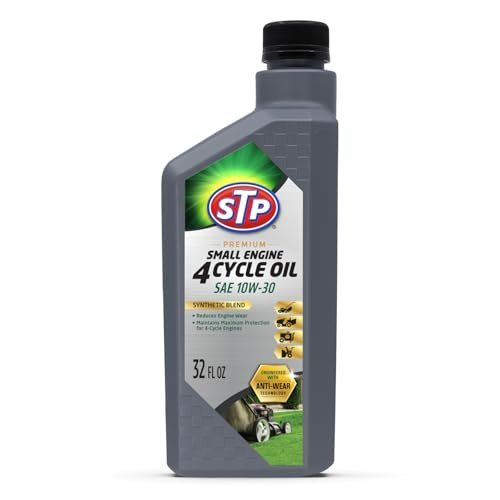
STP Premium Small Engine 4 Cycle Oil is made for compatible four-cycle engines. It comes in an SAE 10W-30 grade and is sold in a pack of two 32-ounce bottles. This makes it a useful option for people who maintain lawn mowers, garden tractors, and other small outdoor machines. The formula aims to help reduce engine wear during normal use.
I like the practical package size for people who do their own equipment care. Two bottles can make it easier to keep extra oil on hand for a planned service. Still, this is small-engine oil, not a general replacement for passenger-car motor oil. Before buying, I would check the equipment manual for the required oil grade, oil type, and service amount.
✅ Pros
- ✔ Designed for compatible four-cycle small engines.
- ✔ SAE 10W-30 grade suits equipment that calls for this viscosity.
- ✔ Two-bottle package provides extra oil for maintenance.
- ✔ Useful for many compatible lawn mower applications.
- ✔ Can serve owners of certain garden tractors and outdoor equipment.
- ✔ The 32-ounce bottle size is practical for small oil changes.
- ✔ The product is clearly aimed at small-engine maintenance.
- ✔ Helps support routine lubrication when used as directed.
⚠️ Cons
- ✖ Not a substitute for passenger-car engine oil.
- ✖ Not suitable for every four-cycle engine or climate.
- ✖ The 10W-30 grade may not match every equipment manual.
- ✖ A two-bottle package may be more than a casual user needs.
- ✖ It does not repair worn engine parts or existing mechanical damage.
My Recommendation
I recommend this STP oil for owners of compatible four-cycle outdoor equipment who want a practical supply for routine maintenance. The two-bottle format can help if you maintain more than one machine or perform regular seasonal service. It earns a place among my small-engine picks because its intended use and viscosity are easy to identify. However, do not choose it just because you are searching for the best engine oil to use in a car. Check your owner’s manual first. If your equipment requires another grade or a special oil type, follow that requirement instead.
| Best For | Why |
|---|---|
| Four-cycle lawn mower owners | The 10W-30 formula may suit mowers whose manuals list this grade. |
| Garden tractor maintenance | The two-bottle pack provides a useful supply for compatible equipment. |
| Home equipment owners | It offers a straightforward small-engine oil option for routine service. |
Prolube Oil Treatment 6 Oz Engine Additive

Prolube Oil Treatment is an engine oil additive made for gas and diesel engines, according to its product description. The advertised uses include reducing wear, noise, and vibration. The listing also mentions possible fuel economy and horsepower benefits, along with use in transmissions and differentials. It comes in a small 6-ounce container.
I would treat this product as an optional maintenance additive, not as a replacement for engine oil. An additive does not change the basic need to use the correct oil grade and specification. Its advertised benefits should also be viewed as product claims rather than guaranteed results. Check the vehicle maker’s instructions before adding anything to the oil system.
✅ Pros
- ✔ Small 6-ounce package is easy to store.
- ✔ Designed as an additive for gas and diesel engine oil.
- ✔ The stated purpose includes supporting engine lubrication.
- ✔ The listing targets owners concerned about engine noise and vibration.
- ✔ May appeal to drivers exploring optional oil treatments.
- ✔ The small container may suit users who want to try a limited amount.
- ✔ The product description identifies several possible applications.
- ✔ Can be considered as an optional product after checking compatibility.
⚠️ Cons
- ✖ It is an additive, not a complete engine oil.
- ✖ Fuel economy and horsepower gains are not guaranteed.
- ✖ Compatibility with every engine oil and vehicle is not established.
- ✖ Some vehicle makers advise against aftermarket oil additives.
- ✖ It cannot repair serious engine wear or damaged components.
- ✖ The small bottle may not suit users who want a larger supply.
My Recommendation
I would consider Prolube only if the engine manufacturer permits oil additives and the product instructions match the intended application. Its small size may suit someone who wants a limited package rather than a large bottle. However, I would not buy it as the main answer to the question of what is the best engine oil to use. A quality oil with the correct viscosity and required performance rating should come first. If your engine makes unusual noise, loses power, or vibrates, check the cause instead of relying on an additive to hide the symptom.
| Best For | Why |
|---|---|
| Drivers considering oil additives | The small package provides an option to evaluate after checking compatibility. |
| Owners of compatible gas engines | The product is marketed for use with gasoline engine oil. |
| Owners of compatible diesel engines | The product description also lists diesel engine applications. |
STP Synthetic Blend Small Engine Oil 10W-30
STP Premium Synthetic Blend 4 Cycle Small Engine Oil is designed for compatible outdoor equipment. It has an SAE 10W-30 grade and comes in a 32-fluid-ounce bottle. The product listing names lawn mowers, generators, tractors, and snow blowers as possible applications. Its synthetic blend formula combines base oils to provide lubrication for suitable four-cycle engines.
This is my leading choice in this group for someone who needs small-engine oil and whose manual calls for 10W-30. The single bottle is simple to store and handle during routine maintenance. I would still check the engine maker’s oil instructions before use. A synthetic blend does not automatically make an oil suitable for every engine or every temperature range.
✅ Pros
- ✔ Synthetic blend formula for compatible small engines.
- ✔ SAE 10W-30 viscosity is clearly stated.
- ✔ Designed for four-cycle equipment.
- ✔ Suitable for compatible lawn mower applications.
- ✔ The product listing also names generators and tractors.
- ✔ Snow blower use is listed for compatible equipment.
- ✔ The 32-ounce bottle is convenient for home storage.
- ✔ A useful option for owners who prefer a synthetic blend.
- ✔ Provides a simple choice for routine small-engine oil changes.
⚠️ Cons
- ✖ Not intended as a universal oil for passenger cars.
- ✖ The 10W-30 grade may not meet every small-engine requirement.
- ✖ A single bottle may not cover every service need.
- ✖ Synthetic blend oil can cost more than some basic conventional options.
- ✖ It cannot prevent all engine wear or eliminate maintenance needs.
- ✖ The formula may not suit equipment that requires a different oil type.
My Recommendation
Of the five products in this comparison, I would put this STP synthetic blend first for compatible four-cycle small engines. It offers a clearly stated grade, a practical bottle size, and a range of listed outdoor equipment uses. It is a sensible option for people who maintain their own lawn mowers or generators. However, I would not call it the best engine oil to use in every vehicle. For a car or truck, select motor oil that meets the exact viscosity and performance standards in the owner’s manual.
| Best For | Why |
|---|---|
| Lawn mower owners | It offers a synthetic blend 10W-30 option for compatible four-cycle mowers. |
| Generator owners | Generators are among the equipment types named in the product listing. |
| Seasonal equipment maintenance | The 32-ounce bottle is practical for a planned oil change. |
Prolube Oil Treatment 1 Quart Engine Additive
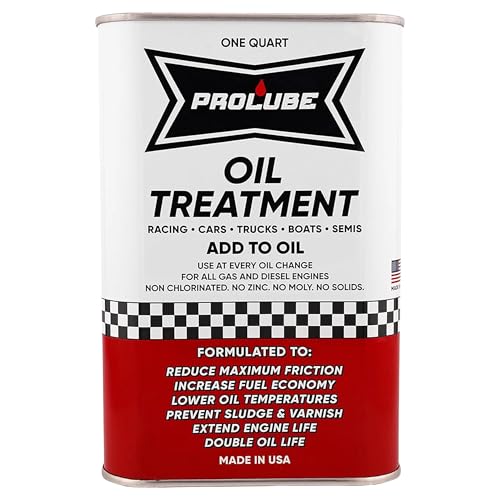
Prolube Oil Treatment in the one-quart size is an additive for gas and diesel engines. Its product description lists possible benefits such as less engine wear, noise, and vibration. It also advertises possible fuel economy and horsepower improvements. The listing mentions use in transmissions and differentials as well as engines.
The larger package may appeal to people who prefer to keep maintenance products on hand. However, I would not assume that every vehicle can use this treatment or that a larger bottle makes it more effective. The correct dose and application matter. I would read the full label and vehicle manual before using it, especially if the engine has a special oil requirement or an active warranty.
✅ Pros
- ✔ Larger one-quart package than the 6-ounce version.
- ✔ Marketed for compatible gasoline engines.
- ✔ The product description also lists diesel applications.
- ✔ Advertised for several types of mechanical systems.
- ✔ May suit users who prefer a larger container.
- ✔ Targets common concerns such as engine noise and vibration.
- ✔ Can be stored for future use when the label allows it.
- ✔ Provides an optional treatment for users whose manuals permit additives.
⚠️ Cons
- ✖ It is not a substitute for regular motor oil.
- ✖ The larger container may be unnecessary for occasional use.
- ✖ Advertised power and fuel savings are not guaranteed.
- ✖ It may not suit engines with strict additive restrictions.
- ✖ Incorrect dosing can affect the oil mixture.
- ✖ It will not repair a damaged bearing, seal, or other worn part.
My Recommendation
I would choose the one-quart Prolube package only when I have a clear reason to use an additive and the engine maker allows it. The larger size may be convenient for someone who maintains more than one compatible machine. But more product does not mean better engine protection. I would first spend money on the correct oil, a good filter where applicable, and timely maintenance. For most drivers asking about the best engine oil to use, an additive should not be the first purchase.
| Best For | Why |
|---|---|
| Users who need a larger package | The one-quart size offers more product than the small bottle. |
| Compatible gasoline engine owners | The treatment is marketed for gasoline engine applications. |
| Compatible diesel engine owners | The product description includes diesel engine use. |
STP High Mileage Oil Treatment With Stop Leak
STP High Mileage Oil Treatment + Stop Leak is designed for older vehicles. The product description says it is intended for vehicles with more than 75,000 miles. It aims to support seals and gaskets and help address minor oil leaks. The bottle contains 15 fluid ounces and is sold as an oil treatment rather than a full engine oil product.
I see this as a targeted option for owners who notice small signs of oil seepage in an older engine. It is not a fix for every leak, and it cannot replace a damaged gasket or worn mechanical part. A driver should first find out where the oil is going. If the engine has a serious leak, low oil pressure, or visible damage, proper repair matters more than an additive.
✅ Pros
- ✔ Designed for high-mileage vehicles.
- ✔ The listing targets vehicles with more than 75,000 miles.
- ✔ Aims to support aging seals and gaskets.
- ✔ Advertised to help address minor oil leaks.
- ✔ The 15-ounce bottle is easy to store.
- ✔ May appeal to owners who want an optional high-mileage treatment.
- ✔ Targets a specific maintenance concern rather than general lubrication.
- ✔ Can be considered for compatible engines after checking the label.
⚠️ Cons
- ✖ It is not a complete engine oil.
- ✖ It cannot repair a cracked engine part or badly damaged gasket.
- ✖ It may not stop every type of oil leak.
- ✖ It is not needed in every high-mileage vehicle.
- ✖ Some manufacturers may restrict aftermarket oil treatments.
- ✖ A serious leak needs diagnosis and repair.
- ✖ It does not remove the need for regular oil changes.
My Recommendation
I would consider STP High Mileage Oil Treatment for an older vehicle with minor seepage, but only after checking the product label and the vehicle maker’s guidance. Its focus on seals and gaskets makes it different from ordinary engine oil. That also means it should not be judged as a direct rival to a full motor oil. If your car burns oil, leaves large puddles, or shows an oil warning light, do not rely on this product as a repair. Find the source of the problem first. For a high-mileage car, the best engine oil to use remains the correct oil grade and specification for that engine.
| Best For | Why |
|---|---|
| Owners of older cars | The product is marketed for vehicles with more than 75,000 miles. |
| Drivers with minor oil seepage | Its stated purpose includes helping with small seal-related leaks. |
| High-mileage vehicle maintenance | It offers a targeted treatment for compatible engines with aging seals. |
Final Verdict: Which Should You Buy?
My top choice from this list is STP Premium Synthetic Blend 4 Cycle Small Engine Oil for compatible lawn mowers, generators, and other four-cycle equipment. It offers a clear 10W-30 grade and a practical 32-ounce bottle. The two-bottle STP Premium option is also worth considering if you want extra oil for regular maintenance. For older vehicles with minor seepage, STP High Mileage Oil Treatment may be an option, but it cannot replace a repair.
The best engine oil to use depends on your engine, climate, and owner’s manual. Choose the correct grade and approval before you buy. Never treat a small-engine oil or additive as a universal car motor oil.
FAQs Of best engine oil to use
Q What is the best engine oil to use in most cars?
Q Is 10W-30 a good engine oil?
Q Is synthetic blend oil better than conventional oil?
Q Should I use an engine oil additive?
Q What is the best engine oil to use for a high-mileage car?