Synthetic blend engine oil combines conventional base oil with synthetic base oil and additives to balance engine protection, performance, and cost.
If you drive to work, take weekend road trips, or sit in rush-hour traffic on an American highway, your engine oil has a demanding job. It must reduce friction, carry heat away from moving parts, and help keep the engine clean. Synthetic blend engine oil can meet these needs when its viscosity and performance ratings match your vehicle manufacturer’s requirements.
Synthetic blend oil sits between conventional oil and full synthetic oil in many drivers’ minds. It combines conventional and synthetic base oils, along with additives that help control wear, deposits, rust, and oil breakdown. The exact formula varies by brand, so the words synthetic blend alone do not tell you every detail about its performance.
The main benefit is balance. You may get some advantages associated with synthetic base oils without paying as much as you would for some full synthetic products. However, synthetic blend oil is not automatically the best choice for every car, and it does not always allow longer oil change intervals. Your owner’s manual remains the best starting point.
Source: pricing.ahg-mosel.de
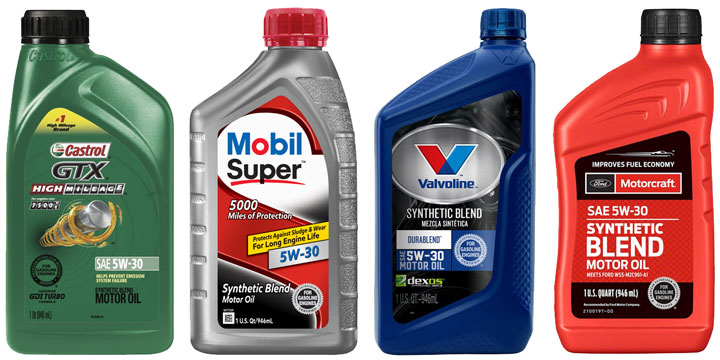
What Is Synthetic Blend Engine Oil?
Synthetic blend engine oil is motor oil made with a mixture of conventional and synthetic base oils. Manufacturers combine these base oils with additives to create a finished lubricant that meets specific performance needs. You may also see this oil called semi-synthetic oil or synthetic blend motor oil.
The conventional portion usually comes from refined petroleum base stocks. The synthetic portion uses base oils produced or processed through methods designed to deliver particular chemical and physical properties. The exact blend ratio and base oil types can differ from one product to another.
Unlike a simple mixture of two oils poured together at home, a finished motor oil is a formulated product. Its base oils and additives work together to manage friction, heat, deposits, oxidation, and wear. A bottle’s label and technical data sheet offer more useful information than the blend name alone.
For a US driver, synthetic blend oil can be a practical choice for a daily driver when the oil meets the vehicle’s requirements. The right product matters more than the label’s general promise.
Source: storage.googleapis.com
Conventional base oil
This petroleum-derived base stock helps lubricate engine parts and contributes to the finished oil’s viscosity and other physical properties.
Synthetic base oil
This base stock is selected for its useful properties, which may include good low-temperature flow, oxidation resistance, or stability under demanding conditions.
Performance additives
These chemicals help reduce wear, control deposits, protect against corrosion, manage foam, and maintain the oil’s intended performance.
Is Synthetic Blend the Same as Semi-Synthetic Oil?
In ordinary motor oil labeling, synthetic blend and semi-synthetic usually describe the same broad category: oil made with conventional and synthetic base oils. The terms are often used interchangeably in the United States and other markets.
However, the names do not establish one universal blend ratio. A product labeled synthetic blend may contain a different combination of base stocks and additives from another brand’s product. Do not assume that every blend contains the same amount of synthetic oil.
Check the product label
Look for the viscosity grade, performance claims, and specifications that apply to your vehicle.
Review technical information
The manufacturer’s product data sheet may explain approvals, specifications, and performance characteristics that the front label does not fully describe.
What Does the Synthetic Blend Ratio Mean?
The blend ratio describes how much of the base oil mixture comes from different types of base stocks. There is no single universal ratio that applies to every synthetic blend engine oil sold in the United States.
Some manufacturers do not disclose an exact ratio. Without a verified formulation statement, a reader cannot reliably determine the percentage of synthetic base oil from the words synthetic blend alone. A larger synthetic portion also does not automatically prove that one finished oil outperforms another.
Avoid guessing percentages
Do not treat an online estimate as the confirmed formula of a particular oil unless the manufacturer supports it.
How Does Synthetic Blend Motor Oil Work?
Synthetic blend oil protects an engine by forming a lubricating film between moving surfaces. That film helps reduce direct metal-to-metal contact as pistons, bearings, camshafts, and other parts move at high speed. The oil also carries heat and suspended contaminants toward places where the engine can manage them.
Think of engine oil as a thin protective cushion. When the oil has the right viscosity and remains in good condition, it helps moving parts slide instead of grind. If the oil becomes too thin, too thick, contaminated, or depleted, its ability to protect the engine may suffer.
Synthetic blend formulations can use synthetic base oils to improve selected properties compared with some conventional formulations. The actual benefit depends on the base stocks, additives, viscosity grade, engine design, operating conditions, and applicable performance standards.
No motor oil can prevent all wear. Proper oil level, a suitable oil filter, timely maintenance, and a correct oil specification remain essential.
Source: mechanicbase.com
Reduces friction
The lubricating film helps limit contact between moving engine components and reduces friction-related wear.
Moves heat
Oil absorbs heat from engine parts and transfers it through the lubrication system, helping manage operating temperatures.
Controls deposits
Detergents and dispersants help limit harmful deposits and keep some contaminants suspended until the oil is drained.
Helps protect against corrosion
Suitable additives help protect metal surfaces from corrosive substances that can form during engine operation.
Why Additives Matter
Base oil is only one part of a finished motor oil. Additives help the oil perform across changing temperatures and operating conditions. Their job may include reducing wear, limiting oxidation, controlling sludge, improving flow at low temperatures, and preventing excessive foam.
Two oils with the same viscosity grade can perform differently because their formulas and certifications differ. This is why the API service category, automaker approvals, and product specifications deserve attention when choosing oil.
Antioxidants
Help slow chemical reactions that cause oil to oxidize and deteriorate.
Detergents and dispersants
Help control deposits and manage contaminants within the lubricant.
Anti-wear additives
Help protect metal surfaces when operating conditions challenge the lubricating film.
Viscosity modifiers
Help the oil maintain useful flow characteristics across a range of operating temperatures.
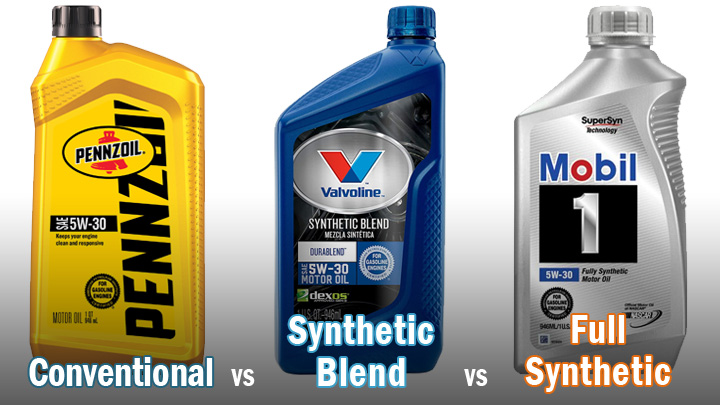
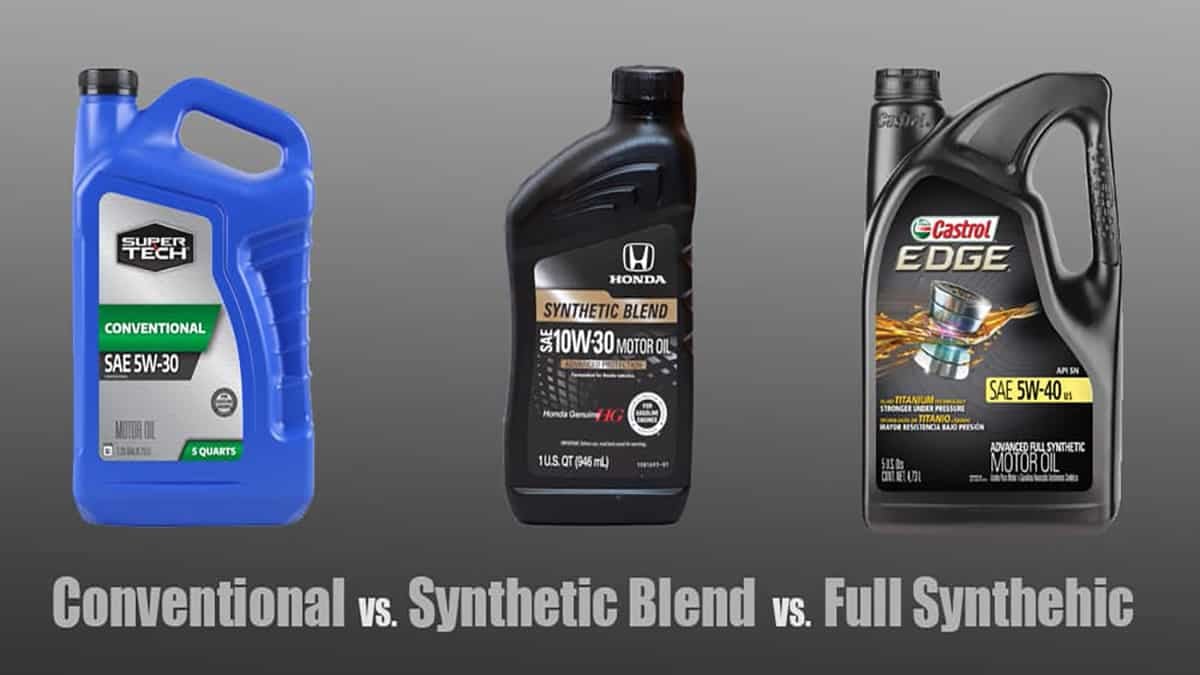
Synthetic Blend vs. Conventional vs. Full Synthetic Oil
The main difference between conventional, synthetic blend, and full synthetic engine oil is the base oil formulation, although additive packages and performance specifications also matter. The three categories overlap in some real-world uses, so the label alone cannot determine which oil is right for your vehicle.
Conventional oil generally uses petroleum-derived base stocks. Synthetic blend oil combines conventional and synthetic base oils. Full synthetic oil generally uses synthetic base stocks and is often formulated to provide strong performance across demanding conditions.
Full synthetic oil may offer better resistance to oxidation or better low-temperature performance than some conventional or blend products. These are not guaranteed results for every comparison, however. You must compare specific products that meet the same relevant requirements to make a fair judgment.
Source: hitchesguide.com
Conventional oil
Often costs less and can be suitable for engines whose manufacturers permit it, provided the oil meets all required specifications.
Synthetic blend oil
Offers a middle-ground formulation for drivers who want synthetic base oil in the blend without automatically paying full synthetic prices.
Full synthetic oil
Often suits modern engines and demanding service when it meets the required specifications, but it may cost more per quart.
Comparison Table: Which Oil Is Different?
Use this table as a general guide to the three oil categories. These are broad tendencies, not guaranteed rankings. Specific formulations, certifications, and vehicle requirements can change the result.
Base oil
Conventional: primarily petroleum-derived base stocks. Synthetic blend: a mixture of conventional and synthetic base stocks. Full synthetic: primarily synthetic base stocks.
Price
Conventional oil often costs the least, synthetic blend often falls in the middle, and full synthetic often costs more. Store, brand, oil grade, and sale prices affect the actual cost.
Cold-weather performance
Some synthetic and synthetic blend formulas flow well at low temperatures. The correct viscosity grade and product specifications matter more than the category name alone.
Oxidation resistance
Synthetic formulations may resist oxidation well, but the finished oil’s formulation and testing determine its actual performance.
Oil change interval
Follow the vehicle maker’s maintenance schedule and any applicable oil-life monitoring instructions. The oil category alone does not establish a safe drain interval.
Best use
Choose the category that meets the engine’s requirements and fits the vehicle maker’s maintenance guidance and your driving conditions.
Is Full Synthetic Always Better?
Full synthetic can be a strong choice for engines that require it or benefit from its formulation. It may also be useful for drivers who face severe cold, high heat, towing, or frequent stop-and-go traffic, provided the product matches the engine’s specifications.
But more expensive oil is not automatically the right oil. If your owner’s manual permits a particular synthetic blend and that product meets the required standards, switching to full synthetic may offer benefits without being strictly necessary. In some vehicles, the manufacturer requires full synthetic or a specific approved oil, so a blend may not be suitable.
The sensible comparison is not simply synthetic blend versus full synthetic. Compare the exact viscosity grade, performance category, approvals, maintenance interval, and total cost for your vehicle.
Follow required specifications first
Never choose a cheaper oil that fails a required viscosity, performance standard, or automaker approval.
Compare the full cost
Consider the oil quantity needed, filter cost, service labor, and manufacturer-approved maintenance interval.
What Are the Benefits of Synthetic Blend Engine Oil?
The main benefit of synthetic blend engine oil is that it can provide a useful balance of performance and cost. It gives manufacturers room to combine different base oils and additives to meet the needs of particular engines and drivers.
For a vehicle that permits synthetic blend oil, the right formulation can provide dependable lubrication for routine driving. It may suit daily commuting, family errands, and many highway trips when the oil grade and performance ratings match the vehicle’s requirements.
Synthetic blend oil can also be a practical option for drivers who want an alternative to conventional oil without choosing a full synthetic product. Still, the value depends on the exact oil, not just the label.
Source: lube-squad.com
A potential cost advantage
Some synthetic blend oils cost less than comparable full synthetic products while meeting the specifications required by a compatible engine.
A balanced formulation
The combination of base oils and additives can target useful lubrication and deposit-control properties for everyday driving.
Options for many vehicle types
Synthetic blend oils are available in multiple viscosity grades and performance categories, although not every grade or approval is available in every brand.
Useful protection when correctly selected
An oil that meets the manufacturer’s requirements can protect an engine under the operating conditions covered by those specifications.
Can Synthetic Blend Oil Help in Cold Weather?
Cold weather makes engine oil thicker, which can make it harder for the oil to circulate during startup. The correct winter viscosity grade helps the lubricant flow under the low-temperature conditions specified by its rating.
Some synthetic blend oils offer useful low-temperature performance, but the term synthetic blend does not guarantee better cold-start behavior than every conventional oil. Compare the complete viscosity grade and the product’s performance claims.
For example, a 5W-30 oil and a 10W-30 oil have different cold-temperature viscosity classifications, even though both share the same second number. Which grade is appropriate depends on the vehicle manufacturer’s guidance and the expected temperatures.
Check the winter rating
The number and W in a multigrade oil designation relate to its performance in cold-temperature viscosity tests.
Use the specified grade
Do not select a thicker or thinner oil based on a general belief that it offers more protection.
Can Synthetic Blend Oil Handle Towing and Heavy Loads?
Towing a trailer, carrying heavy cargo, or driving through steep terrain can place extra demands on an engine. The right motor oil must maintain its required properties under the conditions anticipated by the engine’s design.
A suitable synthetic blend may work for a vehicle that permits it, but severe service can require a particular oil specification or a different maintenance schedule. Check the towing guidance in your owner’s manual rather than assuming every blend can handle the same load.
Check severe-service guidance
Look for maintenance instructions covering towing, frequent short trips, dusty roads, extreme temperatures, and heavy traffic.
What Are the Disadvantages of Synthetic Blend Oil?
Synthetic blend oil is not the best fit for every engine or driving pattern. Its suitability depends on the required oil specifications, the formulation, and the conditions in which the vehicle operates.
One limitation is that synthetic blend does not have a single standardized recipe. Two products with this label may differ in base stocks, additives, approvals, and performance. A low price or a familiar brand name cannot replace checking the product details.
Another limitation is that some engines require a specific full synthetic oil or a manufacturer approval that a blend does not carry. Using an oil that fails those requirements can lead to inadequate protection or problems with warranty compliance, depending on the circumstances and applicable law.
Synthetic blend oil may also be less attractive if the cost difference from a suitable full synthetic is small. In that case, the full synthetic option could be worthwhile if it offers a relevant benefit for your vehicle and service conditions.
Source: kwikkarspringvalley.com
Not suitable for every engine
Some modern engines require specific oil approvals, viscosity grades, or full synthetic formulations that a given blend may not meet.
No universal performance guarantee
The words synthetic blend do not establish a precise synthetic percentage, a specific service life, or superiority over every conventional oil.
Potentially shorter maintenance intervals
The correct oil change interval depends on the vehicle maker’s schedule, oil requirements, and driving conditions, not simply on whether the oil is a blend.
Savings may be limited
If a compatible full synthetic costs only slightly more, the extra cost may be reasonable depending on the product’s benefits and the vehicle’s needs.
Does Synthetic Blend Oil Cause Sludge?
Synthetic blend oil does not automatically cause engine sludge. Sludge can form when oil degrades or contaminants build up, particularly when maintenance is neglected or the engine operates under conditions that promote deposits.
Using the correct oil, maintaining the proper oil level, changing the filter as recommended, and following the maintenance schedule all help manage the risk. If you find thick deposits under the oil cap or notice persistent oil-pressure warnings, do not assume that switching oil types alone will solve the problem.
Severe sludge or suspected blocked oil passages may require professional inspection. Do not use an aggressive engine flush without checking whether it is suitable for the engine and its condition.
Prevent buildup
Use the required oil specification and keep up with scheduled oil and filter changes.
Investigate warning signs
A persistent oil-pressure warning, unusual engine noise, or evidence of heavy sludge needs prompt attention.
Who Should Use Synthetic Blend Engine Oil?
Synthetic blend oil may suit drivers whose vehicles permit it and who want a balance between cost and performance. The strongest candidates are not defined by age or mileage alone. They are defined by whether the oil meets the engine’s specifications and fits the driver’s conditions.
A daily commuter with a compatible gasoline engine may find a synthetic blend practical. Someone who owns an older car may also use it if the owner’s manual allows the viscosity and performance category. A driver who frequently tows, faces severe winter conditions, or owns a turbocharged engine should pay closer attention to the manufacturer’s exact oil requirements.
Do not assume that every older engine needs conventional oil or that every newer engine needs full synthetic. The vehicle maker’s instructions take priority over broad rules of thumb.
Source: fity.club
Everyday commuters
A suitable synthetic blend can serve many routine commuting needs when it meets the specified grade and performance requirements.
Budget-conscious drivers
A blend may lower the upfront oil cost when a compatible product is available and the maintenance schedule remains unchanged.
Owners of older vehicles
An older vehicle may use a blend if the oil meets its required specifications and suits the engine’s condition.
Drivers with demanding conditions
Drivers who tow, make repeated short trips, or encounter extreme temperatures should check whether the manufacturer calls for a particular oil or severe-service interval.
Is Synthetic Blend Good for High-Mileage Cars?
A high-mileage car can use synthetic blend oil if the product meets the vehicle’s requirements. Mileage alone does not determine whether a blend, conventional oil, or full synthetic is best.
Some high-mileage oils include additives intended to condition seals or help manage oil consumption, but those features depend on the specific formulation. They do not guarantee that an old seal will stop leaking or that worn engine parts will return to normal condition.
If the engine consumes oil, check the level regularly and investigate significant changes. An oil change may be part of proper maintenance, but it cannot repair mechanical wear or a damaged seal.
Check the owner’s manual
Confirm the approved viscosity grade and performance standards before choosing a high-mileage or synthetic blend product.
Monitor oil use
Record how much oil the engine needs between changes and seek diagnosis if consumption rises or a leak appears.
Is Synthetic Blend Suitable for Turbocharged Engines?
Turbochargers operate at high speeds and temperatures, so their engines may have strict oil requirements. Some turbocharged engines permit certain synthetic blend products, while others require full synthetic oil or specific manufacturer approvals.
Check the exact engine requirements, not just the vehicle model name. If the manual calls for a particular specification or approved full synthetic oil, use a product that meets that requirement.
Follow the engine specification
Do not substitute a generic synthetic blend for a required oil approval, even when both products share the same viscosity grade.
How to Choose the Right Synthetic Blend Engine Oil
Choose synthetic blend engine oil by matching the bottle to your vehicle manufacturer’s requirements. Start with the owner’s manual, then compare viscosity, service category, and any required automaker approvals.
This process helps avoid a common mistake: buying oil because it says synthetic blend, high mileage, or advanced protection without checking whether it suits the engine. A suitable oil must meet the relevant requirements, not just sound appealing on the shelf.
Source: cartreatments.com
Step 1: Find the required viscosity
Check the owner’s manual or the vehicle manufacturer’s official maintenance information. Common grades include 0W-20, 5W-20, 5W-30, and 10W-30, but these are not interchangeable unless the manufacturer permits them.
Step 2: Check the API service category
Look for the API service category or other performance specification required for your engine. A newer category may be backward compatible in some cases, but confirm the applicable guidance instead of assuming every newer label is suitable.
Step 3: Confirm manufacturer approvals
Some vehicles require an automaker-specific approval or specification beyond a basic viscosity grade. Check the exact wording in the manual and the oil product information.
Step 4: Consider your driving conditions
Frequent short trips, severe cold, towing, dusty roads, or prolonged heavy traffic may affect the maintenance schedule and oil requirements.
Step 5: Compare total service cost
Compare the price of the required oil quantity, the appropriate filter, and the service cost. Do not assume a lower bottle price means a lower long-term cost.
What Do 5W-30 and Other Viscosity Grades Mean?
Viscosity describes how a fluid resists flowing. In a multigrade oil such as 5W-30, the W refers to winter performance. The first number relates to low-temperature viscosity requirements, while the second relates to viscosity at higher operating temperatures under standardized tests.
The numbers do not tell you whether the oil is conventional, synthetic blend, or full synthetic. Oils in the same viscosity grade can use different base stocks and additive packages.
For example, a car that specifies 0W-20 should not automatically receive 5W-30 simply because the thicker oil is marketed for protection. Use another grade only when the vehicle manufacturer allows it for the relevant operating conditions.
Lower winter number
Generally indicates that the oil meets a less restrictive cold-temperature viscosity grade, which can matter during cold starts.
Second number
Identifies the oil’s high-temperature viscosity grade under the applicable test requirements.
How to Read API and Other Oil Labels
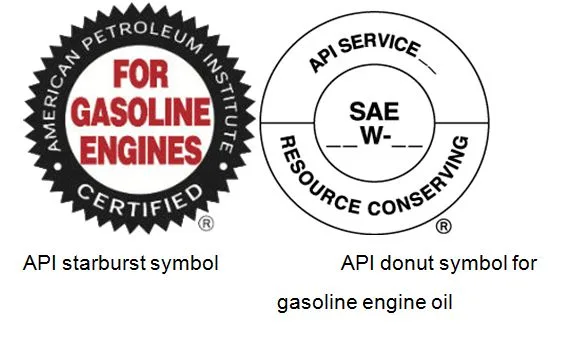
The American Petroleum Institute, or API, provides engine oil service categories and licensing marks. On many gasoline-engine oils, the API service category helps indicate whether the oil meets defined performance requirements.
Some bottles display the API Service Symbol, often called the API donut, which provides information such as viscosity grade and service category. Other industry marks and automaker approvals may also matter for a particular engine.
A product may advertise that it meets a specification without carrying a formal approval from the relevant automaker. When the manual requires a specific approval, check the product’s documentation carefully.
Read the full label
Check viscosity, API category, and any other required performance specifications.
Verify specific approvals
Use the oil maker’s technical data sheet and the vehicle maker’s guidance when formal approval matters.
How Often Should You Change Synthetic Blend Oil?
Change synthetic blend oil according to your vehicle manufacturer’s maintenance schedule. There is no single mileage or time interval that applies to every engine using this type of oil.
Some vehicles use an oil-life monitoring system that estimates when service is due based on operating conditions and other inputs. Others specify mileage and time limits. Follow the instructions for your particular vehicle and do not exceed the stated limits.
Driving conditions can affect how quickly oil becomes unsuitable for continued use. Repeated short trips, heavy traffic, towing, extreme temperatures, and dusty environments may count as severe service under the manufacturer’s definition.
A synthetic blend does not automatically last longer than conventional oil or qualify for the same interval as every full synthetic product. Use the schedule specified for your vehicle and the oil that meets its requirements.
Source: 49northlubricants.com
Follow mileage and time limits
Use the owner’s manual to determine when the oil and filter are due, even if the vehicle has covered relatively few miles.
Check the oil level
Inspect the level as recommended and add the correct oil if needed. Adding oil does not replace a scheduled oil change.
Watch for warning signs
An oil-pressure warning, a sudden loss of oil, or unusual engine noise requires prompt attention rather than waiting for the next scheduled service.
Use the right filter
Install a filter that meets the vehicle’s requirements and replace it according to the recommended maintenance procedure.
Does Synthetic Blend Oil Last Longer Than Conventional Oil?
Some synthetic blend formulations may offer improved resistance to oxidation or other forms of oil deterioration compared with some conventional products. However, the difference depends on the specific formulations and the conditions under which the oil operates.
That does not establish a universal longer oil change interval. Your vehicle maker’s schedule takes account of the engine design, approved oils, and expected operating conditions. Follow that schedule unless the manufacturer provides other applicable guidance.
Do not rely on the label alone
A synthetic blend designation is not proof that the oil can remain in the engine for a particular number of miles.
What If You Cannot Remember the Last Oil Change?
If you do not know when the oil was last changed, check service receipts, maintenance records, or the vehicle’s service display. Inspect the oil level and look for signs of leaks, but remember that oil color alone cannot reliably establish whether the oil is still fit for use.
If the service history is unknown, arrange maintenance based on the vehicle manufacturer’s guidance and the engine‘s condition. If the oil-pressure warning is on or the engine is making unusual noises, stop safely and seek help rather than driving to a routine service appointment.
Recover service records
Look for receipts, dealer records, or maintenance notes that identify the date, mileage, and oil used.
Inspect before driving
Check the level using the procedure in the manual and investigate visible leaks or active warnings.
Can You Mix Synthetic Blend and Full Synthetic Oil?
Synthetic blend and full synthetic engine oils that are suitable for the same engine are generally compatible for routine top-ups, provided both meet the required specifications and viscosity needs. Many motor oils are designed to be compatible with other oils, but mixing them does not create a new oil with guaranteed performance.
If you mix a synthetic blend with a full synthetic product, the resulting mixture will not necessarily retain all the performance characteristics or claims of either original product. The final result depends on both formulations and their proportions.
For an emergency top-up, using an appropriate oil that meets the vehicle’s requirements is usually more important than keeping the oil category perfectly consistent. Check the manual, avoid mixing products that have conflicting requirements, and arrange proper maintenance if the oil type or service history is uncertain.
When changing oil, there is generally no need to flush the engine merely because you are switching from a compatible synthetic blend to full synthetic or vice versa. Follow the manufacturer’s maintenance instructions and do not use a chemical flush unless it is appropriate for the engine.
Source: mechanicbase.com
Check compatibility
Confirm that the oil grades and performance specifications are suitable for the same engine.
Avoid intentional dilution
Do not mix oils to create a custom formulation or assume that the mixture meets every original product claim.
Use the correct oil for top-ups
Keep a suitable oil on hand and follow the vehicle’s instructions for checking and adding oil.
Can You Switch From Conventional Oil to Synthetic Blend?
In most compatible applications, switching from conventional oil to synthetic blend does not require a special conversion procedure. The important conditions are that the new oil meets the required viscosity, performance category, and any manufacturer approvals.
If an older engine has leaks or consumes oil, changing the oil category may not resolve the issue. Monitor the engine after service and address mechanical problems separately.
Verify the oil specification
Check the manual before switching categories, particularly if the engine has unusual oil requirements or a history of mechanical trouble.
Common Mistakes to Avoid When Using Synthetic Blend Oil
Most synthetic blend oil problems begin with an incorrect product choice, poor maintenance, or a mistaken belief about what the label guarantees. A few simple checks can help prevent avoidable engine trouble.
The most important rule is to follow the vehicle manufacturer’s requirements. Do not choose oil based only on price, mileage, color, brand familiarity, or a broad claim that synthetic products always provide better protection.
Source: kwikkarspringvalley.com
Choosing the wrong viscosity
An oil can be synthetic blend and still have the wrong viscosity for your engine. Confirm the grade in the owner’s manual.
Ignoring required approvals
A matching viscosity does not prove that the oil meets every required performance standard or automaker approval.
Extending the oil change interval without support
Do not add extra miles to the maintenance schedule simply because the bottle says synthetic blend.
Assuming darker oil is always bad
Oil can darken as it collects contaminants and combustion by-products. Color alone is not a reliable test of oil condition.
Ignoring low oil levels
Low oil can reduce lubrication and damage engine components. Check the level regularly and investigate repeated losses.
Using additives without checking compatibility
Extra additives may not be needed and can alter a carefully balanced oil formulation. Follow the vehicle manufacturer’s advice.
What Should You Do If the Oil Pressure Warning Appears?
An oil-pressure warning can indicate that the engine is not receiving adequate oil pressure. If the warning remains on while the engine is running, pull over safely, shut off the engine, and consult the owner’s manual or roadside assistance guidance.
Once it is safe, check the oil level using the procedure in the manual. If the level is low, the correct oil may be needed, but adding oil does not prove that the problem is solved. A leak, oil pump problem, blocked passage, or other fault may require professional diagnosis.
Do not keep driving with an active oil-pressure warning to see whether it goes away. Low oil pressure can cause serious engine damage in a short time.
Stop the engine
Safely stop and shut down the engine if the oil-pressure warning stays on while running.
Check the level
Use the manufacturer’s procedure and avoid touching hot engine parts.
Seek help if the warning persists
Do not restart or continue driving if the warning remains or the engine makes unusual noises.
Frequently Asked Questions
Q
Is synthetic blend engine oil good for your car?
Synthetic blend engine oil can be a good choice when it meets your car’s required viscosity, performance category, and manufacturer approvals. It can balance cost and useful engine protection for compatible vehicles. Check your owner’s manual before selecting it.
Q
How long does synthetic blend engine oil last?
There is no single oil change interval for every synthetic blend product or vehicle. Follow the mileage, time, or oil-life monitoring guidance in your owner’s manual. Driving conditions and the engine’s requirements can affect the correct maintenance schedule.
Q
Is synthetic blend oil better than regular oil?
Some synthetic blend formulations may offer advantages in oxidation resistance, low-temperature flow, or other properties compared with some conventional oils. However, performance depends on the exact products being compared. Both types can work well when they meet the engine manufacturer’s requirements.
Q
Can I use synthetic blend oil in an older car?
Many older cars can use synthetic blend oil if it meets the required viscosity and performance specifications. Check the owner’s manual and consider the engine’s condition. If the car leaks or consumes oil, address those issues instead of expecting a different oil category to repair them.
Q
Can I switch between synthetic blend and full synthetic oil?
You can generally switch between compatible synthetic blend and full synthetic oils without a special flushing procedure. The new oil must meet the engine’s requirements. Do not assume the mixture left behind or a combination of different products preserves every original performance claim.
Q
Is synthetic blend oil safe for high-mileage engines?
It can be suitable for a high-mileage engine if it meets the manufacturer’s requirements. Some high-mileage formulations include additives intended to help condition seals or manage oil consumption, but they cannot repair worn parts. Monitor the oil level and investigate new leaks or changes in oil use.
Q
Does synthetic blend oil improve gas mileage?
Any fuel economy effect depends on the engine, oil viscosity, formulation, and operating conditions. A suitable oil can reduce friction, but there is no guaranteed fuel economy improvement from switching to synthetic blend oil. Use the viscosity and specifications recommended by the vehicle manufacturer.
Q
Can I use synthetic blend oil in a car that requires full synthetic?
Do not assume a synthetic blend is acceptable when the manufacturer requires full synthetic oil or a particular approval. Check the exact requirements in the owner’s manual and use a product that meets them. If the wording is unclear, ask an authorized service provider or the oil manufacturer.
✦ Wrapping Up
Conclusion
Synthetic blend engine oil combines conventional and synthetic base oils with additives designed to protect engine parts, control deposits, and maintain lubrication. It can offer a useful balance of performance and cost for vehicles that permit its use.
However, synthetic blend is a broad product category, not a universal performance rating. Different brands and formulations can have different properties, and a blend is not automatically better or worse than every conventional or full synthetic oil. The viscosity grade, performance category, manufacturer approvals, and maintenance schedule determine whether a product is suitable.
For most drivers, the safest way to choose motor oil is simple: start with the owner’s manual, confirm the required specifications, and compare products that meet them. Check the oil level regularly, use the correct filter, and follow the recommended service interval.
💡 Key Takeaway
Before your next oil change, check your owner’s manual for the required viscosity grade and oil specifications. Then choose a synthetic blend only if the product meets those requirements, and follow the manufacturer’s oil change schedule.
If you’re standing in the autoparts aisle, the real question is often simple: how much does motor oil cost? A conventional quart may cost $4 to $9, while a…
You’re gripping a jug in the auto parts aisle. The front label says “Full Synthetic Motor Oil.” The carton behind it says “Engine Oil.” Your brain stutters. Is…