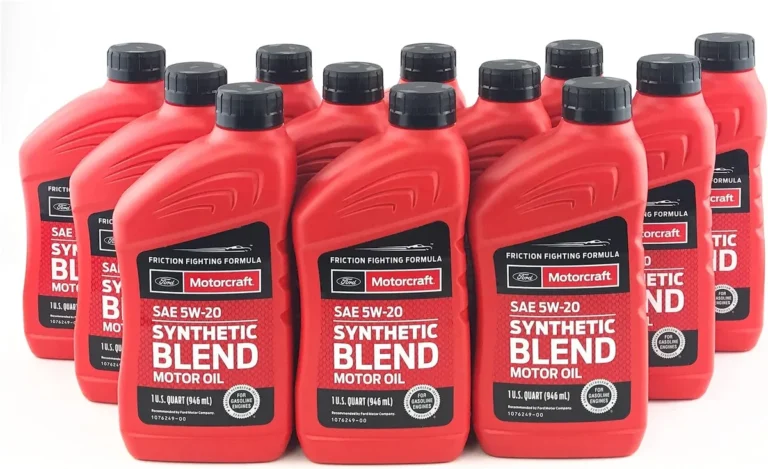
What Brand of Synthetic Motor Oil Is Best
You've probably stood in the motor oil aisle, staring at forty different bottles, wondering what brand of synthetic motor oil is best for your specific car. The honest answer? It is not about the brand.
It is about the spec stamp on the label and the viscosity your OEM actually requires.
Per SAE J300 viscosity standards, a 0W-20 oil must pour at −35 °C and hold at least 2.6 mPa·s of HTHS viscosity. That technical floor is what protects your engine from cold-start wear. The brand name just tells you who manufactured the additive package.
As of 2026, the baseline for nearly every new car sold in North America is API SP paired with ILSAC GF-6. Here is how to pick the right bottle without overspending.
Quick Answer
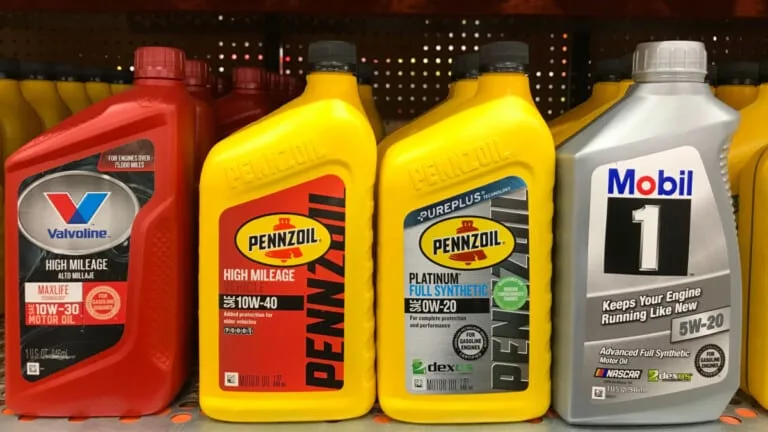
As of 2026, no single synthetic oil brand is best for every car. For 80% of vehicles, any API SP certified oil at your OEM-specified viscosity will do. The big three (Mobil 1, Pennzoil, Valvoline) hit that spec at the lowest price.
Premium brands add track-focused additives you do not need on a stock commuter. Match the spec, not the logo.
The Short Answer: "Best" Lives in Your Oil Cap, Not the Bottle
Open your owner's manual to the "Oil Filling" or "Engine Oil" page. You will see two things: a viscosity grade (like 0W-20 or 5W-30) and a specification stamp (like API SP, ILSAC GF-6B, or Toyota 0020-90-15). That is the entire decision.
Why API SP and ILSAC GF-6 matter more than the brand name
API SP, the current service category published by the American Petroleum Institute, adds anti-lubricity and bearing-corrosion tests that the older SN spec lacked. ILSAC GF-6A and GF-6B tighten fuel-economy and emission-system protection requirements on top of that. These standards are what your engine was engineered around.
A Mobil 1 0W-20 and a Valvoline VR1 0W-20 that both carry the API SP and ILSAC GF-6B stamp will perform identically in your 2024 Hyundai. The $3-per-quart price gap buys you nothing at the metal level. What changes between brands is the marketing tier, not the protection.
You can verify current API licensees on the American Petroleum Institute's public database.
The Big Three vs. the Boutique Shelf: What You're Really Choosing Between
The synthetic oil aisle splits into three clear tiers. Knowing what sits in each one saves you from overpaying.
The quick-lube and big-box workhorses
Mobil 1 (ExxonMobil), Pennzoil Platinum (Shell), and Valvoline MaxLife or VR1 cover the majority of consumer cars. They meet API SP, carry ILSAC licensing, and run $7 to $12 per quart at Walmart or an auto parts store. Manufacturer data sheets confirm identical base-oil groups (III and IV blends) across all three.
The enthusiast and track-oriented tier
Amsoil Signature Series, Royal Purple High-Torque, and Liqui Moly Special Touring T-12 add friction modifiers like molybdenum disulfide and higher ZnDTP levels. These help under sustained high-RPM loads, track days, and boosted engines. For a stock commuter doing 12,000 miles a year in town, those additives sit dormant in the sump.
You are paying a 2 to 3× premium for protection you will not use.
The OEM-branded middle ground
Genuine Toyota 0020-90, BMW Turbo Blue, and Mercedes Star oil are rebranded Chevron, TotalEnergies, or Castrol products. They carry the exact OEM spec stamp your warranty department looks for. Per manufacturer documentation, the base oil and additive package are functionally identical to the non-OEM bottle two aisles over.
| Tier | Typical Brands | Price/Quart (US) | Best For |
|---|---|---|---|
| Big-box / quick-lube | Mobil 1, Pennzoil, Valvoline | $7 to $12 | Stock daily drivers, budget focus |
| Boutique / enthusiast | Amsoil, Royal Purple, Liqui Moly | $15 to $28 | Track days, boosted engines, high-mileage |
| OEM-branded | Toyota 0020-90, BMW Turbo Blue, Mercedes Star | $10 to $14 | Warranty compliance, European cars |
The Three Numbers on the Label That Actually Separate Good Oil from Expensive Oil
Most buyers skip the back of the bottle. Three values printed there tell you more than the front-facing logo.
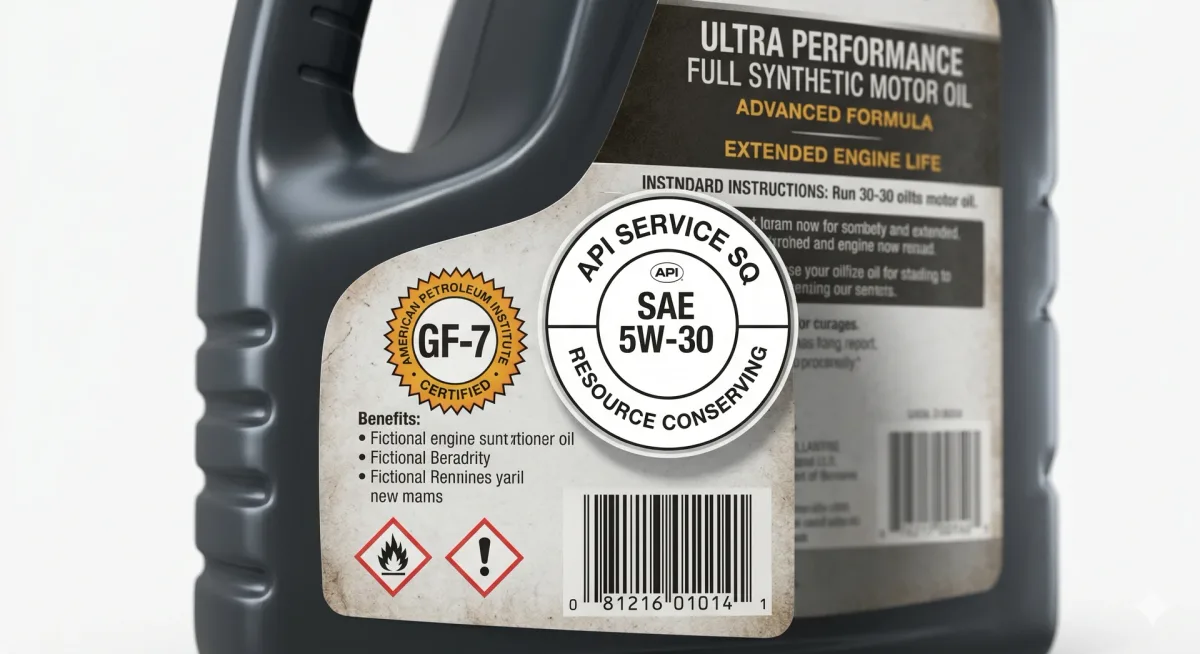
HTHS viscosity, Noack volatility, and TBN: what they protect
HTHS (High Temperature High Shear) viscosity, measured at 150 °C and 1.5 million shears per minute, is the minimum film thickness your crank bearings see at highway speed. ILSAC requires 2.6 mPa·s minimum. ACEA C2 and C3 push that to 2.9.
Noack volatility, capped at 13.5% for API SP, measures how much oil evaporates over 24 hours at 250 °C. Lower Noack means fewer top-ups between changes. TBN (Total Base Number), typically 8 to 12 mg KOH/g, is your oil's acid-neutralizing capacity.
It determines how long the formula resists corrosive combustion byproducts.
Base oil group: III vs. IV vs. V
Group III is hydrotreated mineral stock. Group IV is GTL (gas-to-liquid, like Shell's Purasynth). Group V is esters.
Groups IV and V resist thermal breakdown longer, which is why Amsoil and Liqui Moly lean on them. But a Group III/IV blend from Mobil 1 hits the same API SP pass marks. The base-oil upgrade only matters if your drain interval stretches past 10,000 miles or you run sustained redline.
Matching the Brand to Your Car, Climate, and Driving Rhythm
"Best" shifts depending on where you park, how you drive, and what engine sits under the hood.
Sub-zero commuters
If your ambient temperature drops below −25 °C (Northern Minnesota, northern Alberta, Scandinavia), SAE J300 makes 0W the only viable cold-grade. A 5W oil thickens too much at −30 °C, and that first crank in January becomes a cold-start wear event. Per SAE International's J300 cold-temperature chart, 0W-20 and 0W-30 pour down to −35 °C.
Any of the big three brands in 0W grade will do the job. You do not need a boutique bottle for sub-zero protection.
Hot-dry states and tow drivers
Arizona, the Gulf Coast, and the Middle East sit in the opposite problem. Sustained 110+ °F ambient plus a 5,000-pound trailer means your oil hits 250 °F in the sump. A 0W-40 or 5W-40 with an HTHS of 2.9+ (ACEA C3 spec) keeps the film from shearing.
That is where a Group IV/V base like Liqui Moly's or Amsoil's actually earns its price over a Group III blend.
Turbocharged GDI engines and the dilution trap
VW, Audi, GM 3.6L, and modern BMW TWD engines mix fuel into the oil during rapid decel events. The oil level creeps up. The dilution ratio spikes.
No additive package fixes that. Your only defense is running the exact OEM spec (like VW G 052 007 or BMW LL-04) at the OEM drain interval. A "premium" bottle with extra moly does not dilute less.
It just costs more to replace when you check the dipstick at 4,000 miles.
100,000-mile-and-beyond vehicles
High-mileage variants from Valvoline (MaxLife 100K), Mobil 1 (High Mileage), and Pennzoil (PLATINUM High Mileage) add seal-swelling conditioners. They are not a different base oil. They are the same API SP formula with a softening additive.
Use one if your seals have started weeping past 150k.
Mistakes That Cost You a Warranty Claim or Engine Life
Most of the damage we see in the field comes from three specific errors, not from picking the "wrong" brand.
Pours a non-OEM-spec oil into a 2023 BMW and wonders why coverage got denied
BMW warranty terms state plainly that fluids must meet the LL-04 or LL-01FE specification. A generic "API SP full synthetic" at the gas station does not carry that stamp. If a sludge event hits the VANOS solenoid at 30,000 miles, the dealer's diagnostic report will show a non-conforming fluid.
Your coverage is gone. Always verify the OEM spec line on the bottle, not just "API SP."
Grabs 10W-40 because it is cheaper in a 0W-20 spec car
The thicker SAE grade raises cold-start drag by 20 to 30% on the first rotation. Your fuel-economy figures tank. Your turbocharger spins up slower, running hotter for the first two minutes.
In a hot climate, that is tolerable. In a −10 °C morning, it is a warranty-level misapplication. The viscosity number on the manual is a specification, not a suggestion.
Stretches a 7,500-mile light-duty interval to 15,000 in stop-and-go city driving
"Synthetic means 15k miles" is the most repeated myth in the quick-lube industry. The 15,000 figure applies to open-highway, light-load, moderate-temperature use. Short trips under 5 miles, towing, sustained city idling, and desert heat all cut your safe interval back to 5,000 to 7,500.
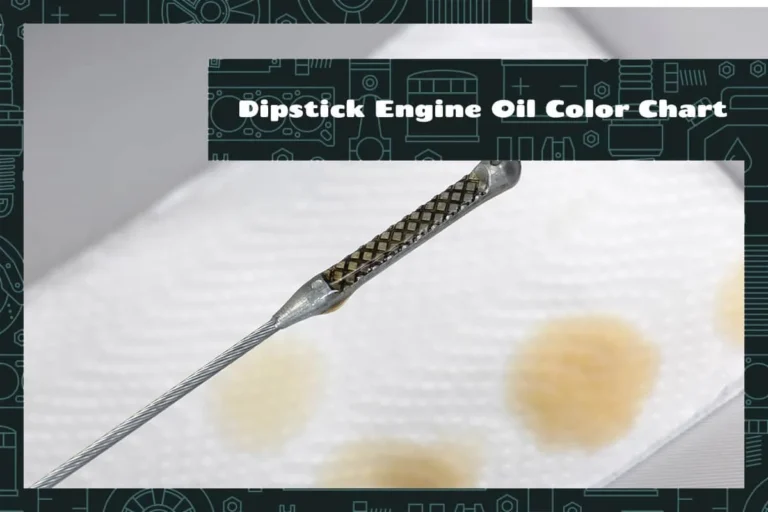
Check the oil's smell and color at the halfway point. If it smells like gasoline or looks milky, change it now regardless of mileage.
What a Case of Oil Actually Costs, and When the Premium Earns Its Keep
The pricing gap between tiers is real but smaller than the shelf placement suggests.
| Tier | Brand Examples | 5-qt Case (US, 2026) | Per-Quart |
|---|---|---|---|
| Big-box | Mobil 1, Pennzoil, Valvoline | $35 to $55 | $7 to $11 |
| OEM-branded | Toyota 0020-90, BMW Turbo Blue | $48 to $68 | $10 to $14 |
| Boutique | Amsoil, Royal Purple, Liqui Moly | $75 to $140 | $15 to $28 |
Where does the extra $6 to $12 per quart go? Two places. A Group IV or V base oil costs 40 to 60% more per gallon than a Group III blend.
Friction-modifier additives like molybdenum disulfide and higher ZnDTP levels add another $2 to $3 in raw material. The rest is margin and packaging.
The premium earns its keep in three specific scenarios. You run a boosted engine above 20 psi. You do weekly track days or sustained redline.
You push drain intervals past 10,000 miles in a hot-dry climate. Outside those three boxes, the $8-per-quart big-box bottle protects your bearings just as well as the $22 bottle on the top shelf. Your crankshaft does not read the brand name.
The 60-Second Decision Guide: Skip the Spreadsheet, Read Your Manual, Grab the Right Bottle
You do not need a comparison chart. You need your owner's manual and about a minute.
Step 1: Open the owner's manual or check the under-hood sticker
Flip to the "Oil Filling" or "Maintenance" section. Write down two things: the SAE viscosity (0W-20, 5W-30, 0W-40) and the spec stamp (API SP, ILSAC GF-6B, Toyota 0020-90, BMW LL-01FE). Most post-2019 cars carry a sticker under the hood with the same info.
Step 2: Match viscosity and spec on the bottle label
Walk to the shelf. Find the viscosity first. Then scan the back label for the spec stamp.
API SP plus ILSAC GF-6B covers most American cars. European cars need ACEA C2 or C3. GM models need dexos2 or dexos3.
The stamp is non-negotiable.
Step 3: Pick the cheapest bottle that meets that spec
Your engine cannot tell a $7 Mobil 1 from a $10 Pennzoil if both carry the same API and ILSAC stamps. Save the difference. Buy the OEM-branded bottle only if your warranty paperwork names it specifically.
For everyone else, the big-box tier is the answer.
Frequently Asked Questions
Can I mix Mobil 1 and Pennzoil at a top-up?
Yes. Both carry the same API SP and ILSAC GF-6B spec. Mixing two oils at the same viscosity and spec is safe.
The additive packages are chemically compatible. Just match the SAE grade. Never mix 0W-20 with 5W-40.
Is Amsoil actually better than Mobil 1, or is it marketing?
For a stock commuter, it is mostly marketing. Amsoil's Group IV/V base and moly additives help at sustained high-RPM or turbo boost. In normal 60-mph highway driving, Mobil 1 hits the same bearing-protection numbers.
The performance gap only opens up at the track or under load.
My manual says 0W-20. Can I use 5W-30 in a pinch?
In an emergency, yes, for one fill. The thicker 5W oil raises cold-start drag and cuts fuel economy by 1 to 2 mpg. It will not damage the engine in a single cycle.
Switch back to 0W-20 at your next change. Do not make the heavier weight your permanent substitute.
Do synthetic oils expire on the shelf?
Unopened, they last 5 years in a cool, dry storage spot. Once the seal breaks, oxidation starts. A half-empty jug sitting on a garage shelf for 18 months has degraded TBN and lost volatility protection.
Buy only what you need for one or two oil changes.
Is "full synthetic" a regulated term, or just a label?
It is not strictly regulated by the FTC. The base oil must be 100% Group III or higher for the term to be legal. In practice, any API SP licensed oil sold under a "full synthetic" name in the US meets that floor.
The term mostly signals marketing tier, not a separate quality class.