Engine oil circulates through your engine, lubricates moving parts, and drains back into the oil pan. If the oil level keeps dropping, it may leak, burn inside the engine, or enter another system.
If you drive a car, pickup truck, or SUV in the United States, you may check the dipstick and find that the engine oil level has fallen. This can happen between oil changes, even when you do not see a puddle in your driveway. The key question is whether the oil is following its normal path or leaving the engine through a fault.
Engine oil does not simply disappear during normal operation. It moves through passages inside the engine, forms a protective film on moving parts, and returns to the oil pan. A small amount may also be consumed during combustion. A sudden or repeated drop in the oil level can point to a leak, worn parts, or another problem that needs attention.
Understanding where engine oil goes helps you separate normal circulation from oil loss. It also helps you decide when to check the dipstick, inspect for leaks, add the correct oil, or call a mechanic. The safest approach is to check the oil level and follow the maintenance instructions in your owner’s manual.
Source: heritagepartscentre.com
Where Does Engine Oil Go During Normal Engine Operation?
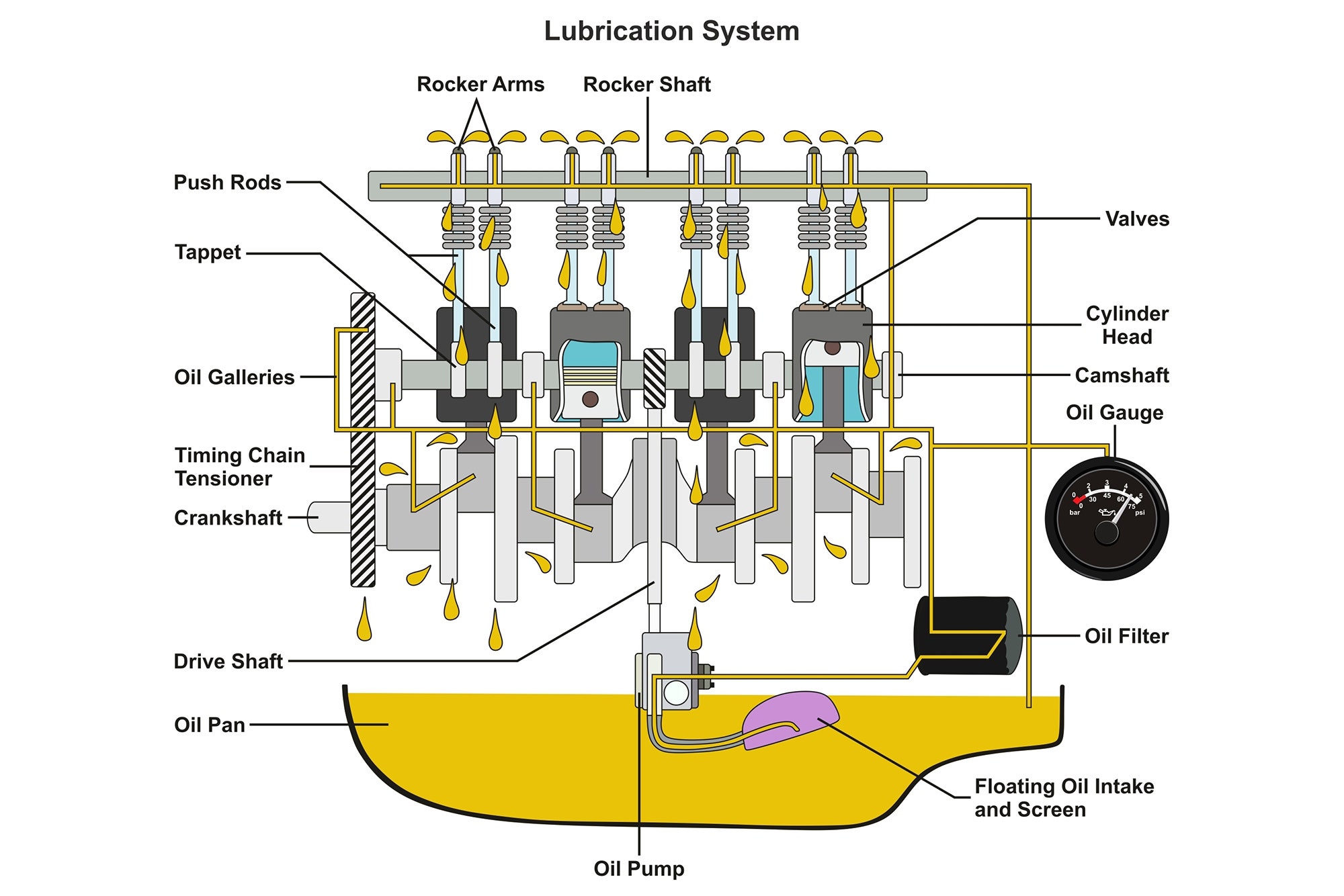
During normal operation, engine oil moves around the engine and returns to the oil pan, also called the sump. The oil pan sits at the bottom of most conventional engines and stores the oil when it is not flowing through the lubrication system. The oil pump draws oil from this reservoir and pushes it through passages that carry it to parts that need lubrication.
The oil does not travel through the engine just once. It repeats this cycle while the engine runs. The pump keeps oil moving, and gravity helps oil drain back down after it passes through many engine components.
Think of engine oil as a delivery service for lubrication. It carries a protective film to moving parts, helps remove heat, and transports some dirt and wear particles toward the filter. Most of the oil stays within the lubrication system rather than being used up like gasoline.
Source: thumbs.dreamstime.com
Oil pan
Stores the engine’s oil supply and collects oil that drains down from internal components.
Oil pump
Moves oil through the engine and helps maintain the pressure needed for lubrication.
Oil filter
Captures many harmful particles as oil passes through it. The filter does not remove every contaminant.
Oil galleries
Internal passages that carry oil to bearings, the crankshaft, the camshaft, and other lubricated parts.
Return passages
Allow oil to drain back toward the oil pan so it can circulate again.
How Engine Oil Reaches Moving Parts
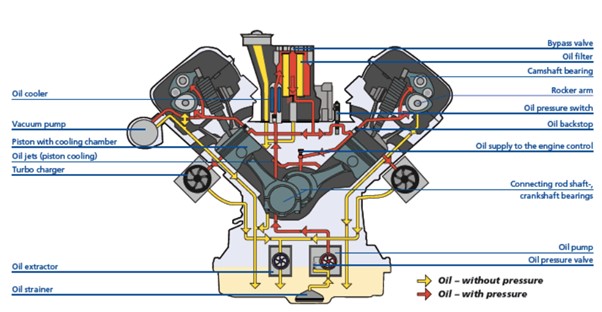
When you start the engine, the oil pump draws oil from the pan through a pickup tube and screen. The pump then sends oil through the lubrication circuit. Depending on the engine design, oil passes through the filter before reaching the main oil galleries and the parts they serve.
Pressurized oil reaches areas such as crankshaft bearings and camshaft bearings. These parts need a thin film of oil between surfaces that move against each other. The film reduces friction and helps prevent rapid wear. Some engines also send oil through special passages to cool pistons, operate variable valve timing systems, or supply turbocharger bearings.
Once oil has done its job in these areas, much of it drains back into the pan. The exact route varies by engine design, so a diagram in your vehicle’s service information can show the specific path.
Pressure
Pushes oil through the designed passages and helps supply critical components.
Gravity
Helps oil flow back down into the oil pan after it lubricates engine parts.
Does Engine Oil Get Used Up While Driving?
Engine oil is not intended to be consumed at the same rate as fuel. However, some oil can enter the combustion chamber in small amounts and burn with the fuel-air mixture. Oil can also pass through certain engine ventilation paths and be consumed during normal operation.
The amount of oil consumed varies with engine design, mileage, operating conditions, and maintenance history. High engine speed, heavy loads, extended high-speed driving, and some forms of wear can increase consumption. The vehicle maker’s guidance is the best reference for what it considers acceptable.
If your dipstick level stays within the correct range between scheduled checks, the engine may be operating normally. If the level drops repeatedly, do not assume that the change is harmless. Track the amount added and the distance driven, then have the vehicle checked if consumption is unusual or increasing.
Normal circulation
Oil repeatedly moves through the lubrication system and returns to the pan.
Oil consumption
A portion of the oil may burn or pass through engine ventilation systems, reducing the amount remaining in the sump.
Where Does Engine Oil Go If the Oil Level Keeps Dropping?
If the engine oil level keeps falling, the missing oil may be leaking outside the engine, burning inside the cylinders, or entering another system. These are different problems, and each leaves different clues. A clean driveway does not rule out oil loss because oil can collect on the engine, drip onto hot parts, or escape only while the engine is running.
Start by confirming the level correctly. Park on level ground, shut off the engine, and wait for the period specified in the owner’s manual. Some vehicles require a cold check, while others specify a warm engine followed by a waiting period. An incorrect checking method can make the reading misleading.
If the level is below the minimum mark, add the specified oil as directed by the manual and avoid overfilling. If the dipstick is dry, the oil-pressure warning is on, or the engine is making unusual knocking or grinding noises, do not keep driving to see what happens. Stop the engine and arrange professional help.
Source: fuchs.azureedge.net
External oil leak
Oil escapes through a gasket, seal, drain plug, filter, or damaged engine component.
Internal oil consumption
Oil enters the combustion chamber and burns, sometimes producing blue or blue-gray exhaust smoke.
Oil entering another system
A failed component or damaged seal may allow oil to mix with coolant or enter an intake or exhaust-related component.
Incorrect oil-level reading
The vehicle may be parked on a slope, checked too soon after shutdown, or checked using the wrong procedure.
Engine Oil Leaks Onto the Ground
An external leak is one of the easiest forms of oil loss to notice, but not every leak leaves a large puddle. Oil may form dark, wet patches under the engine or leave spots where the vehicle has been parked overnight. The color can range from amber to dark brown or black, depending on the oil’s age and condition.
Common leak points include the valve cover gasket, oil pan gasket, crankshaft seals, oil filter, drain plug, and oil cooler seals. A loose drain plug or a damaged filter seal after an oil change can also cause a leak. Oil may spread across the underside of the engine before dripping, making the true source difficult to identify.
Look for fresh, wet oil around accessible areas only when the engine is off and cool enough to inspect safely. Do not crawl beneath a vehicle supported only by a jack. A mechanic may need to clean the area and trace the leak to find its source.
Dark spots under the car
May indicate an oil leak, although other vehicle fluids can also leave stains.
Wet engine surfaces
May point to a leaking gasket, seal, filter, or other component.
Burning oil smell
Can occur when oil reaches hot exhaust parts or other hot engine surfaces.
Engine Oil Burns Inside the Engine
Oil can enter the combustion chamber and burn along with the fuel. This may happen when piston rings no longer control oil properly, cylinder walls are worn or damaged, or valve stem seals and guides allow excess oil to pass. Turbocharged engines may also consume oil if a turbocharger-related fault develops.
Blue or blue-gray exhaust smoke can be a clue, especially after startup, during acceleration, or after the engine has been idling. The timing of the smoke can help a technician narrow down the cause, but it cannot confirm a specific failed part by itself. Some vehicles consume oil without producing smoke that is easy to see.
A faulty positive crankcase ventilation system can also contribute to oil consumption. This system manages gases that escape past the piston rings and routes them back through the engine’s intake system. If a valve or passage fails, the engine may draw in more oil than intended.
If you suspect oil burning, check the oil level regularly and record how much you add. Avoid relying on exhaust smoke alone to judge severity. A mechanic may inspect the ventilation system, check for leaks, and perform tests such as a compression test or cylinder leak-down test when appropriate.
Blue or blue-gray smoke
Can indicate oil burning, but the smoke pattern and other test results matter.
Repeated low oil level
May indicate consumption even when there is no obvious puddle.
Oily intake components
Can occur in ventilation or turbocharger systems, but some oil vapor is normal in certain designs.
Can Engine Oil Go Into the Coolant or Another System?
Yes. A mechanical failure can allow engine oil to enter the cooling system, or coolant to enter the engine oil. This is not part of normal operation. Possible causes include a failed oil cooler, a damaged head gasket, or, in some engine designs, a crack in a component that separates the two fluids.
Oil in the coolant may appear as a greasy film or brown sludge in the coolant reservoir. Coolant in the engine oil can sometimes make the oil look milky or creamy. However, a light tan deposit under the oil filler cap can also form from moisture during short trips in cold weather, so that sign alone does not prove a serious failure.
If the dipstick shows a milky mixture, the coolant level is falling without a clear external leak, or the engine overheats, stop driving and seek a diagnosis. Continued operation with coolant-contaminated oil can damage bearings and other lubricated parts. Never open a hot radiator or pressurized coolant reservoir because escaping coolant can cause severe burns.
Source: thumbs.dreamstime.com
Milky oil on the dipstick
Can indicate coolant contamination and needs prompt professional assessment.
Oily coolant
May indicate an oil cooler or engine sealing problem.
Unexplained coolant loss
Can have several causes, including external leaks, internal leaks, or normal system-related losses that require diagnosis.
What If Engine Oil Gets Into the Air Intake?
Many engines route crankcase gases back into the intake system to reduce emissions. Those gases may contain some oil vapor, and a small amount of oily residue can be normal in certain designs. A failed ventilation valve, excessive blow-by, or a turbocharger-related problem can cause more oil than intended to enter the intake.
Excess oil in the intake may cause deposits, smoke, higher oil consumption, or other running problems. The exact effects depend on the engine design and the amount of oil involved. Do not assume that any oily residue means the engine is damaged, but do investigate heavy pooling or a sudden increase in consumption.
Small oil film
May be normal in some intake and crankcase ventilation systems.
Heavy oil buildup
May require inspection of the ventilation system, turbocharger, and engine condition.
How to Tell Where Your Engine Oil Is Going
The most useful first step is to establish how quickly the oil level changes. A single reading can be misleading, but several readings taken correctly can show a pattern. Use the same checking procedure each time and record the odometer reading and the amount of oil added.
Next, look for visible clues. Check the ground where you park, inspect accessible engine surfaces, and note any smoke, burning smell, warning lights, or changes in coolant level. These observations can help narrow the possible causes, but they do not replace a proper inspection.
Do not remove hot engine covers, reach near belts or fans, or touch exhaust components while the engine is running. Electric cooling fans may start unexpectedly, even after the engine has been shut off. If you cannot inspect an area safely, leave it to a qualified technician.
Source: i.ytimg.com
Step 1: Check the oil level
Follow the owner’s manual and confirm that the vehicle is on level ground.
Step 2: Look for external leaks
Check for fresh oil spots and wet areas that can be viewed safely without going under an unsupported vehicle.
Step 3: Watch for smoke or smells
Record when smoke occurs and whether there is a burning oil odor. Do not use these signs alone to diagnose a failed part.
Step 4: Monitor other fluids
Note unexplained coolant loss or unusual oil appearance and seek help if contamination is suspected.
Step 5: Arrange diagnosis
Have a mechanic inspect recurring oil loss, especially when the source is not visible.
Use an Oil Consumption Log
An oil consumption log gives you useful facts instead of guesswork. Record the date, odometer reading, dipstick level, and quantity added. Keep the car on level ground and use the same measurement method each time.
For example, suppose a vehicle travels 1,000 miles and needs one quart of oil to bring the level back to the same point on the dipstick. The observed rate is one quart per 1,000 miles under those conditions. This is a calculation, not a claim that the rate is acceptable for every engine.
Compare the result with the vehicle manufacturer’s guidance for your exact engine. If consumption rises, the engine develops smoke, or the oil-pressure warning appears, do not wait for the next scheduled oil change to investigate.
Record distance
Use the odometer to measure how far the vehicle travels between checks.
Record oil added
Measure the amount rather than estimating from an open bottle.
Keep conditions consistent
Follow the same parking, waiting, and dipstick procedure to make readings more useful.
What a Mechanic May Check
A technician may inspect common leak points, clean oily surfaces, and use a suitable leak-detection method to locate the source. Depending on the symptoms, the technician may also check crankcase ventilation, inspect the intake and turbocharger, or test the cooling system for signs of fluid crossover.
If internal oil consumption is suspected, further tests may include a compression test, cylinder leak-down test, or examination of spark plugs and other components. No single test identifies every cause, so the mechanic may combine several findings before recommending a repair.
Share your oil log and describe any warning lights, smells, smoke, or recent repairs. This information can help narrow the diagnosis and may prevent unnecessary part replacement.
Visual leak inspection
Looks for oil escaping from seals, gaskets, filters, and other components.
Engine condition tests
May help identify wear or sealing problems when internal oil burning is suspected.
Cooling system checks
Can help investigate possible oil and coolant mixing.
How Much Engine Oil Loss Is Normal?
There is no single oil-consumption rate that applies to every car. Engine design, age, mileage, driving style, operating temperature, and mechanical condition can all affect how much oil an engine uses. Some engines consume very little between oil changes, while others may need occasional top-ups.
The vehicle maker’s oil-consumption guidance is the right starting point. Some manuals describe an acceptable maximum under specified conditions, while others explain how to monitor consumption or arrange a dealer test. A manufacturer’s stated limit should not be treated as proof that every engine using that amount is healthy under every condition.
A sudden change matters more than a guess based on another vehicle. If your engine previously used almost no oil and now needs frequent top-ups, have it inspected. A new leak, a ventilation fault, or increased internal wear may explain the change.
Source: i.ytimg.com
Low or stable consumption
May be normal for the engine if the level stays within the specified range and there are no warning signs.
Gradually increasing consumption
May justify an inspection for leaks, ventilation issues, or engine wear.
Sudden oil loss
Can signal a significant leak or mechanical problem and should be treated promptly.
Does Driving Style Affect Oil Consumption?
Yes. High engine speeds, long periods under heavy load, towing, and sustained high-speed driving can increase oil use in some engines. Repeated short trips may also affect moisture buildup and engine operating conditions, although short trips do not automatically mean an engine will consume more oil.
Temperature can matter as well. Oil behaves differently when cold than when hot, and engines are designed with specific clearances and lubrication needs. Use the oil viscosity and specification recommended for your vehicle rather than choosing a thicker oil simply to hide consumption.
If your driving conditions change, check the oil more often as advised in the owner’s manual. This is especially useful before long highway trips, towing, or extended travel through hot or mountainous areas.
Heavy loads
Towing and other demanding conditions can increase oil use in some engines.
High engine speed
May increase consumption depending on engine design and condition.
Wrong oil specification
Can affect lubrication and engine operation. Follow the manufacturer’s required viscosity and performance standard.
What Happens If Engine Oil Gets Too Low?
Low engine oil can leave important parts without enough lubrication. As the oil supply falls, the pump may struggle to maintain a reliable supply under some conditions, especially during turns, braking, or acceleration if the pickup becomes uncovered. The result can be increased friction, heat, and rapid engine damage.
Low oil level and low oil pressure are related, but they are not the same thing. An engine can have a low oil level without an immediate pressure warning, and a pressure problem can occur even when the dipstick level appears correct. A failing pump, a blocked pickup, or another lubrication fault can cause low pressure.
If the red oil-pressure warning light comes on while the engine is running, pull over safely and shut off the engine as soon as it is safe to do so. Check the owner’s manual and arrange assistance. Do not continue driving simply because the engine sounds normal or the warning disappears briefly.
Source: thumbs.dreamstime.com
Bearing damage
Insufficient oil supply can damage crankshaft and connecting rod bearings.
Overheating and friction
Reduced lubrication can increase heat and wear in moving parts.
Severe engine failure
Continued operation with inadequate lubrication can cause extensive damage or engine seizure.
What to Do When the Oil Warning Light Comes On
First, identify the warning if you can do so safely. A red oil-can symbol often indicates an oil-pressure problem, while some vehicles use a separate maintenance reminder or oil-level warning. The owner’s manual explains the meaning of the specific symbol in your vehicle.
For a red oil-pressure warning while driving, move to a safe place, shut off the engine, and do not restart it just to see whether the light goes away. After the engine is off and the vehicle is safely parked, you may check the oil level using the specified procedure if it is safe to do so.
If the level is low, add the correct oil only as directed by the manual. If the warning remains, the dipstick is dry, or you hear unusual engine noises, arrange towing or professional assistance. Adding oil cannot fix every oil-pressure problem.
Stop safely
Avoid driving with an active red oil-pressure warning.
Check the level
Use the vehicle’s specified procedure and the correct oil.
Get help if needed
Arrange professional diagnosis if the warning persists or severe symptoms appear.
Common Mistakes When Checking Where Engine Oil Goes
A few common mistakes can make oil loss seem worse or less serious than it really is. A reliable check depends on using the right procedure, watching for changes over time, and understanding what each warning sign can and cannot tell you.
Do not judge the oil level from a reading taken on a steep driveway. Do not assume that a clean parking spot proves the engine has no leak. Oil can collect on an engine shield or burn off on a hot surface before it reaches the ground.
Avoid adding oil without checking the current level and the required specification. Overfilling can cause the crankshaft to churn the oil, create excess aeration, or contribute to oil entering places where it should not. If you have added too much, follow the manufacturer’s guidance or have the excess removed.
Source: i.ytimg.com
Checking on a slope
Can give a misleading dipstick reading. Park on level ground.
Ignoring small drops
A small leak can worsen, and recurring oil loss may cause damage before a large puddle appears.
Using the wrong oil
Oil viscosity and performance specifications vary. Check the owner’s manual or an approved service source.
Overfilling the engine
Can create lubrication and operating problems. Keep the level within the specified range.
Assuming dark oil means oil loss
Oil color changes during use and does not reveal how much oil remains in the engine.
Does Black Engine Oil Mean It Is Disappearing?
No. Engine oil can darken as it collects combustion by-products and other contaminants during normal use. Dark oil does not automatically mean the engine is burning oil or that the oil level is too low.
Oil color alone cannot tell you whether the oil still meets the required service interval or whether the engine is healthy. Check the level, follow the recommended oil-change schedule, and pay attention to unusual smells, visible contamination, warning lights, or changes in consumption.
If the oil looks milky throughout the dipstick sample or contains unusual debris, seek professional advice. These findings need context and may require testing rather than a color-based guess.
Dark brown or black oil
Can be normal in used engine oil.
Milky or creamy oil
May indicate moisture or coolant contamination, depending on where it appears and the engine’s operating conditions.
Metallic particles
May indicate wear or damage and should be assessed by a technician.
How to Keep Engine Oil at the Correct Level
The best way to protect your engine is to check the oil regularly, use the correct oil, and respond to changes before they become serious. Your owner’s manual sets the right checking method, oil grade, oil capacity, and service interval for your exact vehicle.
For many vehicles, a dipstick provides a quick way to check the level. Some newer vehicles use an electronic oil-level display and may require a specific temperature, parking position, or waiting period before the reading appears. Follow the procedure for your model instead of assuming every car works the same way.
If the level is between the minimum and maximum marks, it is generally within the dipstick’s specified range. If it is low, add the correct oil in small amounts and recheck it. Never assume that the engine’s total oil capacity is the amount needed for a routine top-up.
Source: mannysmechanicalrepairs.com.au
Check on schedule
Use the interval and procedure in the owner’s manual, checking more often when advised for severe driving conditions.
Use the right specification
Match the viscosity grade and performance requirements listed for the engine.
Watch for changes
Track recurring top-ups, new stains, warning lights, and unusual engine sounds.
Maintain service records
Keep oil-change receipts and consumption notes to help identify a developing problem.
How to Add Engine Oil Safely
Park on level ground, shut off the engine, and follow the cooling and waiting instructions in the owner’s manual. Confirm the correct oil specification before opening a container. Keep dirt away from the filler opening so debris does not enter the engine.
Remove the oil filler cap and add a small amount of the correct oil. Wait as directed, then check the dipstick or electronic display again. Repeat only as needed to bring the level into the permitted range.
Replace the filler cap securely and make sure the dipstick is seated correctly if your vehicle uses one. Clean up any spilled oil. If the engine has a major leak, an active pressure warning, or unusual mechanical noise, adding oil is not a substitute for diagnosis.
Read the manual
Confirm the required oil type, capacity information, and level-checking procedure.
Add oil gradually
Small additions reduce the risk of exceeding the maximum level.
Recheck the level
Use the specified procedure and confirm that the reading is within the allowed range.
What to Do With Used Engine Oil
If you change your own oil, collect the used oil in a clean, leak-proof container. Do not pour it onto the ground, into a storm drain, into household trash where local rules prohibit it, or down a sink. Used oil can contaminate soil and water.
Many auto parts stores, service centers, and local recycling programs accept used motor oil, but acceptance rules vary by location. Call ahead to confirm the quantity, container, and filter requirements. Keep used oil separate from coolant, gasoline, solvents, and other fluids because mixing can make recycling harder or prevent acceptance.
The same care applies when dealing with a leak. Use absorbent material to contain a small spill if it is safe to do so, and follow local disposal guidance. For a large spill or a spill near a drain, contact the appropriate local environmental or emergency service.
Use a sealed container
Store used oil securely until you can take it to an accepted collection point.
Keep fluids separate
Do not mix used oil with coolant, fuel, or solvents.
Follow local rules
Check the recycling site’s requirements before bringing used oil or filters.
Frequently Asked Questions
Q
Where does engine oil go if there is no leak?
If you cannot find an external leak, the engine may be consuming oil internally. Oil can pass the piston rings or valve seals, enter the intake through the crankcase ventilation system, or escape through a turbocharger-related fault. Some oil consumption may be normal for a particular engine, but repeated or increasing loss deserves investigation.
Track the oil level and the amount added over a known distance. If the level keeps falling, ask a mechanic to inspect the engine even if there is no visible smoke or puddle.
Q
Does engine oil go into the combustion chamber?
A small amount of oil may enter the combustion chamber in some engines during normal operation. The piston rings and valve seals help control oil movement, while the crankcase ventilation system manages gases and vapor. If worn rings, damaged seals, or another fault allows too much oil into the chamber, the oil may burn and reduce the sump level.
Blue or blue-gray exhaust smoke can be a clue, but not every oil-burning problem produces obvious smoke. A technician may need to test the engine to identify the cause.
Q
Why does my car lose oil but leave no puddle?
Oil can burn inside the engine, collect on underbody panels, leak only while the engine is running, or reach hot surfaces where it burns off. Small leaks may also leave a wet film without creating a noticeable spot on the ground.
Check the level consistently, look for safe-to-view signs of wet oil, and note any burning smell or exhaust smoke. Recurring loss should be checked by a mechanic.
Q
Can I keep driving if the engine oil level is low?
It depends on how low the level is and whether warning signs are present. If the level is below the minimum mark, add the correct oil according to the owner’s manual before driving when it is safe to do so. Do not overfill the engine.
If the red oil-pressure warning appears, the dipstick is dry, or the engine makes unusual knocking noises, shut off the engine as soon as it is safe and arrange assistance. Continuing to drive with inadequate lubrication can cause severe damage.
Q
How often should I check my engine oil?
Follow the checking schedule in your owner’s manual. Some vehicles need more frequent checks because of their design, age, driving conditions, or known oil consumption. Checking before a long trip and monitoring the level when consumption is suspected can also help.
Use the same level-checking method each time. If you need to add oil often, record the distance traveled and the quantity added, then compare the rate with the manufacturer’s guidance.
Q
Can engine oil mix with coolant?
Yes, a failed oil cooler, damaged head gasket, or another internal fault can allow engine oil and coolant to mix. Oil may appear as a greasy film in the coolant reservoir, while coolant contamination can make engine oil look milky.
These signs are not always conclusive on their own, but suspected fluid mixing needs prompt assessment. Avoid driving if the engine overheats or the oil appears heavily contaminated, and never open a hot pressurized cooling system.
Q
Does dark engine oil mean the engine is losing oil?
No. Used engine oil often darkens as it collects combustion by-products and contaminants. Its color does not tell you how much oil remains in the engine or prove that oil is burning.
Check the dipstick or electronic level display and follow the specified maintenance schedule. Investigate unusual contamination, metal particles, repeated low levels, or other warning signs rather than judging oil loss by color alone.
✦ Wrapping Up
Conclusion
Engine oil normally travels from the oil pan through the pump, filter, and internal oil passages before draining back to the pan. It lubricates moving parts, helps carry away heat, and supports the engine’s normal operation. A small amount may be consumed, but a repeated drop in the oil level should not be ignored.
When engine oil seems to disappear, look for the main possibilities: an external leak, internal oil burning, oil entering another system, or an incorrect level reading. Use the owner’s manual to check the level correctly, monitor how much oil the engine uses, and watch for smoke, stains, burning smells, or warning lights.
Safety comes first. Stop the engine if a red oil-pressure warning appears while driving, and do not continue running an engine that may lack proper lubrication. If the oil level repeatedly falls or contamination is suspected, arrange a professional inspection before a small problem becomes a major repair.
💡 Key Takeaway
Check your engine oil on level ground using the method in your owner’s manual, record the level and any oil added, and investigate recurring loss. If the red oil-pressure warning appears, stop safely and shut off the engine.
If you typed “what motor oil is the thickest” into your browser, you’re probably staring at a halfworn engine, a gear case weeping, or a diesel truck that runs…
You’ve probably stood in the motor oil aisle, staring at forty different bottles, wondering what brand of synthetic motor oil is best for your specific car.…