Best Diesel Engine Oil Additive: Top 5 Picks
XADO 1 Stage Maximum is my leading heavy-duty pick, while Prolube offers flexible sizes for everyday diesel engine care.
Your diesel truck works hard. You may drive long miles on the highway, haul heavy loads, or spend hours in stop-and-go traffic. Over time, engine noise, rough operation, and high mileage can make you think about adding an oil treatment. That is where the best diesel engine oil additive may seem useful. But not every additive suits every engine. Some products focus on general oil treatment, while others target heavy-duty engines. I compared five options by their stated purpose, size, intended use, and practical limits. Here is what I would consider before adding anything to my diesel engine oil.
🏆 Top 3 Products

XADO 1 Stage Maximum for Diesel Trucks
Its diesel truck focus and stated support for oil systems up to 45 quarts make it the most specialized option here.

Prolube Oil Treatment 1 Gallon
The large container suits owners who need more treatment for repeat maintenance or larger equipment.
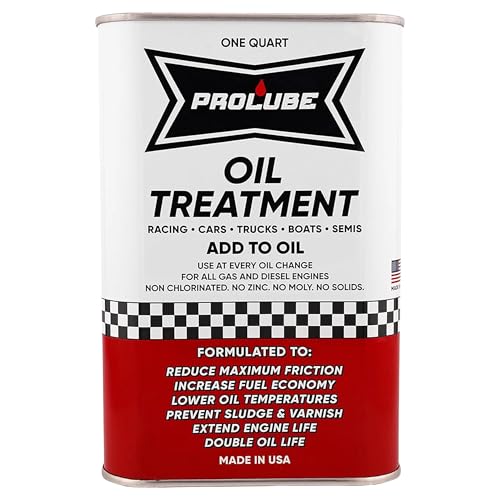
Prolube Oil Treatment 1 Quart
The quart size gives buyers a practical container for routine use when the product fits their engine and oil capacity.
Prolube Oil Treatment 1 Quart Review
Prolube Oil Treatment in the 1-quart size is a general engine oil treatment made for both gasoline and diesel engines. Its product description highlights reduced wear, noise, and vibration. It also lists possible benefits for fuel economy and horsepower. The stated uses include engines, transmissions, and differentials. This wide range of uses makes it an option for owners who maintain more than one type of vehicle or machine.
I like the practical size because it offers more volume than a small trial bottle without requiring the space of a gallon container. Still, I would not assume that every diesel engine needs an extra oil treatment. Modern diesel oils already contain carefully balanced additives. Before using this product, I would check the label, oil capacity, engine manual, and compatibility details. Its claims should be treated as product claims rather than guaranteed results.
✅ Pros
- ✔ Designed for both gasoline and diesel engines.
- ✔ Quart size offers a useful amount for many maintenance needs.
- ✔ The product description targets engine wear.
- ✔ Claims to help reduce engine noise and vibration.
- ✔ Lists possible fuel economy and horsepower benefits.
- ✔ Also lists transmission and differential applications.
- ✔ May suit owners who maintain several compatible vehicles.
- ✔ A larger bottle can be more practical than repeated small purchases.
⚠️ Cons
- ✖ The product description does not prove a specific fuel economy gain.
- ✖ A quart may be too much for a small engine that needs only a limited dose.
- ✖ Compatibility with every diesel oil and engine is not established.
- ✖ Adding extra treatment may change the oil formulation.
- ✖ It does not replace regular oil and filter changes.
- ✖ Buyers must check the correct dose before pouring it into an engine.
My Recommendation
I would consider this Prolube quart bottle for a diesel owner who wants a general-purpose oil treatment and prefers a middle-sized container. It is a practical option when the maker confirms that the product suits the engine and its current oil. I would not buy it just to solve a serious engine noise, low oil pressure, or poor performance issue. Those problems need proper checks first. For someone comparing the best diesel engine oil additive options, this bottle offers a balance between container size and flexibility. Its broad application claims are useful, but the engine manual should guide the final choice.
| Best For | Why |
|---|---|
| Diesel Pickup Owners | The quart size may suit routine maintenance when the dose matches the engine. |
| Multi-Vehicle Owners | The product lists both gasoline and diesel applications. |
| General Oil Treatment Buyers | It targets wear, noise, and vibration rather than one narrow engine issue. |
Prolube Oil Treatment 1 Gallon Review
The Prolube 1-gallon oil treatment is the largest container in this product group. It shares the same broad product positioning as the smaller Prolube bottles. The maker lists gasoline and diesel engine use, along with possible benefits for wear, noise, vibration, fuel economy, and horsepower. Transmission and differential use also appear in its product description. The large format may interest people who maintain several compatible machines.
For a busy repair shop, farm, or fleet, buying a larger container may seem convenient. It can reduce the need to order small bottles again and again. However, container size alone does not make an additive better. I would first confirm the recommended dose, storage needs, shelf life, and compatibility with each engine. A gallon can be wasteful if the product does not suit the equipment or if the correct dose is very small.
✅ Pros
- ✔ Large one-gallon container for repeat use.
- ✔ Designed for both gasoline and diesel engine applications.
- ✔ Product claims focus on reducing wear.
- ✔ Targets noise and vibration concerns.
- ✔ Lists potential fuel economy benefits.
- ✔ Claims to support horsepower.
- ✔ Includes listed uses for transmissions and differentials.
- ✔ May be convenient for users who maintain several compatible vehicles.
- ✔ Can reduce the frequency of buying smaller containers.
⚠️ Cons
- ✖ The large size may be excessive for a single diesel vehicle.
- ✖ Storage space is needed after opening.
- ✖ The correct dose must be checked for each application.
- ✖ Performance claims need independent proof before buyers rely on them.
- ✖ It may not suit engines that require a specific oil formulation.
- ✖ A large purchase creates more waste if compatibility is poor.
My Recommendation
I would place the gallon bottle on the shortlist for a farm operator, small fleet manager, or workshop that has several compatible vehicles. Its main advantage is the large supply, not a proven increase in engine power. Before buying, I would compare the cost per recommended dose with the smaller sizes. I would also confirm that the product works with the exact diesel engine oils in use. For one personal pickup, the quart bottle may be easier to manage. For repeated use across suitable equipment, this larger Prolube option may be more convenient.
| Best For | Why |
|---|---|
| Small Fleet Operators | A large container may help manage repeat treatment needs across compatible vehicles. |
| Farm Equipment Owners | It may offer a convenient supply for multiple machines if their manuals allow its use. |
| Busy Workshops | The gallon format may reduce repeated purchases of small bottles. |
Prolube Oil Treatment 6 oz Review

The Prolube 6-ounce bottle is the smallest option in this review. It carries the same general oil treatment positioning as the other Prolube sizes. The product is listed for gasoline and diesel engines and claims to help reduce wear, noise, and vibration. Its description also mentions fuel economy, horsepower, transmissions, and differentials. The small package may appeal to buyers who do not want to keep a large bottle in their garage.
A small bottle can make storage and handling easier. It may also be a sensible way to consider a product before purchasing a larger container, provided the label gives a suitable dose for the intended engine. But I would never treat a small package as proof that the product works better or is safer. The dose matters more than the bottle size. Diesel owners should check whether the amount is enough for their sump capacity and follow the maker’s instructions.
✅ Pros
- ✔ Compact 6-ounce container.
- ✔ Easy to store in a garage or maintenance cabinet.
- ✔ Designed for gasoline and diesel engines.
- ✔ Targets engine wear in its product claims.
- ✔ Claims to reduce noise and vibration.
- ✔ Lists possible fuel economy benefits.
- ✔ May appeal to owners who prefer small packages.
- ✔ Also lists transmission and differential applications.
- ✔ Requires less storage space than the quart and gallon options.
⚠️ Cons
- ✖ The small quantity may not cover larger diesel oil systems.
- ✖ The dose must be checked before use.
- ✖ It may offer less value for users who need repeat treatments.
- ✖ The listed benefits are not guaranteed results.
- ✖ It does not replace engine diagnosis or scheduled servicing.
- ✖ The small size may not suit fleet or workshop use.
My Recommendation
I would consider the 6-ounce Prolube bottle for an owner who needs a compact package and has already confirmed the correct dose. It may suit someone who wants to avoid storing a large container. Still, I would compare its cost per usable dose with the quart size. Some diesel engines hold a large volume of oil, so a small bottle may not provide enough treatment for the intended application. If you are searching for the best diesel engine oil additive for a heavy-duty truck, I would check the engine capacity and product instructions before choosing this size.
| Best For | Why |
|---|---|
| Compact Storage Needs | The small bottle takes up less room in a garage or tool cabinet. |
| Small Compatible Engines | The quantity may suit an application with a low approved treatment dose. |
| First-Time Buyers | A small package can limit leftover product when the maker’s dose allows it. |
Prolube Oil Treatment 16 oz Review

The Prolube 16-ounce bottle sits between the small 6-ounce package and the larger quart size. It is a general oil treatment for gasoline and diesel engines. The listed product benefits include reduced wear, noise, and vibration, along with possible gains in fuel economy and horsepower. It also lists use in transmissions and differentials. This makes it a flexible option on paper for people who maintain more than one type of vehicle.
I see the 16-ounce format as a middle-ground choice. It offers more product than the smallest bottle but does not require the storage space of a gallon. This can be useful for a vehicle owner who wants a manageable container. Still, the correct amount depends on the product instructions and the engine’s oil capacity. I would not pour in the full bottle without checking the label. Too much extra treatment can upset the oil level or change the oil’s intended balance.
✅ Pros
- ✔ Convenient 16-ounce container.
- ✔ Offers more volume than the 6-ounce version.
- ✔ Takes up less space than a gallon container.
- ✔ Listed for both diesel and gasoline engines.
- ✔ Targets wear reduction in its product claims.
- ✔ Claims to help reduce noise and vibration.
- ✔ Lists possible fuel economy and horsepower benefits.
- ✔ Includes listed transmission and differential applications.
- ✔ May suit owners who prefer a middle-sized package.
⚠️ Cons
- ✖ The amount may not match every diesel engine’s needs.
- ✖ The recommended treatment rate must be confirmed.
- ✖ No specific fuel economy result is guaranteed.
- ✖ It may be less practical for repeated fleet use than the gallon bottle.
- ✖ It may be more than some small engines need.
- ✖ It cannot correct mechanical wear or internal engine damage.
My Recommendation
I would choose the 16-ounce Prolube option when the smaller package is not enough for my planned use but the quart or gallon seems excessive. It offers a useful middle size for personal vehicle owners who maintain compatible equipment. I would still compare the exact treatment rate and cost per dose before buying. This is not automatically the best diesel engine oil additive for every truck. Its value depends on the engine, oil type, and maker’s instructions. If your diesel vehicle has an unusual oil requirement, use the approved engine oil first and ask a qualified technician before adding another product.
| Best For | Why |
|---|---|
| Personal Diesel Vehicles | The middle-sized package may be easier to manage than a large bulk container. |
| Occasional Maintenance | It offers more product than a small bottle without requiring a gallon. |
| Multi-Purpose Treatment Buyers | The product description lists engine, transmission, and differential applications. |
XADO 1 Stage Maximum Diesel Review
XADO 1 Stage Maximum is the most diesel-focused product in this group. Its listing targets diesel trucks and heavy machinery, including tractor-trailers and semi trucks. The package contains 950 ml of product, and the stated oil capacity coverage is up to 45 quarts. That focus makes it stand out from the general-purpose Prolube options. Buyers who maintain large diesel vehicles may find this specific application more relevant than a treatment aimed at both gasoline and diesel engines.
The product name and marketing describe a specialized engine treatment. However, I would not assume that it can repair every worn engine or restore lost compression. A treatment cannot replace a proper mechanical repair. I would check the full product instructions and engine maker’s rules before using it. This matters even more with modern diesel engines that use exhaust treatment systems, turbochargers, and specific oil standards. Its heavy-duty focus is appealing, but compatibility must come first.
✅ Pros
- ✔ Specifically marketed for diesel trucks.
- ✔ Targets heavy-duty machinery and commercial vehicles.
- ✔ Lists tractor-trailer and semi-truck applications.
- ✔ Provides a stated oil capacity limit of up to 45 quarts.
- ✔ Contains 950 ml of treatment.
- ✔ Offers a more specialized diesel focus than the general-purpose options.
- ✔ May interest owners of heavy-duty equipment.
- ✔ Its stated capacity helps buyers assess whether the package suits their oil system.
- ✔ A useful option to compare when researching diesel-specific oil treatments.
⚠️ Cons
- ✖ The heavy-duty focus may not make it the right choice for every passenger diesel vehicle.
- ✖ The stated capacity limit must not be treated as a universal dose.
- ✖ The product’s repair and performance claims need careful review.
- ✖ Compatibility with a specific engine oil standard must be confirmed.
- ✖ It does not replace correct diesel engine oil.
- ✖ It cannot fix failed bearings, damaged pistons, or other serious mechanical faults.
- ✖ The treatment may not be suitable for engines whose makers prohibit aftermarket oil additives.
My Recommendation
XADO 1 Stage Maximum is my first choice to investigate for a heavy-duty diesel truck owner among these five products. Its diesel truck positioning and stated coverage of oil systems up to 45 quarts make it the most specialized option in this group. I would give it the strongest consideration for compatible commercial trucks, tractor-trailers, and heavy machinery. However, I would still read the complete instructions and confirm approval for the engine before use. The best diesel engine oil additive is not simply the one with the strongest claims. It is the one that suits the engine without interfering with its required oil or emissions system.
| Best For | Why |
|---|---|
| Heavy-Duty Diesel Trucks | The product is specifically marketed for diesel truck applications. |
| Semi-Truck Owners | Its listing includes tractor-trailer and semi-truck use. |
| Large Oil Systems | The stated coverage reaches oil capacities up to 45 quarts. |
Final Verdict: Which Should You Buy?
After comparing these five products, XADO 1 Stage Maximum is my leading pick for compatible heavy-duty diesel trucks because of its diesel-specific focus and stated capacity coverage. For general-purpose use, Prolube offers useful size choices, from 6 ounces to a gallon. I would select the size based on the correct dose, not just the amount in the bottle.
The best diesel engine oil additive should match your engine and oil requirements. Check compatibility, follow the label, and keep up with regular service. An additive is optional, not a substitute for quality diesel oil or proper repairs.
FAQs Of best diesel engine oil additive
Q What is the best diesel engine oil additive?
Q Do diesel engine oil additives really work?
Q Can I use an oil additive in a modern diesel engine?
Q Will diesel engine oil additives improve fuel economy?
Q Can an oil additive repair a noisy diesel engine?