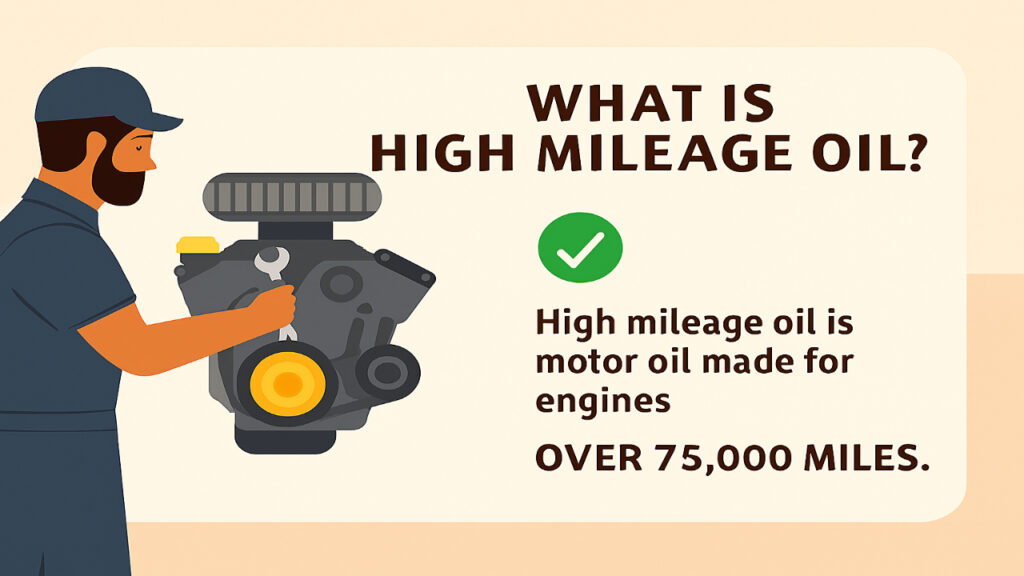
High mileage engine oil is motor oil formulated for older engines, often with 75,000 miles or more, to help reduce wear, manage oil leaks, and protect aging engine parts.
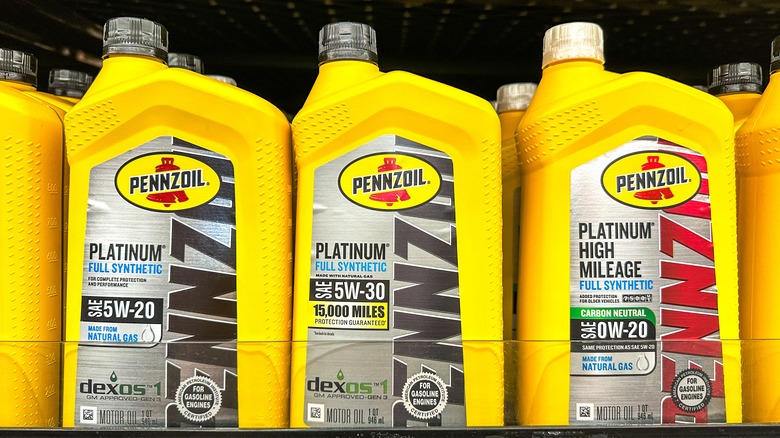
If you drive a car in the United States, you may see high mileage oil on the shelf at an auto parts store, Walmart, or a local service shop. It is made for engines that have covered many miles and may show signs of age. Many formulas contain additives designed to help protect seals, limit deposits, and reduce wear. Some are full synthetic, while others use synthetic blends or conventional base oils.
The name can cause confusion. High mileage oil does not mean oil for a car that must travel long distances each day. It refers to the distance an engine has already traveled. A family sedan with 110,000 miles, a pickup truck used for work, or an older SUV may benefit from this type of oil if its needs match the formula. However, mileage alone does not tell you which oil your engine requires.
The safest choice starts with your owner’s manual. Check the required viscosity, such as SAE 5W-30, and the oil performance standards listed by the vehicle maker. Then consider the engine‘s age, oil use, leak history, and maintenance record. High mileage oil can support an aging engine, but it cannot repair worn bearings, damaged piston rings, or a failed gasket.
Source: carobjective.com
What Is High Mileage Engine Oil?
High mileage engine oil is motor oil designed with the needs of older or heavily used engines in mind. Its base oil may be conventional, synthetic blend, or full synthetic. The formula may also contain a tailored additive package intended to support seal condition, control sludge, limit deposits, and protect moving parts.
An engine faces repeated heat cycles, friction, pressure, and chemical changes as it runs. Over time, seals and gaskets can age, deposits can build up, and clearances between moving parts can change. High mileage oil aims to support these aging components while still doing the basic work of any engine oil: lubricating parts, helping carry away heat, suspending contaminants, and protecting metal surfaces.
The exact formula varies by brand and product. One high mileage oil may emphasize seal conditioning, while another may focus on wear protection or cleaning performance. The label can tell you what the manufacturer claims the formula is designed to do, but it does not prove that every older engine will experience the same result.
Source: mechanicinsider.com
Seal conditioning
Some formulas use additives intended to help certain aging elastomer seals retain flexibility. This may reduce minor seepage in suitable engines, but it cannot restore a torn seal or repair a damaged gasket.
Wear protection
Anti-wear additives help protect engine surfaces under operating conditions. Their effectiveness depends on the full oil formula and whether it meets the required performance specification.
Deposit control
Detergents and dispersants help control deposits and keep contaminants suspended so the oil filter and normal service process can remove them.
Oil consumption support
Some formulas may help reduce oil use in certain older engines, but results vary. Excessive consumption needs diagnosis rather than repeated oil changes alone.
What Does High Mileage Mean?
Many high mileage motor oils are marketed for vehicles with 75,000 miles or more on the odometer. This is a common product guideline, not a universal engineering threshold. An engine does not suddenly become old or worn when its mileage reaches that number.
A car with 130,000 highway miles and regular oil changes may be in better shape than a car with 65,000 miles that has suffered long oil change gaps, repeated overheating, or poor maintenance. Driving conditions and service history matter as much as the number on the dashboard.
Use mileage as a clue
Consider high mileage oil when the vehicle has covered many miles or begins to show age-related oil seepage or consumption.
Check engine condition
Look at service records, oil level trends, leaks, engine noises, and the maintenance schedule before deciding to change formulas.
How Does High Mileage Engine Oil Work?
High mileage oil works through the same basic lubrication process as other engine oils. An oil pump circulates it through the engine, creating a protective film between moving surfaces. That film helps reduce direct metal-to-metal contact while the oil also carries heat and contaminants away from critical areas.
The differences lie mainly in the base oil and additive package. The base oil provides the main lubricating fluid, while additives help control oxidation, reduce wear, clean surfaces, limit foam, and maintain performance across temperature changes. Some high mileage formulas also include seal conditioners intended for aging seals.
As rubber or other elastomer seals age, heat and chemical exposure can change their flexibility. A seal conditioner may help a compatible seal perform better, but it cannot replace missing material or restore a seal that has cracked, split, or lost its shape. A leak from a loose filter, damaged oil pan, or failed gasket still needs a mechanical fix.
Oil viscosity also matters. Viscosity describes how easily oil flows at a given temperature. The first number in a multigrade grade, followed by W, relates to cold-temperature performance; the second number describes viscosity at operating temperature under specified test conditions. Choosing the correct grade helps ensure the oil can circulate and protect the engine as designed.
Source: carpassionate.com
Base oils
Conventional, synthetic blend, and full synthetic oils use different base oil combinations. High mileage products are available in several types, so the label should identify the formulation.
Detergents and dispersants
These additives help limit deposits and keep some contaminants suspended in the oil until normal filtration and oil replacement remove them.
Antioxidants
Antioxidants help slow oil breakdown caused by heat and oxygen. The level of protection depends on the formula and operating conditions.
Viscosity modifiers
Some multigrade oils use polymers to help manage viscosity across temperatures. The finished oil must still meet the engine maker’s required grade and performance standards.
Can High Mileage Oil Stop an Engine Leak?
High mileage oil may reduce minor seepage from certain aging seals, but it cannot be expected to stop every leak. The result depends on the seal material, the type of damage, the oil formula, and the source of the leak.
If you notice fresh oil under your parked car, first identify where it comes from. Oil around a filter or drain plug may point to a loose fitting or damaged sealing washer. Oil near a valve cover may come from a gasket, while a leak near the crankshaft can require a more involved repair.
Do not treat a lower oil level as proof that the engine needs high mileage oil. Check the level using the method in your owner’s manual and monitor how quickly it drops. A sudden change, a large puddle, an oil pressure warning, or visible smoke calls for prompt attention.
Minor seepage
A compatible high mileage formula may help with some minor seal-related seepage. Monitor the area and oil level to see whether the condition changes.
Active leaks
Drips, spreading oil spots, or oil loss that requires frequent top-ups need inspection. Oil additives are not a substitute for repairing a damaged component.
Low oil pressure
If the oil pressure warning appears while driving, pull over safely and shut off the engine as soon as practical. Follow the vehicle manual and arrange service rather than continuing to drive.
What Are the Benefits of High Mileage Engine Oil?
The main benefit of high mileage engine oil is that it offers a formula aimed at common concerns in older engines. Depending on the product and engine condition, it may help with seal-related seepage, oil consumption, deposits, and wear protection. It can also make maintenance simpler when a driver wants an oil designed for a vehicle with substantial mileage.
These benefits are not guaranteed. A healthy older engine may show no clear improvement after switching from a suitable regular oil. A badly worn engine may continue to consume oil or leak even when the owner uses a high mileage formula. The most useful approach is to match the oil to the vehicle and measure actual changes rather than rely on the label alone.
Source: mechanicinsider.com
Support for aging seals
Seal-conditioning additives may help some seals remain flexible and may reduce mild seepage. They cannot repair severe seal damage.
Protection under normal use
A high mileage oil that meets the correct specifications can provide lubrication and wear protection for everyday driving, commuting, and road trips.
Control of deposits
The detergent and dispersant system can help manage deposits and contaminants. This benefit depends on the oil’s actual formulation and the engine’s condition.
Potentially lower oil use
Some engines may consume less oil after a change in formula or viscosity, but the cause of consumption should still be checked if the loss is significant.
Does High Mileage Oil Improve Engine Life?
It can support engine life when the product meets the vehicle’s requirements and the owner follows the proper service schedule. Lubrication, deposit control, and wear protection all matter over the life of an engine. However, there is no universal mileage extension that can be promised for every vehicle.
The strongest foundation for a long engine life remains correct oil, regular oil and filter changes, proper coolant service, prompt attention to overheating, and repairs when faults arise. High mileage oil is one maintenance option, not a substitute for those habits.
What it can do
Provide suitable lubrication, help control deposits, and offer formulation features aimed at common aging-engine concerns.
What it cannot promise
It cannot guarantee a specific number of extra miles, restore worn metal parts, or prevent every future engine failure.
High Mileage Oil vs. Regular Engine Oil
High mileage oil and regular engine oil share the same basic purpose: to lubricate, cool, clean, and protect engine parts. Both types can be conventional, synthetic blend, or full synthetic. The main distinction is that high mileage formulas are marketed with additive packages aimed at concerns that may appear as an engine ages.
Regular oil is not automatically inferior for an older car. If it meets the vehicle manufacturer’s viscosity and performance requirements, it may provide all the protection a well-maintained engine needs. A high mileage formula may offer extra features that suit a particular engine, but the product label alone does not prove better performance in every situation.
Compare the complete specifications, not just the words on the bottle. A suitable regular full synthetic oil that meets the exact manufacturer requirements may be a better choice than a high mileage oil with the wrong viscosity or an unsuitable specification.
Source: www.slashgear.com
Regular engine oil
A broad category of oils intended for normal engine lubrication. It can be suitable for high-mileage vehicles when it meets all required specifications.
High mileage engine oil
A formula marketed for older or heavily used engines, often with seal conditioners and an additive balance intended to support age-related needs.
Full synthetic high mileage oil
Combines a high mileage formulation with a full synthetic base oil system. Check the viscosity and approvals just as you would with any other oil.
Comparison Table: High Mileage Oil vs. Regular Oil
Use this table to compare the two types. It describes common product differences rather than a guarantee that every brand follows the same formula.
Intended audience
High mileage oil targets older or high-mileage engines. Regular oil serves a wider range of engines and may also be suitable for older vehicles.
Seal conditioners
High mileage products often include them. Regular oils may or may not contain similar ingredients.
Wear protection
Both types can provide wear protection when correctly formulated and approved for the engine.
Viscosity choices
Both types come in different grades. The owner’s manual determines which grades are acceptable.
Price
High mileage oil may cost more than some regular oils, but pricing varies by brand, viscosity, container size, and base oil type.
Best reason to choose
Choose high mileage oil when its features suit the engine’s condition and it meets the required specifications, not simply because the odometer is high.
When Should You Start Using High Mileage Engine Oil?
You can consider high mileage oil when your car approaches the mileage range stated on the product label, often around 75,000 miles, or when an older engine develops concerns that the formula is designed to address. There is no need to switch solely because the odometer reaches a particular number if the current oil is working well and meets the manufacturer’s requirements.
The engine’s history is more useful than mileage alone. A car that has had timely oil changes and no oil leaks may have little need for a high mileage formula. Another vehicle with fewer miles but frequent short trips, harsh use, or a history of poor maintenance may need closer inspection before the owner chooses an oil.
Before switching, read the owner’s manual and the oil container. Confirm the viscosity grade, performance category, and any manufacturer-specific approvals. Some vehicles have special needs, including turbocharged engines, engines with particulate filters, or models that require low-viscosity oil for efficiency.
Source: www.autoevolution.com
Around 75,000 miles
This is a common marketing threshold, not a rule that applies to every engine. Review the product label and vehicle manual before switching.
Minor seepage or oil use
Consider a suitable high mileage formula if the engine has minor age-related symptoms, while checking for leaks and tracking oil consumption.
A well-maintained older car
Continue using an oil that meets the manufacturer’s requirements if the engine runs well and there is no clear reason to change formulas.
A recently purchased used car
Check service records, the current oil grade, and the engine condition. If the history is unknown, begin with the manual and a careful inspection rather than guessing.
Can You Use High Mileage Oil Before 75,000 Miles?
Sometimes, yes. A high mileage oil may be suitable below 75,000 miles if it meets the vehicle’s required specifications and the product maker allows that use. However, there is usually no reason to switch early simply to gain a label-based benefit.
If an engine has a small leak or consumes oil before reaching that mileage, find the cause first. Oil choice may help in some cases, but an early leak can also result from an installation issue, damaged gasket, or another mechanical problem.
Confirm compatibility
Check the owner’s manual and the full product specifications before using high mileage oil in a lower-mileage engine.
Avoid unnecessary changes
If the current oil meets requirements and the engine has no age-related concerns, a special high mileage formula may offer little practical benefit.
How to Choose the Right High Mileage Engine Oil
The right high mileage oil is the one that meets your engine’s specifications and suits its current condition. Do not start by choosing the thickest oil or the product with the boldest claims. Start with the vehicle’s manual, then compare viscosity, performance standards, base oil type, and any manufacturer approvals.
For a driver in the United States, a typical oil label may show a grade such as SAE 0W-20, 5W-20, 5W-30, or 10W-30. These grades are not interchangeable in every engine. A thicker oil may not flow as intended during a cold start, while an oil that is too thin for an engine’s requirements may not provide the intended protection under operating conditions.
Look for the API service category and any required ILSAC or automaker specification listed in the manual. The American Petroleum Institute’s service categories identify performance requirements for engine oils. Newer categories may offer backward compatibility for many older gasoline engines, but that does not override a vehicle maker’s specific requirements or special restrictions.
Source: www.autoevolution.com
Viscosity grade
Match the grade listed in the owner’s manual. Use an alternative only if the manufacturer explicitly permits it for the vehicle and conditions.
Performance category
Check the API and any other required standard shown in the manual. Do not assume all oils labeled high mileage meet the same specifications.
Base oil type
Choose conventional, synthetic blend, or full synthetic based on the vehicle requirements, service conditions, and maintenance plan.
Manufacturer approval
Some engines require a specific automaker approval. Confirm it on the oil label or product data sheet when applicable.
Driving conditions
Frequent short trips, towing, heavy loads, extreme temperatures, and stop-and-go driving may affect maintenance needs. Follow the manual’s severe-service guidance.
Is Thicker Oil Better for an Old Engine?
Not always. A common belief is that an old engine needs thicker oil because its parts have worn down. In some engines, a manufacturer-approved alternative viscosity may be allowed under certain conditions, but increasing viscosity without guidance can create problems.
Modern engines may rely on carefully controlled oil flow through narrow passages, variable valve timing systems, turbochargers, or hydraulic components. Using the wrong grade can affect cold-start lubrication and system operation. Do not switch from 5W-20 to 10W-40, for example, unless the vehicle maker permits that grade for your exact engine and conditions.
Follow the manual
Use the recommended grade or an explicitly approved alternative.
Diagnose oil loss
A thicker oil is not a dependable repair for a leak, worn piston rings, or low oil pressure.
Should You Choose Synthetic High Mileage Oil?
Full synthetic high mileage oil may be a useful choice when it meets the engine’s specifications and suits your budget. Synthetic base oils can offer favorable performance across a range of temperatures and may support resistance to oxidation, depending on the complete formulation.
Still, the word synthetic does not make every product identical. A suitable conventional or synthetic blend oil can also be appropriate when the manufacturer permits it. Compare the specifications and service requirements rather than paying more based on the base oil label alone.
Consider full synthetic
It may suit vehicles that require synthetic oil or drivers who want a compatible formula for demanding conditions.
Consider a synthetic blend
It may provide a balance of formulation features and cost when it meets the vehicle’s requirements.
Do not assume longer intervals
A synthetic label alone does not authorize extended oil change intervals beyond the vehicle maker’s guidance.
Does High Mileage Oil Have Any Disadvantages?
High mileage oil is not automatically harmful to an engine, but it is not always necessary. If your engine is healthy and the regular oil already meets every requirement, switching may offer little noticeable benefit. You may also pay more for a product whose additional features your engine does not need.
The biggest risk comes from choosing the wrong oil rather than from the high mileage label itself. A product with the wrong viscosity or missing manufacturer approval may not suit the engine. Special caution is also needed for engines with particular emissions systems, turbochargers, or manufacturer-specific lubrication requirements.
Another limitation is that high mileage oil can create false confidence. A driver may see less seepage and assume the engine is fixed, even though a damaged gasket or seal still needs attention. Oil loss can lead to serious engine damage if the level falls too low, regardless of which formula is in the crankcase.
Source: automotiveah.com
Added cost
Some high mileage formulas cost more than comparable regular oils. The price difference may not be worthwhile if the engine does not need the extra features.
No guaranteed repair
Seal conditioners cannot reliably fix cracked seals, worn bearings, damaged rings, or a failed gasket.
Wrong viscosity risk
Choosing a thicker or thinner grade without approval may affect lubrication and engine system performance.
Possible confusion about maintenance
A high mileage label does not mean you can ignore oil level checks, warning lights, leaks, or the scheduled service interval.
Can High Mileage Oil Damage an Engine?
A high mileage oil that meets the engine manufacturer’s requirements is generally intended to be used in compatible engines without causing damage simply because it is a high mileage formula. The key is compatibility, not the marketing category.
Problems can arise if the oil has an unsuitable viscosity, fails to meet a required specification, or is used in a way the vehicle maker does not permit. If your engine has a known fault or unusual oil pressure, consult a qualified mechanic before changing the lubrication strategy.
Check the specifications
Verify viscosity, performance standards, and automaker approvals before filling the engine.
Watch for new symptoms
If oil pressure warnings, unusual noises, or rapid oil loss appear after a change, stop and investigate instead of assuming the oil will solve the issue.
How to Switch to High Mileage Engine Oil
Switching to high mileage oil is usually straightforward when the product meets your engine’s requirements. You do not normally need a special engine flush or an extra treatment just because you are changing from regular oil to high mileage oil. Follow the vehicle’s standard oil and filter service procedure.
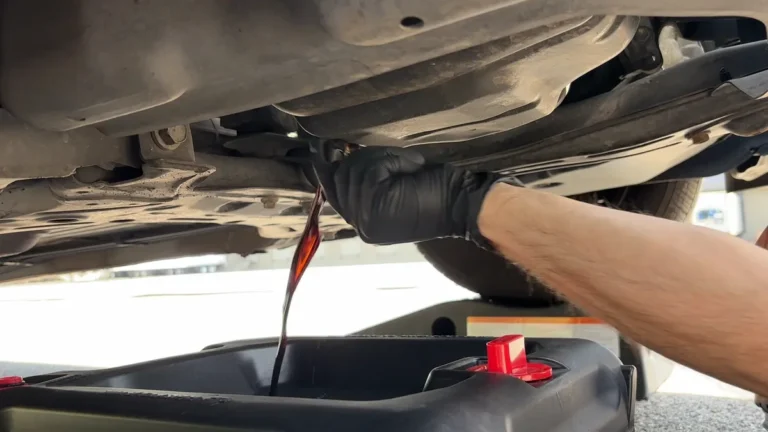
If you change the oil yourself, park on a level surface and use the vehicle manual for the correct service steps. Allow the engine to cool enough to work safely, support the vehicle with properly rated jack stands if lifting is required, and never rely on a hydraulic jack alone. Used engine oil can be hot, and working beneath an unsupported vehicle can cause severe injury.
Use the correct oil filter, add the specified amount of oil, and check the level using the method described in the manual. Start the engine only when the service is complete, check for leaks as directed, then shut it off and recheck the level after the recommended settling period. Do not overfill the crankcase.
Source: storage.googleapis.com
Step 1: Check the manual
Confirm the correct oil grade, performance category, capacity, filter type, and service procedure.
Step 2: Choose a compatible oil
Read the full label and verify that the high mileage product meets the engine’s specifications.
Step 3: Replace the oil and filter
Follow the manufacturer’s procedure. Use suitable tools and safe lifting equipment if the vehicle must be raised.
Step 4: Set the correct oil level
Add oil gradually and check the dipstick or electronic level system according to the manual.
Step 5: Check for problems
Look for leaks and warning lights. If a low oil pressure warning appears, shut the engine off as soon as it is safe and arrange diagnosis.
Step 6: Track the results
Record the mileage and oil grade. Check the level at regular intervals to see whether consumption or seepage changes.
Do You Need an Engine Flush Before Switching?
Usually, no. A routine change to a compatible high mileage oil does not automatically require an engine flush. An unnecessary flush adds cost and may disturb deposits in an engine with a neglected maintenance history.
If the engine has heavy sludge, a history of missed oil changes, or signs of internal damage, ask a qualified mechanic how to proceed. The right response depends on the condition and design of the engine, not simply on the decision to use high mileage oil.
Normal maintenance history
A standard oil and filter change is generally the appropriate way to switch formulas.
Heavy sludge or unknown history
Seek an inspection before using aggressive cleaning products or extending service intervals.
How to Tell Whether High Mileage Oil Is Helping
The best way to judge a change is to record what happens before and after the oil service. Check the oil level under similar conditions, note the mileage, and look for changes in visible seepage. This approach is more useful than relying on a vague impression that the engine sounds smoother.
Do not expect every benefit to appear immediately. A seal-conditioning formula may need time to affect a compatible seal, and some engines may show no change at all. Wear protection and deposit control are also difficult to judge by sight during ordinary driving, so do not treat a quiet engine or clean-looking oil as proof of long-term protection.
If oil consumption increases, the engine develops a new noise, or a warning light appears, investigate promptly. A change in symptoms may be linked to an existing fault, a service error, or another problem. The oil itself should not be assumed to be the cause without checking the facts.
Record the starting level
Check the oil using the same procedure each time and note the odometer reading.
Inspect for leaks
Look for fresh spots beneath the vehicle and wet areas around accessible engine seals, the filter, and the drain plug.
Track oil added
Write down how much oil you add and the distance driven. This can help a mechanic assess the rate of consumption.
Keep the service schedule
Follow the manufacturer’s oil and filter change interval even if the new formula appears to reduce oil use.
When Should You See a Mechanic?
Arrange an inspection if the engine loses oil rapidly, produces persistent blue exhaust smoke, makes new knocking noises, or develops an oil pressure warning. These signs can indicate problems that an oil change cannot repair.
If the check engine light appears, the engine overheats, or performance changes sharply, use the vehicle manual to identify the appropriate response. A flashing warning light, severe overheating, or low oil pressure may require stopping the vehicle rather than continuing to drive.
Urgent signs
Low oil pressure warnings, loud knocking, severe oil loss, or overheating call for prompt action. Shut the engine off when safe and seek professional help.
Persistent symptoms
Ongoing oil seepage, blue smoke, or repeated low oil readings deserve diagnosis even if the vehicle still drives normally.
Common Mistakes to Avoid
The most common mistake is treating high mileage oil as a repair product. It is still motor oil, and its main job is to lubricate and protect the engine. A special additive package may help with some age-related concerns, but it cannot rebuild worn parts.
Another mistake is changing oil viscosity based on mileage alone. An older engine may still need a modern low-viscosity grade because its lubrication system was designed around that specification. Always check the manual before selecting a different grade.
Drivers may also assume that synthetic oil permits longer service intervals or that high mileage oil removes the need to check levels. Neither assumption is safe. The correct service interval depends on the vehicle maker’s instructions and operating conditions, and every engine can lose oil between changes.
Choosing oil by age alone
Use mileage and age as context, but let the manual and engine condition guide the final decision.
Using thicker oil without approval
Do not increase viscosity to mask oil consumption or engine noise unless the manufacturer permits that grade.
Ignoring a leak
A reduction in seepage does not prove that a damaged seal or gasket has been repaired.
Skipping oil level checks
Check the level regularly, especially in an older engine that has a history of oil use.
Mixing products without checking
Small top-ups with compatible oils are often possible, but the finished mixture may not retain every advertised benefit. Use the correct oil when practical and follow the manual.
Extending oil changes without support
Follow the vehicle maker’s service schedule. Do not extend the interval just because the bottle says synthetic or high mileage.
High Mileage Engine Oil Decision Guide
If you are unsure whether to switch, use the engine’s condition and oil requirements as the deciding factors. The following examples are general guidance, not a substitute for the exact instructions for your vehicle.
Older car, no leaks, normal oil level
Keep using a compatible oil that meets the manufacturer’s specifications. High mileage oil is optional if the current formula works well.
Older car with minor seal seepage
Consider a compatible high mileage formula while inspecting the leak. Monitor the result and repair the source if seepage continues.
Engine that uses a little oil between changes
Track the amount consumed and check for leaks. A suitable high mileage formula may help some engines, but persistent or rising consumption needs diagnosis.
Engine with heavy oil loss or blue smoke
Arrange a mechanical inspection. Do not rely on high mileage oil to address a potentially serious internal or external fault.
Newer vehicle with a strict oil specification
Use only a product that meets the exact required grade and approvals. Do not choose an incompatible oil just because it carries a high mileage label.
Used vehicle with unknown maintenance
Check the service history, inspect for leaks, and use the manual to select oil. Ask a mechanic to assess heavy sludge or unusual noises before changing the maintenance plan.
Frequently Asked Questions
Q
What mileage is considered high mileage for engine oil?
Many high mileage engine oils are marketed for vehicles with 75,000 miles or more. This is a common product guideline rather than a universal rule. Engine condition, maintenance history, and the vehicle manufacturer’s requirements matter more than reaching one exact number.
Q
Can I switch from regular oil to high mileage oil?
Yes, in many cases you can switch directly if the high mileage oil meets the engine’s required viscosity and performance specifications. A special flush is not normally needed just for the switch. Check your owner’s manual and follow the normal oil and filter service procedure.
Q
Is high mileage oil better than full synthetic oil?
These terms describe different features. High mileage refers to a formula aimed at older engines, while full synthetic describes the base oil formulation. Some products are both full synthetic and high mileage. Compare the viscosity, performance standards, and manufacturer approvals to decide which product suits your vehicle.
Q
Does high mileage oil make an engine quieter?
It may change engine noise in some cases, but quieter operation is not guaranteed and is not proof that wear has been repaired. New or persistent knocking, tapping, or grinding noises need investigation, especially if they occur with an oil pressure warning or low oil level.
Q
Can high mileage oil reduce oil consumption?
It may reduce oil use in some engines, depending on the cause and the formula. However, oil consumption can result from leaks, worn piston rings, valve seals, or other faults. Track the oil level and the amount added, and have excessive or increasing consumption checked.
Q
Can I use high mileage oil in a low-mileage car?
It may be suitable if the product meets the car’s oil specifications, but the engine may not need its additional features. Do not switch simply because the label sounds more protective. Choose the correct grade and performance category first.
Q
Should I use thicker oil in an engine with more than 100,000 miles?
Not automatically. A high-mileage engine may still require the same viscosity it used when new. Thicker oil can affect cold-start flow and systems designed for a specific grade. Use another viscosity only when the vehicle maker permits it for your engine and driving conditions.
Q
How often should I change high mileage engine oil?
Follow the oil change interval in your owner’s manual or the vehicle’s maintenance system. Driving conditions, engine design, and the oil specification can affect the schedule. High mileage oil does not automatically allow longer intervals, even when it is full synthetic.
Q
Can I mix high mileage oil with regular motor oil?
Compatible engine oils can often be mixed for a small top-up, but the blend may not provide all the features advertised for either product. Check the manual and use the correct specified oil whenever possible. Never mix products if the vehicle maker prohibits it or if compatibility is uncertain.
Q
Does high mileage oil fix a leaking head gasket?
No. High mileage oil is not a reliable repair for a failed head gasket. A head gasket problem may cause coolant loss, overheating, white exhaust vapor, or oil and coolant mixing, although symptoms vary. Stop driving if the engine overheats and arrange a proper diagnosis.
✦ Wrapping Up
Conclusion
High mileage engine oil is designed to support older engines with formulation features that may help condition certain seals, manage deposits, and protect moving parts. Many products target vehicles with 75,000 miles or more, but that number is a guide rather than a rule. A well-maintained engine with more miles may continue to perform well on regular oil that meets its requirements.
The best choice depends on your owner’s manual, the correct viscosity, required performance standards, and the engine’s condition. High mileage oil may help with minor age-related seepage or oil use in some vehicles, but it cannot repair worn parts or serious leaks. Keep checking the oil level, follow the service schedule, and investigate new warning lights, noises, smoke, or rapid oil loss.
💡 Key Takeaway
Before your next oil change, check your owner’s manual for the required viscosity and oil specifications. If your engine has high mileage or minor seepage, compare compatible high mileage formulas, record the current oil level, and monitor any changes after the service.
Most oil changes go wrong because people copy a generic routine instead of matching the car. Knowing how to change your motor oil starts with the year, engine,…