What Is the Advantage of Synthetic Motor Oil: Easy guide
You've probably stood at the oil aisle wondering what is the advantage of synthetic motor oil beyond the higher price tag. The honest answer is: it depends on your engine, your climate, and how you drive. A 0W-20 full synthetic in a Minnesota truck and the same oil in a Phoenix commuter car do very different jobs.
Manufacturer specs from Toyota and BMW confirm that most post-2015 engines are engineered around synthetic-grade base oils from the factory-fill forward. Per SAE J300 testing, a 0W synthetic maintains usable film thickness down to minus 35 C, while a conventional 10W starts thickening around minus 15 C. That gap changes everything about cold-start wear.
So where is the advantage real, and where is it just marketing?
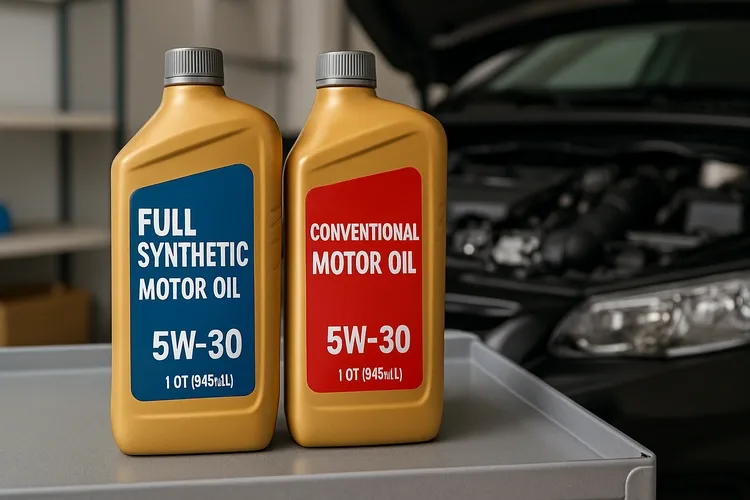
Quick Answer
Synthetic motor oil keeps a stable lubricating film in extreme heat and cold. It resists breakdown, so drain intervals stretch from 5,000 to 10,000 miles. Cold-start wear drops noticeably compared to conventional mineral oil.
Synthetic blends split the difference in cost and performance.
The Short Answer: Yes, Synthetic Oil Is Better, but It Depends on Your Engine
The advantage isn't a single magic property. It's a cluster of performance traits that stack up under specific conditions. Here's what full synthetic motor oil does differently from conventional mineral oil:
- It maintains a stable viscosity film from minus 35 C to plus 150 C engine temps, per SAE J300 classification testing.
- It resists oxidative breakdown, so the oil stays at its rated viscosity for 7,500 to 10,000 miles instead of 3,000 to 5,000.
- It carries a higher Total Base Number (TBN), meaning it neutralizes acid byproducts longer before the oil turns into varnish.
- Cold-start metal-to-metal contact drops because the thinner base oil circulates before the engine reaches operating temperature.
The chemistry is real. But context matters. If you drive a 2019 Civic eight miles to work in Phoenix, the cold-start advantage is nearly irrelevant.
Your oil barely gets cold.
Meanwhile, that same 0W-20 synthetic in a car parked outside in Duluth, Minnesota, is doing genuinely protective work every January morning. The bottom line: synthetic motor oil's advantage is situational. It's most powerful in cold climates, high-heat engines, and extended-drain scenarios.
In mild, steady, low-stress driving, the gap narrows.
What's Actually Different in the Bottle: Base Oil Chemistry and Wear Protection
Conventional oil starts from Group II hydroprocessed mineral base. Think of it as refined crude, cleaned up but still a natural molecule. Full synthetic starts from Group IV polyalphaolefin (PAO) or Group V ester molecules.
These are built in a reactor, not extracted from the ground.
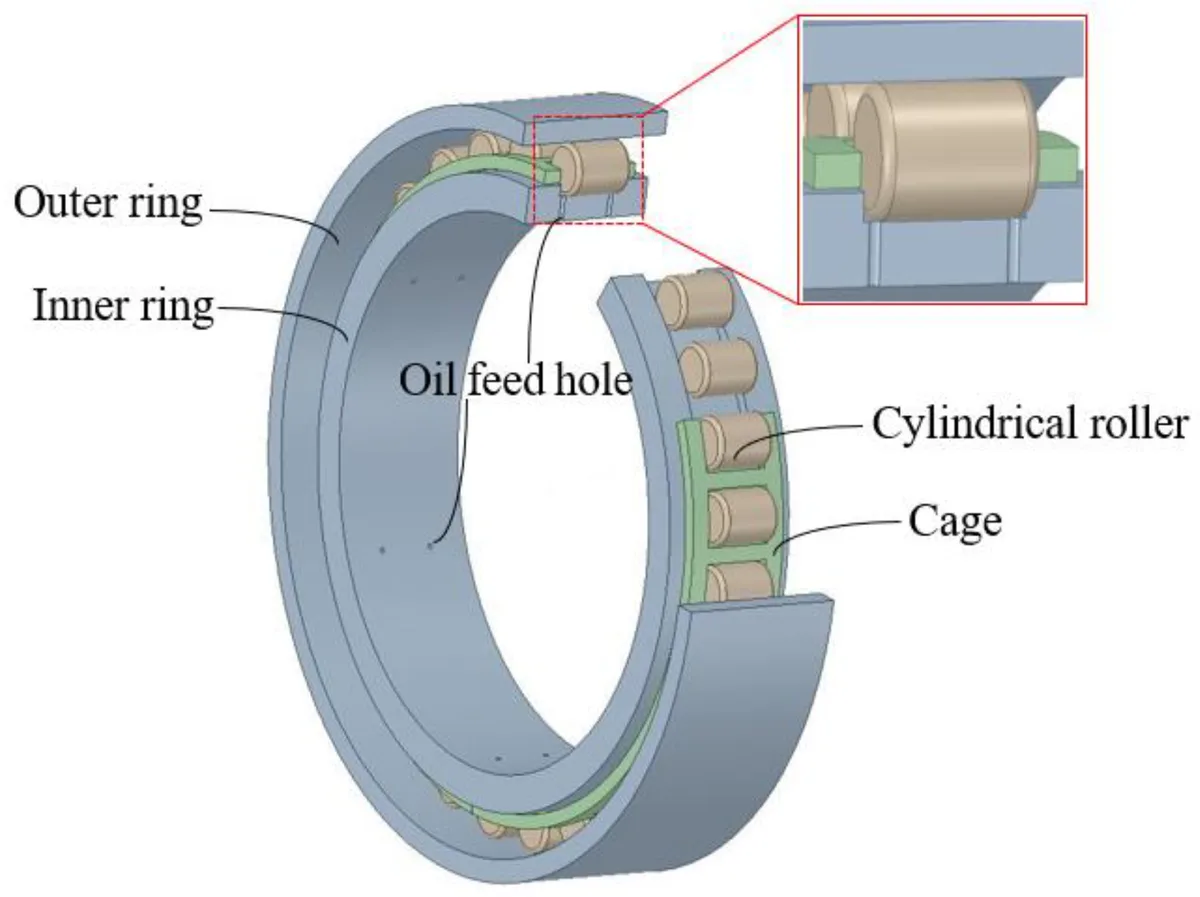
The result is a Viscosity Index (VI) gap you can measure. A conventional 5W-30 sits around VI 140. A full synthetic 5W-30 hits VI 180 to 220, per SAE International test data.
That number tells you how much the oil's thickness changes between cold and hot. Higher VI means the film stays more consistent.
Why does that matter at the bearing surface? When your engine is cold, the oil needs to flow to the top of the block within seconds of the starter turning over. A 0W synthetic at minus 30 C behaves like a light oil.
A 10W conventional at that same temperature is close to honey. The bearing surfaces go bare. Metal scratches metal.
In hot conditions, the story flips. A turbocharged engine or a truck pulling a heavy trailer pushes oil past 150 C. Conventional thins out and loses film strength.
Synthetic's tighter molecular structure holds. That's the thermal stability advantage, and it's where the API SP service category (current as of 2026) really earns its keep. The oil doesn't just last longer.
It protects better at the extreme end of the temperature range.
Conventional vs. Blend vs. Full Synthetic: A Side-by-Side Comparison
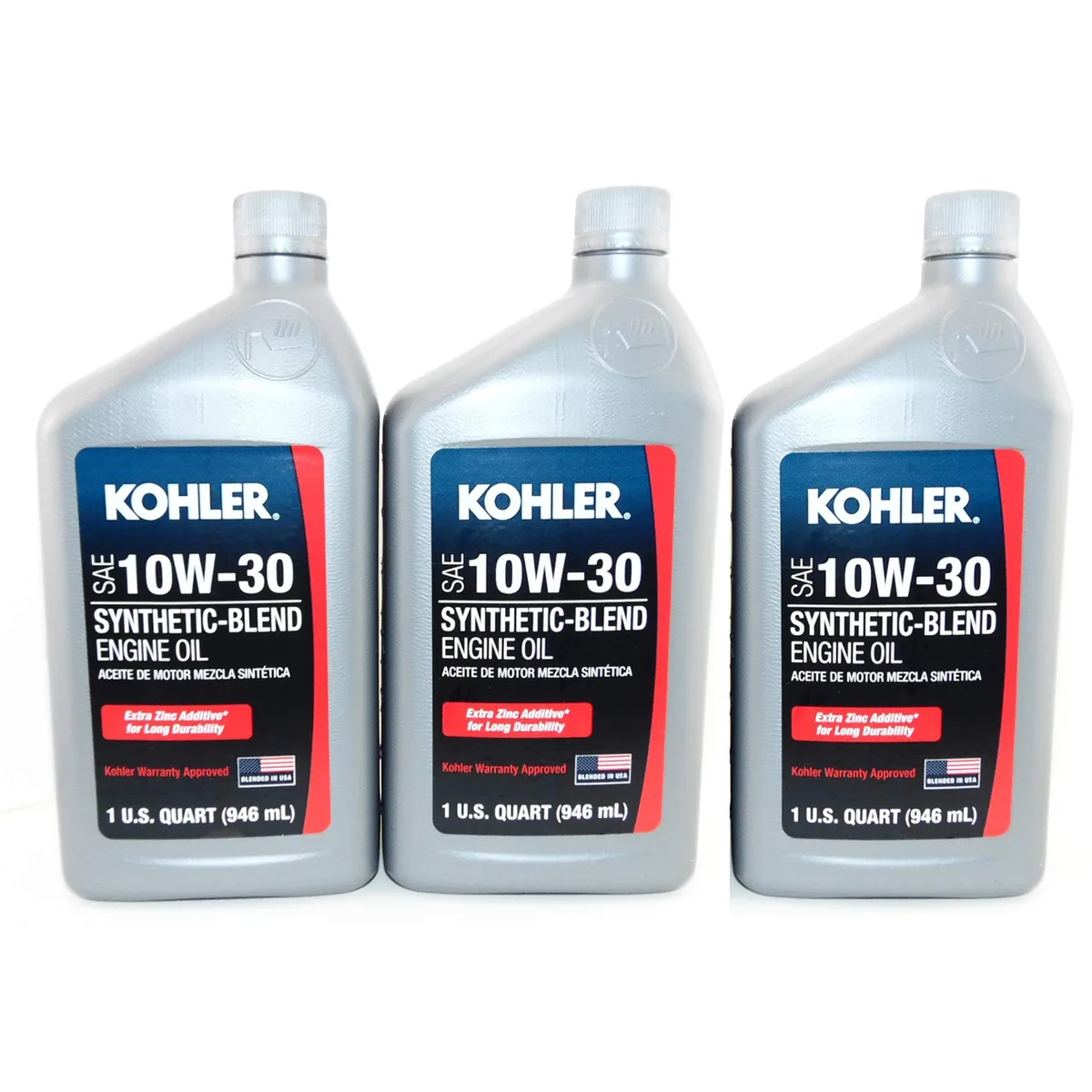
You've got three tiers, and the differences come down to where you sit on the cost-versus-performance curve.
| Conventional (Group II) | Synthetic Blend | Full Synthetic (Group IV/V) | |
|---|---|---|---|
| Base oil | Refined mineral | Mineral + PAO blend | PAO or ester |
| Typical VI | 130 to 160 | 150 to 180 | 180 to 230+ |
| Drain interval | 3,000 to 5,000 mi | 5,000 to 7,500 mi | 7,500 to 12,000 mi |
| Cold pour point (0W) | approx -20 C | approx -30 C | approx -35 C |
| Cost per 4-qt fill | $8 to $10 | $13 to $16 | $16 to $22 |
Conventional works fine if you change it every 3,000 to 5,000 miles and live in a mild climate. The oil doesn't get a chance to oxidize badly before you drain it.
Synthetic blend is the middle option. You get maybe 60 to 70 percent of the full synthetic's thermal stability at a price closer to conventional. It's a reasonable choice for a 10-year-old sedan you're keeping on a budget.
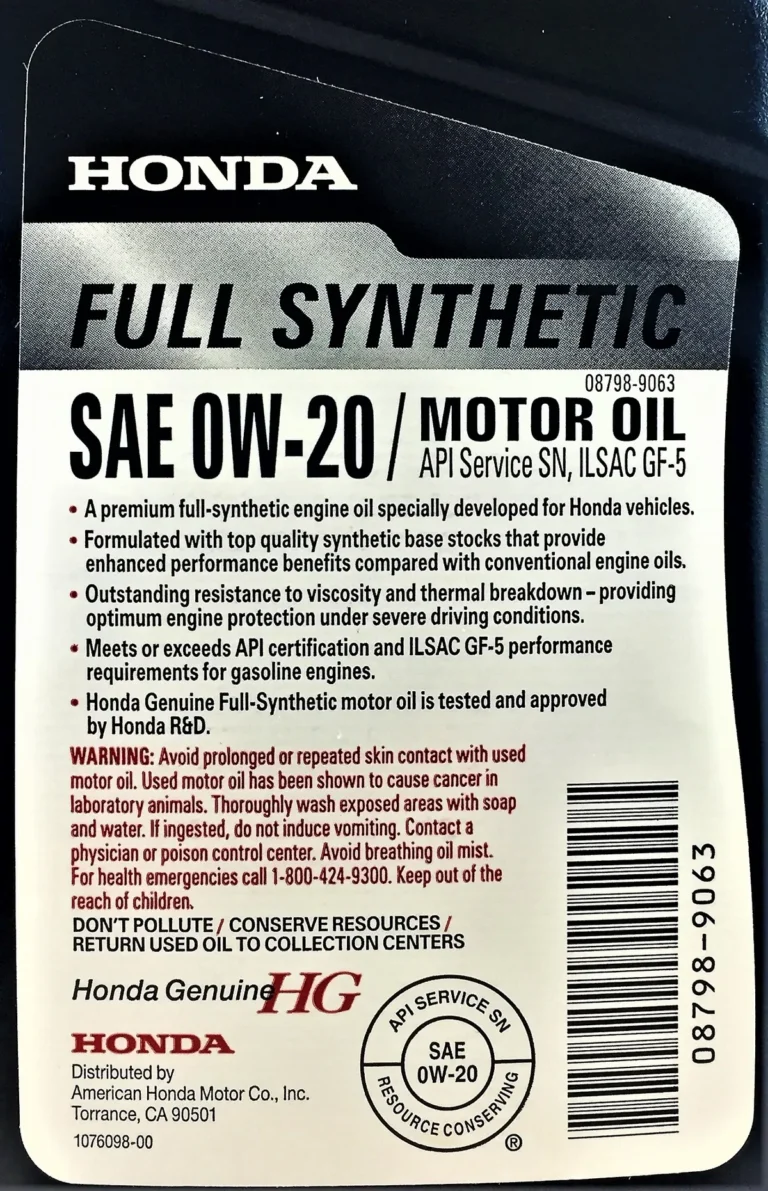
Full synthetic is where extended intervals and extreme-temperature protection kick in. If your OEM manual says "use 0W-20 API SP," that's full synthetic or equivalent. Treat it as the floor, not a suggestion.
Where Synthetic Genuinely Shines (and Where It's Honestly Overkill)
Synthetic earns its premium in these situations:
- Cold-climate parking (below minus 10 C overnight). The 0W pour-point advantage is the whole point.
- Turbocharged or high-compression engines running hot. Film breakdown at 150 C and above is where conventional falls apart.
- Towing or sustained highway loads that keep oil in the thermal breakdown zone for hours.
- Extended drain intervals. If you're stretching to 10,000 miles, conventional simply won't hold its viscosity.
- New vehicles where the OEM specifies API SP full synthetic as the minimum fill.
Now where it's honestly overkill:
- A 20-year-old car in Tucson doing five-mile errands in 95-degree heat. The engine's already seasoned. The cold-start advantage is irrelevant. Conventional changed every 4,000 miles keeps it alive fine.
- A budget fleet where labor cost matters more than the $8 oil difference per fill.
- An engine with active seal seepage. Synthetic won't fix a leak. The psychological switch still costs you.
The old-engine question: can you pour full synthetic into a 2003 with 160,000 miles? Yes. The "it'll cause leaks" claim doesn't hold up.
But do one conventional cycle first to clear sludge. You don't want to dissolve years of gunk in a single drain.
One caveat: if your OEM lists a specific low-SAPS spec (like BMW Longlife-04 or VW 507.00 for DPF-equipped diesels), generic API SP full synthetic isn't a drop-in. Check the manufacturer's approval list before you fill.
What Synthetic Oil Actually Costs You Per Fill and Per Year
Here's the honest math for a typical 5-quart engine at US retail pricing as of 2026:
| Conventional | Synthetic Blend | Full Synthetic | |
|---|---|---|---|
| Cost per 4-qt fill | $8 to $10 | $13 to $16 | $16 to $22 |
| Changes per year (12,000 mi) | 3 to 4 | 2 to 3 | 1 to 2 |
| Annual oil cost | $24 to $40 | $26 to $48 | $16 to $44 |
| Filter (dealer add-on) | +$8 to $12 | +$8 to $12 | +$8 to $12 |
See the pattern? At 12,000 miles a year, full synthetic actually costs less annually because you're making fewer visits. Conventional at 3,000-mile intervals means four changes.
Synthetic at 9,000 to 10,000 means one or two.
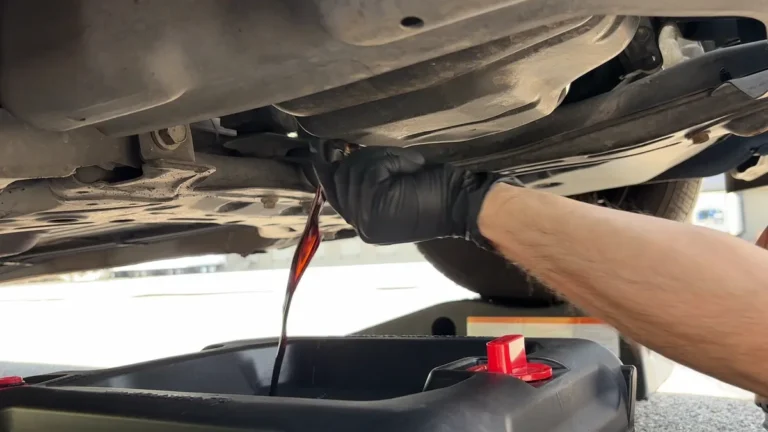
The dealer add-on is where the pain hits. A dealership charging $25 for "synthetic instead of conventional" is marking up the $14 quart. You can buy the same API SP full synthetic at a parts store for $16 to $20 and do it yourself in 20 minutes.
Where the math gets murky: if you drive 4,000 miles a year, you're changing oil once regardless. The "fewer visits" advantage disappears. You're just paying more for the same single drain.
In that scenario, a synthetic blend at $13 to $16 is the sweet spot. You get the thermal stability without the full premium for a driving pattern that never stresses it.
Rule of thumb: the more your driving actually challenges the oil (cold starts, heat, load, long intervals), the more the synthetic premium pays for itself. The less it does, the more you're paying for a feature you don't use.
Five Mistakes That Wipe Out Synthetic Oil's Advantages
You're paying for synthetic's performance. Then one bad habit erases it. Here are the five that matter most:
- Wrong viscosity grade. Your 2023 Hyundai specifies 0W-20 API SP. You grab a 5W-30 because it was on sale. The engine now runs a film thicker than it was calibrated for. Turbos and cam phasers lose flow at cold startup. Check the filler cap every time.
- Ignoring severe-service triggers. Towing. Eight-mile stop-and-go commutes in January. 110-degree ambient freeway running. Any of those cut your 10,000-mile interval down to 6,000 or 7,000. The label says "up to." That "up to" assumes mild, steady highway miles.
- Mixing API service categories. Pouring a pre-2020 API SN oil into an engine spec'd for SP means you skip the LDDS low-duration driving sequence test and the timing-chain protection package. One cycle is technically safe. Repeating it isn't.
- Skipping the dipstick check. Synthetic resists breakdown longer, but it doesn't stop consumption. If your engine burns about 200 miles per quart, a 10,000-mile drain means you're running low for the last 4,000 miles. Check the level every 1,500 to 2,000 miles.
- Gray-market "synthetic." No API star, no ILSAC GF-6 mark, sketchy packaging from an unknown distributor. You're not getting what the label claims. Buy from a reputable parts counter or the manufacturer's verified dealer channel.
How to Pick the Right Oil for Your Specific Engine and Climate
Here's the 90-second decision flow:
- Read the manual or the filler cap. Not a YouTube video. Not the car's website. The cap says something like "Use 0W-20 meeting API SP and ILSAC GF-6A." That's your spec. Full stop.
- Factor in your climate. If you park outside and see below minus 10 C overnight, the 0W pour-point advantage is doing real protective work. In Phoenix or Miami, that cold-start benefit is minimal. A 5W-30 at the same API level often works fine if the manual allows it.
- Match the driving profile. Short, light commutes? A synthetic blend at the correct viscosity is plenty. Long highway miles, towing, or a turbocharged engine? Full synthetic is where the thermal stability actually pays for itself.
- Verify the OEM approval list. If your car specifies BMW Longlife-04, VW 507.00, or Mercedes 229.51, generic API SP isn't automatically a drop-in. Check the manufacturer's published oil list. Most OEMs keep one on their service or owner portal.
- For 15-plus-year engines: Run one conventional cycle to clear sludge before switching. Keep the SAE viscosity the same. Don't drop two grades thinner just because "synthetic is thinner." The chemistry changed, not the spec.
The whole process is: read the cap, check your climate, match your driving, verify the OEM spec. Five minutes, no guesswork.
Quick Answers to What People Actually Ask
Can I switch from conventional to synthetic in an older engine?
Yes. Run one full conventional cycle first to flush out sludge and varnish, then switch to synthetic at the same SAE viscosity. The "synthetic will leak old seals" claim is a myth.
The real risk is dissolving years of deposits in a single drain. One transitional cycle prevents that.
Does synthetic oil actually improve fuel economy?
Marginally. Per EPA fuel economy testing protocols, moving from a 10W-30 conventional to a 0W-20 ILSAC GF-6A synthetic gains about 1 to 3 percent. On a 40 mpg car, that's roughly 0.5 to 1.2 mpg.
Noticeable on the fuel gauge, not life-changing.
Is a more expensive synthetic always better?
No. A $28 premium-brand quart and a $18 lesser-known API SP oil perform within a few percent of each other. The API SP star and ILSAC mark are the real quality gate.
You don't need the flashiest label. You need the spec match.
How far can I stretch a synthetic oil change?
Never past the OEM maximum. If the manual says 10,000 miles or 12 months, that's the ceiling, not the target. In severe service, cut it to 6,000 to 7,500 miles.
Oil past its TBN window turns acidic regardless of the brand on the jug.