How Is Motor Oil Made From Natural Gas: Honest review
You've stared at a canister labeled "full synthetic" and wondered how is motor oil made from natural gas. The label just says "synthetic hydrocarbons and additives." Nobody walks you through the seven unit operations running up to 1,100 °C that happened before that oil hit the shelf.
Here's the short version. Methane gets reformed into syngas, then converted to wax via Fischer-Tropsch synthesis, then cracked and isomerized into a paraffinic base stock. Per API SP 500, that finished base oil classifies as Group III or Group IV.
Below, we'll walk through every step in the order it actually happens.
Quick Answer
Motor oil made from natural gas starts as methane. Reforming turns it into syngas, a mix of CO and H2. Fischer-Tropsch synthesis converts syngas into paraffinic wax.
Hydrocracking and isomerization shape that wax into base oil. Additives finish the job into a pourable engine lubricant.
It's Not Filtered Gasoline: What "Made from Natural Gas" Actually Means
The most common misconception is that natural gas just gets filtered into a liquid you pour into your engine. That's not close to right. Natural gas is a gas at ambient conditions.
It's mostly methane with small amounts of ethane, propane, and hydrogen sulfide.
To get a liquid hydrocarbon out of that gas, you need a full chemical conversion chain. The gas is reformed into syngas, then fed to a Fischer-Tropsch reactor where molecules build into long-chain wax. That wax is solid at room temperature.
You can't just pour it into a crankcase.
So the real answer is this: it's a multi-step industrial process, not a filtering operation. The gas gets broken apart, rebuilt into new molecules, cracked, branched, and cleaned. Today, only a handful of commercial plants run this pipeline at scale.
The Seven-Step Pipeline: From Methane to Base Oil
Each step has a specific job. Skip one and the chain breaks.
Step 1: Feedstock Prep and Desulfurization
Raw natural gas carries H2S, COS, and trace mercaptans. Even 10 ppm of sulfur will poison a cobalt catalyst. You scrub the feed through a ZnO bed or amine wash first.
If the gas is biogenic (landfill or biogas), you add a siloxane and amine purge step.
Step 2: Syngas Generation (Reforming)
Methane hits a reformer at 700 to 1,100 °C. Steam reforming gives you an H2/CO ratio around 2.5:1. Autothermal reforming lands closer to 2:1.
The target ratio matters because cobalt catalysts want about 2:1 for maximum wax selectivity.
Step 3: Fischer-Tropsch Synthesis
Syngas enters a reactor packed with cobalt-on-alumina pellets at 200 to 240 °C and 15 to 40 bar. The product is straight-run paraffinic wax, mostly C20 to C40 n-alkanes. Selectivity to C5+ hits 90 to 95 percent.
The remaining 5 percent is light gas you recycle back to the inlet.
Step 4: Primary Separation
You draw the wax off and heat it to 80 to 90 °C to keep it molten. Light naphtha (C5 to C9) and LPG get sent to a refinery or sold as fuel. Unconverted CO and H2 loop back to the reactor.
Step 5: Hydrocracking
The molten wax hits a hydrocracker at 280 to 350 °C under 1,500 to 3,000 psig of hydrogen. A bifunctional Pt/zeolite catalyst cracks the long chains into C12 to C18 naphtha-range paraffins. This is where the material actually starts to look like oil.
Step 6: Hydroisomerization
Linear n-alkanes are too rigid for a high-viscosity-index product. A second Pt/zeolite pass at 280 to 330 °C branches them into iso-paraffins. This single step takes your viscosity index from under 100 to 260 or higher.
That's the number that makes "synthetic" true.
Step 7: Hydrofinishing, Blending, and Packaging
A final pass at 320 to 380 °C strips residual olefins below 0.05 percent and sulfur below 0.005 percent. The clean, saturated, near-colorless base oil gets blended with a 4 to 12 percent additive package. Detergents, anti-wear agents, and viscosity index improvers go in.
The finished product is tested against ACEA C3 or C4, then filled and shipped.
Where the Branches Matter: Key Decisions at Each Stage
This is where the pipeline splits, and the choices determine whether you end up with lubricant-grade base stock or fuel.
If your feedstock is pipeline natural gas (95 percent CH4), you skip the biogas scrubbing step. If it's landfill gas or biogas (50 to 70 percent CH4 with CO2, siloxanes, and amines), you add a desulfurization and siloxane-removal unit before reforming.
If you choose a cobalt catalyst, you get 90 to 95 percent C5+ wax selectivity. You also need clean syngas with sulfur below 5 ppb. If you choose iron, you tolerate dirtier feedstock and get more gasoline-range byproducts.
Iron is cheaper but less selective.
For hydrocracking severity: mild cracking gives you C12 to C18 base-oil-range material. Severe cracking pushes you into C6 to C10, which is fuel-grade, not lubricant-grade. Pick the wrong severity and your "base oil" is actually diesel.
The hydrogen source matters too. On-site pressure swing adsorption from the reformer gives you 99.9 percent purity at lower cost. Pulling hydrogen from a separate unit adds a purification step and an extra cost layer.
GTL Base Oil vs. Conventional, Group III, and PAO: The Honest Comparison
The numbers below come from manufacturer datasheets and NIST reference viscosity data.
| Property | GTL (Group III/IV) | Conventional (Group I) | PAO (Group V) |
|---|---|---|---|
| Sulfur content | < 0.01 % | 0.5 to 1.5 % | < 0.01 % |
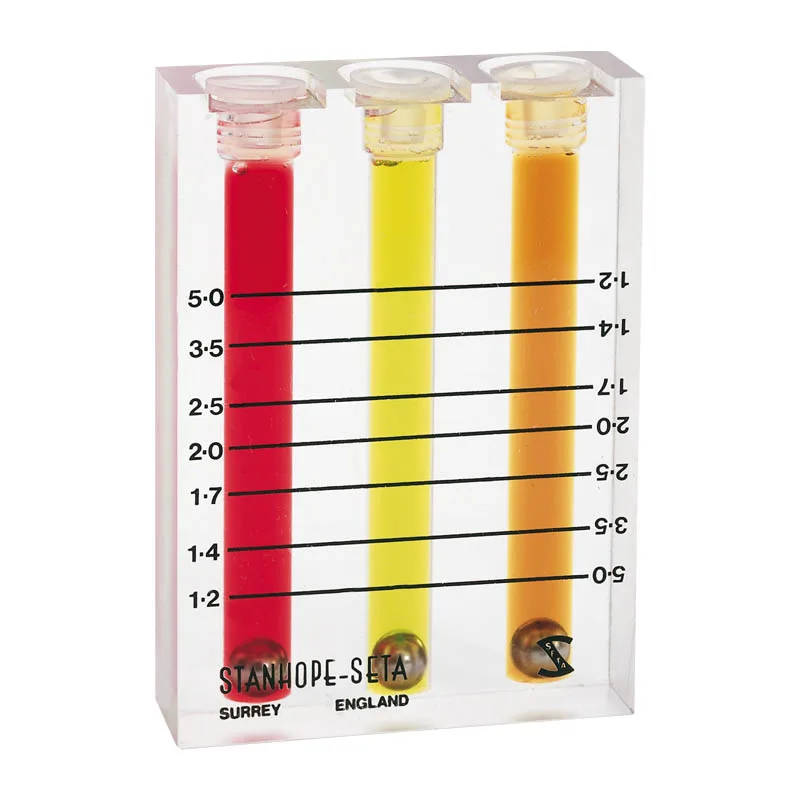
| Viscosity Index | 260 to 330 | 90 to 110 | 125 to 135 |
| Pour point | to −50 °C | −15 to −30 °C | to −40 °C |
| Oxidation (RUST D4669) | > 100 h | 20 to 40 h | 60 to 90 h |
| Metals (Na+Ca+Mg) | < 1 ppm | 5 to 20 ppm | < 1 ppm |
| Base stock cost/gallon | $8 to $14 | $2 to $3 | $10 to $18 |
GTL wins on oxidation stability, metals-free purity, and viscosity index. PAO wins on cold-flow and is the most "pure" synthetic option. Group I is the budget workhorse in a basic 10W-40.
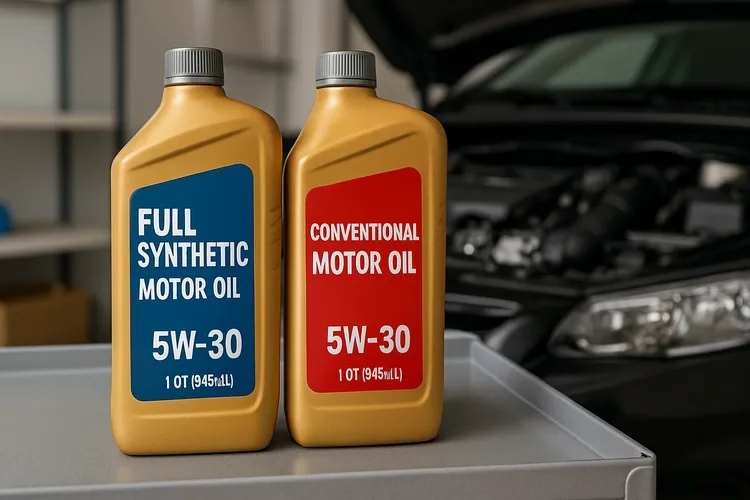
The tradeoff is cost. A GTL-based 5W-30 runs $12 to $22 a quart at retail. A Group I version of the same grade runs $8 to $14.
You're paying for the clean molecules and the longer drain interval they enable.
Specs, Costs, and What Actually Ends Up in Your Oil Pan
When you crack open a canister of "full synthetic" GTL oil, here's what's inside. The base stock is 88 to 96 percent of the volume. It's a mixture of hydroisomerized C18 to C26 iso-paraffins with a narrow carbon-number distribution.
That narrow distribution is what gives it stable, predictable film thickness across temperature.
The remaining 4 to 12 percent is additive package:
- Calcium or magnesium sulfonate detergents (3 to 5 wt%)
- ZDDP or newer boron-based anti-wear agents (1 to 2 wt%)
- Polydisulfide or oligomer viscosity index improvers (2 to 4 wt%)
- Polyphenylene amine antioxidants (0.5 to 1 wt%)
- Friction modifiers and anti-foam agents (trace)
The U.S. Department of Energy has published techno-economic models showing a full GTL-plus-hydroprocessing plant costs $2 to $5 billion to build and runs at roughly 60 to 70 percent carbon efficiency. That capital intensity is why only a handful of plants produce GTL base oil commercially.
You're not going to find it in every garage.
Five Things Most People Get Wrong About "Synthetic" Oil
Here's where the confusion lives, and why it matters for how you read the label.
"Synthetic" means one pure molecule. It doesn't. A GTL base oil is a mixture of C18 to C26 iso-paraffins. The molecules are uniform in shape, but you still have a distribution. "Fully synthetic" just means the base stock wasn't filtered out of crude. It was built from scratch in a reactor.
GTL oil is "natural" because it starts from gas. Not really. You're still running it through seven unit operations at 3,000 psi. The starting material is simple, but the product is engineered. Calling it "natural" misses the entire hydroisomerization and hydrofinishing chain.
You need to "break in" synthetic like conventional. You don't. Mineral oil has a wide boiling range, so it thins as molecules oxidize. GTL base oil has a narrow carbon-number spread. It's at its target viscosity from mile zero. No burn-in needed.
Mixing conventional into synthetic ruins the can. It doesn't. The molecules don't reject each other. You'll lose some of the oxidation-stability and drain-interval benefit, but the oil still lubricates. It's just no longer performing at its certified spec.
"Synthetic" on the label always means GTL. It often means PAO, ester, or a PAO/GTL blend. GTL is the dominant route for 0W-20 and 5W-30 car oils. PAO shows up more in aviation and racing formulations. Check the base-stock classification on the technical data sheet.
Frequently Asked Questions
Is GTL motor oil the same as "full synthetic"?
Yes, in the way that matters. GTL base oil is classified as API Group III (high-severity) or Group IV. When the canister says "full synthetic," it almost always means the base stock is Group IV or V, and GTL is the most common source for passenger-car oils.
Does natural-gas-based oil outlast crude-based synthetic?
In oxidation stability, yes. RUST D4669 testing shows GTL base oils holding above 100 hours versus 50 to 80 hours for typical Group III. That translates to a 20,000 to 30,000-mile drain interval versus 10,000 to 15,000 for a conventional blend, per OEM rig-test data.
Why aren't all motor oils made from natural gas?
Capital cost. A GTL-plus-hydroprocessing plant runs $2 to $5 billion to build. You also need steady hydrogen and a location near cheap gas.
As of 2026, only Sasol in South Africa and Shell in Singapore produce GTL base oil at commercial scale. The rest of the market still uses crude-derived or PAO stocks.
Can I mix GTL synthetic with conventional oil in a top-off?
You can. The molecules coexist without issue. You just dilute the high viscosity index and low-sulfur advantage.
A small top-off between changes won't damage the engine. For a full change, stick to the spec your OEM calls for.
Which viscosity grades actually use GTL base oil?
Most 0W-20, 5W-30, and 5W-40 passenger-car and light-duty truck oils. The ultra-thin 0W-16 grades (Toyota, Honda) also lean heavily on GTL or GTL/PAO blends. You'll rarely see GTL in a 15W-50 heavy-duty diesel, where thick naphthenic stocks still dominate.
When It Actually Matters to You at the Pump
Most of the time, you just pour what the owner's manual says and drive on. The GTL question becomes a practical one in a few specific situations.
You live below 25 °F in winter. A 0W-20 on a GTL base pours at −40 °C with a VI above 260. A Group I 0W-20 hits its pour point around −20 °C and thickens fast. In Minnesota or northern Scandinavia, the GTL under your hood is what keeps that first cold-start from dry-firing your bearings.
Your OEM certifies a 25,000-mile drain interval. That spec only passes if the base oil has RUST above 80 hours and metals below 2 ppm. Conventional can't hold that. GTL and PAO can. If you drive a 2024 or newer Toyota, Honda, or VW, the "extended drain" label is really a GTL story.
You run a DPF-equipped diesel. ACEA C3 and C4 require low-sulfate-ash below 0.8 percent. GTL base oil is essentially zero-sulfur, so you don't need extra ash-carrying detergents to hit the target. Conventional oils need more detergent, and that extra ash clogs the DPF.
You're doing a 5,000-mile city commute in a 2016 Corolla. A Group III conventional 5W-30 is fine. The GTL shelf-price premium buys you a longer interval and better high-heat stability you won't use at 75 °F highway cruising. Save the money. The oil still lubricates.
Pick the oil your OEM spec names. If the spec says "full synthetic" and lists a GTL or PAO base stock, you've already got the answer. Everything else in the can is just the additive package doing its job.