What Is High Mileage Motor Oil: Easy guide
If you're asking what is high mileage motor oil, it is engine oil marketed for aging engines, not a universal viscosity or repair formula. It may combine the required lubricant grade with seal conditioners, stronger oxidation control, and additives aimed at deposits. The right choice still comes from the owner's manual, not the age printed on the bottle.
Most products start targeting older vehicles around 75,000 miles, about 120,700 kilometers. As of 2026, neither that threshold nor the “high-mileage” name is defined by SAE, API, ACEA, or ILSAC. To separate useful aging-engine chemistry from marketing, you first need to understand what the label means and how it differs from a viscosity grade or performance standard.
What Is High Mileage Motor Oil
Quick Answer
High-mileage motor oil is a lubricant marketed for aging engines. It isn't a universal viscosity grade or repair treatment. It may add seal conditioners, oxidation control, and deposit-control additives.
Match the owner's manual for viscosity, performance category, and approvals.
What High-Mileage Motor Oil Is and What It Is Not
High-mileage motor oil is a fully formulated engine lubricant intended for older powertrains. Its base oil may be conventional, synthetic blend, or fully synthetic. Its additives may provide stronger seal conditioning, oxidation resistance, and deposit control.
In US English, “motor oil” and “engine oil” often describe the same product. UK documentation more commonly uses “engine oil.” The lubricant category and required specification matter more than the choice of word.
Does “high-mileage” have one fixed definition?
No. The phrase is a market label rather than a standardized oil category. SAE doesn't define it as a viscosity grade.
API, ACEA, and ILSAC don't define it as a performance category either.
A manufacturer can use the same high-mileage name for products with different SAE grades. The formulas may also have different additive packages, SAPS levels, and OEM approvals.
Does the mileage number tell you what to buy?
No. The familiar 75,000-mile or 120,000-kilometer threshold is a marketing convention. It doesn't identify a required viscosity, performance category, or oil approval.
An engine at 60,000 miles may consume oil because of a failed seal. A well-maintained engine at 180,000 miles may need nothing beyond its factory oil specification.
| Common claim | What the evidence supports |
|---|---|
| It is always thicker | Many high-mileage oils have the same viscosity as standard oil. |
| It is better than standard oil | Suitability depends on the complete specification. |
| It reduces consumption | It may reduce compatible seal seepage, but it cannot fix mechanical wear. |
| It lasts longer | The label does not authorize a longer drain interval. |
| Any 10W-30 will work | The manufacturer may require another grade or a specific approval. |
| It cleans an unhealthy engine | Deposits and contamination require diagnosis, not just fresh oil. |
What changes as an engine ages?
Age can affect several lubrication components at once. Elastomeric seals may harden or lose elasticity. Deposits can collect around piston rings, valve guides, and oil passages.
Heat and contamination place more stress on the lubricant. Older engines may also have worn bearings, camshafts, chains, and oil-pump components. Restricted passages can reduce oil flow when the engine needs protection most.
Not every older engine has these problems. A carefully maintained vehicle can have a clean engine at high mileage and stable oil consumption.
What is the useful part of the label?
The useful part is the intended application. A high-mileage formula may give extra attention to aged seals, oxidation, deposits, and volatility. Those features can suit certain engines when the oil also meets the required specification.
The name alone doesn't prove that the formula contains a useful seal conditioner. It doesn't confirm oxidation resistance, low-SAPS compatibility, or protection against low-speed pre-ignition.
Those claims must be confirmed through the performance category, approval, and manufacturer documentation.
Why the Correct Oil Specification Matters for Aging Engines
The oil specification matters because it controls how the lubricant flows, protects metal surfaces, controls deposits, and works with the emissions system. An aging engine has less margin for a poor match.
Engine oil performs several jobs at once. It forms a film between bearings, journals, cams, and gears. It carries heat away from hot components and carries contaminants toward the filter.
The oil also protects against corrosion, oxidation, and deposit formation. It must remain stable across cold starts, traffic, and extended hot operation.
Why does the manufacturer's specification take priority?
The manufacturer's specification takes priority because the engine was designed around a particular flow rate, film strength, additive balance, and emissions requirement.
Vehicle documentation may specify several separate elements:
- SAE viscosity grade
- API, ACEA, or ILSAC performance category
- A mandatory OEM approval
- Low-SAPS or emissions compatibility
- LSPI protection for an applicable engine
- Oil capacity
- Oil-filter specification
- Normal and severe-service intervals
A matching viscosity doesn't satisfy all of those requirements. A high-mileage product must meet every applicable specification before its aging-engine additives become a useful benefit.
Can the wrong oil cause serious damage?
Yes. The wrong viscosity or poorly balanced formula can contribute to oil starvation, unstable pressure, deposits, seal problems, and emissions-system damage.
| Risk | Possible result | Safer approach |
|---|---|---|
| Oil starvation | Bearing, cam, or valvetrain damage | Use the exact specified viscosity and category |
| Excess oil aeration | Unstable pressure, foaming, and leaks | Avoid overfilling and check the dipstick correctly |
| Wrong additive balance | Deposits, seal issues, or poor compatibility | Avoid unapproved additives |
| Incorrect SAPS level | Excess ash and aftertreatment-system damage | Use low-SAPS oil only when required |
| Poor LSPI protection | Premature combustion in certain direct-injection engines | Match the engine's tested oil specification |
| Excessive oil consumption | Oil reaches the exhaust or combustion chamber | Diagnose the source of consumption |
| Unapproved oil | Possible warranty dispute | Keep the specification and service records |
How does oil starvation damage an engine?
Oil starvation removes the protective film between moving metal surfaces. Friction heat then rises quickly, which can damage bearings, camshafts, lifters, and piston pins.
Low oil level is one common cause. A failed oil pump, blocked pickup, collapsed filter, or damaged oil gallery can also restrict flow.
A low oil-pressure warning requires an immediate engine shutdown. Adding oil doesn't make continued driving safe if the pump or another lubrication component has failed.
Safety warning: Shut down the engine as soon as safely possible if the oil-pressure warning appears. Bearing damage can develop within minutes.
Can a thicker oil hide excessive consumption?
It may reduce seepage across worn clearances for a time. It doesn't repair piston rings, bearings, cylinder walls, or failed valve stem seals.
A heavier grade can also slow flow during a cold start. It may increase pump loading and alter engine noise, sealing, or fuel consumption.
A sudden increase in oil use needs investigation. Don't treat a thicker oil as a permanent solution without understanding the source.
Which signs suggest a mechanical problem?
Watch for a rapid rise in top-up quantity, persistent blue smoke, fresh external leaks, and metallic debris. Low pressure, knocking, overheating, and severe rough running also need prompt attention.
Keep the warning light, smoke, noise, and oil-level trend separate in your notes. That information helps a technician distinguish consumption from leakage or internal wear.
Does using the wrong oil cancel the entire warranty?
No. An incorrect oil choice doesn't automatically cancel every warranty claim. Coverage depends on the written terms, applicable law, and whether the wrong oil caused or contributed to the damage.
Keep the oil specification, purchase record, service date, mileage, and filter part number. A record of the correct service strengthens any later warranty discussion.
Correct an incorrect oil choice promptly. Don't hide it, and don't continue driving if the engine shows a lubrication-related symptom.
How High-Mileage Oil Is Made for Aging Engines
High-mileage oil is made by adapting a complete lubricant formula for common aging-engine conditions. Its effectiveness comes from the combined base oil and additive package, not from one special ingredient.
Conventional, synthetic blend, and fully synthetic describe the base-oil portion. They don't identify viscosity, performance category, or engine suitability by themselves.
What does each part of the formula do?
A lubricant combines base oil with a controlled additive package. Each component handles a separate part of lubrication.
| Component or additive | Main function | Relevance to an aging engine |
|---|---|---|
| Base oil | Carries load and transports heat | Must provide stable viscosity across temperatures |
| Detergents | Neutralize oxidation products and varnish-forming acids | Helps control sludge and varnish |
| Dispersants | Keep contaminants suspended | Helps prevent baked deposits |
| Antiwear agents | Protect high-contact metal surfaces | Supports bearings, camshafts, and valvetrains |
| Antioxidants | Slow reaction with oxygen and heat | Supports longer resistance to oxidation |
| Anti-foam agents | Reduce stable foam and aeration | Supports steady oil pressure |
| Volatility control | Limits evaporation and oil burning | Useful in hot or aging engines |
| Seal conditioners | Improve some aged elastomeric seals | May reduce minor valve-stem-seal seepage |
No additive reverses worn metal or restores a damaged component. Antiwear chemicals protect surfaces that remain dimensionally sound. Detergents control oil chemistry, and seal conditioners help certain materials remain flexible.
Why does viscosity matter in an aging engine?
Viscosity controls the oil's resistance to flow. The oil must pump quickly during a cold start. It must also retain a strong film when the engine reaches full heat.
Too little cold flow can leave the timing drive, cam lobes, and turbocharger under-lubricated during startup. Poor hot-film retention can reduce protection at bearing and cam contacts.
A high-mileage formula can be multigrade, such as 5W-30 or 10W-30. It doesn't automatically use a higher number than the factory oil.
Do seal conditioners really work?
They may work on some aged valve stem seals and compatible gasket materials. Certain additives restore flexibility or slightly swell an elastomer so it can seal again.
Results depend on the seal compound, condition, temperature, and oil chemistry. Some modern seal materials weren't designed to swell.
A conditioner cannot repair a cracked seal carrier, a torn lip, a distorted sealing surface, or severely worn sealing hardware.
Why is oxidation control important?
Oxidation occurs when oil reacts with oxygen and heat. The oil thickens, acidity rises, volatility increases, and deposits form more readily.
Contamination can accelerate the process. Coolant, fuel, and metal particles all affect how the lubricant ages.
A robust antioxidant package can slow oxidation, but it can't compensate for a failing oil cooler, coolant in the oil, chronic low oil levels, or overdue changes.
What is low-SAPS oil?
Low-SAPS oil contains controlled levels of sulfur, ash, and phosphorus. The term matters because certain emissions systems need a limit on lubricant-derived ash and phosphorus.
Low-SAPS formulations can suit many modern gasoline and diesel engines with particulate filters. They may also carry a specific OEM approval or ACEA category.
The high-mileage label doesn't say whether an oil is low-SAPS. Confirm the performance category or manufacturer approval.
Is high-SAPS oil always wrong for an older engine?
No. Some older engines were designed around high-SAPS oil and don't use a particulate filter. That lubricant can be correct when the manufacturer specifies it.
The current emissions system controls the requirement. A vehicle's age doesn't determine SAPS level by itself.
Does LSPI protection apply to every engine?
No. Low-speed pre-ignition is a concern for certain high-compression, direct-injection gasoline engines. Some oil performance categories include testing for this form of premature combustion.
An LSPI claim only matters if the engine's specification requires it. The lubricant must still meet the correct viscosity, performance category, and OEM approval.
SAE Viscosity, API or ACEA Categories, and OEM Approvals
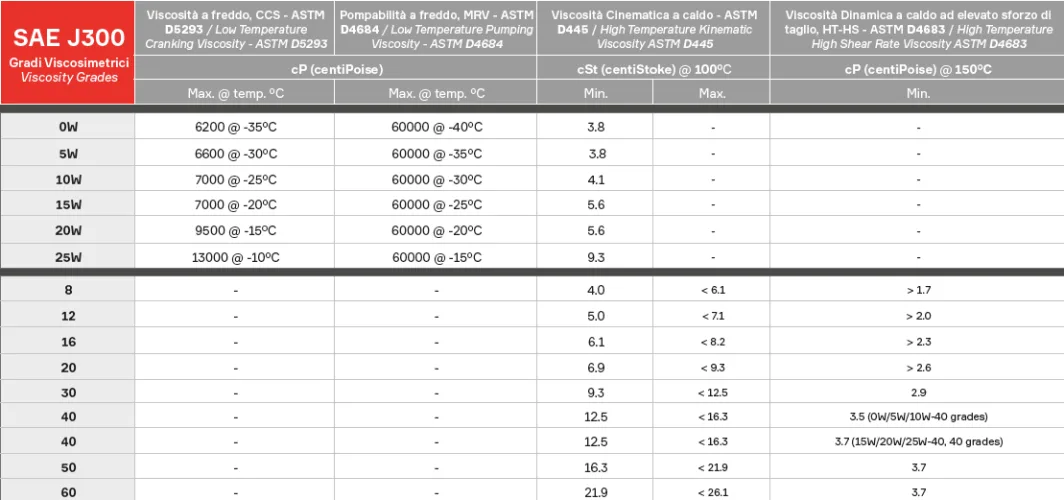
An oil label combines several kinds of information. SAE classifies viscosity behavior, while API and ACEA describe tested performance. An OEM approval identifies a particular formulation accepted for a defined engine application.
These systems answer different questions. Meeting one doesn't automatically satisfy the others.
What does 5W-30 mean?
The “5W” part means the oil meets the SAE winter requirements for a 5W grade. The “30” corresponds to its kinematic viscosity range at 100°C.
Under SAE J300, a 5W-30 oil must meet these limits:
| SAE J300 test | Requirement |
|---|---|
| Cold cranking at minus 30°C | No more than 6,600 mPa·s |
| Pumpability at minus 35°C | No more than 60,000 mPa·s |
| HTHS viscosity at 150°C | At least 2.9 mPa·s |
| Kinematic viscosity at 100°C | 9.3 to 12.5 mPa·s |
The winter number doesn't represent one exact viscosity reading. It identifies compliance with a set of cold-temperature tests.
The 30 represents the hot-temperature viscosity range. HTHS, or high-temperature, high-shear viscosity, estimates film retention under hot, high-load conditions.
Does SAE J300 say whether an oil controls deposits?
No. SAE J300 classifies viscosity behavior. It doesn't evaluate detergent action, oxidation, sludge, wear, or emissions compatibility.
That's why an oil can have the correct SAE grade and still miss the required performance category.
What do API categories tell you?
API engine oil categories describe performance under defined test programs. Depending on the category, those tests may cover deposit control, wear, oxidation, sludge, and emissions compatibility.
Gasoline engine categories include API SP, API SQ, and API SQ Plus as of 2026. A newer category doesn't automatically replace a vehicle's documented requirement.
Use the category named by the manufacturer. If the manual allows a newer substitute, confirm that the oil also meets the required viscosity and any OEM approval.
What do ACEA categories cover?
ACEA oil sequences organize European requirements by engine type, viscosity behavior, and SAPS level. Gasoline categories use the A series, while diesel categories use the E series.
The ACEA 2023 sequences include categories such as C1, C2, C3, C4, and C5 for gasoline applications. Exact viscosity classes vary by category.
An ACEA C5 oil is low-SAPS, for example. It still isn't automatically suitable for every engine because viscosity and application also matter.
Where do ILSAC specifications fit?
ILSAC categories apply mainly to some engines sold in Japan and other markets. GF-6A and GF-6B are examples of current passenger-vehicle oil specifications.
The required ILSAC category still depends on the vehicle. Local packaging and common use don't replace the engine's documentation.
What is an OEM oil approval?
An OEM approval is a manufacturer-specific acceptance of a defined oil formulation. It may apply to an exact viscosity, engine family, model-year range, or market.
Examples include VW 504.00 or 507.00, Mercedes-Benz 229.51 or 229.52, and Ford WSS-M2C913-D. These examples don't apply to unrelated engines.
An oil can carry several approvals and still be wrong for your vehicle. Match every approval stated in the manual.
Does an API checkmark replace an OEM approval?
No. Meeting an API category and carrying an OEM approval are separate claims.
| Label statement | What it confirms | What it doesn't confirm |
|---|---|---|
| SAE 5W-30 | The oil meets that viscosity classification | Suitability for your engine |
| Meets API SQ Plus | The oil meets that API performance category | A required manufacturer approval |
| Meets ACEA C5 | The oil meets that ACEA sequence | Suitability for every C5 application |
| VW 504.00 approved | The oil has that Volkswagen approval | Suitability for an unrelated vehicle |
| Designed for high mileage | The maker targets aging vehicles | Compliance with your engine's specification |
Which requirement should you check first?
Check the owner's manual first. It normally lists the required viscosity, performance category, and any special approval in one place.
Then follow this order:
- Identify the exact engine and market version.
- Confirm the recommended SAE viscosity.
- Confirm the required API, ACEA, or ILSAC category.
- Check every mandatory OEM approval.
- Review permitted alternative grades or categories.
- Confirm oil capacity, filter, and service interval.
If several viscosities are allowed, use climate and engine condition to narrow the choice. Stay within the documented range.
High-Mileage Oil vs. Standard, Thicker, Synthetic, and Extended-Life Oil
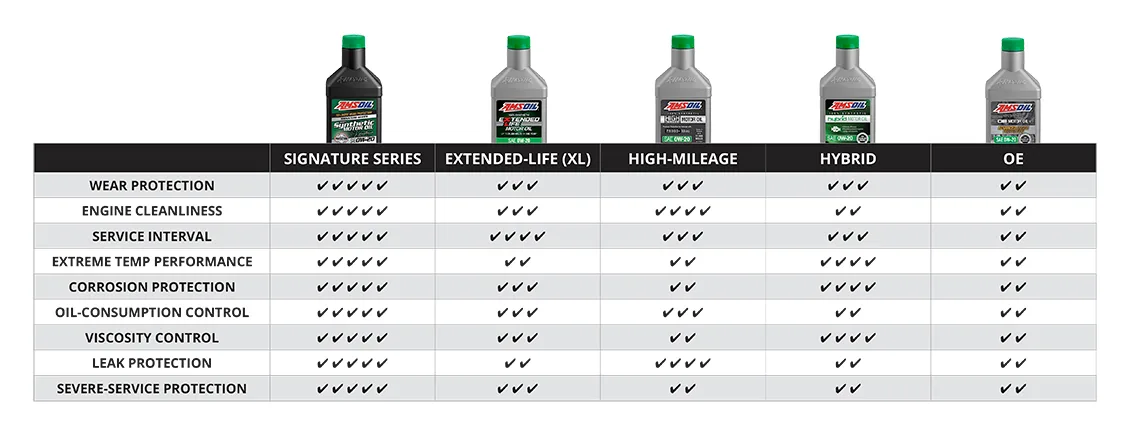
“High-mileage” is often treated as a performance tier, even though it isn't one. The label doesn't reveal viscosity, base-oil type, SAPS level, or service-life approval.
One product can be fully synthetic and marketed for high mileage. Another can be conventional with the same SAE grade and viscosity.
High-mileage oil vs. standard oil
The main difference is usually the additive package. Both products may share the same viscosity and base-oil type.
A high-mileage formula may place more emphasis on aged seals, oxidation resistance, volatility, and deposit management. A standard oil can still be correct when it meets the exact manufacturer specification.
High-mileage oil vs. thicker oil
Viscosity and marketing category are separate. “Thicker” describes SAE behavior, while “high-mileage” describes an intended application.
A manual that permits 5W-30 or 10W-30 may allow the higher grade when the engine consumes some oil. It may also require the factory grade for better cold flow in a severe climate.
Don't choose 10W-30 or 10W-40 only because the engine is old.
Conventional oil vs. synthetic oil
Conventional, synthetic blend, and fully synthetic describe how the base-oil portion is made. They don't create a universal quality ranking.
A fully synthetic oil that meets the required specification can provide excellent cold-start control and volatility performance. A conventional oil can also be correct for an older engine.
Synthetic oil doesn't make worn rings, bad seals, or low oil levels safe. Correct use matters more than the base-oil description.
High-mileage oil vs. extended-life oil
High-mileage oil targets aging engines. Extended-life oil supports a manufacturer-approved longer service interval.
An extended-life claim may depend on a named oil, exact viscosity, normal operating pattern, and specific approval. The high-mileage label doesn't provide any of those things.
Follow the approved interval. Severe service can still require earlier changes.
High-mileage oil vs. separate additives
A complete high-mileage oil already contains a balanced additive package. Adding another conditioner, detergent, or friction treatment can duplicate or disrupt that chemistry.
Use a separate additive only when the engine or lubricant manufacturer supports it. Follow the dosage and service procedure exactly.
Which option fits which situation?
| Vehicle situation | Sensible approach | Why |
|---|---|---|
| Older car with a standard 5W-30 specification | Use oil that meets that exact specification | High-mileage branding isn't required |
| Manual permits 5W-30 or 10W-30 | Use an approved grade that fits climate and condition | The manual controls the choice |
| Stable, mild internal seepage | Consider a compatible high-mileage formula | Its additives may help |
| Rapid consumption or heavy smoke | Inspect the engine first | A lubricant can't repair the fault |
| Turbocharged direct-injection engine | Match the category and OEM approval | It may require LSPI and antiwear testing |
| Engine with a particulate filter | Confirm low-SAPS compatibility | Excess ash can damage aftertreatment |
| Manual requires an extended-life oil | Use the named oil and interval | A high-mileage label won't extend service |
The correct oil meets the engine's documented viscosity, performance category, and emissions requirements. High-mileage chemistry becomes useful only after those requirements are satisfied.
What High-Mileage Oil Can and Cannot Do
High-mileage oil can support compatible seal seepage, film retention, deposit control, and oxidation resistance. It cannot restore worn dimensions, failed seals, blocked passages, or damaged emissions components.
Can it reduce minor oil consumption?
It may reduce seepage across compatible aged valve stem seals. Certain conditioners restore flexibility or slightly swell the seal material so a small leak can seal again.
This works best when the engine is mechanically sound. Consumption may also come from piston rings, cylinder walls, bearings, or external leaks.
A gradual, stable top-up need can be monitored. A sudden increase needs diagnosis.
Can it support stable oil pressure?
It can support stable pressure when its viscosity matches the engine. An approved higher grade may improve flow through worn metering clearances.
Oil pressure also depends on the pump, relief valve, galleries, bearings, filter, and oil level. Fresh oil won't fix a failed pump or a blocked passage.
A low-pressure warning always requires an immediate shutdown.
Can it control sludge and varnish?
It can help prevent new deposits when the detergent and dispersant package suits the engine. Better oxidation resistance also slows the chemistry that creates varnish and sludge.
Existing carbon, baked oil, or blocked passages need mechanical cleaning. Detergent doesn't remove a blockage already formed inside an oil gallery.
A failed crankcase ventilation system can also overwhelm the lubricant's deposit-control ability.
Can it clean the engine?
Not in the way a strong engine flush or mechanical cleaning might. The oil's normal job is controlled lubrication and contaminant suspension, not aggressive removal of hardened deposits.
Don't use an oil change as a repair for heavy carbon, sludge, or damaged vacuum-operated exhaust components. Establish the cause first.
What can it not repair?
It cannot repair worn mechanical parts. It doesn't rebuild a metal surface or restore a cracked component.
| Problem | Likely source | Can the oil fix it? |
|---|---|---|
| Sudden heavy consumption | Worn rings, failed seals, or scoring | No |
| External leak | Gasket, seal, plug, or cracked housing | No |
| Blue exhaust smoke | Internal oil burning or turbo seal failure | No |
| Metallic debris | Bearing, cam, gear, or other wear | No |
| Milky oil | Coolant entering the lubrication system | No |
| Fuel-like dilution | Incomplete combustion or fuel-system fault | No |
| Sludge blockage | Contamination, ventilation failure, or neglect | No |
| Low oil pressure | Low level, pump failure, or restricted flow | No |
A thicker grade may slow a small leak, but the underlying wear remains. Oil can protect sound surfaces, not replace them.
What are the practical drawbacks?
The biggest drawback is false confidence. An owner may assume reduced top-ups prove that the engine no longer needs attention.
A seal conditioner may not suit every seal compound. A higher viscosity can slow cold circulation. A premium product can still lack a required OEM approval.
Extra additives can also upset the formula. The high-mileage label never authorizes a longer drain interval.
How should you measure whether it's helping?
Record the exact top-up amount and the odometer reading. Use the same approved oil for each top-up and keep the engine's condition stable.
Compare recent use with earlier records. Look at consumption, smoke, leaks, noise, and pressure together. A lower top-up amount with new knocking isn't a successful result.
Who High-Mileage Oil Is Best For
High-mileage oil is best for an aging, mechanically sound engine whose documentation accepts the formula. Stable consumption, no warning signs, and a clear oil specification are the strongest starting conditions.
Which vehicles are the strongest candidates?
The strongest candidates combine an appropriate manufacturer specification with a stable mechanical condition.
| Vehicle situation | Why it may fit | What to verify |
|---|---|---|
| Older gasoline engine | Aging-engine additives may support seals and deposits | Exact viscosity and category |
| Stable, mild internal seepage | Compatible valve stem seals may respond to conditioning | No smoke, leak, or pressure warning |
| High-use daily driver | Heat and deposit protection can suit accumulated use | Severe-service interval |
| Turbocharged engine | Strong high-temperature film protection may be useful | Turbo-specific oil requirements |
| Direct-injection engine | Deposit and LSPI control may be valuable | Exact fuel-injection specification |
| Maintained older vehicle | Records confirm prior oil and consumption | Existing mechanical condition |
| Used vehicle with unknown history | Correct oil protects the engine during early ownership | Compression, leaks, coolant, and warning lights |
Vehicle age alone doesn't make the formula appropriate. A low-SAPS requirement, an OEM approval, or a specific viscosity can override the market label.
Is mild valve-stem-seal seepage a good fit?
Yes, if the engine is otherwise sound and the formula meets the specification. Watch for stable, gradual consumption without heavy blue smoke.
The engine should start normally, hold steady oil pressure, and run without persistent knocking. A sudden increase changes the situation.
Record the top-up amount and mileage. Use the manufacturer's guidance rather than a universal consumption estimate.
Is a turbocharged engine automatically a candidate?
No. Turbocharging makes oil performance critical, but it doesn't create a universal high-mileage requirement.
Use the exact oil specified for the engine. Check high-temperature viscosity, oxidation resistance, turbocharger lubrication, LSPI protection where applicable, and any OEM approval.
A strong antiwear claim can't replace the required viscosity or performance category.
Do older direct-injection gasoline engines benefit?
They may benefit from stronger deposit control because piston features, injectors, and turbochargers can accumulate deposits. Some engines also require an oil tested for LSPI.
The high-mileage label doesn't confirm either feature. Read the performance category and approval.
An oil designed for an older port-injected engine may not meet a newer direct-injection engine's requirements.
Is it suitable for a light-duty diesel engine?
Only when the product is approved for that exact diesel engine. A gasoline high-mileage formula may use the wrong detergent balance or SAPS level.
Many diesel engines require low-SAPS oil to protect a diesel particulate filter. Some also require a manufacturer-specific approval.
Don't infer suitability from the words “high mileage” or “diesel-rated.”
Is it suitable for cold-climate driving?
Sometimes, but cold weather makes the specified cold-temperature grade more important. A high-mileage label doesn't override the SAE cold-start requirement.
Use an approved grade that meets the manual in local winter conditions. Don't choose a thick oil solely to quiet an engine before it warms up.
Is it suitable for a recently rebuilt engine?
Not automatically. A rebuilt engine may have a specified break-in oil and an early service schedule.
Follow the rebuild documentation or manufacturer guidance. Don't substitute high-mileage oil because the engine has older components elsewhere in the vehicle.
Is it suitable for a classic vehicle?
Sometimes. Original documentation may call for a specific viscosity, mineral oil, detergent level, or zinc compatibility.
A modern formula may control deposits better than an old stored lubricant. It can also contain additives that don't suit original seals or materials.
Use a restoration specification when one exists. Otherwise, seek advice from a specialist familiar with that engine.
Who should choose a standard oil instead?
Owners should choose a standard oil when it meets the engine's complete specification and no special aging-engine need exists.
This can include a well-maintained engine, a factory conventional-oil application, a climate needing a low-viscosity grade, or a vehicle with no consumption concerns. It also suits an engine designed for a modern low-SAPS oil.
A standard formula with the exact OEM approval is more correct than a premium high-mileage formula without it.
Decision Guide: Does Your Engine Actually Need High-Mileage Oil?
An engine needs a high-mileage formula only when the required specification is met and the extra additives serve a relevant condition. Start with the manual, then evaluate consumption, mechanical condition, and emissions requirements.
What if the manual requires one exact specification?
Use that oil. A high-mileage bottle doesn't override an exact viscosity, category, or OEM approval.
Confirm every listed requirement:
- SAE viscosity
- API, ACEA, or ILSAC category
- OEM approval
- Low-SAPS requirement
- LSPI protection, where applicable
- Oil capacity and filter
- Service interval
If no compliant product is available, contact an authorized dealer or qualified service center. Don't improvise a substitute.
What if the manual allows several viscosities?
Use the manufacturer's recommended grade unless the documentation gives clear direction for another allowed choice. Climate and measured engine condition can then narrow the decision.
For an engine that permits 5W-30 or 10W-30:
- Use the lower cold-flow resistance required for severe cold.
- Consider a higher grade only when the manual permits it and consumption is documented.
- Use the factory grade when the engine runs well and the oil level is stable.
- Check approved operating-temperature recommendations if the vehicle was sold in multiple markets.
Age alone doesn't select the grade.
What if the engine uses some oil?
First decide whether consumption is stable and consistent with the manufacturer's information. Minor seepage from aged valve stem seals can occur in an otherwise sound engine.
Use this sequence:
- Check the level using the specified dipstick procedure.
- Confirm the vehicle is on a suitable surface.
- Inspect the filter, drain plug, covers, pan, and seals for leaks.
- Check the air filter and crankcase ventilation system.
- Look for blue smoke and listen for mechanical noise.
- Record the exact amount and odometer reading.
- Use an approved oil while arranging any needed inspection.
If the level is dangerously low, add the correct oil before restarting. Don't drive the vehicle with a low-pressure warning.
What if consumption is excessive?
Don't use high-mileage oil to hide excessive consumption. Find the source first.
Possible causes include:
- Worn piston rings
- Failed valve stem seals
- Scored cylinder walls
- Damaged bearings
- Cracked cylinder heads
- External gasket or seal leaks
- Turbocharger seal or bearing failures
A compression test, leak-down test, oil-pressure test, and used-oil analysis can help separate some causes. Inspect the exhaust or catalyst when internal consumption is suspected.
There is no single acceptable consumption number for every aging engine. Use the trend, symptoms, and manufacturer information.
What if the engine has a particulate filter?
Confirm that the specified oil is low-SAPS when the manufacturer requires it. The performance category or approval must support that claim.
Diesel particulate filters, gasoline particulate filters, and some catalytic converters can be damaged by excess ash or phosphorus.
An older engine without a particulate filter may correctly use high-SAPS oil. The current emissions system determines the requirement.
What if the engine has a turbocharger or direct injection?
Use the exact performance category and any OEM approval stated in the documentation. Don't assume every high-mileage oil includes the required tests.
Check for:
- High-temperature deposit control
- LSPI protection
- Turbocharger oil-feed compatibility
- Oxidation and thermal stability
- Fuel-injection system cleanliness
- Low-SAPS compatibility
If several products meet the category, confirm the required viscosity and any approval before choosing.
What if the car has no maintenance history?
Use the documented oil specification, but inspect the engine before relying on the market label. Unknown history can hide incorrect oil, coolant leaks, or deferred mechanical work.
Check:
- Oil level and condition
- Oil-pressure warning operation
- External leaks
- Coolant contamination
- Compression and balance
- Crankcase ventilation
- Exhaust and catalyst condition
- Available service records
If a major fault appears, correct it before scheduling a routine oil change.
What if you want a longer oil-change interval?
Use the interval approved for your exact vehicle. A high-mileage label doesn't provide one.
An extended-life interval may require a named oil, exact viscosity, and OEM approval. Normal driving conditions may also be part of the approval.
Follow the earlier interval when the vehicle experiences severe service, uncertain maintenance history, or an existing oil-consumption concern.
Final decision guide
Use this table to make the final decision.
| Condition | Correct approach |
|---|---|
| Manual requires one exact oil | Use that exact oil |
| Manual allows a range | Use the recommended grade that fits climate and condition |
| Stable, mild seal seepage | Consider a compliant high-mileage formula |
| Rapidly rising consumption | Inspect the engine first |
| Low-SAPS oil required | Confirm the exact category or approval |
| OEM approval required | Match the approval and viscosity |
| No compliant high-mileage product exists | Use the correct standard oil |
| Oil pressure is low | Stop the engine and diagnose it |
| Oil is contaminated | Sample it and find the source |
| Service manual is unavailable | Confirm the VIN-controlled specification before buying oil |
How to Choose the Right Oil for an Older Vehicle
Choose an oil by matching the vehicle's complete specification, then evaluate condition, climate, and consumption. Premium packaging can't add a missing requirement.
What should your oil specification record contain?
Create a short record before shopping. Include the VIN, engine code, model year, powertrain, and market version when available.
Add the following documented requirements:
- SAE viscosity
- API, ACEA, or ILSAC category
- OEM approval
- Low-SAPS status
- LSPI requirement
- Oil capacity
- Filter specification
- Standard and severe-service intervals
- Break-in requirement, if applicable
Keep the record with the vehicle's manuals and service receipts.
Which sources should you trust?
Use the vehicle's own documentation first. Later manufacturer notices may apply to a particular production range or VIN.
| Source | Information it can confirm |
|---|---|
| Owner's manual | Factory viscosity, capacity, category, and interval |
| Oil-filler-cap label | Often repeats viscosity or approval requirements |
| Service history | Previous oil, filter, and consumption pattern |
| Manufacturer service bulletin | A specification revision for that engine |
| Authorized dealer or service desk | VIN-specific clarification |
| Emissions-system label | Aftertreatment or low-SAPS requirement |
| Oil container | Product viscosity, category, approvals, and quantity |
A service advisor or online selector can help, but the final requirement should trace back to manufacturer documentation.
What should you check on the container?
Read the full label, not just the large viscosity number. Confirm the performance category, approvals, quantity, and intended application.
Also check:
- Unbroken tamper protection
- Legible manufacturer information
- Matching viscosity and approval references
- API, ACEA, or ILSAC performance information
- Low-SAPS wording where required
- Correct quantity for the engine
- An undamaged container
- No leakage, cloudiness, or separated contents
Oil color isn't a specification or quality test. A dark oil may be used or contaminated. A clean-looking oil can still have the wrong SAPS level or approval.
Does a high-mileage label tell you whether the oil is low-SAPS?
No. The label doesn't identify SAPS level unless the performance category makes that requirement clear.
In North America, check the API category and manufacturer specification. In Europe, the ACEA sequence often identifies viscosity behavior and SAPS level.
A familiar brand name also isn't enough. A manufacturer can change a formula while retaining a similar product name.
Are synthetic and conventional oils interchangeable?
They are interchangeable only when both meet the complete required specification. Base-oil type doesn't replace viscosity, category, or approval.
A synthetic oil may provide strong cold-temperature and volatility performance. A conventional oil can also meet the exact requirements of an older engine.
Don't assume fully synthetic oil is required for high mileage. Don't assume conventional oil is automatically better for old engines.
Should you add a separate oil additive?
Don't add one unless the engine or oil manufacturer supports it. A complete lubricant already contains a controlled additive package.
Extra products can cause:
- Excessive seal swelling
- Deposits
- Foaming
- Filter problems
- Incompatible chemistry
- Warranty disagreement
Never estimate an additive dose from the container size. Follow the approved amount and service interval.
Is it safe to switch oil brands?
Routine switching is generally reasonable when both oils meet the same complete specification. The manufacturer remains the final authority on compatibility.
Don't blend different SAPS levels or unrelated performance categories to solve a low-level problem. Use enough of one compliant product to establish a known additive balance when practical.
Take extra care if the previous oil was wrong or contaminated. Ask the manufacturer or a qualified shop before a flush or large refill.
Why should you avoid an engine flush before an oil change?
An engine flush can circulate solvents and loosened contaminants through the engine. That may dislodge deposits from passages and cause new problems.
Avoid a routine flush on an aging engine unless a qualified technician has identified a reason and a safe procedure. Fresh oil and a correct filter are appropriate for routine service.
Can you compare products across regions?
Compare the specification rather than the front-of-bottle claim. North American documentation often uses SAE and API. European documentation commonly uses ACEA and metric units.
Japan and other markets may use ILSAC specifications. Some vehicles carry OEM approvals in every region.
A familiar regional category doesn't replace the exact requirement for your market version.
What if the correct specification remains unclear?
Don't guess based on mileage, engine appearance, or a universal online rule. Contact the manufacturer through an authorized dealer or service channel.
Provide the VIN, model year, engine code, market version, and current oil specification. A qualified technician can also inspect the filler cap, emissions system, and engine components.
A few minutes of confirmation is cheaper than using the wrong lubricant for years.
Safe Oil-Change Steps for a High-Mileage Engine
A safe oil change starts with the correct specification, proper vehicle support, and controlled fluid handling. Hot oil, loose drain plugs, overfilling, and wrong oil can create serious consequences.
What tools and materials do you need?
Gather the exact oil, matching filter, and specified drain-plug seal before starting. Use a proper drain setup to protect the work area and your hands.
| Tool or material | Purpose | Important detail |
|---|---|---|
| Specified engine oil | Lubrication | Match viscosity, category, approvals, and capacity |
| Correct oil filter | Removes contaminants | Match the engine and filter design |
| Drain-plug gasket or crush washer | Seals the plug | Replace when specified or damaged |
| Suitable drain pan | Collects used oil | Keep it below maximum capacity |
| Clean funnel | Controls filling | Prevent debris entering the engine |
| Correct-size wrenches | Remove and install hardware | Avoid rounded fittings |
| Torque wrench | Tighten the drain plug accurately | Use if required by the specification |
| Absorbent material | Control small spills | Keep oil away from drains |
| Gloves and eye protection | Reduce contact and splash risk | Dispose of contaminated material properly |
| Rated jack and stands | Support the vehicle safely | Never work beneath a jack alone |
| Sealed waste container | Store used oil | Label and prevent tipping |
Use a rated lift when the vehicle and work area support it correctly. A properly rated ramp may work on level ground, but follow all equipment instructions.
Never place only a jack under the vehicle. Crushing injuries can occur if the vehicle rolls or a support point fails.
Should you inspect the engine before draining the oil?
Yes. Check the level using the manual's dipstick procedure before driving. Look for leaks around the filter, drain plug, oil pan, valve cover, and front or rear seals.
Listen for persistent knocking and check the oil-pressure warning. If the pressure warning is on, shut down the engine before adding oil.
A critically low level can damage an engine during the first moments of operation. Add the specified oil before restarting, then find the source of the loss.
How should you prepare the vehicle?
Park on a suitable level surface and apply the parking brake. Put the transmission in the position specified by the service information.
Drain the oil at the temperature directed by the service procedure. Modest warmth may improve drainage. Excessive heat creates a serious burn risk and can make a weakened drain plug seize.
Many service procedures call for removing the oil filler cap before draining. That helps interrupt the vacuum holding oil above the drain opening, but follow the instructions for the engine.
How do you drain the oil safely?
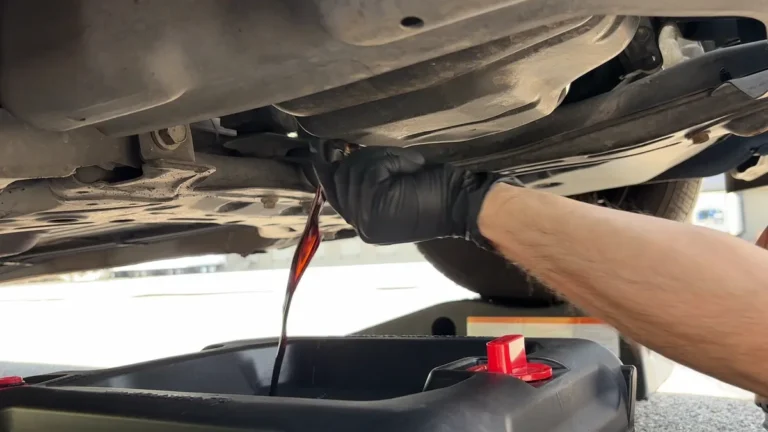
Place the drain pan beneath the plug before loosening it. Remove the plug slowly and guide it into the pan.
A loose plug can drop into the used oil. If that happens, recover it before the container is moved or recycled.
Keep the drain pan below its maximum capacity. Pour the oil into a labeled waste container before the pan becomes unstable.
Should you inspect or sample the old oil?
Yes. The old oil can reveal contamination, wear, or improper service. Place a sample in a sealed, labeled container before disposal when analysis could be useful.
| Observation | Possible meaning | Next step |
|---|---|---|
| Milky residue | Coolant contamination | Inspect the cooling system |
| Fuel-like odor | Fuel dilution or incomplete combustion | Check fuel and combustion faults |
| Metallic particles | Possible internal wear | Seek analysis or inspection |
| Heavy sludge | Contamination or failed ventilation | Diagnose before another change |
| Large water amount | Leak, condensation, or another fault | Preserve a sample and inspect |
| Very low amount in the pan | Engine leakage | Diagnose before normal operation |
Oil color alone doesn't identify a fault. Laboratory analysis can measure condition, contamination, and wear metals more reliably.
How do you replace the oil filter?
Match the filter to the engine exactly. A spin-on filter should seat evenly against its mounting surface. Follow the filter or manufacturer instructions for final tightening.
For a cartridge filter, inspect the housing, cap, and seal. Replace any damaged sealing surface or cracked plastic component.
Apply a small amount of clean oil to a spin-on gasket only when the instructions call for it. Excess oil can overflow and look like a leak.
Replace the drain-plug gasket or crush washer if specified. Discard the old washer if it's crushed, cracked, or distorted.
Does the engine need a prefill?
Only if the manufacturer specifies a procedure. Some engines use an electric pump, while others call for a measured prefill or another lubrication process.
Don't crank the engine continuously to fill the system unless directed. Long cranking can overheat the starter, battery connections, or starter motor.
Use the exact prefill amount when the manufacturer provides one. Otherwise, install the filter and add oil normally.
How should you install the drain plug?
Inspect the plug and threads before installation. Replace the plug if its threads are damaged, stretched, or contaminated.
Install it by hand before using a tool. Tighten it to the torque stated in the service information.
Don't add thread sealant unless the plug design requires it. An unnecessary sealant can strip threads or contaminate the oil.
Over-tightening can crack the oil pan or strip the threads. Under-tightening can allow the plug to loosen and drain the engine.
How do you fill the engine without overfilling?
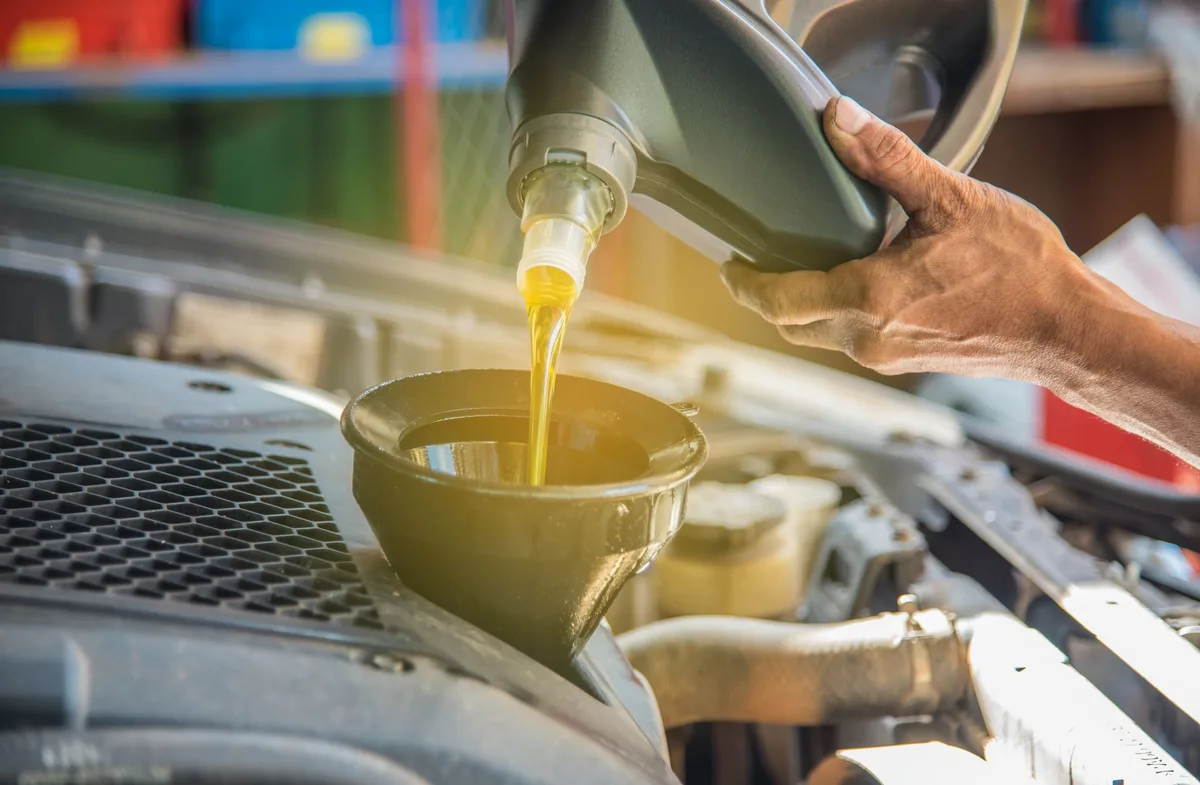
Add the specified quantity slowly through a clean funnel. The listed capacity may include the filter, internal passages, and residual oil in the sump.
Some manuals prescribe a partial prefill or a specific final quantity. Follow that method instead of automatically emptying one container into the engine.
Check the dipstick exactly as directed. The engine may need to be cold, warm, or allowed to stabilize for a set period.
Never overfill to compensate for consumption. Excess oil can foam, aerate, raise crankcase pressure, and cause leaks.
What should you do after filling?
Start the engine as directed by the service information. Watch the oil-pressure indication and listen for new knocking, rattling, or cavitation.
Check beneath the filter, drain plug, and oil pan for leaks. Confirm that the oil-level reading matches the manual's procedure after any specified settling time.
Some vehicles require a technician to enter the oil grade or specification before the monitor will reset. A dealer or shop may need to complete that step through diagnostic equipment.
When should you recheck the oil level?
Follow the manual's schedule. Check sooner if the engine consumes oil, had a recent repair, or previously ran low.
A stable baseline can change with temperature, driving pattern, or a developing mechanicalfault. Record a new reading before driving far or beginning a long trip.
What if a problem appears after the change?
Stop driving if the oil-pressure warning appears, the engine knocks, or oil leaves the engine quickly. Check the level again and find the cause before adding more lubricant.
| Problem | Immediate check | Don't do this |
|---|---|---|
| Oil-pressure warning | Shut down, verify the level, and inspect for leaks | Don't keep driving or rely on thicker oil |
| Filter leak | Filter gasket, seating, and housing seal | Don't overtighten the filter |
| Drain-plug leak | Gasket, threads, and plug torque | Don't rely on an oversized washer |
| Foamy dipstick | Level, overfill, oil grade, and air ingestion | Don't assume foaming is normal |
| Rapid consumption | Leaks, smoke, and internal engine condition | Don't treat top-ups as a permanent fix |
| Service monitor returns | Completed service entry and required oil data | Don't assume it reset automatically |
| Milky oil | Coolant contamination and cylinder-head condition | Don't refill and drive without diagnosis |
The engine should have no new leak, smoke, noise, warning, or abnormal oil level after service. Any change from that baseline deserves prompt attention.
How should you dispose of used oil and the filter?
Store used oil in a sealed, labeled container. Keep it away from children, animals, runoff, and standing water.
Take the oil and filter to an approved collection or recycling location. Used oil is regulated waste in many areas. Pouring it onto soil or into a storm drain can contaminate soil and water.
A local environmental agency or public works department can identify an approved destination. Keep the collection receipt when one is available.
Common High-Mileage Oil Mistakes That Can Cause Damage
Most oil-related damage comes from a mismatch between the lubricant and the engine. A bottle may look suitable while its viscosity, SAPS level, additive balance, or approval remains wrong.
| Common mistake | Possible consequence | Correct action |
|---|---|---|
| Choosing viscosity by age | Poor cold flow or weak hot-film retention | Follow the owner's manual |
| Assuming the label guarantees approval | Wrong emissions or additive requirements | Verify every specified element |
| Using high-SAPS oil where low-SAPS is required | Excess ash and aftertreatment damage | Match the required SAPS category |
| Adding thick oil to hide consumption | Reduced cold flow and unresolved leakage | Record use and inspect the engine |
| Adding several additives | Seal, deposit, foam, or filter problems | Use a complete formulated oil |
| Extending the drain interval by assumption | Oxidation, deposits, and accelerated wear | Follow the approved schedule |
| Mixing unrelated products | Unpredictable additive balance | Use one compliant oil when possible |
| Overfilling | Aeration, pressure, leaks, and pickup problems | Measure by the manual's procedure |
| Ignoring warning lights | Rapid lubrication failure | Shut down and diagnose immediately |
| Skipping or misfitting the filter | Contamination or restricted oil flow | Fit the exact specified filter |
Does the high-mileage label always mean thicker oil?
No. Many aging-engine formulas use the same factory viscosity as standard oil.
A vehicle specified for 5W-30 may receive a high-mileage 5W-30 with added seal conditioners. A permitted 10W-30 formula may carry the same market label.
The marketing term describes an intended application. It doesn't identify one fixed SAE grade.
Is choosing 10W-30 or 10W-40 by age safe?
No. A higher SAE number can reduce leakage across worn clearances. It can also slow circulation during a cold start.
Cold flow matters for the timing chain, cam lobes, lifters, and turbocharger. These components can receive reduced protection during startup.
Use a higher grade only when the manufacturer permits it. The engine's condition, climate, and measured consumption should support the decision.
Does matching the viscosity guarantee the right oil?
No. SAE viscosity describes fluid behavior. API, ACEA, or ILSAC categories address tested engine performance.
A lubricant can have the correct grade while using the wrong deposit-control category, SAPS level, or additive chemistry.
Common mismatches include:
- Missing LSPI protection for an applicable direct-injection engine
- A gasoline oil used where a diesel category is required
- High-SAPS oil in an engine that needs low-SAPS protection
- An oil without a mandatory OEM approval
- A performance category that doesn't fit the fuel and emissions system
- An oil with the right label but the wrong viscosity class
Match the category and any approval, not just the large number printed on the front.
Can extra additives make the oil safer?
Usually not. A correct engine oil already contains a balanced additive package.
A second seal conditioner may overcondition seals that don't need it. A detergent additive can alter deposit behavior. A friction modifier can upset the intended chemistry.
Additional products may cause:
- Foaming or aeration
- Excessive seal swelling
- Increased deposits
- Reduced filter capacity
- Emissions-system deposits
- Warranty disagreement
Use a separate additive only when the engine or lubricant manufacturer supports it. Follow the stated dosage and service interval exactly.
Can an oil-life monitor authorize a longer change interval?
Only when the manufacturer approves that specific oil and vehicle for the longer schedule. The monitor can't test the oil's actual condition.
A monitor may use elapsed time, mileage, and driving patterns. Some vehicles also account for engine conditions or temperature.
It can't directly detect fuel dilution, coolant contamination, additive depletion, or abnormal wear metals. A warning, leak, or contamination signal still needs investigation.
Follow severe-service limits when the vehicle experiences short trips, stop-and-go traffic, extended idling, towing, heavy loads, or extreme heat.
Is topping up between changes always acceptable?
Small top-ups with the correct oil can be normal for some aging engines. Use the same required viscosity, performance category, and approval.
Large top-ups can hide a developing fault. They can also disturb the additive balance when the products differ.
Don't use a different grade because the correct product isn't available. If the engine needs oil rapidly, add enough of the correct lubricant to reach a safe level, then arrange an inspection.
Record the amount, date, and odometer reading. That information reveals a consumption trend more clearly than an estimate based on the vehicle's age.
Are small amounts of mixed oil always harmful?
Two products that meet the same complete specification are generally compatible, though manufacturer guidance remains controlling. A small brand change is usually less concerning than a different viscosity or SAPS level.
Don't blend unrelated products to hide low consumption. Check each container for viscosity, performance category, SAPS level, and OEM approval.
Large quantities of the wrong oil can affect used-oil analysis. A laboratory can measure wear, contamination, and oil condition, but it can't identify every additive by its original marketing name.
Is overfilling common on aging engines?
Yes. Owners often add several quarts after finding a low reading. The engine may later appear to consume oil again because excess oil caused aeration or a leak.
A full sump can push oil into areas not designed to hold fluid. It can also expose the oil pickup to air and raise crankcase pressure.
Use the specified capacity and the manufacturer's dipstick method. Some engines require a particular engine state, stabilization time, or measurement sequence.
Are visual oil checks reliable?
Only when performed under the specified conditions. Checking while the engine runs can produce a misleadingly low result.
Some engines give an accurate reading cold. Others specify a warm engine, level surface, complete shutdown sequence, and second measurement.
Follow the manual rather than a universal method. Wipe and reinstall the dipstick correctly, then repeat an unusual reading.
Which mistakes require immediate correction?
Correct these conditions before driving:
- Wrong oil grade in the engine
- Oil level below the minimum mark
- Low oil-pressure warning
- New knocking or metallic noise
- Large external leak
- Milky oil
- Fuel-like dilution
- Metallic debris
- Overfilled sump
- Missing filter after a service
A small top-up with the correct oil is routine when consumption is stable. A warning, sudden change, or mechanical symptom calls for diagnosis.
Warning Signs That Need More Than a Change in Oil
A scheduled oil change doesn't fix worn bearings, failed seals, blocked galleries, or damaged cooling components. Warning signs help separate routine aging from a developing fault.
Which warning signs mean stop driving immediately?
Stop driving if the engine loses lubrication, overheats, or develops severe mechanical noise. A safe destination is better than a second failure.
| Warning sign | Possible meaning | Immediate action |
|---|---|---|
| Oil-pressure warning | Starvation, low level, pump failure, or blockage | Shut down immediately |
| Rapidly falling oil level | Severe consumption or external leakage | Stop and inspect |
| Heavy blue smoke | Heavy oil entry into the combustion chamber | Shut down and diagnose |
| Loud metallic knock | Bearing, rod, or valvetrain distress | Stop and arrange inspection |
| Engine overheating | Cooling failure, starvation, or internal damage | Stop safely and investigate |
| Large leak near hot exhaust | Rapid loss with burn or fire risk | Shut down away from the hazard |
| Fuel-like odor with low oil | Fuel dilution or incomplete combustion | Shut down and inspect |
| Severe foaming and low pressure | Aeration, wrong oil, or overfilling | Stop the engine |
If the pressure warning appears, switch off the engine as soon as it's safe. Don't add oil while the engine is running.
If the level is low, shut down before opening the filler. Follow the refill procedure, then inspect the cause. Severe noise, smoke, or overheating calls for professional diagnosis and safe transport.
Is rising oil consumption always an emergency?
No. A gradual, small rise can reflect aging valve stem seals, provided the engine remains within the manufacturer's stated expectations.
A sudden increase is different. So is consumption that reaches minimum between services. Heavy blue smoke, fresh leaks, or an oily exhaust also increase the urgency.
Record the exact amount and the odometer reading. Use the same approved product for each top-up.
A stable pattern can often be monitored. A rising pattern needs investigation before it becomes oil starvation.
What does an external oil leak tell you?
A visible leak proves that oil is leaving the engine. It may not show the exact source because oil can travel along brackets and undersides.
Check these common locations:
- Oil-filter housing and filter gasket
- Drain plug and sealing washer
- Oil-pan rail or pan body
- Valve-cover gasket
- Front and rear crankshaft seals
- Timing-cover gasket
- Turbocharger oil lines and seals
- Dipstick tube
- Oil-pressure sending unit
- Crankcase ventilation connections
A small damp area on an old engine may be minor seepage. A growing puddle, falling dipstick reading, or hot oil near the exhaust still needs correction.
Clean the surrounding area before checking again. Fresh oil can make the source easier to see, but it doesn't repair the leak.
What can blue exhaust smoke mean?
Blue smoke indicates oil entering the exhaust. A brief wisp during startup can reflect minor valve-stem-seal seepage in an older engine.
Persistent or heavy smoke can point to:
- Failed valve stem seals
- Worn piston rings
- Scored cylinder walls
- Cracked cylinder heads
- Damaged piston pins
- Turbocharger seal or bearing failures
Smoke during acceleration can suggest ring or cylinder leakage. Smoke after a cold start may suggest valve-stem-seal seepage.
Don't diagnose from smoke color alone. Oil pressure, compression, leak-down results, and visible engine condition provide stronger evidence.
What does milky residue in the oil mean?
Milky residue usually indicates coolant contamination, although oil and water can sometimes emulsify under other conditions.
Possible causes include:
- A failed head gasket
- A cracked cylinder head
- A warped deck surface
- A damaged intake or exhaust gasket
- A leaking cylinder-head joint
Continuing to drive can cause corrosion, sludge formation, bearing damage, and overheating.
Save a sample before replacing the oil. A pressure test and combustion-leak test can help separate gasket and crack possibilities.
Does a fuel-like odor always mean fuel dilution?
A strong fuel odor can indicate fuel dilution, especially when the oil level rises faster than expected. Small amounts may occur after repeated short trips or incomplete combustion.
Larger dilution can reduce viscosity and disturb the additive package. Rich running, stuck injectors, fuel-pressure faults, and ignition problems may contribute.
Ask for used-oil analysis when dilution is suspected. A sample taken before another change can show fuel content and related wear.
What do metal particles in the oil mean?
Metal particles deserve investigation, especially when they are large, shiny, or increasing between services.
| Observation | Possible source | Level of concern |
|---|---|---|
| Large bright fragments | Bearing or gear damage | Severe and urgent |
| Fine uniform iron particles | Surface wear or corrosion | Trend matters |
| Copper-colored particles | Bearing or bushing material | Potential bearing wear |
| Silver-colored particles | Vehicle-specific engine components | Requires analysis |
| Aluminum fragments | Engine or accessory damage | Prompt inspection |
| Iron plus coolant indicators | Possible internal coolant leak | Stop further operation |
The filter can retain some normal wear particles. A rising trend matters more than one small particle, but a large fragment still needs prompt attention.
Are sludge and varnish always caused by long oil-change intervals?
No. Sludge can also come from coolant contamination, fuel dilution, low oil levels, or failed crankcase ventilation.
Short trips and extended idling can contribute because the engine may not reach full operating temperature. Winter warm-up cycles and repeated acceleration can increase moisture loading.
Varnish on piston skirts and valve guides often reflects oxidation and hot-surface reactions. Heavy deposits can restrict flow and raise local temperatures.
Fresh oil helps prevent new deposits. Existing blockage needs diagnosis and mechanical attention.
What does engine knock during an oil change tell you?
Knock can become more noticeable with low oil, hot components, bearing wear, or a lubrication-system fault.
Record the conditions around the sound:
- Cold or hot engine
- Idle or road speed
- Momentary or continuous
- Increasing or decreasing
- Present with low pressure or low level
Metallic knocking with a pressure warning requires an immediate shutdown. Diagnose the lubrication system before further operation.
What should you collect before asking a technician to inspect the engine?
Collect useful evidence without cleaning it away. Take a sealed sample of the current oil before draining it. Keep the old filter when practical and safe to handle.
Bring the service history and top-up records. Note the mileage when consumption changed, blue smoke appeared, or the pressure warning occurred.
| Information | Diagnostic value |
|---|---|
| Exact oil specification | Confirms the required lubricant was used |
| Service and drain dates | Establishes the previous interval |
| Top-up amounts | Quantifies the consumption pattern |
| Mileage at each event | Reveals the rate of deterioration |
| Used-oil sample | Measures wear, contamination, and oil condition |
| Old filter | May show large debris or restricted flow |
| Warning-light history | Establishes when lubrication support was lost |
| Repair history | Identifies prior gasket, seal, or emissions work |
Don't add a stop-leak additive before inspection. It can alter the evidence and create a temporary appearance of improvement.
When is it safe to continue driving?
Only when there is no warning, rapid level loss, heavy smoke, or obvious mechanical noise. Stable minor seepage or a small top-up need usually calls for prompt inspection rather than an immediate shutdown.
Use these conditions to guide the decision:
- A stable, normal level supports continued careful use.
- A drop between closely spaced checks calls for stopping.
- A pressure, temperature, or knock warning requires shutdown.
- Coolant or fuel contamination needs diagnosis before further driving.
- A growing leak shouldn't wait for routine maintenance.
The owner's manual and manufacturer service information take priority over a generic rule.
Safety, Warranty, Emissions, and Used-Oil Compliance
Oil selection, handling, and disposal affect engine safety, warranty questions, emissions-system life, and local environmental compliance. Each issue has a separate requirement.
Can the wrong oil cancel the entire warranty?
No. A wrong oil doesn't automatically cancel every warranty obligation. The result depends on the written terms, applicable law, and the defect involved.
Warranty coverage may depend on whether required maintenance was performed. It may also consider whether the incorrect oil caused or contributed to the damage.
Keep the following evidence:
- Owner's manual and market version
- Required oil specification and approvals
- Product receipt
- Drain date and odometer reading
- Filter part number
- Service invoice
- Oil-level and consumption records
- Service-monitor entry, where applicable
Correct an incorrect oil choice promptly. Document the event rather than hiding it. A dealer can then evaluate coverage using the vehicle's requirements and the evidence.
What does a manufacturer approval mean?
An OEM approval shows that a product has been accepted for a defined application under stated conditions. It may cover an exact viscosity, engine family, model-year range, or service region.
A VW 504.00 approval doesn't make an oil suitable for every vehicle. A Mercedes-Benz 229.51 approval doesn't replace a Ford specification. One oil can carry several approvals and still fit only certain engines.
When a manual names an approval, match the number exactly. Confirm the viscosity separately when the specification requires it.
How can oil damage emissions equipment?
Excess phosphorus can poison a catalytic converter. Excess ash can clog certain particulate filters. Heavy oil burning can also coat and damage these components.
| Emissions component | Potential oil-related issue | Preventive requirement |
|---|---|---|
| Catalytic converter | Phosphorus poisoning or oil coating | Correct low-SAPS specification and controlled consumption |
| Diesel particulate filter | Excess ash loading | Required low-SAPS diesel oil |
| Gasoline particulate filter | Ash or lubricant-derived deposits | Exact direct-injection engine specification |
| Turbocharger | Oil-borne debris, heat damage, or seal leakage | Correct viscosity, antiwear performance, and service interval |
SAPS means sulfur, ash, and phosphorus. A low-SAPS lubricant isn't automatically right for every older engine.
Some older vehicles without a particulate filter correctly use high-SAPS oil. The current emissions design controls the requirement.
Can a seal conditioner harm an emissions system?
A properly formulated conditioner is designed to work within the lubricant's chemistry. A separate additive can upset that balance or increase deposits when used incorrectly.
Don't combine a high-mileage oil with another seal treatment unless the oil manufacturer supports it. Never exceed the stated dose.
Burned additives reach the exhaust with the oil. An engine that consumes substantial oil remains unsuitable even when the lubricant is low-SAPS.
What are the main risks during an oil change?
The main risks are hot-oil burns, crushing injuries, spills, and an incorrect refill.
Reduce those risks with direct controls:
- Let the engine cool enough for safe contact with the drain plug.
- Open the filler cap only as directed before draining.
- Position the drain pan before loosening the plug.
- Support the vehicle with rated stands or use a rated lift.
- Keep hands and eyes away from hot oil and moving parts.
- Keep oily rags in a sealed container with a tight lid.
- Prevent used oil from entering a storm drain.
- Stop draining before the pan becomes unstable.
- Use clean funnels and fittings.
Hot oil can cause serious burns. A spring-loaded plug can loosen suddenly, so remove it slowly and control it with one hand.
Where should used engine oil go?
Put used oil in a sealed, labeled container. Don't pour it onto soil, into a drain, or onto surface water.
In the United States, used oil must be recycled rather than disposed of improperly. State and local rules may add handling requirements.
In the UK and other countries, environmental agencies and local authorities provide approved collection points. Requirements can differ for workshops, farms, public bodies, and private owners.
A household oil-change service or approved public collection point is usually the simplest destination. Check local rules before transporting waste oil across a jurisdiction.
How should filters and oily absorbents be handled?
Place a used filter in a sealed container during the change. It can retain a meaningful amount of oil even when it looks dry.
Oily absorbents, gloves, and wiping cloths can also hold oil. Put them with appropriate controlled waste rather than loose household rubbish.
Don't wash oil into a driveway or storm sewer. Water can move contaminants into drains, soil, and waterways.
Which records support warranty and compliance?
Keep a disposal record when a commercial workshop handles the waste. Useful details may include the service date, oil quantity, filter, collection point, and transfer documentation.
For personal service, retain the service receipt even when local law doesn't require a disposal receipt. A product receipt, service invoice, and recycling confirmation can support your maintenance history.
| Record | Practical value |
|---|---|
| Oil specification | Confirms the required product was used |
| Purchase receipt | Supports product identity and service date |
| Draining and refilling quantity | Helps detect capacity or consumption problems |
| Filter part number | Confirms correct filter use |
| Used-oil transfer record | Supports responsible waste handling |
| Service-monitor entry | Documents completion of required service |
| Recycling receipt | Confirms the destination where available |
Local rules govern disposal, not the product label. Check the environmental agency for the area where the oil is generated.
Long-Term Monitoring and Maintenance for High-Mileage Vehicles
Long-term care depends on trends rather than one reading. A stable oil level and repeatable consumption pattern are easier to manage than a sudden change between services.
What baseline should you record after an oil change?
Record a clear baseline after the service and any manufacturer-specified settling time. Note the date, odometer reading, oil quantity, grade, filter, and final dipstick result.
Also record the presence or absence of baseline symptoms:
- Cold-start noise
- Warm idle vibration
- Blue smoke
- External leaks
- Oil-pressure indication
- Oil-level movement
- Existing warning codes
- Previous consumption rate
Don't inspect the level immediately before draining the old oil. That can make the reading look artificially low.
How should you measure the oil level?
Use the exact procedure in the owner's manual. Some engines give a reliable reading cold. Others specify a warm engine, level surface, complete shutdown sequence, and second reading.
The surface matters on many models. A sloped driveway can change the oil level against the dipstick.
Don't check while the engine is running. Oil movement and splash-back can produce a false reading.
| Measurement approach | Why it can mislead |
|---|---|
| Immediately after shutdown | Oil hasn't drained back from upper areas |
| During engine operation | Pickup dynamics and splash-back distort the result |
| On a steep slope | The oil surface tilts |
| After excessive topping-up | The new level is harder to judge |
| With a wrong dipstick | The measurement point may differ |
If the manual requires a warm reading, don't substitute a cold one. Small differences can matter near the minimum mark.
How do you track oil consumption accurately?
Record the top-up quantity and odometer reading. Keep the same units so the rate remains meaningful.
A simple calculation is:
Consumption rate = top-up amount ÷ distance since last full service × 1,000
| Hypothetical top-up | Distance covered | Calculated use per 1,000 miles |
|---|---|---|
| 1 US quart | 500 miles | 2 quarts |
| 1 US quart | 2,000 miles | 0.5 quart |
| 1 US quart | 5,000 miles | 0.2 quart |
| 1 pint | 3,000 miles | 0.2 quart |
One US quart equals approximately 0.946 liters. Use liters or 500-milliliter top-up units in metric regions.
Don't use this calculation to override a manufacturer consumption limit. The trend, symptoms, and engine design still matter.
How often should you check an aging engine?
Follow the manual's level-check schedule. Check more often if consumption is rising, a recent repair was performed, or the engine previously ran low.
Useful monitoring times include:
- Before a long drive
- Before highway use in a vehicle that consumes oil
- After a warning, leak, smoke episode, or mechanical symptom
- After any work near the drain plug, filter, or oil pan
- Whenever a new service baseline is set
- Before storing the vehicle for an extended period
Don't wait for a warning light to check a known-consuming engine. A level near minimum can fall quickly at operating temperature.
Which driving patterns require earlier maintenance?
Severe service can include stop-and-go traffic, repeated short trips, extended idling, towing, heavy loads, extreme cold, and sustained high-speed heat.
Short trips may not allow enough fuel and moisture to leave the oil. Winter warm-up cycles and repeated acceleration can increase moisture loading.
Heavy towing raises oil temperature and demand on the cooling system. Summer heat can reduce the margin for oil-control faults.
Follow the severe-service interval in the manual. Don't apply a normal interval to a vehicle that regularly performs severe work.
An oil-life monitor may extend some intervals under normal use. It doesn't override a shorter severe-service requirement or an engine condition that needs inspection.
Which engine systems deserve attention during an aging-vehicle inspection?
An oil inspection works best alongside a broader mechanical check. Look for changes in leaks, airflow, cooling, fuel delivery, and exhaust performance.
| System | What to inspect | Why it matters |
|---|---|---|
| Oil system | Filter area, pan, covers, seals, pump noise | Prevents loss and supports circulation |
| Crankcase ventilation | Breather hoses, valve cover, PCV operation | Controls pressure, moisture, and deposits |
| Cooling system | Coolant level, leaks, fan operation, pressure | Protects an engine under heat stress |
| Air intake | Filter restriction and duct condition | Supports efficient combustion |
| Fuel system | Leaks, pressure, injector condition | Prevents fuel dilution and fire risk |
| Turbocharger | Oil lines, play, exhaust smoke | Protects the bearing system |
| Exhaust | Hangers, leaks, catalyst condition | Helps distinguish internal from external leakage |
| Mounts | Engine and transmission movement | Supports noise and leak diagnosis |
A restricted air filter increases dust loading. A failed ventilation system promotes sludge. A weak cooling system accelerates oil oxidation and seal deterioration.
When is used-oil analysis useful?
Analysis can help with rising consumption, unknown history, repeated metal debris, turbocharging, severe service, or suspected coolant leakage.
A useful analysis can measure:
- Viscosity
- Oxidation and nitration indicators
- Fuel dilution
- Coolant contamination
- Water and glycol
- Iron, copper, aluminum, and other wear metals
- Additive wear
- Particle condition and contamination
Sampling at consistent intervals can reveal trends. One isolated result needs context from mileage, service history, symptoms, and the engine design.
Don't use analysis to authorize continued operation after a major warning or obvious failure. Laboratory data can't make an unsafe engine safe to drive.
What if a top-up appears to stop a small leak?
Reduced top-up need can mean that a seal is sealing better. It can also mean that the reading changed, the source remains external, or another fault has altered oil flow.
Track the exact amount and distance. Inspect the engine area for fresh oil after normal operation. A new spot means the leak remains.
Avoid a stop-leak additive before the source is identified unless the manufacturer specifically supports it. The additive can alter the evidence and mask the symptom.
What maintenance plan works best over time?
Use three records: service history, oil-consumption history, and symptom history. Each answers a different question.
| Record | Key information |
|---|---|
| Service history | Date, mileage, oil, filter, capacity, and interval |
| Consumption history | Top-up amount, mileage, and operating pattern |
| Symptom history | Smoke, leaks, noise, pressure warnings, and coolant issues |
Review the pattern at every scheduled service. Compare recent consumption with the vehicle's earlier life. Look for a gradual rise, sudden jump, or new symptom.
A properly maintained aging engine can remain reliable with its specified oil and timely service. A changing consumption pattern deserves attention before the next scheduled change.
Frequently Asked Questions
How often should high-mileage oil be changed?
Change it at the interval in the owner's manual, using whichever time, mileage, or severe-service limit comes first. The label doesn't extend that interval. If the manufacturer approves an extended-life schedule, use only the named oil and operating conditions.
An oil-life monitor is a reminder, not a condition test, so watch the level and warning lights.
Does the high-mileage label always mean thicker oil?
No. Many aging-engine formulas keep the factory SAE grade, such as 5W-30. A higher number describes hot viscosity, not aging-engine suitability.
Choose a thicker grade only when the manufacturer permits it and the engine's condition supports that choice for that model.
Can high-mileage oil stop an engine from burning oil?
It may reduce minor seepage across compatible aged valve stem seals, but it can't repair rings, bearings, or damaged seals. A sudden rise in consumption, heavy blue smoke, or a visible leak needs diagnosis. Record the amount and mileage between top-ups so a worsening pattern doesn't hide behind fresh oil.
Can I use 10W-30 when my manual calls for 5W-30?
Only if the manufacturer explicitly permits 10W-30 for that engine. Matching cold behavior isn't enough if the manual also requires a specific performance category or OEM approval. Climate and measured consumption can affect an allowed choice, but age alone doesn't authorize a thicker grade.
Is synthetic high-mileage oil better than conventional oil?
Not necessarily. A fully synthetic formula can provide strong cold-start and volatility control, while a conventional formula may meet the same required specification. Choose the base-oil type after confirming viscosity, performance category, SAPS level, and any OEM approval.
A higher price doesn't add a missing requirement.
Can I mix oil brands or high-mileage formulations?
Mixing two oils that meet the same specification is usually manageable, but don't blend incompatible grades or SAPS levels. Never add a large amount of a different oil to hide low consumption. Use the correct specified oil at the next change and obtain the full quantity of one compatible product whenever possible.