How good is valvoline motor oil: Easy guide
The question "how good is Valvoline motor oil" keeps coming up in our inbox, and the honest answer is: it depends on which bottle you're holding. Valvoline isn't one product. It's a portfolio of eight or nine tiers, from a $3 conventional 10W-40 to a full-synthetic MaxLife running $5 a quart.
Judge the wrong tier and you'll think the whole brand is either overpriced or incredible. Both can be true at the same time.
In our research into API SP licensing data and manufacturer spec sheets (as of 2026), Valvoline's top-tier MaxLife oils land in the same performance band as Mobil 1 and Pennzoil Ultra Platinum for standard passenger cars. The gap only opens when you need European ACEA C5 or C6 low-SAPS specs that the US Valvoline lineup simply doesn't carry. Let's untangle which Valvoline product actually makes sense for your engine.
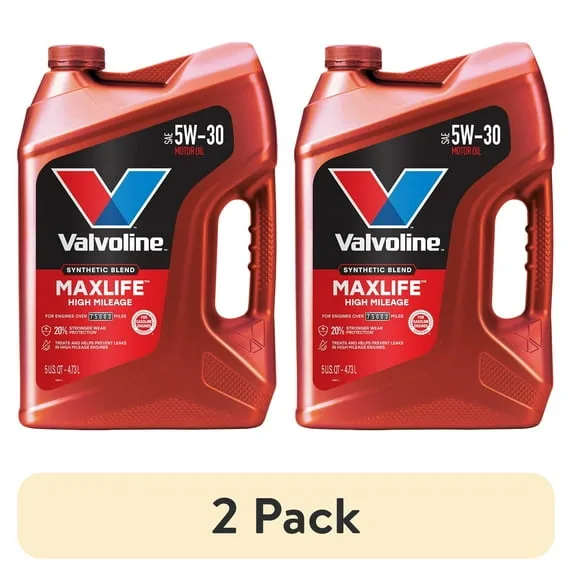
Quick Verdict: Where Valvoline Actually Lands
Valvoline motor oil is a solid pick for mainstream US passenger cars. Its MaxLife full synthetic meets API SP and ILSAC GF-6A. It costs about the same as Mobil 1 or Pennzoil Ultra Platinum.
The one real gap is missing European ACEA low-SAPS specs. For a 2022 Toyota Camry or Honda Civic, it's a no-brainer.
Valvoline Isn't One Product — Here's the Tier You're Picking
Before you judge "Valvoline motor oil," you need to know which specific product you're looking at. The brand ships several distinct lines, and their base oils, additive packages, and price points differ enough that they're almost separate products.
MaxLife Full Synthetic
This is the flagship. MaxLife 5W-30 and 0W-40 use a Group III hydrocracked base with a high viscosity index (typically 155 or above). The API SP stamp and ILSAC GF-6A mark mean it passed the full battery of engine wear, sludge, and fuel-dilution tests.
It's the tier you want for a turbocharged or GDI engine running extended intervals.
Synthetic Blend (5W-30 / 10W-40)
A synthetic-blend sits between conventional and full synthetic. The base is mostly Group II mineral oil with 10 to 30 percent Group III synthetic mixed in. It handles moderate driving fine.
You won't see the cold-flow advantage of a 0W grade, but it's still a step above straight conventional.
Durability Conventional
This is the $3-a-quart, 10W-40, API SN or SP product. It meets the letter of the spec. It just won't hold viscosity as long under heat or give you the same cold-start protection.
Fine for an older car you drive 10,000 miles a year in a moderate climate. Not the one to run in a 2023 turbocharged Subaru at -20 °F.
High Mileage and Diesel Lines
The High Mileage 5W-30 adds a conditioning package aimed at softening aging seals, which matters past 75,000 miles. The Diesel 15W-40 (API CF / CI-4) is built for light-duty work trucks and the 6.7 Powerstroke crowd. Neither is a "better" oil.
They solve a different problem.
What "Good Motor Oil" Actually Means Before You Judge Any Brand
You can't call an oil "good" without pinning down the spec it's built to meet. Here's the shorthand that separates a qualified judgment from a brand-vibes review:
- API service category (SP, SN, CF): The American Petroleum Institute licenses every oil through a 15-test engine battery. The API licensing page lists which products carry which stamp. SP is the current petrol standard; CF covers diesel.
- ILSAC GF-6A / GF-6B: These are fuel-economy-focused variants. GF-6B requires a tighter HSTST shear-stability limit (≤ 3.5 cSt at 250 °C), which keeps the oil film thinner and preserves the 3 to 5 percent fuel savings your OEM claims.
- SAE J300 viscosity grade: The "0W-20" or "5W-30" number tells you cold-cranking behavior and hot viscosity. A 0W oil must crank at 6,000 cP or less at -40 °C. That number is not marketing. It's a physics test.
- Base oil group: Group III (hydrocracked mineral) is the workhorse. Group IV (PAO) gives better cold flow and higher VI. Group V (esters) shows up in racing oils. Most mainstream brands, including Valvoline MaxLife, use a Group III formulation.
- ZDDP and SAPS: Zinc dialkyldithiophosphate is the anti-wear workhorse, but modern API SP caps it at 800 ppm to protect three-way catalysts. Low-SAPS (ACEA C5/C6) oils go even lower. If your engine manual calls for a C5 spec and you pour in a high-ZDDP conventional oil, you're trading catalyst life for lifter protection.
Get those five boxes checked and you're in the same conversation as any name-brand synthetic. Miss one, and "good" is doing a lot of heavy lifting.
Valvoline vs. Mobil 1, Pennzoil, Castrol, and Amsoil — Side by Side
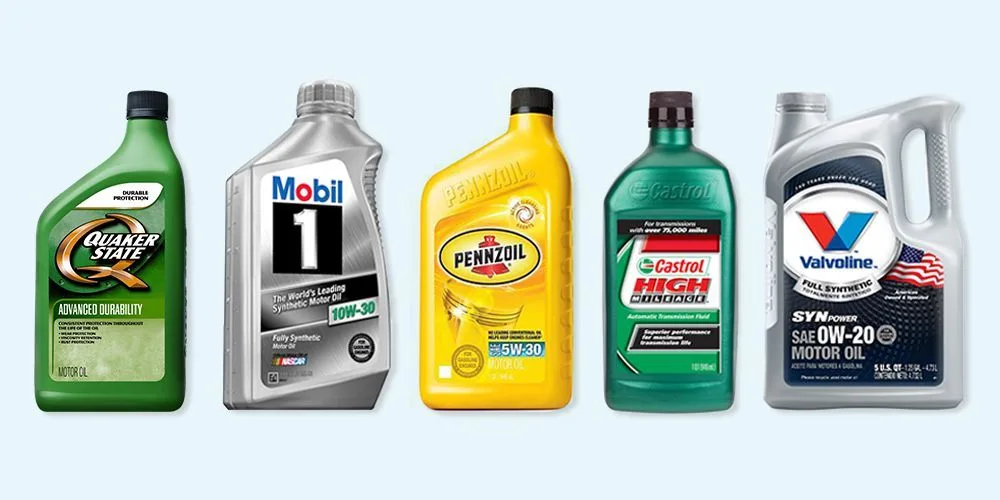
Here's how the main contenders stack up for a 5W-30, API SP, ILSAC GF-6A application. Prices are US retail ballpark as of 2026.
| Axis | Valvoline MaxLife 5W-30 | Mobil 1 5W-30 (Ext. Perf.) | Pennzoil Ultra Platinum 5W-30 | Castrol EDGE 5W-30 | Amsoil Signature 5W-30 |
|---|---|---|---|---|---|
| Base oil | Group III | Group III + IV | Group III | Group III + IV | Group IV PAO |
| API / ILSAC | SP / GF-6A | SP / GF-6A | SP / GF-6A | SP / GF-6A | SP (non-ILSAC) |
| Viscosity index (typ.) | ~155 | ~160 | ~165 | ~160 | ~170+ |
| Marketed max drain | 10,000 mi | 10,000 mi | 10,000 mi | 7,500 mi | 12,000+ mi |
| Retail price / qt | $4.50–$5.00 | $5.00–$5.50 | $5.00–$5.50 | $5.00–$6.00 | $8.00–$10.00 |
| Best use case | Value, wide availability | Cold-start + long drain | Detergent-package focus | Enthusiast brand loyalty | Track, extreme intervals |
The honest read: for a standard commuter, Valvoline MaxLife and Mobil 1 Extended Performance are within measurement error of each other. You're paying for shelf placement and brand trust more than chemistry. Amsoil earns its premium if you run a car on the track or push 15,000-mile drains in hot ambient conditions.
Pennzoil's "Full MAX" detergent package is a slight edge for cars that mostly crawl in stop-and-go traffic, where sludge and deposits build faster.
Where Valvoline Earns Its Keep
A few things make Valvoline the default reach for a lot of drivers, and they're not just marketing:
- You can find it everywhere. Walmart, AutoZone, O'Reilly, every gas station with a car-care aisle. If you're in a rural county with one strip mall, Valvoline is the only synthetic on that shelf. That convenience has real value when your oil light is on and it's 4 p.m. on a Tuesday.
- Price-to-spec ratio is hard to beat. A 12-quart case of MaxLife 5W-30 regularly hits the $55 to $60 range at warehouse clubs. Per-quart, that undercuts Mobil 1 and Castrol by a dollar or two with the same API SP / GF-6A claim.
- Cold-start protection at the 0W grade. The MaxLife 0W-20 and 0W-40 bottles meet SAE J300's 6,000 cP cold-cranking ceiling at -40 °C. In a Minnesota or Montana winter, that thinner cold film means the starter isn't fighting a semi-solid oil film, and oil pressure builds in the first two seconds of cranking.
- The Valvoline IOC network. Roughly 4,500 drive-in locations across the US. A synthetic change with filter lands around $65 to $90. For someone who hasn't touched a drain plug in years, the "I just pull in and pull out 20 minutes later" factor keeps the car on its service schedule.
- High Mileage line for older seals. If the car has 150,000 or 200,000 miles on it and you've noticed a drip at the valve cover gasket, the slightly thicker 5W-30 High Mileage blend with its seal-conditioning additives buys you another oil-change cycle without a fresh gasket job.
The through-line: Valvoline is the "you don't have to think about it" oil. It hits the spec, it's on the shelf, it costs the same as the competition, and it won't surprise you. For the vast majority of US passenger cars, that's exactly what you want.
Where Valvoline Falls Short (and What to Grab Instead)
The biggest gap in Valvoline's US lineup is European OEM specs. If you drive a 2021 Audi Q5, a 2022 BMW 330i, or a Mercedes C300, your owner's manual calls for an ACEA C5 or C6 low-SAPS oil. Valvoline's US shelves carry zero products stamped C5 or C6.
The ACEA specification database confirms which brands hold those certifications. For your car, that means Castrol MAGNATEC C5, Liqui Moly TopTec 4800, or OEM-bottled VW G0600. Picking up a Valvoline MaxLife 5W-30 for that engine saves you $2 a quart and costs you a catalytic converter or DPF in a few thousand miles.
The second gap is base-oil ceiling. Valvoline's mainstream synthetics run Group III. If you push 15,000-mile drains in 105 °F ambient conditions or track a car on weekends, you want Group IV PAO or Group V ester base.
That's Amsoil Signature, Liqui Moly, or Mobil 1 Extended Performance territory. Valvoline's VR1 race oil exists, but it's not on the Walmart shelf and it's priced like a performance product.
A smaller pain point: API SP caps ZDDP at 800 ppm. If you run a variable-valve-timing engine and you've noticed lifter rattle on cold starts, some drivers step up to a non-ILSAC, higher-ZDDP oil for extra anti-wash on the cam. Valvoline doesn't offer that in its retail lineup.
You'd go to a Quaker State or a shop blend that explicitly lists 1,200+ ppm ZDDP.
The SKU Trap: How to Not Grab the Wrong Quart at the Store
Walk into an AutoZone and see "Valvoline 5W-30" on the shelf. There are three of them. One is MaxLife full synthetic.
One is Synthetic Blend. One is a High Mileage formula. All three say "5W-30." All three carry the API SP donut.
But the base oil, additive package, and price differ by $1.50 a quart.
Here's how to not grab the wrong one:
- Read the second line on the label. "MaxLife" means full synthetic. "Synthetic Blend" means a 10 to 30 percent synthetic mix in mineral base. "High Mileage" means a 5W-30 with seal-conditioning additives, targeted at 75,000+ mile engines.
- Check the API service code. Older cans still in retail bins carry API SN. That's the pre-2020 standard. It lacks the low-temperature sludge and camshaft-wear tests that SP added. If the can says SN, put it back.
- Match the ILSAC mark. Your engine needs GF-6A or GF-6B. A can without the ILSAC "star" mark is not fuel-economy optimized. It'll still protect the engine, but you're losing the 3 to 5 percent fuel savings your OEM designed around.
- Count the quarts. A four-cylinder needs 4 to 5 quarts including the filter. A V6 or V8 needs 5 to 7. Buying a single quart means a second trip. A 12-quart case at a warehouse club costs 25 to 35 percent less per quart.
Pricing, Drain Intervals, and Real Cost Per Mile
Let's do the math that actually matters. You don't pay for a quart of oil. You pay for a quart of oil per thousand miles of engine life.
| Product (US retail, 2026) | Price / qt | Drain interval | Cost per 1,000 mi (5 qt car) |
|---|---|---|---|
| Valvoline Durability 10W-40 (conventional) | $2.75 | 3,000 mi | $4.58 |
| Valvoline Synthetic Blend 5W-30 | $3.75 | 5,000 mi | $3.75 |
| Valvoline MaxLife 5W-30 (full synthetic) | $4.75 | 10,000 mi | $2.38 |
| Mobil 1 Ext. Perf. 5W-30 | $5.25 | 10,000 mi | $2.63 |
| Amsoil Signature 5W-30 | $9.00 | 12,000 mi | $3.75 |
The conventional oil is cheapest per visit, but you're driving to the shop or crawling under the car three times as often. Labor alone at a shop runs $30 to $50 per visit. Once you add labor, MaxLife at 10,000-mile intervals actually undercuts Durability at 3,000-mile intervals in real cost-per-year for a car that logs 15,000 miles.
You go to the shop one and a half times instead of five.
The catch: the 10,000-mile number assumes "normal" driving. Short trips under 10 minutes, extreme heat, heavy towing, or dusty off-road conditions all cut that in half. Your OEM manual's "severe service" table tells you when to drop back to 5,000 or 7,500.
Matching Your Engine Spec to the Right Valvoline (or Deciding Not to Run One)
Pull out your owner's manual. Find the "Engine Oil" page. You need three numbers: viscosity (0W-20, 5W-30, etc.), API level (SP, CF), and any OEM-specific spec (dexos2, VW 504 00, Ford WSS-M2C961-A, BMW LL-04).
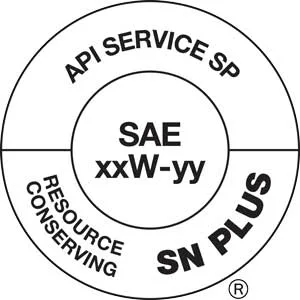
Now cross-reference against Valvoline's product matrix on valvoline.com. Most US-market sedans and trucks want API SP, ILSAC GF-6A, and a 0W-20 or 5W-30 viscosity. Valvoline MaxLife covers that cleanly.
You're in luck.
But here's where you step outside:
- European cars with DPF or GDI: You need ACEA C5 or C6. Valvoline US doesn't make it. Grab Castrol MAGNATEC C5 or the OEM's own bottled oil.
- GM dexos2 or Ford WSS-M2C961-A: Valvoline RPM 5W-20 is licensed to both. That's the one to grab, not MaxLife.
- Diesel (6.7 Powerstroke, Duramax, Cummins): Valvoline Diesel 15W-40 (API CF / CI-4) works, but check whether your truck's manual calls for a specific viscosity at 20 °F. In cold climates, a 10W-30 diesel is safer.
- Extended-interval European OEMs (15,000 to 30,000 km): Those drain intervals assume a C5/C6 oil with a specific TBN and ash profile. A US-market Valvoline won't hit that. Use the OEM spec.
If the manual says "any API SP 0W-20" and you don't have a DPF, Valvoline MaxLife 0W-20 is a legitimate, spec-correct choice. No reason to pay extra for a name you can't pronounce.
Mistakes That Wipe Out Any Oil's Advantage
The oil is only as good as the install. Here's what undoes even a perfect bottle of MaxLife:
- Skipping the filter. Oil holds contaminants in suspension. The filter catches them. Pour in fresh oil and leave a clogged, bypassed filter, and you're running 50 percent spent slurry. Always use an OEM-spec or better filter (Mann, Bosch, Wix).
- Overfilling. A half-quart over the "Full" line on the dipstick foams the oil at speed. Aeration kills lubrication. Check the dipstick cold, then again after 10 minutes of driving. Adjust.
- Wrong drain-plug torque. Strip the thread and you leak. Under-torque and the magnet wire washes out. OEM spec is usually 25 to 30 ft-lbs with thread-loctite. A torque wrench is a $25 tool that saves a $200 rearmain seal job.
- Mixing API SN and API SP on the same engine. If you top off with an SN can from the gas station, you're diluting the SP additive package. The engine still runs. You just lose the cam-wash and low-temp sludge protection that SP added.
- Ignoring the "severe service" table. Your manual's note about "frequent short trips under 10 minutes" or "towing over 3,500 lbs" drops the recommended interval from 10,000 to 5,000. Running 10,000 in that regime is like stretching a rubber band past its limit. It works for a while, then it snaps.
- Letting the oil sit for 12 months between drives. If the car sits in a garage and only gets 2,000 miles a year, the "10,000 miles" number means nothing. Time degrades the additive package. Change it every 12 months regardless of mileage.
None of these mistakes are Valvoline-specific. They'll wreck Mobil 1, Castrol, or a $3 conventional oil equally. But they turn a $50 oil into a $50 problem, and the engine pays the bill.
Valvoline IOC vs. DIY: When the $70 Service Actually Makes Sense
The short answer: if you don't have a drained-pan space, a torque wrench, and 40 minutes to spare, the $70 to $90 drive-in change is a fair trade. You're paying for convenience and a guarantee that someone else torqued the drain plug and seated the filter.
DIY makes sense when you've done it before, you have a drain pan and the right filter, and the car is a standard 4-cylinder or V6. You'll save $50 per visit and learn what the underside of your car actually looks like. For a V8 or a car with a plastic drain plug, the risk of a stripped thread or a missed filter sealant blob is real.
That's where the IOC's "we handle it" model earns its price.
One thing to check before you pull in: ask whether they use an OEM-spec filter or a generic one. A $2 filter difference is minor, but a bypassing filter on a turbo engine is not.
Quick Answers to the Questions People Actually Ask
Is Valvoline MaxLife the same as Mobil 1?
No, but they're close. Both use a Group III base, carry API SP and ILSAC GF-6A, and hit the same 10,000-mile marketing interval. Mobil 1 adds a small Group IV fraction for a slightly higher viscosity index.
In a daily commuter, you won't feel the difference.
Can I mix Valvoline and Pennzoil in the same engine?
You can, and it won't harm the engine in a pinch. The additive packages are compatible. But mixing means neither oil's full formulation is doing its job.
Top off with whatever matches the spec, and change out the full volume at the next service.
Does Valvoline make a good diesel oil?
For light-duty work trucks, yes. The 15W-40 (API CF / CI-4) handles a 6.7 Powerstroke or a Duramax fine under normal duty. For a heavy-duty tractor or a long-haul fleet, step up to a CI-4 Plus or CK-4 rated diesel from Pennzoil, Chevron Delo, or Fuchs.
Is Valvoline available in Europe?
Valvoline Europe is a separate product line with different SKUs. It does carry some ACEA C3 grades, but the US and EU ranges don't overlap. Check the bottle's label for your specific OEM spec before you buy.
Final Call: Who Should Run Valvoline and Who Shouldn't
Run Valvoline MaxLife or RPM if you drive a mainstream US sedan, truck, or SUV, your manual says API SP, and you want a shelf-stable, spec-correct oil at a fair price.
Step outside the brand if you drive a European car needing ACEA C5 or C6, you're tracking a car and want Group IV PAO base, or you're running a heavy-duty diesel past 500 hours a year. In those cases, the spec is the boss, and Valvoline's US lineup simply doesn't cover it.
For everyone else, grab the right tier, match the viscosity, skip the SN cans, and drive 10,000 miles before you think about it again.