How Many Quarts of Motor Oil: Easy guide
You've got the car jacked up, drain plug out, fresh filter in hand, and now you're staring at a quart bottle wondering how many quarts of motor oil you actually need. Most owner's manuals list one number, but that number isn't what you pour. The gap between total capacity and actual fill volume is where most DIY oil changes go wrong.
A 5.7-liter V8 might list 5.7 quarts of total capacity, yet the real pour after a full drain lands closer to 4.5 quarts. The difference is trapped in the new filter's paper element and the oil passages that never fully drain. Your oil grade must match the OEM spec per the SAE J300 viscosity system, but the volume question is purely mechanical.
Here's the math so you nail it on the first pour.
Quick Answer
Most passenger engines need 3.5 to 5.7 quarts after a full drain. Your owner's manual lists the total capacity. Subtract one quart for the new filter's residual soak.
Then verify with the dipstick, not the number on the page.
The Number in Your Manual Isn't What You Pour: The Quick Math
Here's the core confusion. Your owner's manual says "Oil capacity with filter: 5.7 quarts." That's the total volume the engine can hold. It's not what you pour in after a drain.
The new filter soaks up roughly 0.5 to 1.0 quart of that volume before you even start the engine. Add the thin film on cylinder walls and passages that never fully drain, and your actual pour lands 0.5 to 1.5 quarts below the listed number.
The quick formula most mechanics use: take the manual's "with filter" figure, subtract one quart, pour that, then check the dipstick. A 4-cylinder listing 4.2 quarts means you pour about 3.2. A V8 at 5.7 means roughly 4.5.
A 6.7-liter diesel at 12 quarts means around 10.
That one-quart buffer isn't arbitrary. Thinner synthetics like 0W-16 or 0W-20, the grades most US-market engines specify as of 2026, wick into the filter paper a bit faster than a 5W-40. But the residual volume still sits in that half-to-one-quart range regardless of viscosity.
You don't need to hit a number dead center. You need to land between the MIN and MAX marks on the dipstick. The formula gets you close so the final adjustment is just a quarter-quart top-off.
What Actually Changes Your Quart Count: Engine, Filter, and Situation
Three variables shift your pour amount. If you can't pin these down, you're guessing.
Engine size and configuration. A 2.0-liter 4-cylinder and a 6.4-liter V8 pull from completely different oil pans. The 4-cylinder might list 3.4 to 4.2 quarts total. The V8 lists 5.5 to 7.5.
Diesel inline-6s jump to 9 to 12. Bigger pan, more capacity, more oil to pour.
Filter type. A spin-on cartridge filter on a sedan soaks up about 0.5 to 0.75 quart. A large canister-style filter on a 6.7-liter diesel can hold 1.0 to 1.5 quarts of residual. If you're swapping a smaller filter for a larger one on the same engine, your pour drops by half a quart.
Check the filter spec, not just the engine.
Full drain versus top-off. This is where the math splits completely. A full drain-and-refill starts from zero. You pour capacity minus filter residual.
A top-off means the engine already has oil in it. You're filling from MIN to the midpoint of the range. That's usually 0.25 to 0.5 quarts, not four or five.
Sealed engines with no dipstick. A growing number of newer turbo-charged 4-cylinders dropped the traditional dipstick. The engine control module reads level via an electronic sensor instead. You pour the manufacturer's stated fill amount, run the engine 30 seconds, shut it off, and the dash confirms "level OK" or prompts you to add oil.
No dipstick, no guessing.
If you're doing a full change on a standard engine with a dipstick, the logic is simple: if the manual says X quarts with filter, pour X minus 1, start the engine, shut it off, wait two to three minutes, pull the dipstick, and adjust. That's the whole tree.
The Full Oil Change Workflow: Drain, Filter, Pour, Verify
Here's the sequence that works every time, in the order it matters:
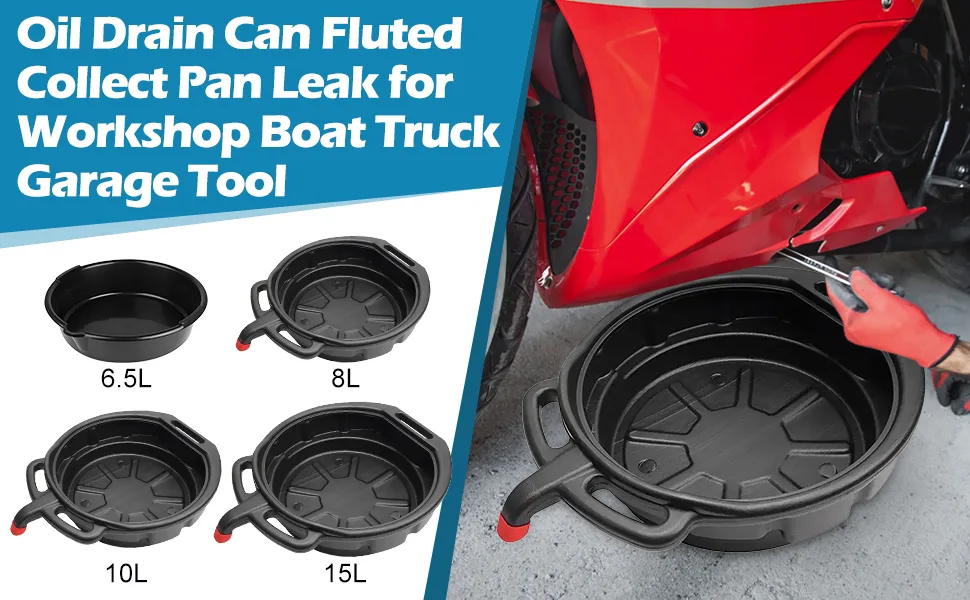
Drain. Warm the engine (idle two to three minutes so oil flows freely). Car on level ground. Remove the drain plug and let it run eight to ten minutes. Catch the full volume in a pan. Torque the plug back on with a fresh copper or CR washer.
Filter. Remove the old filter. Dab a thin film of fresh oil on the new filter's rubber seal. Hand-tighten, then add three-quarters of a turn. No wrench on the housing unless the spec calls for it.
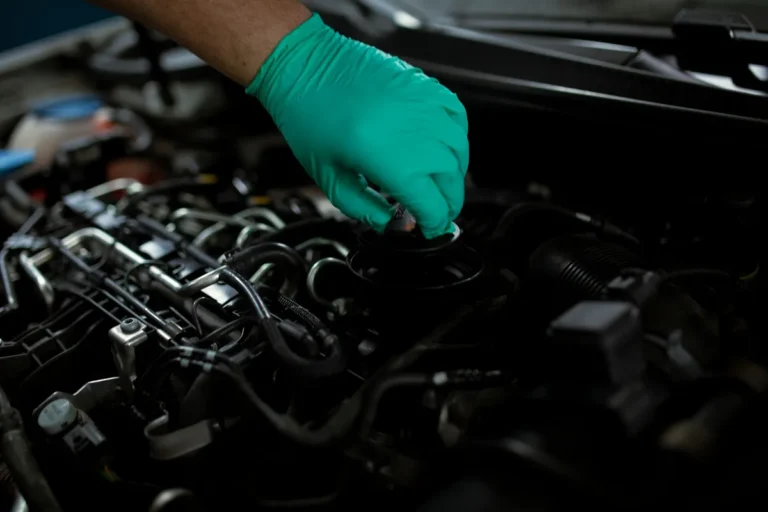
Initial pour. Using your capacity-minus-one-quart formula, pour the calculated amount through the fill cap. Slow and steady. A funnel helps. Don't pour fast enough to trap air.
Circulate and settle. Start the engine. Let it idle 20 to 30 seconds. Shut it off. Wait two to three minutes. The oil needs to drain back into the pan and the filter needs to fully load.
Verify. Pull the dipstick, wipe it clean, re-seat it fully, pull it again. You want the level between the two marks, closer to the midpoint. If you're at or below MIN, add a quarter-quart at a time. Re-check after each addition and a fresh two-minute wait.
Close out. Torque the drain plug. Wipe the fill cap. Record date and mileage. Reset the oil-life monitor on the dash.
The whole thing takes 20 to 30 minutes if your tools are ready. The pour is the only step where the "how many quarts" question actually matters, and you've already done the math.
The Four Mistakes That Turn a 20-Minute Job Into a Problem
Pouring the full capacity number. You see "5.7 quarts" in the manual and pour 5.7. The filter soaks up 0.75. The passages hold another 0.5.
You're now one to 1.5 quarts over MAX. Excess oil aerates in the crankcase, foams past the seals, and in sealed engines can trigger a hydrocarbon sensor fault code. Fix: pour capacity minus one, verify with the dipstick.
Reading the dipstick while the engine is running or the car sits on a slope. Oil sloshes. The reading is meaningless. Shut the engine off.
Park on flat ground. Wait two to three minutes. Then pull, wipe, re-seat, and read.
Skipping the settle time between top-offs. You add a quarter-quart, pull the dipstick ten seconds later, and think you're still low. The oil hasn't reached the bottom of the sump yet. Wait two full minutes between each addition.
You'll save yourself an extra half-quart of overfill.
Wrong viscosity grade. Your manual specifies 0W-20. You grab the 5W-30 because it's on sale. For the first couple thousand miles, the engine runs fine.
Long-term, the thinner oil's cold-start protection is what the OEM engineered for. Using a heavier grade in a 0W-20 spec engine can void your powertrain warranty. Viscosity choice is a compliance call, not a preference.
None of these mistakes are catastrophic in one cycle. Run them repeatedly, though, and you're shortening bearing life, stressing seals, and creating check-engine lights that cost more at the shop than a $12 filter and $30 in oil would have.
Capacity Ranges by Engine Type and How Many Bottles to Grab
Here's the quick reference so you walk into the parts aisle and pick up the right count:
| Engine type | Total capacity (qt) | Approximate pour (qt) | Bottles to buy |
|---|---|---|---|
| 2.0 to 2.5 L 4-cyl | 3.4 to 4.8 | 2.4 to 3.8 | 4-qt + 1-qt |
| 3.0 to 3.6 L V6 | 4.2 to 5.8 | 3.2 to 4.8 | 5-qt or 4-qt + 1-qt |
| 4.6 to 6.4 L V8 | 5.5 to 7.5 | 4.5 to 6.5 | 6-qt or 4-qt + 2-qt |
| 6.0 to 6.7 L diesel I6 | 9.0 to 12.0 | 8.0 to 11.0 | 12-qt jug |
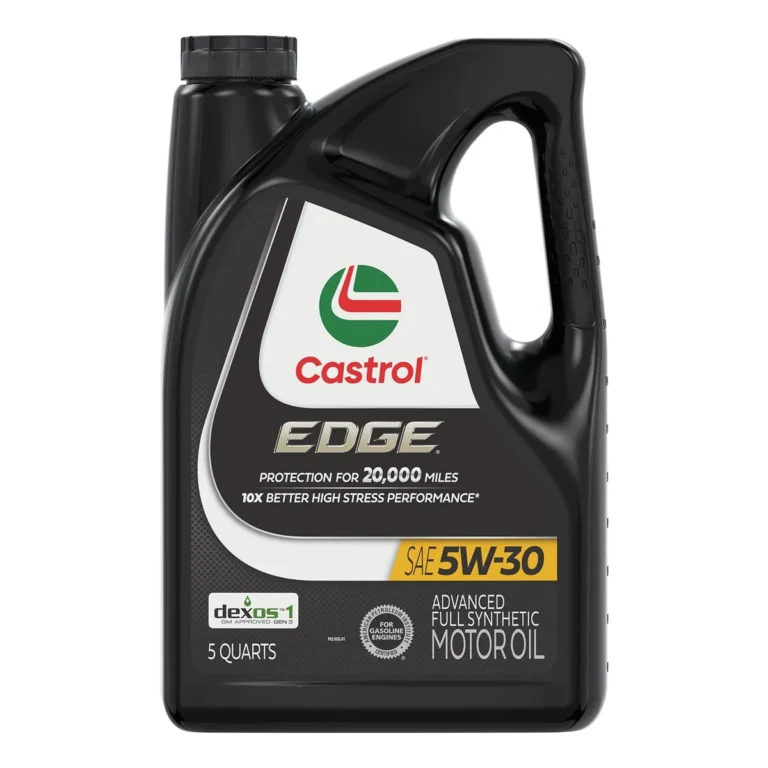
The "bottles to buy" column assumes US retail packaging: 1-qt, 2-qt, 4-qt, 5-qt, 6-qt, and 12-qt containers. As of 2026, most big-box auto parts stores stock all of these in the common SAE grades. If your pour lands at 4.5 quarts, grab a 5-quart bottle.
You pour 4.5 and use the last half as a top-off or keep it for the next 500-mile check.
If you're doing a diesel truck or a large V8, the 12-quart jug is the practical option. You pour 10, and the remaining two quarts cover a top-off or a small generator. Don't buy three 4-quart bottles for a 6.7-liter.
You'll open three cans and waste half of the last one.
One rule of thumb: always buy one quart more than your calculated pour. That extra quart is your top-off buffer and your mess buffer. You can return an unopened 1-quart bottle.
You can't return the oil that aerated in the crank because you were a half-quart short.
Safety, Disposal Rules, and the Warranty Trap
Hot oil is the first hazard. After running, engine oil sits above 250 °F. A splash on bare skin is a second-degree burn waiting to happen.
Let the engine cool for at least five minutes before touching the drain plug or sump.
Jacking safety is non-negotiable. Use the factory-specified lift points, not the frame rails. Wheel chocks on the opposite axle.
The car must be on dead-level ground before you slide underneath. If the vehicle shifts while you are under it, the outcome is not survivable.
On the disposal side, the EPA classifies used motor oil as a hazardous waste. Pouring it into a drain, onto soil, or into a storm sewer is illegal in every US state. Transfer it to a sealed, labeled container and drop it at an authorized facility.
Most auto parts stores and fire departments accept small volumes at no charge. In the UK, DEFRA designates used oil as hazardous waste under the Environment Act 1995. Your local council or a licensed processor handles collection.
The warranty angle is the silent trap. Your OEM specifies an SAE viscosity grade in the owner's manual. Pour 5W-30 into a 0W-20 spec engine and you have deviated from the manufacturer's requirement.
That single deviation can void your powertrain warranty the next time a bearing or seal fails.
And overfilling past MAX? That is not a warranty repair. Oil weeping past the crank seal or valve stem seals, caused by excess crankcase pressure, is classified as owner-caused damage by virtually every OEM.
You will not get that fixed under warranty.
Frequently Asked Questions
How many quarts does a 5.7 Hemi need?
A 5.7-liter Hemi lists 5.7 quarts total capacity with filter. Your actual pour after a full drain lands around 4.5 to 5.0 quarts. Check the dipstick after the two-minute settle to confirm you are between MIN and MAX.
What do I do if my engine has no dipstick?
Sealed engines use an electronic oil-level sensor read by the engine control module. Pour the manufacturer's stated fill amount, idle the engine 20 to 30 seconds, shut it off, and wait three minutes. The dash confirms "level OK" or prompts you to add oil.
No dipstick means no guessing.
Is a small overfill actually a problem?
Yes. Even half a quart past MAX foams the oil in the crankcase. Aeration drops lubrication pressure and pushes oil past seals.
In sealed engines, the hydrocarbon sensor picks up oil vapor and throws a P0456 code. Correct it by draining the excess through the dipstick tube or the fill port.
How many quarts for a quick top-off?
You are filling from MIN to the midpoint of the dipstick range. That is typically 0.25 to 0.5 quarts on a 4-cylinder and 0.5 to 1.0 quart on a V8. Add in quarter-quart increments, wait two minutes, and re-check.
Do I need to replace the oil filter every oil change?
Yes. A used filter is saturated with metal particles, varnish, and degraded additives. Running it another 5,000 miles starves the engine of clean filtration.
The filter costs $8 to $12. The bearings it protects cost $3,000 to $6,000 to replace. The math is not close.
What viscosity should I use in cold climates?
Match the OEM spec, not the weather. If your manual says 0W-16 or 0W-20, that grade is engineered for your climate zone. You can go one SAE weight thicker for sustained operation below 5 °F, but the "W" rating is what protects cold starts.
Stick with the manual's call.