What Is the Best Brand of Synthetic Motor Oil: Honest Review
The answer to “what is the best brand of synthetic motor oil” depends on your engine, not the logo alone. A 5W-30 with the wrong approval can be a poor choice, while a less familiar brand may be the exact factory match your engine needs. The real winner is the product that meets your required viscosity, specification, and service conditions.
As of 2026, common North American requirements include API SQ, API SP, and ILSAC GF-6. Many European engines call for an ACEA sequence and a named OEM approval. Start with those requirements, then compare the brands using clear technical evidence rather than marketing.
Quick Answer
What is the best brand of synthetic motor oil? There is no universal winner. Choose the exact viscosity and approval your manual requires.
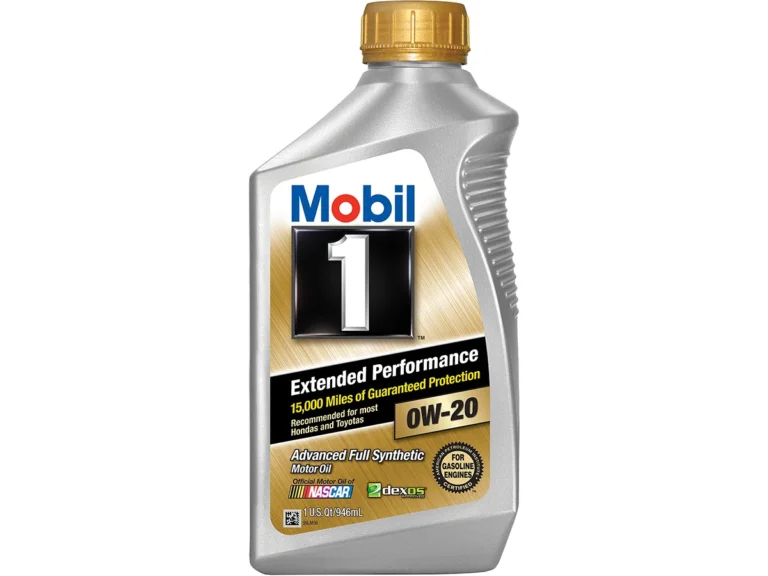
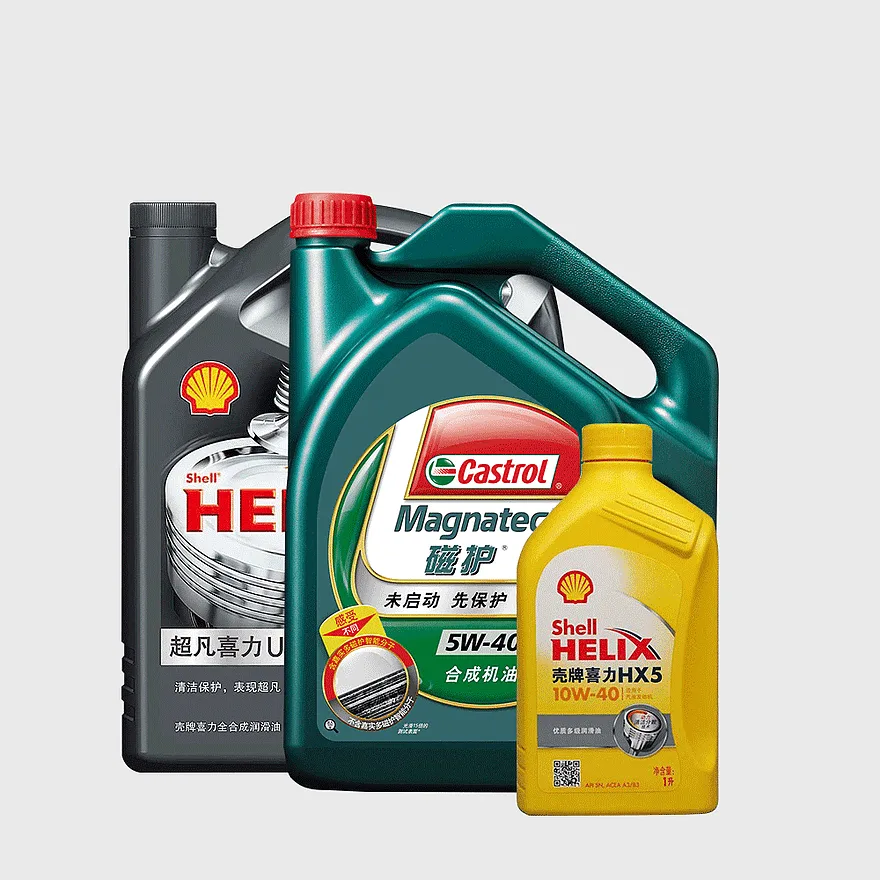
Mobil 1, Castrol EDGE, and Shell Helix are common options. Verify the market-specific label before buying.
Why There Isn’t One Universal Best Synthetic Oil Brand
A brand name covers many products, markets, viscosity grades, and approval lists. The best choice can change between two cars that use the same platform.
Think about what a label must tell you. A brand may sell a 0W-20 oil for one engine and a 5W-40 oil for another. It may offer a factory-fill formula in one country and a different retail formula elsewhere.
Comparing only the parent company is like comparing all tires by the automaker that supplied them.
The exact product matters more than the logo
A fair comparison identifies six things:
- The full product family
- The SAE viscosity grade
- The API, ACEA, ILSAC, or JASO category
- Any named OEM approval
- The country and market version
- The drain interval for which the oil was approved
The production date and lot code matter for traceability. They help you document what was installed and when you bought it.
Two products can carry the same viscosity while using different base stocks and additives. One may be optimized for cold starts. Another may be formulated for extended drain intervals.
A third may be designed around a gasoline particulate filter.
That does not make either one wrong. It makes the applications different.
What makes one oil better for a particular engine?
“Better” depends on the job the oil must do. An oil that protects a naturally aspirated gasoline engine may not suit a hard-driven turbocharged model.
| Vehicle or operating condition | More important oil traits | Why they matter |
|---|---|---|
| New vehicle under warranty | Exact factory specification and approval | Keeps service and warranty records straightforward |
| Repeated cold starts | Cold-flow performance and seal compatibility | The engine must oil quickly before it reaches full temperature |
| Turbocharging or sustained high load | Oxidation resistance, volatility control, and deposit protection | Heat and airflow place more stress on the oil |
| Older or high-mileage engine | Correct viscosity, approval, and compatibility | Condition matters more than the vehicle’s age alone |
| Gasoline particulate filter or SCR system | Correct SAPS level | After-treatment components can be sensitive to phosphorus and sulfur |
| Long approved drain interval | Formula approved for that interval | A standard oil may not be designed for the longer service period |
| Mixed household fleet | One approved product covering several engines | Simpler purchasing and fewer service mistakes |
Oil performance is a system. The engine, fuel, driving pattern, filter, service interval, and emissions equipment all affect the result. Changing the formula cannot compensate for a wrong grade, poor sealing, or a neglected engine.
The same brand may sell different formulas by region
Oil formulations can vary between the United States, Canada, the United Kingdom, Europe, Japan, and other markets. The container may look nearly identical while the approval list changes.
Regional versions can differ in several ways:
- Base-stock choice
- Viscosity grade
- Additive balance
- Sulphated ash, phosphorus, and sulfur content
- OEM approvals
- API, ACEA, or JASO category
- Package size
- Drain-interval claim
A U.S. bottle should not automatically be treated as identical to a European product with the same family name. Check the certification, approval code, viscosity, and local technical data before buying.
Brand reputation is useful, but it cannot replace fit
Mobil 1, Castrol EDGE, Shell Helix, Pennzoil Platinum, Valvoline, TotalEnergies, Motul, AMSOIL, Red Line, Royal Purple, RAVENOL, FUCHS, Repsol, PETRONAS Syntium, and Millers Oils all have established technical footprints. They are reasonable places to begin a search.
None earns an automatic win. A premium product with the wrong approval can be a worse fit than an affordable product that meets the exact specification.
OEM-supplied brands have a different advantage. Ford Motorcraft, ACDelco, Mopar, Toyota Genuine Motor Oil, and Honda Genuine Motor Oil often provide a straightforward factory match. They may not offer the widest viscosity range or retail availability.
What should you do when several brands meet the same specification?
Use this order:
- Remove every product with the wrong viscosity.
- Remove every product missing a required approval.
- Check the approved drain interval.
- Compare published oxidation, volatility, wear, and deposit data.
- Favor current certification and traceable distribution.
- Consider availability, package waste, and total service cost.
If no product appears to meet the manual, contact an authorized dealer or the manufacturer. Do not guess based on viscosity alone.
Start With Your Manual: Viscosity, Oil Capacity, and Required Approval
Your engine’s manual defines the oil it was engineered to use. It may specify a viscosity, performance category, OEM approval, or all three.
How do you identify the exact engine requirement?
Start with the year, make, model, trim, engine, fuel type, and build date. Check the VIN or build plate when the model year crosses a production change.
A single nameplate can cover several engines. One version may use 0W-20, while another uses 0W-30. A turbocharged version may also require a different approval from the naturally aspirated model.
Look for labels such as:
- Engine oil specification
- Engine oil viscosity
- Recommended engine oil
- Approved engine oil
- Oil-change interval
- Severe conditions
- Factory-fill oil
The wording matters. “Use SAE 0W-20” is different from “use 0W-20 oil meeting specification XYZ.” A named approval usually leaves less room for interpretation.
The filler cap may show a grade or standard. Treat it as a quick reminder rather than the only source. The manual and emissions plate provide more complete information.
What do the numbers in 0W-20 and 5W-30 mean?
An SAE viscosity grade describes oil flow across temperature. It does not measure engine cleanliness, wear protection, or approval status.
The number before W describes cold-temperature behavior. The number after W describes viscosity at normal operating temperature. “W” comes from winter-rated cold behavior under SAE J300.
A 0W-20 oil is not limited to freezing weather. It can be correct in a warm climate if the engine was designed for that grade. A 5W-30 can suit a broad range of climates.
It simply has a different cold-flow classification.
| Common SAE grade | Common application pattern | Critical caution |
|---|---|---|
| 0W-16 | Some newer, efficiency-focused engines | Often limited to tightly specified applications |
| 0W-20 | Many newer gasoline engines with advanced emissions systems | Confirm the required API, ILSAC, or OEM category |
| 0W-30 | Many modern and older gasoline engines | Verify that the manufacturer permits it |
| 5W-30 | Broad use across many conventional gasoline engines | Some newer engines require a specific 0W grade |
| 0W-40 or 5W-40 | Selected hot-climate, high-load, turbocharged, or older applications | Not a blanket upgrade for every engine |
| 0W-50 or 5W-50 | Specific high-load or specialist applications | Clearance, pumping, and consumption need careful review |
A common mistake is treating the lower number as a sign of quality. A 0W-30 is not automatically better than a 5W-30. It simply meets a different SAE viscosity classification.
The same problem appears with thicker oils. A 10W-40 may flow more slowly during cold starts than a 5W-30. That can be a poor choice for an engine that needs fast circulation at startup.
What do HTHS and viscosity index add?
HTHS stands for high-temperature high-shear viscosity. It is measured at 150°C and helps describe oil-film behavior under hot, high-load conditions.
SAE J300 sets minimum HTHS values for certain viscosity grades. Higher-viscosity grades generally have higher minimum values. An oil should still meet its full grade under the complete SAE testing requirements.
| SAE grade example | Minimum HTHS requirement under SAE J300 |
|---|---|
| 0W-16 | 2.3 mPa·s |
| 0W-20 | 2.6 mPa·s |
| 0W-30 | 2.9 mPa·s |
| 0W-40 | 3.5 mPa·s |
| 5W-30 | 2.9 mPa·s |
| 5W-40 | 3.5 mPa·s |
Viscosity index shows how much viscosity changes with temperature. A higher index is not automatically better. Engine design, additives, seals, and operating conditions still control the result.
Does the manual’s capacity match the amount you should buy?
Not always. The listed capacity may refer to a drain-and-fill procedure, a refill level, or a specific system configuration.
Account for:
- Oil remaining in the sump
- Oil inside the replacement filter
- Oil retained in an oil cooler or external filter
- The specified refill procedure
- The exact drain method
For example, a manual may list 5.0 US quarts while a full service leaves enough oil inside for only 4.7 US quarts to reach the correct level. The owner’s manual or service information should settle the calculation.
Check the capacity in the units supplied. One US quart equals about 946 mL. A 5-quart container is not the same as a 5-litre container.
Then choose a sensible package size. Repeatedly opening one large jug exposes it to more air and moisture. A smaller package is often better if the extra oil would sit unused.
What is a factory-fill oil?
A factory-fill oil is the oil installed at the factory, or the oil specified for the vehicle’s original configuration. It may share a viscosity with other approved oils while using a different formula.
Manufacturers may specify a factory-fill oil for several reasons:
- Break-in requirements
- Friction characteristics
- Emissions-system compatibility
- Oil consumption control
- Sealing behavior
- Calibration around a particular viscosity
If the manual says that a factory-fill or break-in oil is required, follow that instruction before switching. A high-friction or high-performance oil may be unsuitable during a specified break-in period.
If the manual allows an alternative, verify its exact approval. “Same viscosity” is not enough unless the manual says so.
How do oil-change intervals affect your choice?
The oil’s approved service interval matters as much as its viscosity. Some manuals permit 10,000 or 15,000 miles under normal conditions. Others specify a shorter interval for severe service.
A long-life oil is designed around a specific combination of:
- Engine design
- Fuel chemistry
- Additive package
- Oxidation resistance
- Deposit control
- Volatility
- Service conditions
Do not assume every 0W-20 or 5W-30 supports a 10,000-mile interval. An oil approved for 5,000 miles may still fit a 5,000-mile schedule perfectly.
Severe service can include:
- Frequent short trips
- Extended idling
- Heavy stop-start traffic
- Repeated high-speed driving
- Heavy towing
- Repeated track use
- Extreme cold or heat
Use the shorter interval your manufacturer defines for those conditions. A premium oil does not cancel the effects of an unsuitable drain schedule.
What should you record before shopping?
Build a short specification sheet from the manual.
| Item | What to write down |
|---|---|
| Vehicle | Year, make, model, trim, engine, fuel type |
| Required viscosity | Exact SAE grade |
| Performance category | API, ILSAC, ACEA, or JASO category |
| OEM approval | Full approval name or code |
| Capacity | Drain-and-fill and refill quantities |
| Normal interval | Distance, time, or both |
| Severe interval | Distance or time |
| Factory-fill restriction | Required or not applicable |
| Emissions equipment | GPF, DPF, SCR, catalytic converter, or none |
| Additive warning | Prohibitions in the manual |
This record prevents a smooth-looking bottle from replacing the actual requirement.
How does the process work in a simple example?
Suppose a manual calls for SAE 0W-20, API SQ, and 4.8 US quarts. The shop has three candidate oils.
- Candidate A is 0W-20 and meets API SQ.
- Candidate B is 0W-20 but lists API SP.
- Candidate C meets API SQ but is 0W-30.
Candidate A matches the example specification. Candidate B has the right viscosity but not the named category. Candidate C has the right category but the wrong viscosity.
A dealer may authorize another product for a documented fleet or service reason. That exception should be confirmed in writing and recorded. It should not be inferred from a similar label.
API, ACEA, ILSAC, and OEM Approvals: What Each Label Means
An oil label can contain several kinds of requirements. A viscosity grade is not the same thing as a performance category. A performance category is not always the same as an OEM approval.
Here is the distinction that matters most.
What does an API category confirm?
An API category confirms that an oil passed the tests included in that category. It does not confirm compatibility with every engine carrying the same make or model.
API publishes engine oil categories and licensing information through its official API website. The familiar donut is linked to the API licensing program. It is useful evidence, but the category and viscosity still need to match your vehicle.
As of 2026, API SQ is the newest current API passenger-car gasoline category. Many vehicle manuals still specify API SP, however. Older manuals may refer to API SN, SM, or an earlier category.
API describes SQ as backward compatible with SP. That does not remove the need to follow the vehicle’s stated approval. A manufacturer can set narrower viscosity, formula, or factory-fill requirements.
What do ILSAC GF-6 specifications cover?
ILSAC develops lubricant specifications used in North America and Japan. Its GF-6 family tightened requirements related to emissions, deposits, wear, and piston deposits.
The suffix matters:
| ILSAC category | Normally paired viscosity | Typical positioning |
|---|---|---|
| GF-6A | 0W-20 | Newer efficiency-focused gasoline engines |
| GF-6B | 0W-30 | Newer gasoline engines needing broader hot-temperature viscosity |
| GF-6C | 0W-40 | Newer applications designed around a heavier grade |
The exact oil specification in the manual remains the deciding factor. An engine requiring GF-6B should not receive a GF-6A oil solely because both sit within the GF-6 family.
ILSAC compatibility is not universal. A vehicle designed before GF-6 may permit an earlier category. A newer engine may require the newer specification.
What do ACEA A, B, and C sequences mean?
ACEA develops dated oil sequences for European vehicles. Its A, B, and C categories separate different engine and emissions-system requirements.
ACEA publishes the current sequences and technical explanations through its official ACEA website. Check the sequence named in both the manual and the product documentation.
Broadly, the groups work like this:
| ACEA family | General engine position | Common technical emphasis |
|---|---|---|
| A | Gasoline engines without a particle filter | Conventional emissions, wear, and deposit requirements |
| B | Hybrid gasoline engines without a particle filter | Fuel dilution, emissions, and hybrid operating demands |
| C | Engines with advanced after-treatment | Lower SAPS levels and emissions-system protection |
A higher letter does not automatically mean a better oil. ACEA A3/B4 and C5, for example, serve different applications.
The C sequences generally use lower sulphated ash, phosphorus, and sulfur levels. That makes them relevant to many gasoline particulate filters and certain emissions-controlled diesel systems. It does not make them suitable for every engine.
Older or specialized engines may need a different ACEA sequence or a named OEM approval. Check the emissions system, viscosity, and exact manual wording together.
Why can an OEM approval override a generic category?
An OEM approval is tied to a manufacturer’s engineering and application requirements. It may specify viscosity limits, additive chemistry, emissions compatibility, oxidation performance, and a particular engine use.
Common examples include:
- Ford WSS-M2C approvals
- General Motors dexos approvals
- Toyota TGMO specifications
- Stellantis MS-series specifications
- BMW LL-series approvals
- Mercedes-Benz 229-series approvals
- Volkswagen 504.00 and 507.00
- Porsche C30
The code alone does not guarantee suitability. You still need the exact code, viscosity, product version, and application.
A common label can also serve more than one approved use. That does not make it universally safe. Read the product guide for the engine or component you intend to service.
What is the difference between certified, qualified, and approved?
Those words are not interchangeable in practical terms.
| Label language | What it usually tells you | What you still need to check |
|---|---|---|
| Meets API SQ | The product passed the API SQ program | Correct viscosity and vehicle application |
| Meets an ACEA sequence | The product passed that ACEA sequence | Exact sequence, grade, and emissions system |
| ILSAC GF-6 qualified | The product meets the stated ILSAC category | Correct suffix and engine requirement |
| OEM approved | The manufacturer authorizes it for a stated use | Exact approval, grade, and market version |
| Recommended | Useful guidance with possibly broader wording | Whether the manual says “use” or gives an alternative |
| Compatible | Broad marketing language | The actual approval and viscosity on the label |
A certification mark is not a ranking. It shows that a defined specification was met.
Why does the SAPS level matter?
SAPS stands for sulphated ash, phosphorus, and sulfur. These values are especially relevant when an engine has emissions equipment that can be sensitive to them.
Common systems include:
- Catalytic converters
- Gasoline particulate filters
- EGR systems
- Diesel particulate filters
- SCR systems
- AdBlue dosing systems
Low-SAPS oil can be correct for a newer engine with a particle filter. A mid- or high-SAPS oil may be needed for an older engine, certain turbocharged applications, or a powertrain without sensitive after-treatment.
Neither level is automatically better. The engine design determines the acceptable range.
Which requirement should you follow when a manual names several levels?
Follow all of them when they describe separate constraints. A viscosity requirement, performance category, and OEM approval do not replace one another.
Consider this hypothetical requirement set:
- SAE 0W-20
- API SQ
- No factory-fill restriction
- No additional additives
An oil that meets only 0W-20 does not qualify. An API SQ oil in 0W-30 does not qualify. The correct product must satisfy both hard requirements.
A dealer or fleet operator may be permitted to use a documented alternative. Record that authorization before the service.
How to Compare Synthetic Oils Using Evidence Instead of Marketing
Once you know the required viscosity, category, approval, capacity, and interval, you can compare products fairly. Every candidate should pass the same basic requirements before you rank its evidence.
What should you compare first?
Start by removing any oil that fails a mandatory requirement. Do not judge additives or marketing claims for a product that already has the wrong grade.
Use a pass-or-fail filter:
- Correct SAE viscosity
- Required API, ILSAC, ACEA, or JASO category
- Required OEM approval
- Correct market version
- Approved drain interval
- Required capacity or packaging
- Genuine, traceable product
Only then compare secondary qualities.
A premium product with the wrong approval loses before its additive package enters the discussion. A cheaper product that meets every requirement may be the stronger choice.
Which technical measurements are actually useful?
Useful data comes from the product-specific technical data sheet. Family-level pages are less reliable because a brand may offer several grades and formulations.
| Measurement | What it describes | What it does not prove |
|---|---|---|
| Kinematic viscosity at 40°C | Fluid flow at a reference temperature | The oil will prevent wear |
| HTHS viscosity at 150°C | High-temperature, high-shear film behavior | Exact consumption in a particular engine |
| Viscosity index | How viscosity changes with temperature | Overall quality or compatibility |
| Cold pour point | Low-temperature flow under a test condition | Rapid lubrication of every passage |
| Noack volatility | Mass loss during high-temperature testing | Every real-world evaporation characteristic |
| Oxidation resistance | Resistance to heat and chemical breakdown | Correct approval for your vehicle |
| Sludge or varnish test | Deposit resistance under stated conditions | Performance with the wrong oil grade |
| Piston-deposit test | Carbon control at elevated heat | Protection of a different engine design |
| Cam or timing-chain wear test | Valvetrain protection under defined loads | Every possible driving condition |
| SAPS content | Ash, phosphorus, and sulfur levels | Compatibility without checking the emissions system |
| Seal compatibility | Effect on test seals under controlled conditions | Condition of seals already installed |
Kinematic viscosity is often measured under ASTM D445. Viscosity index is commonly calculated under ASTM D2270. HTHS viscosity is measured under ASTM D4684.
Noack volatility is commonly tested under ASTM D5800.
The method matters. A result without its test temperature, procedure, and product identity is incomplete.
Why should you compare test methods, not isolated numbers?
Lubricant testing uses defined machines, temperatures, times, and pass/fail limits. Two products may both pass the same test while showing different measured results.
A piston-deposit result from one test does not automatically compare with a deposit result from another. A laboratory’s overall score from a different sequence does not replace API or ACEA qualification.
Use comparisons in this order:
- Confirm that both products were tested by the same method.
- Confirm that the test appears in the relevant specification.
- Compare the actual result when the method is identical.
- Consider severity conditions relevant to your engine.
- Use the overall specification as the primary decision.
A single impressive test result rarely outweighs a failed required specification.
What do oxidation and volatility tell you?
Oxidation is a central part of oil life. Heat and oxygen can thicken the oil, increase acidity, create varnish, and weaken the additive package.
Long drain intervals increase the importance of oxidation control. That does not mean every long-life oil is better. The engine and manufacturer must approve the interval.
Volatility matters especially in:
- Turbocharged engines
- High ambient temperatures
- Extended high-speed driving
- Heavy towing
- Track use
- Engines with tight emissions controls
Noack volatility testing measures mass loss under defined high-temperature conditions. It gives useful context, but test conditions matter. Do not compare a Noack result with flash-point data as though they measured the same thing.
Which deposit and wear tests deserve the most attention?
The useful test depends on your engine. A modern gasoline direct-injection engine may place attention on piston deposits, timing-chain wear, and low-speed pre-ignition resistance.
Turbocharged engines raise the importance of oxidation, sludge, and thermal stability. Hybrid and stop-start applications can increase the relevance of fuel dilution and emissions-related deposit testing.
Older engines may need attention to seal compatibility, sludge control, and the correct viscosity. A high-mileage label alone does not tell you which properties matter.
For a timing-chain engine, seek published timing-chain or cam-wear data. For a naturally aspirated engine operating normally, that result may matter less than availability and correct approval.
Does PAO content make an oil better?
No single base-stock percentage defines an oil’s quality.
Polyalphaolefins, or PAOs, offer useful cold-flow behavior, low volatility, and oxidation resistance. Synthetic esters can contribute strong lubricity and thermal stability. A finished oil combines base stocks, additives, and viscosity modifiers.
A “50% PAO” claim is incomplete without the rest of the formula. It does not tell you which additives are used or whether the oil has the required approval.
Compare the finished product, not only a single base-stock ingredient.
How should you read manufacturer test data?
Read enough context to identify the exact product. The viscosity grade and market version must match the bottle you plan to buy.
Manufacturer data is useful when it is detailed and specific. Look for defined test methods, pass/fail requirements, and exact product identities. Be cautious with general statements that never name a standard.
Strong evidence includes:
- A complete product data sheet
- Current API or ACEA licensing information
- A named ILSAC or OEM qualification
- Relevant ASTM or industry test methods
- Clearly stated viscosity values
- Results tied to the exact grade
- Documented compatibility with the required engine application
Weak evidence includes:
- “Race-proven” without a named oil or test
- “Zero wear” without a measurement
- “Advanced protection” without a standard
- A certification mark shown without its category
- A chart comparing different test methods
- A result from a different market formulation
What can aggregate owner feedback tell you?
Owner reports can help reveal recurring practical issues. They may identify a difficult pour, inconsistent packaging, seller problems, or an engine application that repeatedly consumes oil.
They are weak evidence for basic lubricant chemistry. Engines, filters, driving patterns, maintenance histories, and measurement methods vary from vehicle to vehicle.
Repeated verified reports deserve attention. A single complaint does not establish a formulation defect. Owner feedback is most useful after the approval and product identity have been confirmed.
How should you compare full synthetic, synthetic blend, and conventional oil?
Start with the specification, then consider the base-stock composition.
| Comparison point | Full synthetic | Synthetic blend | Conventional oil |
|---|---|---|---|
| Base stocks | PAOs, synthetic esters, or other synthetic systems | Synthetic and mineral base stocks | Mineral base stocks |
| Cold-start behavior | Often strong, depending on the formula | Can perform very well | More temperature-dependent |
| Oxidation and volatility | Often well controlled | Varies by product | More dependent on formulation |
| Required approval | Must match the manual | Must match the manual | Must match the manual |
| Best selection rule | Approval and viscosity first | Approval and viscosity first | Approval and viscosity first |
| Cost | Usually highest | Middle | Usually lowest |
Both full synthetic and synthetic-blend oil can meet the same formal category. The category describes tested limits, not the percentage of synthetic base stock.
If two products meet the same approval and grade, a synthetic blend can offer better value. Full synthetic can be worth more in extreme cold, high load, or a manufacturer-specified application.
Which marketing claims deserve the closest scrutiny?
Treat any universal claim as a warning. “The best oil” cannot be true for every engine, climate, and service schedule.
Be skeptical of statements such as:
- Works in every car
- Never burns
- Prevents all engine wear
- Protects your engine for any mileage
- 100 percent synthetic with no definition
- The only oil your engine needs
- Revolutionary or game-changing chemistry
- Full protection for one price
- Made for modern engines without a named specification
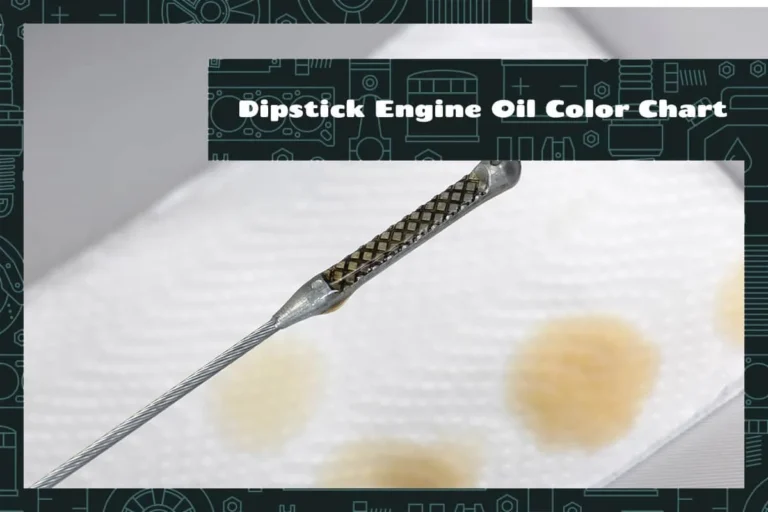
Be careful with oil color too. Mineral, synthetic, and blend oils can share a similar color. Oxidation may darken an oil, but darkness alone does not establish its condition.
How do you build a fair comparison worksheet?
Use the same columns for every candidate. Weight hard requirements above preferences.
| Comparison field | How to score it |
|---|---|
| Required viscosity | Pass or fail |
| Required performance category | Pass or fail |
| OEM approval | Pass, fail, or not specified |
| Approved drain interval | Matches, shorter, or unconfirmed |
| Oxidation and volatility evidence | Strong, moderate, limited, or unavailable |
| Engine-specific deposit data | Relevant, indirect, or unavailable |
| Emissions compatibility | Meets the manual or unconfirmed |
| Market certification | Verified, unclear, or mismatch |
| Traceable seller | Authorized or reputable source identified |
| Package and cost | Fits service quantity and budget |
Do not turn unsupported marketing into a numerical score. If a claim cannot be verified, mark it unconfirmed.
What decision rule should you use at the end?
Use simple conditional logic.
- If the manual names an OEM approval, choose an exact match from a traceable seller.
- If the manual gives a generic API or ACEA category, require the exact category and viscosity.
- If several products meet the same requirements, compare documented tests relevant to your engine.
- If the evidence remains equal, favor reliable local availability.
- If a package would sit open for years, choose a smaller size.
- If the manual requires a factory-fill oil, do not substitute without written confirmation.
- If a vehicle has unusual requirements, contact a dealer or the manufacturer.
Once every hard requirement is met, a traceable purchase and clear service record usually add more value than an unsupported performance promise.
Leading Synthetic Oil Brands Side by Side
Once the hard requirements are settled, the brand comparison becomes simpler. The major names differ in product range, approval coverage, packaging, and distribution. None earns an automatic win because the exact bottle matters more than the parent company.
| Brand family | Where it fits well | Main check |
|---|---|---|
| Mobil 1 | Broad North American availability and common grades | Confirm the local API, ILSAC, dexos, or OEM approval |
| Castrol EDGE | Wide range of gasoline and European applications | Don’t assume every version has the same approval |
| Shell Helix | International availability and many ACEA or OEM uses | Check the formula sold in your country |
| Pennzoil Platinum | Mainstream North American synthetic options | Match the exact grade and required category |
| Valvoline | MaxLife, VR1, and specialist applications | Positioning is not an engine approval |
| TotalEnergies 7000 | Broad European and international coverage | Regional ACEA and OEM requirements differ |
| Motul | Road, enthusiast, and motorsport products | Select the exact 3000, 8100, or competition family |
| AMSOIL | Cold-weather, enthusiast, and specialty applications | Drain claims do not replace the engine manual |
| Red Line, Royal Purple, RAVENOL | Specialist, classic, and competition uses | Confirm seals, emissions, and engine compatibility |
| FUCHS, Repsol, PETRONAS, Millers | Regional OEM and European applications | Verify current local documentation |
| Ford Motorcraft, ACDelco, Mopar, Toyota, Honda | Factory-fill, warranty, and dealer service | The exact OEM code still matters |
Mobil 1, Castrol EDGE, and Shell Helix
Mobil 1, Castrol EDGE, and Shell Helix are useful starting points for many drivers because they offer broad product ranges and relatively easy retail access. Their different versions cover different engines, so you still need to read the bottle.
Mobil 1 is a practical option for many North American vehicles. It offers common grades such as 0W-20 and 0W-30, with versions aimed at different API, ILSAC, dexos, and OEM requirements. It works well when you want a widely available oil and plan to top up the same product later.
Castrol EDGE has a similarly broad reach. North American products may carry dexos, ILSAC GF-6, API, or selected OEM qualifications. European versions can sit under different ACEA and OEM frameworks.
A common mistake is seeing the Castrol name and assuming every EDGE bottle fits every GM, Ford, Toyota, or European vehicle. Check the exact code on the container.
Shell Helix has a strong international footprint, especially across Europe and other global markets. Its families include ACEA-oriented oils and versions with selected BMW, Mercedes-Benz, Volkswagen, Porsche, and other approvals.
Those approvals apply to specific products, viscosities, and market versions. They are not blanket permission for every Shell Helix container.
| Need | Sensible place to start | Decide with |
|---|---|---|
| Common North American daily driver | Mobil 1, Castrol EDGE, Shell Helix, Pennzoil Platinum, Valvoline | Exact grade and category |
| GM application | Any exact dexos-approved product | Full dexos code and viscosity |
| European vehicle | Shell Helix, Castrol EDGE, TotalEnergies, Motul, or FUCHS | ACEA sequence and OEM approval |
| Easy local top-ups | Any brand sold by a reputable service shop | Consistent product availability |
Pennzoil Platinum, Valvoline, and TotalEnergies
Pennzoil Platinum is a practical option for many U.S. drivers who want full synthetic oil at a mainstream retail price. Its product range includes common low-viscosity grades for newer gasoline engines.
It can suit a normal daily driver when the exact bottle meets the manual. A vehicle that requires a particular dexos, ILSAC, or OEM specification may need another product within the range.
The grade and approval on the container are the useful parts. The family name is only a starting point.
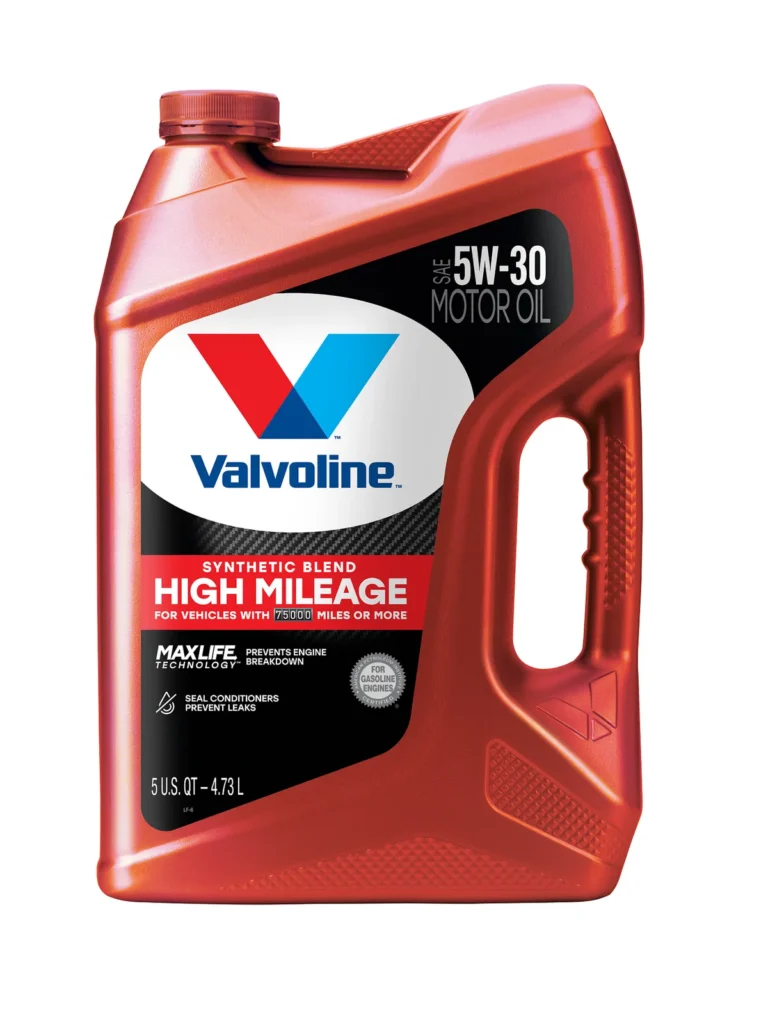
Valvoline has a more segmented portfolio. MaxLife products target high-mileage applications, while VR1 products occupy higher-performance and enthusiast positions. TotalEnergies 7000 is widely available outside the United States and often appears in European service documentation.
These positioning statements do not replace technical approval. A MaxLife oil still needs the correct viscosity and specification. A VR1 product still needs a compatible engine application.
Valvoline can be a sensible candidate when your manual permits a high-mileage formula and you want a product that is easy to find. It can also suit selected enthusiast applications when the required grade is available.
Motul, AMSOIL, Red Line, Royal Purple, and RAVENOL
Motul, AMSOIL, Red Line, Royal Purple, and RAVENOL are often discussed as enthusiast or specialty brands. They can suit particular engines, climates, and service programs. They are not automatically better for a routine family car.
Motul’s 3000, 8100, and higher-performance families cover different road and competition roles. Some 8100 products target ACEA and OEM applications. Others are intended for more specialized use.
Motul is especially relevant when a European vehicle has a precise ACEA or OEM requirement, or when a track application calls for a defined lubricant. A racing oil may have a different friction profile and a narrower operating window than a road oil.
AMSOIL’s XL, XL MaxLife, Signature, and XPO products serve different segments. XL is a common road-oil family. MaxLife targets higher-mileage use.
Signature and XPO products are more specialized.
AMSOIL’s longer drain claims deserve careful reading. A long-life claim applies to a specific product, engine, and service schedule. It does not authorize you to ignore the interval in your owner’s manual.
Red Line, Royal Purple, and RAVENOL offer products for enthusiast performance, specialist chemistry, classic engines, and motorsport use. Some Red Line products use ester-rich formulations, while RAVENOL products span several synthetic families.
The important question is not whether a bottle sounds exotic. It is whether the engine builder, sanctioning body, or service manual supports the product. Classic engines may need a different friction level than a modern direct-injection engine.
| Specialty group | Most useful when | Watch carefully |
|---|---|---|
| Motul | Exact ACEA, OEM, or motorsport application is named | Road and competition formulas differ |
| AMSOIL | Cold conditions, enthusiast use, or an approved extended interval | Never extend the manual by assumption |
| Red Line | Specialist or competition use is documented | Confirm seals, friction, and consumption needs |
| Royal Purple | High-mileage or enthusiast requirements are clear | Marketing claims do not replace approval |
| RAVENOL | A European, OEM, or motorsport product is needed | Availability and authenticity matter |
Ford Motorcraft, ACDelco, Mopar, Toyota Genuine, and Honda Genuine
OEM-supplied oils are often the simplest choice for a new vehicle, a vehicle under warranty, or a car receiving dealer service. Ford Motorcraft, ACDelco, Mopar, Toyota Genuine Motor Oil, and Honda Genuine Motor Oil are the most visible examples.
The case for an OEM product is straightforward. It may be the factory formula, or it may be one of several approved oils. The dealer can document the specification.
That does not mean every OEM-branded bottle is interchangeable. A vehicle may require a Ford WSS-M2C code, a GM dexos version, Toyota TGMO, or another application-specific approval.
ACDelco is often associated with GM, but its range can include other specifications. Mopar, Toyota, and Honda products also come in different grades and versions.
OEM oil can be less convenient if the viscosity range is narrow or the exact product is hard to find. It may also cost more than a third-party product in some markets.
If your manual names the factory-fill oil, start there. If it allows an approved alternative, compare that alternative on viscosity, approval, drain interval, and availability.
FUCHS, Repsol, PETRONAS Syntium, and Millers Oils
FUCHS Titan, Repsol Sintetico, PETRONAS Syntium, and Millers Oils can be good choices in markets where their exact approvals and service networks are strong. They are especially relevant in Europe, the United Kingdom, and countries with manufacturer-specific lubricant requirements.
These brands often appear in technical documentation for European vehicles. A dealer may specify a particular viscosity or approval because of the engine’s emissions system, seals, or calibration.
A local product can therefore be more relevant than a famous global name sold in a different formula. Check the local product guide for viscosity, category, OEM code, drain interval, and production information.
Which brand group should you choose?
The most useful brand depends on your vehicle and service conditions, not on a universal ranking.
| Situation | Brands or families worth comparing | Final decision |
|---|---|---|
| North American daily driving | Mobil 1, Castrol EDGE, Shell Helix, Pennzoil, Valvoline | Exact grade, category, and approval |
| GM requirement | Any exact dexos-approved product | Precise dexos code |
| European ACEA requirement | Shell Helix, Castrol, TotalEnergies, Motul, FUCHS, Repsol, PETRONAS | ACEA sequence and OEM approval |
| Cold-weather use | Any brand with the required 0W grade | Manual approval comes first |
| High-mileage use | Valvoline MaxLife, AMSOIL XL MaxLife, or any exact alternative | Grade, seals, emissions, and consumption |
| Track use | Motul, AMSOIL, Red Line, Royal Purple, RAVENOL | Engine-builder or sanctioning-body specification |
| Factory warranty service | OEM brands or any exact approved product | Dealer documentation and service record |
If several products pass every hard requirement, choose the one with the clearest supply chain. A stable, traceable product is often more useful than a marginally better claim that is difficult to verify.
Best Synthetic Oil for Common Vehicles and Driving Conditions
The best oil changes with the way the engine is used. A normal commuter, a cold-climate driver, and a track-day driver do not have the same priorities.
| Driving or vehicle condition | Sensible starting point | Non-negotiable check |
|---|---|---|
| Daily commuting and motorway driving | Manual viscosity with API, ACEA, or ILSAC approval | Normal and severe-service intervals |
| Cold climate with short trips | Approved 0W grade, if the manual permits it | Cold flow and warm-up behavior |
| Hot climate, turbocharging, or towing | Exact OEM approval with volatility and oxidation data | Level, pressure, and load limits |
| Older or high-mileage engine | Manual grade or documented manufacturer alternative | Seals, consumption, leaks, and condition |
| Engine with GPF, DPF, or SCR | Correct SAPS level and emissions approval | Exact after-treatment requirement |
| Track or competition use | Oil specified by the builder or event rules | Break-in, oil temperature, and change limits |
Daily commuting and mixed city-highway driving
For ordinary commuting, choose the exact viscosity and performance category in the manual. A synthetic blend can be sensible when it meets those requirements and costs less.
You do not need a competition formula for a normal road engine. Stop-start traffic and repeated short trips can create fuel dilution. They can also leave moisture in the oil and engine surfaces.
Follow the manufacturer’s severe-service guidance when your route regularly looks like that. Check the level at the stated interval. Investigate rising consumption rather than simply switching to a thicker oil.
Cold climates and repeated short trips
Choose the lowest cold-temperature grade the manufacturer permits, not the lowest number you can find. A 0W-20 can be ideal for an engine designed for it, even in a mild climate.
A 5W-30 can also be correct if the manual calls for it. Full synthetic often performs well during cold starts, but it must still carry the right approval.
Short trips can be harder on an engine than one long drive. The engine may not reach full operating temperature. That can increase condensation, fuel dilution, and wear.
Use the specified short-trip service schedule. Battery health, coolant, spark plugs, thermostat operation, and drive belts matter too. A good oil cannot compensate for an engine that never reaches temperature.
Hot climates, turbocharging, and towing
Use the exact OEM-approved oil. Prioritize oxidation resistance, volatility control, and deposit protection.
Turbochargers can create high exhaust temperatures even when the outside air is mild. Sustained high load can make that heat more important.
A lower-volatility oil may be useful, but “low volatility” is not a stand-alone approval. Confirm the grade, category, and OEM code.
Do not assume 5W-40 is better than the specified 0W-20. Do not assume 0W oil is too thin in a hot climate. The engine design and manufacturer decide.
Towing adds load to the engine, transmission, cooling system, and brakes. Check the oil level more closely during sustained heat. Follow the manufacturer’s tow-driving and service guidance.
A pressure warning deserves immediate attention. Stop the engine safely and investigate. Adding premium oil does not repair a failed oil pump, blocked filter, or damaged bearing.
High-mileage, older, and sludge-prone engines
There is no universal high-mileage oil, and 5W-40 is not automatically the right upgrade. Start with the viscosity and approval in the manual.
If it allows an alternative, check seal compatibility, volatility, and the engine’s emissions design. Older engines may have worn piston rings, valve guide seals, oil-control components, or external leaks.
A thicker oil may slow consumption in one engine while increasing cold-start stress in another. Inspect the positive crankcase ventilation system, oil filter, oil pan, valve covers, and dipstick tube.
Check for coolant in the oil and oil in the coolant. Low hot operating pressure can be more revealing than oil color.
A chemical flush is not the first answer to sludge. Deposits can move into restricted passages and create new problems. A correct oil change, correct filter, and diagnosis of the cause are safer starting points.
Engines with catalytic converters, GPFs, DPFs, or SCR systems
Follow the exact emissions-system specification and SAPS requirement. A gasoline particulate filter, diesel particulate filter, EGR system, SCR system, or catalytic converter can make oil chemistry part of the emissions design.
Low-SAPS oil is often relevant for newer engines with advanced after-treatment. It is not automatically correct for every engine.
Some older or specialized powertrains require a mid- or high-SAPS formula. For a DPF or SCR system, confirm the viscosity, ACEA category, OEM approval, and permitted drain interval.
New engines may also have a factory-fill or break-in requirement. Use that product for the specified period. Do not substitute a high-friction or high-performance oil without written confirmation.
Track, competition, and specialist engine applications
Use the oil named by the engine builder, competition rules, or sanctioning body. A track engine may need a grade that would be wrong for a road engine.
Competition oils may be designed around a narrower operating range. They can depend on oil temperature, filtration, and scheduled changes more closely than a normal passenger-car oil.
Read the engine builder’s instructions for break-in, warm-up, oil temperature, and disposal. Do not switch to a competition oil immediately before an event unless the engine was prepared for it.
A last-minute change can alter friction, oil pressure, and temperature behavior. Keep the product and lot number with the event records.
Hybrid and stop-start vehicles
Hybrid engines can spend time shut down while the vehicle is moving. Fuel dilution becomes more relevant when an engine starts repeatedly before it reaches full temperature.
The correct oil still comes from the manual. Look for the exact oil category, viscosity, and approved service interval.
A modern long-life synthetic may be correct, but only if the manufacturer approves that formula and interval. Don’t assume a conventional schedule is safer.
Full Synthetic vs. Synthetic Blend vs. Conventional Oil
Full synthetic, synthetic blend, and conventional oil can all work when they meet the correct specification. “Synthetic” describes the base-stock approach, while API, ACEA, ILSAC, and OEM approvals describe tested performance and application requirements.
What are PAOs, synthetic esters, and Group III+?
PAOs are polyalphaolefins, usually placed in API Group IV. They are valued for cold-flow behavior, low volatility, and oxidation resistance. Synthetic esters belong to Group V and can contribute strong lubricity, thermal stability, and seal compatibility.
Group III+ base stocks are hydroisomerized mineral oils. Some manufacturers market certain formulations as full synthetic. Others describe them differently.
The name does not guarantee a particular additive package or approval. A finished oil also contains antioxidants, detergents, dispersants, corrosion inhibitors, antiwear agents, anti-foam agents, and viscosity modifiers.
Those materials control oxidation, wear, deposits, corrosion, foam, and flow. Base-stock percentage alone cannot tell you whether an oil meets your engine’s requirements.
| Comparison point | Full synthetic | Synthetic blend | Conventional oil |
|---|---|---|---|
| Typical base stock | PAOs, synthetic esters, or another synthetic system | Synthetic and mineral base stocks | Mineral base stocks |
| Cold-start behavior | Often strong, depending on the formula | Can perform very well | More temperature-dependent |
| Oxidation and volatility | Often well controlled | Varies by product | Varies by formulation |
| Deposit and wear performance | Can meet demanding standards | Can meet the same formal standard | Can meet some standards |
| Engine approval | Must match the manual | Must match the manual | Must match the manual |
| Cost | Usually highest | Usually middle | Usually lowest |
| Best reason to choose it | Extreme temperatures, high load, or manufacturer recommendation | Value when it meets the requirement | Budget service when the manual permits |
Can a synthetic blend meet the same standard?
Yes. A synthetic blend can meet the same viscosity grade and the same API, ACEA, ILSAC, or OEM requirement as a full synthetic.
If both products carry the correct approval, the blend may be the more sensible purchase. The blend may have a different base-stock balance. That can change cold-start feel, volatility, oxidation behavior, or seal response.
Those differences do not automatically make the product unsuitable.
A synthetic blend can be a good choice for:
- Normal commuting
- A mixed household fleet
- Moderate annual mileage
- Drivers who meet the required approval and interval
- Vehicles whose manual does not require full synthetic
Ablend is a poor choice when the manual requires a specific synthetic product, a factory-fill formula, or a documented extended interval. It may also be the wrong choice for repeated extreme cold, sustained high load, or a competition application.
When is full synthetic worth the extra cost?
Full synthetic is worth the extra cost when the manufacturer requires it or the driving pattern places a heavy demand on the lubricant. Cold starts, turbocharging, high-speed use, towing, and approved long drain intervals are strong reasons to examine synthetic options closely.
PAO-based oils often provide strong cold-flow behavior and low volatility. Ester-rich formulas can provide strong lubricity, solvency, and thermal stability. Those properties can be useful, but the finished oil still has to meet the exact engine requirement.
Full synthetic is easier to justify when one approved formula covers several difficult conditions. Paying more once can be reasonable if it reduces oil loss or supports a long, manufacturer-approved service interval.
Can base-stock type affect oil consumption?
Yes, base-stock type can affect volatility, viscosity stability, and seal behavior. Those factors can influence consumption, especially in an older engine.
The effect is hard to predict without knowing the engine. Worn piston rings can outweigh any difference between two approved oils. Check for leaks, boost pressure, valve-cover ventilation, and visible exhaust smoke before blaming the lubricant.
Do not select a thicker grade solely to hide a consumption problem. That can increase cold-start load and create a new fault.
Does a high-mileage label guarantee lower consumption?
No, a high-mileage label does not guarantee lower consumption. It usually signals a formula aimed at aging seals, deposits, and oxidation control.
Many high-mileage formulas use a higher SAE grade. That can reduce consumption in some engines. It can also make the oil too thick for others, especially during cold starts.
Use the manufacturer’s listed alternatives as your guide. If the manual permits 5W-30 but does not call for 5W-40, a high-mileage 5W-40 needs careful justification.
Do two oils with the same approval perform identically?
No, two oils with the same approval can still use different base stocks, additive packages, and viscosity modifiers. They both pass a defined specification, but their measured behavior may differ.
That makes approval the first filter, not the final ranking. Product-specific data can help compare oxidation, volatility, deposits, and wear.
Availability and top-up consistency can also influence the decision. A product you can obtain reliably twice a year may serve you better than a marginally different formula that is hard to find.
What about conventional oil?
Conventional oil can be correct when the manual permits it and the engine is in sound condition. It may also be the economical choice for an older vehicle with a conventional approval.
Its cold-temperature behavior and volatility are less predictable than many synthetic formulas. Those differences matter most in extreme cold, sustained high load, turbocharged engines, and engines designed around long drain intervals.
A high-mileage or low-mileage label is not a performance category. The API, ACEA, ILSAC, or OEM approval remains the deciding factor.
How should you decide between the three oil types?
Start with the manufacturer’s requirement, then compare temperature range, oxidation control, volatility, and engine condition.
- Confirm that the oil meets every mandatory specification.
- Check whether the manufacturer requires a synthetic or factory-fill formula.
- Compare cold, heat, oxidation, and deposit evidence.
- Account for engine age, seals, mileage, and consumption history.
- Compare the cost of the quantity you will actually use.
- Favor a traceable product with reliable local availability.
| Driver situation | Most practical choice |
|---|---|
| New engine with a specified synthetic factory fill | Exact synthetic or factory-fill product |
| Normal commuter with a generic specification | Full synthetic or blend that meets the requirement |
| Budget-conscious owner of several older vehicles | Approved blend where the manual allows it |
| Frequent cold starts in a severe winter | Approved 0W full synthetic where available |
| Turbocharged vehicle with a long approved interval | Exact OEM-approved synthetic formula |
| Classic engine with documented oil requirements | Oil specified by the builder or specialist |
| Conventional engine with no unusual stress | Conventional or blend if it meets the manual |
| Competition engine | Only the lubricant named by the builder or sanctioning body |
A synthetic blend can deliver strong value when it meets the same standard. Full synthetic earns its place when the engine design, climate, service load, or manufacturer calls for it.
Regional Formulas, Package Sizes, and Price-per-Unit Value
The same product name can describe more than one formula across countries. Regional differences make the market version part of the product identity.
How do regional oil formulas differ?
Oil sold in North America, Europe, the United Kingdom, Japan, and other markets may use different base stocks and additive packages. They may also carry different certifications, OEM approvals, and package sizes.
A familiar family name does not guarantee that every bottle shares one global recipe. A North American version may meet API and ILSAC requirements. A European version may carry an ACEA sequence or a European OEM approval.
Regional versions can differ in several ways:
- PAO and synthetic ester content
- Group III, Group III+, Group IV, and Group V base-stock balance
- Detergent and dispersant chemistry
- Antiwear additive selection
- Oxidation inhibitor concentration
- Sulphated ash, phosphorus, and sulfur content
- Friction-modifier use
- OEM approval lists
- SAE viscosity offered
- Container size and labeling
- Approved drain interval
Which regional standards should you check?
| Market or vehicle group | Common requirement language | Key check |
|---|---|---|
| United States gasoline engines | API SQ, API SP, dexos, ILSAC GF-6, Ford WSS-M2C | Exact code and viscosity |
| Canada | Similar to U.S. requirements, with some product differences | Local label and approval list |
| United Kingdom and Europe | ACEA A, B, or C sequence, often with an OEM approval | Sequence, grade, and emissions system |
| Japan | JASO, API, and model-specific requirements | Japanese product version |
| Import or global-market vehicles | Several possible standards | VIN-specific build and manual |
| After-treatment-equipped diesels | ACEA category, OEM approval, and SAPS limits | DPF, SCR, EGR, and AdBlue compatibility |
The market does not determine the oil by itself. Your engine’s build and manual do. The regional list helps you find the correct documentation.
Why can two bottles with the same product name differ?
A manufacturer may alter the formula to meet regional specifications, fuel standards, or OEM approvals. It may also change the additive package to control cost or adapt to local emissions requirements.
The container can preserve the same product name, color, and viscosity. The certification panel can still tell a different story.
Compare these fields before treating two bottles as equivalent:
- Full product family and grade
- API, ACEA, ILSAC, or JASO category
- OEM approval code
- SAPS values
- Production location
- Technical data sheet revision
- Pack date or lot code
- Drain-interval claim
If a seller cannot confirm the market version, choose a product with clearer labeling.
How should you read production and lot codes?
A lot code supports batch traceability. It can help a manufacturer investigate a product concern. It also helps you document the purchase.
A best-before date does not prove that an opened container will remain fresh for the same period. Storage temperature, seal condition, air exposure, and contamination all matter.
Keep the container tightly closed, upright, and away from heat. Don’t store it near a furnace, garage heater, or direct sunlight.
Are larger oil containers cheaper?
Sometimes, but the lowest price per quart or litre is not always the lowest service cost. A large container can be cheaper if you use it promptly.
It can waste money if the remainder sits open for years. Package size should reflect your service quantity and storage conditions.
| Buying pattern | Sensible package strategy |
|---|---|
| One oil change in a 4-quart or 4-litre engine | Buy one sealed container near the required quantity |
| One oil change in a 5-quart or 5-litre engine | Check the refill quantity and avoid unnecessary excess |
| Several vehicles using the same oil | Compare bulk, case, or fleet purchasing |
| Infrequent service | Choose a smaller package or a sealed multipack |
| Frequent service | Buy from a source with reliable stock |
| Long storage after opening | Avoid an excess quantity |
A fresh, correctly sized package often costs less than a partly used jug stored for years.
How do US and metric package sizes compare?
One US quart equals about 946 mL. A 5-quart container holds about 4.73 litres. A 5-litre container holds about 5.28 US quarts.
That difference can create waste if you estimate only from the number printed on the bottle.
| Package marking | Approximate US measure | Practical note |
|---|---|---|
| 1 US quart | 0.946 litres | Useful for top-ups, but too small for many services |
| 5 US quarts | 4.73 litres | Common North American service size |
| 1 litre | 1.06 US quarts | Common in many non-U.S. markets |
| 4 litres | 4.23 US quarts | Common European service size |
| 5 litres | 5.28 US quarts | Convenient for several larger engines |
Check the engine’s specified quantity. Don’t choose a package by the container number alone.
How do you compare price per quart or litre?
Use a simple calculation:
Price per unit = package price divided by package volume
Compare only products that meet the same requirements. Comparing a premium OEM approval with a lower generic category can make either product look artificially good or bad.
For illustration:
| Product | Example price | Package size | Example unit price |
|---|---|---|---|
| Product A | $24.99 | 5 US quarts | $5.00 per US quart |
| Product B | $34.99 | 5 litres | $7.00 per litre |
| Product C | $22.99 | 4 litres | $5.75 per litre |
These figures are examples, not quoted 2026 market prices. Taxes, shipping, promotions, and regional availability change the real total.
Convert equivalent units when shopping across countries. A $30 price for 5 US quarts and a $30 price for 5 litres do not offer equal value.
Should you include the filter and labor in the cost?
Yes, include every required service item. The oil is only one part of an oil change.
A useful total includes:
- Engine oil
- Oil filter
- Drain plug washer, if required
- Labor
- Shop supplies
- Local taxes
- Disposal or recycling charge
- Shipping, if applicable
- A second filter on engines with cartridge filtration
- Additional oil needed for a top-up
A premium oil can be better value if a documented approval supports it. An oil that saves several dollars but creates warranty questions is not economical.
How do promotions affect the real value?
Coupons and membership discounts can change the best retailer. Compare the final checkout price, not the shelf price.
A bulk discount can make sense when the extra oil has a valid future use. It is poor value when the oil will remain open, stored in a hot garage, or exposed to repeated spills.
Never buy several open jugs to chase a promotion. Storage and contamination risk can erase the saving.
How do you avoid counterfeit or mislabeled oil?
Buy from an authorized distributor, established retailer, dealer, or reputable marketplace seller with clear traceability. The lowest price often appears where authentication is weakest.
Check the following before opening:
- Product name and viscosity
- Performance category and approval code
- Tamper seal
- Lot or batch code
- Package condition
- Seller identity and return policy
- Expiration or pack date where shown
- Shipping damage
- Unusual price or missing documentation
A refilled container can look convincing. The cap, seal, print alignment, label texture, and lot-code format may reveal tampering.
If the oil has no clear approval, a damaged seal, or an unexplained price, don’t use it. Return it or buy from another source.
What is the best buying decision?
Use this rule:
- If one product has the required OEM approval, choose it when price and supply are reasonable.
- If several meet a generic API, ACEA, or ILSAC specification, compare product-specific test data.
- If the evidence is close, choose reliable local availability and a package that fits the service quantity.
- If products differ by market, use the local technical data sheet.
- If the seller cannot confirm the label, change sellers.
Traceability has real value. You’re buying confidence that the container contains what the label says.
How to Choose, Buy, and Change Synthetic Oil
Choosing the right oil takes a few minutes of research. Changing it safely takes preparation, the correct quantity, and a clean service record.
What tools and materials do you need?
A proper oil change requires more than a drain plug and a new jug of oil. The exact tools depend on the vehicle and whether you use a ramp, a lift, or an oil-extraction system.
| Tool or material | Purpose | Important check |
|---|---|---|
| Vehicle owner’s manual | Defines oil, capacity, filter, and interval | Use the exact engine version |
| Correct engine oil | Provides the required viscosity and approval | Match the market-specific label |
| Replacement oil filter | Removes old oil and traps contaminants | Match the cartridge or spin-on design |
| Drain plug washer | Seals the plug when required | Fit the specified washer |
| Drain pan or extraction system | Collects used oil | It must hold the full drain volume |
| Funnel and clean measuring container | Reduces spills and supports accurate filling | Keep both free of grit and water |
| Drain plug wrench | Removes the plug without rounding it | Use the correct socket size |
| Oil filter tool | Removes a filter when required | Match the filter design |
| Nitrile gloves and eye protection | Handles fresh and used oil safely | Have a disposal plan |
| Absorbent material | Contains small spills | Dispose of it properly |
| Approved collection container | Stores used oil for recycling | It must be leak-resistant |
A service manual may add special steps for a cartridge filter, oil-cooler drain, oil pan drain, or multiple drain plugs.
How do you identify the exact engine before buying oil?
Record the VIN, year, make, model, trim, engine, fuel type, and build date. A model year can contain several engines or emissions systems.
Then check:
- The oil filler cap
- The owner’s manual
- The engine-bay emissions plate
- The door-jamb label
- The service record
- The dealer’s build record
- VIN-specific manufacturer documentation
If the vehicle was converted, modified, or imported, confirm the installed engine. The original manual may not describe every change.
How do you turn the manual into a purchase order?
Create a short list with five fields:
- Exact engine and model year
- Required SAE viscosity
- Required API, ACEA, ILSAC, or JASO category
- Named OEM approval
- Oil quantity and filter number
Then verify the package size, market version, and approved drain interval.
A search result’s product name is not enough. Open the technical data sheet and approval guide. Make sure the exact grade and market version match.
How do you shortlist products fairly?
Start with every product that meets the mandatory requirements. Remove mismatches before comparing price.
For each remaining product, record:
- Full product name
- SAE grade
- Performance category
- OEM approval
- SAPS level
- Drain-interval claim
- Kinematic and HTHS viscosity
- Oxidation and volatility data
- Relevant deposit or wear tests
- Package size
- Price per unit
- Seller traceability
| Comparison step | Correct action |
|---|---|
| Viscosity | Require an exact match unless the manual gives alternatives |
| Performance category | Require the exact API, ACEA, ILSAC, or JASO specification |
| OEM approval | Verify the full code and application |
| Emissions system | Confirm the SAPS and after-treatment compatibility |
| Drain interval | Use the manufacturer’s approved interval |
| Seller | Favor an authorized or reputable source |
| Package | Choose a size that matches the service |
| Cost | Compare total service value, not bottle price alone |
How do you inspect the bottle before changing the oil?
Check the product name, grade, approval, and quantity against your worksheet. Confirm that the seal is intact and the container hasn’t leaked or been damaged.
Look for an opening date on packages intended to be opened immediately. Mark the date if the container doesn’t provide one.
Don’t use oil from a container with:
- A broken or missing seal
- Cloudy liquid caused by water contamination
- A damaged label
- An unreadable lot code
- An unexplained color change
- A wrong SAE grade
- A missing required approval
- Suspected refilling or relabeling
Store the container until the service is complete. It documents the exact oil used.
How should you prepare the vehicle for an oil change?
Park on level ground, select Park, apply the parking brake, and switch off the engine. Let the oil and exhaust components cool enough to handle safely.
Open the hood and locate the filler cap, dipstick, drain plug, and filter. Remove the filler cap before draining. This can reduce the chance of a full sump overflowing.
Check underneath for fresh oil, coolant, fuel, or other damage. Investigate a serious leak before continuing.
Put absorbent material under the drain point. Keep children and pets away from the work area. Don’t start the engine with the filler cap removed.
How do you drain the old oil safely?
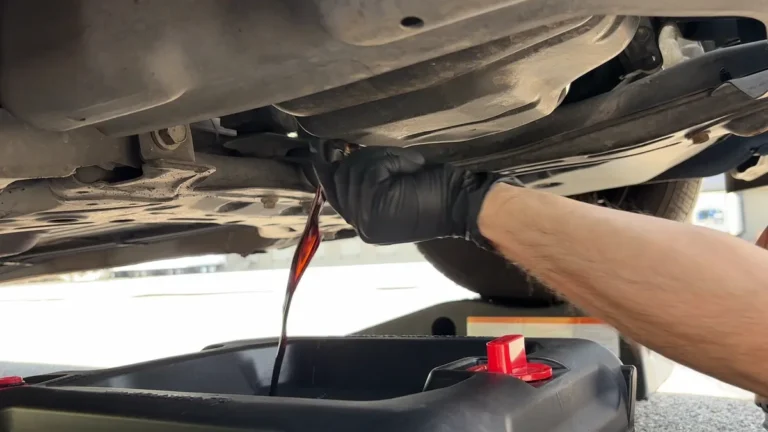
Place a large drain pan under the plug. Remove the plug carefully while keeping the pan in position. Let the oil flow into the container.
Some engines have a plug behind a shield or under a cover. Move the shield without pulling hoses or wiring out of the way.
Use an oil-extraction system if the vehicle has limited ground clearance. Stop suction when the hose loses pressure.
Never drain oil while it is hot enough to burn you. Freshly drained oil can remain hot enough to cause severe burns.
How do you replace a spin-on oil filter?
Check the manual for the correct filter and any cartridge requirements. A spin-on filter is usually fitted to the filter housing.
Follow the manufacturer’s removal and installation method. When the design calls for it, lightly lubricate the filter gasket with clean engine oil of the specified grade.
Wipe the mounting surface clean. Fit the filter until the gasket contacts the surface. Tighten it by the amount the service instructions require.
Don’t use an arbitrary extra turn. A crushed gasket or overtightened filter can leak.
What about cartridge filters and oil-cooler drains?
Cartridge filters can require removal of a cap, inspection of an O-ring, and a new sealing element. The housing can collect used oil underneath.
Check whether the manual calls for draining the engine oil cooler. A blocked drain can leave old oil inside the cooler after the main sump is empty.
Cold-weather service can add another step. The manual may specify draining the oil cooler, replacing the filter, filling the engine, and running it until the new oil reaches the cooler.
How do you reinstall the drain plug?
Inspect the plug threads and sealing surface. Replace the crush washer if the manufacturer specifies a new one. Don’t reuse a sealing washer unless the manual allows it.
Install the plug by hand to avoid cross-threading. Tighten it to the stated torque. Excess torque can strip the threads or damage the oil pan.
Start slowly, especially with an aluminum or plastic pan. If the plug resists, stop and check for thread damage or debris.
How much oil should you add?
Use the manual’s refill procedure. Don’t assume the listed capacity equals the amount that can safely be added to a partly drained engine.
Add the estimated quantity in stages. Stop before reaching the full listed capacity. Check the level using the manufacturer’s method.
Many engines use a dipstick. Some use an electronic dipstick or a sight glass. Follow the manual’s instructions exactly.
How do you check the level correctly?
Park on level ground and use the required temperature state. The engine may need to warm briefly and then shut off for a settling period.
Remove the dipstick, wipe it cleanly, reinstall it fully, then remove it again. Don’t leave the dipstick suspended above the tube.
Confirm the level against the manual’s minimum and maximum marks. Some dipsticks are designed for checking at operating temperature. Others provide a cold-check procedure.
A new oil change may need a second level check after circulation. Follow the service instructions for your engine.
How do you prime the oil system after filling?
Start the engine and watch the oil-pressure indicator or gauge. Allow the oil to reach the specified pressure at idle.
Keep the engine running only long enough to confirm circulation unless the manual specifies a longer procedure. Watch for:
- A persistent oil-pressure warning
- Rapid pressure loss
- Leaks around the filter or drain plug
- Foamy oil near the filler neck
- Loud bearing noise
- An illuminated engine warning
If the oil-pressure warning stays on, shut the engine off. Don’t drive while the warning remains active.
How do you reset the oil service indicator?
Reset the service indicator only after a complete oil change. The process depends on the vehicle.
Some dashboards use a steering-wheel menu. Some require a trip-meter button sequence. Others need a dealer scan tool.
Use the exact method in the manual or service information. Record the mileage and date afterward. Resetting the indicator does not change the manufacturer’s required interval.
What should you check after the first drive?
Take a short drive at normal engine speed. Avoid hard acceleration until the oil is fully circulated and the new service is settled.
After the drive:
- Park on level ground
- Check beneath the vehicle
- Check the drain plug
- Check the filter housing
- Inspect the filler neck for overflow
- Recheck the level as specified
- Note any unusual pressure or noise
A small oil film around a dry plug may be normal. A steadily forming drip is not.
How do you record the service for warranty evidence?
Save the following in the vehicle file:
- Date and mileage
- Exact product and grade
- Performance category
- OEM approval
- Oil quantity
- Filter part number
- Seller or shop
- Invoice
- Package photograph
- Next normal service date
- Next severe-service date, if different
A photograph of the label adds useful information. It doesn’t replace an invoice, but it records the product identity.
Keep the container until the service provider confirms that the work is complete.
How should used oil be stored and recycled?
Put used oil in a closed, leak-resistant container. Keep it away from children, pets, food, water, and ignition sources.
Label the container if it will be moved or stored. Keep the cap secure and place it on an impermeable surface to catch a spill.
Take used oil and filters to an approved collection or recycling site. Follow local environmental rules. Don’t pour oil into a storm drain, sewer, soil, or ordinary trash.
Used oil can contain metals and combustion contaminants. It should be handled as waste, not poured into the environment.
What should you do if the level is too high?
Remove oil through the manufacturer’s specified method. Don’t loosen the drain plug in traffic or on an unsafe surface.
Overfilling can cause aeration, foaming, leaks, pressure fluctuation, and exhaust damage. Extra oil can reach the catalytic converter if the level is badly overfilled.
Find out why the engine needed more oil than expected. A leak, high consumption event, or incorrect earlier grade may need attention.
What should you do if the level is too low?
Add the same oil and grade while the engine is safe to service. Don’t top up an empty engine while it is running.
If the dipstick shows no oil, stop using the engine until you determine whether it drained through a leak or a failed seal. Continuing without lubrication can damage bearings, cam lobes, and other surfaces.
Inspect the filter, drain plug, oil pan, valve covers, front cover, and rear seal. Check the oil-pressure system if the engine had run low.
Which problems need a dealer or engine specialist?
Seek qualified help when the manual is unclear, the engine has a cartridge-only filter, or the oil drain is difficult to access.
Get prompt help if you find coolant in the oil, metal in the filter, a persistent low-pressure warning, or substantial sludge.
A burning smell, rising consumption, loud ticking, or new oil-pressure noise needs investigation. Don’t solve it by switching brands.
The safest service record is simple. You matched the required product, used the correct quantity, checked the result, and documented the work.
Mistakes That Can Cause Poor Lubrication or Engine Damage
One incorrect choice can matter more than a small difference between two approved products. Most oil problems begin with a mismatch between the engine and the label.
| Mistake | Likely result | Safer response |
|---|---|---|
| Wrong SAE viscosity | Poor cold flow, excess friction, or oil starvation | Use the exact manual grade |
| Missing OEM approval | Warranty and application uncertainty | Verify the full approval code |
| Wrong SAPS level | After-treatment compatibility issues | Match the emissions-system requirement |
| Overfilling | Foaming, leaks, pressure fluctuation, and exhaust damage | Check the level at the specified point |
| Underfilling | Low pressure, wear, overheating, and engine damage | Stop and investigate if the sump is empty |
| Mixing unrelated products | Unclear additive and viscosity behavior | Use one approved oil whenever possible |
| Adding a thickener or additives | Changed friction, deposits, or warranty uncertainty | Leave an approved oil unchanged |
| Ignoring severe service | Sludge, fuel dilution, and accelerated wear | Use the shorter manufacturer schedule |
| Using the wrong filter | Restricted flow, leakage, or incorrect sealing | Fit the specified filter |
| Ignoring low oil pressure | Rapid bearing and valvetrain damage | Shut down and investigate promptly |
Can I use a thicker oil than the manual specifies?
No, not unless the manual or manufacturer authorizes the grade. A thicker oil can help some older engines with worn rings or seals, but it can also increase cold-start stress and reduce oil flow.
An engine designed for 0W-20 may not tolerate 5W-40, 5W-50, or 10W-40. A thicker film does not automatically protect better.
A thicker oil may flow too slowly through a restricted cold-start passage. That is especially concerning with narrow oil galleries, long runners, and engines that use low-viscosity factory-fill oil.
Use a thicker grade only when the manual allows it or a manufacturer confirms the substitution. Keep the written approval with the service record.
Can I use a thinner oil to reduce fuel consumption?
No, not unless the manual permits that grade. Lower viscosity can reduce internal friction in an engine designed around it, but the same oil can be too thin for another engine.
A 0W-16 oil is a common example of a grade with limited applications. A 0W-20 engine may not tolerate 0W-16, even though both look thinner on the bottle.
The number before W describes cold flow. It does not show the oil’s HTHS value or engine-film strength at operating temperature.
If fuel economy concerns lead you away from the manual’s grade, ask the manufacturer for a specific approved alternative.
Does a missing approval cause damage?
A missing approval does not prove that an oil will fail immediately. It means the product has not been shown to meet the stated manufacturer requirements for that use.
Common mismatches include:
- The viscosity matches, but the required dexos version does not.
- The oil meets API SQ, but the manual names a different category.
- The bottle is correct, but the approval belongs to another market version.
- The product is approved for one engine, but not for an engine with a particle filter.
The consequences can include poor deposit control, wrong friction, oil consumption, after-treatment issues, or warranty disputes.
Can the wrong SAPS level harm emissions equipment?
Yes. SAPS levels can affect gasoline particulate filters, diesel particulate filters, EGR systems, SCR systems, and catalytic converters.
A low-SAPS oil may be right for a newer engine with sensitive after-treatment. A mid- or high-SAPS oil may be required for an older engine or a different emissions design.
The problem is not that one level is always better. The problem is using a level outside the engine’s approved range. Excess phosphorus in the wrong application can contribute to catalyst or filter concerns.
Check the manual and the engine’s emissions plate. Don’t choose a product from a generic diesel or gasoline recommendation.
Is it safe to mix different synthetic oils?
Mixing products is not automatically catastrophic, but it removes the clarity of your oil record. Two approved products can have different base stocks, additives, and viscosity modifiers.
For a top-up, use the same product and grade when possible. If another product is your only option, check its viscosity, specification, and approval before adding it.
Don’t assume that two products with the same SAE grade are interchangeable. If one is low-SAPS and the other is not, the blend may no longer match the engine’s required chemistry.
After an emergency top-up, record both products. Plan to return to the specified oil at the next service.
Can a thickener or friction modifier help a worn engine?
No. A thickener may reduce an oil-consumption symptom in some engines, but it can disguise a mechanical problem. It may also change pumpability, oil pressure, deposits, and emissions behavior.
A friction modifier can be useful in a competition oil or a specific engine application. It may be inappropriate in a catalytic-converter or fuel-economy engine.
Some manufacturers explicitly prohibit additives. Adding a treatment can create warranty questions and change the performance you purchased.
If an engine burns oil, inspect:
- Piston rings and cylinder walls
- Valve guide seals
- Turbocharger seals
- Valve-cover seals
- Oil-control rings
- Positive crankcase ventilation
- Oil-pressure regulation
- External leaks
A thicker bottle is not a repair for damaged components.
Is an engine flush safe before every oil change?
No. Routine engine flushing is not required for most vehicles. Deposits can move into restricted oil passages, galleries, and filter areas.
A flush may dislodge material that causes:
- Oil-pressure restriction
- Filter blockage
- Rapid deposit movement
- Oil-starvation warnings
- New leaks around seals
Use a flush only when the manufacturer, dealer, or engine specialist recommends it for a known condition. Follow the procedure and product specification exactly.
A correct oil change, filter replacement, and mechanical diagnosis are safer than a chemical flush for unexplained sludge.
What happens if you overfill the engine?
Overfilling can aerate the oil and create foam. Foam may reduce the oil’s ability to form a stable film and can cause unstable pressure.
Other possible effects include:
- Oil blowing past the filler neck
- Leaks at crankcase seals
- Oil consumption
- Engine damage in some applications
- Catalytic-converter overheating
- Emissions-system damage from excessive oil
- A false or fluctuating pressure reading
Use the manual’s fill procedure rather than adding the full listed capacity. Check the level in the prescribed state and add oil in stages.
If the sump is overfilled, remove oil through the manufacturer’s method. Don’t loosen the drain plug in an unsafe location.
What happens if you run the engine with too little oil?
Too little oil removes the protective film between moving parts. Bearings, cam lobes, pistons, and other surfaces can wear quickly.
If the dipstick shows no oil, stop using the engine until you find the cause. Check for:
- A failed oil filter
- A loose drain plug
- A damaged oil pan
- A front or rear crankcase seal
- A valve-cover leak
- A ruptured oil-cooler line
- Excessive consumption
Add the specified oil before restarting, but don’t assume a full sump solves the problem. Repeated oil loss needs diagnosis.
Can extending the drain interval to 10,000 miles be safe?
Sometimes, but only when the oil, engine, manual, fuel, and driving pattern support that interval. There is no universal mileage rule for synthetic oil.
A product may advertise 5,000, 7,500, 10,000, or 15,000 miles. Those numbers apply to defined applications and test conditions. They do not cover every car or owner.
Use the shorter interval for severe service when your driving pattern includes:
- Repeated short trips
- Extended idling
- Heavy stop-start traffic
- Heavy towing
- Repeated track use
- Extreme cold
- Sustained high-speed driving
A premium oil cannot remove the effects of fuel dilution, condensation, or poor circulation.
Can a wrong oil filter cause engine problems?
Yes. A filter that is too restrictive can reduce oil flow, especially during a cold start. A filter with incorrect dimensions or sealing can leak.
Use the exact filter part number or cartridge specified for the engine. Check:
- Thread or cartridge dimensions
- Gasket or O-ring
- Mounting surface
- Drain-back valve
- Filtration rating
- Oil-cooler connections
- Filter housing capacity
A high-flow filter does not mean a better filter. The manufacturer’s part is the safe default unless a documented alternative exists.
Can an oil-life monitor replace the manual interval?
No. The oil-life monitor estimates remaining oil life using operating conditions and, in some vehicles, oil-quality and driving data.
It is calibrated around an approved oil and service program. It may not account accurately for:
- A previous overfill
- Fuel dilution
- A failed filter
- Heavy towing
- Frequent short trips
- A used or modified engine
- Unrecorded service history
Follow the manual’s inspection and replacement requirements. The monitor helps with timing, but it cannot make a wrong oil correct.
What should you do if the oil-pressure warning appears?
Shut the engine off safely and investigate. Don’t drive while a red oil-pressure warning remains on.
A pressure problem can come from:
- Low oil level
- A failed oil pump
- A blocked oil filter
- A damaged oil gallery
- Excessive aeration
- A viscosity mismatch
- Internal engine wear
- A defective pressure sensor
Adding another bottle may not help if the pump or filter is failing. Check the level, filter, and recent service history. Obtain qualified help when pressure does not return to the specified range.
What does coolant in the oil indicate?
Coolant in the oil can signal a head-gasket failure, a cracked cylinder head, a damaged engine block, or another cooling-system intrusion. It needs diagnosis, not a change of oil brand.
Stop using the engine if you find:
- A milky residue on the filler cap
- A mayonnaise-like deposit on the dipstick
- A coolant smell from the filler
- Rising engine temperature
- Milky sludge
- Pressure in the cooling system
An oil change can dilute the contamination temporarily. That may hide the symptom while allowing corrosion and wear to continue.
How can you avoid counterfeit or mislabeled oil?
Buy from a source that can show the product identity and lot information. Be cautious with unusually low prices, unmarked containers, missing approvals, and sellers who cannot name the market version.
Check:
- Tamper seal
- Label print quality
- Container markings
- Lot or batch code
- Expiry or pack date
- Seller authorization
- Shipping and return policy
- Viscosity and approval match
A bottle can look genuine while containing a different fluid. Don’t use oil with a damaged label or broken seal.
Is automotive oil safe in a motorcycle engine?
Not automatically. Some motorcycle oils carry an automotive API rating, but the engine still needs the correct friction, filtration, and cooling requirements.
Use an oil that meets the motorcycle engine builder’s specification. A JASO rating may matter for wet-clutch operation. A shared API or ACEA category does not prove that an automotive formula is suitable.
Keep motorcycle and automotive oils stored and labeled separately. A refill error can damage the clutch, bearings, or engine.
Long-Term Monitoring and Maintenance
A correct oil change is only one part of engine care. Monitoring the level, consumption, pressure, and service history helps you spot a developing problem before it becomes expensive.
How often should you check the oil level?
Check at the frequency stated in the owner’s manual. If the manual gives no routine interval, check more often when the engine consumes oil, drives in extreme heat, or has a known leak.
Use the same conditions every time:
- Park on level ground
- Use the prescribed engine temperature
- Turn off the engine
- Wait the required settling period
- Pull the dipstick, wipe it, reinstall it, then read it
Some engines use an electronic dipstick or sight glass. Follow that procedure instead.
A sudden level drop is worth noting. A small top-up may be normal for some engines, while rapid loss points to a leak or consumption problem.
What level of oil consumption is normal?
There is no universal acceptable number. The owner’s manual may define a limit, and engine design, age, and maintenance history affect the result.
Record a baseline after a fresh service. Compare the level at later checks. A sudden change from steady consumption to rapid loss deserves attention.
Watch for:
- A sudden increase after an oil change
- A need to add oil between every service
- Low oil at the next scheduled check
- Blue exhaust smoke
- A burning oil smell
- Leaks under the vehicle
- A low oil-pressure warning
Don’t assume a thicker oil is the answer. Find out whether the oil is escaping externally or burning.
How should you investigate rising oil consumption?
Check the engine after a normal drive. Inspect the dipstick, filler cap, filter housing, drain-plug area, and ground beneath the vehicle.
Then check:
- Piston-ring wear
- Valve-guide seals
- Turbocharger seals
- Oil-control rings
- Positive crankcase ventilation
- Oil-filter seals
- Valve-cover and rear-main-seal leaks
Fuel dilution can raise the oil level while weakening the lubricant. A gasoline engine that burns fuel during repeated short trips may need a shorter interval and a fuel-system diagnosis.
Never respond to a low-level warning by pouring in an unidentified bottle. Correct the level only after confirming the required oil and investigating the loss.
What should you do about new oil leaks?
A small oil film around a drain plug can be normal. A growing puddle, drip, or oily coating on a hot exhaust part deserves attention.
Trace the leak before changing brands. Clean the surrounding area, drive briefly if safe, and inspect again.
Common sources include:
- Oil-filter housing
- Drain-plug washer
- Valve-cover gasket
- Front crankcase seal
- Rear crankcase seal
- Oil-pan seal
- Turbocharger oil line
- Dipstick tube
- Engine-cover gasket
Leak location matters more than the appearance of the oil. A small leak near a hot exhaust can create a fire risk.
When is used-oil analysis worth running?
Used-oil analysis can help with known consumption, wear, fuel dilution, or turbocharging. It can also provide useful history for a used vehicle with incomplete records.
A laboratory may measure:
- Fuel dilution
- Coolant contamination
- Wear metals
- Soot
- Oxidation
- Viscosity change
- Sulphated ash, phosphorus, and sulfur
- Total base number
- Additive depletion
Interpret the report with the engine’s age, mileage, oil type, service interval, and symptoms. A single value is not a universal pass or fail limit.
Collect the sample as the laboratory instructs. Record the odometer, operating temperature, oil brand, grade, and service date.
Used-oil analysis is most useful as a trend. Several samples often tell more than one isolated result.
How should you handle top-ups between services?
Use the same oil and grade that is installed whenever possible. Record the date, mileage, and quantity added.
If the correct product is unavailable, check the alternative against the manual before adding it. A temporary top-up should not become a permanent mix.
Don’t overfill because the bottle is small. Add oil in stages and check the level using the prescribed method.
If the engine needs frequent top-ups, schedule a diagnosis. A fresh bottle can hide the symptom without fixing the loss.
When does severe-service maintenance become more important?
Severe-service schedules become relevant when the vehicle regularly experiences hard use. The manufacturer defines the exact conditions.
Common triggers include:
- Driving mostly short distances
- Repeated stop-start traffic
- Extended idling
- Heavy towing
- Repeated high-speed driving
- Frequent track use
- Extreme cold
- Sustained high ambient heat
- Driving on dusty or poor-quality roads
Use the shorter interval and additional checks in the manual. A modern oil can handle demanding work, but it still needs time, temperature, and sound filtration.
How should you store oil after opening it?
Keep the container tightly closed, upright, and away from heat and direct sunlight. Store it where children and pets cannot reach it.
Label the container with the product, grade, and opening date. If the container becomes dirty or damaged, transfer the oil only with clean, sealed equipment.
Don’t leave a jug in a hot vehicle, beside a furnace, or under direct sun for long periods. A fresh container is easier to trust than an old open one.
How should used oil be recycled?
Store used oil in a closed, leak-resistant container. Keep it away from water, food, children, pets, and ignition sources.
Take it to an approved collection or recycling site. The U.S. Environmental Protection Agency provides official information about used-oil handling and environmental protection.
Don’t pour used oil into a drain, storm sewer, soil, or ordinary trash. Oil can contaminate water and soil long after the service is over.
Filters and oily rags may need separate disposal. Follow the recycler’s instructions and local rules.
What records should you keep for the life of the engine?
A simple service record can prevent expensive guesswork later. Save:
- Mileage and date
- Oil brand and full product name
- SAE viscosity
- API, ACEA, ILSAC, or JASO category
- OEM approval code
- Filter part number
- Oil quantity
- Shop or seller
- Invoice
- Service interval used
- Any inspection findings
Keep the old oil container until the service provider confirms the work is complete. A label photo can supplement the invoice.
Update the record if you add oil between services. That history helps a technician distinguish normal consumption from a developing fault.
Frequently Asked Questions
Which synthetic motor oil brand is best overall?
There is no universal best brand. Mobil 1, Castrol EDGE, Shell Helix, Pennzoil, Valvoline, TotalEnergies, and Motul all make qualified products. The winner is the exact bottle that matches your manual’s viscosity and API, ACEA, ILSAC, or OEM approval.
Reliable local supply can break a tie.
Does the brand matter when two oils meet the same specification?
The brand can matter after both products pass because base stocks, additives, volatility, and deposit behavior may differ. It should not matter when one has the required approval and the other does not. Compare product-specific data, then favor a traceable product with dependable top-up supply.
Is fully synthetic oil always better than a synthetic blend?
No, a synthetic blend can meet the same viscosity and performance requirements as full synthetic. Full synthetic is more useful for extreme cold, high load, manufacturer recommendation, or an approved long interval. A blend often offers better value for ordinary driving and moderate annual mileage.
Can I use 0W-30 instead of the specified 0W-20?
Only if the manual or manufacturer authorizes it. A higher viscosity can change friction, consumption, pressure, and cold-start behavior. It may also affect warranty coverage.
Ask the dealer or manufacturer for a documented alternative instead of choosing by appearance or price.
How often should fully synthetic oil be changed?
Use the interval in the vehicle manual for the installed oil, not a generic mileage rule. Severe service may require shorter changes. A 5,000, 10,000, or 15,000-mile claim applies only to stated engines, fuels, filters, and conditions.
Short trips and heavy load can require earlier service.
What do API SQ, API SP, and ILSAC GF-6 mean?
API SQ, API SP, and ILSAC GF-6 are performance categories, not brand rankings. API SQ and SP use different test programs, while GF-6 includes suffixes such as GF-6A, GF-6B, and GF-6C. Use the exact category and viscosity named by the manual, plus any OEM approval.
Final Decision Guide: Choosing the Best Brand for Your Vehicle
Use the engine’s requirement as the first filter. Brand reputation, price, and base-stock claims only come after the oil passes that test.
| What the manual requires | What to choose | What to avoid |
|---|---|---|
| A named OEM approval | The exact product and viscosity with that approval | A generic universal substitute |
| A factory-fill or break-in oil | The specified factory product until the restriction ends | A competition or high-friction oil |
| API or ILSAC category | The exact category and SAE grade | An oil with only a similar category |
| ACEA sequence | The stated sequence, grade, and OEM code | A guessed SAPS level |
| Severe-service schedule | An approved oil with the shorter interval | A long interval based on advertising |
| Several qualified products | The best-supported, traceable, local option | A bottle with unclear labeling |
Choose the Exact OEM-Approved Product When the Manual Requires One
Choose the exact OEM-approved product when the manual names a code such as dexos, WSS-M2C, TGMO, HTO-06, BMW LL, Mercedes-Benz 229, Volkswagen 504.00, or Porsche C30.
Ford Motorcraft, ACDelco, Mopar, Toyota Genuine Motor Oil, and Honda Genuine Motor Oil can be the simplest choices for the vehicles they cover. Third-party oils may also qualify when they carry the exact approval.
Don’t substitute a product with the same viscosity but a missing approval. If a dealer offers an alternative, record the authorization and the exact bottle used.
Choose Among API- or ILSAC-Qualified Oils for Compatible U.S. Gasoline Engines
Choose among API- or ILSAC-qualified oils when the manual gives a North American performance category and doesn’t name a specific OEM approval.
Compare the exact SAE grade, API SQ or API SP requirement, and ILSAC GF-6 suffix where applicable. Mobil 1, Castrol EDGE, Shell Helix, Pennzoil Platinum, and Valvoline can offer suitable options.
If several products pass, choose reliable local supply. A product you can buy from an authorized retailer and top up later is easier to use correctly.
Choose Among ACEA- and OEM-Qualified Oils for European Vehicles
Choose among ACEA- and OEM-qualified oils when the manual names an ACEA A, B, or C sequence, often with a separate manufacturer approval.
Shell Helix, Castrol EDGE, TotalEnergies, Motul, FUCHS, Repsol, PETRONAS Syntium, and Millers Oils may have products for these applications. The grade, SAPS level, and approval code still control the decision.
An ACEA category does not override a named BMW, Mercedes-Benz, Volkswagen, Porsche, or other approval. Match every requirement printed on the label.
Choose a Synthetic Blend When It Meets the Specification and Fits the Budget
Choose a synthetic blend when it meets the exact viscosity and approval, your driving pattern is ordinary, and the lower cost matters.
A blend can suit a mixed household fleet, moderate annual mileage, and a vehicle whose manual does not require full synthetic. It can also work in cold climates if the approved grade has the needed cold-flow behavior.
Keep the receipt and product information. Buy the same product for the next service so the oil history remains consistent.
Choose Full Synthetic for Cold Climates, High Load, or Manufacturer Recommendation
Choose full synthetic for extreme cold, repeated cold starts, turbocharging, towing, sustained high-speed driving, track use, or a manufacturer-specified extended interval.
PAO-based and ester-rich formulas can offer useful cold-flow, volatility, and thermal characteristics. The finished product still needs the correct grade, category, and approval.
Full synthetic is not a blanket upgrade. A specialist oil can be wrong for an engine with emissions equipment or a factory-fill requirement.
Prioritize Availability and Service Records When Performance Is Equivalent
Prioritize availability and service records when two products meet the same requirements and have comparable published evidence.
Check that you can buy the same product from an authorized retailer. Make sure the viscosity and approval are easy to identify. Choose a package that matches the service quantity without leaving a large open container.
Save the invoice and a label photograph. Clear documentation helps the next owner and gives a technician useful maintenance history.
Start with the manual. Remove every product that fails a hard requirement, then compare the remaining options on current, product-specific evidence. When the evidence is equal, buy the oil that is genuine, properly approved, and easy to maintain on schedule.