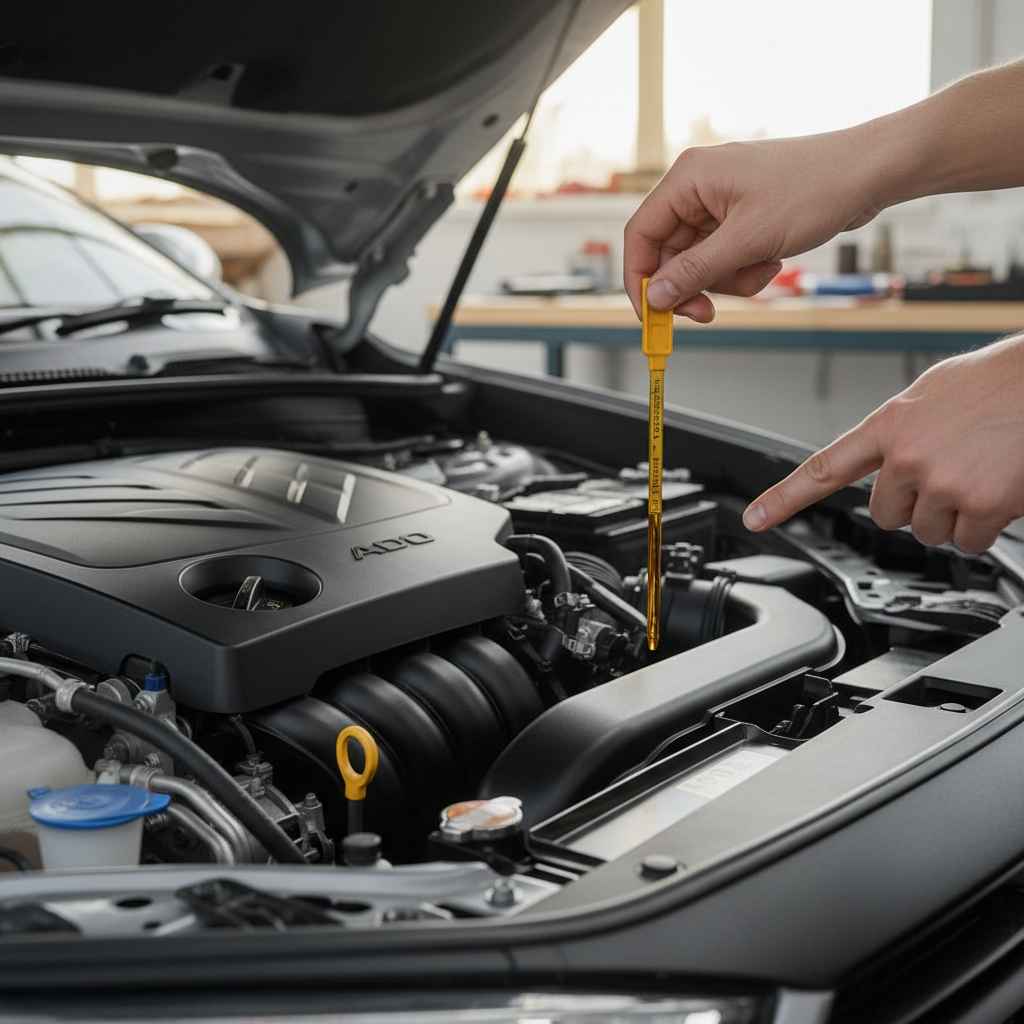
Check engine oil with the engine off, the car parked on level ground, and the oil settled before reading the dipstick.
If you drive to work, run errands, or take a long road trip across the United States, checking your engine oil is a simple way to help protect your car. The task takes only a few minutes, but checking at the wrong time can give you a misleading reading. The key is to know when to shut the engine off and how long to wait before you measure the oil.
For most cars with a traditional engine oil dipstick, you should turn off the engine, park on level ground, and allow the oil to drain back into the oil pan. Many vehicles need a few minutes after shutdown, while others call for a specific waiting period in the owner’s manual. Some cars use an electronic oil level system, so their instructions may differ. The safest approach is to follow the procedure for your exact vehicle rather than assume every engine works the same way.
Source: shieldoils.com
Do You Check Engine Oil With the Car On or Off?
You should checkengine oil with the car off in most vehicles that have a traditional dipstick. Turn off the engine, park on flat ground, and wait for the oil to drain back into the oil pan before taking a reading. This gives you a more useful view of the oil available in the engine.
When the engine runs, the oil pump moves oil through the engine’s passages, bearings, and other parts that need lubrication. Some oil stays around those parts for a short time after shutdown. If you check the dipstick immediately, the reading may not match the level specified by the manufacturer.
The engine does not always need to be completely cold. Many manufacturers allow an oil level check after the engine has warmed up and then been switched off for a specified period. The important points are to keep the engine off during the measurement and follow the correct temperature and waiting instructions for your vehicle.
There is one major exception: some vehicles use an electronic oil level sensor or a dashboard measurement procedure. These systems may require the engine to reach a certain temperature, the car to sit on level ground, or a particular ignition setting. Follow the owner’s manual rather than applying the dipstick method to every car.
Source: castrol.com
Engine off
The normal choice for a traditional dipstick check because it allows the oil to settle and avoids contact with moving engine parts.
Engine running
Do not use this as the normal dipstick-check method. The oil is circulating, the reading can be misleading, and moving parts create a safety risk.
Engine recently switched off
Often suitable after the required waiting period, provided the car is level and the manufacturer’s instructions permit this method.
Engine completely cold
Suitable for many vehicles, but not all manufacturers specify a cold-engine check. Confirm the correct procedure in the owner’s manual.
Why the Engine Must Be Off
Engine oil does more than sit in the bottom of the engine. While the engine runs, the oil pump sends it through passages to lubricate moving parts. Some oil remains in these passages and on internal components instead of immediately returning to the oil pan.
The dipstick is designed to show the oil level under a specified set of conditions. Measuring it while oil is circulating can produce an unreliable result. Turning off the engine and allowing enough time for the oil to drain back helps you compare the reading with the dipstick marks correctly.
A clearer reading
Settled oil provides a more consistent measurement when you use the procedure specified by the manufacturer.
Less risk
With the engine off, you avoid the belts, fans, pulleys, and other moving parts that may be present in the engine bay.
Does the Engine Need to Be Cold?
No. The engine does not have to be cold for every oil check. Some vehicle manuals specify checking the oil after the engine has reached normal operating temperature and then waiting several minutes after shutdown. Others allow or recommend checking when the engine is cold.
Temperature can affect how oil flows and drains back into the oil pan. That is why a reading taken immediately after a long highway drive may differ from one taken after the vehicle has been parked overnight. Neither condition automatically makes a reading wrong; the correct method depends on the engine design and the manufacturer’s instructions.
Cold engine
Can be convenient for routine checks because the engine bay has had time to cool. Use this method only if it fits your vehicle’s instructions.
Warm engine
May be the required condition for some vehicles. Shut the engine off and wait as directed before checking.
Very hot engine
Take extra care around the exhaust, cooling system, and other hot parts. Never open a hot pressurized coolant cap to check engine oil.
How Long Should You Wait After Turning Off the Engine?
Wait for the period stated in your owner’s manual before checking engine oil. Some vehicles need only a few minutes for the oil to drain back into the oil pan, while others specify a different interval or require a particular engine temperature. There is no single waiting time that fits every car.
If your manual says to warm the engine, switch it off, and wait five minutes, follow those steps. If it calls for a cold-engine reading, let the vehicle cool for the required period instead. The goal is to measure the oil under the conditions used to define the correct dipstick range.
Avoid checking the oil immediately after switching off a vehicle unless the manual specifically allows that timing. A rushed reading may lead you to add oil that you do not need. Overfilling can also cause problems, so a short wait is worth the effort.
Source: engineauditor.com
First, check the manual
Look for the engine oil level inspection procedure, including the required engine temperature and waiting period.
Park on level ground
A slope can shift oil toward one side of the oil pan and affect the reading.
Wait before measuring
Allow the oil to settle for the specified time rather than guessing from how warm the engine feels.
Repeat an unclear reading
Wipe the dipstick, insert it fully, and take another reading if oil smears make the marks difficult to see.
What If You Just Finished Driving?
After a commute or highway trip, park safely on level ground and switch off the engine. Apply the parking brake, keep clear of traffic, and let the engine settle for the time specified in the manual. If the vehicle calls for a cold check, wait until it reaches the appropriate condition.
Do not touch the exhaust manifold, turbocharger, radiator, or other hot components while reaching for the dipstick. If the engine bay is too hot to access safely, wait longer. There is no benefit in risking a burn just to get an immediate reading.
Safe access
Use the hood release as instructed and keep clothing, hair, and hands away from hot or moving components.
Correct timing
Use the vehicle-specific waiting period instead of relying on a universal five-minute rule.
How to Check Engine Oil Correctly Step by Step
You can check the oil in many gasoline and diesel cars with a traditional dipstick and a clean cloth or paper towel. Before starting, park in a safe, level place, switch off the engine, set the parking brake, and read the relevant section of your owner’s manual.
Find the dipstick by looking for the handle marked with an oil symbol or a bright-colored grip. Its location varies by vehicle. Some engines have a dipstick that is easy to reach, while others place it deeper in the engine bay.
Follow the steps below to get a useful reading without adding unnecessary oil or putting yourself near moving parts.
Source: carcurehub.com
Step 1: Park safely
Choose level ground away from traffic. Put the transmission in Park for an automatic or the appropriate safe gear for a manual, apply the parking brake, and turn off the engine.
Step 2: Wait as directed
Allow the oil to settle for the time specified in the owner’s manual. If the manual requires a cold check, let the engine cool first.
Step 3: Open the hood
Use the hood release and prop rod or built-in hood supports as designed. Keep hands away from hot surfaces and moving components.
Step 4: Find the dipstick
Identify the engine oil dipstick, not the transmission dipstick or another service point. Check the manual if you are unsure.
Step 5: Pull it out and wipe it
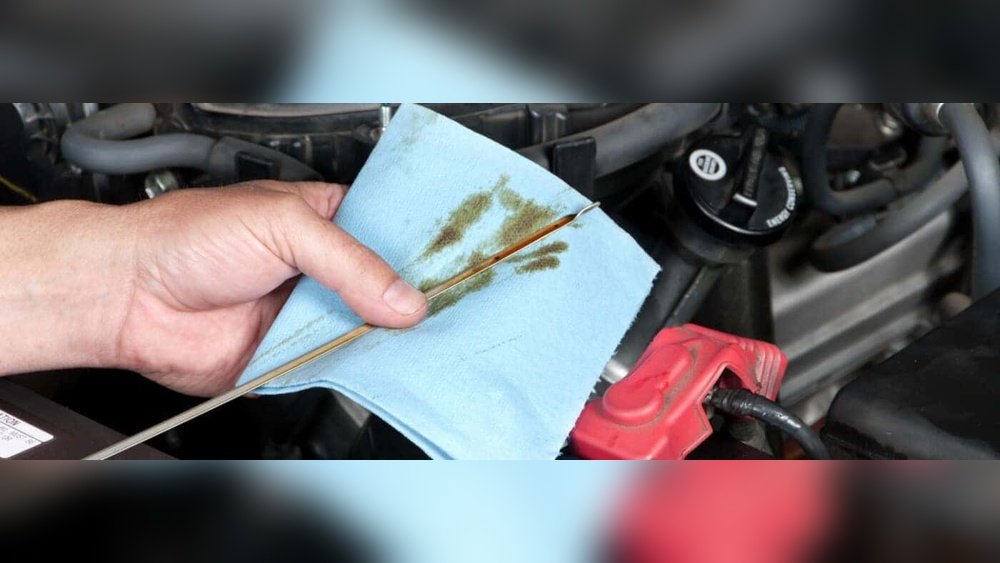
Remove the dipstick fully and wipe the oil from its measuring end with a clean, lint-free cloth or paper towel.
Step 6: Insert it fully
Slide the dipstick back into its tube until it is seated as designed. A partial insertion can give an inaccurate reading.
Step 7: Read the level
Pull the dipstick out again and inspect where the oil reaches the marked range. Check both sides if the oil has smeared along the blade.
Step 8: Add oil only if needed
If the reading is below the minimum mark, add the specified oil in small amounts and recheck. Avoid filling above the maximum mark.
Step 9: Finish safely
Reinsert the dipstick fully, secure the oil filler cap if you opened it, and close the hood before driving.
How to Read the Engine Oil Dipstick
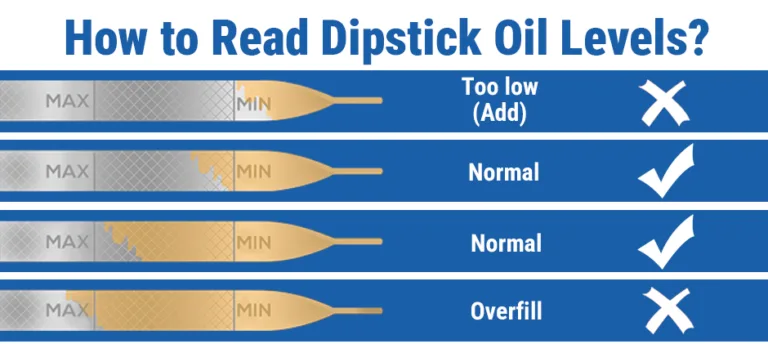
Most dipsticks have two marks, two holes, a crosshatched area, or a pair of lines that show the acceptable oil range. The lower mark represents the minimum level for the specified check, and the upper mark represents the maximum. The oil should normally fall between those marks.
A reading near the minimum mark means the oil level is low within the marked range, so check the manual for the correct response. If the level is below the minimum mark, add the specified oil carefully and recheck. If the dipstick is dry, do not assume the engine contains no oil, but treat the situation as urgent and avoid running the engine until you have checked the level and followed the manufacturer’s instructions.
A dipstick may show a thin film or streak above the main oil mark. This can happen when the blade touches the tube as you pull it out. Wipe it clean and repeat the measurement to distinguish the actual level from a smear.
Below MIN or LOW
The oil level is below the specified range. Add the correct oil carefully and investigate repeated loss.
Between MIN and MAX
The oil level is generally within the acceptable range when checked using the correct procedure.
Above MAX or FULL
Do not add more oil. If the level is genuinely too high, have the excess corrected according to the service instructions.
No clear mark
Wipe and reinsert the dipstick, then repeat the check. If the reading remains unclear, consult the owner’s manual or a qualified technician.
What Tools Do You Need?
A traditional dipstick check usually requires no special tools. A clean cloth or paper towel helps you wipe the dipstick, and the owner’s manual tells you how to read it and which oil the engine needs.
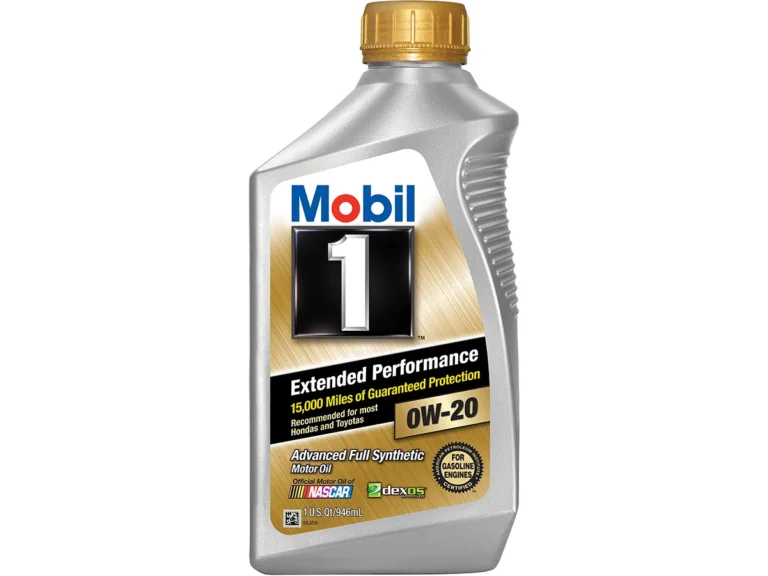
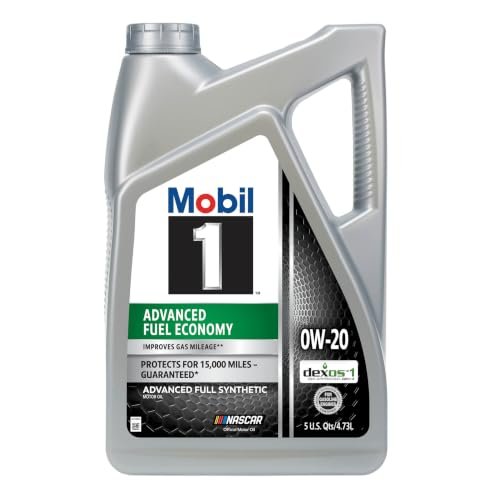
If you need to top up the oil, use the viscosity grade and specification listed by the manufacturer. A small funnel can help prevent spills. Do not choose oil based only on the brand, price, or the fact that a bottle says it is suitable for cars.
Clean cloth or paper towel
Removes the old oil film so the next measurement is easier to read.
Owner’s manual
Provides the correct inspection procedure, oil type, and capacity information for your vehicle.
Suitable engine oil
Use the exact viscosity grade and required performance specification for the engine.
Small funnel
Helps guide oil into the filler opening and reduces spills on engine parts.
What Is the Correct Engine Oil Level?
The correct engine oil level is the range specified by the manufacturer, usually between the minimum and maximum marks on the dipstick. Do not assume that the highest possible reading is always better. The maximum mark is a limit, not a target to exceed.
A low level can leave some engine parts without enough lubrication, especially during turns, braking, acceleration, or other conditions that move oil inside the pan. Too much oil can also cause problems because rotating engine parts may churn it into foam or allow oil to enter areas where it should not be. Both low and excessive oil levels deserve attention.
If the reading sits between the marks, you may not need to add oil. If it is near the lower mark, monitor the level and follow the manual’s advice. If you add oil, use small amounts, wait as required, and recheck rather than pouring in a large quantity at once.
Source: autoemc.net
The minimum mark
Shows the lower boundary of the specified dipstick range. A reading below it calls for prompt attention.
The maximum mark
Shows the upper boundary of the specified range. Do not exceed it when topping up.
The space between the marks
Represents the acceptable measured range under the manufacturer’s stated inspection conditions.
How Much Oil Should You Add?
The amount needed depends on the engine and the distance between its dipstick marks. Some engines have a marked range that corresponds to about one quart, while others differ. Do not assume every car uses the same amount between MIN and MAX.
If your owner’s manual gives a measured amount, use that guidance. Otherwise, add a small amount of the correct oil, wait for it to settle, and check the dipstick again. Repeat only as needed to bring the level into range.
For example, imagine a hypothetical car whose manual says the distance between the minimum and maximum marks represents one quart. If the oil is halfway between those marks, the level is roughly halfway through that marked range. This is only an illustration, not a reliable calculation for every engine; use the vehicle’s own specifications.
Add a little at a time
Small additions make it easier to avoid overfilling.
Recheck after each addition
Let the oil settle as required, then take another dipstick reading.
Stop at the correct range
Do not keep adding oil simply to reach the upper mark if the reading is already within the permitted range.
What If You Add Too Much Oil?
If the oil level is above the maximum mark, first make sure the reading is accurate. Park on level ground, follow the required waiting period, wipe the dipstick, and repeat the measurement. If the level remains above the maximum, arrange to have the excess removed before driving when the overfill is significant or the manufacturer advises against operation.
Too much oil can be churned by moving engine parts, which may cause foaming and interfere with lubrication. Depending on the engine, excess oil may also contribute to leaks, smoke, or damage to emission-control components. The risk depends on how much oil is present and the engine design, so do not dismiss a confirmed overfill.
Confirm the reading
Rule out a sloping parking spot, an immediate post-shutdown check, or oil streaks on the dipstick.
Avoid further additions
Do not pour in more oil when the level is already above the maximum mark.
Seek service if needed
Have excess oil removed using a suitable method if the level remains too high.
Can You Check Engine Oil While the Car Is Running?
For a normal dipstick measurement, do not check engine oil while the engine is running. The oil is circulating through the engine, so the reading may not reflect the specified level. More importantly, running engines have moving parts and may contain hot surfaces that can injure you.
The engine bay may contain an electric cooling fan that can start unexpectedly, even on some vehicles after the engine has been switched off. Belts and pulleys can also catch loose clothing or fingers while the engine runs. There is no need to expose yourself to these risks to read a standard dipstick.
An electronic oil level display is different. Some cars measure oil level through a sensor and tell you when and how to view the result. The required process may involve the engine being off, the ignition being on, or another specified condition. Follow the instructions shown in the owner’s manual or vehicle display.
Source: nextcarreview.com
Never reach into a running engine
Keep hands, clothing, hair, and tools away from belts, pulleys, fans, and other moving parts.
Do not remove the dipstick while running
Use the manufacturer’s stationary inspection method instead.
Follow electronic measurement instructions
Use the procedure required by the vehicle rather than treating a digital oil level system like a traditional dipstick.
What About Checking Oil With the Ignition On?
Turning the ignition on is not the same as running the engine. In some vehicles, the ignition must be on to display electronic oil level information while the engine remains off. Other systems require a different sequence, so do not rely on a universal button or dashboard method.
If your car has no dipstick and displays an oil level electronically, check the manual for the exact steps. If the display reports a low level, follow the stated instructions for adding oil or arranging service. A dashboard oil level reading also differs from an oil pressure warning, which can indicate a more urgent problem.
Oil level message
Indicates the measured amount of oil or a level-related condition, depending on the vehicle.
Oil pressure warning
Can signal inadequate oil pressure. Stop safely and switch off the engine if the warning remains on while running.
How Often Should You Check Engine Oil?
Check engine oil at the interval recommended in your owner’s manual. As a practical habit, many drivers can inspect the level about once a month and before a long road trip, but the right frequency depends on the vehicle, its condition, and how it is used.
Older cars, high-mileage engines, vehicles with a history of oil consumption, and cars used for frequent short trips may need closer attention. A vehicle that burns or leaks oil can move from a normal reading to a low level between scheduled services. Regular checks help you spot a change before it becomes a serious problem.
Do not treat the oil change schedule as a replacement for checking the level. An engine can lose oil between oil changes, even when the oil itself is still within its service interval. Follow the manufacturer’s service schedule and inspect the level more often if you notice a leak, smoke, or an unusual drop.
Source: carawareness.com
Routine driving
Use the inspection interval in the owner’s manual, with a monthly check as a practical habit for many drivers when appropriate.
Before a long trip
Check the level before driving long distances, especially if the vehicle has a history of oil loss.
Older or high-mileage vehicles
Monitor more frequently if the engine consumes oil or has developed leaks.
After an oil change
Confirm the level using the manufacturer’s procedure if the service instructions call for a check.
Signs Your Car May Be Low on Oil
A low oil level may not produce an obvious warning at first. Some vehicles display a message or warning light, while others give little notice before the problem becomes serious. Checking the dipstick is a useful way to monitor the level when the vehicle is designed for that method.
Watch for signs of oil loss, but do not use symptoms alone to judge the level. A burning smell may come from oil leaking onto hot engine parts, and blue exhaust smoke can indicate that the engine is burning oil. Neither symptom proves the exact cause, so further inspection may be needed.
Oil pressure warning light
Treat a warning that stays on while the engine runs as urgent. Pull over safely, switch off the engine, and seek guidance before restarting.
Oil spots under the car
May point to a leak. Check the level safely and arrange an inspection if the leak continues.
Burning oil smell
Could indicate oil reaching a hot surface. Stop if there is smoke or a strong burning odor and have the cause checked.
Unusual engine noise
Knocking, ticking, or other new sounds may have several causes. Shut the engine off if a serious noise appears with an oil warning.
Repeatedly falling oil level
May indicate a leak or oil consumption that needs diagnosis, even if the level remains within range between checks.
Common Engine Oil Checking Mistakes to Avoid
Most dipstick errors come from checking under the wrong conditions, reading oil streaks as the actual level, or adding too much oil. A few simple habits can prevent these mistakes and make the result more reliable.
The most useful rule is to repeat any reading that looks unusual before acting on it, provided the vehicle is safe to check. If the reading remains abnormal, follow the manual and address the cause instead of guessing.
Source: blog.openroadautogroup.com
Checking on a slope
A tilted car can produce an inaccurate level reading. Move to level ground and repeat the check.
Measuring immediately after shutdown
Oil may not have drained back into the pan yet. Wait for the period required by the manufacturer.
Leaving the dipstick partly inserted
The reading may be wrong if the dipstick is not fully seated during measurement.
Reading an oily smear
Wipe the blade clean and take another reading instead of treating a streak as the true oil level.
Using the wrong oil
Check the required viscosity grade and performance specification before topping up.
Overfilling the engine
Add oil gradually and recheck the level to avoid going above the maximum mark.
Ignoring warning lights
A low oil pressure warning can indicate a problem that a normal dipstick reading will not rule out.
Touching hot engine parts
Allow the engine to cool enough for safe access and avoid hot exhaust parts, fans, and belts.
When Should You Stop and Get Professional Help?
Stop the engine and seek professional help if the oil pressure warning remains on, the dipstick is dry, the engine makes a severe knocking sound, or you see a major oil leak. Running an engine with inadequate lubrication can cause rapid damage. Do not keep restarting it to see whether the warning disappears.
Professional inspection is also sensible when the oil level rises unexpectedly, the oil looks milky, the engine repeatedly loses oil, or the dipstick reading remains unclear. These signs can have several causes, and an accurate diagnosis may require more than a simple level check.
Persistent oil pressure warning
Shut down the engine and arrange roadside assistance or a qualified inspection.
No oil visible on the dipstick
Do not start or continue driving until you have followed the vehicle’s instructions and confirmed that it has a safe oil level.
Milky or unusual oil
Have the engine inspected, particularly if the oil appearance is accompanied by overheating or coolant loss.
Repeated oil loss
Ask a technician to check for external leaks, internal oil consumption, and related faults.
Engine Oil Dipstick vs. Electronic Oil Level Monitor
A traditional dipstick lets you inspect the engine oil level directly, while an electronic monitor uses a sensor and vehicle-specific software to report a reading. Neither method should be used outside the conditions specified by the manufacturer.
Many newer vehicles have electronic level displays, and some engines do not provide a conventional dipstick for routine checks. The system may ask you to warm the engine, switch it off, wait a certain amount of time, or use the vehicle’s controls to display the result. Other systems may require a different sequence.
An electronic oil level monitor is not always the same as an oil pressure warning system. Oil level concerns how much oil is present; oil pressure concerns how well the lubrication system is delivering oil under operating conditions. A normal level does not guarantee normal oil pressure.
Source: autoemc.net
Traditional dipstick
Provides a physical reading when used on level ground under the specified temperature and waiting conditions.
Electronic oil level monitor
Reports a sensor-based reading and may require a specific procedure before it can display an accurate result.
Oil pressure warning
Signals a potential lubrication pressure problem and should be treated urgently if it remains on while the engine runs.
What If Your Car Has No Dipstick?
First, confirm that your vehicle is designed to use an electronic oil level system. Do not assume a dipstick is missing just because it is not easy to see; its location and design vary by engine.
Consult the owner’s manual for the electronic check procedure. If the system reports low oil, use the specified oil and follow the instructions for adding it. If the display is unavailable, gives an error, or conflicts with other warning messages, arrange a qualified inspection instead of guessing.
Use the correct display procedure
Meet the specified temperature, parking, shutdown, and ignition conditions.
Do not estimate the level from oil pressure
Pressure and quantity measure different conditions, so one cannot reliably replace the other.
Get help for inconsistent readings
A faulty sensor or a system issue may need diagnosis if the level cannot be confirmed.
Frequently Asked Questions
Q
Should I check engine oil when the engine is hot or cold?
Either condition may be correct, depending on your vehicle. Some manufacturers specify a warm engine followed by a waiting period, while others allow or recommend a cold-engine check. Follow the owner’s manual for the required temperature and timing, and always switch the engine off before using a traditional dipstick.
Q
Can I check engine oil immediately after turning off the car?
It is better to wait for the period specified in your owner’s manual. Oil needs time to drain back into the oil pan after the engine stops. Checking too soon may produce a misleading reading and could lead you to add more oil than necessary.
Q
Should the car be running when I pull out the oil dipstick?
No. Turn off the engine before removing the dipstick for a normal oil level check. A running engine can give an unreliable reading and exposes you to moving parts, hot surfaces, and other hazards. Electronic oil level systems may use a different procedure, so follow the vehicle’s instructions.
Q
Can I check engine oil while the car is parked on a hill?
Avoid it. A slope can shift oil inside the oil pan and make the dipstick reading inaccurate. Park on level ground, switch off the engine, wait as directed, and repeat the check. Do not rely on a reading taken on a steep incline to decide how much oil to add.
Q
What should I do if the oil level is below the minimum mark?
Use the correct oil listed in the owner’s manual and add it in small amounts. Let the oil settle as required, then repeat the dipstick check until the level is within the permitted range. If the dipstick is dry, the engine has a major leak, or an oil pressure warning is on, do not continue driving; follow the manufacturer’s emergency instructions and seek help.
Q
Is it safe to check engine oil after a long drive?
Yes, if you follow the correct procedure and take care around hot parts. Park on level ground, shut off the engine, and wait for the period specified in the manual. Avoid touching the exhaust, turbocharger, and other hot surfaces. If the engine bay is too hot to access safely, allow it to cool longer.
Q
Does a full oil level mean my engine is healthy?
Not necessarily. A level within the correct range confirms only the measured quantity of oil under the specified checking conditions. It does not prove that oil pressure is normal, the oil is still suitable for use, or the engine has no leaks or internal problems. Pay attention to warning lights, unusual noises, and changes in oil condition.
Q
Can I drive with the engine oil level at the minimum mark?
A reading exactly at the minimum mark is at the lower boundary of the specified range, but you should check the owner’s manual and address the level as directed. If you can safely top up with the correct oil, do so carefully without exceeding the maximum mark. Never continue driving merely because the dipstick is not dry if an oil pressure warning or serious engine symptom is present.
✦ Wrapping Up
Conclusion
The answer to do you check engine oil with car on or off is simple: for a traditional dipstick check, turn the engine off first. Park on level ground and wait for the oil to settle according to the manufacturer’s instructions. Then wipe the dipstick, insert it fully, and take a fresh reading.
Keep the oil between the minimum and maximum marks, use the specified oil when topping up, and avoid adding too much. If the reading is unclear, repeat the check under the right conditions. If the level is very low, an oil pressure warning stays on, or the engine makes a serious noise, stop and seek help rather than risking engine damage.
A few minutes of routine maintenance can help you spot oil loss before it becomes a costly problem. Make the check part of your regular vehicle care, especially before a long trip or when your car has a history of using oil.
💡 Key Takeaway
Park on level ground, switch off the engine, wait as directed in your owner’s manual, and check the dipstick twice before deciding whether to add oil.
If you’re trying to work out how much motor oil your engine needs, the answer is in the vehicle’s oilcapacity specification. Engine size alone can mislead…