What Is The Best Synthetic Motor Oil: Top 5 Picks
Mobil 1 Advanced Fuel Economy 0W-20 is my top pick for compatible cars that need efficient, full synthetic engine protection.
Your car may take you through daily traffic, long highway trips, school runs, and weekend road trips. The right motor oil helps protect its engine through all these miles. But choosing oil can feel hard. There are many brands, grades, and formulas on store shelves. If you are asking what is the best synthetic motor oil, start with your owner’s manual. The correct oil grade and required performance rating matter more than the brand name alone. I compare five options here, including full synthetic oils, synthetic blends, and formulas made for older engines. This guide will help you find a suitable choice for your car and driving needs.
🏆 Top 3 Products

Mobil 1 Advanced Fuel Economy 0W-20
It is my leading choice for compatible vehicles that need full synthetic oil and prioritize fuel economy.

Mobil 1 High Mileage Full Synthetic 0W-20
Its full synthetic formula targets the needs of older vehicles with high odometer readings.

Castrol GTX High Mileage 5W-30
It is a practical option for older cars that call for 5W-30 and benefit from a high-mileage oil blend.
Castrol GTX High Mileage 5W-30 Review
Castrol GTX High Mileage 5W-30 is a synthetic blend motor oil made for older engines. It combines synthetic and conventional base oils with additives that help protect engine parts. Its formula aims to reduce sludge buildup and help limit oil leaks linked to worn seals. The five-quart jug can suit many cars that need this oil grade, though the amount your engine needs may differ.
I would consider this oil for a car that has covered many miles and still runs well. It may help support cleaner engine parts and steady daily use when the grade and oil rating match the manual. However, this is a synthetic blend, not a full synthetic oil. If your car needs a specific full synthetic product or a different viscosity, choose an oil that meets those needs instead.
✅ Pros
- ✔ Designed for engines with high mileage.
- ✔ Contains synthetic and conventional base oils.
- ✔ Helps control sludge when used as directed.
- ✔ Aims to help reduce leaks linked to worn seals.
- ✔ The five-quart jug may suit many common oil changes.
- ✔ SAE 5W-30 is widely used in many older vehicles.
- ✔ Can be a practical choice for daily driving.
- ✔ Offers a high-mileage formula without requiring a full synthetic product.
⚠️ Cons
- ✖ It is a synthetic blend rather than full synthetic oil.
- ✖ SAE 5W-30 is not suitable for every engine.
- ✖ It cannot repair damaged seals or worn engine parts.
- ✖ The jug may not provide the exact amount every vehicle needs.
My Recommendation
I recommend Castrol GTX High Mileage 5W-30 for drivers with older cars that call for SAE 5W-30 and meet the product’s stated oil requirements. It is a sensible option for routine care when you want a high-mileage formula. Check the API service category and any automaker approval listed on the bottle before buying. If your engine needs full synthetic oil, a different grade, or a special manufacturer specification, choose a product that clearly meets that requirement.
| Best For | Why |
|---|---|
| Older daily drivers | Its high-mileage formula is designed to support engines with many miles. |
| Drivers who prefer a blend | It combines synthetic and conventional base oils. |
| Cars that require 5W-30 | The grade fits vehicles whose manuals call for this viscosity and the matching service rating. |
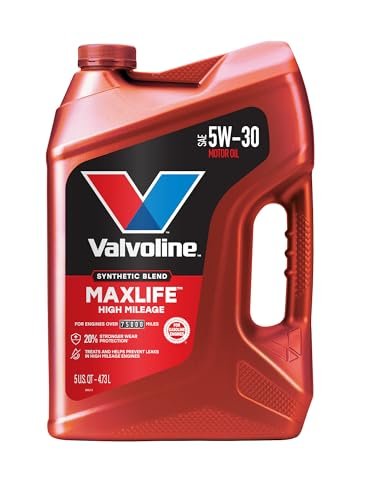
Valvoline MaxLife High Mileage 5W-30 Review

Valvoline MaxLife High Mileage 5W-30 is a synthetic blend motor oil made for engines with higher mileage. Its formula aims to help protect aging engine parts, reduce oil use, and limit leaks linked to worn seals. It also includes additives that help fight sludge and deposits. The five-quart size can be useful for home oil changes when it matches your engine’s oil capacity.
I see this as an option for drivers who want an oil designed with older engines in mind. A high-mileage formula may help maintain good engine care, but it cannot restore worn parts or fix a major leak. It is important to follow the oil grade and service rules in your owner’s manual. Before buying, check the label for the exact performance standards your vehicle needs.
✅ Pros
- ✔ Designed for engines with high mileage.
- ✔ Aims to help reduce oil leaks related to worn seals.
- ✔ May help limit oil consumption in some engines.
- ✔ Contains additives that help fight sludge and deposits.
- ✔ The five-quart jug suits many routine maintenance jobs.
- ✔ SAE 5W-30 fits many vehicles that call for this grade.
- ✔ Useful for drivers who want an oil focused on aging engines.
- ✔ Can support regular engine care when used on schedule.
⚠️ Cons
- ✖ This listed product is a synthetic blend, not full synthetic oil.
- ✖ It cannot fix a failed gasket or damaged engine seal.
- ✖ It may not meet the needs of cars that require another viscosity.
- ✖ Results for oil use and leaks vary with engine condition.
My Recommendation
I would choose Valvoline MaxLife High Mileage 5W-30 for an older car that uses this grade and needs an oil designed for high-mileage service. It is especially worth considering when routine maintenance matters more than buying a premium full synthetic formula. Do not use it to hide a serious leak or low oil pressure. Check the dipstick often, follow the service schedule, and have a mechanic inspect any sudden change in oil use.
| Best For | Why |
|---|---|
| High-mileage cars | The formula targets common care needs in aging engines. |
| Drivers watching oil use | It is designed to help minimize oil consumption, though results depend on engine condition. |
| Routine oil changes | The five-quart jug can suit many cars that use SAE 5W-30. |
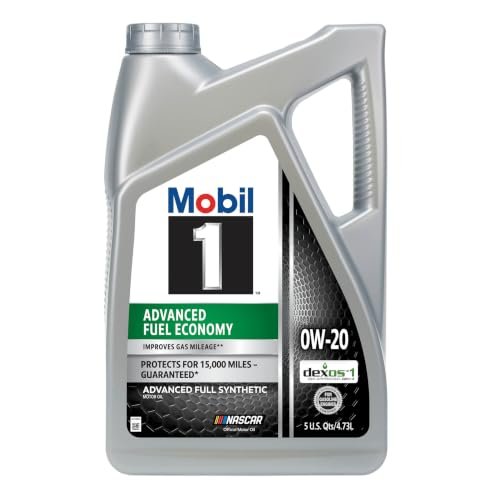
Mobil 1 Advanced Fuel Economy 0W-20 Review
Mobil 1 Advanced Fuel Economy 0W-20 is a full synthetic motor oil designed for engines that call for this low-viscosity grade. Its formula aims to reduce friction and support fuel economy while helping protect key engine parts. It also works to control deposits and keep the engine clean. The product label lists protection claims and service guidance, but drivers must still follow the carmaker’s oil-change schedule.
For compatible vehicles, this is my top pick in this group. The 0W-20 grade can flow well during cold starts, which is useful in cold US winters. Its full synthetic base also suits drivers who want a modern oil for everyday trips and highway miles. Still, a thinner oil is not always better. Never switch to 0W-20 unless your owner’s manual allows it and the oil meets the required service standards.
✅ Pros
- ✔ Full synthetic formula for compatible engines.
- ✔ Designed to support fuel economy.
- ✔ Helps protect engine parts from wear.
- ✔ Aims to control harmful deposits.
- ✔ 0W-20 can aid oil flow during cold starts.
- ✔ Suitable for many modern vehicles that require this grade.
- ✔ The five-quart jug is convenient for many home oil changes.
- ✔ A strong choice for drivers who want everyday full synthetic protection.
⚠️ Cons
- ✖ Not suitable for engines that require another oil grade.
- ✖ The full synthetic price may exceed that of a basic blend.
- ✖ Fuel savings depend on the vehicle and driving conditions.
- ✖ The advertised protection interval does not override the owner’s manual.
My Recommendation
If you ask what is the best synthetic motor oil for a modern car that calls for 0W-20, I would start with Mobil 1 Advanced Fuel Economy. It offers full synthetic protection with a focus on efficiency. It is a good match for commuting, city traffic, and highway use when the grade and specifications fit the vehicle. Check the manual before purchase, and do not extend oil changes beyond the automaker’s schedule or the product’s approved limits.
| Best For | Why |
|---|---|
| Modern cars that require 0W-20 | Its viscosity is designed for engines that specify this grade. |
| Fuel-conscious commuters | The formula aims to reduce friction and support fuel economy. |
| Cold-weather drivers | The 0W rating supports flow during cold starts when the engine calls for this oil. |
STP Synthetic Blend 10W-30 Small Engine Oil

STP Premium Synthetic Blend 10W-30 is a four-cycle small-engine oil, not a standard choice for most passenger cars. It is made for equipment such as compatible lawnmowers, generators, tractors, and snow blowers. Its synthetic blend formula helps lubricate moving parts and support engine care during normal use. The 32-fluid-ounce bottle is sized for smaller engines and top-ups.
I would consider this product for outdoor power equipment only when its manual allows SAE 10W-30 and the oil’s service rating matches. It is not a direct substitute for the full synthetic car oils in this guide. Small engines can have different oil needs based on design, load, and temperature. Check the equipment manual first, especially before using oil in a generator that may run for long periods or in cold weather.
✅ Pros
- ✔ Made for compatible four-cycle small engines.
- ✔ Useful for many lawnmowers and garden machines.
- ✔ Can suit certain generators and tractors.
- ✔ Synthetic blend base oil supports routine lubrication.
- ✔ The 32-fluid-ounce bottle is easy to store.
- ✔ SAE 10W-30 is a common grade for some small engines.
- ✔ Offers a dedicated option for outdoor power equipment.
- ✔ Can be handy for seasonal equipment maintenance.
⚠️ Cons
- ✖ Not intended as a general passenger-car motor oil.
- ✖ The 10W-30 grade may not suit all small engines.
- ✖ The small bottle may not fill larger engines.
- ✖ It may not be suitable for two-cycle engines that use an oil-fuel mix.
My Recommendation
I recommend STP Premium Synthetic Blend 10W-30 only for compatible four-cycle equipment. It is useful for homeowners who maintain a lawnmower or generator and need this grade. Do not buy it as your main car oil just because it contains synthetic base oil. Confirm the equipment’s required viscosity, oil capacity, and service category. If the manual calls for a different grade or a special small-engine oil, follow that guidance instead.
| Best For | Why |
|---|---|
| Four-cycle lawnmowers | It can suit machines whose manuals allow SAE 10W-30. |
| Compatible generators | The small bottle is convenient for routine service on equipment that accepts this oil. |
| Homeowners with garden equipment | It provides a dedicated oil option for certain small engines. |
Mobil 1 High Mileage Full Synthetic 0W-20 Review
Mobil 1 High Mileage Full Synthetic 0W-20 is designed for vehicles with high odometer readings that need this oil grade. Its formula includes seal conditioners and aims to help control sludge and deposits. The product is marketed for engines with 75,000 miles or more, but mileage alone does not decide which oil a vehicle needs. The owner’s manual and the oil’s performance specifications still guide the choice.
I like this option for owners who want a full synthetic formula made for aging engines. It may help support seal care and reduce some oil-use issues, but it will not repair a cracked gasket or worn mechanical part. Its 0W-20 grade suits only engines that allow it. If an older vehicle calls for 5W-30 or another viscosity, choose the correct grade rather than switching based only on mileage.
✅ Pros
- ✔ Full synthetic motor oil.
- ✔ Designed for vehicles with high mileage.
- ✔ Includes seal conditioners to support seal care.
- ✔ Aims to help prevent sludge and deposits.
- ✔ The five-quart jug suits many routine oil changes.
- ✔ 0W-20 can support cold-start flow in compatible engines.
- ✔ Useful for drivers who want high-mileage care and a full synthetic base.
- ✔ Offers a clear option for many modern cars with higher odometer readings.
⚠️ Cons
- ✖ Only suitable for vehicles that allow SAE 0W-20.
- ✖ It may cost more than a synthetic blend.
- ✖ Seal conditioners cannot repair damaged seals or gaskets.
- ✖ A high-mileage label does not mean every older engine should use it.
My Recommendation
For a vehicle with 75,000 miles or more that requires 0W-20, Mobil 1 High Mileage Full Synthetic is one of my leading choices. It combines a full synthetic base with features aimed at aging engines. I would choose it when the car’s service needs match the bottle’s specifications. Check oil levels often if the engine already uses oil, and have any sudden loss or leak checked rather than relying on a new oil formula alone.
| Best For | Why |
|---|---|
| High-mileage modern cars | The product targets vehicles with higher odometer readings. |
| Drivers who want full synthetic oil | It combines full synthetic base oil with a high-mileage formula. |
| Cars that require 0W-20 | Its viscosity suits engines whose manuals specify this grade. |
Final Verdict: Which Should You Buy?
If you are asking what is the best synthetic motor oil from this list, I choose Mobil 1 Advanced Fuel Economy 0W-20 for compatible vehicles. It offers a full synthetic formula aimed at engine protection and fuel economy. For older cars that need 0W-20, Mobil 1 High Mileage Full Synthetic is a strong alternative. Castrol GTX High Mileage and Valvoline MaxLife suit drivers who need a 5W-30 synthetic blend, while STP is for compatible small engines.
The best synthetic motor oil is the one that meets your vehicle’s exact grade and service needs. Check your owner’s manual, compare the label, and follow the service schedule. This simple approach helps you choose motor oil with confidence and care for your engine mile after mile.
FAQs Of what is the best synthetic motor oil
Q What is the best synthetic motor oil for most cars?
Q Is full synthetic oil better than synthetic blend oil?
Q Can I use 0W-20 instead of 5W-30?
Q Does high-mileage motor oil stop leaks?
Q How often should I change synthetic motor oil?