How Much Motor Oil: The complete guide
If you’re trying to work out how much motor oil your engine needs, the answer is in the vehicle’s oil-capacity specification. Engine size alone can mislead because the same model may use several engines. The correct figure can also change by model year, trim, and market.
One U.S. liquid quart equals 0.946 liters. SAE J300 classifies viscosity, but it doesn’t approve oil for a specific engine. Check the owner’s manual for the required performance category, then follow its top-up or service procedure.
How Much Motor Oil
Quick Answer
How much motor oil you need depends on your exact engine. Check the owner’s manual for its rated capacity. For a top-up, read the current level and add in stages.
Never exceed the MAX mark after the oil drains back.
Find Your Engine’s Exact Oil Capacity
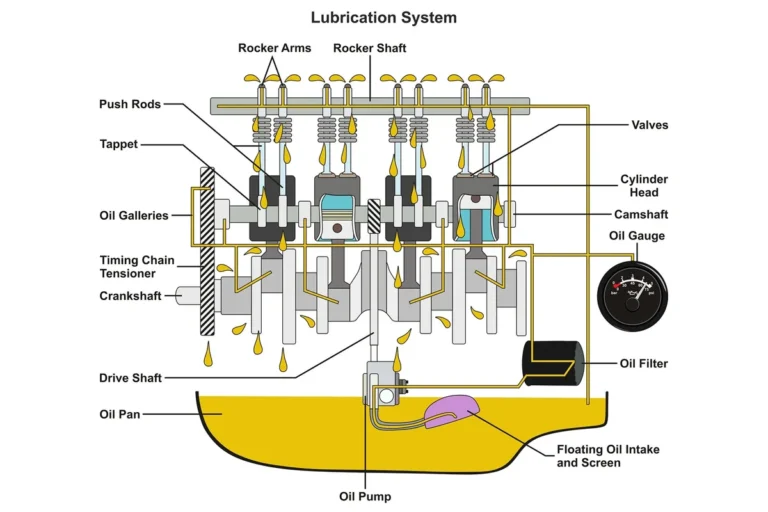
Engine oil capacity is the total volume held by an engine’s lubrication system. Sump capacity may be smaller because it doesn’t always include the filter, cooler, galleries, hoses, or external dry-sump lines.
Start with the Vehicle Identification Number (VIN), model year, trim, and engine code. This matters most on pickups, vans, and SUVs that share a body style with several powertrains.
Which vehicle details should you match?
Match the VIN, model year, trim, and engine code before trusting any oil-capacity chart.
| Detail | Why it matters |
|---|---|
| VIN | Identifies the production year, market, and build |
| Trim and drivetrain | Can change the engine or lubrication system |
| Engine code | Confirms the correct lubrication layout |
| Engine displacement | Provides a useful cross-check |
As of 2026, start with the VIN-specific owner’s manual or official manufacturer database. A general model chart may combine figures from several engines or model years. Manufacturer specifications are more reliable than a generic engine-size formula.
What do the oil-capacity labels mean?
Each capacity label includes only the components stated by the manufacturer.
- Total engine oil capacity covers the full lubrication system described in the manual.
- Sump or reservoir capacity measures only the oil-holding container.
- Factory-fill capacity is the amount used to fill a new engine under specified conditions.
- Service refill amount is the quantity assigned to a complete maintenance procedure.
- Filter-included capacity means the listed quantity assumes the oil filter is attached.
Some oil remains inside the filter, cooler, galleries, and passages after draining. That’s why a service refill may be lower than the factory-fill capacity.
One U.S. liquid quart equals 0.946 liters. A 4.5-liter capacity is therefore about 4.75 U.S. liquid quarts. A label marked “qt” normally means U.S. liquid quarts unless the manual says otherwise.
Decide Between a Top-Up and a Full Drain-and-Refill
Choose the procedure based on the engine’s service condition, not the amount left in your oil container. A top-up and a full service use different reference points.
Is this a top-up or a full service?
Use a top-up when the service interval is current and the oil remains clean and usable.
| Situation | Correct choice | Quantity to use |
|---|---|---|
| Level is low before the service interval | Top-up | Enough to reach the prescribed level |
| Scheduled service is due | Full drain-and-refill | Manufacturer’s service refill amount |
| Oil filter is due | Full drain-and-refill | Procedure’s stated quantity plus final-level check |
| Engine repeatedly needs oil | Inspection first | Add only enough to reach a safe level |
| Oil-pressure warning is active | Stop driving | Diagnose the warning |
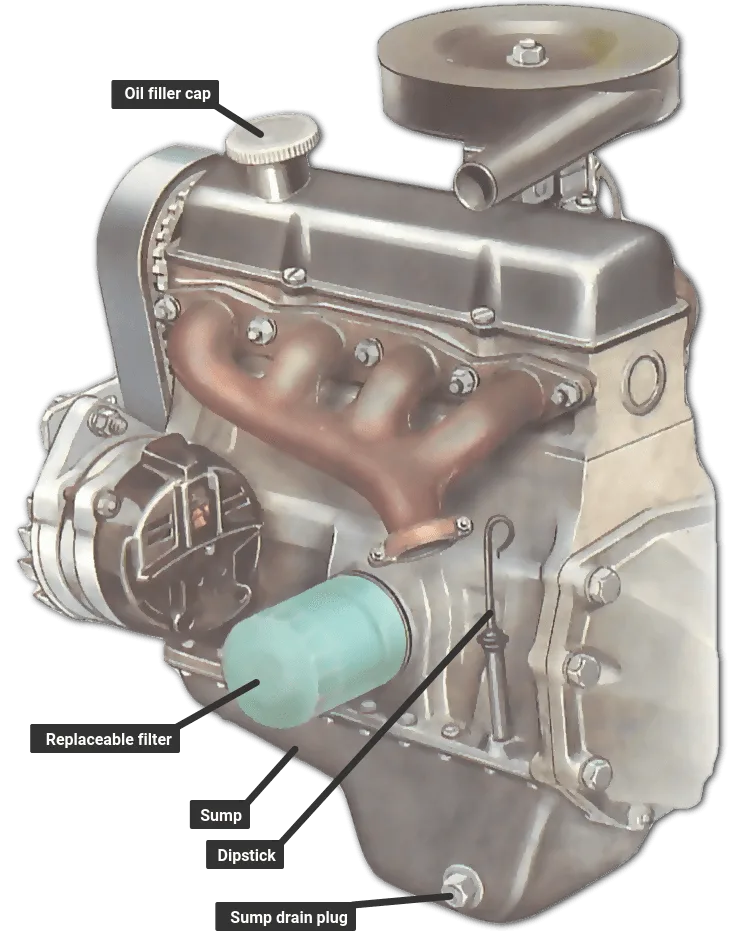
For a top-up, the engine already contains some oil. The amount you add depends on the current reading. Don’t pour in the engine’s full rated capacity.
A full drain-and-refill removes the old oil and usually replaces the filter. Oil still remains in the filter housing, cooler, galleries, hoses, and sump. The manual’s service amount accounts for those retained quantities.
Use the complete service procedure when oil has reached the end of its interval, appears contaminated, or has suffered water or fuel contamination. A top-up replaces missing volume, but it doesn’t remove old oil.
Check the Current Oil Level the Right Way
Read the level only after following the manufacturer’s engine-state and parking instructions. A correct dipstick technique gives you a more reliable reading.
How do you read a dipstick correctly?
Read the dipstick at the prescribed time, temperature, and engine state.
- Park on the surface specified in the owner’s manual.
- Set the engine to the required state. Procedures vary by model.
- Pull the dipstick, wipe it clean, and fully reinsert it.
- Pull it again and read the lowest point of the oil.
- Compare the oil with the marked range.
- Repeat the reading if the manual requires a specific settling period.
Some engines require a cold check. Others call for a warm engine followed by a shutoff. Don’t substitute a common rule for the vehicle-specific procedure.
Don’t read a dipstick while the vehicle is parked on a slope unless the manual requires it. Oil movement can shift the level and produce a misleading result.
Don’t leave the dipstick partly inserted while adding oil. It can affect the filling volume or allow oil to splash back onto the dipstick.
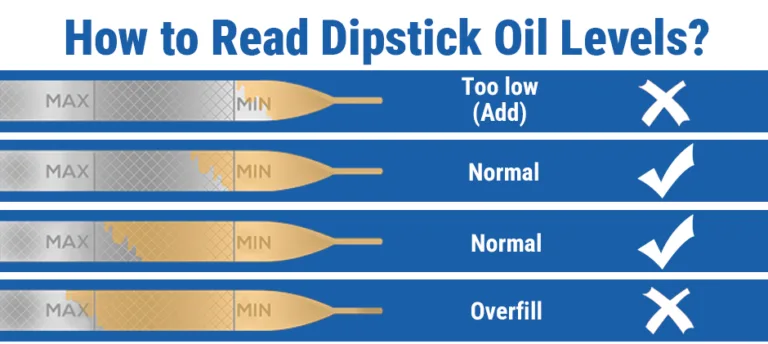
What do the MIN, SAFE, and MAX marks mean?
The marks show the manufacturer’s permitted range and normal target area.
| Reading | Correct response |
|---|---|
| Below MIN | Add measured oil and investigate repeated loss |
| Between MIN and the target | Add only the estimated difference |
| At the target | No addition needed |
| Close to MAX | Don’t add oil unless the procedure requires it |
| Above MAX | Stop driving and correct the level |
Not every dipstick uses a SAFE mark. Some show two limits, while others include a target symbol. Use the labels supplied for that engine.
What if the vehicle has no dipstick?
Use the electronic oil-level display or service menu specified by the manufacturer.
Follow the manual’s engine temperature, operating state, and settling time. A strange reading may reflect a sensor fault, a recent service, or an incorrect check procedure. If it conflicts with an oil warning, stop driving and seek diagnosis.
Add the Right Amount Without Overfilling
Adding oil in measured stages makes overfilling much easier to avoid. Estimate the gap, add a small portion, then confirm the result.
What do you need before adding oil?
Use oil that meets both the required viscosity and performance specification.
Gather these items:
- Engine oil meeting the owner’s manual specification
- A clean funnel
- A graduated measuring container
- A drain pan or absorbent mat
- A clean rag
- Suitable gloves
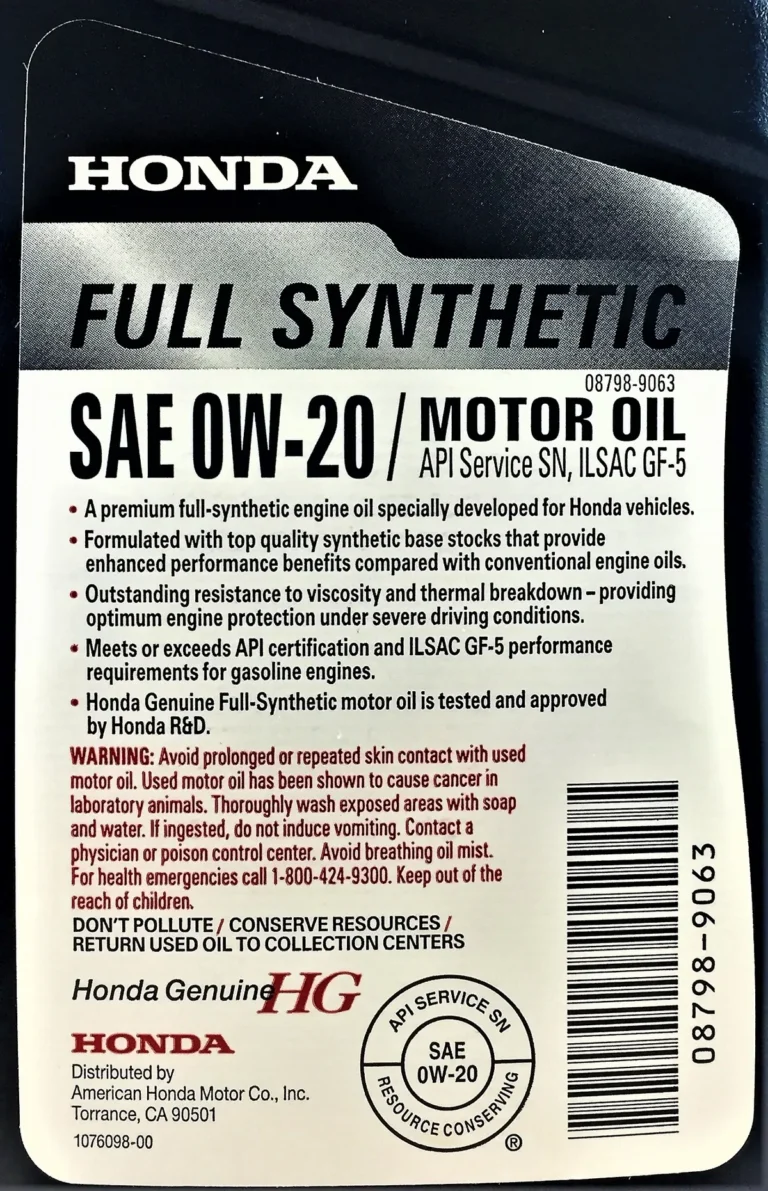
A matching viscosity alone may not be enough. The oil must also meet any required API, ACEA, or manufacturer approval category.

How should you add engine oil safely?
Add the oil slowly in small, measured stages and recheck after each stage.
- Confirm the engine, oil specification, and reason for adding oil.
- Read the current level before opening the oil fill port.
- Measure a cautious first portion of the estimated top-up.
- Pour slowly into the oil fill port.
- Allow time for the oil to drain back into the sump or reservoir.
- Read the dipstick or electronic gauge again.
- Repeat in smaller increments until the proper mark is reached.
- Secure the oil fill cap and clean any spill.
- Record the oil type and quantity added.
If the level reaches MAX after the first addition, stop. If it remains low, recheck the reading and verify the oil specification before adding more.
For a full service, follow the refill amount stated for that procedure. Always perform the final level check, even if the measured quantity matches the expected refill amount.
Reset an oil-life indicator only after completing the required service. Adding oil between services doesn’t replace used oil or extend the service interval.
Special Engines, Capacity Traps, and Common Mistakes
Special lubrication systems can have extra reservoirs or separate oil circuits. Check the exact equipment manual before using a passenger-car capacity chart.
Which special engines need an extra check?
Check the specific lubrication system before choosing a capacity or refill procedure.
| Engine or equipment | Extra point to verify |
|---|---|
| Motorcycle | Separate engine and final-drive or gearbox oil |
| Dry-sump engine | External reservoir level and fill procedure |
| Marine or industrial engine | Multiple drain points, sumps, or filter systems |
| Hybrid vehicle | Combustion-engine oil and shutdown procedure |
| Break-in engine | Special oil and initial operating procedure |
| Modified engine | Revised capacity and lubrication requirements |
Motorcycle engines may need oil in both the crankcase and final-drive housing. Adding one type to the other can overflow a sealed component or leave the required circuit empty.
Dry-sump engines use an external reservoir to separate oil from the crankshaft. The reservoir target and total system volume may appear as separate figures. Use the manufacturer’s complete filling procedure.
Hybrids still lubricate their combustion engines during operation. Follow the specified shutdown and check procedure. The displayed high-voltage battery state doesn’t replace the engine-oil instructions.
How should you investigate repeated oil loss?
Record the amount added and the odometer reading at every top-up. Compare the pattern with the manufacturer’s stated consumption limit. Then inspect for leaks, blue exhaust smoke, oil mist, and fouled plugs.
A rising top-up need can indicate a leak, failed seal, worn piston rings, valve-train issues, or oil dilution. Don’t treat repeated additions as a permanent fix.
Which common mistakes should you avoid?
Avoid these errors when checking or adding oil:
- Estimating capacity from engine displacement alone
- Using a similar model with a different engine
- Confusing sump capacity with total system capacity
- Treating U.S. quarts as imperial quarts
- Reading before the oil has drained back
- Using the entire rated capacity for a top-up
- Relying on viscosity without the required approval category
- Using the fill cap or oil container as a measuring guide
- Ignoring a low reading because the engine still starts
Safety, Warnings, and When to Stop Adding Oil
Shut down the engine safely whenever an oil-pressure warning appears. A correct level doesn’t guarantee proper oil pressure.
When should you stop driving?
Stop driving and shut off the engine if an oil-pressure warning appears.
| Situation | Response |
|---|---|
| Low-oil-level warning | Check and correct the level promptly |
| Low oil-pressure warning | Shut down safely and seek diagnosis |
| Oil level above MAX | Don’t drive until corrected |
| Foamy or milky oil | Stop driving and inspect the lubrication system |
| Warning remains after correction | Treat it as a pressure, sensor, or leak fault |
| Repeated rapid top-ups | Inspect before adding more oil |
Excess oil can aerate, raise pressure, cause leaks, or increase blow-by. You may notice oily seals, rough idle, excessive exhaust smoke, or a reading above MAX. Stop adding oil and follow the manual before removing any.
Low oil can leave bearings, pistons, and turbo components without proper lubrication. Don’t continue driving simply because the engine still sounds normal.
Use care around hot engine parts and the exhaust. Let the engine cool before inspecting the oil fill port, and keep the container upright. Secure the fill cap after the final check.
A matching viscosity doesn’t guarantee the required engine approval. Using unsuitable oil can reduce protection and complicate a warranty claim. If the engine is modified or the correct manual information is unavailable, ask a qualified technician.
Seal used oil in a suitable container and take it to an approved collection point. The U.S. Environmental Protection Agency’s used-oil management guidance explains proper collection and recycling.
Keep oil away from drains, soil, and waterways.
Frequently Asked Questions
How much oil does my engine take?
Only the capacity listed for your exact engine is reliable. Check the VIN-specific owner’s manual or manufacturer service information. A top-up needs enough oil to reach the proper mark, while a full service may use less than the factory-fill quantity.
Can I add engine oil a little at a time?
Yes. Adding measured increments reduces the risk of overfilling. Start with a small portion of your estimated amount, let the oil drain back, and check again.
Repeat until the level reaches the prescribed range. Don’t use the fill cap as a measuring guide.
Why does an oil change use less than the stated capacity?
Oil remains in the filter, cooler, galleries, hoses, and sump after the old oil drains. The manual may list a service refill amount below the complete factory-fill capacity. Use the procedure’s stated amount, then confirm the final level after the prescribed drainback period.
Is overfilling an engine dangerous?
Yes. Excess oil can cause aeration, excessive pressure, leaks, and rough running. It can also increase blow-by and strain seals.
Never exceed MAX, and don’t assume a full engine needs a full container. Recheck in stages before adding any more.
When should I check the engine oil level?
Check before a long drive, during routine maintenance, and whenever the vehicle requests an oil-level check. Follow the manual’s engine temperature and operating-state instructions. Inspect the level sooner if you see leaking oil, smoke, or repeated top-ups between scheduled services.