Yes. A two-stroke engine needs the correct two-stroke oil for lubrication, usually mixed with gasoline or supplied by a separate oil injection system.
If you use a gas-powered leaf blower in an American yard, ride a dirt bike on a trail, or run a chainsaw after a storm, knowing how to oil its engine matters. Most small two-stroke engines do not have the same oil sump as a typical car engine. They rely on oil delivered with the fuel or through a built-in injection system to protect moving parts.
The exact method depends on the engine. Some tools need a measured gas-and-oil mix, while others use a separate oil tank. Using straight gasoline in an engine that requires premix can cause rapid wear, overheating, and severe engine damage. The safest starting point is always the owner’s manual, the fuel cap label, or the manufacturer’s service instructions.
Source: maritimeducation.com
Why Does a Two-Stroke Engine Need Engine Oil?
A two-stroke engine needs oil to reduce friction, limit wear, and help protect parts that move at high speed. Inside the engine, the piston travels up and down in the cylinder, while the crankshaft and connecting rod rotate or pivot. Without enough lubrication, metal parts can rub against each other and generate excess heat.
The key difference is how the engine receives that oil. A typical four-stroke car engine stores oil in a sump and circulates it through passages. Many two-stroke engines instead receive oil through the fuel mixture or a separate injection system. The oil lubricates internal parts as the engine runs, then much of it burns during combustion.
This design helps make many two-stroke engines compact and light. It also means you cannot treat their lubrication needs like those of a car or lawn mower with a four-stroke engine. The correct oil must reach the moving parts in the way the manufacturer intended.
Source: i.ytimg.com
Reduce friction
Oil forms a thin film between moving parts, helping them slide with less resistance.
Limit wear
Proper lubrication helps protect the piston, cylinder, crankshaft bearings, and connecting rod bearings.
Help control heat
Oil reduces friction-related heat and supports normal engine operation, but it cannot correct an overheating problem caused by poor cooling or an incorrect fuel mixture.
Support engine life
Using the specified oil and ratio helps reduce the risk of scoring, bearing damage, and premature engine failure.
What Happens If You Run a Two-Stroke Engine Without Oil?
Running an engine without the oil it needs can cause damage very quickly. The exact time depends on the engine, its load, temperature, speed, and how much lubrication remains, so there is no safe universal time limit.
The piston and cylinder may develop scoring, which means deep scratches or damaged surfaces. Bearings can also overheat or seize. In severe cases, the engine may stop turning and need major repairs or replacement.
If you accidentally add straight gasoline to a machine that requires premix, stop using it as soon as you notice the mistake. Do not keep running it to see whether it will survive. Follow the manufacturer’s recovery instructions or have a qualified small-engine technician inspect it if it has been operated without the required oil.
Possible warning signs
Unusual metallic noises, loss of power, excessive heat, or a sudden stop can indicate a serious problem, although these symptoms can have other causes.
Best response
Shut the engine off safely, avoid repeated restart attempts, and confirm the correct fuel and lubrication requirements before using it again.
How Does Two-Stroke Engine Lubrication Work?
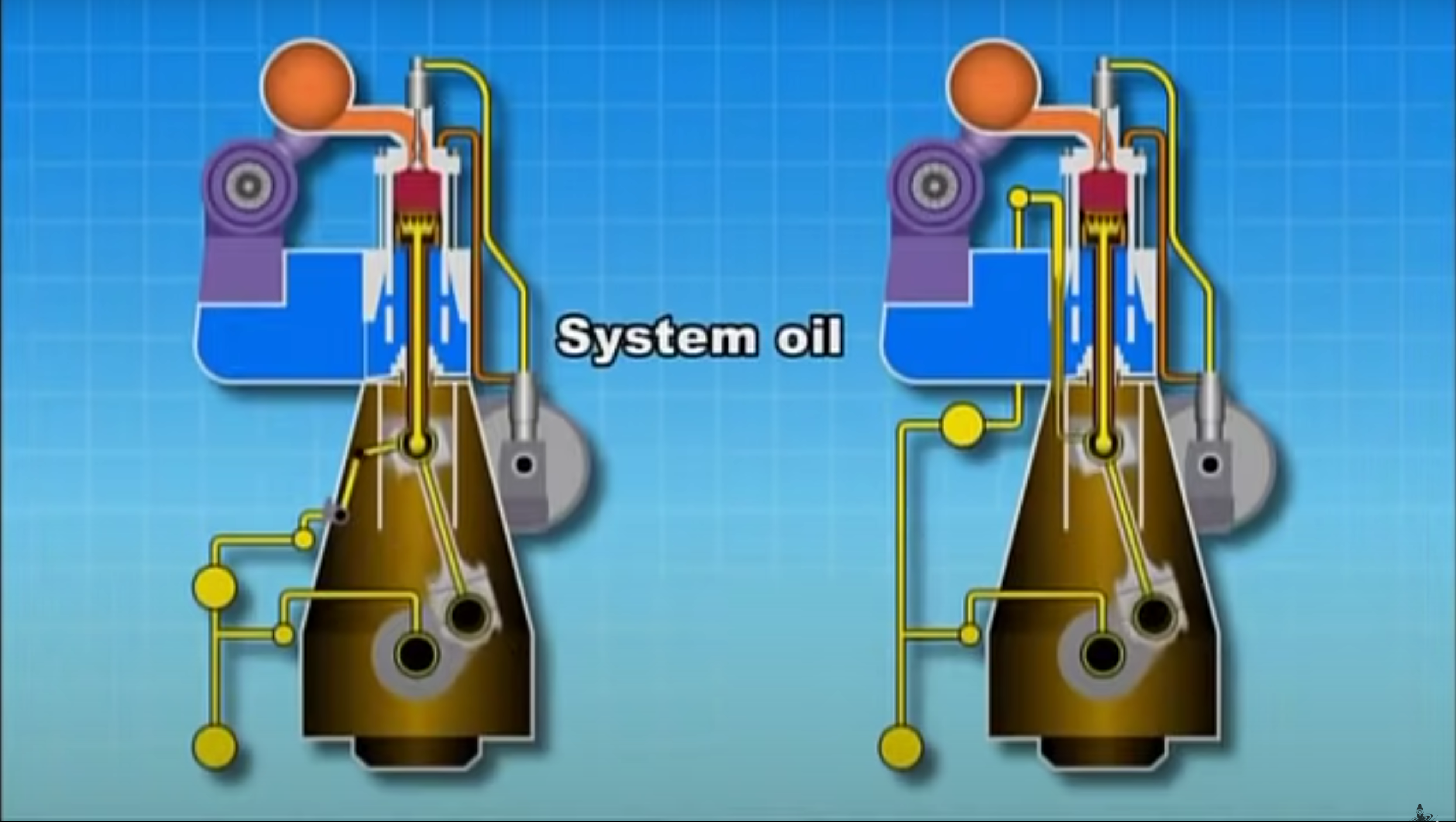
Most small two-stroke gasoline engines use one of two lubrication methods: premixed fuel or separate oil injection. Both methods deliver oil to internal engine parts, but they do so in different ways. Knowing which system your machine uses helps you avoid a costly fueling mistake.
With premix, you combine the specified amount of two-stroke oil with gasoline before filling the fuel tank. The engine draws in the mixture, and the oil travels through the intake and crankcase before helping lubricate the piston, cylinder, and bearings. The gasoline burns during combustion, and much of the oil is burned or leaves through the exhaust.
With oil injection, the engine has a separate oil reservoir and a metering system. The system supplies oil as the engine operates, according to its design and operating conditions. You usually add gasoline to the fuel tank and two-stroke oil to the designated oil tank, rather than mixing them by hand.
Neither system removes the need to check lubrication. Premix requires an accurate mixture, while injection requires the correct oil, an adequate supply, and a functioning pump and delivery system.
Source: engineoiljournal.com
Premix lubrication
Oil is measured into gasoline before fueling. This is common on many chainsaws, string trimmers, leaf blowers, and two-stroke dirt bikes.
Oil injection
A separate reservoir and metering system supply oil to the engine. This arrangement is used on some motorcycles, marine engines, and other two-stroke machines.
Conventional oil sump
Most small two-stroke gasoline engines do not use a conventional four-stroke-style engine oil sump, but some specialized engine designs have different arrangements.
Does the Oil Burn Along With the Gasoline?
In a typical small two-stroke gasoline engine, some of the oil enters the combustion chamber and burns with the fuel. This is why two-stroke engines can produce visible exhaust smoke, especially when cold or when the mixture and operating conditions create more smoke.
Not all the oil behaves in exactly the same way. Some can leave through the exhaust, and deposits may build up if the oil is unsuitable or the engine runs under conditions that promote incomplete combustion. The goal is to use an oil designed for the engine and supplied at the specified rate.
Smoke is not a reliable measuring tool
A little smoke does not prove the oil ratio is correct, and heavy smoke does not automatically mean the engine has enough lubrication.
Oil choice matters
Use the oil specification stated in the owner’s manual, including any required performance classification or marine-specific rating.
Do You Mix Two-Stroke Oil With Gasoline?
You should mix two-stroke oil with gasoline only when the engine manufacturer specifies premixed fuel. The required ratio can vary by engine design, model, age, and intended use. A ratio that works for one machine may be wrong for another.
For example, a manual may specify a 50:1 fuel-to-oil ratio. This means 50 equal parts of gasoline for every one part of oil by volume. Another engine may require a different ratio, so never assume that 50:1 is right for every chainsaw, trimmer, motorcycle, or outboard motor.
Read the fuel label and owner’s manual before mixing. If the machine has a separate injection reservoir, do not add oil to the gasoline unless the manufacturer explicitly instructs you to do so for a particular procedure. Extra oil in an injection system can create an incorrect mixture and operating problem.
Source: enginelearner.com
Step 1: Confirm the required ratio
Find the ratio in the manual, on the machine label, or in official service information for the exact model.
Step 2: Use the correct oil
Choose two-stroke oil that meets the engine’s stated requirements. Do not select oil based on bottle color alone.
Step 3: Measure both fluids
Use a suitable fuel container and an accurate measuring tool. Do not estimate the oil amount by eye.
Step 4: Mix and label the fuel
Prepare the mixture as directed by the manual, close the container securely, and label it so it cannot be mistaken for straight gasoline.
Step 5: Store and handle it safely
Use an approved fuel container, keep it away from heat and ignition sources, and follow the manufacturer’s fuel storage guidance.
How Much Two-Stroke Oil Do You Need?
The amount depends on the gasoline volume and the specified ratio. At 50:1, you need one part oil for every 50 parts gasoline. That works out to 1 US fluid ounce of oil for about 50 US fluid ounces of gasoline, or approximately 2.6 US fluid ounces of oil per US gallon of gasoline.
The table below gives approximate amounts for common premix ratios. These are calculation examples, not recommendations for a particular engine. Use only the ratio specified by the manufacturer.
50:1 ratio
About 2.6 US fluid ounces of oil per US gallon of gasoline.
40:1 ratio
About 3.2 US fluid ounces of oil per US gallon of gasoline.
32:1 ratio
About 4.0 US fluid ounces of oil per US gallon of gasoline.
What Type of Oil Does a Two-Stroke Engine Need?
A two-stroke engine generally needs oil formulated for two-stroke use and approved for its specific application. The right product must lubricate the engine while meeting the needs of its combustion and exhaust design. A label that simply says motor oil is not enough to confirm compatibility.
Two-stroke oil is often sold as 2-cycle oil or 2T oil. These names commonly refer to oil intended for two-stroke engines, but the product’s performance rating and application still matter. Some oils are intended for air-cooled engines, while others are formulated for water-cooled marine engines.
Check the owner’s manual for the required oil specification. A marine outboard engine may call for an oil meeting a specific National Marine Manufacturers Association classification, while a handheld power tool may have different requirements. The machine’s manual takes priority over a general-purpose recommendation.
Source: i.ytimg.com
Air-cooled two-stroke oil
Often used in chainsaws, string trimmers, leaf blowers, and many dirt bikes. Follow the engine maker’s oil specification.
Marine two-stroke oil
Designed for specified marine engine applications. Some water-cooled outboards require an oil meeting a stated NMMA rating, such as TC-W3.
Either may be suitable when it meets the engine maker’s requirements. Synthetic oil is not automatically approved for every engine or every mixing ratio.
Oil for four-stroke engines
Do not substitute ordinary four-stroke crankcase oil unless the engine manufacturer explicitly approves that product for the intended two-stroke application.
Can You Use Regular Car Engine Oil in a Two-Stroke Engine?
In general, do not use regular car engine oil in a two-stroke engine unless the manufacturer specifically permits it. Car engine oil is designed mainly for a different lubrication system and may not have the properties required for an engine that burns its oil supply during normal operation.
The wrong oil may contribute to deposits, spark plug fouling, smoke, or poor lubrication. A product being labeled synthetic or high mileage does not make it suitable for premix. Match the oil to the engine’s required specification instead.
If you already used the wrong oil
Do not keep running the engine on an uncertain mixture. Check the manual and seek advice from the manufacturer or a qualified repair shop about draining the fuel and checking for possible damage.
Two-Stroke vs. Four-Stroke Engine Oil
The main difference is how each engine uses its lubricant. Many small two-stroke engines receive oil through premixed fuel or injection, and the oil is largely consumed during operation. Most four-stroke engines keep their oil in a separate sump and circulate it through the engine for continued use.
This difference changes the maintenance routine. A four-stroke lawn mower may require regular crankcase oil checks and oil changes. A premix two-stroke trimmer instead requires correctly mixed fuel, while an injected two-stroke engine requires monitoring its separate oil supply.
The engine cycle alone does not tell you every maintenance detail. Some two-stroke engines have gearcases or other components that need separate lubricant, and some designs use specialized systems. Check each service point listed in the manual.
Source: vehiclechef.com
Oil storage
Many two-stroke engines use premix or an injection reservoir; most conventional four-stroke engines have a crankcase oil supply.
Routine service
Premix engines need the right fuel blend, while four-stroke engines usually need crankcase oil checks and scheduled oil changes.
Oil consumption
A typical two-stroke burns some of its lubricating oil during operation. A four-stroke generally recirculates its engine oil, although it may still consume or leak oil.
Oil compatibility
Use the oil specification designed for the exact engine and application, rather than assuming the two oil types are interchangeable.
Does a Two-Stroke Engine Need an Oil Change?
A typical premix two-stroke engine does not have a conventional engine oil sump that needs routine draining and refilling. Instead, you prepare fresh fuel with the specified amount of two-stroke oil. That does not mean the machine never needs lubricant service.
A two-stroke motorcycle may have a separate transmission or gearbox lubricant. A marine engine may have a gearcase that needs its own service. Some equipment also has grease points or other components with specific maintenance intervals. Those systems are separate from the oil mixed into the gasoline.
If your machine has an oil injection tank, you normally refill that tank as required rather than performing a conventional crankcase oil change. The injection pump and oil lines may also need inspection or service under the manufacturer’s instructions.
For premix engines
Prepare the correct fuel mixture and follow the manual’s cleaning, inspection, and service schedule.
For injected engines
Keep the correct oil in the designated reservoir and follow the specified checks for the pump and oil delivery system.
For separate gearcases
Check and change the gear lubricant according to the service schedule for that component.
What Happens If the Oil-to-Gas Ratio Is Wrong?
An incorrect oil-to-gas ratio can cause trouble in either direction. Too little oil may leave engine parts without enough protection, while too much oil can interfere with combustion and increase deposits. The correct ratio is the one specified for the exact engine, not a compromise between different machines’ instructions.
If you are unsure how a mixture was prepared, do not guess or add more oil without calculating the current ratio. A fuel container may already contain oil, and adding another measured amount without knowing the original blend can make the mixture less accurate. When the mixture cannot be confirmed, follow the manual’s guidance for safely replacing it.
Source: mroilguy.com
Too little oil
Can increase friction, heat, piston and cylinder wear, bearing damage, and the risk of seizure.
Too much oil
Can cause excessive exhaust smoke, spark plug fouling, carbon deposits, and poor running.
Incorrect oil type
May lead to inadequate lubrication or deposits even when the measured ratio appears correct.
Old or contaminated fuel
Can cause starting and running problems independent of the oil ratio. Follow the engine maker’s fuel freshness and storage rules.
How to Check a Suspected Fuel-Mixture Problem
Start by shutting the engine off and letting it cool. Work outdoors or in a well-ventilated area, keep fuel away from sparks and flames, and avoid opening a hot fuel tank. Never use a running engine as a test for whether a questionable mixture is safe.
Next, check the machine’s fuel instructions and identify whether it uses premix or oil injection. If it uses premix, verify the ratio and oil type against the manual. If it uses injection, check the designated oil reservoir and follow the manufacturer’s procedure for checking the delivery system.
If the engine has lost power, seized, made a metallic noise, or stopped suddenly after being run with the wrong fuel, avoid repeated starting attempts. Have a qualified technician inspect it before further use.
Confirm the fuel system
Identify the correct lubrication method before changing the mixture or refilling any tank.
Correct the fuel safely
Use the manufacturer’s approved procedure and a suitable fuel container to replace an incorrect mixture.
Inspect before restarting
If the engine showed signs of damage or ran without required lubrication, get professional advice rather than assuming fresh fuel will fix it.
Do Different Two-Stroke Machines Need Different Oil?
Yes. The general need for lubrication is shared, but oil specifications, delivery methods, and service steps can differ between machines. A chainsaw, a dirt bike, and a boat motor may all use two-stroke engines, yet their cooling systems, operating loads, and oil requirements may not be the same.
For American homeowners, handheld power equipment is a common example. A gas trimmer may require premix, while another machine from the same brand could use a different engine design. Always check the model-specific instructions instead of relying on the brand name or the appearance of the fuel cap.
Marine engines deserve special care because the oil may need to meet a specific marine performance standard. Similarly, a high-performance motorcycle may have precise requirements tied to its design and operating conditions. The manual is the final authority for the oil type and delivery method.
Source: i.ytimg.com
Chainsaws and leaf blowers
Many small gasoline models use premixed fuel, but the required ratio and oil specification vary.
Dirt bikes and motorcycles
Some use premix, while others have separate oiling arrangements or distinct transmission lubrication requirements.
Outboard boat motors
Some use premix and others use oil injection. Use the oil rating and maintenance procedure required by the exact engine.
Older two-stroke equipment
Do not assume an older machine uses the same ratio as a newer model. Find the original manual or obtain model-specific guidance.
Can You Use One Two-Stroke Oil for Every Machine?
Not always. Some oils are approved for several applications, but a broad label such as universal does not override the engine manufacturer’s specifications. Check the oil’s stated ratings and the machine’s manual before using the same bottle in multiple engines.
If you maintain several machines, label each fuel container with the intended equipment and mixture ratio. This simple step reduces the chance of putting the wrong blend into a machine, especially when different family members share yard tools or recreational equipment.
Read the full label
Check the oil’s intended use, performance ratings, and any limits stated by the manufacturer.
Keep mixtures separate
Do not use a single container for different ratios unless you fully empty and prepare it according to the required procedure.
Frequently Asked Questions
Q
Does a 2 stroke need engine oil?
Yes. A two-stroke engine needs the correct lubricant to protect its moving parts. Many models use oil mixed with gasoline, while others have a separate oil injection system. Follow the owner’s manual for the required oil type and delivery method.
Q
Can a two-stroke engine run on straight gasoline?
Only if the manufacturer specifically allows that fuel arrangement, which is not the normal setup for a conventional small premix two-stroke engine. Most premix models need gasoline mixed with the correct amount of two-stroke oil. Running one on straight gasoline can cause severe damage.
Q
What is the usual two-stroke oil mix ratio?
There is no single ratio for every two-stroke engine. Some engines specify 50:1, while others require 40:1, 32:1, or another ratio. Use the exact ratio listed in the manual or on the machine’s fuel label.
Q
Does a two-stroke engine have an oil filter?
Many small premix two-stroke engines do not have a conventional engine oil filter because they do not circulate oil from a crankcase sump. However, designs vary, and some machines have fuel filters, air filters, oil injection components, or separate lubricated gearcases. Check the service manual for the exact model.
Q
Can too much two-stroke oil damage an engine?
Yes. Too much oil can lead to excess smoke, spark plug fouling, carbon deposits, and poor engine performance. It can also alter the intended fuel mixture. Prepare the fuel at the specified ratio rather than adding extra oil as a precaution.
Q
Do oil-injected two-stroke engines need premixed gas?
Most oil-injected engines are designed to receive gasoline in the fuel tank and two-stroke oil in a separate reservoir. Do not premix the fuel unless the manufacturer specifically requires it for that engine or procedure. Check the manual before filling either tank.
Q
Can I use four-stroke oil in a two-stroke engine?
Do not use ordinary four-stroke engine oil as a substitute unless the manufacturer explicitly approves it for the intended two-stroke application. Two-stroke engines often burn their lubricant during operation, so they need oil suited to that design and its performance requirements.
✦ Wrapping Up
Conclusion
A two-stroke engine does need engine oil, even though it often does not use the conventional oil sump found in a car. Most small two-stroke gasoline engines receive lubrication through premixed fuel or a separate oil injection system. Without the correct oil supply, moving parts can wear rapidly and the engine can suffer serious damage.
The most important step is to identify the lubrication system on your exact machine. Confirm the required two-stroke oil specification and, if it uses premix, measure the gasoline and oil at the ratio stated in the owner’s manual. If it uses injection, keep the correct oil in the designated reservoir and maintain the system as directed.
Do not guess the ratio, add extra oil just in case, or assume that oil approved for one machine will work in another. If you have already run the engine without required lubrication or with an unknown mixture, stop and check the manufacturer’s instructions before restarting it.
💡 Key Takeaway
Before your next start, check the owner’s manual or fuel label, confirm whether the engine uses premix or oil injection, and use only the specified two-stroke oil and ratio.
You asked “what is thickest motor oil” because something in your engine feels off, or a friend told you thicker means better. Neither is quite right. The…
Where do you put motor oil? That question trips up more firsttime owners than any other driveway task. You open the hood, stare at plastic covers and metal…
You’ve probably held up a Pennzoil and a storebrand jug side by side and wondered: does brand of motor oil matter? The honest answer is “it depends on what…
The direct answer to “does cvs sell motor oil” is simple: don’t assume your nearest CVS has it. CVS isn’t a dedicated autoparts chain, and any engineoil…
You’re searching how to refill motor oil made for your exact engine, and every answer you find is a flat eightstep list that ignores which path you actually…