Does Brand of Motor Oil Matter: Honest Review
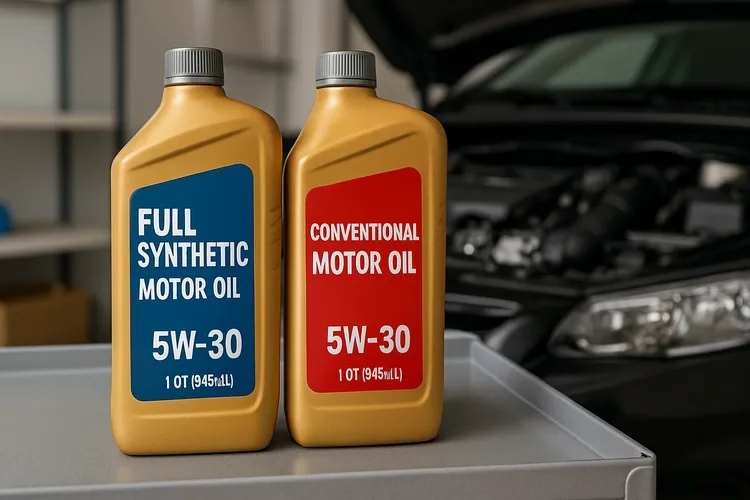
You've probably held up a Pennzoil and a store-brand jug side by side and wondered: does brand of motor oil matter? The honest answer is "it depends on what you're asking it to do." For a five-thousand-mile drain on an older four-cylinder, the brand barely moves the needle. Step into turbocharged territory or a twenty-thousand-mile synthetic interval, and the base oil and additive package start to separate the $7 jug from the $14 one.
Per SAE J300 and API SP testing (the standard in effect as of 2026), a quality 5W-30 synthetic must hold a High-Temperature High-Shear viscosity of at least 2.9 mPa·s. That one number is where cheap and premium formulations diverge. Here's where brand genuinely matters and where you're just paying for a logo.
Short Answer: Your 5K-Mile Swap Doesn't Care, Your 20K-Mile Turbo Drain Does
Does brand of motor oil matter? For a 5,000-mile conventional change, no. Any API SP licensed product will do the job.
Where it matters is turbocharged engines, GDI engines, or drains past 10,000 miles. There, base oil group and shear stability genuinely separate the products.
What's Actually Different Between a $7 Jug and a $14 Jug of 5W-30
Same SAE grade. Same API SP certification mark on the front. So where's the real gap?
It lives in three places: base oil group, additive package depth, and thermal stability over the full drain interval.
| Attribute | $7 store-brand 5W-30 | $14 name-brand 5W-30 |
|---|---|---|
| Base oil group | Group I or II | Group III (GTL) or Group IV (PAO) |
| Viscosity Index | 130 to 140 | 160 to 180+ |
| TBN (mgKOH/g) | 8 to 10 | 11 to 13 |
| HTHS at 140 °C | 2.9 mPa·s (meets floor) | 3.1 to 3.5 mPa·s |
| TOST T10 (hours) | 8 to 10 | 12 to 14+ |
The base oil is the foundation. Group I and II stocks (mineral and hydroprocessed) are cheaper to source and handle fine at five thousand miles. Group III gas-to-liquid and Group IV polyalphaolefin bases cost more per liter but resist viscosity loss far better under sustained heat.
In a 20,000-mile drain, that difference is the whole game.
TBN tells you how much acid the oil can neutralize before it starts attacking metal. A 5W-30 with a TBN of 8 runs low on protective alkalinity by mile 12,000 in a short-trip, cold-start commute. The 12 to 13 TBN formulation holds up to 20,000.
Then there's HTHS. The 2.9 mPa·s floor is the minimum API requires. Premium brands typically formulate to 3.1 or 3.5.
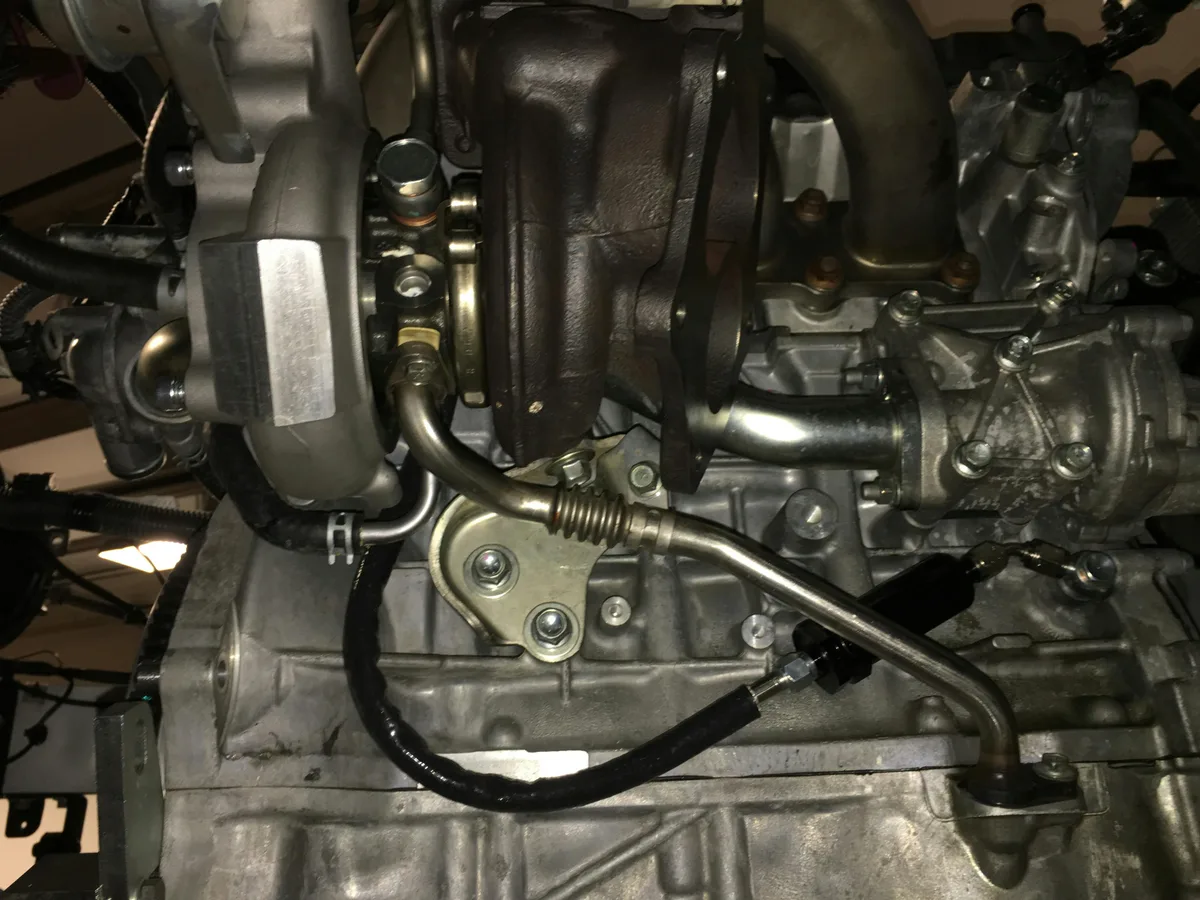
That extra film thickness at 140 °C is what keeps turbo journal bearings protected during a hot highway cruise.
Where Brand Choice Changes Your Outcome and Where It's a Coin Flip
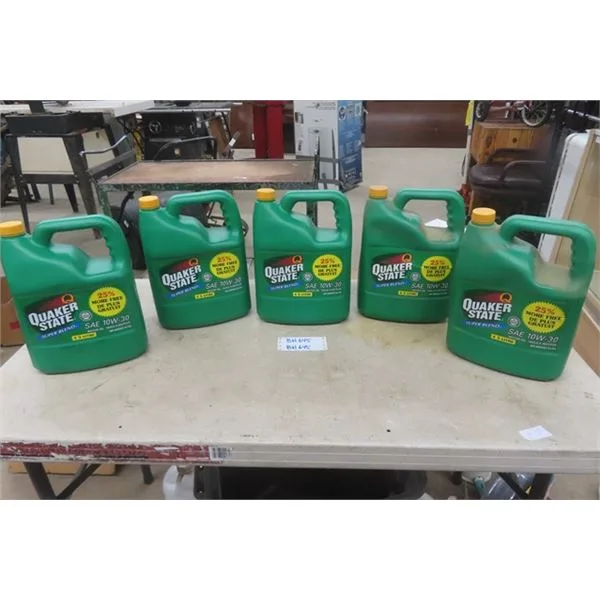
If you drive a 2016 Honda Civic, do a 5,000-mile conventional drain, and mostly highway: the brand truly doesn't matter. A $6 Quaker State and a $13 Pennzoil Platinum will wear the engine identically at that interval. The API SP certification means both passed the same wear, deposit, and sludge tests.
You're paying for shelf placement.
If you drive a 2022 BMW 330i with the B48 turbo, pull a 15,000-mile synthetic, and live in traffic-heavy LA: now the brand pulls weight. The B48's close-clearance turbo bearings need that higher HTHS film. A PAO or GTL base with 12+ TBN holds up where a Group I/II blend starts to thin out by mile 10,000.
If you run a turbo-diesel with a DPF or SCR system: additive package and ash content matter even more. Per ACEA E4 and E5 specifications, low-SAPS oils cap sulfated ash at 0.8%. Get that wrong and you're looking at a $3,000 DPF replacement, not a $14 oil bill.
And if your dealer tells you "you must use BMW Evo or it voids your warranty": manufacturer documentation under BMW's GS-44 spec lists any oil meeting the stated approvals as acceptable. The warranty language protects the dealer from arguments, but the engineering spec is what actually governs the requirement.
For a 150,000-mile car with weeping valve covers: the brand still doesn't matter, but the viscosity does. A 10W-40 or 20W-50 will seal better than a 0W-20 regardless of the label you grab.
What to Check on the Label Before You Grab a Jug: Specs That Separate the Good From the Fine
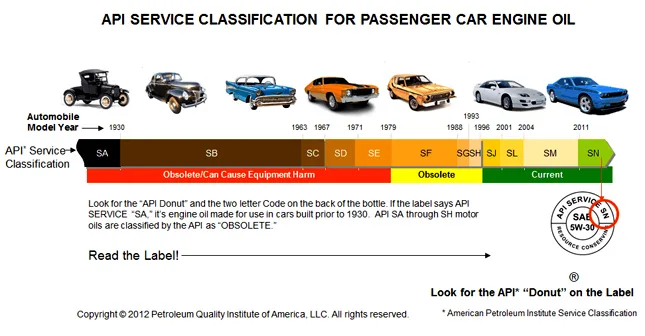
Flip the jug around. Read the back in this order:
- SAE grade. 5W-30, 0W-20, whatever your owner's manual calls for. This is non-negotiable.
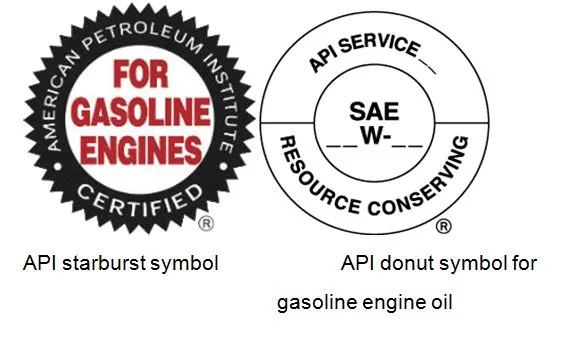
- API service symbol. The donut or diamond on the label. As of 2026, API SP is the current gasoline engine category. Cars from 2024 forward need SP. Older cars can run SN or SP.
- ILSAC classification. GF-6A is standard. GF-6B applies to newer designs with higher HTHS requirements.
- OEM approval code. BMW LL-01, VW 508.00, Ford WSS-M2C950-A, GM dexos1. If your manual names one, the jug should carry it.
- HTHS value and TBN (if printed). This is the fine print that separates a $7 jug from a $14 one.
You can verify any of these against the API's official lubricant category page. The API license number on the jug is a code you can cross-check there. No license, no API mark, no buy.
| Mark on Label | What It Actually Guarantees |
|---|---|
| API SP or SN | Passed API wear, deposit, sludge, and oxidation tests |
| ILSAC GF-6A | Meets fuel-economy and emission-system thresholds |
| OEM code (VW 508.00, etc.) | Passed that manufacturer's extended-drain and aftertreatment tests |
| API license number | Licensed product; low counterfeit risk |
| "Meets or exceeds" | Marketing language. The licensed mark is what's actually tested |
Mistakes That Cost More Than the Brand Premium Ever Will
The $4 gap between a $10 and a $14 jug? Cheap. These errors are not.
- Buying "unlisted" oil from a marketplace or import channel. NHTSA and the EPA have both flagged counterfeit motor oil as a growing consumer risk. The NHTSA consumer safety site tracks complaints about fake API marks and diluted base stock. If a jug of "Pennzoil" costs $3 and the license number doesn't resolve, walk away.
- Running the wrong viscosity because it was cheaper. A 0W-20 in a vehicle the OEM specifies at 5W-30 (especially in a hot climate or a short-block with looser clearances) will thin out at operating temperature. You lose oil film, you gain bearing wear. That's a $4,000 engine rebuild, not a $6 oil bill.
- Mixing a 20W-50 mineral top-up into a 0W-20 synthetic mid-drain. It usually won't poison the oil, but it drags the Viscosity Index down and ruins the long-interval performance you paid for.
- Letting a gallon sit sealed in the garage for two years. Base oil oxidizes even in a closed container. Past 18 months, the TBN and antioxidant reserves degrade. You're pouring stale oil and wondering why it wears fast.
- Skipping the drain because "synthetic lasts forever." No additive package survives a 30,000-mile stretch in a hot, dusty, short-trip commute. The brand doesn't protect you from neglect.
One more people miss: buying the right brand but the wrong generation. API SP is the 2020 standard. If you pull an SN jug from a back shelf that hasn't been rotated, you're running a two-year-old formula on a car designed for the newer spec.
Check the API symbol, not just the logo.
The Questions People Actually Ask at the Auto-Parts Counter
Can I mix two different brands of motor oil in the same drain?
Yes, and it won't hurt the engine. A top-up of a different brand at the same SAE grade is completely fine. Just avoid mixing wildly different viscosities, like pouring 0W-20 into a 5W-30 mid-interval.
The additive packages dilute slightly, but for a quart or two that's negligible.
Is Pennzoil the same thing as Quaker State?
They share a BP parent company and overlap on base oil suppliers. But the exact additive packages and formulation ratios differ. At a 5,000-mile drain they perform identically.
Push to 20,000 and the Pennzoil Platinum's higher TBN starts to pull ahead.
Do I need full synthetic if my manual says a blend is okay?
No. If the OEM lists a synthetic blend as acceptable, the engine is designed around that. Full synthetic buys you better shear stability, which only matters if you stretch past the minimum interval.
Follow the manual and you're not wasting money.
What does the "high mileage" label actually do?
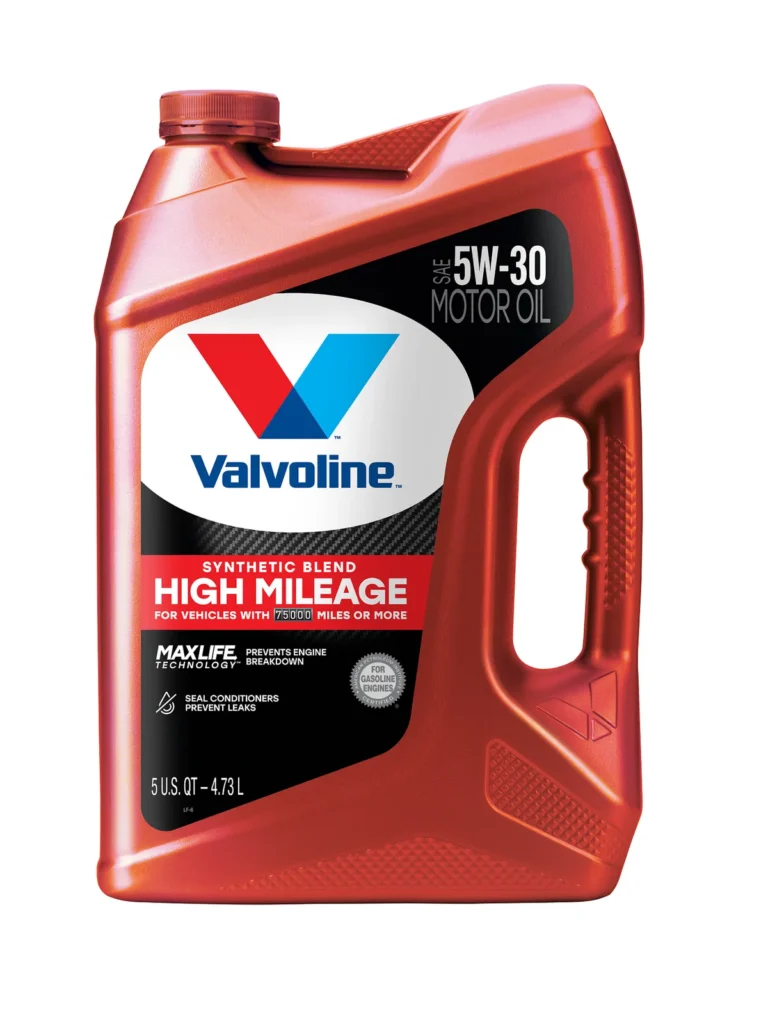
It adds extra seal-conditioning additives and a slightly thicker base stock. If your car is past 100,000 miles and has a faint seep at the valve cover gasket, a high-mileage 5W-30 can slow the weep. It won't fix a blown gasket, but it buys a few months.
Does the brand matter on a diesel with a DPF?
Here, yes. You need low-SAPS or mid-SAPS oil, capped at 0.8% sulfated ash per ACEA E4 and E5. Most universal passenger car oils run high-SAPS and will plug the filter.
Check the ash percentage on the back label, not the brand name on the front.
Your Pick, by Engine and Interval: The 30-Second Decision
Walk into the store, find your SAE grade, then match the scenario below.
| Your situation | What to grab | Brand matters? |
|---|---|---|
| 5,000 mi conventional, 10+ year car | Any API SP, store brand fine | No |
| 10,000 mi synthetic, GDI or turbo | Name-brand Group III, HTHS 3.1+ | Somewhat |
| 15,000 to 25,000 mi extended drain | Group IV PAO, OEM spec code, TBN 12+ | Yes |
| Turbo diesel with DPF or SCR | Low-SAPS CK-4, ACEA E4/E5, ash under 0.8% | Yes |
| 150k+ miles, weeping seals | 10W-40 or 20W-50 high-mileage | No |
| Hot climate, 40+ °C ambient | 5W-40 or 10W-40, not 0W-20 | No |
Two quick rules override the table. First, if your owner's manual names a specific OEM code (VW 508.00, BMW LL-01, Ford WSS-M2C950-B), match that code before you match anything else. Second, if the drain interval your dealer quotes is shorter than what the oil label supports, the dealer is cutting costs, not the engine.
You can stretch to the label's max interval on a quality synthetic.
Grab the jug, verify the API license number on api.org, and get on with your day. The brand on the front label is marketing. The specs on the back are engineering.
Read the back.