Is Engine Oil and Motor Oil the Same: Honest Review
You open the hood, pull the dipstick, and wonder if you grabbed the right can. Maybe you're in the parts store, staring at two aisles: "Motor Oil" and "Engine Oil." So is engine oil and motor oil the same? Yes.
They're the identical product with two regional names.
Per SAE J300, the viscosity classification standard, a 5W-30 grade means the same thing no matter which word is printed on the front. As of 2026, the current API service category is SP, and it applies to both terms equally. The word on the can is geography, not chemistry.
Let's untangle where each name came from and where the confusion actually causes real damage.
The Short Answer: Yes, They're the Same Product
Quick clarification / why people keep asking this
Is engine oil and motor oil the same? Yes. It's one product with two regional names: "motor oil" in North America, "engine oil" in the UK and Europe.
The SAE grade, API spec, and additive package are identical regardless of which word is on the front. One can, two labels, zero difference in chemistry.
People keep asking because the two words appear in different contexts. A UK manual says "engine oil," while a US shelf reads "motor oil." Your brain files them as separate products. They're not.
In our research across OEM documentation from Ford, BMW, and Toyota, the spec language is identical. The only variable is which word the marketing team printed for that region's shelf.
The real confusion usually comes from somewhere else. People mix up 4-stroke crankcase oil with 2-stroke chainsaw or scooter oil. Or they see "engine oil" and assume it's a heavier, gear-box-grade product.
Neither is true.
The SAE and API/ACEA codes on the side of the can carry all the technical weight. Once you read those, the front-label word stops mattering.
Where Each Name Comes From: US Retail vs. UK/Global Industry
The 1900s marketing root of "motor oil"
In early 1900s America, a car was called a "motor car" or simply a "motor." That's why the lubricant was "motor oil." The word "motor" carried the whole vehicle in US English.
Mobil, Quaker State, and Pennzoil all built their brand identity around that label. It stuck in North American retail from the 1910s through the present day.
The engineering-industrial root of "engine oil"
In the UK, maritime, aviation, and heavy-industry sectors used "engine" as the technical term for any power unit. An "engine room" on a ship. A "power plant" in a factory.
The lubricant for that engine was simply "engine oil." The term predates the car boom. When UK and European automakers wrote their manuals, they kept that industrial language.
What it means on the shelf at Napa vs. at your local UK garage
In a US auto parts store, you'll find one aisle labelled "Motor Oils." In a UK garage or EU auto centre, that same aisle reads "Engine Oils." The cans inside are the same products.
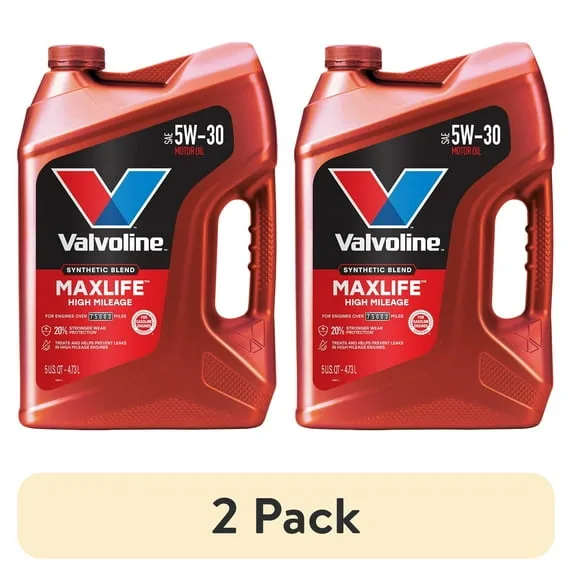
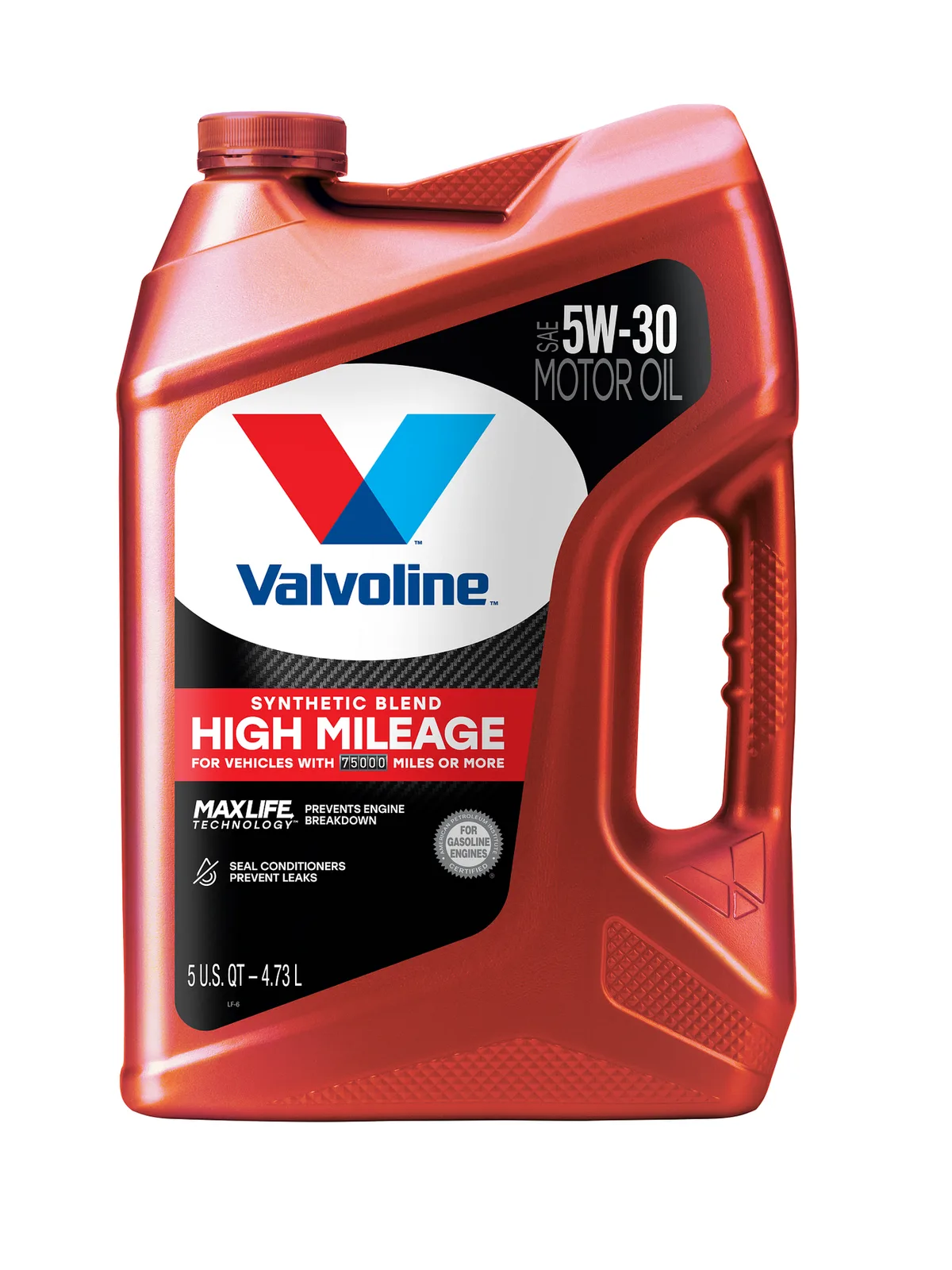
A Castrol 5W-30 sold in Detroit says "Motor Oil" on the front. The same formula sold in Birmingham says "Engine Oil." The SAE grade, API category, and additive package are unchanged.
As of 2026, this split still holds across every major OEM. Toyota's US manual says "motor oil" while the UK version says "engine oil." Same spec, same part number.
What's Actually on the Can: SAE Grade, API Category, and Additive Pack
SAE viscosity numbering (0W-20 through 20W-50)
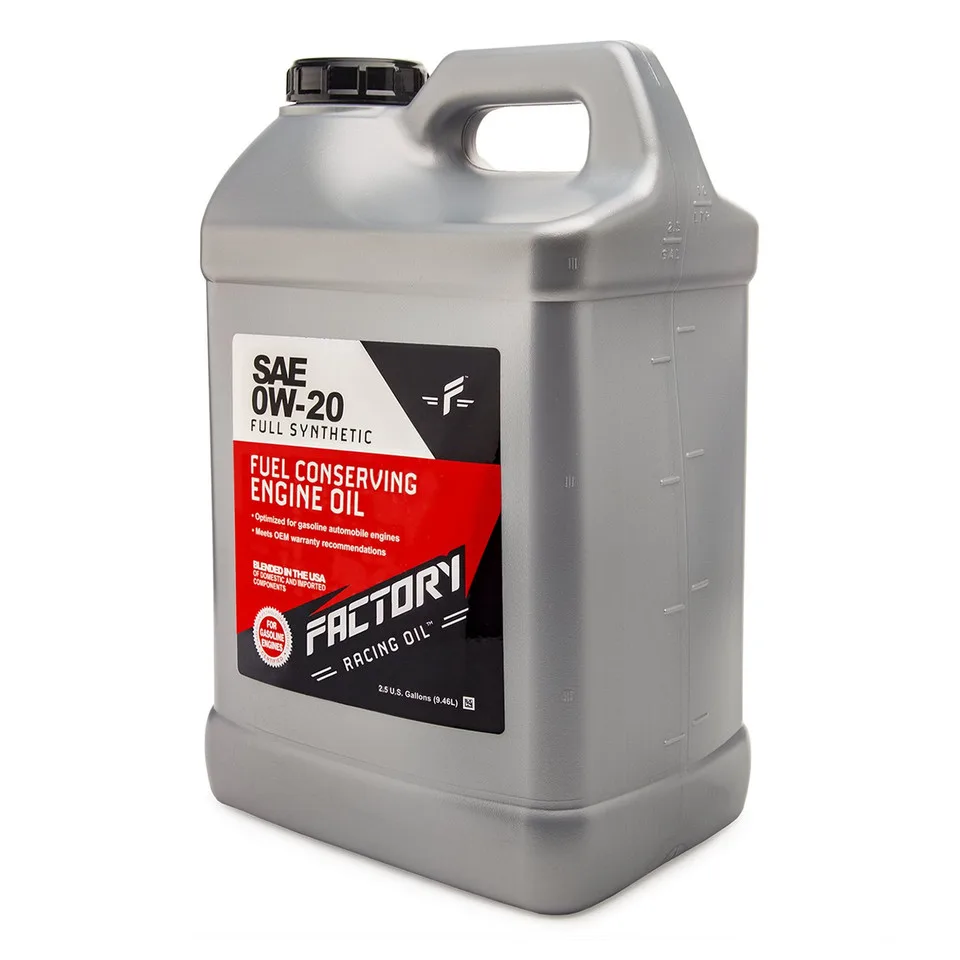
The SAE grade is the actual performance spec. The "W" number (winter) tells you the cold-start viscosity. The second number tells you the viscosity at 100°C operating temperature.
A 0W-20 flows at -35°C. A 20W-50 barely moves until 20°C. That gap matters a lot if you live in Minnesota or Scandinavia.
| SAE Grade | Cold Rating | Hot Rating | Typical Use |
|---|---|---|---|
| 0W-20 | -35°C | ~8 cSt at 100°C | Modern turbo-GDI petrol |
| 5W-30 | -30°C | ~11 cSt at 100°C | Mid-latitude all-round |
| 10W-40 | -25°C | ~16 cSt at 100°C | Older or heavy-duty diesel |
| 20W-50 | -10°C | ~25 cSt at 100°C | Extreme heat, older engines |
API SP / ACEA C2 to C6 service categories
The API category (currently SP) is a mandatory test battery. It covers wear protection, sludge control, LSPI resistance, and high-temperature high-shear stability.
ACEA C2 through C6 are the European equivalents. C2 and C3 are low-saps specs required by DPF-fitted diesels and newer petrol DPFs.
Base-stock type and OEM approval stamps
Under the spec, the oil is conventional (mineral), full synthetic, or a blend. OEM stamps like "Meets MB 229.51" or "GM dexos1 Gen 4" go beyond API and ACEA.
They're contractual for warranty compliance. The stamp tells you the oil passed that manufacturer's specific test suite.
The one-line proof
Flip a Castrol 5W-30 can from the US shelf to the UK shelf. The SAE code, API SP mark, and additive list are word-for-word identical.
Only the front label changes: "Motor Oil" becomes "Engine Oil." That's the entire difference.
Where the Confusion Actually Burns You: 2T Oil, ATF, and Viscosity Mismatches
The two-stroke trap for scooter and chainsaw owners
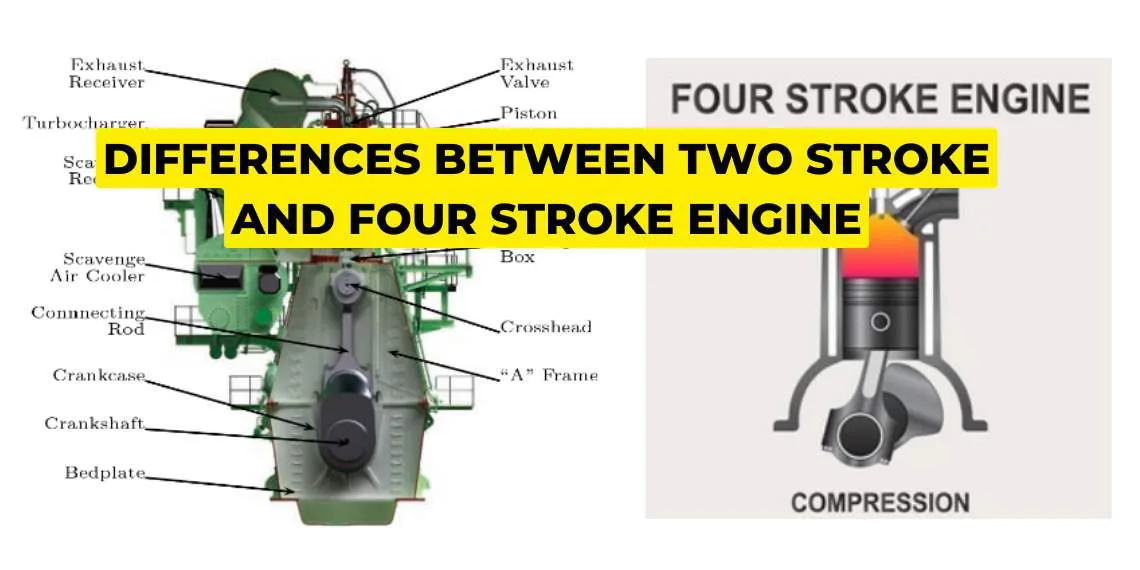
This is where "motor oil" causes real damage. A 2-stroke engine (old scooters, chainsaws, small outboards) needs 2T oil. That oil is formulated to burn cleanly through the exhaust.
If you pour regular 4-stroke "motor oil" into a 2T engine, you get carbon deposits, stuck piston rings, and a seized valve within hours. The additive packages are fundamentally different.
4-stroke oil carries zinc-based anti-wear additives that 2T oil deliberately avoids. Per EPA disposal guidance, used 2T and 4T oils are separate waste streams in many jurisdictions. Mixing them creates a recycling headache on top of the mechanical damage.
Pouring crankcase oil into a gearbox or transmission
"Engine oil" doesn't mean "any fluid that goes in the engine." It specifically means crankcase lubricant. Transmission fluid (ATF, DCTF) has different friction modifiers, shear stability, and viscosity ranges.
Pouring 5W-30 into a manual or automatic transmission kills the clutch pack within a few hundred miles. The two fluids look similar in the bottle but do completely different jobs.
The "heavier product" misconception
Some people see "engine oil" and assume it implies a thicker, gear-box-grade fluid. It doesn't. "Engine oil" and "motor oil" both cover the full SAE 0W-20 through 20W-50 range.
The word "engine" refers to the crankcase, not the gearbox. The viscosity lives in the SAE number, not in the label word.
If your manual calls for SAE 15W-40 "engine oil," that's a 4-stroke crankcase spec. It's not a reference to a separate product category.
How to Read the Label and Buy the Right Can in Either Market
Five steps from manual to shopping cart
- Open your owner's manual. Find the "Recommended lubricant" page. Note the SAE grade, API or ACEA category, and any OEM approval number.
- Match the SAE grade first. If your manual says 5W-30, you need 5W-30. Not 5W-40. Not 0W-20.
- Check the API or ACEA category. A modern turbo-GDI needs API SP. A DPF-equipped diesel needs ACEA C2 or C3.
- Look for the OEM stamp. "Meets MB 229.51" or "BMW LL-01" means that specific oil is approved for that engine.
- Get the right volume. Most 4-cylinder cars take 3.5 to 4.5 quarts. V6s take 4.5 to 5.5. Your manual lists the exact figure.
US parts store vs. UK garage
In a US store, you walk to the "Motor Oils" aisle. In a UK or EU shop, it's "Engine Oils." The cans are the same.
The SAE and API markings are identical. You're reading the same spec sheet with one word swapped. If you've driven a UK-spec car into a US quick-lube shop, the technician already knows this.
They match the SAE grade and API category, not the front-label word.
The manual says one thing, the shelf says another
If your UK manual says "engine oil" and the nearest US shelf says "motor oil," grab the can. It's the same product.
Cross-reference the SAE grade and API category on the side label. If those match your manual, you've got the right oil.
The front-label word is irrelevant to performance. What matters is the code printed on the side and bottom of the can.
When the Word on the Front Doesn't Matter (and When It Does)
Warranty and OEM spec compliance
Does the label word affect your warranty? No. Under the Magnuson-Moss Warranty Act, you can use any brand of oil as long as it meets the OEM spec.
That spec is the SAE grade, API or ACEA category, and the OEM approval stamp. The word "motor" or "engine" isn't part of it.
The FTC enforces this: a dealer can't void your powertrain warranty just because you bought a different brand. They can deny it if the oil fails to meet the stated spec.
In Europe, warranty clauses run tighter. A BMW UK service centre checks the ACEA C2 or C3 stamp before logging the oil in your service book. They care about the code on the side, not the front-label word.
Fleet and commercial specs
Fleet managers write procurement documents with codified specs. They reference SAE grades, API categories, and OEM approvals. The term "engine oil" is standard in those documents.
But the binding requirement is the code, not the noun. A 5W-30 API SP can meets the spec whether the front reads "motor oil" or "engine oil."
Climate-driven grade selection
Your climate picks the SAE grade, not the label word. In Minnesota, you need 0W-20 or 5W-30 regardless of the front-label text. In 40°C Texas, a 10W-40 diesel keeps the oil film stable through the summer.
The word "engine" or "motor" doesn't shift any of that. What shifts is the SAE number on the side.
FAQ: The Questions That Actually Come Up at the Parts Counter
Can I use "motor oil" in a European-spec car?
Yes. If the SAE grade and API/ACEA category match your manual, the label word is irrelevant. A 5W-30 API SP can from a US shelf meets the same spec as one from a UK shelf.
The chemistry is identical. Only the front print changes.
Does "engine oil" mean a heavier, industrial-grade product?
No. "Engine oil" is just the British and industrial term for the same crankcase lubricant. It doesn't imply higher viscosity or a different additive package.
The SAE grade on the side of the can is the only thing that tells you the thickness.
Can I mix two brands of the same SAE grade?
Yes. A 5W-30 API SP conventional and a 5W-30 API SP synthetic blend can coexist in one fill. The next drain removes the mixture.
Just avoid mixing different SAE grades, like 5W-30 with 10W-40.
Why does my UK manual say "engine oil" but the US version says "motor oil"?
Localization. The manual is adapted for each market's retail vocabulary. The spec line (SAE grade, API category) is identical in both.
The front-label word is a marketing choice, not a technical one.
Does 2-stroke oil count as "motor oil"?
No. 2T oil is a separate product with a different additive package, formulated to burn cleanly through the exhaust. Pouring 4-stroke "motor oil" into a 2T engine causes carbon buildup and piston seizure. Always use 2T-specific oil for chainsaws, scooters, and small outboards.
The Verdict: One Product, Two Shelves
What to tell a friend who's still confused
Here's the one-sentence version: "engine oil" and "motor oil" are the same fluid, and the word on the front is just geography. Match the SAE grade, API category, and OEM stamp from your manual, and you've got the right product. Full stop.
The one rule that makes the whole topic irrelevant
Read the side of the can, not the front. The front says "Motor Oil" or "Engine Oil" for shelf placement. The side and bottom print the SAE grade, API/ACEA category, base-stock type, and OEM approvals.
That's where the actual spec lives. As of 2026, every major manufacturer (Mobil, Castrol, Shell, Fuchs, Valvoline) follows the same label layout.
The front is branding. The side is engineering. Once you train yourself to read the side label, the front word becomes noise.