The right engine oil is the grade, type, and specification listed in your vehicle owner’s manual. Check the oil cap and manual before buying, because the correct oil depends on your engine, model year, and driving conditions.
If you drive to work on a busy American highway, sit in Texas traffic, or start your car on a cold winter morning in Minnesota, the oil inside your engine has an important job. It helps moving parts slide, carries heat away, and reduces wear. But not every bottle of motor oil suits every engine.
Start with your owner’s manual or the official maintenance guide for your exact vehicle. Look for an oil grade such as SAE 0W-20 or SAE 5W-30, then check whether the manufacturer requires a specific API, ILSAC, or other approval. These details matter more than the brand name or the price on the shelf.
This guide explains how to choose engine oil in the United States, what the numbers mean, and how synthetic, conventional, and high-mileage oils differ. It also covers common mistakes, severe driving conditions, and what to do if you cannot find the exact oil listed in your manual.
Source: engineoilpro.com
How Do I Find the Right Engine Oil for My Car?
The fastest way to find the right engine oil is to identify your vehicle and check its official maintenance instructions. You need the model year, make, model, engine type, recommended viscosity, and required oil specification. Two vehicles from the same brand can need different oils, so a general recommendation is not enough.
Your owner’s manual is the main source to trust. If you do not have a paper copy, look for the manufacturer’s official online manual or maintenance schedule. A dealer service department can also confirm the required oil using your vehicle identification number, or VIN.
The oil filler cap may show a grade such as SAE 0W-20. Treat that marking as a useful clue, but check the manual as well. Some vehicles have special requirements that go beyond the viscosity printed on the cap.
Source: koala.sh
Check the owner’s manual
Find the engine oil section and record the required viscosity grade, performance standards, oil capacity, and change interval.
Confirm your exact engine
Check whether the vehicle has a gasoline or diesel engine, a turbocharger, or a hybrid powertrain. Engine variants can use different oils.
Read the oil container
Match both the viscosity grade and the required performance specification. A similar-looking number does not prove compatibility.
Verify special requirements
Look for manufacturer-specific approvals, low-ash requirements, or other rules that may apply to your engine and emissions system.
What if I do not have my owner’s manual?
Use the official website for your vehicle manufacturer and search for the owner’s manual or maintenance guide for your exact model year and engine. You can also ask a dealership or qualified repair shop to verify the oil requirement using the VIN. Avoid relying only on a generic parts-store lookup when your engine has special requirements.
Do not guess based on age
An older vehicle does not always need thicker oil, and a newer vehicle does not always use the same grade as other new cars.
Keep a record
Write down the approved oil grade and specification so you can check them during future oil changes.
What Do Engine Oil Numbers Like 0W-20 and 5W-30 Mean?
The numbers and letters on a motor oil bottle describe its SAE viscosity grade. Viscosity means how easily a fluid flows under specified conditions. Engine oil must flow well during a cold start while maintaining suitable protection as the engine warms up.
The Society of Automotive Engineers, or SAE, sets the viscosity classification system used on most motor oil sold in the United States. A grade such as 5W-30 is a multigrade oil designed to meet defined low-temperature and high-temperature viscosity requirements. The numbers do not indicate oil quality by themselves.
The best grade is the one approved for your engine. Do not assume that a higher number means better protection or that thicker oil is always safer in hot weather. Oil that falls outside the manufacturer’s requirements may affect lubrication, fuel economy, engine operation, or warranty coverage.
Source: lmem.my
The number before W
The W stands for winter. The number before it relates to the oil’s performance in specified low-temperature tests. Lower winter grades generally support easier cold-weather cranking and pumping when the oil meets the applicable requirements.
The number after W
The second number identifies the oil’s high-temperature viscosity grade under SAE test conditions. It does not mean that the oil is suitable for every hot climate or every engine.
Multigrade oil
Grades such as 0W-20, 5W-30, and 10W-40 meet requirements for two viscosity ranges. They are widely used because engine oil must work across changing temperatures.
Is 0W-20 thinner than 5W-30?
The grades differ in both their winter classification and their high-temperature viscosity classification. Under the relevant tests, 0W-20 meets a lower winter grade and a lower high-temperature viscosity grade than 5W-30. That does not make one universally better than the other. Use the grade specified or expressly permitted by the vehicle manufacturer.
For cold starts
A suitable lower-W grade can help oil move under very cold conditions, provided it meets the engine’s requirements.
For engine protection
The correct viscosity must work with the engine’s clearances, oil pump, lubrication system, and operating requirements.
Which engine oil is best for hot or cold weather?
Climate helps explain why manufacturers specify particular grades, but it is not a reason to override the manual. A modern engine designed for 0W-20 may still require that grade in a hot state such as Arizona. An engine designed for 5W-30 may require it in a cold state such as Wisconsin. Check whether the manufacturer lists an approved alternative for your temperature range.
Cold winters
Follow the specified winter grade and any published temperature chart. Do not select a grade based on a single cold morning.
Hot summers
Keep the approved grade unless the manufacturer expressly permits another grade for the conditions involved.
Which Type of Engine Oil Should I Choose?
Engine oil comes in several base-oil and formulation types, including conventional, full synthetic, synthetic blend, and high-mileage oil. These labels describe broad product categories, not a universal ranking of quality. The correct choice depends on your engine’s requirements and the oil’s stated approvals.
Many newer gasoline engines require or recommend full synthetic oil, but the manual determines what is suitable. Some older engines can use conventional oil when it meets the required grade and specification. Others have needs that make a specific synthetic formulation necessary.
When comparing bottles, check the complete product label. Two oils with the same SAE grade can have different performance approvals, additive systems, and intended applications. Choose compatibility before price or marketing claims.
Source: autopartsshelf.com
Conventional oil
Conventional motor oil uses refined petroleum base oils with additives. It may suit certain older engines when it meets the specified grade and performance standard, but it is not appropriate for every modern engine.
Full synthetic oil
Full synthetic formulations are designed to provide specific performance benefits, which can include strong cold-start flow, oxidation resistance, and performance across a broad operating range. The exact benefits depend on the formulation and its approvals.
Synthetic blend oil
A synthetic blend combines conventional and synthetic base-oil components. It may provide a middle-ground option, but its name alone does not prove that it meets a particular engine’s requirements.
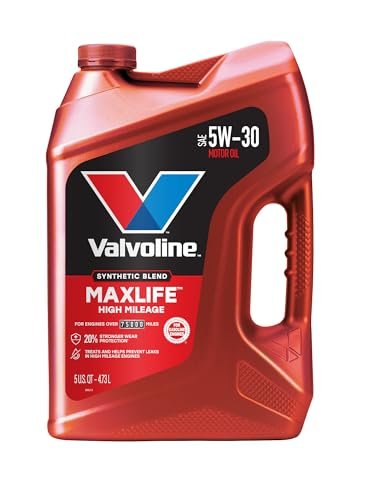
High-mileage oil
High-mileage oils are formulated for engines with substantial use. Depending on the product, they may include additives intended to condition seals or address common aging-engine concerns. They cannot repair worn seals or internal mechanical damage.
Is full synthetic oil better than conventional oil?
Full synthetic oil can offer useful performance advantages, especially when an engine requires it or operates under demanding conditions. However, the label alone does not prove that a product is better for every car. A conventional oil that fails the required specification is not an acceptable substitute for an approved synthetic oil, and a premium synthetic with the wrong specification is not automatically suitable either.
If your manual requires full synthetic oil, use an oil that meets that requirement. If it permits conventional oil, compare the approved products and service intervals before paying extra. Never extend an oil change interval simply because the bottle says synthetic.
Choose by specification first
Verify the SAE grade and required performance standard before comparing oil categories.
Follow the service schedule
Use the manufacturer’s time, mileage, or oil-life-monitor guidance, including any severe-service schedule that applies.
Should I use high-mileage oil in an older car?
High-mileage oil may be useful in an older vehicle if its formulation meets the required grade and specifications. High mileage alone does not mean your engine needs thicker oil or a special product. If the engine leaks, burns oil, makes unusual noises, or loses pressure, identify the cause instead of relying on an oil change to fix it.
Consider the engine’s condition
Check for oil consumption, visible leaks, maintenance history, and any manufacturer guidance for older engines.
Do not treat additives as repairs
Oil additives and high-mileage formulas cannot reliably reverse mechanical wear or repair damaged engine parts.
Why Engine Oil Specifications Matter as Much as Viscosity
The SAE grade tells you about viscosity, but it does not tell you everything about an oil’s performance. Engine oil also needs to meet requirements for wear protection, deposits, oxidation, and other factors. That is why the owner’s manual may list an API category, an ILSAC standard, an ACEA specification, or a vehicle manufacturer’s own approval.
In the United States, gasoline-engine oil containers may carry an API service symbol or certification mark when the product qualifies for the relevant licensing program. The API service category indicates that the oil meets defined performance requirements. ILSAC standards are also used for many passenger-car gasoline engines.
Diesel engines, European vehicles, turbocharged engines, and vehicles with exhaust after-treatment systems may require more specific approvals. Do not assume that an oil suitable for one gasoline car is suitable for a diesel truck or a European vehicle just because the viscosity matches.
Source: cdn.dribbble.com
API service category
Check the API category required by your manual and the applicable product label. Confirm that the category is appropriate for the engine and model year.
ILSAC standard
Some gasoline engines specify an ILSAC performance standard. Look for the required standard on the container or product data sheet.
Manufacturer approval
Certain engines need oil that meets a specific automaker approval. A general statement that an oil is suitable for many cars may not satisfy that requirement.
Diesel and emissions systems
Diesel engines may require particular oil categories or low-ash formulations to protect the engine and emissions equipment. Follow the exact diesel specification.
Can I use any oil with the correct viscosity?
No. Matching the viscosity grade is only one part of choosing oil. If the manual requires a certain performance category or manufacturer approval, the oil must meet that requirement as well. For example, two 5W-30 products may not be interchangeable if only one carries the approval your engine needs.
Read the full label
Look beyond the large viscosity number on the front of the bottle and inspect the performance categories and approvals.
Verify unclear claims
If the label uses wording such as recommended for or suitable for, check the manufacturer’s technical data sheet to understand whether the product has a formal approval or merely claims compatibility.
Engine Oil Comparison: Which Option Fits Your Needs?
The following table compares common oil grades and categories to help you understand the labels. These are examples, not universal recommendations. Your owner’s manual takes priority over this general comparison.
Source: napacarcare.com
SAE 0W-20
A common grade in many modern passenger vehicles. Use it only when the manufacturer specifies or permits it.
SAE 5W-20
Found in some gasoline engines. It is not automatically interchangeable with 0W-20 or 5W-30.
SAE 5W-30
Used in many gasoline engines and some other applications. The exact specification and engine requirements still determine suitability.
SAE 10W-30
Specified for certain engines and operating conditions. Do not choose it solely because the local weather is warm.
SAE 5W-40
Used in some engines that require this viscosity and the appropriate performance approvals. It is not a universal upgrade for older vehicles.
A simple oil selection table
Use this table to understand common product labels, then confirm the correct choice in your vehicle documentation.
Newer gasoline car
Start with the specified SAE grade and API or ILSAC standard. Many newer vehicles require synthetic oil, but the manual determines the actual requirement.
Older vehicle with high mileage
Use the original approved grade unless the manufacturer allows an alternative. A suitable high-mileage formulation may be an option.
Diesel pickup or work truck
Check the engine-specific diesel oil category and any emissions-system requirements before purchasing.
Turbocharged engine
Follow the exact viscosity and approval requirements. Turbochargers can place additional demands on the lubricant.
Hybrid vehicle
Use the oil grade and specification listed for the hybrid’s gasoline engine. Do not assume that every hybrid uses the same oil.
Does Your Driving Style Change Which Engine Oil You Need?
Driving conditions can affect oil degradation and the service interval, but they do not automatically change the required viscosity. Frequent short trips, long periods of idling, heavy traffic, towing, dusty roads, and extreme temperatures may count as severe service under a manufacturer’s maintenance schedule.
For example, a driver who makes several short trips around Chicago may put fewer miles on the car than a highway commuter but still operate under conditions that can prevent the engine from reaching its normal operating temperature for long. In some vehicles, that pattern can contribute to moisture and fuel dilution in the oil.
A driver who regularly tows a trailer through mountainous areas may also face higher engine loads and temperatures. In either case, the right response is to check the maintenance schedule and follow any severe-service interval, not to choose a thicker oil without approval.
Source: static.overfuel.com
Short trips
Frequent cold starts and brief drives can make moisture and fuel dilution more of a concern. Check whether the manufacturer specifies a shorter interval.
Heavy traffic and idling
Stop-and-go use may place different demands on the engine than steady highway driving. Follow the service schedule for your driving pattern.
Towing and heavy loads
Use the approved oil and the maintenance interval specified for heavy use, towing, or other demanding operation.
Dusty roads
Dust exposure may affect the air filter and maintenance needs. Inspect the air intake system and follow the manufacturer’s guidance.
Should I use thicker oil in summer?
Not unless the manufacturer allows it. Modern engines are designed around specific oil flow, pressure, and viscosity requirements. Switching from 0W-20 to 10W-40 just because summer temperatures are high can cause unsuitable lubrication behavior or other problems. Check the official temperature and viscosity guidance for your exact engine.
Keep the approved grade
Use the listed grade across seasons unless the manual specifically allows another option.
Check the cooling system
If your engine overheats in summer, inspect the cooling system rather than treating a thicker oil as the fix.
How Much Engine Oil Does Your Car Need?
Oil type and oil quantity are separate questions. The manual or service information lists the required capacity for your engine, often with a distinction between an oil change with a filter and a completely dry engine. Do not assume that every engine takes four or five quarts.
Many vehicles sold in the United States use quarts as a familiar shopping unit, while technical documents may also show liters. If the listed capacity is in liters, remember that one US quart is about 0.946 liter. Use the specified capacity as a starting point and confirm the level with the vehicle’s dipstick or electronic oil-level procedure.
Overfilling can be harmful. Too much oil can cause foaming, leaks, or other engine problems, depending on the design and degree of overfill. Underfilling can also reduce lubrication and damage the engine.
Check the specified capacity
Look up the exact engine and confirm whether the figure includes an oil filter change.
Add oil gradually
If you are topping up, add a small amount at a time, wait for the oil to settle as directed by the manual, and recheck the level.
Use the proper level-check method
Some vehicles require a dipstick check on level ground after a specified wait. Others use an electronic procedure that depends on engine temperature or operating conditions.
Avoid overfilling
Keep the level within the permitted range. If you add too much, remove the excess before continued operation when the level exceeds the manufacturer’s limit.
What if the oil level keeps dropping?
A falling oil level may result from an external leak, internal oil consumption, or another engine issue. Check for fresh oil under the vehicle and look for warning signs such as blue exhaust smoke, burning-oil smells, or repeated low-level warnings. Some engines consume a small amount of oil in normal use, but the acceptable rate depends on the manufacturer’s guidance.
If you need to add oil often, record how much you add and how far you drive between checks. Have a qualified technician inspect the engine if the loss is sudden, excessive, or accompanied by warning lights, smoke, knocking, or overheating.
Do not ignore an oil-pressure warning
Safely stop the engine as soon as possible when the oil-pressure warning indicates low pressure. Continuing to drive may cause severe damage.
Check for leaks
Look for signs of oil around the engine and beneath the vehicle, but do not reach near hot or moving parts.
How Often Should You Change Engine Oil?
Change engine oil at the interval specified by the vehicle manufacturer. Depending on the car, the interval may be based on mileage, elapsed time, an oil-life monitoring system, or a combination of these factors. There is no single mileage figure that applies to every engine and every type of oil.
Some modern vehicles can go longer between oil changes under the conditions described by the manufacturer. Others need shorter intervals because of their engine design, age, or driving pattern. A bottle’s synthetic label does not override the vehicle’s maintenance schedule.
If your car has an oil-life monitor, learn how it works and whether the manufacturer also sets a maximum time interval. Reset the monitor after the service according to the owner’s manual. Keep receipts or service records to track the date, mileage, oil grade, and filter used.
Follow mileage and time limits
Meet whichever limits the manufacturer specifies, even if you drive relatively few miles.
Use the severe-service schedule when applicable
Short trips, frequent idling, towing, extreme temperatures, and other listed conditions may call for more frequent service.
Replace the filter as directed
Use the specified oil filter and follow the maintenance instructions for filter replacement.
Keep maintenance records
Records help you follow the schedule and provide useful evidence of proper maintenance if a repair or warranty question arises.
Common Engine Oil Mistakes to Avoid
Many oil problems begin with a reasonable guess that turns out to be wrong for the engine. Reading only the largest number on a bottle, choosing oil because it is on sale, or copying a friend’s recommendation can lead to a poor match. A few simple checks can prevent those errors.
Choosing oil by brand alone
A familiar brand may sell several oil grades and formulations. Confirm the exact product’s specifications instead of relying on the logo.
Assuming thicker oil is always better
Oil that is too thick for an engine may not flow as intended, especially during cold starts. Use only approved viscosity grades.
Ignoring the performance category
The correct viscosity is not enough if the oil fails a required API, ILSAC, ACEA, or manufacturer-specific standard.
Extending changes because the oil is synthetic
Synthetic oil does not automatically allow longer intervals. Follow the manufacturer’s instructions and oil-life monitoring system.
Adding aftermarket additives without a need
Some additives can conflict with the oil formulation or manufacturer guidance. Check the manual before using an additional product.
Mixing oils without checking compatibility
If you need an emergency top-up, use oil that meets the vehicle’s requirements whenever possible. Do not assume that all oils are interchangeable because they share a viscosity grade.
Can I mix 5W-30 and 5W-20?
Do not deliberately mix different viscosity grades as a routine maintenance practice unless the manufacturer permits it. The resulting mixture may not have the properties or approvals specified for the engine. If you are stranded and the oil level is dangerously low, consult the owner’s manual or roadside assistance for the safest available option rather than continuing to drive with insufficient oil.
For routine service
Use the required grade and specification for the complete oil fill.
For an emergency
Protecting the engine from a dangerously low oil level is important, but seek manufacturer-specific advice and correct the oil choice as soon as practical.
What If You Put the Wrong Engine Oil in Your Car?
The consequences depend on how far the oil differs from the required grade or specification, how much was used, the engine design, and how long the engine ran. A small amount of an alternative oil during an emergency is not the same as filling an engine entirely with a seriously unsuitable lubricant. Do not assume either that damage has occurred or that the mismatch is harmless.
If you discover the error before starting the engine, avoid starting it until you confirm the correct next step. If the engine has already run, check the manual and contact a qualified technician or dealership for advice, especially if the oil does not meet a required approval or the viscosity is substantially different.
If the oil-pressure warning comes on, the engine makes unusual knocking sounds, or the vehicle overheats, stop safely and shut the engine off. Do not continue driving in the hope that the oil will work itself out.
Wrong viscosity
The oil may not flow or maintain the intended film thickness as designed. The level of risk depends on the mismatch and operating conditions.
Wrong performance specification
The oil may not provide the required protection or compatibility for seals, turbochargers, or emissions equipment.
Wrong oil quantity
Overfilling and underfilling can both cause problems. Verify the level and correct it according to the vehicle instructions.
Uncertain oil history
If you do not know what oil is in the engine, check service records or have the next oil change completed with the correct product and filter.
A Practical Checklist Before Buying Engine Oil
Before you buy a bottle at an auto parts store, dealership, or online retailer, collect the details that determine compatibility. This small check can save you from buying the wrong grade or making an unnecessary second trip.
Vehicle details
Record the model year, make, model, engine size or engine code, and whether the vehicle uses gasoline or diesel.
Required viscosity
Confirm the exact SAE grade and any alternative grades expressly permitted by the manufacturer.
Required performance standards
Check the required API, ILSAC, ACEA, or automaker approval and verify the product meets it.
Oil category
Choose conventional, synthetic blend, full synthetic, or high-mileage oil only when the product is suitable for the engine.
Quantity and filter
Confirm the oil capacity for the planned service and identify the correct oil filter.
Service interval
Check whether normal or severe-service maintenance applies and whether the vehicle has an oil-life monitor.
How to confirm a product on the shelf
Compare the viscosity and performance standards on the front and back labels with the requirements in your manual. If the oil claims to meet a manufacturer specification, check the exact approval wording. When the product label is unclear, use the manufacturer’s technical data sheet or ask a qualified parts specialist to confirm the match.
Oil color does not establish whether a product is the correct grade or specification.
Do not rely on price
A low price does not necessarily mean poor quality, and a high price does not guarantee compatibility.
Keep the receipt
A receipt and a photo of the label can help you track the product used during maintenance.
Frequently Asked Questions
Q
How do I know what engine oil my car needs?
Check the owner’s manual or official maintenance guide for your exact model year and engine. Find the SAE viscosity grade and any required API, ILSAC, ACEA, or manufacturer-specific approval. Then choose a product that meets all listed requirements.
Q
Can I use 5W-30 instead of 0W-20?
Only if the manufacturer expressly permits 5W-30 for your engine and operating conditions. The grades have different viscosity classifications, so they are not automatically interchangeable. Check the manual before making the switch.
Q
Is synthetic oil necessary for every car?
No. Some engines require full synthetic oil, while others permit conventional oil or a synthetic blend that meets the required specifications. Use the oil type stated in your vehicle documentation rather than assuming every car has the same needs.
Q
Does engine oil expire if it sits in the garage?
Unopened motor oil can generally remain usable for a period when stored in its original sealed container under suitable conditions, but the product’s stated shelf life and storage guidance matter. Keep oil away from excessive heat, moisture, dirt, and direct sunlight. Check the manufacturer’s guidance if the container is old, damaged, or has been stored in poor conditions.
Q
Can I switch from conventional oil to full synthetic oil?
In many engines, switching is acceptable when the synthetic product meets the required viscosity and performance specifications. Check the owner’s manual and oil manufacturer’s guidance first. There is generally no need to keep using conventional oil simply because that is what a previous owner used.
Q
Should I use high-mileage oil after 100,000 miles?
There is no universal mileage point at which high-mileage oil becomes necessary. You may consider it if the product meets the required specifications and suits the engine’s condition, but mileage alone does not justify a thicker grade. Investigate leaks or unusual oil consumption instead of treating a special oil as a mechanical repair.
Q
Can I add a different brand of engine oil?
Brand differences are usually less important than matching the required viscosity and performance specifications. For a routine oil change, use one suitable product for the fill. If you need a top-up, select oil that meets the manufacturer’s requirements and check the manual for any special mixing guidance.
Q
What happens if my engine oil is too low?
A low oil level can reduce lubrication and may cause severe engine damage. Check the level using the method in the owner’s manual and add the correct oil if needed. If the oil-pressure warning is on, the engine is knocking, or the level drops rapidly, shut the engine off safely and seek professional help.
✦ Wrapping Up
Conclusion
The answer to what type of engine oil do I need starts with your vehicle’s owner’s manual. Find the correct SAE viscosity grade, check the required performance standards, and choose an oil formulation that meets those needs. Do not select oil based only on price, climate, mileage, or a familiar brand.
Your driving conditions and engine condition can affect maintenance needs, but they do not automatically make a different oil grade suitable. Follow the recommended service interval, check the oil level regularly, and investigate repeated oil loss or warning lights. If the requirements are unclear, confirm them with the vehicle manufacturer or a qualified technician before adding oil.
💡 Key Takeaway
Before buying engine oil, write down your vehicle’s exact model year and engine, the required SAE grade, the performance specification, and the oil capacity. Match every item to the product label, then follow the maintenance schedule in your owner’s manual.
You keep seeing the question “can you switch from synthetic to regular motor oil” pop up at every service counter and forum thread. The mechanical answer is…