Best Engine Oil Additives: Top Picks For Better Protection
LIQUI MOLY Cera Tec is my top pick for drivers seeking extra engine wear protection and smoother operation.
Your car may run fine, but you might notice more engine noise, rough starts, or higher oil use as the miles add up. Daily trips, long highway drives, and hot summer traffic can put extra stress on engine oil. That is why many US drivers look at oil additives. The right product may help with a specific issue, but not every engine needs one. I compare five popular options here, including ceramic treatments, oil savers, and zinc supplements. I also explain what each product can and cannot do so you can choose with care.
🏆 Top 3 Products

LIQUI MOLY Cera Tec Ceramic Engine Treatment
Its ceramic-based formula makes it a strong choice for drivers who want added friction and wear protection.

LIQUI MOLY Motor Oil Saver
It targets oil use and seal-related issues in older engines.

Rislone Hy-per Lube Zinc ZDDP Supplement
It offers a focused zinc supplement for older engines that need extra ZDDP support.
LIQUI MOLY Cera Tec Ceramic Engine Additive
LIQUI MOLY Cera Tec is a ceramic-based engine oil additive for gasoline and diesel engines. Its main goal is to reduce friction between moving engine parts. The formula uses solid lubricant materials that work with engine oil. The product comes in a 300 ml bottle and suits drivers who want extra wear protection.
I like its focused purpose. Rather than claim to fix every engine issue, Cera Tec aims to support smooth engine operation and reduce metal-to-metal contact. The brand also promotes lower fuel use, but real results depend on the engine, oil, and driving style. It should not replace the correct motor oil or regular service.
✅ Pros
- ✔ Ceramic-based formula designed to reduce friction.
- ✔ Made for both gasoline and diesel engines.
- ✔ Can be used with many common engine oil types, subject to label guidance.
- ✔ Aims to reduce wear on moving engine parts.
- ✔ May help support smoother engine operation.
- ✔ A 300 ml bottle offers a simple way to add the treatment.
- ✔ Does not serve as a replacement for routine oil changes.
- ✔ A focused option for drivers who want extra lubrication support.
⚠️ Cons
- ✖ Costs more than many basic oil treatments.
- ✖ Results may vary from one engine to another.
- ✖ Does not repair worn bearings, damaged rings, or internal engine faults.
- ✖ Drivers with newer engines may not notice a clear change.
- ✖ You must check oil capacity and product directions before use.
My Recommendation
I would choose LIQUI MOLY Cera Tec for a driver who wants a dedicated friction-reduction treatment and whose vehicle maker allows supplemental additives. It is my leading choice among the best engine oil additives in this group because it has a clear purpose and works with both gasoline and diesel applications. Still, I would not add it blindly. Check your owner’s manual first, especially if your vehicle has a special oil requirement, a wet clutch, or a warranty rule that limits extra products. Use the stated dose and keep the oil level within the safe range.
| Best For | Why |
|---|---|
| Daily Drivers | A friction-focused treatment for cars used on regular city and highway trips. |
| Gasoline Engines | The product is designed for use in petrol engines as well as diesel engines. |
| Diesel Vehicles | It offers an extra lubrication option when the engine maker permits additives. |
LIQUI MOLY Motor Oil Saver For Older Engines
LIQUI MOLY Motor Oil Saver is made for engines that use more oil than they should. Its formula aims to help maintain the flexibility of engine seals and reduce oil loss linked to aging seals. This can make it useful for older cars with minor seal-related oil use. The bottle holds 300 ml.
I see this as a targeted product, not a cure for every oil leak. An engine can lose oil due to worn seals, a damaged gasket, loose fittings, or internal wear. This additive may help with some seal-related problems, but it cannot fix a cracked part or a serious mechanical fault. A proper leak check should come first.
✅ Pros
- ✔ Targets oil loss linked to aging engine seals.
- ✔ Designed for use in gasoline and diesel engines, subject to label directions.
- ✔ May help reduce oil use caused by hardened seals.
- ✔ Useful for some older vehicles with minor oil seepage.
- ✔ Simple bottle format makes dosing easy.
- ✔ Can be considered during a regular oil service.
- ✔ Offers a focused alternative to general engine treatments.
- ✔ May help reduce the need for frequent oil top-ups when seal condition is the cause.
⚠️ Cons
- ✖ Cannot repair broken seals or damaged gaskets.
- ✖ Will not fix leaks from loose drain plugs or cracked parts.
- ✖ Results depend on the condition of the engine seals.
- ✖ May not help with oil burning caused by worn piston rings.
- ✖ Drivers of newer engines may have little reason to use it.
My Recommendation
I recommend this product for owners of older cars that show mild oil loss and have signs of seal-related seepage. It is a better match for that problem than a general friction additive. Before buying it, I would check for visible leaks and track the oil level over several drives. If the engine loses a lot of oil, smokes, or leaves large spots under the car, get it checked by a mechanic. Do not use an additive to delay a needed repair.
| Best For | Why |
|---|---|
| Older Cars | A targeted option for engines with aging seals and mild oil loss. |
| High-Mileage Vehicles | May help when seal wear is linked to rising oil use. |
| Minor Oil Seepage | Designed to support seals rather than repair broken engine parts. |
Prolube Oil Treatment For Gas And Diesel Engines
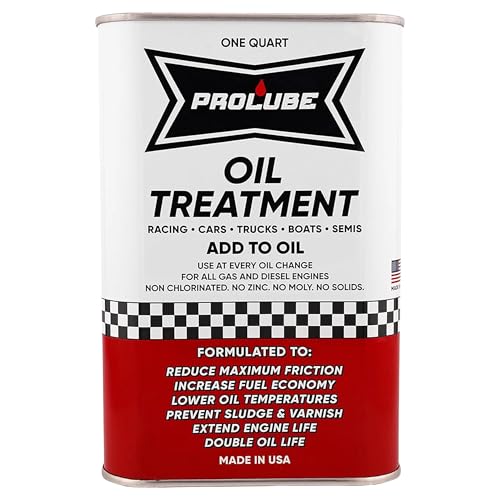
Prolube Oil Treatment is a multi-use oil additive sold for gasoline and diesel engines. The product description highlights lower wear, noise, and vibration. It also promotes possible gains in fuel economy and horsepower. This one-quart size may suit drivers who want a larger amount for an approved application.
The product also lists transmissions and differentials as possible uses. That makes the label especially important because these systems may need different fluids and additives. I would not assume that one treatment works in every gearbox or axle. Always check the fluid maker’s rules before adding anything.
✅ Pros
- ✔ Marketed for both gasoline and diesel engines.
- ✔ Aims to reduce friction and engine wear.
- ✔ Promotes lower engine noise and vibration.
- ✔ One-quart size may suit larger fluid systems when approved.
- ✔ The product description lists possible transmission uses.
- ✔ Also lists differential applications.
- ✔ May appeal to drivers seeking a broad oil treatment.
- ✔ Offers another option for owners comparing the best engine oil additives.
⚠️ Cons
- ✖ Claims about horsepower and fuel savings are not guaranteed.
- ✖ A broad-use formula may not suit every fluid system.
- ✖ The one-quart size can be too much for some engines.
- ✖ You need clear dosing instructions before use.
- ✖ It may not be suitable for vehicles with special fluid requirements.
- ✖ It cannot repair mechanical wear or internal damage.
My Recommendation
I would consider the one-quart Prolube treatment only when its label matches the vehicle and fluid system. Its broad use claims may appeal to owners of cars, trucks, or other machines, but I would not rely on promised gains in power or fuel economy. Check the owner’s manual and the product’s full technical details. If the product does not clearly meet the needs of your engine or transmission, choose the correct fluid instead.
| Best For | Why |
|---|---|
| Gasoline Vehicles | The product is marketed for gasoline engine oil systems. |
| Diesel Vehicles | Its stated applications include diesel engines. |
| Large Fluid Systems | The one-quart size may be practical when the system allows this treatment. |
Prolube Oil Treatment 6 oz For Engine Protection

The 6 oz Prolube Oil Treatment offers a smaller package of the brand’s multi-use oil treatment. It is marketed for gas and diesel engines and claims to reduce wear, noise, and vibration. The product also promotes possible improvements in fuel economy and horsepower. Its smaller size may be easier to store or use for a smaller approved application.
I would compare this bottle with the one-quart version before choosing. The main difference shown in the supplied product names is the amount. Do not assume that the smaller bottle has a different formula or dose. Read the label and work out the correct amount for your engine’s oil capacity.
✅ Pros
- ✔ Compact 6 oz bottle is easy to store.
- ✔ Marketed for gas and diesel engines.
- ✔ Aims to reduce friction and wear.
- ✔ Promotes lower noise and vibration.
- ✔ May suit drivers who need a smaller amount.
- ✔ Useful for comparing package sizes and cost per use.
- ✔ The product description also lists transmission and differential uses.
- ✔ Offers a small-format option in the engine oil additive market.
⚠️ Cons
- ✖ The small size may not cover larger approved applications.
- ✖ Fuel economy and horsepower claims are not guaranteed.
- ✖ Exact dosing must come from the product label.
- ✖ It may not suit engines with strict fluid requirements.
- ✖ A small bottle does not make an unsuitable additive safe to use.
My Recommendation
I would choose the 6 oz Prolube bottle when I want a smaller package and the product label confirms that the dose suits my vehicle. It may be more practical than a large bottle for some owners. Still, I would compare the price per ounce and the exact instructions before buying. This is not a reason to add more treatment than the engine needs. Correct oil and regular service remain the first priorities.
| Best For | Why |
|---|---|
| Small Applications | The compact bottle may suit an approved small-volume use. |
| Occasional Users | A smaller package can reduce the need to store extra product. |
| Product Comparisons | It lets buyers compare the smaller size with the one-quart option. |
Rislone Hy-per Lube Zinc ZDDP Supplement
Rislone Hy-per Lube Zinc ZDDP Supplement is designed to add zinc and phosphorus compounds to engine oil. ZDDP is a type of anti-wear additive used in many motor oils. It can help protect metal parts that face high pressure and contact. This 11 oz bottle is aimed at owners who need extra ZDDP support, often in older engines.
This product is not a general upgrade for every modern car. Many newer oils already contain a carefully balanced additive package. Adding more zinc without a clear need can upset that balance. I would pay close attention to the engine maker’s oil guidance, especially for vehicles with catalytic converters or other emissions equipment.
✅ Pros
- ✔ Provides a focused zinc and ZDDP supplement.
- ✔ Designed to support anti-wear protection.
- ✔ May suit some older engines that need extra ZDDP.
- ✔ Useful for owners of certain classic cars.
- ✔ The 11 oz bottle offers a practical treatment size.
- ✔ Addresses a specific lubrication need rather than making broad repair claims.
- ✔ Can be considered when an engine or oil maker recommends extra ZDDP.
- ✔ A useful option for comparing the best engine oil additives for older engines.
⚠️ Cons
- ✖ Not needed for most modern engines using the correct oil.
- ✖ Too much ZDDP may cause problems with emissions system parts.
- ✖ The correct dose depends on oil volume and existing additive levels.
- ✖ Does not repair worn camshafts or damaged engine parts.
- ✖ Not a substitute for an oil that meets the required specification.
My Recommendation
I recommend Rislone Hy-per Lube Zinc ZDDP Supplement for owners of older engines that truly need extra zinc support. It can be a sensible choice for certain classic vehicles with flat-tappet camshafts, but I would confirm the oil requirements first. Do not add it to a modern car just because more zinc sounds better. The right oil with the correct factory rating is often the safer choice.
| Best For | Why |
|---|---|
| Classic Cars | Some older engines may need extra ZDDP protection. |
| Flat-Tappet Engines | These engines can have specific anti-wear needs at the cam and lifter contact points. |
| Specialty Builds | A targeted supplement may help when the engine builder or oil maker calls for it. |
Final Verdict: Which Should You Buy?
LIQUI MOLY Cera Tec is my overall pick among these five products. It offers a focused ceramic-based approach to friction and wear support. Choose LIQUI MOLY Motor Oil Saver if your older engine has mild seal-related oil loss. For certain classic engines that need extra ZDDP, Rislone Hy-per Lube Zinc is the more focused option. Prolube offers two sizes for drivers who prefer its general oil treatment.
The best engine oil additives depend on your engine and its needs. Check your owner’s manual, use the right oil, and follow the product dose. A good additive can support proper care, but it cannot replace repairs or routine maintenance.
FAQs Of Best Engine Oil Additives
Q Do engine oil additives really work?
Q What is the best engine oil additive overall?
Q Can I use engine oil additives in a new car?
Q Do oil additives stop engine leaks?
Q Can I mix two engine oil additives?