How Is Motor Oil Produced
How is motor oil produced? It sounds like a one-line answer, but the real process runs through distillation, cracking, dewaxing, polymerization, additive blending, and engine qualification. Most people picture crude oil in a funnel and clean lube oil coming out the other end.
The actual chain is far more layered.
Base oil makes up the bulk of any engine lubricant, but it is never the whole product. Per SAE J300, a multigrade oil like 5W-30 must hit specific viscosity targets at both 40°C and 100°C, plus cold-cranking and pumpability thresholds. That is why the production path stretches from crude distillation all the way to additive dosing and engine-bench testing.
Let's walk the full chain, step by step.
Quick Answer: What Motor Oil Production Actually Involves
Motor oil starts as a refined or synthetic base stock. Crude oil is distilled, hydrocracked, dewaxed, and finished. Synthetic routes build base fluids from synthesis gas or polymerization.
Additives for wear, oxidation, and deposits are blended in. The final blend must pass SAE J300 and API specification tests.
The Production Chain at a Glance
Here is the full sequence from raw material to the bottle on your garage shelf:
- Feedstock intake: Crude oil, synthesis gas, olefin feed, or recovered used oil enters the plant.
- Primary separation: Distillation, gas conversion, or polymerization breaks the feedstock into usable hydrocarbon streams.
- Base-stock upgrading: Hydrocracking, isomerization, dewaxing, and hydrofinishing strip out unwanted molecules.
- Base-stock cutting: The upgraded stream is fractionated into target viscosity ranges.
- Blending: Multiple base stocks are mixed to hit a final viscosity and viscosity-index target.
- Additive dosing: Antiwear, antioxidant, detergent, dispersant, and viscosity-modifier concentrates are added.
- Final testing and release: Viscosity, volatility, corrosion, foaming, wear, and emissions checks confirm the batch.
- Packaging and distribution: Clean filling, lot coding, and temperature-controlled storage get the oil to you.
Why Base Oil Alone Is Not Motor Oil
Base oil gives you the right flow, bulk lubrication, and some thermal stability. It does not give you the antiwear protection, deposit control, or corrosion resistance a modern engine needs. Without an additive package, base oil alone cannot meet API SP or ILSAC GF-6A performance requirements.
The additive blend is what turns a hydrocarbon fluid into a working engine lubricant.
Feedstock Decision: Crude Oil, Synthesis Gas, Synthetic Compounds, or Used Oil
The first real choice a lubricant producer makes is what to start from. That decision locks in your base-stock chemistry, your refining route, your yield, and your cost structure.
Common Feedstocks and Their Roles
| Feedstock | What It Becomes | Typical Base-Stock Group | Key Strength | Key Limitation |
|---|---|---|---|---|
| Conventional crude oil | Group I, II, or III base oil | I, II, III | Mature infrastructure, proven yield | Sulfur and wax content vary by crude slate |
| Synthesis gas (from natural gas) | GTL base oil (Group III+ quality) | III / III+ | Very low sulfur, high VI | Higher capex, energy-intensive |
| Alpha-olefin monomers | PAO (Group IV) | IV | Excellent VI, low volatility | Costlier; shorter molecular chain needs stabilizing |
| Carboxylic acids + alcohols | Synthetic esters (Group V) | V | High lubricity, solvency, seal compatibility | Cost; oxidative lifetime shorter than PAO |
| Used motor oil | Re-refined base oil (Group I to III) | I, II, III | Circular, lower virgin-crude demand | Feedstock variability, contaminant control |
How Producers Choose a Production Route
If your target is a budget Group I mineral oil, conventional crude through solvent or mild hydrotreating will do. If you need a Group III stock with a viscosity index above 125, you are looking at hydroisomerization and isomeric dewaxing of a hydrotreated feedstock. If the engine demands a PAO backbone, you skip the refinery and run a polymerization-plus-hydrogenation plant.
The choice also depends on your market. As of 2026, North American and European OEMs increasingly specify low-SAPS or mid-SAPS gasoline engine oils, which pushes formulators toward cleaner Group III and Group IV stocks. Heavy-duty diesel applications may tolerate more conventional Group I and II base oils as long as the additive package handles soot and TBN demands.
Re-refined base oil sits in a middle tier. The American Petroleum Institute recognizes re-refined stocks as qualifying for Groups I through III, depending on the purity achieved. If your cost target is tight and you have a reliable used-oil collection network, re-refining can cut virgin crude demand while still hitting API base-stock specs.
Petroleum Route: From Crude Oil to Lubricating Base Oil
This is the most common path in global lube-oil production. It starts in a petroleum refinery and ends with a base stock ready for additive blending.
Desalting, Atmospheric Distillation, and Vacuum Distillation
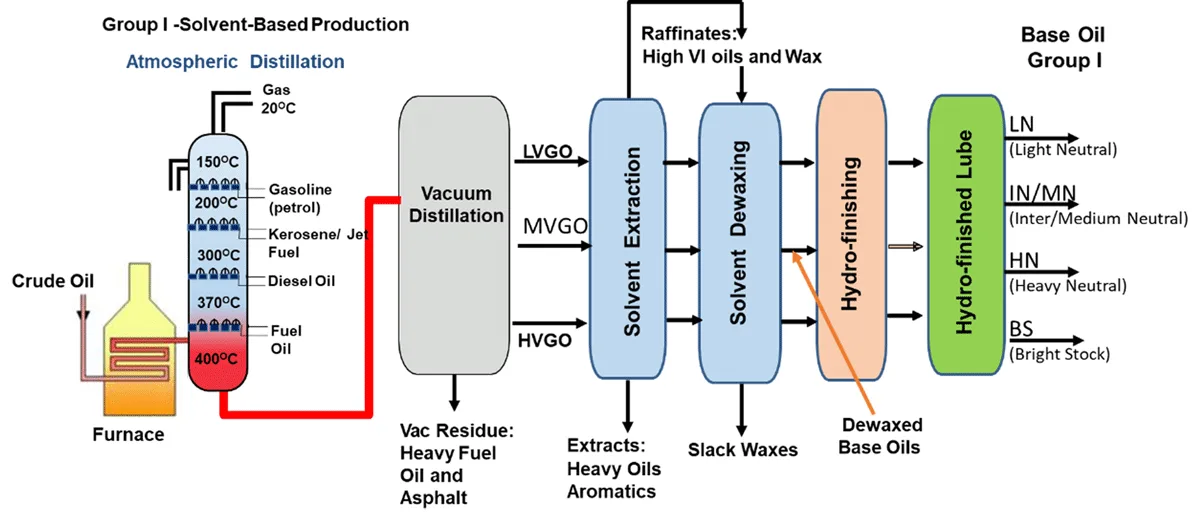
Crude oil arrives with dissolved salts, water, and suspended solids. A desalter uses a water wash and electrostatic separation to pull those out before the oil ever hits a furnace. After that, the feed goes to an atmospheric distillation column.
Lighter fractions come off the top and sides: gasoline-range, kerosene-range, and diesel-range materials.
The heavy residue at the bottom is your lubricating-oil candidate. But you cannot just pour that residue into a base-stock blend. It is too heavy, too waxy, and too full of sulfur and asphaltenes.
So it moves to vacuum distillation. Under reduced pressure (typically 40 to 60 mmHg), the residue is heated gently and cut into slabs: light VGO, medium VGO, and heavy VGO. These slabs are the real feedstock for base-oil upgrading.
Deasphalting and Lubricating Feedstock Preparation
Before you can hydrocrack or isomerize a VGO stream, you strip out asphaltenes. The most common method is deasphalting with a C5+ gas oil or a proprietary solvent. Asphaltenes are sticky, high-molecular-weight aggregates that poison downstream catalysts and clog dewaxing units.
Once they are gone, the deasphalted oil is your clean catalytic feedstock.
Some refineries skip deasphalting and use a different crude slate that produces a naturally low-asphaltene VGO. The decision depends on crude economics and unit utilization.
Hydrocracking and Hydroisomerization
This is where the chemistry gets serious. A hydrocracker runs the deasphalted oil over a bifunctional catalyst at high hydrogen pressure (roughly 500 to 1,000 psig) and 300 to 400°C. The catalyst cracks heavy paraffins and aromatics into lighter, more branched molecules.
Hydrogen saturates the fragments. The product is a low-sulfur, low-aromatic stream with a higher proportion of isoparaffins.
Hydroisomerization takes that stream and rearranges linear paraffins into branched isoparaffins. This step raises the viscosity index dramatically. A Group I stock might sit at a VI of 90 to 100.
A well-run hydroisomerized feedstock can push VI toward 120 to 130. That is the difference between an oil that thickens fast at 40°C and thins fast at 100°C, and one that holds a more stable film across the range.
Catalytic and Isomeric Dewaxing
Even after hydroisomerization, the stream still contains long-chain waxes that will crystallize below 20°C. You need to remove or convert them. Two main routes exist.
Catalytic dewaxing cracks wax molecules over a hydrogenation catalyst and hydrogenates the fragments. The wax is destroyed. You lose some yield but get a very clean, low-pour-point product.
Isomeric dewaxing converts the wax into isoparaffins instead of destroying it. The wax molecules are isomerized into branched structures that do not crystallize. You keep the molecules in the oil.
Yield goes up. The pour point drops. The viscosity index often improves a few points.
Most modern lube plants prefer isomeric dewaxing when the feedstock supports it.
Hydrofinishing, Clay Finishing, and Base-Stock Cutting
After dewaxing, the base oil still carries trace nitrogen, residual sulfur, and some color-causing impurities. A hydrofinishing pass over a hydrotreating catalyst at moderate temperature strips those out. For Group I stocks, a clay-finishing step may follow.
Activated clay (fuller's earth) adsorbs the last traces of sulfur compounds, nitrogen heterocycles, and colored molecules.
The final step in the refinery is fractionation. You cut the finished base-oil stream into specific viscosity grades: 10, 30, 50, or 100 SUS at 100°C. Each cut becomes a distinct base-stock product.
Those cuts are what the blending plant receives to build the next stage.
Alternative Routes: GTL, PAO, Synthetic Esters, and Re-Refined Oil
Not every base stock comes from a petroleum refinery. Four major alternative routes cover the rest of the market.
Gas-to-Liquid Base Oil
Gas-to-liquid production converts synthesis gas (a mix of carbon monoxide and hydrogen) into liquid hydrocarbons through Fischer-Tropsch chemistry. The feed gas can come from natural gas, coal, or captured CO2 and green hydrogen. The Tropsch reactor produces a wax-like slurry of long-chain paraffins.
That slurry is then hydrocracked, isomerized, dewaxed, and finished just like a petroleum VGO stream.
The result is a base oil with very low sulfur, very low nitrogen, and a high viscosity index. In industry shorthand, this is often called Group III+ because it meets or exceeds Group III API base-stock requirements even though it never touched a crude-oil distillation column. The API base-stock framework still classifies it under Group III or III+ depending on the exact saturates and sulfur numbers.
GTL plants are capital-intensive. The payback depends on long-term feed gas contracts and the premium you get for a high-purity, low-sulfur base stock. They are most common in regions with abundant natural gas but limited lube-crude supply.
Polyalphaolefin and Synthetic Ester Production
PAO (Group IV): You polymerize an alpha-olefin monomer (typically 1-dodecene or 1-hexadecene) in the presence of a metallocene or Ziegler-Natta catalyst. The polymer is then hydrogenated to lock down residual unsaturation and reduce color. The output is a straight-chain or lightly branched polyolefin.
PAOs deliver a very high viscosity index (often 130 to 140), low volatility, and excellent cold-flow behavior. They are the backbone of many premium synthetic engine oils.
Synthetic esters (Group V): You react a selected carboxylic acid with an alcohol under acid or base catalysis, then distill and purify the ester. Esters are polar. That polarity gives them strong boundary lubricity, good solvency for keeping detergents and dispersants in solution, and strong seal compatibility.
The tradeoff is cost and a shorter oxidative lifetime compared to PAO or hydrocarbon stocks. Esters are most common in aircraft, two-stroke, and high-performance racing oils.
Re-Refining Used Lubricating Oil
Used motor oil is not trash. It is a feedstock. The U.S.
EPA, under 40 CFR Part 279, treats clean, non-hazardous used oil as a recyclable material, not a waste stream. Re-refining plants collect used oil, remove water, solids, fuel, and metallic wear particles, then run the recovered hydrocarbons through a distillation and hydrotreating sequence.
The recovered base stock must meet the same API base-stock specifications as any virgin stock. It is not a lesser product. It is a circular one.
The EPA reports that re-refining recovers roughly 85 to 95 percent of the hydrocarbons in the used-oil stream. The remaining fraction is coke, ash, or off-spec material.
The challenge is feedstock consistency. A mix of conventional, synthetic, diesel, and gasoline used oils creates a variable feed. Plants use online analyzers and batch blending to keep the final re-refined stock within tight VI, sulfur, and pour-point windows.
Feedstock Purification and Contaminant Control
Every alternative route has its own purification step. GTL needs the Tropsch wax fully cracked and hydrogenated. PAO needs the olefin feed dried and stabilized before polymerization.
Esters need the acid and alcohol streams dried and filtered before reaction. Re-refined oil needs dewatering, filtration, and hydrotreating before it can be cut into a usable base stock.
The common thread: contaminants are the enemy. Sulfur, nitrogen, metals, water, fuel, and oxidation products each have a specific impact on the finished oil's performance and emissions compatibility. The purification step is not optional.
It is the gate between a usable base stock and a batch that will fail shelf-life or engine-wear tests.
Base-Oil Selection: Matching Viscosity, VI, Volatility, and Chemical Purity
You now have a tank farm full of base-stock cuts. The next decision is which cuts go into which finished-oil blend, and in what ratio.
Key Properties Considered Before Blending
Before any additive is dosed, the base-oil blend must hit a target profile. The properties you are matching are:
- Kinematic viscosity at 100°C: Sets the high-temperature film thickness.
- Viscosity index: Controls how much the oil's flow changes with temperature.
- Noack volatility (evaporation loss): Drives oil consumption at high temperature.
- Pour point: Determines cold-start behavior.
- Sulfur and saturates content: Affects oxidation stability, color, and emissions-system compatibility.
- Nitrogen (total and basic): Influences additive interaction and acid-number drift.
- Flash point: A handling-safety metric and a rough indicator of distillation quality.
A 5W-30 oil, for example, might blend 60 percent of a 30-viscosity base stock with 40 percent of a 50-viscosity base stock, then add a pour-point depressant to pull the cold-flow number down. The exact recipe depends on the API group you are using and the additive package you plan to dose.
API Groups I, II, III, IV, and V
The API base-stock group system classifies oils by chemical makeup and viscosity index. Here is how they stack:
| Group | Typical Source | VI Range | Sulfur (max) | Saturates (min) | Common Use |
|---|---|---|---|---|---|
| I | Solvent-refined or mild hydrotreated crude | 80 to 122 | 0.30 wt% | 80 vol% | Budget mineral oils, industrial greases |
| II | Severely hydrotreated (HPI) | 80 to 122 | 0.10 wt% | 90 vol% | Mid-range mineral and blended oils |
| III | Hydroisomerized and dewaxed | 80 to 122 | 0.03 wt% | 90 vol% | Premium mineral, "full synthetic" marketing tier |
| III+ | GTL or advanced synthetic hydrocarbons | 122+ | 0.03 wt% | 90 vol% | High-performance and extended-drain oils |
| IV | PAO (polyalphaolefin) | 122+ | Below 0.03 wt% | N/A (no aromatics) | Full synthetic, aviation, racing |
| V | Synthetic esters and other | Varies | Varies | Varies | Specialty, high-lubricity, seal-compatible oils |
The critical nuance: "Group III+" is not a formal API category. It is an industry shorthand for a hydrocarbon base stock that exceeds Group III API/ILSAC limits on saturates and sulfur. The API recognizes it informally, but the official groups remain I through V.
Group III+ and Other Industry Terminology
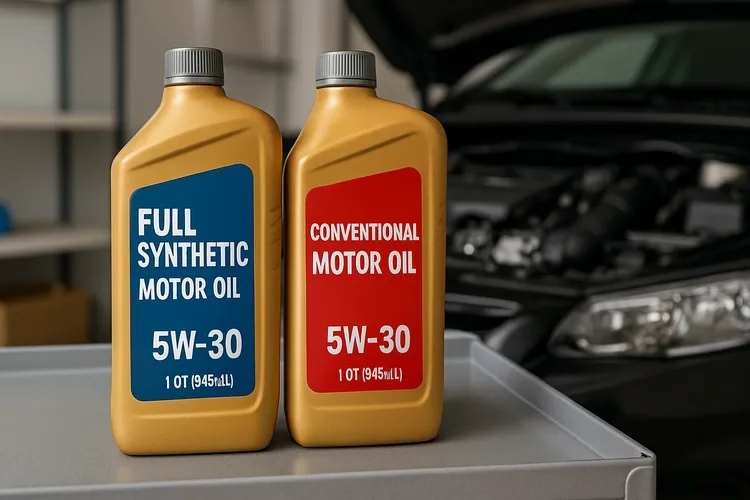
Marketing labels add a second layer of confusion. "Full synthetic" often means a Group III or III+ hydrocarbon base oil. "Semi-synthetic" or "synthetic blend" usually means a Group I or II base with a smaller share of Group III or IV stock.
"Mineral" typically refers to Group I or II. None of these labels are standardized by a single global definition. The API and ILSAC specify base-stock groups in their technical documents, but the retail label is not a legal classification.
If you are evaluating a product, look past the label. Check the base-stock group the manufacturer lists on its technical data sheet. Check the SAE viscosity grade and the API or ILSAC performance category.
Those three data points tell you more than the word "synthetic" on the bottle.
Creating a Consistent Batch-to-Batch Base-Oil Blend
Blending is not just mixing two or three tanks. It is a controlled process. The blending plant uses flow meters, inline viscometers, and automatic proportioning valves to hold the recipe within tight tolerances.
A 0.5 cSt shift in the 100°C viscosity can push a 5W-30 oil just outside its SAE J300 window.
After the base blend is cut, the plant runs a verification panel: kinematic viscosity at 40°C and 100°C, flash point, pour point, Noack volatility, sulfur, and nitrogen. If any number drifts, the batch is either re-cut, sent back to the tank farm, or held pending a corrective blend. Only after the base stock passes does the additive dosing step begin.
This is where the production chain shifts from refinery chemistry to formulation engineering. The base oil is the canvas. The additive package is the paint.
The next stage is where a hydrocarbon fluid becomes a working engine lubricant that meets API SP, ILSAC GF-6B, ACEA C5, or whatever OEM specification the customer requires.
Additive Package: Turning Base Oil Into a Working Lubricant
Base oil gets you maybe 70 percent of the way. The remaining 30 percent is additive chemistry. A typical finished engine oil carries 2 to 15 percent additive package by volume, depending on the spec.
In a low-SAPS passenger-car oil, that might be closer to 2 percent. In a heavy-duty diesel oil with high-TBN detergents, it can hit 10 to 15 percent.
Antiwear and Bearing-Protection Chemistry
The workhorse of engine antiwear is zinc dialkyldithiophosphate, or ZDDP. It reacts with hot metal surfaces to form a sacrificial phosphate glass that blocks boundary-contact wear on cam lobes, bearings, and tappets. Modern low-SAPS specs cap ZDDP at around 700 to 900 ppm phosphorus to protect three-way catalytic converters.
If the spec allows higher phosphorus, you can push ZDDP past 1,200 ppm for tougher protection.
A newer class of ashless antiwear agents (boron- and phosphorus-free chemistry) is entering the market for GPF-equipped engines. These use organometallic or coordination-complex structures. They work, but they have a shorter boundary lifetime than ZDDP under extreme load.
Antioxidants, Detergents, and Dispersants
Antioxidants slow the radical-chain reactions that thicken oil and form acids. Phenolic and aminic antioxidants are the standard pair. Detergents (calcium, magnesium, or phosphorus sulphonates) neutralize acidic by-products and keep them suspended.
Dispersants (amines, polyisobutylene succinimides, or amide-based) keep soot and sludge from agglomerating into varnish.
The balance matters. Too much detergent and you raise ash, which cooks a catalytic converter. Too little and sludge builds on the oil pump.
The formulation engineer tunes these three against the spec's TBN, SAPS, and deposit limits.
Friction Modifiers and Corrosion Inhibitors
Friction modifiers (esters, alkanolamines, or organic molybdenum compounds) sit at the oil-metal interface and cut the friction coefficient. This directly improves fuel economy. ILSAC GF-6B was built around a lower-friction target, so those formulations carry a higher dose of friction modifier than the older GF-5 spec.
Corrosion inhibitors (typically amines, imidazolines, or borates) protect ferrous surfaces from sulfuric and organic acids that form during combustion. In a wet engine (one that sits with acid-laden oil in the sump), a weak inhibitor package will show copper-alloy pitting within a single drain interval.
Viscosity-Index Improvers and Pour-Point Depressants
For multigrade oils, you add a polymer: usually polyisobutylene, styrene-isoprene, or a styrene-butadiene block copolymer. This is the viscosity-index improver (VII). It unfurls at high temperature and thickens the oil, keeping the 100°C viscosity in range.
At low temperature, the polymer coils up and adds almost no resistance. That is how a 5W oil flows at -30°C but still holds a 30-weight film at 150°C.
Pour-point depressants (low-molecular-weight polyalphaolefin or polyisobutylene) interfere with wax crystal growth. They keep the oil flowing past its natural cloud point. A 0W stock without a PPD would pour around -18°C.
With the right PPD, it can pour below -40°C.
Additive Interactions and Treat Rates
You cannot just dump five concentrates into a tank and call it done. ZDDP and aminic antioxidants compete for the same radical sites. Calcium detergents can react with phosphorus dispersants and drop the total base number.
Friction modifiers that are esters can alter the solvency balance and pull dispersants out of solution.
Formulators run treat-rate trials at 1, 2, 3, 5, and 8 percent additive concentrate. They track how each treat rate shifts viscosity, TBN, flash point, and wear score. The target treat rate is the lowest one that still passes every spec limit.
As of 2026, API SP and ILSAC GF-6B typically call for 2 to 4 percent treat rates in a 5W-30. Heavy-duty API CK-4 or FA-4 diesel oils can sit at 8 to 12 percent.
Multigrade Blending: How 5W-30 and Other SAE Grades Are Made
You now have a base-oil blend and a measured additive concentrate. The next step is locking the viscosity to a specific SAE J300 grade. This is where the "W" number and the high-temperature number both get validated.
Matching the SAE J300 Low-Temperature Grade
The "W" side of a 5W-30 is tested by two methods. Cold Cranking Simulator (ASTM D5293) measures the torque required to turn a test piston at the low-temperature threshold. For 5W, the oil must crank at -30°C with a torque limit of 6,600 kgf-cm.
Maximum Reversing Viscometer (ASTM D4851) confirms the oil still flows through a simulated pump at that same -30°C, with a limit of 60,000 cP.
If your base blend is too thick at -30°C, you add more pour-point depressant or switch to a lighter base cut. If it is too thin and the VI gets pulled down, you add a heavier base stock or a small dose of VII. The engineer iterates until both D5293 and D4851 pass.
Matching the High-Temperature Viscosity Range
The "30" in 5W-30 means the oil must sit between 9.3 and 12.6 cSt at 100°C (per SAE J300). The formulation team blends base stocks to land in that window. Then they add the VII dose to lift the high-temperature viscosity without wrecking the cold-flow numbers.
A typical 5W-30 recipe on a Group III base might look like this:
| Component | Volume Share | Role |
|---|---|---|
| 20-viscosity Group III base | 35% | Low-temperature fluidity |
| 30-viscosity Group III base | 40% | Bulk viscosity at 40°C |
| 50-viscosity Group III base | 15% | High-temperature film strength |
| VII (polyisobutylene) | 4% | Lifts 100°C cSt, protects cold flow |
| Additive concentrate | 6% | Antiwear, antioxidant, detergent, dispersant |
The exact ratios shift by OEM spec and seasonal demand. A winter 5W-30 for a Nordic market might skew 45 percent 20-viscosity base. A summer 5W-30 for a Gulf market might run 50 percent 50-viscosity base.
High-Temperature High-Shear Viscosity
SAE J300 now requires an HTHS minimum at 150°C. For a "30" grade, HTHS must be at least 2.6 mPa-s. For a "40" grade, it must be at least 3.6 mPa-s.
The VII polymer is the lever you pull here. Add more polymer, HTHS goes up. But too much polymer and the shear stability test (ASTM D4739) will show a 10 to 15 percent viscosity drop after 350 miles of engine shear.
Formulators pick a VII with a high shear half-life. Styrene-isoprene copolymers tend to shear faster than hydrogenated styrene-butadiene. The choice depends on drain interval and engine RPM range.
Polymer Shear Stability and Cold-Flow Performance
These two properties are in constant tension. More VII gives you better HTHS but worse shear loss over life. A pour-point depressant keeps cold flow down but can slightly raise the 40°C viscosity, pulling you out of the "5W" cold-crank window.
The formulation team runs a thermal-shock cold-crank test (D5293 after a 15-minute chill at -40°C) to confirm the VII has not raised the low-temperature viscosity too much.
Final Batch Adjustments
After the first blend pass, the lab pulls a 500-mL sample. They run full viscosity at 40 and 100°C, flash point, pour point, Noack, and HTHS. If any number is off by more than the spec tolerance, the batch goes back.
Adjustments are small: 0.5 percent more VII, a 1 percent shift in base-stock ratio, or a 0.2 percent bump in PPD. Once every number sits inside the SAE J300 window, the batch is signed off for the final quality panel.
Quality Control: Lab Tests, Engine Qualification, and Batch Release
A multigrade blend is not finished oil until it passes a full quality gate. This is where the lab, the engine test rig, and the batch records all come together.
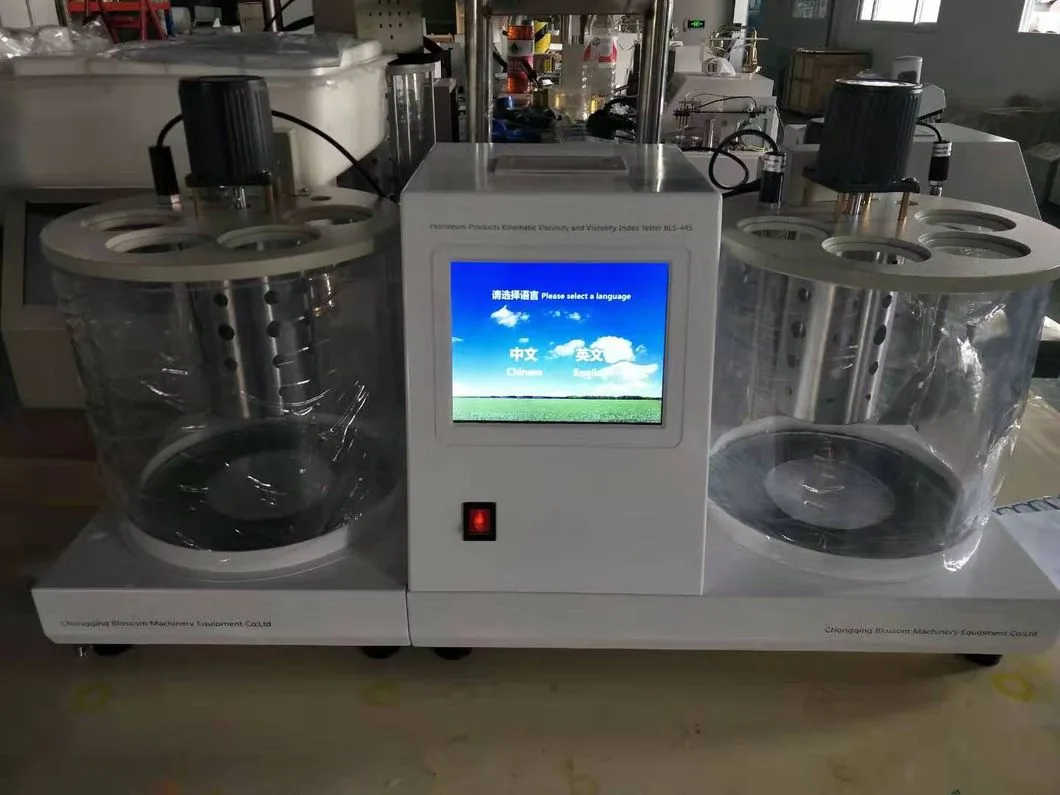
Incoming Feedstock and Process-Control Testing
Every tank of base stock that rolls into the blending plant gets a certificate of analysis from the refinery. The lab verifies viscosity, sulfur, nitrogen, saturates, pour point, and flash point before the tank is released for blending. If a tank is off by more than 2 percent on sulfur or 1 cSt on 100°C viscosity, it is segregated and the refinery is notified.
For additive concentrates, the incoming check covers active-ingredient assay, water content, particle count, and homogeneity. A contaminated additive batch (one that has gelled, separated, or picked up metal shavings from a pump) will show up as a foaming failure or a rust stain on the corrosion coupon.
Viscosity, Volatility, Corrosion, and Foaming Tests
The finished-oil panel runs a standard suite. Per ASTM standards, this includes:
- Kinematic viscosity (D445): at 40°C and 100°C.
- Noack volatility (D5824): typically a 2-hour, 190°C bake. Most API SP oils target below 12 percent mass loss.
- Flash point (D92): must exceed 180°C minimum for most automotive oils.
- Foam (D892): Sequence I, II, and III at 25 and 93°C. The spec calls for no foam after 5 minutes at 93°C.
- Rust (D665): Three days at 121°C in a sealed jar. The ferrous coupon must show no staining.
- Copper corrosion (D130): 3 hours at 100°C. The copper strip must be no worse than a 1B rating.
If the Noack is high, you check for light-base-stock contamination or an under-dosed VI. If foaming fails, you look at the dispersant dose or a contaminated additive batch.
Wear, Deposits, and Oxidation Testing
The big-ticket tests are engine-based. API SP requires a set of laboratory engine runs. These are not a single 4,000-mile road trip.
They are controlled, replicated engine tests that isolate one failure mode at a time.
- API Sequence VIIB: A high-RPM, high-temperature sequence that drives piston-ring wear and turbocharger deposits.
- CA-7: An oxidation-and-sludge sequence at 150°C.
- HTH shear (D4739): A 350-mile engine shear to confirm VII stability.
- Turbocharger deposit test: A dedicated sequence that measures carbon buildup on the turbo shaft and bearing face.
- Low-SAPS wear test: A boundary-lubrication sequence at reduced ZDDP levels.
Each test has a pass/fail threshold. A 5 percent ring-wear increase, a 15 percent viscosity increase after the oxidation sequence, or a measurable shift in catalytic-converter light-off temperature will hold the batch.
Engine-Bench and Qualification Testing
For OEM-specific approvals (VW 507 00, MB 229.51, GM dexos1, Toyota 0029), the manufacturer runs its own proprietary sequences. You submit the finished oil to the OEM's lab. The test can take 8 to 14 weeks.
Results come back as a pass/fail with wear, deposit, and fuel-economy data.
ILSAC GF-6B added a fuel-dilution sequence that simulates repeated short trips. The oil is diluted with 5 percent fuel by volume, then run in a wear sequence. A formulation that cannot tolerate 5 percent fuel dilution without a 10 percent viscosity drop will fail GF-6B.
Certificates of Analysis and Lot Traceability
Every batch that clears the full panel gets a certificate of analysis. It records the tested values, the test method, the acceptance limit, and the result for each property. The lot code is stamped on the fill line, the drum, the pallet, and the shipping manifest.
This traceability chain runs both directions. If a customer reports a seal leak or a turbo deposit failure, the manufacturer pulls the lot code, traces it back to the specific base tank, additive batch, and fill-line date. If the lot is clean, the issue is on the service side.
If the lot failed a viscosity or foaming check that was missed, the batch is recalled. The API Engine Oil Guide lays out the licensing and certification framework that governs how these claims are made and tracked.
API Groups, SAE Grades, and Marketing Labels: What Each One Means
This is where the consumer gets confused. A bottle says "5W-30 Full Synthetic API SP ILSAC GF-6B." That is four separate pieces of information, and they do not mean the same thing.
API Base-Stock Groups vs. Finished-Oil Categories
API base-stock groups (I through V) describe the chemistry and purity of the starting material. They are not printed on the consumer bottle. API finished-oil categories (SA, SB through SP, and CK-4, FA-4) describe the performance level the oil must meet.
A Group III base can be used in an API SP oil. A Group IV PAO can also be used in an API SP oil. The base-stock group is a manufacturing classification.
The API category is a performance certification.
SAE Viscosity Grades vs. Performance Specifications
SAE J300 tells you the flow behavior: 0W, 5W, 10W, 15W, 20W on the cold side, and 20, 30, 40, 50, 60 on the hot side. It says nothing about antiwear, oxidation resistance, deposit control, or emissions compatibility. The API, ILSAC, ACEA, or OEM spec says that.
A 5W-30 that is API SP is not the same as a 5W-30 that is API SN. Both flow the same at 40°C. The SP oil has passed a newer, stricter set of engine sequences.
API, ACEA, ILSAC, JASO, and OEM Requirements
| Standard Body | What It Covers | Typical Use Region |
|---|---|---|
| API (SP, SQ, CK-4, FA-4) | Gasoline and diesel engine performance | North America, many OEMs globally |
| ILSAC (GF-6A, GF-6B) | Fuel-economy-focused gasoline oils | North America, Japan, Korea |
| ACEA (C1 through C6, A3/B4) | European gasoline and diesel sequences | EU, UK, much of Asia |
| JASO (1, 2, 3) | Japanese automotive lubricant categories | Japan |
| OEM (VW 507 00, MB 229.51, GM dexos1) | Manufacturer-specific engine approval | Individual vehicle models |
A single oil can carry multiple labels. A 5W-30 might be API SP, ILSAC GF-6A, ACEA C5, and carry a VW 507 00 approval. Each label is earned through its own test sequence.
One pass does not imply the others.
What "Mineral," "Semi-Synthetic," and "Full Synthetic" Do Not Tell You
These are retail marketing terms. There is no single global legal definition. "Full synthetic" can mean 100 percent Group III hydroisomerized base.
It can mean 100 percent Group IV PAO. It can mean a 50/50 blend of Group III and Group IV. The label tells you the marketing tier.
The technical data sheet tells you the actual base-stock breakdown.
If you are matching an OEM spec, ignore the marketing word. Check the spec. A "mineral" 15W-40 that carries MB 229.51 is a legitimate heavy-duty diesel oil.
A "full synthetic" 0W-20 that lacks ILSAC GF-6B may not meet the fuel-economy and emissions targets of a current-generation GPF-equipped sedan.
Production Choices by Engine, Climate, Duty Cycle, and Emissions System
The same SAE grade is not one single formulation. A 5W-30 made for a 2025 Lexus with a GPF is chemically different from a 5W-30 made for a 2003 4.6L V8. The engine, the climate, the driving pattern, and the after-treatment system all shift the production recipe.
Gasoline Engines vs. Diesel Engines
Gasoline engine oils prioritize low SAPS, controlled friction, and GPF/turbo deposit control. Diesel engine oils need a higher TBN (often 10 to 20 for heavy-duty) to neutralize sulfuric acid from fuel, and they must handle soot loads of 40 to 80 percent by weight in the oil.
A passenger-car diesel with an SCR system and DPF (like a modern BMW 320d) needs a mid-SAPS oil (ACEA C3) with a TBN around 7 to 9. A mining-truck diesel running on marine fuel needs an API CK-4 or FA-4 with a TBN of 14 or higher. The base-stock choice, the detergent dose, and the dispersant type all shift accordingly.
Turbocharged, High-Load, and Heavy-Duty Applications
Turbochargers spin at 100,000 to 150,000 RPM. The oil film on a turbo bearing is measured in microns. A single deposit or acid spike can score a bearing in one drain interval.
Turbocharged engines also run hotter. The oil at the turbo housing can exceed 180°C even when the sump sits at 110°C.
This means the formulation needs:
- Higher HTHS (a 30-grade with HTHS of 2.8 instead of 2.6).
- Stronger oxidation stability (aminic antioxidant dose pushed to the upper spec limit).
- A dispersant that can hold soot at 60 percent by weight without raising HTHS.
- A friction modifier that does not sacrifice film strength at the turbo bearing.
Heavy-duty fleet operators often extend drain intervals to 40,000 to 75,000 miles. The oil must survive that time without a viscosity increase above 15 percent or a TBN loss below the minimum acid-neutralization threshold.
Cold-Winter and Hot-Climate Operation
If the vehicle parks at -30°C and the driver cranks the engine at -40°C, a 0W-20 is the floor. The oil must pump through the galleries before the first combustion event loads the sump. A 5W-30 at -40°C will have a CCS torque that is 30 to 40 percent higher than a 0W-30.
That extra torque loads the starter and battery. In a cold-climate fleet, the 0W grade is not optional. It is the difference between a vehicle that starts on the first crank and one that needs a block heater.
In a +45°C ambient environment (Gulf coast, Arizona desert, or a heavy-duty engine with no oil cooler), the 100°C viscosity must hold. A 5W-30 with HTHS at 2.6 mPa-s might thin to 2.2 mPa-s after a long high-load cycle. The film at the main bearing drops below the hydrodynamic threshold.
The formulator responds by shifting 5 percent of the base blend from a 20-viscosity cut to a 50-viscosity cut, or by adding 0.5 percent more VII.
Stop-and-Go Driving and Long-Duty Service
Urban stop-and-go driving keeps the engine in a low-temperature, high-moisture regime. The oil never reaches its optimal operating temperature. Water condenses on the cylinder walls.
Fuel that did not burn in the compression stroke washes down the wall and dilutes the sump oil. After 200 miles of short trips, the sump can carry 8 to 12 percent fuel by volume.
ILSAC GF-6B addresses this with its fuel-dilution sequence. The oil is diluted to 5 percent fuel, run through a wear sequence, and checked for viscosity drop. A formulation that cannot handle this will show a 20 percent viscosity loss and a 30 percent increase in iron and copper wear metals.
Long-duty highway service is the opposite. The oil runs hot and dry for thousands of miles. The failure modes shift to oxidation, volatilization, and soot accumulation.
The same 5W-30 that is fine for a city car will need a longer drain interval and a stronger antioxidant package for a long-haul truck.
Catalytic Converters, GPFs, DPFs, and SCR Systems
The after-treatment system is the final constraint on additive chemistry. A three-way catalytic converter is poisoned by phosphorus above 800 ppm. A gasoline particulate filter is clogged by sulfur and ash deposits.
A DPF is blinded by soot and by ash from high-TBN detergents that do not burn off at the regeneration temperature. An SCR system is degraded by phosphorus that coats the catalyst washcoat.
The production choice is clear:
- Engine with a GPF or SCR: Low-SAPS. Sulfur below 3,000 ppm, phosphorus below 700 ppm, ash below 0.5 wt%.
- Engine with a DPF (diesel): Mid-SAPS or high-TBN. Sulfur controlled, ash controlled, but TBN pushed to 10 to 14.
- Engine with no after-treatment (older vehicle, marine, off-road): Conventional SAPS. Phosphorus can hit 1,500 to 2,000 ppm. TBN can reach 16 to 20.
The base stock you pick, the additive package you dose, and the final spec you claim all hinge on what is mounted on the exhaust manifold.
Petroleum, Synthetic, and Re-Refined Routes: Benefits and Tradeoffs
You have three broad production families. Each one wins in a different cost, performance, or sustainability scenario. There is no single "best" route.
The right one depends on your spec, your margin, and your feedstock access.
Petroleum-Derived Base Oil
Group I through III base stocks dominate global volume. They are the cheapest per liter to produce at scale. The infrastructure is mature: thousands of refineries worldwide already run vacuum distillation, hydrocracking, and dewaxing units.
If your target is a cost-effective Group I mineral oil for a 20-year-old truck fleet, petroleum is the obvious choice.
The tradeoff is variability. Crude slate shifts seasonally. A North Sea crude gives you a different VGO than a Persian Gulf heavy.
Sulfur content swings from 0.1 to 2.5 wt% across global barrels. Your refinery must flex its hydrofinishing severity to hold the final sulfur number below 0.3 percent for Group I or below 0.03 percent for Group III.
GTL and Chemically Synthetic Base Oil
GTL and PAO routes give you a feedstock that is consistent by design. The hydrogen and carbon monoxide in a synthesis gas stream are measurable, controllable, and low-impurity. The resulting base stock has sulfur below 0.01 percent and nitrogen below 1 ppm.
You do not need a clay-finishing pass. You do not need a severe hydrofinishing run. The product is clean out of the reactor.
The cost structure is different. A GTL plant needs a natural gas feed contract, a shift-conversion unit, a Tropsch reactor, a fractionator, and a full upgrading train. Capital expenditure runs into the billions.
The economics only work at multi-million-liter annual scale. PAO plants are smaller but still need a dedicated olefin feed and a metallocene catalyst supply chain.
For the end user, a GTL or PAO base stock gives you:
- Viscosity index of 130 to 140 (vs. 100 to 120 for a typical Group III).
- Noack volatility below 10 percent (vs. 14 to 18 percent for a Group III).
- Sulfur below 5 ppm (vs. 200 to 300 ppm for a Group III).
- Better low-temperature fluidity at the same SAE grade.
Re-Refined Base Oil
Re-refining recovers 85 to 95 percent of the hydrocarbons in a used-oil stream. The U.S. EPA classifies clean used oil as a recyclable material under 40 CFR Part 279.
The recovered base stock can meet API Group I, II, or III specifications depending on the purification depth.
The advantage is circular. You are not competing with gasoline or diesel for the same crude barrel. The supply is local.
Collection infrastructure in the U.S. pulls an estimated 750 to 800 million gallons of used oil per year. The disadvantage is feed variability. A tank of used oil from a mix of conventional and synthetic vehicles, with variable fuel dilution and soot levels, is harder to process consistently than a clean VGO slab from a refinery.
Re-refined base oil is best suited for:
- Group I and II mineral grades in budget and industrial applications.
- Grease and hydraulic-fluid base stocks where high VI is not the priority.
- Fleets that want a documented recycled-content claim without sacrificing API certification.
Performance Consistency, Feedstock Flexibility, Cost, and Yield
| Factor | Petroleum (Group I to III) | GTL / PAO (Group III+ / IV) | Re-Refined |
|---|---|---|---|
| Cost per liter of base stock | Lowest | Highest | Mid to low |
| Feedstock variability | Medium (crude slate) | Low (synthesis gas) | High (used-oil mix) |
| Sulfur in finished stock | 200 to 300 ppm (III) | Below 5 ppm | 100 to 250 ppm |
| Viscosity index range | 95 to 125 | 130 to 140 | 85 to 115 |
| Yield from feed | 25 to 40% of crude barrel | 50 to 70% of synthesis gas | 85 to 95% of used oil |
| Scale needed | Any refinery | Multi-plant, multi-billion capex | Regional collection network |
| Best end use | Budget mineral, blended | Premium synthetic, extended drain | Recycled-content, industrial |
No route is "better" in an absolute sense. A Group III petroleum oil meeting API SP is a legitimate, high-performance product. A PAO-based GF-6B oil is not magically superior in every engine.
The spec is the target. The route is the path to get there within your cost and sustainability constraints.
Common Failure Points from Refining to the Service Bay
Even a well-run production chain has failure modes. Knowing where things break helps you diagnose a product problem, a batch reject, or a field complaint.
Feedstock Contamination and Refining Variability
If a VGO slab arrives with 3 percent more sulfur than the certificate of analysis lists, your hydrofinishing catalyst loads up faster. The off-gas hydrogen sulfide spike trips the unit alarm. You either slow the feed rate or accept a higher residual sulfur in the base stock.
Both cost you.
In re-refining, a single tank of used oil that includes a high volume of diesel soot will raise the carbon black content of the recovered base stock. The clay finishing pass will load and need replacement mid-batch. Your yield drops 4 to 6 percent on that tank.
Incomplete Dewaxing, Overprocessing, or Poor Hydrofinishing
If the isomeric dewaxing catalyst loses activity (from metal poisoning or thermal deactivation), wax crystals remain in the stream. The pour point creeps up from -15°C to -8°C. A 5W oil that should flow at -30°C now thickens at -20°C and fails the MRV test.
The opposite error is overprocessing. Push the hydrocracker too hard and you break too many long chains. Your 100°C viscosity drops below the target window.
You are now making a 20-viscosity stock when you ordered a 30. The batch is off-spec and must be re-blended or downgraded.
Incorrect Additive Concentration and Blend Errors
A 0.5 percent under-dose of ZDDP will not show up in the viscosity or flash-point panel. It will show up six months later as cam-lobe wear in a high-RPM sequence. A 1 percent over-dose of pour-point depressant raises the 40°C viscosity just enough to push a 0W-20 into 5W-20 territory.
The SAE grade is wrong. The OEM will reject the lot.
Blend errors are the most common field complaint. A pump seal failure lets 2 percent of a heavy 100-viscosity base stock into a 0W-20 fill line. The batch viscosity at 40°C is now 1.5 cSt high.
The whole fill run is segregated and reworked.
Insufficient Testing or Misleading Quality Claims
A manufacturer that ships a batch on a partial panel (viscosity and flash point only) skips the oxidation, foaming, and corrosion checks. The oil sits on a warehouse shelf for four months. During that time, a batch-to-batch additive instability develops.
A dispersant slowly phases out of solution. The oil arrives at the service bay with a foaming failure. The customer sees sputtering on the dipstick.
The manufacturer traces it back to a skipped foam test on release.
Misleading claims compound the problem. A label that says "meets API SP" on a product that has not completed the full SP test sequence is a regulatory violation. The API licensing framework requires that performance claims match completed, documented test results.
Wrong Viscosity, Wrong Specification, and Overextended Drain Intervals
This is the service-bay side of the failure chain. A 10W-40 poured into an engine that calls for 0W-20 will not circulate properly at -25°C. The oil pump starves.
The bearing surfaces run in boundary lubrication. Wear metals spike in the first 200 miles.
An oil that meets API SN but is poured into an engine that requires API SP will lack the newer deposit-control and fuel-dilution protection. The turbocharger will build carbon faster. The GPF will clog earlier.
The drain interval will effectively shrink by 30 to 40 percent.
Overextending the drain interval past the OEM specification degrades the additive package. ZDDP depletes. Detergent TBN drops.
Dispersants break down. The oil that was a balanced formulation at fill becomes a thick, acidic, soot-loaded sludge by the last 2,000 miles of an extended interval.
Safety, Environmental Rules, and Specification Compliance
The production of motor oil sits at the intersection of process safety, environmental regulation, and chemical labeling. Get one of these wrong and you face a shutdown, a fine, or a recall.
Hydrogen, Hot Oil, and Refinery Hazards
Hydrocracking and hydroisomerization run at 500 to 1,000 psig hydrogen pressure. A leak at that pressure is a jet-fire hazard. OSHA Process Safety Management rules (29 CFR 1910.119) require a written process hazard analysis, a relief-system design review, and operator training before the unit starts.
The NFPA 30 flammable-liquids code governs storage and transfer of the hot base-oil streams, which sit at 300 to 400°C during processing.
Hydrogen sulfide, a by-product of hydrofinishing, is toxic at 100 ppm and fatal at 500 ppm. Refinery gas-treating units scrub H2S before the vent reaches the atmosphere. Workers in the area carry personal gas detectors and SCBA bottles.
Used-Oil Storage, Sampling, and Spill Prevention
Used oil is not inert. It carries metals, fuel, and oxidation products. Under 40 CFR Part 279, it must be stored in closed, labeled containers.
It must not be mixed with hazardous waste (a 5-gallon can of used oil mixed with a solvent waste becomes a hazardous waste and loses its recycling pathway).
Spill prevention is governed by the EPA Spill Prevention, Control, and Countermeasure (SPCC) plan. Any facility that stores more than 1,320 gallons of oil aboveground needs one. Secondary containment, oil-water separators, and emergency shutoff valves are mandatory.
GHS Labels and Safety Data Sheets
Every finished motor oil ships with a GHS-compliant label and a Safety Data Sheet (29 CFR 1910.1200). The label carries the hazard pictograms, signal words, and precautionary statements. The SDS is a 16-section document that covers composition, first aid, fire-fighting, reactivity, and disposal.
For the consumer, the SDS is less relevant. For the service technician who handles a drum of oil in a confined space, it is the document that tells them to wear nitrile gloves, keep the area ventilated, and avoid skin contact with the hot additive concentrate.
Used-Oil Regulations and Environmental Controls
In the U.S., the EPA and state environmental agencies enforce 40 CFR Part 279. Used oil must be stored in approved containers, labeled as "Used Oil," and transported by a licensed hauler. It must not enter a storm drain.
It must not be burned in an unpermitted kiln.
In the EU, the Waste Framework Directive (2008/98/EC) and the End-of-Life Vehicles Directive (2000/53/EC) set collection and recycling targets. The UK Environment Agency enforces equivalent rules. A re-refiner in any of these jurisdictions must hold a waste-transfer or recycling license and report recovery yields annually.
API Licensing, Performance Claims, and OEM Requirements
You cannot print "API SP" on a bottle unless you have completed the full API SP test sequence and paid the licensing fee. The API licensing framework publishes the current categories, the test sequences, and the licensing terms. A manufacturer that prints an expired or unlicensed category on the label is in violation of the API terms and can be pulled from the Engine Oil Guide.
OEM approvals (VW, MB, GM, Toyota, Honda) have their own testing and licensing. The manufacturer submits the oil, the OEM runs its proprietary sequences, and the approval is granted for a set period. If the formulation changes (a new additive, a different base stock), the approval must be re-submitted.
You cannot ride an old approval on a new recipe.
Decision Guide: Following Finished Oil from Feedstock to Package
If you are a formulator, a fleet manager, or a service advisor trying to trace what a bottle of oil actually went through, here is the decision path.
Choosing a Route for a New Formulation
Start with the spec. If your target is ILSAC GF-6B for a GPF-equipped sedan, you need a low-SAPS base stock. That points to Group III, III+, or IV.
If your target is API CK-4 for a long-haul diesel, you need a high-TBN-capable base with good soot dispersibility. That points to Group II or III with a conventional additive package.
If sustainability is a hard requirement (corporate ESG target, government green procurement), look at re-refined base oil for the Group I and II tier, or at GTL made from a natural-gas or green-hydrogen feed for the Group III+ tier. The re-refined route recovers existing material. The GTL route decouples you from a specific crude slate.
Selecting the Correct Feedstock and Base-Oil Group
If the spec says "API SP, ILSAC GF-6A, ACEA C5," you can build the oil on:
- A Group III hydroisomerized base (lowest cost, proven supply).
- A Group III+ GTL base (cleaner, higher VI, premium cost).
- A Group IV PAO (highest VI, lowest volatility, highest cost).
- A Group V ester as a 5 to 15 percent co-blend for seal compatibility or boundary lubricity.
The base-stock group does not determine the API category. A Group III oil can be API SP. A Group IV oil can be API SP.
The API category is earned by the finished-oil test sequence, not by the base-stock label.
Matching Additives to Engine and Service Needs
If the engine is a GPF-equipped 1.5-liter turbocharged three-cylinder, your additive package must hold phosphorus below 700 ppm and ash below 0.5 percent. You will use a calcium/magnesium detergent blend instead of a phosphorus-rich package. Your dispersant must handle 40 to 50 percent soot by weight without raising HTHS.
If the engine is a 20-year-old 4.6L V8 with a three-way cat but no GPF, you can run phosphorus at 1,200 to 1,500 ppm. The ZDDP dose goes up. The TBN goes up.
The deposit-control target is sludge and varnish, not soot. The friction-modifier dose can be lower because the engine is not fuel-economy-optimized.
Verifying Viscosity, Performance, and Quality Before Release
The final gate before a batch ships is the full certificate-of-analysis panel. Every property is tested against the spec limit. The batch is released only when:
- Kinematic viscosity at 40°C and 100°C sits inside the SAE J300 window.
- HTHS at 150°C meets the SAE minimum for the grade.
- Noack volatility is below the spec ceiling.
- Flash point exceeds 180°C.
- Pour point meets the "W" grade cold-flow requirement.
- Rust, copper corrosion, and foam sequences all pass.
- TBN, SAPS, and phosphorus numbers are within the additive spec.
- The API or ILSAC or OEM test sequence has been completed and the result is on file.
Only after all of that does the lot code get stamped and the oil moves to the fill line.
What Buyers Should Check on the Product Label
When you stand in the aisle or pull up the product page, here is the scan order:
- SAE grade: 0W-20, 5W-30, 10W-40, etc. This is the viscosity behavior.
- API category: SP, SQ, CK-4, FA-4. This is the performance level.
- ILSAC or ACEA sequence: GF-6A, GF-6B, C3, C5, C6. This narrows the fuel-economy and emissions fit.
- OEM approval: VW 507 00, MB 229.51, GM dexos1, Toyota 0029. This confirms the specific engine match.
- Base-stock group (on the technical data sheet, not the label): I, II, III, III+, IV, or V. This tells you the chemistry.
- Drain interval or extended-drain claim: Only trust it if the OEM backs it. A manufacturer's "up to 15,000 miles" claim is void if the driving pattern is 90 percent stop-and-go in a -20°C climate.
If the label lists the SAE grade and the API category but no OEM approval, the oil is a general-purpose product. It will work. It may not be the optimal match for your specific engine and service conditions.
Frequently Asked Questions
Is motor oil just refined crude oil?
No. Refined crude gives you a base stock, which is one ingredient. A finished motor oil is a base stock plus 2 to 15 percent additive package (antiwear agents, antioxidants, detergents, dispersants, viscosity modifiers).
The additive blend is what makes the oil meet API, ILSAC, or OEM performance specs. Base oil alone cannot protect a modern engine.
Are all synthetic oils made the same way?
No. "Synthetic" covers at least three distinct chemistries. Group IV PAOs are made by polymerizing alpha-olefins and hydrogenating the polymer.
Group V esters are made by reacting carboxylic acids with alcohols. GTL hydrocarbons are made by converting synthesis gas through Fischer-Tropsch chemistry. Each route produces a different molecular structure, viscosity index, and volatility profile.
Is re-refined motor oil comparable to virgin oil?
Yes, if it meets the same API base-stock specifications. The EPA treats clean used oil as a recyclable material, and re-refined base stock must pass the same viscosity, sulfur, and pour-point limits as virgin stock. The difference is feed variability.
A re-refiner must manage a more inconsistent incoming stream than a refinery managing a single crude slate.
What does API Group mean?
The API base-stock group system (I through V) classifies the chemical makeup and purity of the starting material. Group I is solvent-refined. Groups II and III are hydroprocessed to increasing severity.
Group IV is PAO. Group V is ester or other. The group is a manufacturing classification, not a performance rating.
A Group III oil and a Group IV oil can both meet the same API SP category.
Why does motor oil need an additive package?
Base oil provides bulk lubrication and thermal stability. It does not provide antiwear protection, oxidation resistance, deposit control, corrosion inhibition, or emissions compatibility. Without additives, a base oil would thicken, form sludge, corrode bearings, and fail to protect a catalytic converter within a few thousand miles.
The additive package is what makes the oil a complete engine lubricant.
Does oil color show its quality or base-oil type?
No. Color is a process indicator, not a quality indicator. A dark Group I base stock and a dark Group IV PAO can look identical.
A light Group III base and a re-refined Group II base can also look the same. The API group, the SAE grade, and the test data tell you what the oil actually is. Color tells you almost nothing about performance or base-stock chemistry.
Does the SAE viscosity grade tell you which engine an oil is for?
No. SAE J300 describes flow behavior across temperature. A 5W-30 flows the same way whether it is in a 1.0-liter turbo three-cylinder or a 6.2L V8.
The SAE grade tells you the viscosity window. The API category, ILSAC sequence, ACEA class, or OEM approval tells you the engine fit. You need both to select the correct oil.