What Is the Difference Between 5w20 and 5w30 Motor Oil
You're standing in the auto parts aisle, squinting at two jugs that look identical except for one number. What is the difference between 5w20 and 5w30 motor oil? It's not just "thicker liquid, more protection." The gap changes how your engine breathes on cold starts and how the oil film holds up on a hot highway.
Most people assume a higher number means better. That's where things go sideways.
Per SAE J300, both grades share the same 5W cold-crank rating, so the only real variable is behavior at 100 °C under high shear. As of 2026, most US-market cars spec 0W-20 or 5W-20 from the factory, while hot-climate and European vehicles often run 5W-30. The answer isn't "bigger is better." It's matching the grade to your engine's tolerances and climate.
Here's where each one actually pulls ahead.
The Short Answer (and Why Most People Get It Wrong)
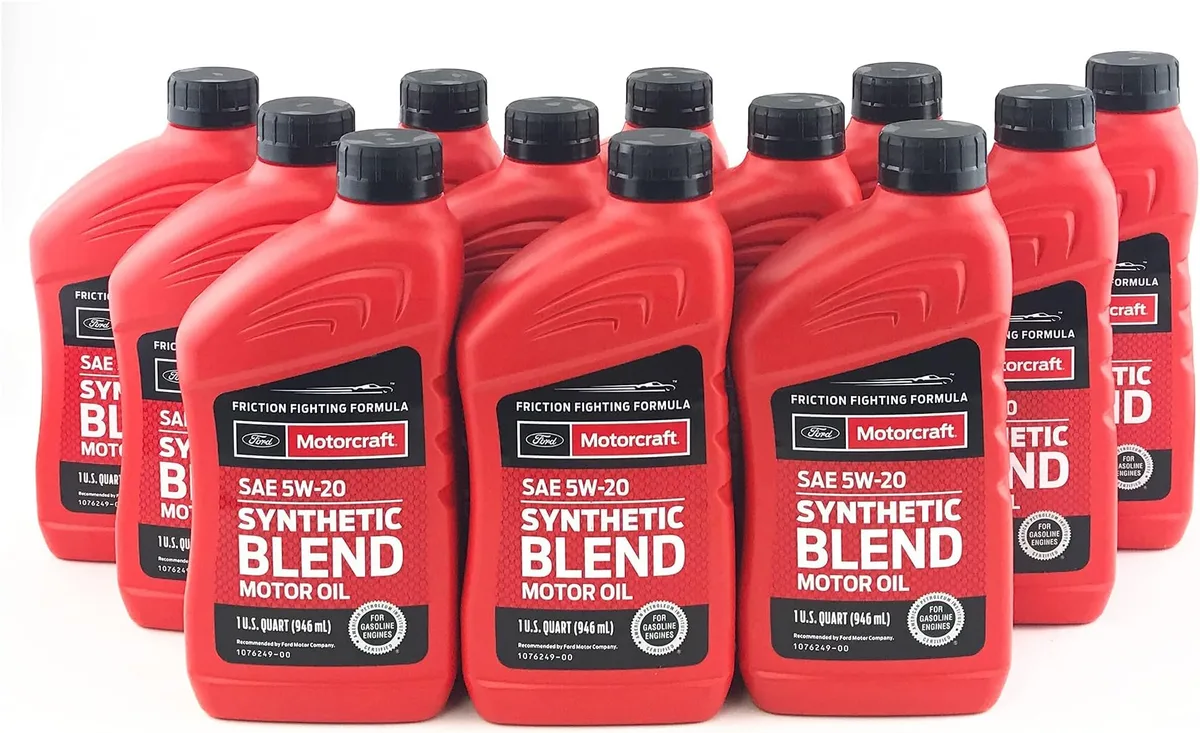
5W-20 and 5W-30 share the same cold-flow rating. The "5W" means both pump well down to −30 °C. The difference lives entirely in the second number.
At 100 °C under high shear, 5W-20 sits around 6.5 to 8.0 mPa·s of HTHS viscosity. 5W-30 sits around 9.0 to 12.0 mPa·s. That 2 to 4 mPa·s gap is the whole story.
Most people treat 5W-30 as a one-step-up from 5W-20. They think thicker always means better protection. But your oil pump, bearing clearances, and VVT phasing were calibrated for one specific HTHS range.
Fill a tight-tolerance turbocharged GDI with 5W-30 and you raise sump pressure at idle. VVT target timing shifts. You slowly lose half a percent of fuel economy.
Fill a 120K-mile V6 with wide clearances and a 5W-20, and the thin film seeps past worn valve seals faster. Oil consumption creeps up. Unburned fuel dilutes the sump.
The right grade isn't the best grade. It's the one your engine was designed to run.
This is why the owner's manual, or the sticker on the oil filler cap, is your single most important reference. It tells you the exact SAE grade and API service class your engine expects. Ignore that and you're guessing.
And guessing with a turbo running at 1,450,000 s−1 shear isn't a great strategy.
What "5W-20" and "5W-30" Actually Measure
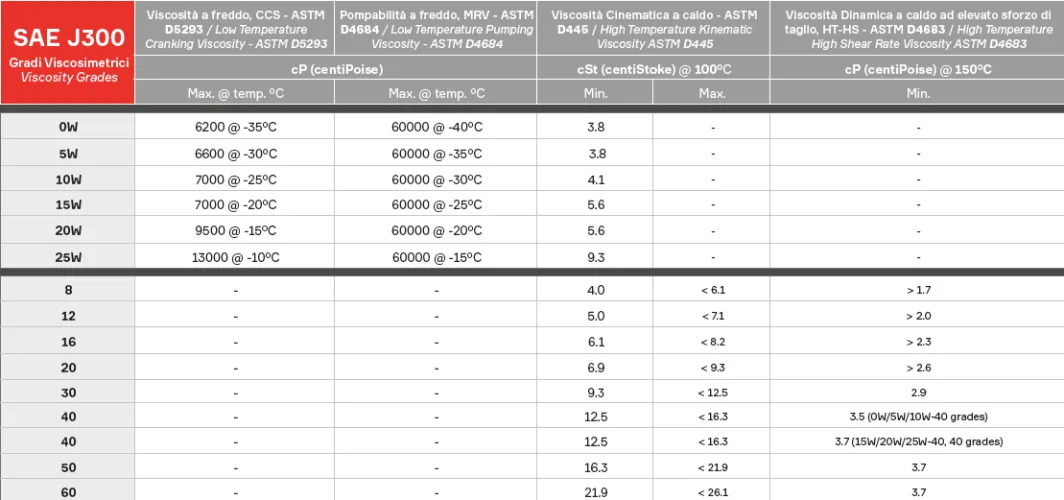
The SAE J300 standard splits every multi-grade oil into two test conditions. The first number (the "W" for winter) measures cold-crank viscosity at a specified low temperature. The second number measures high-temperature, high-shear viscosity at 100 °C.
That second number is where 5W-20 and 5W-30 genuinely diverge.
For the 5W prefix, SAE J300 requires a maximum cold-crank viscosity of 6,600 cP at −30 °C. Both 5W-20 and 5W-30 must clear that same bar. So at a frozen morning start, they behave nearly identically.
The pump moves the same amount of oil to the bearings in those first critical seconds.
The hot side is where things split. A 20-grade must show a minimum kinematic viscosity of 8.0 mPa·s at 100 °C. A 30-grade must show a minimum of 12.5 mPa·s.
In practice, a well-formulated full-synthetic 5W-20 lands between 6.5 and 8.0 mPa·s of HTHS, while a 5W-30 lands between 9.0 and 12.0 mPa·s. You can read the full grading table through SAE International's J300 documentation. That 2 to 4 mPa·s gap translates to roughly 0.5 to 1.5 percent fuel-economy delta in a light-duty sedan, per EPA test cycle data.
5W-20 vs. 5W-30: Side-by-Side Spec Breakdown
Here's the data that actually matters when you're standing in front of the shelf.
| Parameter | 5W-20 (typical full synthetic) | 5W-30 (typical full synthetic) |
|---|---|---|
| Cold-crank temp | −30 °C | −30 °C |
| Cold-crank max viscosity | 6,600 cP | 6,600 cP |
| HTHS at 100 °C (mPa·s) | 6.5 – 8.0 | 9.0 – 12.0 |
| Viscosity Index (VI) | 150 – 170 | 150 – 165 |
| Typical API service | SP / ILSAC GF-6A | SP / ILSAC GF-6A or ACEA C3 |
| Typical flash point | 210 – 220 °C | 210 – 220 °C |
Notice the cold row is identical. That's the "5W" doing its job. The HTHS row is where the real trade-off lives.
A few things to watch on the label. Two 5W-30 bottles can be radically different. An ILSAC GF-6A spec (low SAPS, DPF-safe) is built for modern GDI and turbo engines.
An ACEA C3 spec carries higher ZDDP (zinc dialkyldithiophosphate) for older European engines with wet clutches or higher soot loads. The API service category chart breaks down which letter applies to which engine family. Never judge a bottle by its viscosity number alone.
Always check the API star, ILSAC, or ACEA mark on the back.
Where 5W-20 Wins, Where 5W-30 Wins
5W-20 pulls ahead in cold, short-trip driving. If you live in Minneapolis, Denver, or anywhere winters drop below −10 °C and your commute is under eight minutes, the lighter hot viscosity reaches full bearing pressure faster. That shaves a few seconds of cold-start metal-on-metal.
It also cuts parasitic drag in the oil pump by a small but measurable amount. Most 2018-and-newer Toyota, Honda, and Hyundai models ship with 0W-20 or 5W-20 as the factory spec for exactly this reason.
5W-30 pulls ahead in sustained heat and higher mileage. Run a 200K-mile V6 that drinks a quart every 4,000 miles, and the thicker hot film stays over the bearings longer. It reduces the rate at which oil wicks past tired valve seals.
Hot-climate fleets in Texas, Arizona, and the Middle East often spec 5W-30 as a single-fill, all-season grade because ambient sump temps regularly exceed 110 °C. The extra HTHS keeps the boundary layer intact where a 5W-20 would thin out.
For wet-clutch motorcycles, 5W-30 is the common JASO MA2 or MA3 spec. A car-only 5W-20 can cause the clutch to slip under load because the film is too thin for the friction surfaces.
Mistakes That Quietly Hurt Your Engine
Defaulting to "one weight up is fine." This is the most common error we see in shop intake notes. A dealer writes "5W-30, customer preference" on a vehicle that specs 5W-20. The engine runs, nothing feels wrong, but VVT solenoid targets drift and fuel economy slowly drops.
You won't notice on one fill. You'll notice at the pump over a year.
Ignoring the API or ACEA suffix. You grab a 5W-30 that says "API SP" but your turbocharged Volkswagen requires ACEA C2 (low SAPS, DPF-compatible). The viscosity number matches. The additive package doesn't.
After 15,000 miles, sulfated ash clogs the DPF and the light comes on. You just paid for a new aftertreatment system.
Mixing grades mid-drain. Top off a 5W-30 sump with two quarts of 5W-20 and you've created an uncontrolled blend with an HTHS somewhere between the two. Your drain interval was calculated for a known viscosity. Now it isn't.
For a short emergency top-off, it's survivable. For a full drain cycle, go back to the spec'd grade.
Sticking to a 5W-30 in a car that spec'd 5W-20 after an oil-dilution TSB. Toyota and Ford both issued service bulletins on GDI dilution in the early 2020s. The fix was a firmware update plus tighter drain intervals, not a viscosity bump. Switching to 5W-30 doesn't solve the dilution.
It just changes the failure mode.
Using 5W-20 in a high-mileage, oil-consuming engine and calling it "the same oil." It isn't. The thinner film accelerates seepage past worn seals. If your 140K-mile truck is using a quart every 3,500 miles on 5W-20, stepping up to 5W-30 (if the OEM allows it) can cut consumption meaningfully.
Check the manual first.
How to Pick the Right Grade for Your Vehicle
Start with the oil filler cap or owner's manual. Your vehicle's spec sheet lists the exact SAE grade and API service class. If it says 5W-20, that's your baseline.
If it says "5W-30 or 5W-20," you have a choice based on conditions.
Here's the decision path:
Cold climate (below 0 °C) with short commutes under 10 minutes. Stick with 5W-20. The lighter hot viscosity reaches bearing pressure faster, and the 5W cold rating handles the freeze.
Hot climate (above 35 °C ambient) or sustained highway driving. 5W-30 holds a thicker film at 100 °C sump temps. If your manual lists both, the 30 gives you better thermal margin.
Engine over 100K miles with consumption above 1 quart per 4,000 miles. If the OEM approves 5W-30 as an alternative, step up. The extra HTHS reduces seepage past tired valve seals.
Wet-clutch motorcycle. Use a JASO MA2 or MA3 rated 5W-30. Never substitute a car-only ILSAC 5W-20. The clutch friction spec is completely different.
Towing, fleet work, or mixed duties in one climate zone. 5W-30 with API SP or ACEA C3 is the common single-fill choice. One grade covers summer and winter without seasonal swaps.
One last point. If you're switching from 5W-20 to 5W-30 (or the reverse), run a full drain and new filter. Don't just top off.
A blend of two viscosities gives you an uncontrolled HTHS value that no drain interval was calculated for.
Frequently Asked Questions
Can I use 5W-30 in a car that requires 5W-20?
Only if the OEM lists 5W-30 as an approved alternative on the oil cap or in the manual. If the spec is single-grade 5W-20, filling with the 30 raises sump pressure and can shift VVT phasing. Nothing feels wrong for months, but fuel economy and turbo bearing margins gradually degrade.
Does the "W" number change between 5W-20 and 5W-30?
No. Both carry the same 5W prefix, which refers to cold-crank viscosity. Per SAE J300, the bar is identical: 6,600 cP maximum at −30 °C.
The difference lives entirely in the second number, which measures HTHS viscosity at 100 °C under high shear.
Is 5W-30 better for a high-mileage engine?
Usually yes, provided the OEM permits it. Past 100K miles, bearing and valve-seal clearances have widened. The thicker hot film in a 5W-30 stays over the metal longer at idle, cutting oil consumption.
Confirm the approved grade on the oil cap before you switch.
Can I mix 5W-20 and 5W-30 in the same sump?
A one- or two-quart emergency top-off is survivable. A full drain cycle is not. You'd end up with an uncontrolled HTHS value, and your drain interval was set for a known viscosity.
Drain, fill with the correct grade, and reset the schedule.
What API or ACEA spec should I look for on the bottle?
For most 2020-and-newer North American gasoline engines, look for API SP or ILSAC GF-6A. For European-spec turbos or DPF-equipped vehicles, check for ACEA C2 or C3. The full mapping lives on the API service category page, which ties each letter to its engine family and additive limits.