How Much Motor Oil Do I Need: Easy guide
You've probably stood at the oil filler cap with a jug in hand, wondering how much motor oil do I need for this specific engine. The answer shifts with your vehicle. A 1.4-liter inline-four swallows about 3.3 quarts.
A 6.2-liter V8 wants a full 7. There's no universal number.
As of 2026, every OEM owner's manual lists an exact wet-capacity figure in quarts or liters, and SAE J300 defines how your chosen viscosity grade affects pump volume before the dipstick level settles. Three variables set that number for you. Let's break them down so you pour the right amount the first time.
Quick Answer
Most passenger cars take 3.5 to 6 quarts of motor oil. The exact number depends on your engine's displacement. A new oil filter absorbs 0.3 to 0.5 quarts extra.
Always verify on the dipstick after the engine cools. Your owner's manual lists the exact OEM figure.
Why "Four Quarts" Isn't the Answer You Need
Walk into any auto parts store and grab the first 5-quart jug off the shelf. That's what most people do. They pour all five quarts in, close the cap, and call it done.
The problem is that "4 quarts" or "5 quarts" isn't a spec. It's a guess. Engine displacement drives capacity.
A 2.0-liter turbocharged inline-four in a new compact SUV holds roughly 4.3 quarts wet. A 5.7-liter V8 in a half-ton pickup holds 6 quarts with the filter.
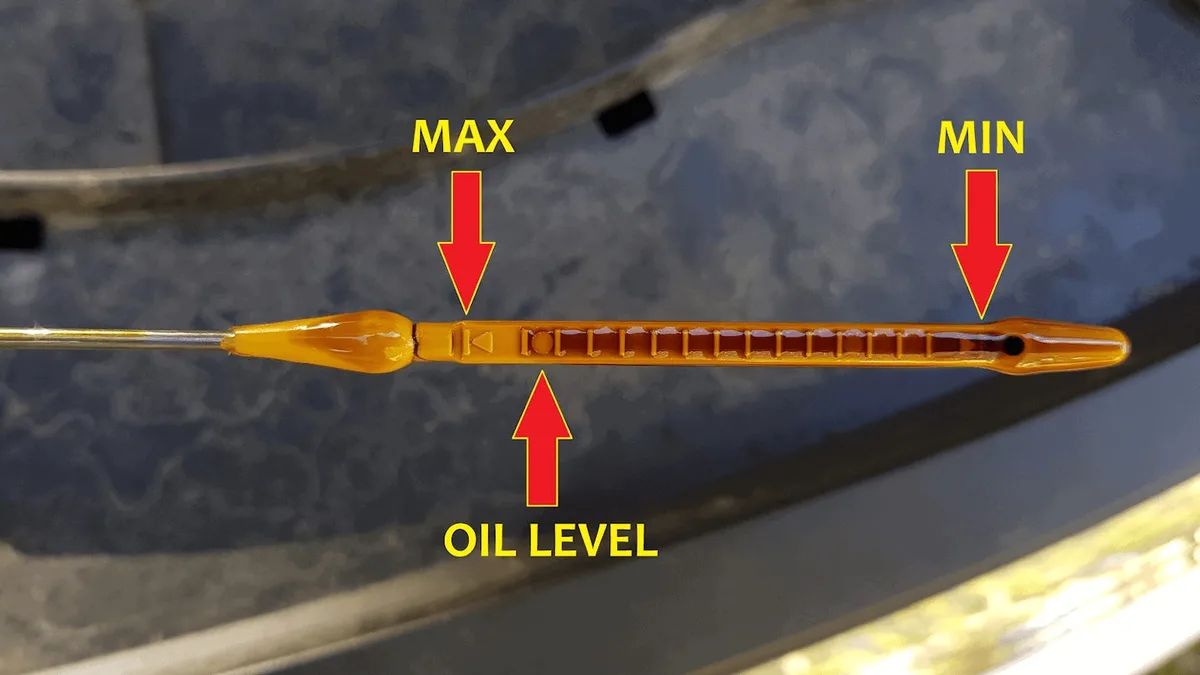
Per OEM service manuals, the spread runs from about 3 quarts on a 1.0-liter I3 to 7.5 quarts on a 6.4-liter V8. If you pour a flat 5 quarts into a 3.3-quart engine, you've overfilled by 1.7 quarts. That's well past the MAX mark on the dipstick.
The oil aerates under the crankshaft, foams through the PCV system, and leaks past your valve-cover gaskets. In a high-RPM small-displacement engine, the rotating assembly propellers through the fluid. You lose oil pressure in milliseconds.
On the flip side, underfilling a 6-quart V8 with just 4 quarts leaves your main bearings running on a thin film. Cam lobe wear accelerates. Top-end rings don't seat properly.
You'll see oil on the dipstick way below MIN within a few hundred miles.
The takeaway: never treat oil capacity as a one-size-fits-all number. The correct fill is always specific to your engine, your filter, and the viscosity you're using. That's where the three variables come in.
The Three Variables That Set Your Fill Number
Your final pour amount is the sum of three pieces. Get all three right and the dipstick sits between MIN and MAX. Miss one and you're over or under.
Engine displacement and wet capacity
Wet capacity means the total oil volume the engine holds at operating temperature with the dipstick at the MAX mark. Manufacturer specs list this number in quarts for US-market vehicles. A 2.5-liter I4 typically shows 4.6 quarts.
A 3.5-liter V6 shows 5.5. A 6.2-liter HEMI V8 shows 7. The bigger the crankcase, the more oil it holds.
New filter absorption
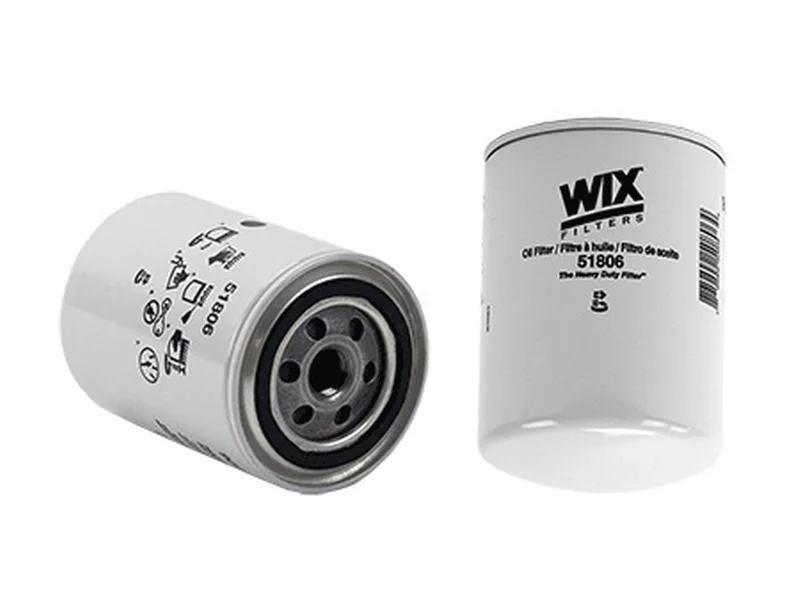
This is the variable most DIYers skip. A dry, new oil filter soaks up 0.3 to 0.5 quarts of oil before it's even in the system. Filter manufacturer spec sheets (Wix, Fram, Bosch, Mann-Filter) print this figure on the carton.
If your engine's wet capacity is 4.6 quarts and you install a new filter, you need to pour roughly 5.0 to 5.1 quarts total.
The filter steals the difference. Ignore it and your dipstick reads below MIN even though you poured the "correct" amount.
Viscosity grade and operating temperature
The SAE J300 standard, available at sae.org, classifies oil by its behavior at cold and hot temperatures. A 0W-20 flows thinner at startup than a 5W-30. Thinner oil spreads faster through the upper engine, so a few extra milliliters migrate into the valve cover before the crankcase level stabilizes.
In practice, the dipstick difference between a 0W-20 and a 10W-40 at the same pour volume is small, maybe 0.1 quart. But if you're sitting right at the edge of the MIN-to-MAX window, that 0.1 quart matters. For cold climates below 35 degrees Fahrenheit, OEMs specify the "0W" or "5W" leading number to ensure adequate flow at crank.
How to Find Your Exact Oil Capacity (With or Without the Manual)
The manual-and-spec-sheet route
Pull up your owner's manual. The PDF is free on every OEM's website. Look for "Engine Oil" or "Lubrication" under the maintenance section.
You'll see a spec box listing capacity in quarts, SAE viscosity grade, API service category, and whether a filter is included in that figure.
Per the API's certified-oil listing at api.org, the API SP and SN Plus marks confirm the oil meets the additive spec your engine needs. The capacity number in that box is your starting pour target before you adjust for filter absorption.
The dashboard-gauge route (no dipstick models)
Newer Toyota, Honda, and Subaru models (2020 and up) dropped the physical dipstick. They use an electronic oil-level sensor in the pan. Here's the procedure: start the engine, let it idle for 2 minutes, shut it off, then go to Settings > Maintenance > Oil Level on the infotainment screen.
The gauge shows a bar from MIN to MAX in percentage increments, not quarts. You still need the manual's capacity figure to know how many quarts to pour. The gauge just confirms you're in the window.
The "call the dealer or check the filler cap label" route
No manual in the glove box? The oil filler cap on some European models (VW, Mercedes, BMW) has the recommended SAE grade and sometimes the capacity printed on the plastic. If it's not there, call your local dealership's service department.
Give them your VIN. They pull the build sheet and read you the exact wet capacity in 30 seconds.
The oil filter part number on your last service invoice also shows the filter's dry-absorption figure. Add that to the engine's base capacity and you have your pour target.
The Pour, Wait, and Check Workflow

Pre-check: level ground, engine state, wait time
Park on flat ground. A two-degree slope reads the dipstick 0.3 quarts high or low. Start the engine and let it idle for 2 to 3 minutes so oil circulates to the upper passages.
Shut it off. Wait 5 to 10 minutes for the oil to drain back into the pan.
Pull the dipstick, wipe it with a shop rag, reinsert it fully, then pull it again. That's your baseline "before" reading.
Pour and filter soak compensation
If you just swapped the filter, add 0.5 quart to your engine's wet-capacity number. So a 4.6-quart engine gets a 5.1-quart pour. Pour slowly through the filler cap.
Stop about 0.5 quart shy of your target.
This avoids the overfill trap where you pour too much and can't easily pull it back out. You'll top off in the next step.
Verify on the dipstick or gauge, top off in 1/4-qt increments
Run the engine again for 2 minutes. Shut off. Wait 5 minutes.
Pull the dipstick. If you're below MIN, add oil in 0.25-quart increments.
Wait two minutes between adds so the level settles. Recheck after each 0.25 quart. Stop when the oil film hits just below the MAX mark.
For dashboard-gauge models, repeat the idle-and-check cycle via the infotainment screen. Record the date, mileage, total quarts poured, and filter brand in a notebook or your phone.
Overfill and Underfill: What Actually Damages the Engine
Overfilling isn't just "a little extra." On engines under 2.0 liters, the crankshaft spins at 7,000 RPM and acts like a propeller in the oil. If you're more than 0.5 quart above MAX, the churning aerates the fluid into foam.
The oil pump pulls air instead of liquid. You lose pressure in seconds. Bearings get a dry flash.
In extreme cases, liquid fills a cylinder and the piston can't reach top dead center because the fluid is incompressible. That's hydrolock. The connecting rod bends.
The engine is done.
Sustained overfill, say a full quart past MAX, pressurizes the PCV system. Oil forces past the crankshaft front seal and the valve-cover gaskets. You'll see blue smoke from the exhaust, oil weeping at the timing cover, and a misfire code as oil enters the combustion chambers.
Your catalytic converter gets coated. The check-engine light stays on until you fix the level.
Underfill is quieter but just as destructive. Run a V8 at 3 quarts instead of 6 and the main bearings spin on a half-mil film. At 3,000 RPM that film breaks.
Metal-on-metal contact starts. Cam lobes wear within 5,000 miles.
Top-end rings lose oil to the cylinders, burning it as smoke. You'll catch the low-oil warning light, but by then the bearing shells are already scored. The safety margin is tight.
The MIN-to-MAX gap on most dipsticks is only 0.5 to 1.0 quart.
Stay in that window. Check the level monthly and after any long highway trip. A 0.25-quart top-off between changes is normal.
A full quart missing is a sign of a leak or consumption issue you need to track down before the next oil change.
Capacity Cheat Sheet by Engine Displacement
Here's the quick-reference table that covers most US-market engines. These figures represent wet capacity with a new filter already seated.
| Displacement class | Typical wet capacity | Add for new dry filter |
|---|---|---|
| 1.0 to 1.5 L (I3 / I4) | 3.0 to 4.0 qt | +0.3 to 0.5 qt |
| 2.0 to 2.5 L (I4) | 4.0 to 5.0 qt | +0.4 to 0.5 qt |
| 3.0 to 3.5 L (V6) | 5.0 to 6.0 qt | +0.5 qt |
| 4.0 to 5.7 L (V8) | 6.0 to 7.0 qt | +0.5 qt |
| 6.2 L and up (V8) | 7.0 to 7.5 qt | +0.5 qt |
If your engine falls between two rows, pull the exact figure from your OEM manual. A 2.4-liter I4 in a compact sedan typically lists 4.3 quarts. A 3.6-liter V6 in a mid-size truck lists 5.7.
The table gives you the ballpark. The manual gives you the number to pour.
The "Add for new dry filter" column is the one most people skip. If you reuse the old filter, you don't add that amount. If you install a fresh filter, you do.
That 0.3-to-0.5-quart difference is the gap between a correct reading and a "wait, why is the dipstick low?" moment an hour later.
The MIN-to-MAX gap on most dipsticks is only 0.5 to 1.0 quart. That entire window is your working range. Land at the middle of that gap and you're in the sweet spot.
FAQs: The Questions Nobody Puts on the Dipstick
How much oil do I need if I'm only doing a top-off?
You don't need a set amount for a top-off. Add 0.25 quarts at a time. Wait two minutes for the level to settle.
Recheck. Repeat until the oil film sits just below MAX. Most top-offs between full changes total 0.5 to 1 quart.
Does synthetic vs. conventional change how much I pour?
No. The volume is identical regardless of oil type. What changes is the service interval, not the fill quantity.
Full synthetic maintains its viscosity for 10,000 to 15,000 miles. Conventional degrades closer to 5,000. Your pour target for a given engine stays the same either way.
My dipstick has no numbers, just MIN and MAX dots. How do I measure?
Each dot on a standard dipstick represents roughly 0.25 to 0.5 quarts of oil between them. Wipe the dipstick clean, reinsert it fully, pull it out, and read where the oil film lands between the two dots. At the lower dot you're at MIN.
At the upper dot you're at MAX. Aim for the middle.
Should I check oil cold or hot?
Wait 5 to 10 minutes after shutting off the engine. Checking while oil is still circulating hot gives a false low reading. Checking after it's been sitting for hours cold gives a false high reading.
The 5-to-10-minute warm-and-settled window is what OEMs specify in the manual.
I just did a full drain-and-fill. Why is the level still below MIN?
Your new filter absorbed 0.3 to 0.5 quarts of oil during the pour. If you only filled to the engine's base capacity without adding the filter soak amount, you're short. Top off in 0.25-quart increments.
Wait two minutes between adds. Recheck until you land in the MIN-to-MAX window.