Best Engine Oil For High Mileage Vehicles: Top Picks
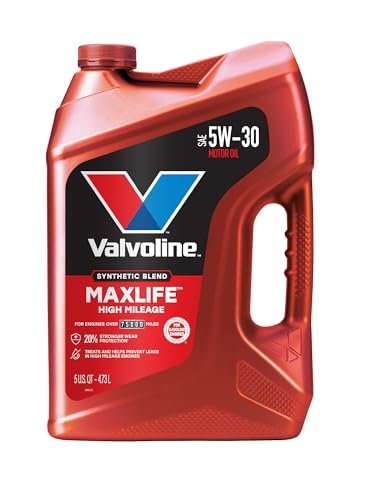
Valvoline MaxLife High Mileage 5W-30 is my top overall choice for compatible older engines that need extra seal care and wear protection.
Your car has passed 100,000 miles, but you still depend on it for work, school runs, road trips, and daily errands. You may notice small oil leaks, a lower oil level between changes, or a louder engine during cold starts. These signs can make choosing motor oil feel confusing. Regular oil may still work, but a high-mileage formula can offer extra help for an aging engine. I compared five popular products to find the best engine oil for high mileage vehicles. This guide covers their strengths, limits, and the type of driver who may benefit from each one.
🏆 Top 3 Products

Valvoline MaxLife High Mileage 5W-30 Synthetic Blend
It combines high-mileage engine protection, seal care, and everyday value in a popular synthetic blend.

Castrol EDGE High Mileage 5W-30 Full Synthetic
It is a strong choice for drivers who want full synthetic oil and high-mileage engine care.

Valvoline MaxLife High Mileage 10W-30 Synthetic Blend
It offers a high-mileage formula for engines that call for 10W-30 without requiring a full synthetic product.
Valvoline MaxLife High Mileage 5W-30 Review
Valvoline MaxLife High Mileage 5W-30 is my top pick in this group. It is a synthetic blend motor oil made for vehicles with higher mileage. Its formula focuses on the needs of older engines. These include wear, oil use, and possible seal leaks. The 5W-30 grade also suits many cars and light trucks that call for this oil weight. However, I would always check the owner’s manual before choosing it.
One key reason I like this oil is its focus on seal care. Older engines may have seals and gaskets that lose some flexibility over time. This can lead to small leaks or oil use. MaxLife aims to help care for these parts while also protecting engine surfaces. It does not repair broken seals or worn engine parts. Still, it can be a sensible choice for a healthy but aging engine that needs the right oil.
✅ Pros
- ✔ High-mileage formula made for aging engines.
- ✔ Helps care for engine seals and gaskets.
- ✔ Designed to help reduce oil leaks from aging seals.
- ✔ Helps limit engine wear during normal use.
- ✔ Synthetic blend offers a balance of cost and oil performance.
- ✔ 5W-30 grade fits many cars and light trucks.
- ✔ Can help support engines that use some oil as they age.
- ✔ Five-quart size suits many standard oil changes.
- ✔ Suitable for many daily drivers when the manual allows this grade.
- ✔ A practical option for drivers who want a dedicated high-mileage oil.
⚠️ Cons
- ✖ It is not a full synthetic motor oil.
- ✖ It cannot fix damaged seals or mechanical leaks.
- ✖ The 5W-30 grade may not suit engines that require another viscosity.
- ✖ It may not be the best choice for cars that require a specific newer oil approval unless the label confirms it.
- ✖ A five-quart bottle may not cover every vehicle’s oil capacity.
My Recommendation
I recommend Valvoline MaxLife High Mileage 5W-30 as the best overall option in this comparison for drivers whose vehicles call for SAE 5W-30. It offers a useful mix of high-mileage features, everyday engine protection, and practical value. I would consider it for an older sedan, family SUV, or light truck with a healthy engine that has crossed the 75,000-mile mark. It is also worth considering when an older engine begins to show mild oil use. However, do not treat it as a leak repair product. If oil drips onto the driveway, check the source before relying on a different oil. Also, match the required API and manufacturer standards in your owner’s manual. The best engine oil for high mileage vehicles is always the one that meets the engine maker’s requirements.
| Best For | Why |
|---|---|
| Older daily drivers | Its high-mileage formula focuses on the common needs of aging engines. |
| Cars that require 5W-30 | Its viscosity matches vehicles that specify this oil grade. |
| Drivers seeking seal care | Its formula is designed to help care for aging seals and gaskets. |
Valvoline MaxLife High Mileage 5W-20 Review

Valvoline MaxLife High Mileage 5W-20 brings the same high-mileage focus to engines that require a thinner oil grade. It is a synthetic blend motor oil for older cars and light trucks. Its formula aims to support engine protection and care for aging seals. This can make it worth a look if your vehicle has covered many miles but still runs well. The key point is that your engine must call for 5W-20.
Many newer and older American vehicles use 5W-20 motor oil. Some engines need this grade to support their designed oil flow and performance. A thicker oil is not always better for an older car. This MaxLife version gives drivers a high-mileage option without changing the required viscosity. I like that approach because it keeps the focus on proper oil choice rather than using a heavier grade to hide an engine problem.
✅ Pros
- ✔ Designed for vehicles with higher mileage.
- ✔ Uses a synthetic blend formula.
- ✔ Helps care for aging seals and gaskets.
- ✔ Aims to help reduce oil leaks from aging seals.
- ✔ Helps protect engine parts against normal wear.
- ✔ Offers a high-mileage choice for engines that require 5W-20.
- ✔ Useful for many compatible passenger cars and light trucks.
- ✔ Can support everyday driving and regular oil changes.
- ✔ Avoids the need to choose a thicker grade when the engine calls for 5W-20.
- ✔ Five-quart package is useful for many common oil changes.
⚠️ Cons
- ✖ It is not suitable for engines that require 5W-30 or 10W-30.
- ✖ It is a synthetic blend rather than a full synthetic.
- ✖ It cannot restore badly worn engine seals.
- ✖ It may not meet every vehicle maker’s specific oil approval.
- ✖ It does not remove the need to check oil levels between changes.
My Recommendation
I recommend this oil to owners of high-mileage vehicles that specifically require 5W-20. It is a sensible option for a compatible older sedan, compact SUV, or family vehicle. It gives you a high-mileage formula while keeping the correct viscosity. That matters because switching to a thicker oil without approval can affect oil flow and engine operation. If your car calls for 5W-20, this product deserves a place on your shortlist. If your manual calls for 5W-30, choose the matching MaxLife version instead. I would not pick motor oil based only on mileage or claims about leak reduction. Check the oil specification, service needs, and current engine condition first.
| Best For | Why |
|---|---|
| High-mileage cars requiring 5W-20 | It offers a high-mileage formula in the correct viscosity for these engines. |
| Older compact cars | It can suit compatible vehicles used for normal daily travel. |
| Drivers who want synthetic blend oil | It combines a synthetic blend base with high-mileage-focused features. |
STP High Mileage Oil Treatment Review

STP High Mileage Oil Treatment + Stop Leak is different from the other products in this review. It is an oil treatment, not a replacement for regular motor oil. The 15-fluid-ounce product is made for older vehicles and is marketed for cars with more than 75,000 miles. Its purpose is to support oil performance and help care for aging seals and gaskets. Drivers should use it only as directed on the product label.
This treatment may appeal to owners who notice minor oil seepage or want an added high-mileage product. However, I would be careful about expecting too much from it. An oil treatment cannot repair a cracked engine part, a failed gasket, or a damaged seal. It also cannot replace an oil change. You must check whether the product is compatible with your vehicle and whether adding it will affect the oil’s required specification. For most drivers, the correct engine oil should remain the main priority.
✅ Pros
- ✔ Made with high-mileage vehicles in mind.
- ✔ Designed to help care for aging seals and gaskets.
- ✔ Marketed to help reduce minor oil leaks.
- ✔ May appeal to owners of vehicles with more than 75,000 miles.
- ✔ Can be considered as an additional product when the label and vehicle maker allow it.
- ✔ Small 15-fluid-ounce container is easy to store.
- ✔ Can be added to compatible engine oil as directed.
- ✔ Offers an option for drivers who want to explore an oil treatment.
- ✔ Does not require replacing the engine oil with a separate treatment formula.
- ✔ Provides a different approach from standard high-mileage motor oil.
⚠️ Cons
- ✖ It is not a complete motor oil and cannot replace an oil change.
- ✖ It cannot repair broken seals, cracked parts, or damaged gaskets.
- ✖ It may not be suitable for every engine or oil formulation.
- ✖ Adding treatment can change the oil’s total volume and formulation.
- ✖ It requires careful attention to the label’s dosage instructions.
- ✖ It is not a substitute for diagnosing an oil leak.
- ✖ Some drivers may get better value by choosing a suitable high-mileage motor oil instead.
My Recommendation
I would treat STP High Mileage Oil Treatment as an optional product, not my first choice when shopping for the best engine oil for high mileage vehicles. It may interest drivers who want an additional treatment for an older engine with mild seal-related seepage. Still, I would first inspect the engine, find the leak source, and select a motor oil that meets the owner’s manual. Before adding this product, check the instructions and confirm that the treatment is suitable for your vehicle. Never exceed the recommended oil level. If your car loses oil quickly, produces blue smoke, or leaves large drops under the engine, seek a proper diagnosis instead of relying on an additive.
| Best For | Why |
|---|---|
| Owners considering an oil treatment | It offers a separate high-mileage treatment option when compatible with the engine. |
| Vehicles with mild seal seepage | Its formula is marketed to help care for aging seals and reduce minor leaks. |
| Drivers who follow product instructions | Correct dosage and compatibility checks are important before adding any treatment. |
Valvoline MaxLife High Mileage 10W-30 Review
Valvoline MaxLife High Mileage 10W-30 is another synthetic blend option for older engines. It offers the same general high-mileage focus as the 5W-30 version but uses a different viscosity grade. Some cars, SUVs, and light trucks require 10W-30. For those vehicles, this product can be a useful match. It is designed to support engine protection and care for seals in vehicles with higher mileage.
I like this product for drivers who need 10W-30 and want a dedicated high-mileage oil. The thicker operating viscosity compared with 5W-30 does not make it automatically better for every older engine. The correct choice depends on the engine design and the conditions listed in the owner’s manual. This is especially important in modern engines with tight oil clearances. If your manual allows 10W-30, MaxLife offers a practical option for regular driving and maintenance.
✅ Pros
- ✔ Designed for engines with higher mileage.
- ✔ Synthetic blend formula supports everyday engine protection.
- ✔ Helps care for aging seals and gaskets.
- ✔ Aims to help reduce leaks caused by aging seals.
- ✔ Helps limit normal engine wear.
- ✔ Provides a 10W-30 option for compatible vehicles.
- ✔ Useful for some older cars and light trucks.
- ✔ Can support regular driving and routine maintenance.
- ✔ Offers a dedicated high-mileage formula without requiring full synthetic oil.
- ✔ Five-quart bottle suits many standard oil changes.
⚠️ Cons
- ✖ Not suitable for engines that require 5W-20 or 5W-30 unless the manufacturer allows 10W-30.
- ✖ It is not a full synthetic motor oil.
- ✖ It cannot repair serious oil leaks or worn engine parts.
- ✖ May not be ideal for vehicles with specific oil approval requirements unless the label confirms compatibility.
- ✖ A thicker viscosity does not guarantee lower oil consumption.
My Recommendation
I recommend Valvoline MaxLife 10W-30 for owners whose vehicles call for this specific grade. It is a practical choice for an older vehicle that needs a high-mileage synthetic blend. I would consider it for compatible cars and light trucks that still run well but need regular maintenance. Its seal-care focus is useful when aging seals are a concern, although it cannot fix a mechanical fault. Check your manual before buying it. If the manual recommends 5W-30, do not switch to 10W-30 just because the vehicle has crossed 100,000 miles. The best engine oil for high mileage vehicles must still match the engine maker’s specifications.
| Best For | Why |
|---|---|
| Older vehicles requiring 10W-30 | It offers a high-mileage formula in the specified viscosity grade. |
| Compatible light trucks | It can support regular engine maintenance in trucks that call for this oil. |
| Budget-minded high-mileage owners | Its synthetic blend formula offers another option besides full synthetic oil. |
Castrol EDGE High Mileage 5W-30 Review
Castrol EDGE High Mileage 5W-30 is the full synthetic choice in this comparison. It is designed for older engines and drivers who want a full synthetic oil. The formula focuses on engine protection and high-mileage needs. It also targets the common concerns that come with age, including wear and possible oil leaks. For a compatible vehicle that calls for 5W-30, it deserves serious consideration.
One reason to consider this product is its full synthetic base. Full synthetic oil can offer strong performance across a range of temperatures. This can matter when your car faces cold starts, summer heat, and long highway drives. However, the oil grade and required specifications still matter more than the words full synthetic on the bottle. I would choose Castrol EDGE when the vehicle maker allows this oil and I want a full synthetic high-mileage option. It is not a repair product, and it cannot reverse engine damage.
✅ Pros
- ✔ Full synthetic motor oil.
- ✔ Designed for high-mileage engines.
- ✔ Offers a 5W-30 viscosity for compatible vehicles.
- ✔ Helps protect engine parts against wear.
- ✔ Designed to help care for aging seals.
- ✔ Aims to help reduce oil leaks from worn seals.
- ✔ Can suit daily commuting and regular highway use.
- ✔ Full synthetic oil offers useful temperature performance.
- ✔ A good option for drivers who prefer synthetic oil.
- ✔ Suitable for many compatible older passenger cars and light trucks.
⚠️ Cons
- ✖ It may cost more than a synthetic blend oil.
- ✖ It is not suitable for engines that require another viscosity grade.
- ✖ It cannot repair damaged seals or stop every type of oil leak.
- ✖ Full synthetic does not mean every vehicle can use it.
- ✖ It may be unnecessary for drivers whose vehicle manual allows a less costly oil.
My Recommendation
Castrol EDGE High Mileage 5W-30 is my preferred choice for drivers who want a full synthetic oil for a compatible older engine. I would consider it for a family SUV, sedan, or light truck that requires 5W-30 and meets the product’s stated specifications. It is especially appealing to drivers who deal with changing weather and regular highway trips. The full synthetic formula is a useful feature, but it does not automatically make the product better for every vehicle. If your manual calls for another viscosity or a specific manufacturer approval, follow that requirement. I would also compare the price with Valvoline MaxLife before making a final choice. Both products have different strengths, so the right pick depends on your engine and budget.
| Best For | Why |
|---|---|
| Drivers who prefer full synthetic oil | It provides a full synthetic option for compatible high-mileage engines. |
| High-mileage vehicles requiring 5W-30 | Its viscosity suits engines that specify this oil grade. |
| Regular highway drivers | Its synthetic formulation offers useful protection during normal long-distance driving. |
Final Verdict: Which Should You Buy?
After comparing all five products, I choose Valvoline MaxLife High Mileage 5W-30 as the best overall engine oil for compatible older vehicles. It combines a synthetic blend formula with a focus on seal care and everyday engine protection. Castrol EDGE High Mileage 5W-30 is my preferred alternative for drivers who want full synthetic oil. If your engine requires 5W-20 or 10W-30, choose the matching Valvoline version instead. STP Oil Treatment is an optional extra, not a replacement for motor oil or engine repairs.
The best engine oil for high mileage vehicles must match your owner’s manual, engine condition, and driving needs. Check your oil level, use the right filter, and follow the service schedule. These simple steps can help keep an older car running well.
FAQs Of best engine oil for high mileage vehicles
Q What Is The Best Engine Oil For High Mileage Vehicles?
Q Is 5W-30 Good For A Car With Over 100,000 Miles?
Q Does High Mileage Oil Reduce Oil Consumption?
Q Should I Use Synthetic Or Synthetic Blend Oil In An Older Car?
Q Can High Mileage Oil Fix An Engine Leak?