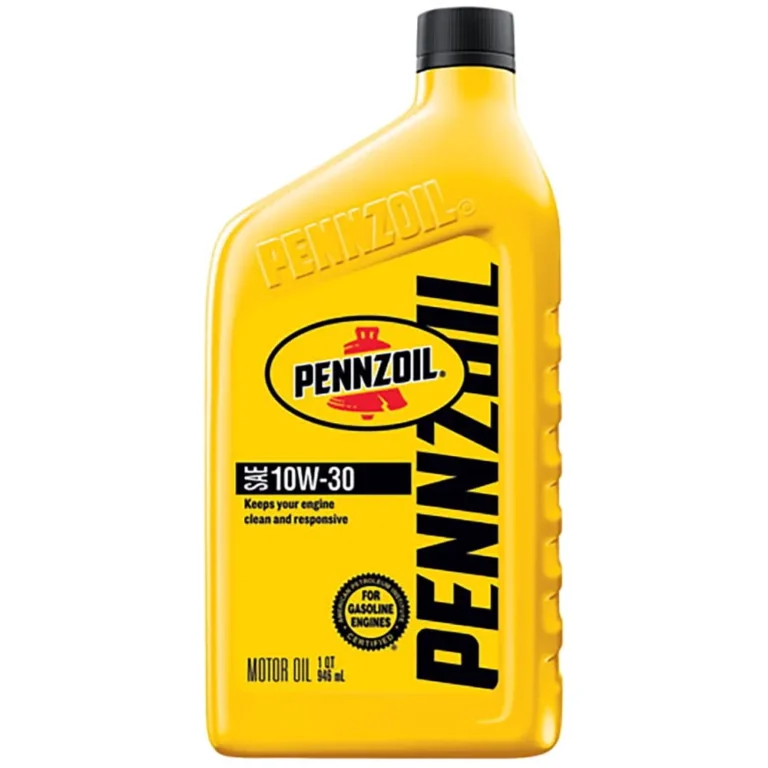
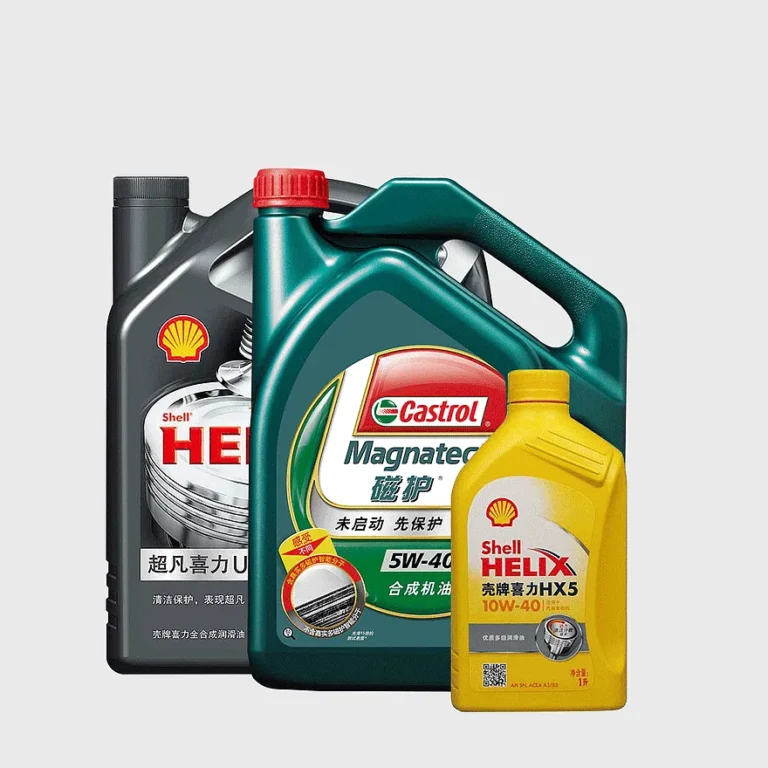
To refill engine oil, park on level ground, switch off the engine, let it cool as needed, check the oil level, and add the correct oil in small amounts through the engine’s oil filler cap. Recheck the dipstick after each addition and stop when the level reaches the recommended range.
If you drive in the United States, you may notice that your car needs an oil top-up between scheduled oil changes. Long highway trips, hot summer traffic in Texas, cold winter starts in Minnesota, and daily stop-and-go driving can all make regular checks useful. Before adding oil, check your owner’s manual and confirm that the engine actually needs more.
Refilling engine oil is a simple maintenance task for many gasoline and diesel cars, trucks, and SUVs. The key is to use the correct oil specification, work on level ground, and add oil slowly. Too little oil can leave engine parts without proper lubrication, while too much can also cause serious problems.
This guide explains how to check your oil, select the right motor oil, refill the engine, and confirm that the level is correct. It also covers common mistakes, electronic oil-level systems, warning lights, and situations where adding oil is not enough to solve the problem.
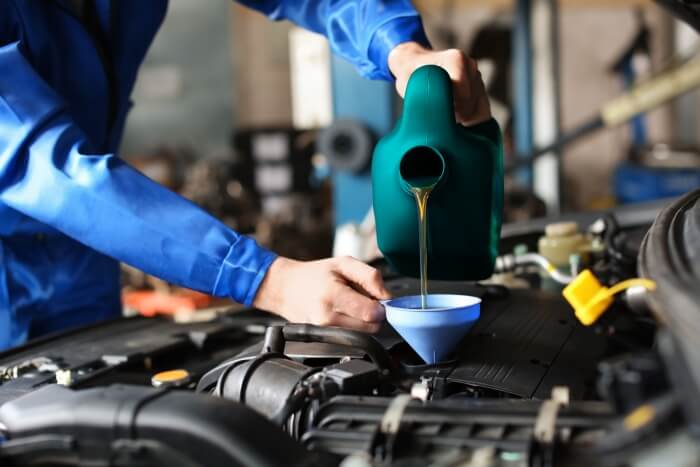
Source: shutterstock.com
What Does It Mean to Refill Engine Oil?
Refilling engine oil usually means adding a small amount of fresh motor oil to bring the engine’s oil level back into its recommended range. Drivers also call this topping off engine oil. It is different from an oil change, which involves draining used oil and replacing it with fresh oil, usually along with a new oil filter.
Engine oil forms a protective film between moving parts. It also helps carry heat away, reduces friction, suspends some contaminants, and supports the operation of systems designed around engine lubrication. The oil pump moves oil through the engine while it runs, so the engine needs an adequate supply of the correct oil.
Some oil may be consumed during normal operation, depending on the engine design, mileage, driving conditions, and maintenance history. Leaks can also lower the level. A top-up may restore the correct level, but it does not explain why oil was lost.
Source: smart.dhgate.com
Topping off
Adds enough compatible oil to bring a low level back into the permitted range without draining the existing oil.
Changing the oil
Replaces the old engine oil and generally includes replacing the oil filter according to the manufacturer’s service schedule.
Adding oil after an oil change
May be necessary if the final level is low after the correct refill procedure, but the total amount must follow the vehicle’s specified capacity and checking method.
What You Need Before Refilling Engine Oil
Gather your supplies before opening the oil filler cap. Having the right oil and a clean way to pour it helps prevent spills, contamination, and mistakes. You do not need a full mechanic’s tool kit for a routine top-up on a vehicle with an accessible filler opening.
Start with the owner’s manual or the manufacturer’s official maintenance information. The oil cap may show a viscosity grade, such as SAE 0W-20 or SAE 5W-30, but the cap alone may not list every required performance specification. Confirm the complete requirement for your exact engine.
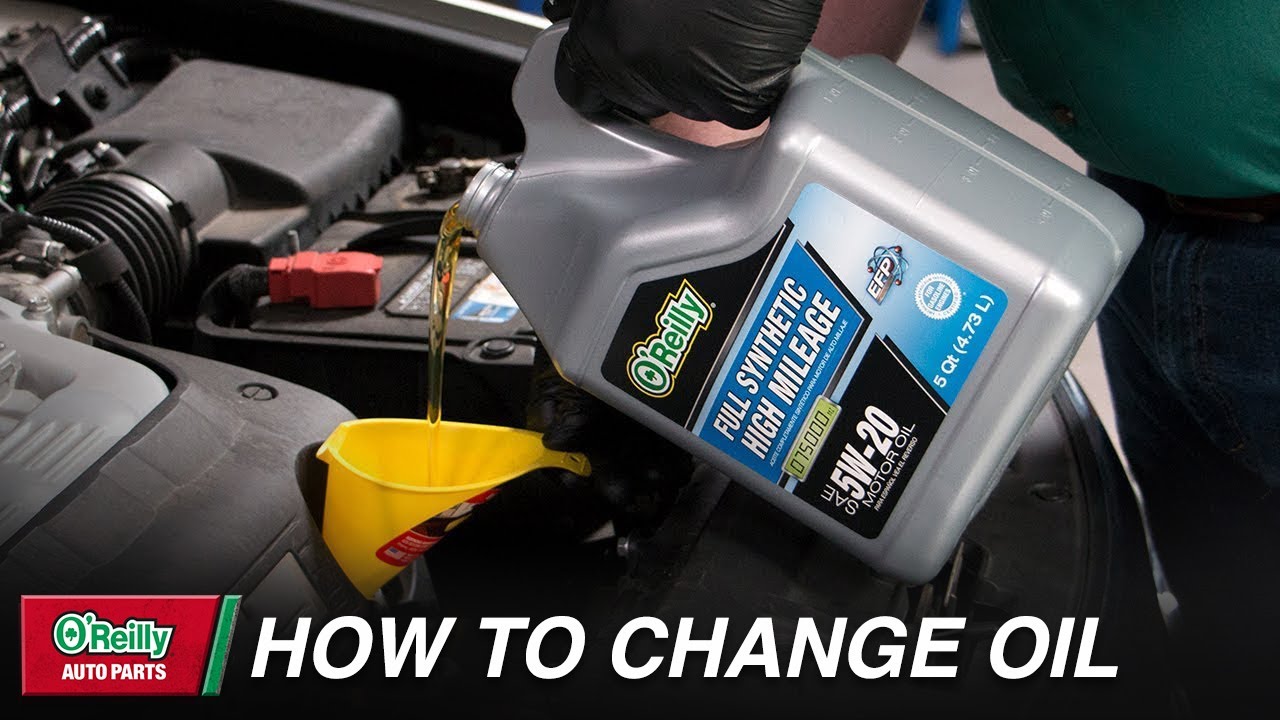
Source: YouTube, O’Reilly Auto Parts
Correct engine oil
Choose the viscosity grade and required API, ILSAC, ACEA, or manufacturer-specific approval listed for your vehicle. Use only specifications that apply to your engine and market.
Clean funnel
A clean funnel makes pouring easier and helps keep dirt away from the filler opening. A funnel is helpful but not essential if the container has a suitable pouring spout.
Clean cloth or paper towel
Use it to wipe the dipstick and clean small spills around the filler opening.
Owner’s manual
Use it to confirm the checking procedure, oil type, oil capacity, and any special requirements for your engine.
Protective gloves
Gloves can keep oil off your skin. Avoid contact with hot engine parts, and wash exposed skin after handling used or fresh oil.
Choose the Right Engine Oil
The correct oil is not determined by brand alone. You need the right viscosity and the required performance rating or manufacturer approval. Viscosity describes how readily the oil flows at different temperatures, while performance specifications address other properties that matter to engine protection and emissions systems.
For example, SAE 0W-20 and SAE 5W-30 are different viscosity grades. Neither is automatically better for every vehicle. A modern engine designed for 0W-20 may require that grade for proper operation, while another engine may specify a different oil.
Synthetic, synthetic-blend, and conventional oils can all be suitable in different applications when they meet the manufacturer’s requirements. Do not switch to a thicker or thinner oil simply because the car has high mileage, the weather is hot, or a friend recommends it. Follow the manual unless the manufacturer provides an approved alternative.
Check the viscosity
Find the SAE grade specified for your engine and the temperatures in which you drive.
Check the performance rating
Look for the required service category, industry standard, or vehicle-maker approval on the container.
Check the engine type
Gasoline, diesel, turbocharged, hybrid, and specialty engines may have different oil requirements. Do not assume their oils are interchangeable.
How Much Oil Should You Buy?
For a small top-up, a container that holds one quart may be enough, but the amount your engine needs depends on the dipstick reading and the vehicle’s specifications. A one-quart bottle does not mean you should pour in the entire bottle.
If you are carrying out a full oil change, use the service-fill capacity specified by the manufacturer. That amount may differ from the engine’s total dry capacity, which can include oil passages and components that do not drain during an ordinary oil change.
For a low dipstick reading
Add a small amount, then check the level again before deciding whether more is needed.
For an oil change
Use the specified service capacity as a starting reference, then verify the final level using the prescribed procedure.
How to Refill Engine Oil Step by Step
The safest way to refill engine oil is to check the current level first, add a little oil at a time, and confirm the result before driving. The exact checking procedure varies by vehicle, so follow the owner’s manual when its instructions differ from this general guide.
For a conventional dipstick-equipped car, the steps below cover a routine top-up. If your vehicle uses an electronic oil-level system, follow the dashboard or infotainment instructions instead of searching for a dipstick that may not exist.
Source: www.youtube.com
Step 1: Park on level ground
Move the vehicle onto a flat, stable surface away from traffic. Set the parking brake and switch off the engine. Do not work beneath a vehicle supported only by a jack.
Step 2: Let the oil settle
Follow the manual’s temperature and waiting-time instructions. Some vehicles require a cold engine, while others specify checking after warming the engine and waiting a set period after shutdown.
Step 3: Find the oil dipstick
Open the hood and locate the engine oil dipstick if fitted. Its handle is often brightly colored, but its appearance varies by model. Do not confuse it with a transmission dipstick or another service point.
Step 4: Check the current oil level
Pull out the dipstick, wipe it clean, insert it fully again, and withdraw it to read the oil mark. The oil should normally fall between the minimum and maximum marks when checked according to the manual.
Step 5: Locate the oil filler cap
Find the cap marked with an oil-can symbol or an engine-oil label. Confirm that it is the engine oil filler, not the coolant reservoir or another fluid opening.
Step 6: Add a small amount of oil
Unscrew the filler cap and place a clean funnel in the opening if needed. Pour in a modest amount of the correct oil, taking care not to spill it onto belts, electrical parts, exhaust components, or the ground.
Step 7: Wait and recheck
Allow the added oil to drain into the engine’s sump, then check the level again using the manual’s procedure. Repeat with smaller additions if the level remains low.
Step 8: Secure the filler cap
Once the level is within the permitted range, reinstall the filler cap securely. Return the dipstick fully to its tube and remove any tools or cloths from the engine bay.
Step 9: Inspect the area
Wipe up spilled oil and look for obvious fresh leaks. If the oil pressure warning light is on, a major leak is present, or the engine makes unusual noises, do not continue driving until the cause is addressed.
How Much Oil Should You Add at a Time?
There is no single amount that fits every engine. If the dipstick is slightly below the minimum mark, begin with a small addition, such as about one-quarter of a quart, when appropriate for your vehicle. Let the oil settle and check again before adding more.
The distance between the minimum and maximum marks often represents a defined quantity, but that quantity is not universal. Check the manual for your model rather than assuming the marks always equal one quart. If the level is far below the minimum mark, use the specified capacity and checking method to avoid guessing.
Think of the dipstick as a measuring guide rather than a fuel gauge. A low reading tells you that the level needs attention, but it does not tell you exactly how much oil to pour in without additional vehicle-specific information.
Add gradually
Use small additions and recheck between them instead of pouring in a large quantity at once.
Stop at the correct range
Aim for a level within the manufacturer’s permitted range, not above the maximum mark.
Never guess the total
If the dipstick is dry or the oil level cannot be measured reliably, consult the manual or a qualified mechanic before adding a large amount.
How to Refill Oil Without a Dipstick
Some newer vehicles use an electronic oil-level sensor and display the reading on the instrument panel or infotainment screen. The system may require the engine to be at a specified temperature, the vehicle to be level, and the engine to be switched off for a set period.
Open the vehicle’s maintenance menu or consult the owner’s manual to find the correct procedure. Do not assume that a dashboard oil-pressure warning is an oil-level measurement. Those warnings serve different purposes, and an oil pressure warning can signal an urgent lubrication problem even when the oil level appears normal.
Follow the display instructions
Meet the specified conditions before taking an electronic oil-level reading.
Use the approved top-up method
Add the recommended oil in small amounts and repeat the electronic measurement as instructed.
How to Know When the Engine Oil Level Is Correct
The oil level is correct when it falls within the range specified by the manufacturer under the prescribed checking conditions. On a typical dipstick, this means the oil mark lies between the minimum and maximum indicators. The safest target is the permitted range, not a level that exceeds the upper mark.
Oil can cling to the dipstick tube or spread across the measuring surface, which may make the reading look unclear. Wipe the dipstick clean and repeat the measurement if necessary. Read both sides if the manual recommends it, and use the consistent, clear reading rather than a smear above the actual oil mark.
After topping off, check that the filler cap is secure and the dipstick is fully seated. Look around the filler opening for spills and check the ground beneath the vehicle if you suspect a leak. A correct reading does not guarantee that the engine has no mechanical problem, but it confirms that the measured oil level is within the allowed range.
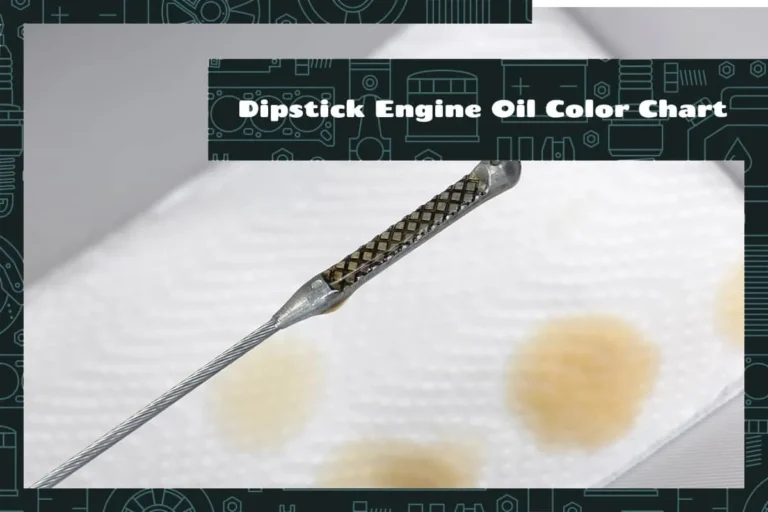
Source: YouTube, Ricky Sanders
Below the minimum mark
Add the correct oil gradually, then recheck. If the level is very low or the dipstick is dry, investigate possible oil loss and follow the manual before driving.
Between the marks
The level is generally within the permitted range. Add oil only if the manufacturer’s procedure or reading indicates that more is needed.
Above the maximum mark
Do not add more oil. If the engine is overfilled, arrange to have the excess removed and investigate any unusual reading or recent service error.
Example: Estimating a Small Top-Up
Suppose your owner’s manual states that the space between the dipstick’s minimum and maximum marks represents one quart. If the level is halfway between those marks and the reading procedure is correct, the engine may need roughly half a quart to reach the upper mark.
This is a hypothetical example, not a universal dipstick measurement. Your vehicle may use a different quantity between the marks, and aiming for the upper mark is not always necessary. Check the exact specification before using this calculation.
Confirm the mark interval
Use the vehicle manual to find the quantity represented by the minimum-to-maximum range.
Treat estimates as estimates
Add a small amount, wait, and verify the actual reading before deciding whether another addition is needed.
Common Engine Oil Refilling Mistakes to Avoid
Most top-up problems happen when a driver uses the wrong oil, adds too much, or skips the level check. A careful approach can prevent these errors. If you are unsure about the correct oil or the amount needed, pause and verify the information before opening the container.
Source: dreamstime.com
Using the wrong viscosity
An oil that looks suitable on the shelf may not meet your engine’s needs. Check the owner’s manual for the required grade and performance specification.
Overfilling the engine
Excess oil can be whipped into foam by rotating engine parts or contribute to pressure and emissions-system problems, depending on the engine and the degree of overfill. Correct an overfill promptly.
Checking on a slope
An uneven parking surface can distort the reading. Move to level ground before measuring.
Adding oil while the engine is running
Switch the engine off before removing the filler cap or measuring the oil. Moving parts and hot components create avoidable hazards.
Confusing oil pressure with oil level
A pressure warning may indicate that oil is not circulating correctly. Adding oil is not a substitute for diagnosing a pressure problem.
Ignoring repeated oil loss
A top-up may restore the level temporarily, but recurring loss can point to a leak, internal oil consumption, or another mechanical issue.
Leaving the cap loose
A loose or missing filler cap can allow oil to escape and may cause oil to spread around the engine bay. Reinstall it securely after the refill.
What If You Accidentally Add Too Much Oil?
If the level rises above the maximum mark, do not assume the engine will safely burn off the extra oil. The risk depends on how much was added and the engine’s design, but a significant overfill can cause damage.
Switch off the engine if you have not started it yet. Arrange for the excess to be removed through the correct service procedure. A mechanic can measure and correct the level if you do not have suitable equipment or are unsure how much oil is present.
If you have already driven with an overfilled engine and notice smoke, unusual noises, warning lights, or poor running, stop in a safe place and seek professional help. Do not continue driving to see whether the symptoms disappear.
Avoid starting the engine when a major overfill is known
Correct the level first, especially when a large quantity was added or the dipstick is clearly above the maximum mark.
Do not drain oil onto the ground
Use suitable service equipment or have a repair shop remove the excess. Collect and dispose of the oil properly.
What to Do When the Oil Level Keeps Dropping
If your engine repeatedly needs more oil, treat the top-up as a temporary measure while you look for the cause. Some engines consume more oil than others, but the acceptable rate depends on the specific engine and the manufacturer’s guidance. There is no single normal consumption rate that applies to every car.
Start by recording the odometer reading and the amount of oil added. Check the level under consistent conditions and look for visible signs of leakage. This information can help a mechanic determine whether the engine is leaking oil, consuming it internally, or showing an inaccurate level reading.
Source: addinol.de
Look for visible leaks
Check the ground where the car is parked and look for fresh oil around accessible engine areas without touching hot or moving components. A clean engine bay may make a leak easier for a technician to trace.
Watch for blue or blue-gray exhaust smoke
This can indicate that engine oil is entering the combustion process, although smoke color alone does not confirm the cause.
Check for unusual oil appearance
Milky or creamy oil may indicate contamination, though small amounts of condensation under some conditions can complicate the interpretation. If the dipstick shows substantial milky contamination or the coolant level is also dropping, stop driving and seek diagnosis.
Track oil use
Record how much oil you add and how far you drive between checks. Follow the manufacturer’s instructions for any oil-consumption test.
When Is It Unsafe to Keep Driving?
The oil pressure warning light is an urgent signal. If it stays on while the engine is running, pull over safely, shut off the engine, and consult the owner’s manual or roadside assistance. Do not keep driving simply because the dipstick shows an acceptable level.
A low oil level can sometimes be corrected with the specified oil, but low oil pressure may have another cause, including a lubrication-system fault. If the warning remains after a proper level check, professional diagnosis is necessary.
Stop driving and arrange assistance if the engine makes loud knocking or grinding sounds, loses oil rapidly, produces heavy smoke, or shows signs of severe overheating. A tow can cost less than repairing an engine damaged by continued operation.
Oil pressure warning
Shut off the engine as soon as it is safe. Do not restart it to test whether the warning disappears.
Major leak or rapid oil loss
Avoid driving until the leak is assessed and the engine can be operated safely.
Unusual engine noise
Stop the engine and seek help rather than relying on another top-up to solve the problem.
Can You Mix Different Engine Oils When Topping Off?
Different engine oils can sometimes be mixed for a necessary top-up, but compatibility should not be assumed. The safest choice is to use the same oil type, viscosity grade, and performance specification already in the engine. If that oil is unavailable, check the vehicle manufacturer’s approved alternatives.
The same brand is not always essential. What matters most is that the oil meets the required specifications for your engine. Two oils that share a viscosity grade may still differ in performance approvals or intended applications.
If the oil level is dangerously low and you cannot obtain the exact product, consult the owner’s manual or roadside assistance about an approved alternative. Do not continue operating an engine with inadequate lubrication merely to avoid mixing compatible oils.
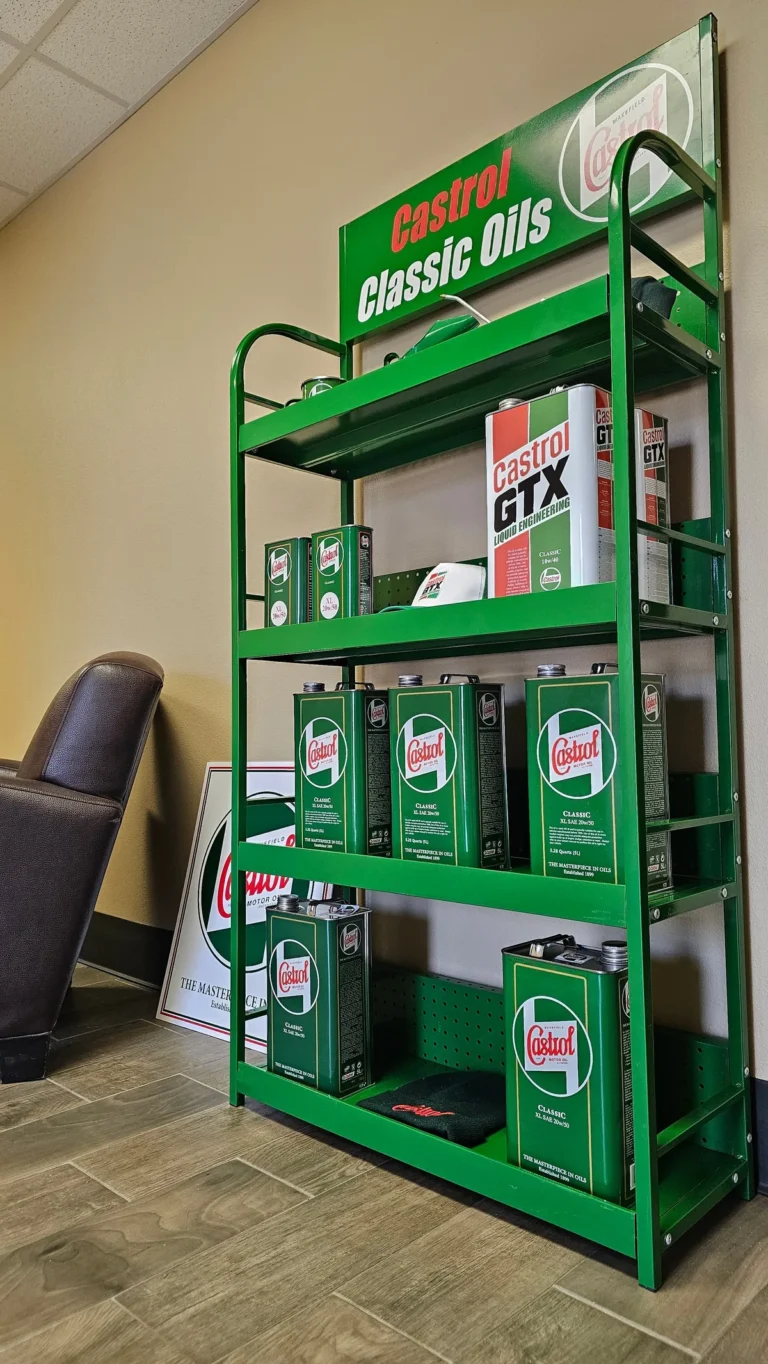
Source: vecteezy.com
Same specification
This is generally the simplest option for topping off because it matches the engine’s stated requirements.
Different brand, same required specification
It may be suitable when the new oil meets all applicable requirements, even if the brand differs.
Different viscosity or approval
Use only if the manufacturer permits it for the engine and operating conditions. Do not assume that all oils can be mixed without consequences.
How Often Should You Check and Refill Engine Oil?
Check your engine oil at the interval stated in your owner’s manual and more often if the vehicle has a history of oil consumption or leakage. Some drivers check before long road trips, while others include an oil-level check in their regular monthly vehicle inspection. The right interval depends on the engine, driving conditions, and manufacturer’s guidance.
A scheduled oil change does not remove the need to monitor the level between services. The oil can become low before the next scheduled change, particularly if the engine consumes oil or develops a leak. Checking the level helps you notice changes before they become severe.
If your vehicle has an oil-life monitor, remember that it generally estimates when an oil change is due. It does not necessarily measure how much oil remains in the engine. Use the separate oil-level checking procedure when your vehicle requires one.
Source: grandcity.com
Before a long road trip
Check the level and look for signs of leaks before extended highway driving.
When a warning appears
Identify whether the message refers to oil level, oil pressure, or scheduled maintenance. Follow the appropriate instructions.
After a recent service
Confirm the level using the specified procedure if you suspect the refill was incomplete or the vehicle reports a low level.
When oil consumption is known
Check at the interval recommended by the manufacturer or repair technician and record any top-ups.
Does Hot Weather Mean You Need More Oil?
Hot weather does not automatically mean an engine needs a different oil or a larger quantity. The correct oil depends on the manufacturer’s specifications and the operating conditions for which the engine was designed.
Driving through summer heat in Arizona or sitting in heavy traffic in Florida may increase the demands on an engine, but changing viscosity without checking the manual is not the right response. Maintain the specified level, follow the service schedule, and investigate unusual oil loss.
Use the approved grade
Follow the oil specifications for your engine and climate rather than choosing oil based on temperature alone.
Monitor unusual changes
If consumption rises during a change in driving conditions, record the pattern and ask a mechanic whether further checks are needed.
Frequently Asked Questions
Q
Can I refill engine oil when the engine is hot?
You can add engine oil after the engine has been switched off, but you must follow the manufacturer’s checking procedure and avoid hot components. Some vehicles specify checking the level after the engine reaches operating temperature and then sits for a set period. Others require a cold-engine check.
Never remove the oil filler cap or reach into the engine bay while the engine is running. Hot oil and engine components can cause burns, so wait as directed by the manual and use suitable care.
Q
Can I add engine oil without changing the old oil?
Yes. Topping off is appropriate when the existing oil is still within its service interval and the level is low. Add the correct oil to restore the level, then continue following the manufacturer’s maintenance schedule.
However, adding fresh oil does not remove accumulated contaminants or replace the need for a scheduled oil change. If the oil is severely contaminated, the service interval has passed, or a mechanical fault is suspected, a top-up alone is not enough.
Q
How long should I wait after adding engine oil before checking the dipstick?
Wait long enough for the added oil to drain into the sump, then use the waiting period specified in the owner’s manual. The required time varies by vehicle and engine design.
If the reading is unclear, wipe the dipstick, insert it fully, and check again. Repeated, consistent readings are more useful than acting on a single oil smear.
Q
What happens if I drive with low engine oil?
A low oil level can reduce the supply available to the lubrication system and may lead to increased friction, overheating, or serious engine damage. The risk depends on how low the level is, the engine design, and the driving conditions.
If the oil pressure warning light stays on while the engine is running, stop safely and switch off the engine. Check the level only when it is safe to do so, and arrange professional help if the warning persists or the cause is unclear.
Q
Can I use a different brand of engine oil for a top-up?
A different brand may be suitable if the oil meets the exact viscosity grade, performance specifications, and manufacturer approvals required for your vehicle. Matching the brand is less important than meeting the engine’s requirements.
If you are unsure whether the oils are compatible, consult the owner’s manual or the vehicle manufacturer’s service information before mixing them.
Q
What should I do if the engine oil dipstick is dry?
A dry dipstick may indicate that the oil level is extremely low, but first confirm that you used the correct checking procedure and inserted the dipstick fully. Park on level ground and repeat the check according to the manual.
If the dipstick remains dry, do not guess how much oil to add. Consult the specified oil capacity and top-up instructions or contact a mechanic or roadside assistance. If an oil pressure warning has appeared or the engine is making unusual noises, do not restart it.
Q
Is it safe to add a whole quart of engine oil at once?
Only add a whole quart if the vehicle-specific oil-level reading and instructions show that this amount is appropriate. Some engines need less than a quart to move from the minimum mark to the maximum mark.
For a routine top-up, adding a smaller amount and rechecking is safer than pouring in the entire container. Stop when the level reaches the permitted range.
Q
Does topping off engine oil reset the oil change reminder?
Usually, adding oil does not automatically reset the scheduled oil change reminder. Many vehicles calculate the reminder from time, mileage, or an oil-life monitoring system.
Reset the reminder only after completing the maintenance that the system tracks and following the manufacturer’s reset procedure. Adding oil alone does not mean the engine oil has been fully changed.
✦ Wrapping Up
Conclusion
Learning how to refill engine oil can help you maintain your car and catch low oil levels before they become a serious problem. Park on level ground, switch off the engine, follow the correct checking procedure, and use the oil grade and performance specifications listed in your owner’s manual.
Add oil gradually and check the level after each addition. Keep the reading within the permitted range, secure the filler cap, and clean up any spills. Never assume that more oil is better, because overfilling can create its own problems.
If the level drops repeatedly, the dipstick stays dry, or an oil pressure warning remains on, do not rely on repeated top-ups alone. Record what you observe and seek professional diagnosis when necessary. A careful oil check takes only a little time and can help you avoid preventable engine damage.
💡 Key Takeaway
Before your next drive, check your owner’s manual for the correct oil grade and level-checking procedure. Measure the oil on level ground, add a small amount only if needed, and recheck until the level is within the permitted range.
 Figure out when to use synthetic motor oil and you’ll stop secondguessing yourself…
You pull the dipstick, hold it up to the light, and what you see doesn’t match what you expected. If you’ve ever wondered what should motor oil look like,…
You’ve got the car jacked up, drain plug out, fresh filter in hand, and now you’re staring at a quart bottle wondering how many quarts of motor oil you…
The answer to “what is the best brand of synthetic motor oil” depends on your engine, not the logo alone. A 5W30 with the wrong approval can be a poor choice,…