Check engine oil when the engine is cold or after it has been shut off for several minutes, depending on your vehicle’s owner’s manual. Many cars allow a warm-engine check after a short wait, but the correct method varies by model.
If you drive to work, run errands, or take a long road trip across the United States, checking your engine oil is a simple way to care for your car. The tricky part is knowing whether to check it hot or cold. A reading taken at the wrong time may not match the method your vehicle maker recommends.
Engine oil moves through the engine while it runs. After you turn the engine off, some oil drains back into the oil pan. This change can affect the dipstick reading, so temperature and waiting time matter. The ground beneath your car matters, too, because a slope can make the oil level look higher or lower than it really is.
There is no single rule that fits every car, truck, SUV, or van. Some vehicles call for a cold engine, while others require the engine to reach normal operating temperature before you shut it off and wait. In this guide, you will learn how to check engine oil safely, read the dipstick, spot common problems, and decide what to do when the level is too low.
Source: i.ytimg.com
Should You Check Engine Oil Hot or Cold?
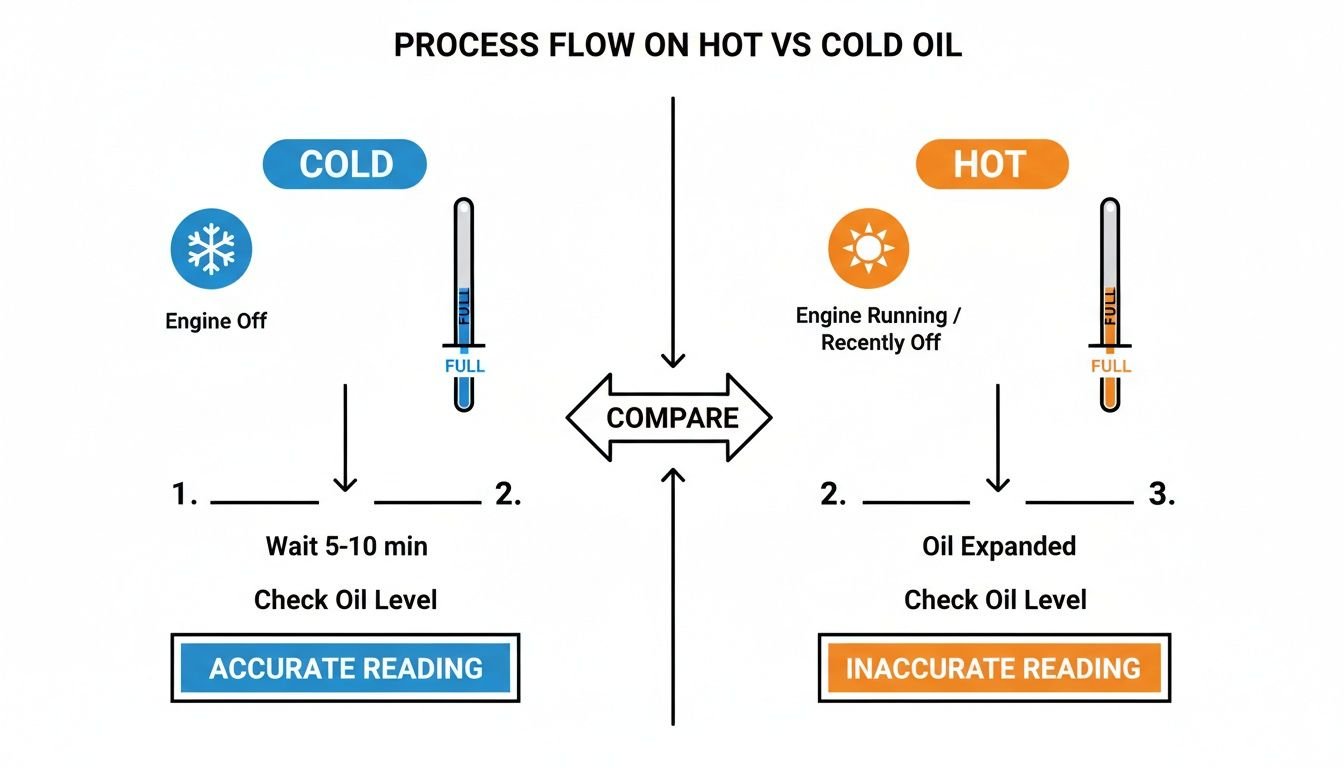
You can check engine oil hot or cold if your vehicle’s recommended procedure allows it. The key is to follow the correct temperature and waiting time rather than choosing one method for every car. For many vehicles with a traditional dipstick, checking after the engine has been off for several minutes provides a useful reading.
A cold check can be convenient because the car has been parked overnight and the engine is cool. A warm check may be required by a manufacturer that specifies normal operating temperature followed by a short waiting period. These methods are not always interchangeable, so consult the owner’s manual before you begin.
If your vehicle has an electronic oil-level sensor instead of a traditional dipstick, use the dashboard or infotainment instructions. The system may require a particular oil temperature, a level parking surface, and a specific engine state before it will display a reading.
Source: engineauditor.com
Check it cold
Use this method when your owner’s manual calls for a cold-engine check. An overnight parking period often gives the oil time to settle in the oil pan.
Check it warm
Some manufacturers require the engine to reach normal operating temperature. After switching it off, wait for the exact period stated in the manual.
Check it after a short wait
For vehicles that permit this method, waiting several minutes after shutdown helps oil return to the oil pan before you read the dipstick.
Why There Is No Universal Hot-or-Cold Rule
Engine designs, oil pan shapes, dipstick markings, and oil-level measurement systems differ. A manufacturer may calibrate the dipstick for a specific temperature and waiting period. A procedure that works on one vehicle may produce a misleading reading on another.
For example, one car may specify checking the oil before starting a cold engine, while another may require a warm engine and a five-minute wait. Neither procedure is automatically better for every engine. The correct method is the one specified for your vehicle.
First choice
Read the oil-level section of your owner’s manual.
If the manual is missing
Look up the procedure in the official owner’s manual for your exact model year, engine, and trim.
What Happens to Engine Oil When It Gets Hot?
Engine oil changes in temperature and thickness as the engine runs. As oil warms up, it generally becomes less viscous, which means it flows more easily through the engine. The oil also circulates through passages, around moving parts, and through the oil filter.
When you switch off the engine, the oil pump stops circulating oil. Some oil remains in engine passages and components, while some drains back into the oil pan. The amount of time needed for this return depends on the engine design and the conditions under which the car was running.
This is why a warm engine can produce a different dipstick reading from a cold engine. The difference does not automatically mean that the engine has lost oil. It may simply reflect the temperature and how much oil has returned to the pan.
Source: lh6.googleusercontent.com
Oil circulation
While the engine runs, oil moves through the lubrication system rather than sitting entirely in the oil pan.
Oil return
After shutdown, oil gradually drains back toward the pan. A suitable wait allows the level to settle.
Thermal expansion
Warm oil occupies a slightly different volume from cold oil, which can affect the reading.
Does Hot Oil Make the Dipstick Read Higher or Lower?
There is no reliable direction that applies to every engine and every checking procedure. Oil temperature changes its volume, while the amount still held in engine passages changes the quantity in the pan. The dipstick design and the manufacturer’s calibration also affect the result.
Do not assume that a hot reading is always lower or that a cold reading is always higher. Instead, compare readings taken under the same conditions and use the method specified by the vehicle maker. This gives you a more useful picture of changes in oil level over time.
For a fair comparison
Check the vehicle on level ground, under similar temperature and shutdown conditions each time.
For an unexpected result
Repeat the measurement using the manual’s procedure before adding oil, unless an urgent warning requires immediate action.
How Long Should You Wait Before Checking Engine Oil?
The correct waiting time depends on the vehicle. Some manuals call for a check before the first start of the day, while others specify a wait after the engine reaches normal operating temperature. When a manual gives a precise interval, follow it rather than relying on a general rule.
For a vehicle that permits checking after shutdown, several minutes is often enough for much of the oil to drain back into the pan. A commonly suggested interval is about five to ten minutes, but that is not a universal specification. A long highway drive, a short trip, cold weather, and engine design can all affect the conditions.
If you are unsure of the procedure, let the engine cool enough to work safely while you locate the official instructions. Never reach near a hot exhaust manifold, radiator fan, or other moving or heated component just to save a few minutes.
Source: i.ytimg.com
Cold engine
If the manual calls for a cold check, measure the oil before starting the engine after the vehicle has been parked long enough to cool.
Warm engine
If the manual calls for a warm check, bring the engine to the specified temperature, switch it off, and wait for the stated interval.
Unknown procedure
Do not treat five or ten minutes as a fixed rule for every vehicle. Find the manufacturer’s instructions first.
Can You Check Engine Oil Right After Driving?
You may be able to check it after driving if your vehicle’s procedure allows a warm-engine measurement. First park on level ground, switch off the engine, and wait for the recommended interval. Keep your hands and clothing away from hot components.
If the manual requires a cold check, wait until the engine reaches the required condition. A reading taken immediately after shutdown may not match the specified procedure because oil is still circulating or draining through the engine.
Do
Park safely, turn off the engine, set the parking brake, and follow the manual’s waiting time.
Do not
Remove a hot oil filler cap unnecessarily, touch hot metal parts, or work near moving belts and fans.
How to Check Engine Oil Step by Step
You can check engine oil at home with a few basic items and a safe place to park. Most vehicles with a dipstick need no special tools. You may want a clean paper towel or lint-free cloth and the correct oil specification in case the level needs topping up.
Start with the owner’s manual because it identifies the dipstick location, the correct measurement conditions, and the oil grade required for your engine. If the vehicle uses an electronic oil-level system, follow its on-screen procedure instead of searching for a dipstick that may not exist.
Source: i.ytimg.com
What you need
Your owner’s manual, a clean cloth or paper towel, and the correct engine oil if a small top-up is needed.
Where to work
Use a flat, stable parking surface away from traffic. Turn off the engine and secure the vehicle.
Step 1: Park on Level Ground
Park on a flat driveway, garage floor, or other level surface. A steep driveway or roadside slope can shift oil toward one side of the pan and make the dipstick reading inaccurate. Set the parking brake and switch off the engine before you begin.
Check the surface
Avoid hills, uneven shoulders, and surfaces that make the vehicle lean.
Step 2: Follow the Correct Temperature Procedure
Determine whether your vehicle requires a cold check or a warm check. If the manual specifies a warm engine, bring the engine to normal operating temperature through ordinary driving, then switch it off and wait for the stated interval. If it specifies a cold check, measure under those conditions instead.
Avoid guesswork
Do not start or warm the engine solely to take a measurement if the manual calls for a cold check.
Step 3: Find and Remove the Dipstick
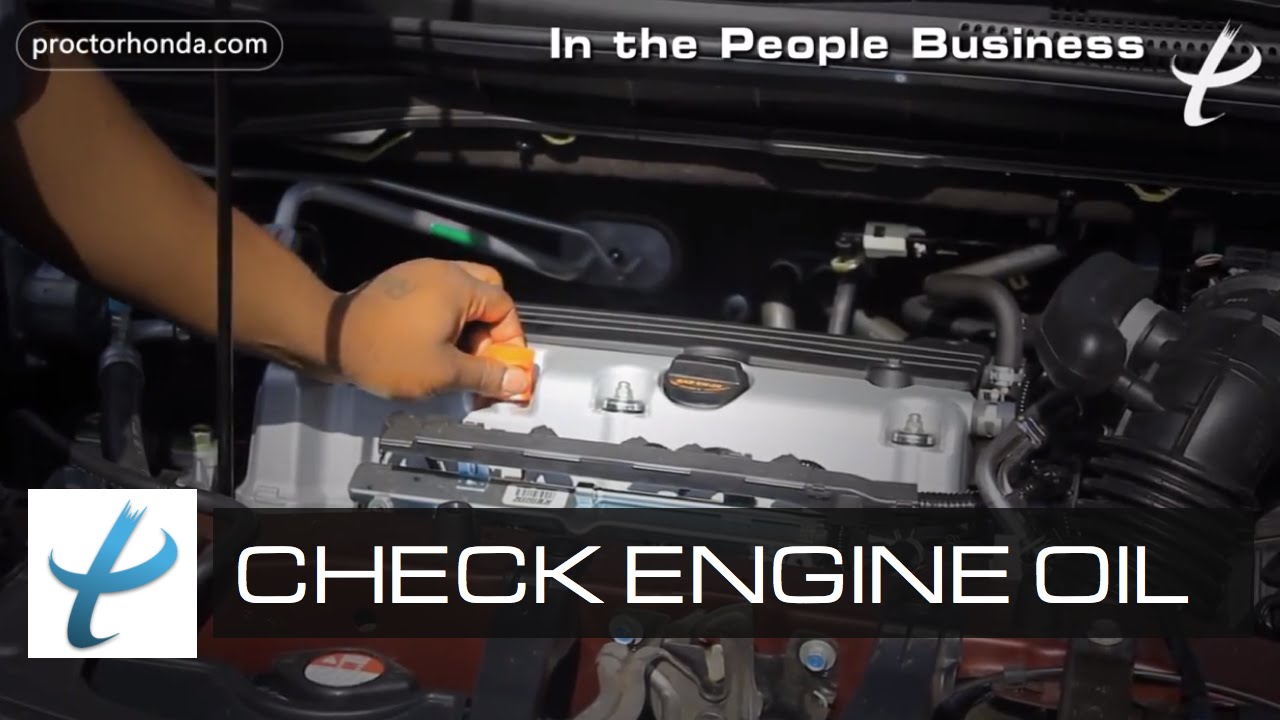
Open the hood and locate the engine oil dipstick. It often has a colored handle, but its appearance varies by vehicle. Pull it out slowly and keep the end pointed away from clothing.
Use the right handle
Do not confuse the engine oil dipstick with the transmission dipstick or another service point.
Step 4: Wipe the Dipstick Clean
Wipe the entire measuring end with a clean cloth or paper towel. The first reading may show oil smeared along the dipstick from removal, so cleaning it gives you a clear starting point.
Keep it clean
Use a lint-free cloth if possible and avoid allowing dirt or debris to enter the dipstick tube.
Step 5: Reinsert and Read the Dipstick
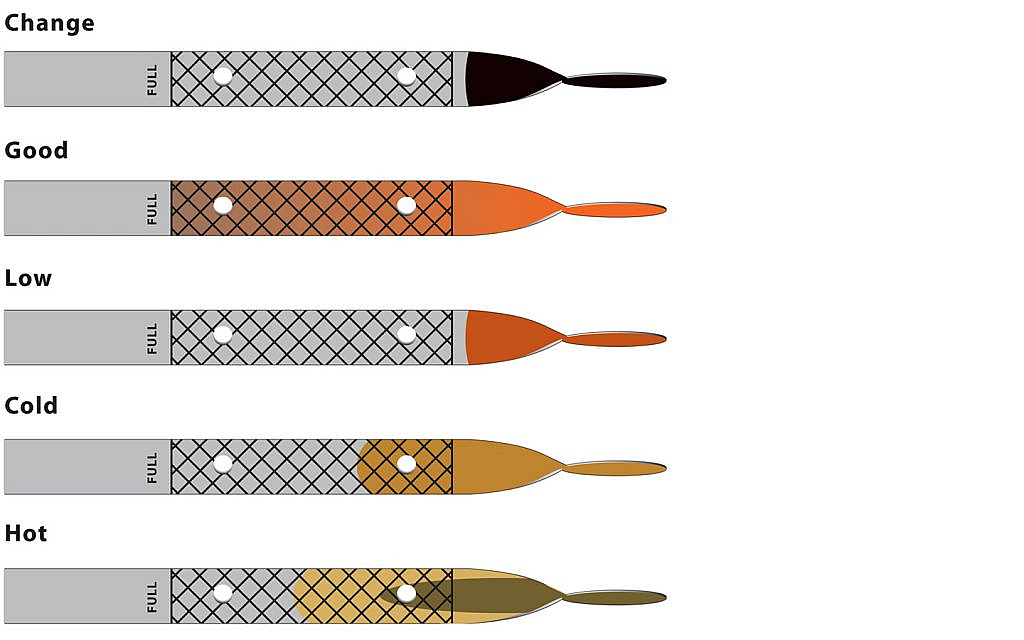
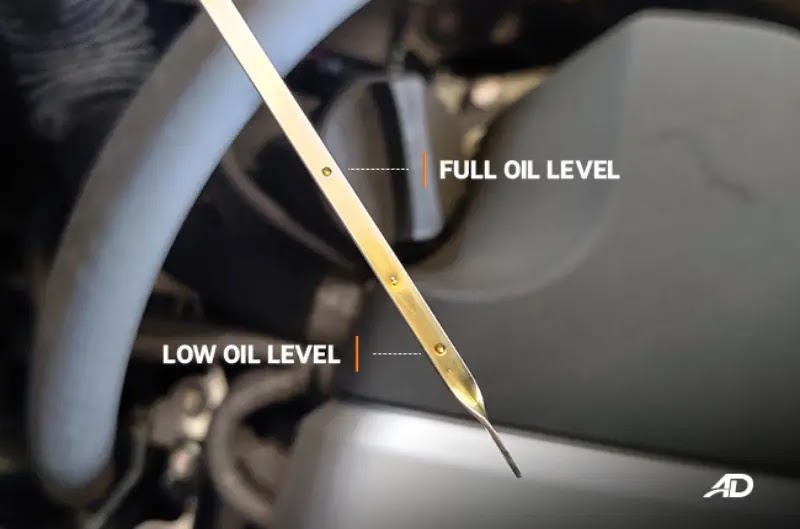
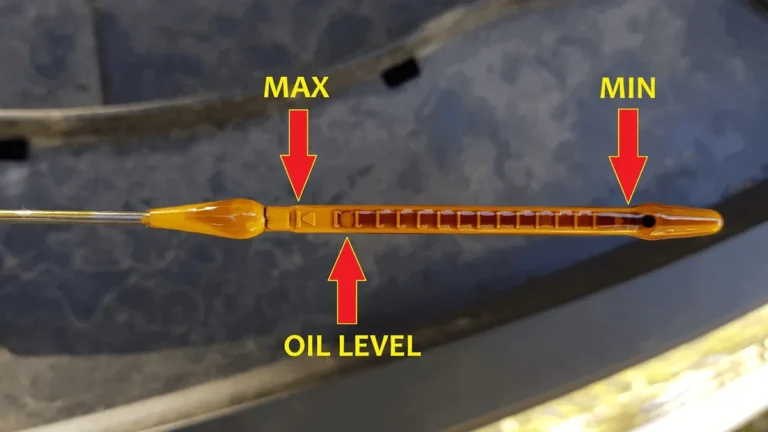
Push the dipstick fully back into its tube, then pull it out again. Hold it level and inspect the oil film at the marked end. Most dipsticks have two marks, holes, or a crosshatched area that indicates the acceptable range.
Between the marks
The level is generally within the acceptable range when the oil falls between the minimum and maximum indicators under the specified checking conditions.
At or below minimum
The engine may need oil. Confirm the reading and add the correct oil in small amounts as directed by the manual.
Above maximum
Do not assume extra oil is harmless. An overfilled engine may need excess oil removed.
Step 6: Recheck and Secure Everything
If the oil level is low, add a small amount of the specified oil through the filler opening. Wait as directed by the manual, then repeat the dipstick procedure. Continue carefully rather than pouring in a large amount at once.
When the reading is correct, fully reinsert the dipstick and secure the oil filler cap. Close the hood and check for any warning lights before driving. If the level keeps dropping, arrange an inspection to find the cause.
Avoid overfilling
The space between the minimum and maximum marks represents a range, not a target for adding oil without measuring.
Watch for repeat loss
Frequent top-ups can point to a leak, oil consumption, or another engine issue that needs diagnosis.
How to Read the Engine Oil Dipstick Correctly
The dipstick shows whether the oil level falls within the engine’s specified range. The lower mark usually indicates the minimum acceptable level, and the upper mark indicates the maximum. Check the owner’s manual if the markings are unusual or difficult to interpret.
The oil film should form a clear line or patch at the measuring end. If oil smears up the sides, wipe the dipstick clean and repeat the process. When the reading is hard to see, use good light and hold the dipstick at a slight angle without allowing oil to run along it.
Oil color alone cannot tell you whether the level is correct or whether the oil is still suitable for use. Used engine oil often darkens during service. Look at the level, the maintenance schedule, warning lights, and any unusual changes in the oil’s appearance or smell.
Confirm the measurement and add the correct oil as instructed. If the oil pressure warning light is on, do not rely on topping up alone; shut the engine off and seek help.
Between minimum and maximum
The oil level is generally acceptable when measured correctly. Continue following the normal maintenance schedule.
Above the maximum mark
Avoid running the engine until you determine whether the reading is accurate and excess oil must be removed.
No visible oil
Repeat the check under the correct conditions. If the dipstick remains dry, do not keep driving without determining whether the engine has enough oil.
How Much Oil Is Between the Minimum and Maximum Marks?
The amount between the marks varies by engine. Some vehicles have a difference of about one quart, while others use a different range. Never assume that every dipstick represents the same volume.
If your manual states the amount between the marks, use that figure to guide a top-up. Otherwise, add small quantities and recheck the level rather than assuming the dipstick marks equal a fixed amount.
Use the vehicle specification
Confirm the oil capacity and the dipstick range in the manual for your exact engine.
Measure after adding
Give the oil time to settle as directed, then check again before adding more.
Hot vs. Cold Engine Oil: Key Differences
Both hot and cold oil checks can be useful when they follow the correct manufacturer procedure. The main difference is the engine condition at the time of measurement and how much oil has returned to the pan. A consistent method matters more than choosing the same temperature for every vehicle.
A cold check is often easy to repeat because the car can sit overnight. A warm check can be more convenient when a manufacturer specifically calls for it. Neither method is inherently more accurate across all engines.
Source: autoemc.net
Cold check
Often convenient before the first start of the day. It is appropriate when the manufacturer specifies a cold measurement.
Warm check
Useful for vehicles whose manuals specify normal operating temperature followed by a defined wait.
Immediate post-drive check
May not match the required procedure. Oil may still be draining into the pan, and hot parts can cause burns.
Comparison Table: Which Method Should You Use?
Use this table as a general guide, not a substitute for your owner’s manual. The instructions for your exact vehicle determine the correct measurement conditions.
Cold engine before starting
Best when the manual specifies a cold check. Park on level ground and measure before starting the engine.
Warm engine after shutdown
Best when the manual calls for a warm check. Follow its temperature and waiting-time instructions.
Engine just switched off
Use only if the vehicle’s procedure permits it. Otherwise, wait for the specified interval.
Electronic oil-level display
Follow the vehicle’s on-screen instructions, which may require a warm engine, level ground, and a particular engine state.
What to Do If the Engine Oil Level Is Low
If the dipstick shows a low level, confirm the reading under the correct conditions before adding oil. Use the grade and specification listed in the owner’s manual. The oil cap may also show a viscosity grade, but the manual provides the full requirements for the engine.
Add oil in small amounts, allow it to settle, and recheck the level. Do not fill the engine to an assumed capacity based on the dipstick alone. The goal is to bring the oil into the acceptable range without going above the maximum mark.
A low reading can result from a leak, normal oil consumption, an overdue service, or another mechanical issue. If the level drops repeatedly, look for signs such as fresh oil under the car or smoke from the exhaust, but remember that some leaks are hard to spot.
Source: engineerine.com
Use the right oil
Choose the viscosity and performance specification approved for your engine.
Add oil slowly
Use a funnel if needed and check the dipstick again after each small addition.
Avoid driving with an urgent warning
If the red oil pressure warning light stays on while the engine is running, stop safely and switch off the engine. Arrange professional help.
Low Oil Level vs. Low Oil Pressure
Low oil level and low oil pressure are related but different problems. Oil level describes how much oil is in the engine’s sump or pan. Oil pressure describes the force that moves oil through the lubrication system.
An engine can have a reasonable dipstick reading and still suffer from low oil pressure because of a pump problem, a blocked passage, excessive bearing clearance, or another fault. Likewise, a low level may not trigger a warning immediately.
Treat an oil pressure warning as urgent. Stop in a safe place, shut off the engine, and consult the manual or roadside assistance. Adding oil may help if the level is low, but it does not fix every cause of low pressure.
Low level
Measure the oil and top it up carefully if needed, then investigate repeated loss.
Oil pressure warning
Shut off the engine promptly and arrange diagnosis rather than continuing to drive.
Common Mistakes When Checking Engine Oil
Most oil-checking mistakes are easy to avoid. The biggest risks come from using the wrong procedure, measuring on a slope, misreading oil smeared along the dipstick, or adding too much oil. A careful repeat measurement can prevent an unnecessary top-up or reveal a real problem.
Take your time, especially after driving. A few extra minutes are far cheaper than engine damage caused by running with too little oil or overfilling the crankcase.
Checking on a slope
The vehicle’s angle can change the reading. Move to a level surface and repeat the check.
Reading the dipstick only once
Oil can smear during removal. Wipe the dipstick, reinsert it fully, and take another reading.
Using the wrong oil
Oil that does not meet the required viscosity or specification may not provide the intended protection.
Adding too much oil
Overfilling can cause foaming and other lubrication problems. Remove excess oil according to the proper service procedure.
Ignoring a warning light
An oil pressure warning can signal a serious problem even when the dipstick level appears normal.
Touching hot parts
Exhaust parts and other engine components can remain hot after shutdown. Keep hands and clothing clear.
Can You Check Engine Oil While the Engine Is Running?
For a conventional dipstick check, switch the engine off first unless the manufacturer explicitly instructs otherwise. With the engine running, oil is circulating through the system, and moving belts, fans, and hot parts can create serious hazards.
Some vehicles use electronic systems that display oil information while the engine is running or under specified conditions. Follow the exact instructions for that system rather than applying the dipstick method.
Traditional dipstick
Measure with the engine off and under the temperature conditions specified in the manual.
Electronic system
Use the prescribed dashboard procedure and observe all stated conditions.
How Often Should You Check Engine Oil?
Check your engine oil at the interval recommended in your owner’s manual. As a practical habit, many drivers check it periodically between oil changes and before a long road trip. Older vehicles, engines known to use oil, and cars with a history of leaks may need closer monitoring.
Your driving pattern can also affect how often you should inspect the level. Frequent short trips, heavy loads, towing, long highway drives, and extreme temperatures can place different demands on the engine. Follow the maintenance schedule for your vehicle and adjust monitoring when you have a known oil-loss issue.
If your car has an electronic oil-level monitor, do not assume it eliminates all maintenance checks. The system may provide useful warnings, but you should still follow the manufacturer’s service schedule and respond to any alerts.
During routine maintenance
Check the oil when the maintenance schedule or owner’s manual recommends it.
Before a long trip
Confirm the level using the correct procedure, especially if the vehicle has been losing oil.
After a repair or oil change
Verify the level when the manufacturer’s procedure allows and watch for leaks or warning lights.
When oil loss is suspected
Check promptly under safe conditions and arrange an inspection if the level continues to fall.
Signs Your Car May Be Losing Engine Oil
A falling dipstick reading is one of the clearest signs of oil loss. You may also notice oil spots under the vehicle, a burning-oil smell, or blue-gray exhaust smoke. These signs can have different causes, so they do not prove a specific fault by themselves.
If the engine makes unusual knocking or rattling sounds, or the oil pressure warning light appears, stop driving when safe and shut off the engine. Continuing to run an engine without proper lubrication can turn a repairable problem into major damage.
Oil spots
Check for fresh drips, but remember that an undertray may hide a leak.
Burning smell or smoke
Oil may be reaching hot engine parts or entering the combustion process. Have the cause checked.
Repeated low readings
Record the level and distance driven, and ask a mechanic to assess oil consumption or leaks.
Special Cases: New Cars, Older Cars, and Vehicles Without Dipsticks
The best checking method depends on the vehicle’s design, not simply its age. Some newer cars use electronic level sensors, while some older vehicles have traditional dipsticks. A few engines may have special procedures that require a particular temperature or operating state.
If the vehicle is new to you, do not rely on a general online instruction alone. Confirm the engine type and model year, then read the oil-level section of the manual. This is especially useful for used vehicles, imported models, and cars with engine options that differ by trim.
Newer vehicles
Check whether the vehicle uses an electronic oil-level measurement system and follow its instructions.
Older vehicles
Inspect the dipstick and look for signs of leaks or frequent oil use, while following the specified procedure.
Recently serviced vehicles
If the reading is unexpectedly high or low after an oil change, verify the procedure and service records before driving far.
Unfamiliar vehicle
Use the official manual for the exact model and engine instead of guessing based on another car.
What If the Dipstick Is Dry?
A dry dipstick can mean the oil level is below the measuring range, but an incorrect checking procedure can also lead to confusion. Park on level ground and repeat the check using the manufacturer’s instructions.
If the dipstick remains dry, do not continue driving as though the engine has enough oil. Check the manual for the correct oil specification and safe next steps. If you cannot establish the oil level or suspect a serious leak, arrange professional assistance.
Repeat the measurement
Confirm that the dipstick is fully inserted and that you are checking under the correct conditions.
Avoid blind filling
Do not pour in several quarts without measuring. The required amount depends on the engine and its current oil level.
Seek help when needed
If the level cannot be established or an oil pressure warning is present, do not run the engine until the issue is assessed.
A Simple Routine for Accurate Oil Checks
A repeatable routine makes oil checks easier and helps you spot changes before they become serious. Use the same parking surface and the same manufacturer-approved temperature procedure whenever you compare readings. Write down unusual changes instead of relying on memory.
For example, if your manual specifies a cold check, you might inspect the oil before the first start on a weekend morning. If the level is lower than your last recorded reading, repeat the measurement and check for signs of leakage. If the drop continues, arrange an inspection rather than simply adding oil each time.
Before you start
Confirm the vehicle is on level ground and the engine is in the required condition.
During the check
Clean the dipstick, reinsert it fully, and read the level carefully.
After the check
Top up only if needed, use the specified oil, and secure the dipstick and filler cap.
If you need a fast answer, start with the owner’s manual and match the measurement conditions to its instructions. If the level is within range and there are no warning signs, continue with normal maintenance. If the level is too low, too high, or impossible to confirm, take the appropriate next step before driving.
Confirm the reading and add the correct oil carefully if it is safe to do so.
Level is above maximum
Verify the reading and have excess oil removed if necessary.
Oil pressure warning is on
Stop safely, shut off the engine, and arrange assistance.
Frequently Asked Questions
Q
Should I check engine oil before or after driving?
Check it before or after driving according to your owner’s manual. A cold check before the first start is convenient when the manufacturer specifies it. Other vehicles require the engine to reach normal operating temperature, followed by a defined wait after shutdown.
Q
How long should I wait after turning off the engine?
Follow the exact waiting period in your vehicle’s manual. Some vehicles call for several minutes after shutdown, and five to ten minutes is a common general guideline for certain warm-engine checks. It is not a universal rule, and some vehicles require a cold check instead.
Q
Can I check engine oil when the car is cold?
Yes, if your vehicle permits or requires a cold-engine check. Park on level ground and measure before starting the engine when the manual specifies that method. If the manufacturer requires a warm measurement, use that procedure instead.
Q
Does engine oil expand when hot?
Yes. Engine oil generally expands as its temperature rises, and its viscosity decreases as it warms. The dipstick reading also depends on how much oil has drained back into the oil pan, so temperature alone does not determine whether the reading will be higher or lower.
Q
Should engine oil be at the maximum mark?
The level should fall within the range specified by the dipstick, not above the maximum mark. A reading near the upper mark is generally acceptable when measured correctly, but you should not add oil just to reach that mark if the level is already within range.
Q
Can I drive if the engine oil is below the minimum mark?
Do not ignore a reading below the minimum mark. Confirm the measurement, add the correct oil if appropriate, and check for leaks or repeat oil loss. If the oil pressure warning light is on, the engine makes unusual knocking sounds, or the dipstick is dry, shut off the engine and arrange professional assistance rather than continuing to drive.
Q
Can I check engine oil while the car is running?
For a traditional dipstick check, the engine should generally be off unless the manufacturer explicitly specifies another procedure. A running engine creates hazards from moving parts and hot surfaces, and circulating oil can make the reading unsuitable. Electronic oil-level systems may have their own instructions.
Q
What should I do if the oil level changes between checks?
First, repeat the measurement under the same conditions on level ground. Different temperatures, waiting times, and parking angles can cause different readings. If the level continues to fall, inspect for possible leaks and have the engine checked for oil consumption or another fault.
✦ Wrapping Up
Conclusion
So, should you check engine oil hot or cold? The correct answer depends on your vehicle. Many cars allow a check after the engine has been shut off for several minutes, while others require a cold measurement or a specific warm-engine procedure.
For an accurate reading, park on level ground, follow the owner’s manual, clean the dipstick, reinsert it fully, and check the oil against the marked range. Add only the oil your engine requires, and avoid overfilling. If the reading remains unusually low or high, or an oil pressure warning appears, take the problem seriously.
A quick oil check can help you catch a problem before it causes major engine damage. Make it part of your regular maintenance routine, use the same correct procedure each time, and get professional help when the level or warning signs point to a possible fault.
💡 Key Takeaway
Before your next drive, check your owner’s manual for the exact engine oil measurement procedure. Then take a careful reading on level ground and confirm that the oil is within the specified range.
You’re gripping a jug in the auto parts aisle. The front label says “Full Synthetic Motor Oil.” The carton behind it says “Engine Oil.” Your brain stutters. Is…
Compare the best engine oil for motorcycles, including synthetic and conventional options. Find the right oil for smooth performance and engine protection.
You’ve probably stood at the oil filler cap with a jug in hand, wondering how much motor oil do I need for this specific engine. The answer shifts with your…
How is motor oil produced? It sounds like a oneline answer, but the real process runs through distillation, cracking, dewaxing, polymerization, additive…