Can You Use Car Motor Oil in a Motorcycle: Top Guide
You're in the parking lot of an auto parts store, clutch going soft, and you need 1.2 litres of oil right now. The question is whether you can use car motor oil in a motorcycle or if you're forced to drive forty minutes to a dealer. The short answer: it depends on three things, and getting it wrong means a two-thousand-dollar clutch rebuild.
Most 4-stroke motorcycles share one sump between engine, transmission, and wet clutch, so whatever you pour in coats those friction plates. Per JASO T 905, the standard maintained by the Japan Automotive Standards Organization as of 2026, wet-clutch oil must hit a minimum oiliness coefficient of 0.110 N/m. Car oils carrying friction-modifying additives routinely fall below that threshold.
So before you grab that bottle, here's the branch-by-branch breakdown.
Guide to Can You Use Car Motor Oil in a Motorcycle
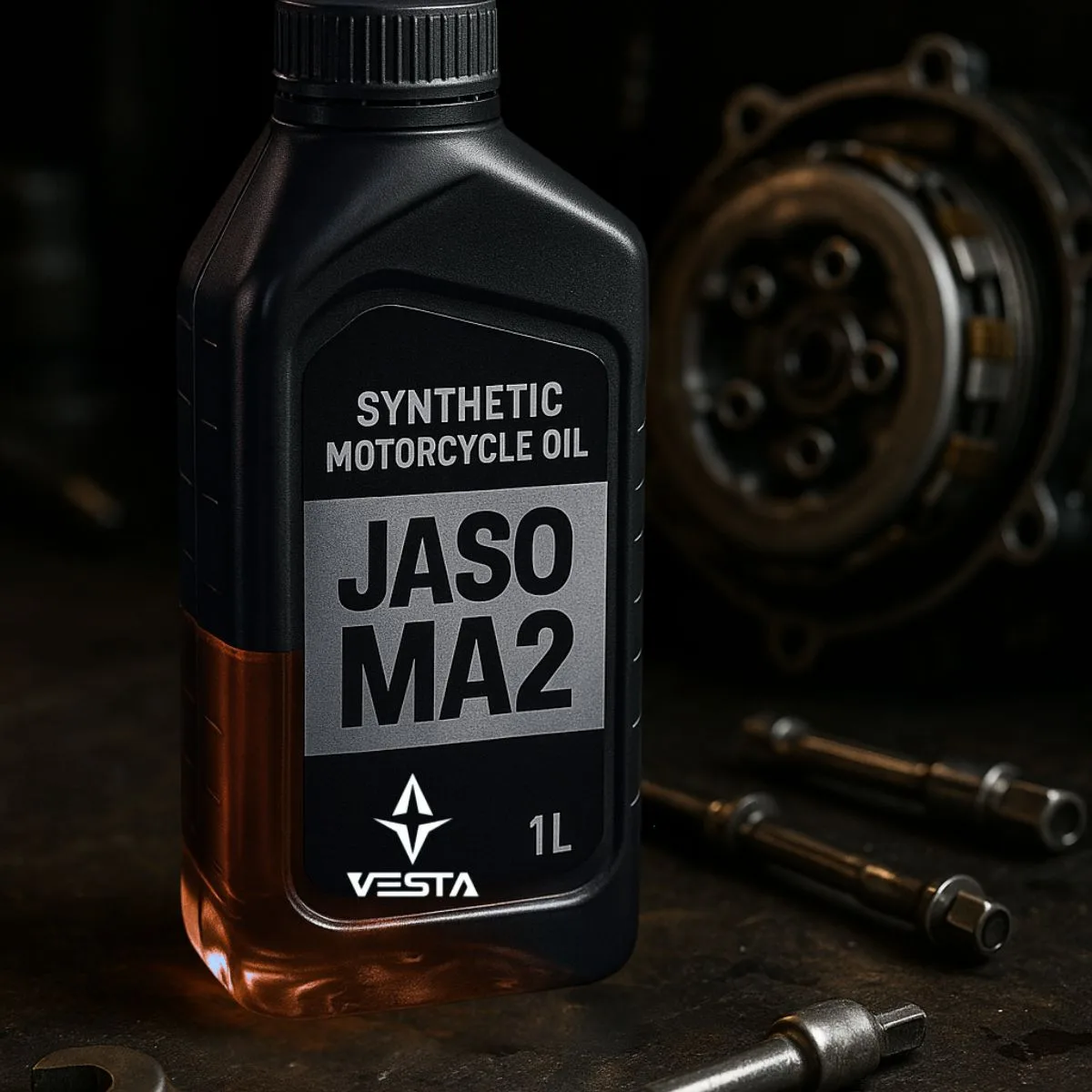
The Short Answer: Maybe (and Why Yes or No Is Wrong)
Can you use car motor oil in a motorcycle? Sometimes, and it depends on your clutch type. Dry clutch: no problem.
Wet clutch: the additives will burn your plates. Here's how to figure out which branch you're on.
The reason a flat "no" is wrong: dry-clutch bikes (most scooters, small off-road enduros, a handful of 125 cc commuters) never route sump oil past the friction plates. The clutch sits in its own sealed housing. A 10W-40 from your local auto parts counter is mechanically fine in those machines.
The reason a flat "yes" is wrong: most 4-stroke street bikes use a wet clutch. The friction discs bathe in the same oil that lubricates the crankshaft. Car oils, licensed under API service categories, carry friction-modifying additives built to cut parasitic drag in a car's own gearbox.
Those same additives coat motorcycle clutch plates and drop the coefficient of friction below the 0.110 N/m floor that JASO MA2 demands.
Three variables decide your path:
- Clutch type: wet or dry
- Engine type: 4-stroke or 2-stroke
- Situation: scheduled oil change or emergency top-off
Each variable flips the answer. The sections below walk through each branch in the order you'll actually make the decision.
What's Actually Happening Inside a Wet Clutch
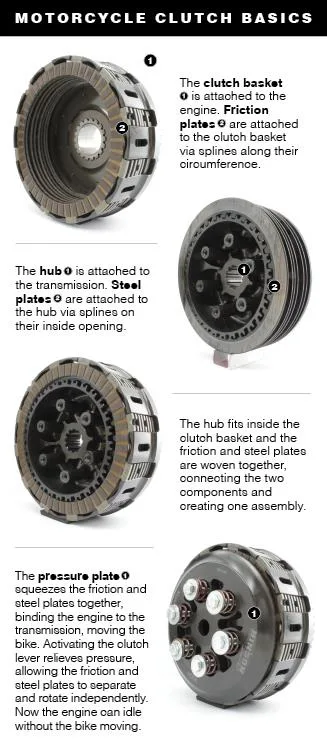
Here's the mechanics in plain terms. A wet clutch packs alternating steel plates and friction discs inside the engine case. The whole assembly sits in the oil sump.
When you twist the throttle, the steel plates push against the friction discs via springs. The discs must grip. The oil's job is to keep those contact surfaces cool and lubricated without letting them slip.
The problem starts when the oil carries friction-modifying additives (FMAs). These are the same additives that let a car's automatic transmission shift smoothly. In a motorcycle wet clutch, they act like a wax layer on the friction discs.
The plates can no longer build enough grip. You feel it as revs climbing but the bike not accelerating. That's slippage.
Over one or two oil intervals (roughly 3,000 to 6,000 miles), the FMA residue bakes onto the disc surface and the clutch is toast.
The good news: a single top-off of the wrong oil in a true emergency won't instantly destroy the clutch. The additive concentration is low. You'd need several full intervals of FMA-laden oil before the cumulative coating becomes irreversible.
One bad pour, ridden gently, gives you time to get the correct spec.
Step One: Is Your Clutch Wet or Dry?
You'll need to open the owner's manual, flip to the specifications page, and find the clutch type. If it says "wet" or "multidisc, oil-bathed," you're on the JASO MA2 path. If it says "dry" or "mechanically actuated," the oil spec is looser and car oil is acceptable.
Not sure? Here's a quick field test:
- Scoop the side of the engine case. A wet clutch has a visible oil fill plug and often a small inspection port on the transmission cover. The clutch housing sits inside the crankcase oil.
- Check the oil capacity. A 4-stroke with a wet clutch typically holds 0.9 to 1.5 litres. A dry-clutch scooter or 125 cc commuter often sits at 0.7 to 1.0 litres with a separate, smaller drain.
- Look at the shift mechanism. Wet-clutch bikes use a foot-shifter with a ratchet on the crankshaft. Dry-clutch scooters and some small off-road bikes use a hub shifter at the rear wheel or a cable-actuated mechanism.
If you find "JASO MA" or "JASO MA2" printed in the manual's oil spec line, that's your confirmation. The bike's wet clutch demands that oiliness threshold. No JASO marking in the manual usually means the clutch is dry and you have more oil flexibility.
Step Two: Read the Bottle, Not Just the Viscosity Number
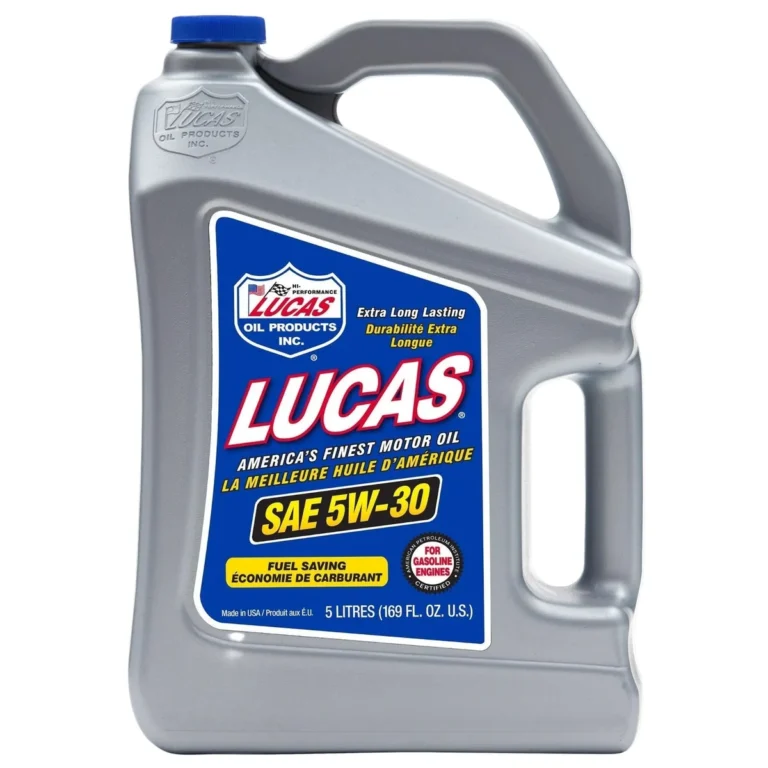
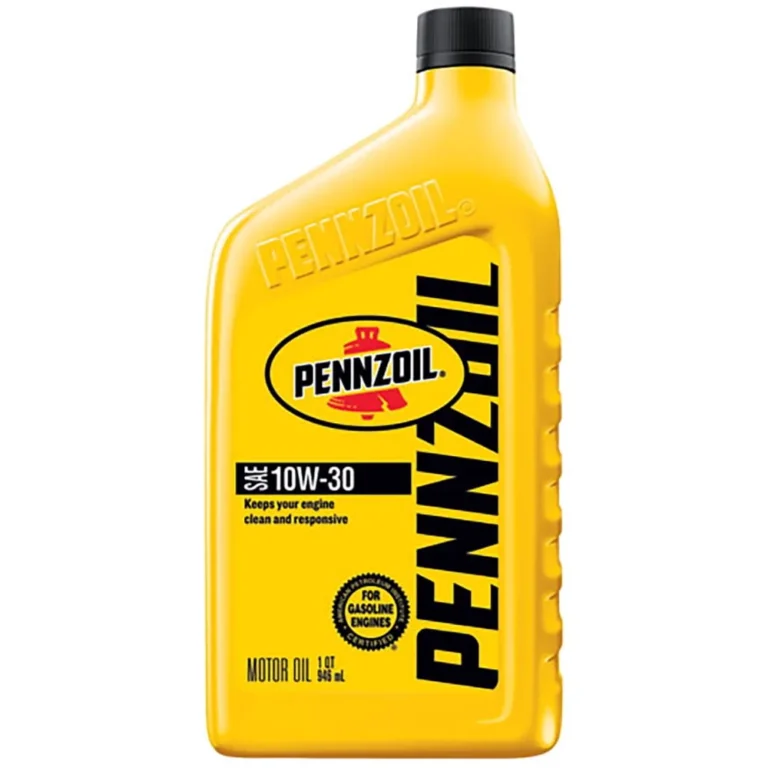
The viscosity grade (5W-30, 10W-40, 20W-50) tells you how thick the oil is, not whether it's safe for your clutch. Two bottles of 10W-40 can behave completely differently in a wet clutch. The difference is the additive package, and it's printed on the back label.
Here's what to look for on any bottle you're considering:
| What to check on the label | What it means |
|---|---|
| "JASO MA2" stamp | Passed the wet-clutch friction test. Safe to use. |
| "JASO MB" stamp | High-friction-reducing spec for cars. Avoid in a wet clutch. |
| "API Energy Conserving" or "F2" designation | Contains FMAs. Will reduce clutch grip. |
| No JASO marking at all | Assume it has FMAs. Do not use in a wet clutch. |
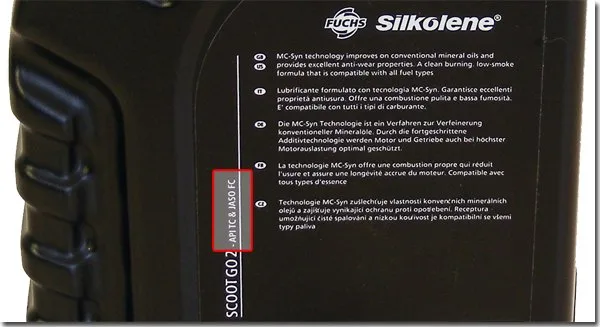
Turn the bottle around. The JASO stamp is usually small, tucked into the fine-print block near the QR code or batch number. If you can't find it, call the number on the label and ask directly: "Does this formula meet JASO MA2, or does it carry a friction-modifier package?" Most manufacturers will answer in ten seconds.
If they say "it's API SP," that's a car spec. Put it back.
The Four-Branch Decision Tree: Emergency, Scheduled, Dry Clutch, 2-Stroke
This is where you plug your three variables in and get your answer. Follow the path that matches your situation.
| Your situation | Clutch | Engine | What to do |
|---|---|---|---|
| Scheduled change, in town | Wet | 4-stroke | Use JASO MA2 oil. Period. |
| Emergency, 80 miles from help | Wet | 4-stroke | Top off with car oil (API SN/SP). Ride gently. Change to JASO MA2 at the next stop. |
| Any situation | Dry | 4-stroke or scooter | Car oil is fine. Match viscosity from the manual. |
| Mix or injection system | N/A | 2-stroke | Use API TC or JASO C2/C3 2-stroke oil. Never use 4-stroke car oil. |
A few rules that keep you safe at the intersection of these branches:
- Emergency top-off limit: don't exceed 250 ml (about half a pint) of the wrong oil. That keeps FMA concentration low enough that one subsequent JASO MA2 change flushes it out.
- Ride gently after an emergency pour. Avoid hard pulls from standing. Let the clutch modulator work gradually. You're buying range, not power.
- 2-stroke is a separate world. A 4-stroke car oil has zero anti-foam or combustion-stability additives a 2-stroke needs. You'll get carbon deposits, plug fouling, and a smoking engine. The mix ratio (usually 1:50) calls for a dedicated 2-stroke formulation.
- Dry clutch is the one true "yes." If your scooter or small off-road bike has a dry clutch, grab the 10W-40 you need, pour it in, and ride. No JASO stamp required. No compromise.
If you're still unsure after checking the manual and the bottle, your dealer's service desk will confirm the correct spec in under two minutes. It costs nothing and saves a clutch pack.
What to Do If Car Oil Is Already in the Tank
You already poured a litre of API SP 10W-40 into a wet-clutch bike and now you're panicking. Take a breath. One interval of FMA-laden oil won't cook your discs.
The residue is a thin film, and it's reversible if you act within the next 1,000 to 1,500 miles.
Here's the remediation sequence:
- Ride gently for the rest of this interval. No hard launches, no sustained high-RPM pulls. Let the clutch modulator work gradually.
- At the next drain (or within 2,000 miles), do a full drain-and-fill with JASO MA2 oil. Topping off does not flush. A complete drain removes 80 to 90% of the FMA residue from the sump.
- Consider a second short change 500 miles later if you notice judder or a slow, spongy engagement. That clean pour strips the remaining film off the friction surfaces.
- Inspect the clutch cover if you're mechanical. Light grey on the discs is normal. A black, glossy coating means the FMA baked on and you need a fresh friction pack.
If you hear metallic scraping or the revs climb while speed stays flat, stop riding. The plates are glazed. A friction pack replacement runs $150 to $400 in parts.
Add $300 to $800 in shop labour. That's still far cheaper than a full assembly swap at $1,200 to $3,500.
Three Real Situations, Walked Step by Step
Situation 1: You're 90 miles from the nearest dealer and your Yamaha MT-07 is at the oil warning light.
You have a 4-stroke, wet clutch. You have a can of 10W-40 car oil in the tail bag. Pour in 250 ml maximum.
Check the dipstick. Ride at moderate RPM, no hard pulls. You have enough range to reach help.
At the dealer, request a full drain-and-fill with JASO MA2 oil and tell them you topped off with car oil. Budget $40 to $60 for the flush labour.
Situation 2: Your 125 cc scooter with a dry clutch is due for its 6,000 km service.
Open the manual. It lists "SAE 10W-30 or 10W-40" with no JASO line. That's your green light.
Grab the 10W-40 from the auto parts shelf, pour 0.8 litres, and ride. No compromise, no premium markup. The dry clutch lives in its own sealed housing and never touches sump oil.
Situation 3: Your 200 cc 2-stroke pit bike needs a fresh mix for the season.
You do not use 4-stroke car oil. You mix dedicated 2-stroke oil (API TC or JASO C3) at the ratio your manual specifies, usually 1:50. A half-litre of 2-stroke oil costs $6 to $9.
It gives you clean combustion, no carbon on the exhaust port, and the right anti-foam package for high-RPM use. Using 4-stroke oil here means carbon buildup within 50 miles and a plug that fouls every race.
FAQs: What Riders Actually Ask at the Parts Counter
Will one litre of car oil permanently destroy a motorcycle wet clutch?
No. One full interval of FMA-laden oil degrades grip but doesn't cook the discs. The residue is a thin, reversible film.
A complete drain-and-fill with JASO MA2 oil removes 80 to 90% of it. You'd need three to four consecutive intervals of the wrong oil to cause permanent glazing that demands a new friction pack.
Does "API SP 10W-40" on the label mean it's safe for my bike?
No. API SP is a car-engine performance standard. It says nothing about wet-clutch friction.
In fact, API-licensed oils often carry friction-modifying additives that reduce the exact grip your clutch needs. The only marking that matters for a wet clutch is the JASO MA2 stamp. If it's not on the label, assume it's not in the oil.
Can I use ATF instead of motor oil to save money?
Don't. ATF is built for gearbox lubrication, not engine anti-wear. It lacks the ZDDP and organotin packages your crankshaft and cam bearings depend on.
You'll get metal-on-metal wear within a few thousand miles. ATF in a motorcycle engine is worse than car oil because it damages the engine itself, not just the clutch.
How do I know if my clutch is already slipping from bad oil?
Watch for three signs. Revs climb while speed stays flat under load. The clutch grabs late in the engagement, so you feel a sudden jerk instead of smooth take-up.
You hear a faint metallic screech during the first 500 rpm. Any one of those means the friction surface is compromised. Inspect before your next hard ride.
Is JASO MA2 available at every auto parts store?
Usually not. As of 2026, most independent auto parts shops stock car oil in 10W-40 and 5W-30 but carry JASO MA2 in limited SKUs. Motorcycle dealers, specialty two-wheeler shops, and a growing number of online retailers have it on the shelf.
Call ahead. A two-minute phone call saves a wasted drive and a $12 bottle you can't actually use.