Best Engine Oil For Racing: Top Picks Compared
Valvoline VR1 Racing 20W-50 is my top pick for compatible high-performance racing engines that need strong wear protection.
Imagine getting your car ready for a weekend race at a local American track. You check the tires, brakes, fuel, and cooling system. But what about the oil inside your engine? Racing puts extra heat and stress on engine parts. Regular passenger car oil may not suit every race setup. The best engine oil for racing must match your engine, clearances, temperature, and driving style. I reviewed five products, including Valvoline VR1 oils, VP Racing two-cycle oil, and a friction-reducing additive. This guide helps you compare them and choose the right option without paying for features your engine does not need.
🏆 Top 3 Products

Valvoline VR1 Racing SAE 20W-50 Motor Oil
A strong choice for compatible high-performance engines that need a thicker oil and racing-focused wear protection.

Valvoline VR1 Racing Synthetic SAE 10W-30
A synthetic racing oil option for compatible engines that need 10W-30 viscosity and racing-focused protection.

Valvoline VR1 Racing SAE 10W-30 Motor Oil
A practical option for racers who want conventional VR1 racing oil in a six-quart case.
Valvoline VR1 Racing 20W-50 Motor Oil
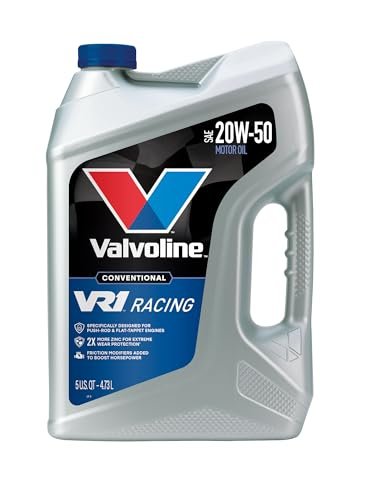
Valvoline VR1 Racing SAE 20W-50 is my top overall choice from this product list for engines that call for this viscosity. It targets high-performance and racing use. Its formula includes extra zinc, which helps protect metal parts that move against each other. This matters in some older engines and performance builds with flat-tappet camshafts. The five-quart container also gives you a useful amount for an oil change.
The 20W-50 grade makes this oil worth considering for engines designed to use a thicker lubricant. It may suit some older race engines and warm-weather setups. However, thicker oil does not always mean better protection. It can affect oil flow and pressure in ways that depend on engine design and temperature. I would check the engine builder’s oil recommendation before choosing it. The best engine oil for racing is always the one that fits the engine, not simply the one with the biggest performance claims.
✅ Pros
- ✔ Racing-focused formula for compatible high-performance engines.
- ✔ Higher zinc content supports wear protection for suitable engine designs.
- ✔ 20W-50 viscosity suits engines that require thicker oil.
- ✔ Five-quart container offers a useful quantity for maintenance.
- ✔ Suitable for some older performance engines.
- ✔ Designed with high-temperature engine demands in mind.
- ✔ Can be considered for certain flat-tappet engine setups.
- ✔ Recognized Valvoline VR1 product line.
⚠️ Cons
- ✖ 20W-50 may be too thick for engines designed for lighter oil.
- ✖ Not the right choice for every modern passenger vehicle.
- ✖ Higher zinc content may not suit every catalytic converter-equipped street vehicle.
- ✖ The five-quart package may not match every engine’s oil capacity.
- ✖ Racing-focused oil may not offer the best value for ordinary daily driving.
My Recommendation
I recommend Valvoline VR1 Racing 20W-50 as the leading option in this comparison for compatible engines that need SAE 20W-50. It offers a useful mix of racing-focused formulation, zinc-based wear protection, and a practical container size. I would give it special attention when choosing oil for an older performance engine or a race build that calls for a thicker grade. Before buying, check the engine manual or builder’s instructions. Also check oil pressure, operating temperature, bearing clearances, and the type of camshaft. Do not use 20W-50 just because you plan to race. If your engine calls for 5W-30 or 10W-30, follow that requirement unless your engine builder approves a change.
| Best For | Why |
|---|---|
| Older performance engines | The 20W-50 grade may suit older engines designed around thicker oil. |
| Compatible flat-tappet engines | Its higher zinc content can support wear protection for suitable valve train designs. |
| Warm-weather racing | It offers a thicker viscosity for engines whose builders specify 20W-50. |
Valvoline VR1 Racing 10W-30 Motor Oil
Valvoline VR1 Racing SAE 10W-30 is a practical choice for racers who want a conventional racing oil in a lighter viscosity than 20W-50. This product comes as a case of six one-quart bottles. That package can help when you want to keep several quarts ready in your garage. Its racing-focused formula includes additional zinc for wear protection in compatible engines. It is worth considering for certain performance builds that call for 10W-30.
I like the flexibility of this viscosity for engines that do not need a heavy 20W-50 oil. The correct grade still depends on the engine design and the conditions in which it runs. A race engine may face high temperatures, high RPM, and heavy loads. Good oil must keep a suitable protective film under those conditions. This Valvoline option deserves a place on a shortlist of the best engine oil for racing products, especially for racers who prefer conventional oil and want a six-quart package.
✅ Pros
- ✔ 10W-30 viscosity suits engines designed for this grade.
- ✔ Racing-focused formula for compatible performance engines.
- ✔ Additional zinc supports wear protection in suitable applications.
- ✔ Six one-quart bottles make oil storage simple.
- ✔ Easy to measure and pour in small amounts.
- ✔ Useful for racers who prefer conventional motor oil.
- ✔ Offers a lighter viscosity option than the 20W-50 VR1 product.
- ✔ Comes from the established Valvoline VR1 racing oil range.
⚠️ Cons
- ✖ It may not suit engines that require 20W-50 or another viscosity.
- ✖ Conventional oil may not be the preferred choice for every severe racing setup.
- ✖ The six-bottle case may cost more upfront than buying one quart.
- ✖ Higher zinc content needs careful compatibility checks in street vehicles.
- ✖ It is not a universal oil for all race cars or motorcycles.
My Recommendation
I recommend this VR1 10W-30 option for racers whose engine builder specifies conventional SAE 10W-30 oil. It is a good middle ground for people who do not need a heavy 20W-50 grade. The six-quart package is also useful for a home garage or race team that wants spare oil on hand. I would compare it with the synthetic VR1 version before making a final choice. The conventional formula may fit some budgets and engine requirements, while the synthetic option may be more appealing for other demanding setups. Always follow the required oil grade and service interval.
| Best For | Why |
|---|---|
| Budget-conscious racers | A conventional racing oil option can help control oil costs. |
| 10W-30 engine builds | It matches engines that specifically call for SAE 10W-30. |
| Garage oil storage | Six separate one-quart bottles make it easier to keep spare oil ready. |
VP Racing Full Synthetic 2-Cycle Oil
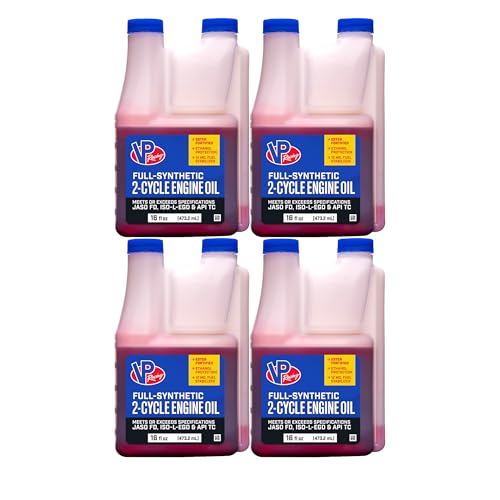
VP Racing 2907 Full-Synthetic 2-Cycle Oil serves a different purpose from the Valvoline VR1 products. It is made for two-cycle engines, including compatible ATVs and motorcycles. The package contains four 16-ounce bottles. Two-cycle engines work in a different way from four-stroke car engines. Many of them use oil mixed with fuel or supplied through a separate oil system. This product belongs in a two-cycle maintenance discussion, not a normal four-stroke engine oil comparison.
I included this product because some racers use two-stroke motorcycles, ATVs, and other small machines. These engines need oil designed for their specific lubrication system. Using ordinary four-stroke racing oil in a two-cycle engine can cause serious problems. You must also follow the machine maker’s mixing ratio and oil requirements. VP Racing offers a useful option for riders who need compatible synthetic two-cycle oil. However, it is not the best engine oil for racing a standard four-stroke car.
✅ Pros
- ✔ Full-synthetic two-cycle oil formulation.
- ✔ Designed for compatible two-cycle applications.
- ✔ Useful for some ATV and motorcycle engines.
- ✔ Four-bottle package offers multiple maintenance portions.
- ✔ Individual 16-ounce bottles are easy to store.
- ✔ A dedicated two-cycle option from a racing-focused brand.
- ✔ Suitable for machines that require compatible two-cycle lubricant.
- ✔ Provides an alternative to ordinary four-stroke engine oil for two-cycle owners.
⚠️ Cons
- ✖ Not designed as a replacement for ordinary four-stroke engine oil.
- ✖ Cannot be used in every two-cycle engine without checking compatibility.
- ✖ The correct fuel-to-oil ratio depends on the engine maker.
- ✖ Four small bottles may not be enough for frequent track use.
- ✖ Not the right choice for most conventional car racing engines.
My Recommendation
I recommend VP Racing 2907 for riders who own a compatible two-cycle ATV or motorcycle. It is a specialized product, so its value depends on your engine type. If you race a two-stroke machine, check the owner’s manual for the required oil specification and mixing ratio. Do not pour this oil into a four-stroke engine as a substitute for standard motor oil. It is also important to keep your fuel mixture clean and accurate. For a standard racing car, choose a suitable four-stroke racing oil instead.
| Best For | Why |
|---|---|
| Two-cycle ATV owners | It is designed for compatible two-cycle engine lubrication. |
| Two-stroke motorcycle riders | It provides a dedicated synthetic oil option for suitable motorcycles. |
| Small racing machines | Its compact bottles are useful for machines that need two-cycle oil. |
Valvoline VR1 Synthetic Racing 10W-30 Oil
Valvoline VR1 Racing Synthetic SAE 10W-30 is my preferred option in this list for racers who want a synthetic racing oil in a 10W-30 grade. It combines a synthetic base oil with a racing-focused additive package. The product description highlights additional zinc and protection against engine wear. It comes in a case of six one-quart bottles. This makes it a useful choice for people who want to keep their maintenance supplies organized.
Synthetic oil can be a good fit for demanding engine conditions when the engine maker approves the formula and viscosity. Racing can expose oil to high heat and repeated stress. A suitable synthetic base oil can help maintain its properties under demanding conditions. Still, the word synthetic does not make every oil suitable for every engine. I would compare this product with the conventional VR1 10W-30 before buying. For racers who need synthetic 10W-30, it is one of the strongest candidates for the best engine oil for racing.
✅ Pros
- ✔ Synthetic formula for compatible performance engines.
- ✔ 10W-30 viscosity suits engines that require this grade.
- ✔ Racing-focused additive package.
- ✔ Additional zinc supports wear protection in suitable engine designs.
- ✔ Six one-quart bottles offer convenient storage.
- ✔ Useful for racers who prefer synthetic engine oil.
- ✔ Provides an alternative to the conventional VR1 10W-30 version.
- ✔ Suitable for selected high-performance applications.
⚠️ Cons
- ✖ May cost more than conventional racing oil.
- ✖ 10W-30 may not be correct for engines that require thicker oil.
- ✖ High-zinc formulations may not suit all modern emissions systems.
- ✖ A six-quart case may be more than some owners need.
- ✖ The synthetic label does not guarantee compatibility with every race engine.
My Recommendation
I recommend Valvoline VR1 Synthetic 10W-30 for racers who need a synthetic oil and whose engine specifications allow SAE 10W-30. It is especially worth comparing with the conventional version if you run frequent track sessions or put heavy demands on your engine. The synthetic base oil makes it an appealing choice for people who prefer this type of lubricant. However, I would not claim that synthetic oil is always better for every race engine. Check the oil pressure, bearing clearances, operating temperature, and the engine builder’s recommendation before switching.
| Best For | Why |
|---|---|
| Synthetic oil users | It provides a synthetic option in the VR1 racing oil range. |
| 10W-30 performance engines | It matches engines that require or allow SAE 10W-30. |
| Frequent track drivers | It is worth considering for demanding use when the engine maker approves the formula. |
BestLine Racing Diamond Nano-Lube Additive

BestLine Racing Diamond Nano-Lube is an engine oil additive, not a complete motor oil. Its product description presents it as a treatment for gasoline and diesel engines. It also promotes friction reduction, more power, longer engine life, and improved fuel economy. These are manufacturer claims, not results I can confirm through independent testing. The main point is that this product is meant to supplement engine oil rather than replace it.
I would approach any racing oil additive with care. Modern engine oils already contain carefully balanced additive packages. Adding another treatment can change the oil’s chemistry. This may not help every engine, and some engine makers advise against extra additives. Before using this product, check whether your oil supplier and engine builder approve it. A good racing oil with the correct viscosity should remain your first priority. An additive should never be a shortcut for proper lubrication or regular maintenance.
✅ Pros
- ✔ Designed as an additional engine oil treatment.
- ✔ Marketed for compatible gasoline engines.
- ✔ Also marketed for compatible diesel engines.
- ✔ Can appeal to owners interested in friction-reduction products.
- ✔ Offers an alternative to changing the entire oil formula.
- ✔ May be considered for suitable engines with manufacturer approval.
- ✔ A separate product category from standard racing motor oil.
⚠️ Cons
- ✖ It does not replace a complete engine oil.
- ✖ Promotional friction-reduction claims need independent verification.
- ✖ Extra additives may affect the balance of an engine oil formula.
- ✖ Not every engine maker approves aftermarket oil treatments.
- ✖ It does not guarantee more horsepower or better fuel economy.
- ✖ It may add unnecessary cost if the existing oil already meets engine needs.
My Recommendation
I would place BestLine Racing Diamond Nano-Lube behind the four motor oil products for most racing applications. It may interest owners who want to evaluate an additional friction-reduction treatment. However, I would not make it my first purchase when preparing a race engine. Start with the correct oil grade and a suitable racing oil. Then ask your engine builder whether an additive is safe for your specific setup. I would also look for independent test results before relying on claims about large friction reductions or power gains. If your engine already runs well on an approved racing oil, adding another product may not provide a clear benefit.
| Best For | Why |
|---|---|
| Additive research | It gives owners a product to evaluate when researching friction-reduction treatments. |
| Compatible gasoline engines | The product is marketed for gasoline engine oil treatment. |
| Compatible diesel engines | It is also marketed for diesel applications, subject to approval. |
Final Verdict: Which Should You Buy?
After comparing all five products, I choose Valvoline VR1 Racing SAE 20W-50 as the best overall option for compatible engines that require this grade. Its racing-focused formula, additional zinc, and practical five-quart container make it a strong choice. For engines that need 10W-30, I would choose Valvoline VR1 Synthetic 10W-30. VP Racing 2907 is the right category for compatible two-cycle machines, while BestLine is an optional additive rather than a replacement for engine oil.
The best engine oil for racing is the one that matches your engine, not the one with the biggest claims. Check viscosity, temperature, and compatibility before buying. Choose the right oil, maintain it on schedule, and protect your engine every time you race.
FAQs Of best engine oil for racing
Q What is the best engine oil for racing?
Q Is synthetic oil better for racing?
Q Is 20W-50 oil good for racing?
Q Why does racing engine oil contain zinc?
Q Can I use racing oil in my daily driver?