SAE 60 is among the thickest common engine oil grades for passenger-style four-stroke engines, while specialized racing and heavy-duty oils can have higher viscosity ratings.
If you drive a pickup through a hot Texas summer, commute in a family sedan in Ohio, or maintain an older car in a cold Minnesota winter, engine oil choice matters. The thickest oil is not always the best oil for your vehicle. What matters most is the viscosity grade and performance specification listed in your owner’s manual.
Engine oil viscosity describes how easily oil flows at certain temperatures. Common automotive grades include 0W-20, 5W-30, 10W-40, and 20W-50. Higher hot-viscosity grades generally flow less readily at operating temperature than lower grades in the same classification system. Some specialized oils, including certain racing lubricants, use SAE 60 or higher hot-viscosity grades, but their suitability depends on engine design and operating conditions.
This guide explains what is the thickest engine oil, how SAE viscosity ratings work, which grades are commonly available, and when thicker oil may be appropriate. It also covers cold starts, older engines, racing applications, and common mistakes that can reduce engine protection. The goal is to help you choose oil based on documented requirements rather than thickness alone.
Source: autofocusblog.com
What Is the Thickest Engine Oil?
The answer depends on the type of engine oil you mean. For common passenger-car and light-truck applications, SAE 60 is a high hot-viscosity grade, and some specialized racing oils use it. Other lubricants can have even higher viscosity ratings, but they may be intended for competition engines, industrial machinery, or other equipment rather than ordinary road cars.
There is no single grade that can be called the thickest engine oil in every context. SAE J300 classifies engine oils by measured viscosity properties. It covers several winter grades and hot-viscosity grades, including SAE 60. Products with specialized formulations or different intended uses may not fit the same comparison in a simple way.
A bottle labeled 20W-50, for example, contains multigrade engine oil that meets defined winter and hot-viscosity requirements. A suitable SAE 60 oil is generally thicker at operating temperature than a suitable SAE 50 oil, but the exact viscosity of each product depends on its formulation and measured properties.
For everyday driving, the thickest available oil is rarely the right starting point. Engine designers choose bearing clearances, oil passages, pumps, variable valve timing systems, and other components around particular lubricant properties. Using oil that is too thick can interfere with the flow the engine needs.
Source: i.ytimg.com
Common high-viscosity road oils
SAE 20W-50 is a familiar high-viscosity multigrade option for certain engines. Some approved applications also use other high-viscosity grades.
Specialized high-viscosity oils
SAE 60 and certain higher-viscosity specialty formulations may be used in specific racing or competition engines when the engine builder or manufacturer calls for them.
The correct oil is application-specific
An oil’s viscosity grade alone does not establish whether it has the right additive package, approvals, or performance for a particular engine.
Is SAE 60 the Thickest Engine Oil?
SAE 60 is among the highest hot-viscosity grades in the familiar SAE J300 engine-oil classification. It is much thicker at operating temperature than grades such as SAE 20, SAE 30, or SAE 40 when compared within their defined viscosity ranges.
However, SAE 60 is not necessarily the thickest lubricant sold for every engine-related purpose. Specialized racing oils and lubricants designed for other machinery may use different formulations or fall outside the ordinary passenger-car comparison. Always distinguish an engine oil’s SAE grade from a product’s intended application.
For street cars
Use SAE 60 only when the vehicle manufacturer or a qualified engine builder specifies it for the engine and operating conditions.
For competition engines
The required grade may depend on bearing clearances, engine speed, oil temperature, fuel dilution, and the engine builder’s lubrication plan.
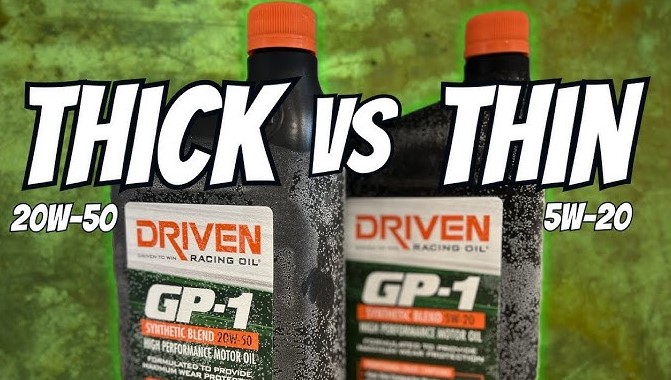
Is 20W-50 Thicker Than 10W-40?
At normal engine operating temperatures, 20W-50 is generally thicker than 10W-40. The second number describes the oil’s hot-viscosity grade, so an SAE 50 oil meets a higher hot-viscosity range than an SAE 40 oil.
The first number adds another comparison. A 10W oil and a 20W oil must meet different low-temperature cranking and pumping requirements. The 10W grade is designed to meet a lower winter-temperature test threshold than 20W, but these labels do not tell you every detail about how two specific products behave at every temperature.
10W-40
Often used where the manufacturer permits SAE 40 hot-viscosity oil and the winter grade suits the climate.
20W-50
A thicker hot-viscosity option for engines whose specifications permit it, but it may be unsuitable for cold weather or engines designed for lower-viscosity oil.
Understanding Engine Oil Viscosity and SAE Grades
Viscosity measures a fluid’s resistance to flow. A high-viscosity oil is generally thicker and flows less readily than a low-viscosity oil under the same conditions. Temperature matters because engine oil usually becomes thinner as it heats and thicker as it cools.
The Society of Automotive Engineers, or SAE, publishes the J300 classification used for engine-oil viscosity grades. The classification sets limits for properties such as low-temperature cranking, low-temperature pumping, and kinematic viscosity at specified temperatures. It does not rank oils by overall quality.
A viscosity grade is only one part of an engine oil’s specification. API service categories, ILSAC standards where applicable, and manufacturer approvals address other performance needs. Two oils with the same SAE grade can have different additive packages and approvals, so they are not automatically interchangeable in every engine.
Source: autofocusblog.com
Single-grade oil
An oil classified with one viscosity grade, such as SAE 30 or SAE 60, without a winter grade in the multigrade designation.
Multigrade oil
An oil such as 5W-30 or 15W-40 that meets requirements for a winter grade and a hot-viscosity grade.
Kinematic viscosity
A measure of how a fluid flows under gravity at a specified temperature, commonly reported in centistokes or mm²/s.
High-temperature, high-shear viscosity
A measure of oil behavior under high temperature and high shear conditions that help represent demanding engine lubrication conditions.
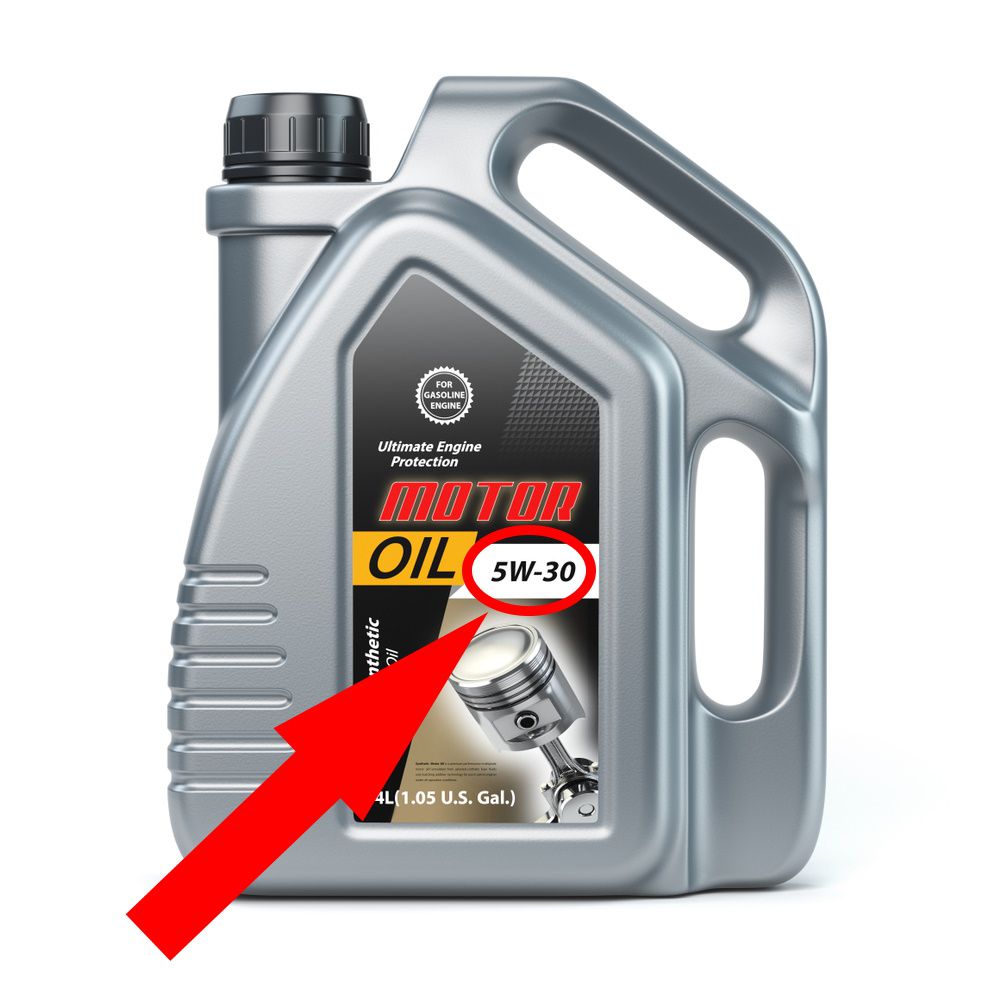
What Does the W Mean in 10W-40 or 20W-50?
The W stands for winter. It identifies the low-temperature performance class, not the word weight and not a guarantee that the oil is suitable for every winter climate.
In 5W-30, the 5W portion indicates compliance with defined low-temperature cranking and pumping requirements. The 30 portion identifies the hot-viscosity grade. A 0W oil must meet more demanding low-temperature requirements than a 5W oil, while the hot-viscosity numbers describe a separate set of properties.
For drivers in cold U.S. states, the winter rating can matter during overnight parking and cold starts. In hot climates, the oil still needs to meet the engine maker’s full requirements; ambient heat alone does not justify switching to a thicker grade.
Lower winter number
Generally indicates compliance with more demanding low-temperature cranking and pumping requirements.
Higher second number
Indicates a higher hot-viscosity classification, not a guarantee of better wear protection.
Why the Same Oil Can Feel Different in Summer and Winter
Oil can pour easily when warm and move slowly when cold. That is why a high-viscosity oil can be difficult to pump after a vehicle sits outside on a freezing night, even though it flows more readily once the engine reaches operating temperature.
Multigrade oils use base oils and viscosity modifiers to meet specified requirements across a broader temperature range. Their behavior is measured under standardized tests, so the SAE label provides more useful information than a simple visual check or a pour test at home.
Cold starts
The oil must reach bearings and other lubricated parts promptly, so the correct winter grade matters.
Hot operation
The oil must retain suitable viscosity and resist breakdown under the engine’s expected operating conditions.
Engine Oil Thickness Chart: Common Grades Compared
The following chart compares familiar engine-oil grades and their general uses. It is a practical overview, not a complete SAE specification table or a universal recommendation for every vehicle.
The first number in a multigrade rating describes winter performance requirements, while the second identifies the hot-viscosity grade. SAE 60 has a higher hot-viscosity classification than SAE 50, but a single-grade SAE 60 oil does not carry a multigrade winter rating such as 10W or 20W.
The actual oil you should use depends on the engine’s required grade, its applicable performance specifications, the climate, and any manufacturer-approved alternatives. Never choose a grade solely because it appears farther down a thickness chart.
Source: autopadre.com
0W-20
A relatively low hot-viscosity grade used in many modern engines designed for fuel efficiency and specified oil flow.
5W-30
A common multigrade oil for many gasoline vehicles, but it is suitable only where the manufacturer permits it.
5W-40
A higher hot-viscosity grade used in some engines that require or allow SAE 40 oil.
10W-40
A familiar multigrade grade for certain older and other specified engines.
15W-40
Common in many heavy-duty diesel applications and some other engines that specifically call for it.
20W-50
A high hot-viscosity multigrade oil used in some approved applications, including certain older engines and specific operating conditions.
SAE 60
A high hot-viscosity grade associated with selected competition or specialized applications when the engine specification permits it.
How to Read an Oil Thickness Chart Correctly
Start by comparing the hot-viscosity grades only when that is the question you need to answer. A 50-grade oil generally has a higher kinematic-viscosity range at 100°C than a 40-grade oil, while a 60-grade oil has a higher range than a 50-grade oil.
Next, check the winter rating. Two oils with the same second number can have different low-temperature classifications. For example, 5W-40 and 15W-40 share the same hot-viscosity grade but have different winter requirements.
Finally, check the specifications on the bottle and in the owner’s manual. An oil that appears to be the right thickness may still lack an approval required for a turbocharged gasoline engine, a modern diesel with an emissions system, or another specialized design.
Compare like with like
Use the same temperature and viscosity measurement when comparing products.
Check the full label
Confirm the SAE grade and the required API, ILSAC, ACEA, or manufacturer specifications where applicable.
Is Thicker Engine Oil Better for Your Engine?
Thicker engine oil is not automatically better. The right oil must flow through the engine’s passages, reach moving parts, and maintain an appropriate lubricating film under the conditions for which the engine was designed.
An oil with higher viscosity can help maintain a thicker fluid film under some conditions, but that does not mean it will protect every engine better. If it is too thick for the design, it can increase pumping losses, delay oil delivery during a cold start, and affect systems that depend on controlled oil flow.
Modern engines may use tight bearing clearances, turbochargers, hydraulic valve controls, and variable valve timing systems. Those features can depend on a specific viscosity range. Changing from a recommended 0W-20 to a much thicker oil without approval can cause problems even if the engine seems to run normally at first.
The useful question is not whether the thickest oil offers the most protection. It is whether the selected oil meets the engine maker’s viscosity and performance requirements under the conditions the vehicle will face.
Source: piketransit.com
Potential benefit in a suitable application
A specified higher-viscosity oil may help maintain the intended lubricating film at high operating temperatures or in an engine designed for that grade.
Potential drawback
Excessive viscosity can increase flow resistance, affect cold-start lubrication, and interfere with oil-dependent engine systems.
Fuel economy
Higher viscosity can increase internal friction and pumping losses, which may reduce fuel efficiency under some conditions.
Oil pressure
A higher pressure reading with thicker oil does not prove that every engine part receives the correct oil flow.
Does Thicker Oil Increase Oil Pressure?
Thicker oil can increase the pressure shown by an engine’s oil-pressure gauge under some conditions because it offers more resistance to flow. However, oil pressure and oil flow are different things, and a higher gauge reading does not automatically mean better lubrication.
An engine’s oil pump, pressure-relief valve, passages, and clearances all affect the result. If a warning light comes on or a pressure reading falls outside the manufacturer’s specified range, diagnose the cause rather than using thicker oil to hide the symptom.
Never assume that a change from 5W-30 to 20W-50 will solve low oil pressure safely. Worn bearings, a faulty pump, a clogged pickup, a damaged sensor, or an incorrect oil level may require a different repair.
Check the oil level
Follow the owner’s manual procedure and confirm that the engine has the specified amount of oil.
Check warnings promptly
If the oil-pressure warning remains on while the engine is running, stop the engine as soon as it is safe and arrange diagnosis.
Can Thick Oil Damage an Engine?
Yes, using an oil that is too thick for the engine can contribute to lubrication problems. The risk depends on the engine design, temperature, oil grade, and how the vehicle is operated.
A thick oil may take longer to circulate during a cold start. It may also affect hydraulic tensioners, variable valve timing components, or other parts that depend on oil flow. In some cases, it can increase energy losses or prevent the lubrication system from operating as intended.
The effect is not identical in every engine. A grade approved for a particular performance engine may be wrong for a modern commuter car. Follow the manufacturer’s instructions rather than treating viscosity as a universal measure of protection.
Avoid unapproved changes
Do not move to a substantially thicker grade without checking the permitted viscosity range and operating conditions.
Investigate symptoms
New engine noise, warning lights, poor cold-start behavior, or unusual pressure readings deserve diagnosis rather than an improvised oil change.
When Should You Use Thicker Engine Oil?
Use thicker engine oil only when the vehicle manufacturer’s guidance or a qualified engine builder supports that choice. Certain older engines, competition engines, and specialized applications may call for higher-viscosity grades, but age or hot weather alone does not establish a need.
A vehicle that consumes oil may have worn rings, valve seals, external leaks, or another mechanical issue. Switching to thicker oil might change the rate of consumption in some cases, but it does not repair the underlying fault. The right response depends on the cause and the engine’s approved oil options.
Drivers in hot parts of the United States may wonder whether summer heat justifies 20W-50. The answer is still determined by the engine specification. Modern cooling systems regulate engine temperature, and the oil grade must be selected for the actual engine and operating conditions rather than outdoor temperature alone.
Source: vehiclefreak.com
Older engines
Some older engines were designed for higher-viscosity oils, but use the grade recommended for the exact model and conditions.
High-performance driving
Track use can increase oil temperatures and loads. Follow the vehicle maker’s severe-use guidance or the engine builder’s documented recommendation.
Oil consumption
Measure consumption and inspect for leaks or mechanical faults before deciding whether an approved alternative grade is appropriate.
Hot climates
Ambient heat does not automatically justify thicker oil. Confirm that the selected grade is allowed for the engine and climate.
Is 20W-50 Good for Older Cars?
20W-50 can be suitable for some older vehicles, including certain engines designed around higher-viscosity oils. It may also be allowed in selected engines under specified conditions. But older does not always mean loose clearances or a need for thick oil.
Many older vehicles have specific viscosity recommendations based on ambient temperature. A classic car manual may include a viscosity chart that differs from modern recommendations. Check the exact model year, engine type, and climate guidance before selecting a grade.
If an older engine has low oil pressure, smoke, leaks, or high oil consumption, identify the likely cause first. A higher-viscosity oil can change symptoms without fixing worn components or damaged seals.
Read the vehicle manual
Look for the original viscosity chart, approved alternatives, and temperature limits.
Consider the engine’s condition
Use measured oil consumption, pressure checks, leak inspection, and repair history rather than age alone.
Is Thicker Oil Better in Hot Weather?
Not necessarily. An engine designed for 5W-30 or 0W-20 may still need that grade during hot weather because its oil pump, bearings, and oil-controlled systems were designed around specified viscosity properties.
For vehicles driven while towing, carrying heavy loads, or operating in severe conditions, the owner’s manual may provide a different maintenance schedule or permitted oil grades. Follow those instructions instead of making an unapproved viscosity change.
If the manual lists several approved grades, choose one that matches the expected temperature range and operating conditions. If it lists only one grade, ask a qualified technician or the manufacturer before deviating from it.
Use the climate chart
Follow any ambient-temperature chart supplied for the exact engine.
Check severe-service guidance
Towing, sustained high speeds, and track driving may have separate oil requirements.
How to Choose the Right Engine Oil Viscosity
Choose engine oil by starting with the owner’s manual, then matching the required viscosity grade and performance specification. This method is more reliable than selecting the thickest bottle on a shelf or relying on advice meant for a different engine.
The vehicle’s year, make, model, engine code, fuel type, emissions equipment, and intended use can all affect the correct choice. Even vehicles from the same model year may require different oils when they use different engines.
Once you know the required grade, select a product that meets the applicable performance requirements. If you cannot find the exact oil, consult the manufacturer or a qualified service professional before using a substitute.
Source: engineoiljournal.com
Step 1: Find the specification
Check the owner’s manual, under-hood service information where provided, or the manufacturer’s official service resources.
Step 2: Match the viscosity
Choose the stated SAE grade or a permitted alternative listed for your conditions.
Step 3: Match performance standards
Confirm the required API, ILSAC, ACEA, or vehicle-specific approval, as applicable.
Step 4: Consider driving conditions
Review approved options for cold weather, towing, high-speed operation, or other severe service.
Step 5: Follow service intervals
Change oil and the filter according to the maintenance schedule, including any severe-service interval that applies.
What If Your Engine Oil Is Too Thin?
Oil that is below the specified viscosity may not provide the intended lubrication under all operating conditions. However, the appearance of the oil on a dipstick cannot reliably establish whether it is too thin. Engine oil naturally becomes less viscous as it heats, and many modern oils are designed to be relatively fluid.
If the engine uses oil, develops low pressure, or makes unusual noises, check the oil level and investigate the cause. Fuel dilution, overheating, mechanical wear, and incorrect oil selection can affect performance. Do not diagnose viscosity problems from color or feel alone.
If the wrong oil was installed, check the product label against the manufacturer’s specification. A service professional can advise whether the oil should be changed promptly based on the mismatch and the engine’s condition.
Check the exact oil grade
Read the container and service record rather than guessing from the oil’s appearance.
Look for related faults
Investigate leaks, fuel dilution, overheating, or abnormal pressure instead of assuming the oil itself is the only problem.
What If You Cannot Find the Recommended Oil?
Do not automatically buy a thicker oil as a substitute. Search for the manufacturer’s approved alternatives and confirm that the replacement meets the required performance category.
If the engine is low on oil and the correct product is unavailable, consult the owner’s manual for emergency guidance or contact a qualified service provider. Running an engine with too little oil can cause severe damage, so the decision should consider the immediate risk as well as the grade mismatch.
For a routine oil change, waiting until the correct specification is available is generally preferable to making an unapproved long-term change. If you must act urgently, obtain model-specific advice rather than relying on a universal rule.
Avoid guessing
Confirm both viscosity and performance specifications before using a substitute.
Protect the engine
Do not continue driving with a low-oil-pressure warning or a dangerously low oil level.
Common Mistakes When Choosing Thick Engine Oil
The biggest mistake is assuming that thicker oil always provides more protection. Engine lubrication depends on the right balance of viscosity, oil flow, additives, operating temperature, and engine design.
Another common error is using a grade recommended for a different vehicle. Advice for an older V8, a racing motorcycle, or a heavy-duty diesel may not apply to a modern turbocharged passenger car. Similar-looking oil containers can also carry different performance specifications.
Avoid choosing oil based on color, a home pour test, or a single oil-pressure reading. Those clues cannot replace the manufacturer’s requirements or proper diagnosis.
Source: cdn.shopify.com
Mistake: Choosing the highest number
A higher hot-viscosity grade is not automatically better. Use the viscosity specified or permitted for your engine.
Mistake: Ignoring the winter grade
A 20W oil may not meet the cold-start requirements of an engine that calls for 0W or 5W oil.
Mistake: Confusing pressure with protection
Higher oil pressure does not prove that the oil reaches every component at the required flow rate.
Mistake: Treating all oils as interchangeable
Engine oils for gasoline cars, heavy-duty diesels, motorcycles, and specialized equipment can have different requirements.
Mistake: Using oil to hide a fault
Thicker oil may change a symptom, but it cannot repair worn bearings, failed seals, a damaged pump, or a blocked pickup.
Can You Mix Thick and Thin Engine Oils?
Mixing two engine oils does not create a reliably predictable viscosity grade. The resulting blend depends on the oils’ base stocks, viscosity modifiers, additive packages, and proportions.
Many modern engine oils can be mixed in an emergency without an immediate chemical incompatibility, but the resulting mixture may not meet the original oil’s viscosity grade or performance specification. Routine mixing is best avoided when a correctly specified oil is available.
If you need to top off a low engine, use an oil that meets the manufacturer’s requirements whenever possible. Follow the owner’s manual for emergency top-up guidance and arrange service if the level drops repeatedly.
For routine service
Use the same approved viscosity grade and performance specification whenever practical.
For an emergency top-up
Follow the manufacturer’s guidance and avoid continuing to drive if the oil level or pressure presents a serious risk.
Frequently Asked Questions
Q
What Is the Thickest Engine Oil You Can Buy?
There is no single thickest engine oil across every product and application. SAE 60 is a high hot-viscosity grade used in certain specialized and racing applications, while some specialty lubricants may have different or higher viscosity characteristics. Always confirm that an oil is intended for your engine and meets its requirements.
Q
Is 20W-50 the Thickest Motor Oil?
No. SAE 20W-50 is a high-viscosity multigrade engine oil, but SAE 60 is a higher hot-viscosity grade. Some specialized racing products may use SAE 60 or other formulations designed for specific engines. The correct choice depends on the engine manufacturer’s specification, not just the highest viscosity number.
Q
Is SAE 60 Oil Thicker Than 20W-50?
At operating temperature, SAE 60 generally has a higher viscosity classification than the SAE 50 portion of 20W-50. However, SAE 60 alone does not provide the same winter-grade information as 20W-50. Compare the full specifications and intended applications before choosing between them.
Q
Can I Use Thicker Oil in an Older Engine?
Possibly, but only if the vehicle’s instructions or a qualified engine builder permit the grade. Some older engines call for higher-viscosity oils, while others have specific temperature-based recommendations. Check the manual and diagnose oil consumption, leaks, or low pressure before changing viscosity.
Q
Does Thicker Engine Oil Stop Oil Leaks?
Thicker oil may change how quickly oil passes through certain worn seals or clearances, but it does not repair a damaged gasket, seal, or engine component. A leak should be located and repaired when needed. Use the specified oil grade unless the manufacturer approves an alternative.
Q
Does Thicker Oil Protect an Engine Better in Hot Weather?
Not automatically. The oil must maintain suitable viscosity and flow under the engine’s actual operating conditions. A manufacturer-approved higher-viscosity grade may be appropriate for some engines or severe-service conditions, but unapproved thick oil can increase flow resistance and affect lubrication.
Q
Does Thick Engine Oil Increase Oil Pressure?
It can increase a pressure reading under some conditions because it resists flow more strongly. However, oil pressure is not the same as oil flow, and higher pressure does not prove that all parts receive proper lubrication. Diagnose abnormal readings according to the manufacturer’s service procedure.
Q
Should I Use Thick Oil in Winter?
Use the winter viscosity grade recommended for your engine and expected temperatures. Thick oil may circulate more slowly during cold starts, especially when its low-temperature properties do not suit the climate. A lower winter number, such as 0W rather than 20W, indicates compliance with more demanding low-temperature requirements.
✦ Wrapping Up
Conclusion
The thickest engine oil depends on the classification and application being discussed. SAE 60 is among the highest hot-viscosity grades used in specialized engine applications, while 20W-50 is a familiar high-viscosity multigrade oil for engines that permit it. Neither grade is automatically the best choice for every car or truck.
Oil viscosity affects how the lubricant flows during a cold start and how it behaves at operating temperature. Choosing a grade that is too thick can create flow problems, affect oil-controlled systems, and increase pumping losses. Choosing the correct grade also requires checking the performance specifications and approvals listed by the vehicle manufacturer.
For most drivers in the United States, the safest approach is simple: identify the exact engine, read the owner’s manual, and use the required or explicitly approved oil. If the engine consumes oil, loses pressure, or develops unusual noise, find the cause before using thicker oil as a workaround.
💡 Key Takeaway
Before buying engine oil, check the owner’s manual for the exact SAE viscosity grade, temperature guidance, and required performance standards. Use SAE 60 or 20W-50 only when the engine’s documented requirements allow that choice.
How is motor oil produced? It sounds like a oneline answer, but the real process runs through distillation, cracking, dewaxing, polymerization, additive…
If you’re searching for where to put motor oil, use the opening marked for engine oil. On most cars, that’s the cap on the valve cover or upper engine. Never…
Learning how to drain motor oil is usually simple when the engine has a clear sump plug. Motor oil, also called engine oil, lubricates, cools, and cleans the…