What Motor Oil Is the Thickest: Best guide
If you typed "what motor oil is the thickest" into your browser, you're probably staring at a half-worn engine, a gear case weeping, or a diesel truck that runs hot on mountain grades. The answer isn't one number. It shifts depending on whether you're filling a passenger car, a transmission housing, or a marine outboard.
Per SAE J300, the standard that defines engine-oil viscosity grades, the thickest single-grade engine oil is SAE 60. But SAE J2294, the gear-oil standard, climbs all the way to SAE 251. That gap changes your entire decision.
Let's sort it out.
What Motor Oil Is the Thickest
The Shortest Honest Answer: "Thickest" Changes Based on What You're Lubricating
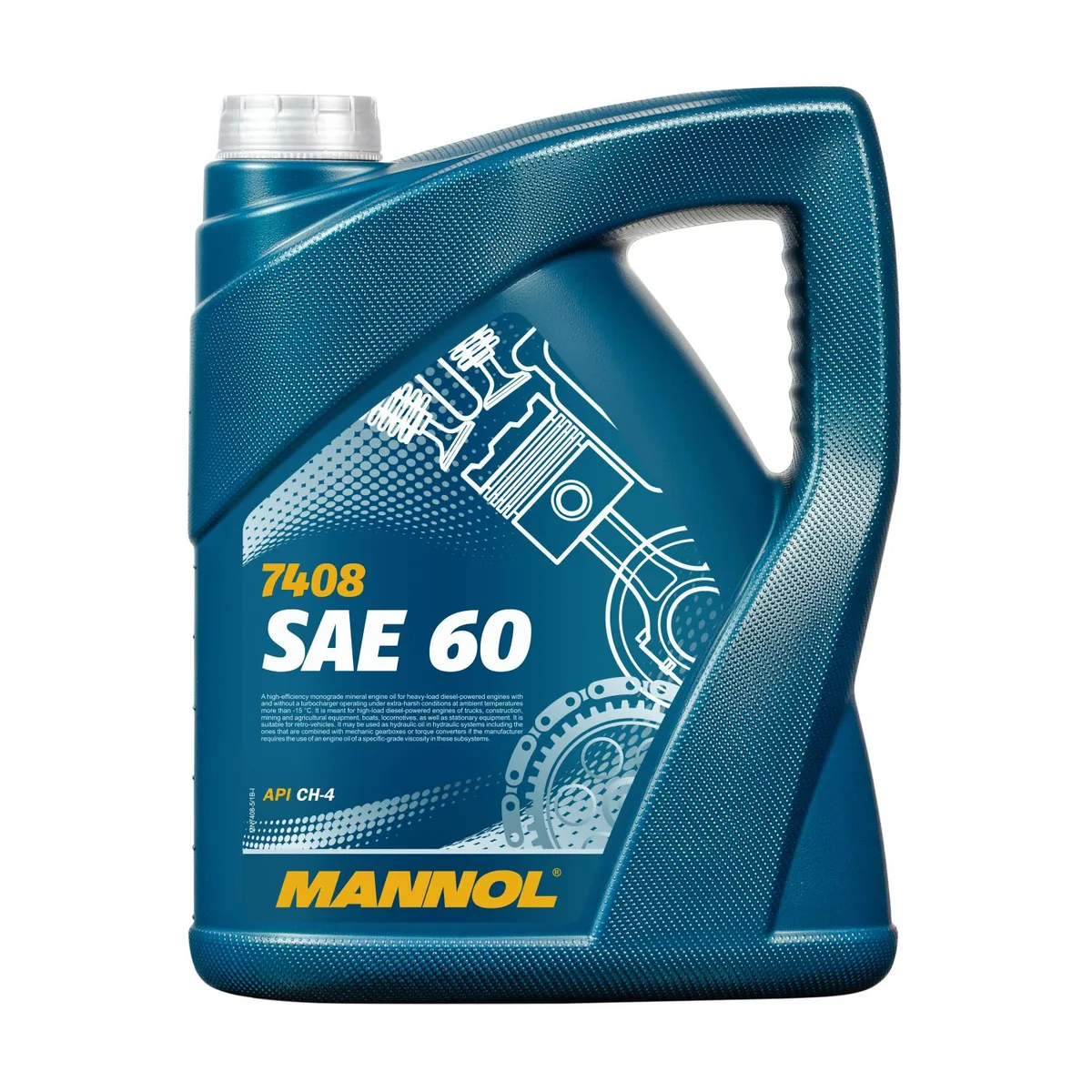
The thickest engine oil under SAE J300 is SAE 60. The thickest gear oil under SAE J2294 is SAE 251. Which one applies depends on the component.
A four-cylinder engine isn't a differential. Match the standard to the part.
What "Thickest" Actually Means: SAE J300 Engine Oils vs J2294 Gear Oils and the cSt Numbers Behind Them
Here's where most people get tripped up. SAE J300 rates engine oils by their minimum viscosity at 100 °C. SAE J2294 rates gear oils at 40 °C.
Those two reference temperatures don't line up, so you can't just compare the numbers side by side.
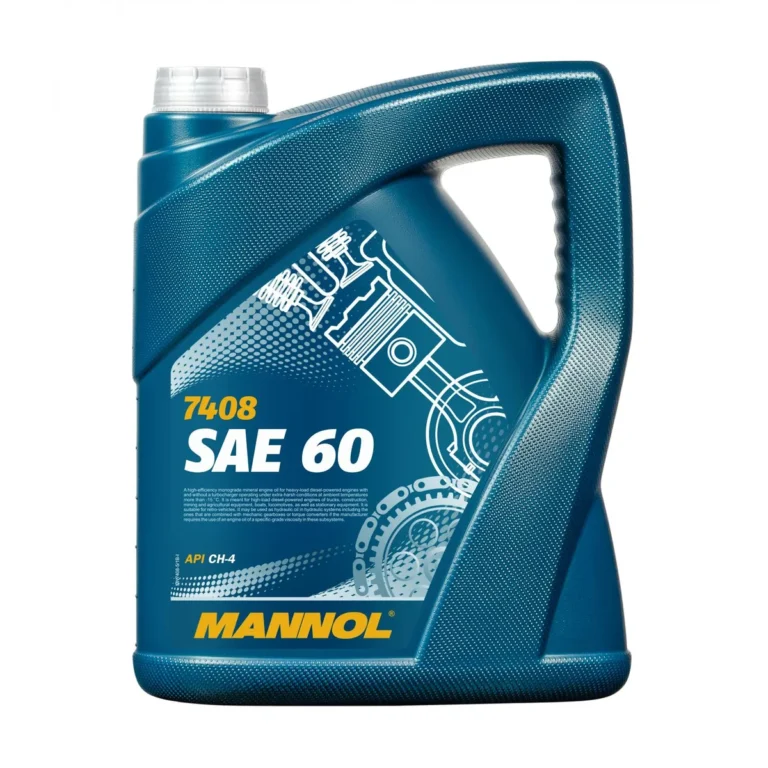
The thickest single-grade engine oil under J300 is SAE 60, which must hold a minimum of 21.3 centistokes at 100 °C. The thickest multi-grade engine oil is 25W-60. The W-number tells you the cold-crank performance.
The 60 tells you the hot-end thickness, same as SAE 60.
On the gear-oil side, SAE 251 sits at 45.0 to 59.9 cSt measured at 40 °C. That's roughly equivalent to ISO VG 460 in the industrial hydraulic world. As of 2026, you'll find SAE 251 in heavy differentials, military transmissions, and large mining gearboxes.

| Grade | Standard | Reference Temp | Viscosity Range |
|---|---|---|---|
| SAE 60 (engine) | J300 | 100 °C | ≥ 21.3 cSt |
| 25W-60 (engine) | J300 | 100 °C hot / −10 °C cold | ≥ 21.3 cSt at 100 °C |
| SAE 140 (gear) | J2294 | 40 °C | 18.0 to 27.9 cSt |
| SAE 251 (gear) | J2294 | 40 °C | 45.0 to 59.9 cSt |
The key takeaway: "thickest" is not one number. It's a standard, a reference temperature, and a range. If you want the full grade tables, SAE publishes them through their standards program at sae.org.
Which Application Are You Dealing With? Diesel Trucks, Classic Cars, Gearboxes, Aviation, and Marine
If your component is an engine, you're on J300. If it's a gear case, axle, or transmission, you're on J2294. That single fork changes everything that follows.
Heavy-duty diesel trucks in hot climates: If you're pulling mountain grades in 40 °C ambient, 20W-50 or 20W-60 under API CK-4 or FA-4 keeps the film intact at 140 to 150 °C. A 15W-40 works for moderate loads. Skip the 0W-20 here.
It'll shear thin too fast under sustained heavy torque.
Classic or worn engines: If your 1970s small-block Chevy or Mopar V8 has 0.002 to 0.005 in bearing over-clearance, a single-grade SAE 40 or SAE 50 restores the oil film a modern 5W-30 can't. If the clearances are still near stock, you don't need SAE 60. You need SAE 30 or 40.
Gearboxes, differentials, and transfer cases: If it's a hypoid rear axle, SAE 90 is the baseline. If it's a heavy commercial or off-road diff running hot, step up to SAE 140. Mining and military applications use SAE 251.
For a marine outboard lower unit, you need SAE 90 or 140 that meets the NMMA TC-W3 spec, not a generic gear oil.
Aviation piston engines: If the manual calls for MIL-PRF-8821 or SAE AS 795, you're looking at SAE 80W or 10W-40. Turbine engines run MIL-PRF-23699 (MIL 7568) at SAE 5. That's the thickest jet oil in service.
SAE 251 has no place in a turbine gearbox.
How to Pick the Right Thick Oil in Six Steps
Walk through these in order. Skip a step and you'll end up with the wrong oil in the wrong component.
Name the component. Engine, transmission, differential, hydraulic circuit, outboard. This picks your standard: J300, J2294, or SAE AS.
Pull the OEM spec sheet. Owner's manual, service bulletin, or the API, ACEA, or MIL-PRF number stamped on the filler cap. Note the minimum and maximum SAE grades. If it says "5W-30 or 0W-20," you're locked. Don't upgrade to 20W-60.
Match the W-number to your lowest ambient. If your coldest start is −20 °C, you need at least a 15W. A 25W won't flow. The oil pump will cavitate and you'll lose bearing pressure.
Match the hot number to your load and clearance. New engine, mild duty, hot ambient? Go 30 or 40. Worn clearances, sustained heavy load, 45 °C+ ambient? Go 50 or 60.
Check the base oil and additive package. If your vehicle has a GPF or DPF, you need a low-SAPS synthetic (≤ 50 ppm P/S). A thick mineral SAE 60 with a high-phosphorus package will clog the filter within two drain intervals.
Verify the pour point and CCS from the SDS. Don't trust the bottle label alone. A "SAE 60" that pours at 10 °C is a different product from one that pours at −5 °C. The cold-crank number matters more than the hot number for start-up survival.
If any step gives you a conflict (OEM says 0W-20, but your climate calls for 25W), the OEM spec wins. Warranty is not worth a cold-start gamble.
Where "Thickest" Backfires: Cold Starts, Viscosity Shear, and the Gear-Oil-in-Engine Trap
This is where "thickest" stops being an advantage and starts being a liability.
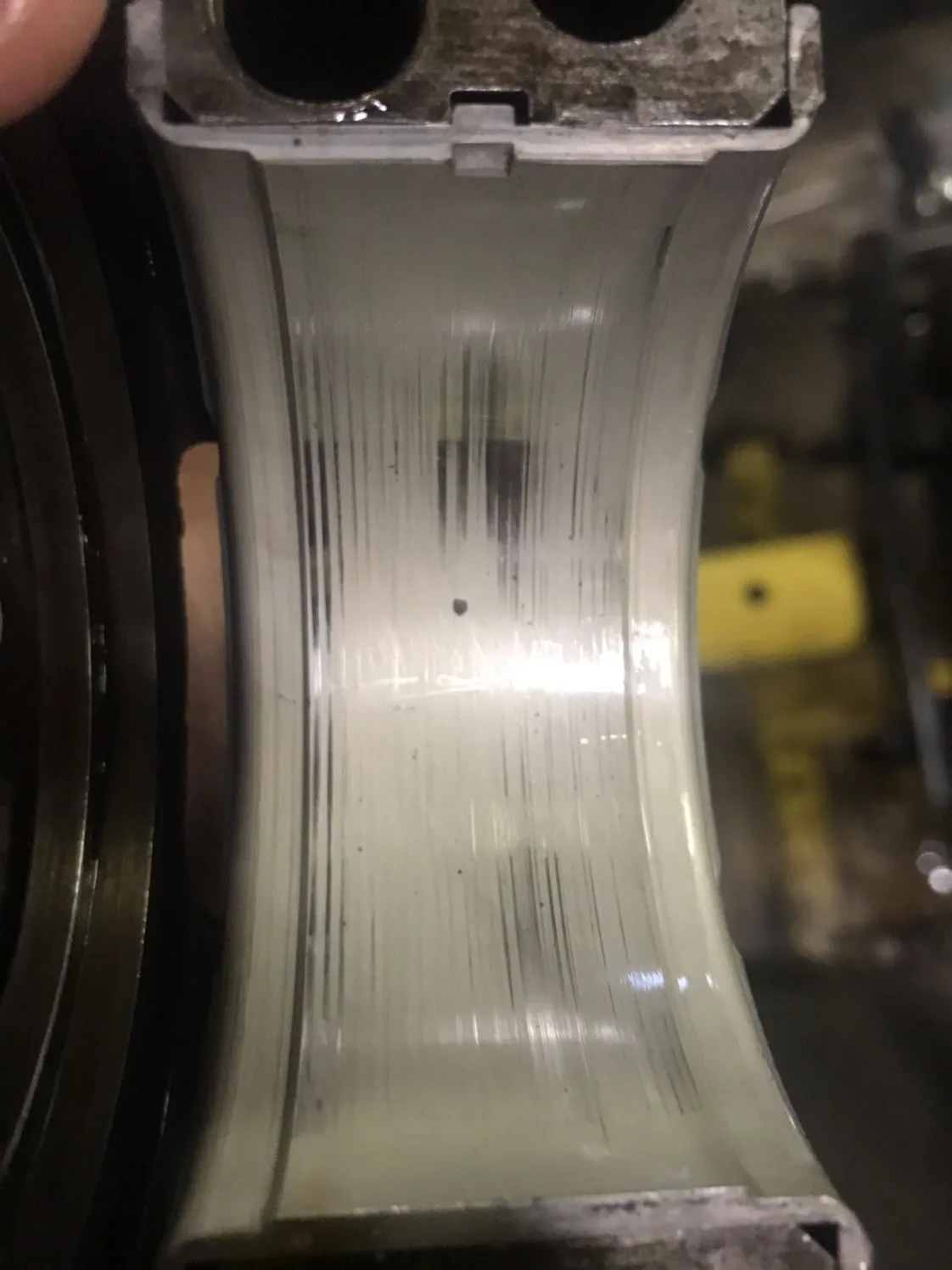
Cold-start failure. If you start a 25W-60 or a single-grade SAE 60 in a −10 °C morning, the oil is essentially cold syrup. The pump can't build pressure. The main bearings run dry for the first two to three seconds of cranking.
Engine teardown data from heavy-duty diesel applications shows this is a leading cause of scored journals in owners who "upgraded" to a heavier grade for their hot desert climate.
Viscosity shear. A cheap mineral SAE 60 shears down to SAE 40 behavior within 3,000 to 4,000 miles under load. You think you're running a thick oil. You're not.
A PAO-based SAE 60 with a VI above 145 holds its 100 °C spec for the full drain interval. If you're buying a heavy grade, buy the synthetic version or the thick advantage evaporates.
The gear-oil-in-engine trap. This shows up in every shop forum. SAE 251 and SAE 250 are J2294 gear oils. They carry no detergent-dispersant package and very little anti-wear (ZDDP) chemistry.
Pour SAE 251 into a car engine and you'll get sludge on the valvetrain and accelerated cam lobe wear within a few thousand miles. The viscosity number looks "thick," but the additive package is wrong for a combustion environment.
Fuel-economy hit. If you swap a 0W-20 for a 20W-60 in a modern 2.0 L turbo four, manufacturer-published friction data shows a 3 to 6 percent MPG penalty. That's real money at the pump, and it's the trade-off for the extra film thickness.
The rule is simple: if/then. If your OEM spec allows a wider band, then a heavier grade is your safety margin. If the spec is narrow (0W-20 only), then "thickest" is not on the menu and you should not force it in.
SAE 60 vs 25W-60 vs SAE 251: Side-by-Side Specs and When Each One Wins
These three grades cover the thickest territory across both SAE standards. The table below pulls the key numbers from J300 and J2294 so you can see where the gaps are.
| Spec | SAE 60 (single) | 25W-60 (multi) | SAE 251 (gear) |
|---|---|---|---|
| Governing standard | SAE J300 | SAE J300 | SAE J2294 |
| Viscosity reference temp | 100 °C | 100 °C | 40 °C |
| Minimum viscosity | ≥ 21.3 cSt | ≥ 21.3 cSt | 45.0 to 59.9 cSt |
| Pour point (max) | Varies by base oil | −10 °C | −2 °C |
| Typical viscosity index | 110 to 165 | 130 to 165 | 120 to 170+ |
| Additive package | Detergent, dispersant, ZDDP | Detergent, dispersant, ZDDP | EP (extreme-pressure) only |
| Component | Engine | Engine | Gearbox, axle, hydraulic |
When SAE 60 single-grade wins: If your classic V8 has worn bearing clearances and you garage the vehicle or live in a hot climate. No W-number means no cold-flow promise. You trade winter startability for maximum hot-end film thickness.
When 25W-60 wins: If you need that same thick hot-end but still crank in mild cold, down to about −10 °C (14 °F). Racing engines, off-road rigs, and heavy-duty diesels in desert climates run this. The 25W prefix keeps you legal to that floor.
When SAE 251 wins: If the component is a gear housing, not an engine. Heavy differentials, limited-slip axles in mining or military applications, and large hydraulic gear circuits. This is a J2294 product with an EP package.
It has no detergent chemistry. It belongs in a gear mesh, not a combustion chamber.
Quick Decision Guide: Match Your Climate, Load, and Component to a Grade
Use this if/then flow to lock in your grade in under a minute.
If your lowest expected ambient is below −10 °C (14 °F), then a 25W won't flow. Drop to 15W or 5W. The W-number is your cold-start floor.
If the component is a gear case (differential, transmission, transfer case), then you are on J2294, not J300. SAE 90, 140, or 251. Engine oil in a gear housing is the wrong chemistry.
If the OEM spec is narrow (0W-20 or 5W-30 only), then do not override it. A thicker grade voids your powertrain warranty and can trap soot in a GPF.
If you're running a worn engine in a hot climate and the OEM band allows it, then SAE 40 or 50 single-grade is the sweet spot. SAE 60 is the ceiling. Beyond that you're in gear-oil territory.
If your vehicle has a DPF or GPF, then any thick oil must be a low-SAPS synthetic (≤ 50 ppm P/S). A mineral SAE 60 will clog the filter within two drain intervals.
If you cannot find your exact grade, then check the SAE J300 or J2294 table at sae.org and pick the closest grade within the OEM's allowed range. Never round up outside that range.
Frequently Asked Questions
Can I pour SAE 251 gear oil into my car engine?
No. SAE 251 is a J2294 gear oil with an extreme-pressure additive package and no detergent or dispersant chemistry. In an engine it will form sludge on the valvetrain and accelerate cam lobe wear within a few thousand miles.
Use a J300 engine oil instead.
What is the actual difference between SAE 60 and 25W-60?
The hot-end viscosity is identical, both minimum 21.3 cSt at 100 °C. The difference is cold flow. SAE 60 single-grade has no W-number, so it offers no cold-crank guarantee. 25W-60 must pass a CCS test at −10 °C.
In practice, SAE 60 is for garaged or hot-climate engines only.
Is thicker oil always better for a worn engine?
No. Thicker oil helps if your bearing clearances have grown past stock and you need extra film thickness at operating temperature. But if the clearances are still near spec, a thick oil just increases pumping drag and fuel consumption.
Match the grade to the measured clearance, not to the engine's age.
What is the thickest oil I can run in a diesel truck?
For a heavy-duty diesel in a hot, loaded environment, 20W-60 or 25W-60 under API CK-4 or FA-4 is the practical ceiling. SAE 60 single-grade works in some applications, but the cold-start risk in any season below 10 °C makes it a poor choice for a truck that needs to turn over in the morning.
Can I blend SAE 60 with a lighter oil to create a 5W-60?
You can physically mix oils, but the result is not a certified multi-grade. The W-number on a blended oil is meaningless. If you need a 5W-60, buy one that passed the CCS test at −30 °C.
A homemade blend will not have the shear stability or pour-point guarantee of a factory multi-grade.