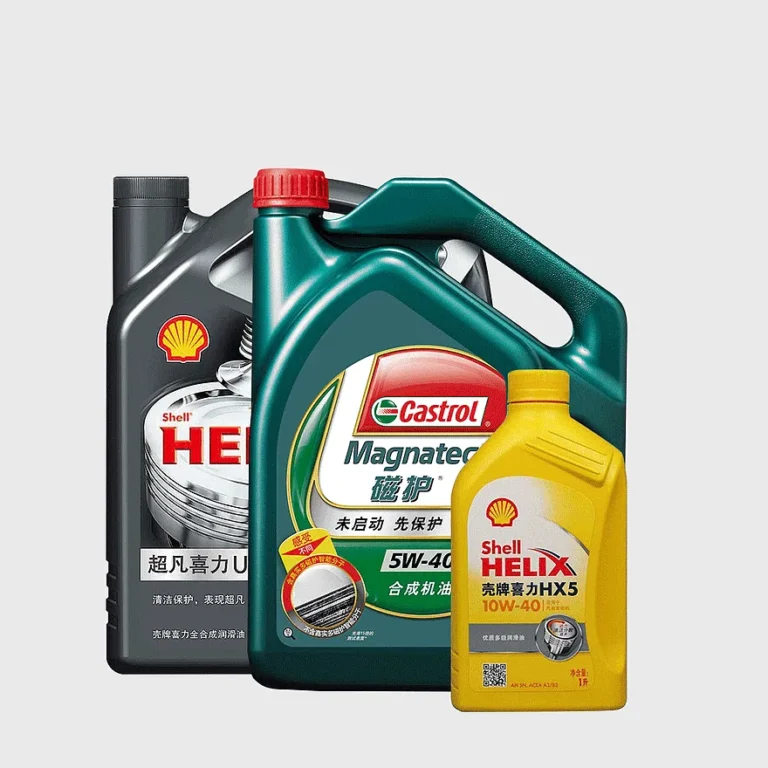
Is Motor Oil the Same as Engine Oil: Easy guide
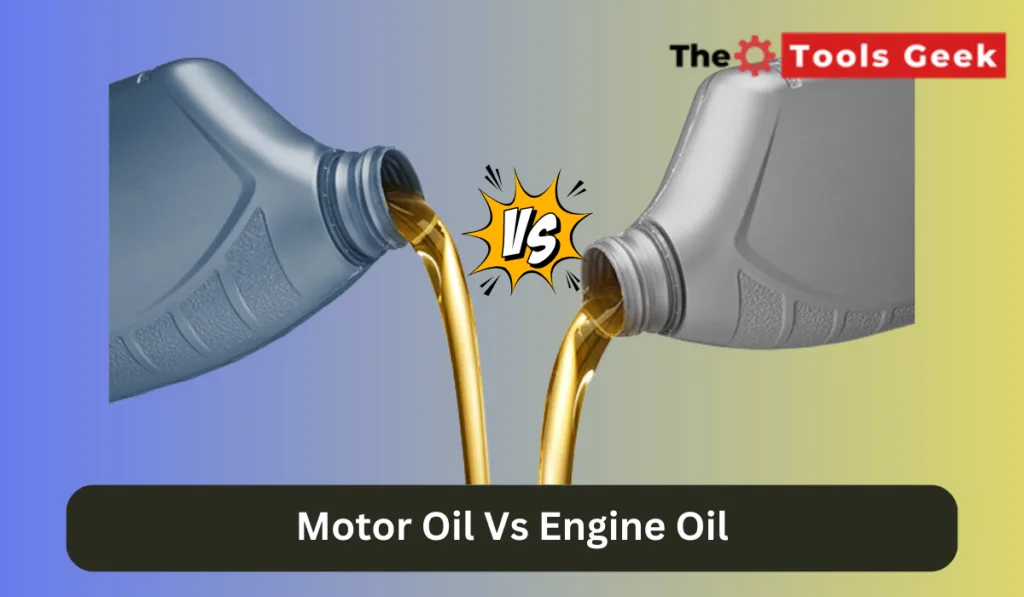
The question "is motor oil the same as engine oil" shows up in every forum thread, owner's manual, and hardware-store aisle you'll ever open. And here's the thing. For your car, your diesel pickup, or that four-stroke mower in the shed, yes.
They are the exact same product. The word just shifts depending on where you grew up and which shop you walk into.
As of 2026, the SAE International viscosity standard (SAE J300) still governs every grade from 0W-20 up to 25W-50. The American Petroleum Institute publishes the service-level chart that sits on every compliant bottle, so the label word is cosmetic. The spec underneath is what your engine actually sees.
The one real exception is marine outboard-motor oil, which runs on a completely different additive package.
Short Answer: Yes, They're the Same Bottle (With One Big "But")
For a passenger car, a light truck, or a small diesel, motor oil and engine oil are the same product.
The two words are just regional names for one SAE/API-spec lubricant.
The single exception is outboard-motor oil for boats.
That marine product follows the JASO T4 standard instead of API.
So for every garage and driveway in the country, the words are interchangeable.
Here's the nuance people miss. In US auto-parts stores, the aisle sign says "Motor Oil." Walk into a Shell or Castrol station in Manchester and the shelf tag reads "Engine Oil." Same SKU, same API SP donut, same SAE 5W-30 on the front. The word swap is purely translation and retail branding.
No mechanic, no OEM, no spec sheet will tell you they are two different fluids. They aren't.
The "but" lives in the marine aisle. If you grab a bottle of outboard-motor oil for a two-stroke or a four-stroke boat engine, you're looking at a JASO-certified product. It carries anti-foam agents, saltwater anti-corrosion additives, and, in two-stroke versions, it gets mixed into gasoline.
That is a fundamentally different formulation from the 0W-20 you pour into your Civic.
Where the Two Names Actually Come From
The split is geographic and generational. In North America, "motor" became the default word for the whole vehicle. You fill the motor, you check the motor oil, you take the car to a motor-oil-change place.
The term stuck in every OEM manual published by Ford, GM, Toyota, and Honda since the 1980s.
Across the Atlantic, "engine" has always been the word. A UK driver reads "engine oil" in their BMW or Range Rover manual. Australian and South African markets follow the same convention.
The EU language versions (Möton in German, huile moteur in French, olio motore in Italian) all translate back to "engine oil" in English procurement sheets.
So if you've pulled up a translated service bulletin from a European dealership and seen "engine oil, ACEA C3, 0W-30" while your US owner's manual says "motor oil, API SP, 0W-30," you're reading the same requirement. The ACEA and API designations cross-reference cleanly. A bottle that meets API SP and ACEA C3 satisfies both lists.
The word on the front label changes. The chemistry in the jug does not.
One more place the terms fork. In marine and small-engine contexts, "motor oil" specifically means the outboard or go-cart lubricant. "Engine oil" stays generic and covers every internal-combustion sump.
That's why a Yamaha outboard manual says "outboard-motor oil, JASO T4" and never just "engine oil." The qualifier keeps you from reaching for your car's 5W-30.
Side-by-Side: What's Identical and What Isn't
Let's put the two terms next to each other so you can see exactly where they overlap and where they don't.
| Attribute | "Motor Oil" (US automotive use) | "Engine Oil" (UK/EU automotive use) |
|---|---|---|
| SAE viscosity grade | 0W-20, 5W-30, 10W-40, etc. | Identical SAE J300 grades |
| API service level | SP (2020), SN, CK-4 | Same API letter system |
| ACEA category | A3/B4, C3 (where applicable) | Identical ACEA sheet |
| Typical container | 1 qt, 1 gal, 4 L, 5 L | Same sizes, metric labels common |
| Retail shelf label | "Motor Oil" | "Engine Oil" |
| Underlying product | SAE/API lubricant | SAE/API lubricant (same fluid) |
| Attribute | Outboard-Motor Oil (marine) | Automotive Engine/Motor Oil |
|---|---|---|
| Governing standard | JASO T1, T2, T4, T6 | API SP / ACEA / SAE |
| Additive focus | Anti-foam, saltwater rust, fuel-mix (2-stroke) | Detergent, anti-wear, oxidation inhibitor |
| Use in gasoline | Yes (2-stroke mix at 50:1 or 40:1) | No |
| Safe in automotive sump? | No (wrong friction modifiers) | No (no saltwater anti-rust) |
The table makes the real split obvious. For every road vehicle, the two words describe one fluid. For boats, "motor oil" carries a completely different chemistry, and you must not swap it into a car or truck.
When "Motor Oil" Means Something You Don't Want in Your Car
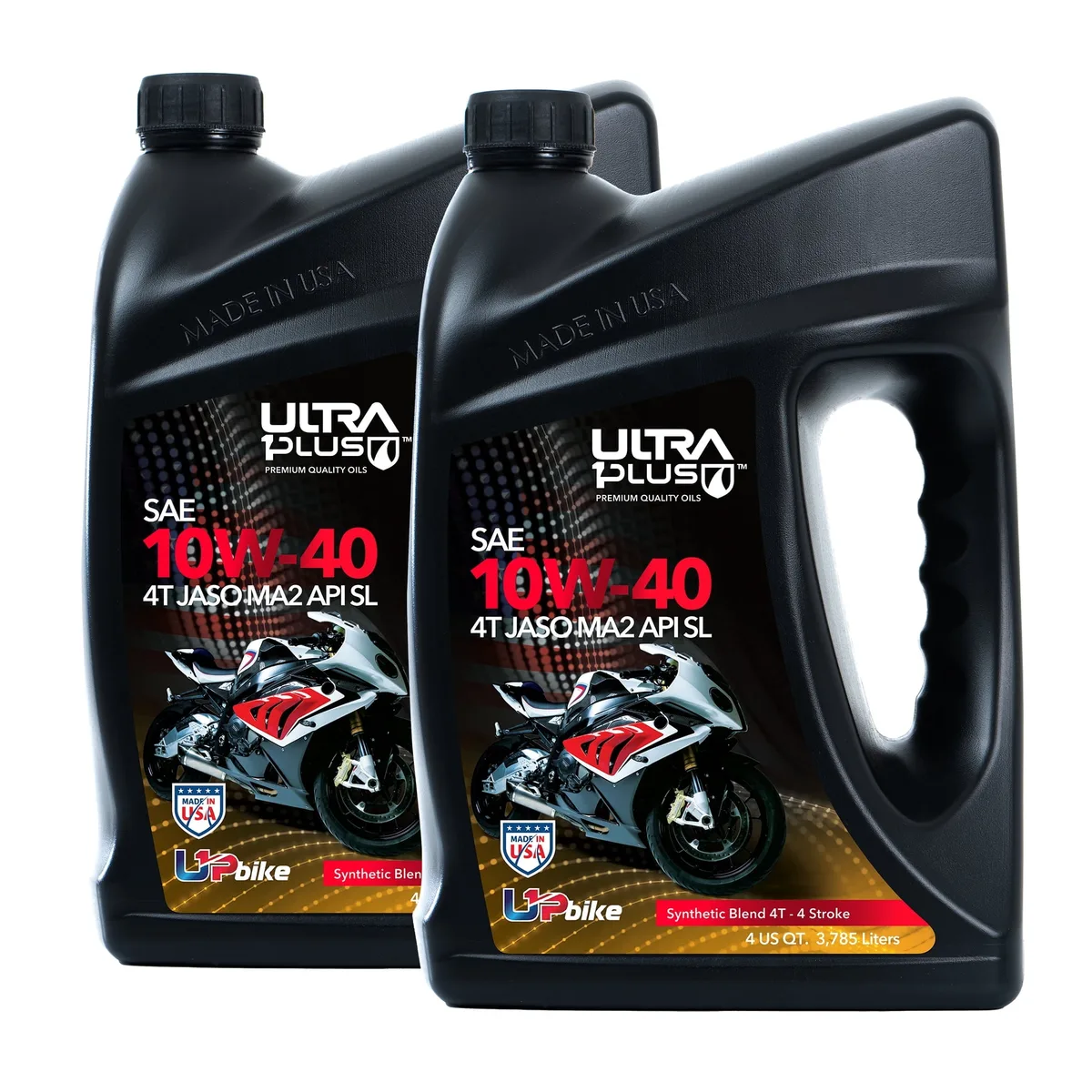
Here's the scenario that trips up plenty of new boat owners. You see "outboard-motor oil" on a shelf and your brain says, "Fine, it's still motor oil, I'll top the car up with it." Don't. JASO T4 outboard oil is engineered for a sealed, non-recirculating sump that gets drained and refilled every season.
It lacks the detergent load your car's oil pump needs to keep the crankcase clean over 7,500 miles. It also carries a higher proportion of anti-foam and rust-inhibitor additives tuned for saltwater, not for the thermal cycling your V6 runs through daily.
The reverse mistake is worse. Pouring automotive 0W-20 into a two-stroke outboard and mixing it into the fuel tank will destroy the carburetor and clog the fuel line in one weekend. Two-stroke marine oil is a thin, fuel-mixing lubricant.
It has no SAE viscosity rating you'd use for an engine that circulates 4 quarts of fluid.
If you're running a four-stroke outboard (Mercury, Yamaha, Johnson), the manual explicitly lists a JASO T4 grade, usually 10W-30 or 20W-40. Manufacturer specs confirm that using a standard API-SP automotive oil "in a pinch" for one season is technically survivable. But it will accelerate internal corrosion because that oil has zero saltwater anti-rust package.
One bad season and you're replacing a water pump and an impeller. Not worth the twenty bucks you saved at the auto store.
Stop Reading the Label, Start Reading the Spec Sheet
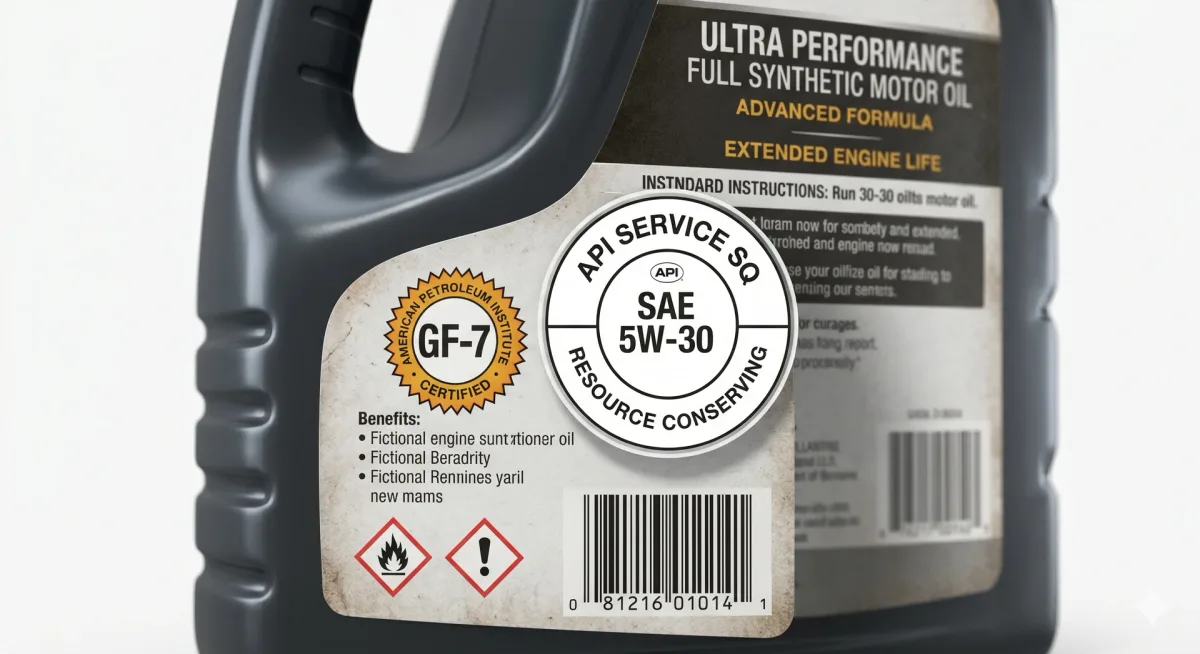
The front of the bottle says "Motor Oil" or "Engine Oil" and a big SAE number. That's the marketing layer. What your engine actually runs on lives on the back label or the printed data sheet.
Three things to check, in order:
- SAE viscosity grade. Match it to your owner's manual. A 2024 Honda Civic wants 0W-20. A 2019 Cummins diesel wants 0W-40 CK-4. Get the number right first.
- API service letter. The circular "donut" logo on the back carries a two-letter code. As of 2026, the newest passenger-car grade is API SP. If your manual says "API SN or higher," SP qualifies. If it says "CK-4," you need a heavy-duty diesel spec, not a passenger-car SN.
- ACEA category (if applicable). European and many modern CNG or hybrid engines list an ACEA sheet like C3 or E9. A bottle that stamps "ACEA C3" meets that requirement regardless of whether the front says motor or engine.
A practical habit: pull up your vehicle's owner's manual (most OEMs host a PDF on their site), find the oil-spec page, and write down the three data points. Then walk the store shelf and match the back label, not the front. If two bottles both say "motor oil" but one carries API SP / ACEA C3 and the other carries API SN, they are not the same product.
The word "motor" on the front didn't tell you that. The spec sheet did.
One more check. Some OEMs, like Toyota and BMW, publish an ILSAC or "BMW Longlife" approval list. Those are additive-package overlays on top of the SAE/API base.
If your manual references a specific OEM approval number, look for that stamp on the back. It's the final gate before you commit to the bottle.
The Substitutions That Actually Ruin an Engine (and the Ones That Don't)
You're halfway down a rural road, the oil light is on, and the last decent store was twelve miles back. What do you pour in? Here's the hierarchy from survivable to catastrophic:
- Wrong SAE grade, same API class. You need 0W-20 and the store only has 5W-30 API SP. Top off the two quarts you're missing. Drive home. Change the oil at the next opportunity. Short-term, the engine won't notice.
- Same SAE grade, older API class. Manual says SP, you grab an SN jug. Fine for a 500-mile drive. SP added improved LSPI (low-speed pre-ignition) protection, but SN will not destroy a modern turbo engine in one fill.
- Transmission fluid (ATF) into the sump. No. ATF is formulated for torque converters and planetary gear sets. It has zero anti-wear additives for camshafts and no oxidation stability for a 300°F crankcase. You'll see scuffing on the bearing surfaces within a few hundred miles.
- Gear oil or WD-40 as a "temporary fix." This is the one that ends in a tow truck. Gear oil carries EP (extreme pressure) sulfur-phosphorus additives that will coat and degrade your catalytic converter and O2 sensors. WD-40 is a penetrant, not a lubricant. It evaporates. You now have a dry engine.
- Marine JASO oil in a car sump. Covered in section four. Wrong friction modifiers, no detergent package, accelerated varnish. One season and your piston rings are stuck.
The rule is simple: if the SAE number and API letter are close, you'll survive a few hundred miles. If you're reaching for a completely different fluid category, stop. Call a friend.
Call roadside service. The engine is not the place to improvise.
FAQs: The Questions You're Still Googling
Can I use "engine oil" from a UK shop in my American car?
Yes, as long as the SAE grade and API service letter match your owner's manual. A UK bottle of Castrol Edge 0W-40 with API SP on the back is the same fluid as the American-labeled version. The word "engine" on the front is just the British retail term.
The spec on the back is what matters.
Does "motor oil" sound more casual than "engine oil"?
In a mechanic's shop, no one cares which word you use. In a written service request or procurement form, "engine oil" reads slightly more formal and is standard in UK, EU, and Australian documentation. "Motor oil" is the everyday US term.
Both are correct. Neither triggers a different product.
Is 2-stroke motor oil the same as car engine oil?
No. Two-stroke oil (sometimes called "motor oil" in marine and small-engine contexts) is a thin, fuel-mixing lubricant. It gets blended into gasoline at 40:1 or 50:1.
It has no SAE viscosity rating you'd use for a sump. Pouring it into your car engine is like pouring salad oil into a gearbox. Completely wrong product.
Why does my Toyota manual say "engine oil" but the AutoZone shelf says "motor oil"?
Toyota's US manuals have historically used "engine oil" even in English-language prints, likely because the source documentation is Japanese, where the term translates closer to "engine oil." The retail shelf uses "motor oil" because that's the term American consumers recognize. Same product. Different translation layer.
Do I need to worry about API SP versus SN for a 2019 vehicle?
For most 2019 cars, API SN was the required minimum at build. SP (introduced 2020) is backward-compatible and adds LSPI protection for turbocharged, direct-injection engines. If your manual says "SN or higher," SP qualifies.
You're safe either way. No need to downgrade to SN if SP is what's on the shelf.
Which Word Should You Use, and Does It Even Matter?
Honestly? It doesn't matter for the product on the shelf. You will never walk into a store and be refused a bottle because you said "engine oil" instead of "motor oil." The SAE number and API letter are the real identifiers.
Say the one that feels natural in your head.
Where the word does matter is in three specific situations. First, when you're writing a procurement list or a fleet maintenance log. Match the terminology your organization already uses so the warehouse doesn't log two SKUs for the same fluid.
Second, when you're reading a translated manual or a European service bulletin. "Engine oil, ACEA C3, 0W-30" is not a different requirement from "motor oil, API SP, 0W-30." Read the spec, ignore the label word. Third, when you're in the marine aisle.
Here, "motor oil" is a functional descriptor pointing to outboard or go-cart products. Adding the qualifier ("outboard-motor oil, JASO T4") keeps you from grabbing your car's 5W-30 and dumping it into a boat engine.
For everything else, the conversation is settled. Same fluid. Same spec.
Same engine. Pick the word that feels right, check the back label, and pour it in. That's the whole job.