Most passenger cars need about 4 to 6 US quarts of engine oil for a routine oil change, but the exact amount depends on the engine and vehicle.
If you maintain a car in the United States, knowing its oil capacity can save you a trip to the auto parts store. It can also help you avoid a costly mistake during a driveway oil change. Many small cars need around 4 quarts, while some larger engines need 6 quarts or more.
The right amount is not based on the car’s size alone. Engine design, oil filter size, model year, and whether the oil filter is changed can all affect the amount needed. Your owner’s manual or the vehicle maker’s official service information is the best place to find the exact capacity.
I recommend treating the listed capacity as a starting point, not a reason to pour in every drop at once. Add oil in stages, check the level as directed by the manufacturer, and stop when the reading is within the safe range. This simple habit helps protect the engine from both low oil and overfilling.
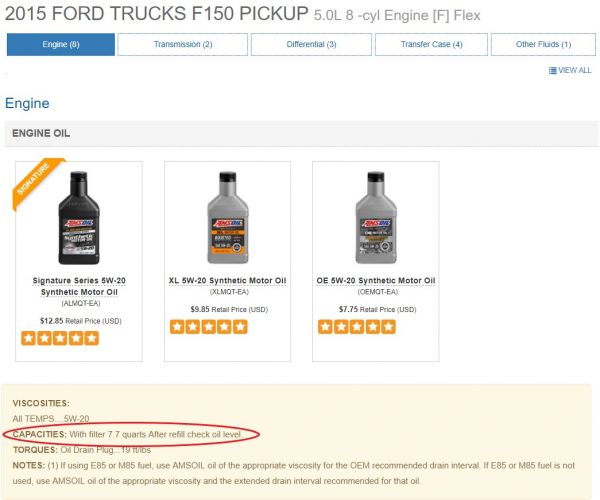
Source: blog.amsoil.com
How Many Quarts of Engine Oil Does a Car Need?
Most everyday passenger cars need about 4 to 6 US quarts of engine oil for a standard oil change. This range covers many compact sedans, family cars, and small crossovers, but it is not a universal rule. A vehicle with a small engine may need less than 4 quarts, while a larger engine may need 7 quarts or more.
The exact amount matters because engine oil must reach the parts that need lubrication without rising above the permitted level. Too little oil can reduce lubrication and cause excessive wear. Too much oil can also cause problems, including oil foaming, leaks, and damage to engine parts or emissions equipment in some circumstances.
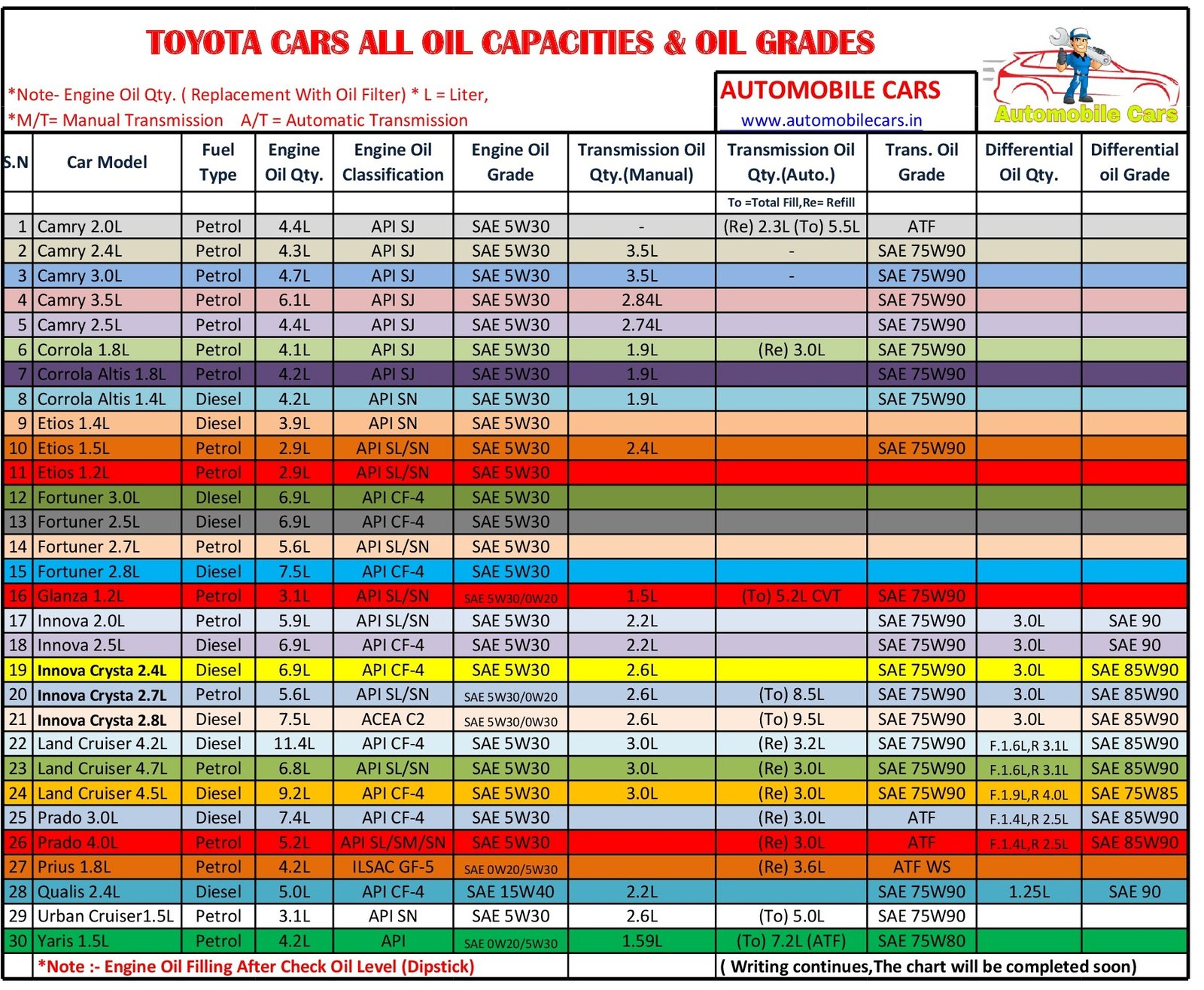
For a quick estimate, use the table below to understand common capacity ranges. These are broad examples for planning, not specifications for a particular vehicle.
Source: viruscars.com
Small cars and compact sedans
Many use around 3.5 to 5 US quarts, depending on the engine and model year.
Midsize sedans
Many need about 4 to 6 US quarts for an oil change.
SUVs and crossovers
Many use about 5 to 7 US quarts, though smaller and larger exceptions exist.
Pickup trucks and large SUVs
Some need 6 to 8 quarts or more, especially when fitted with larger engines.
High-performance and specialty vehicles
Capacity varies widely with engine design, dry-sump systems, and manufacturer-specific service procedures.
Typical Engine Oil Capacity by Engine Size
Engine displacement, often listed in liters, describes the combined volume swept by the engine’s pistons. It can offer a rough clue about oil needs, but it does not determine capacity by itself. Two engines with similar displacement may use different oil pans, filters, and lubrication systems.
The ranges below are general illustrations. Always check the exact engine code and model year before using them to plan an oil change.
1.0 to 1.6-liter engines
Many need approximately 3 to 5 quarts.
1.8 to 2.5-liter engines
Many need approximately 4 to 6 quarts.
3.0 to 3.8-liter engines
Many need approximately 5 to 7 quarts.
4.0-liter engines and larger
Some need 6 to 8 quarts or more, depending on design.
Why These Ranges Are Not Exact Specifications
Engine size is only one factor. A turbocharged engine, for example, may have a different oil capacity from another engine with similar displacement. Hybrid vehicles also vary, and some have gasoline engines with capacities that differ from those in nonhybrid models.
Never choose an oil quantity solely because another vehicle has the same engine size. Find the specification for your exact vehicle, including the model year, engine option, and market.
Use the right vehicle details
Have the make, model, model year, and engine type ready when looking up capacity.
Confirm the service condition
Check whether the stated capacity includes a new oil filter or refers to another service condition.
How to Find the Exact Oil Capacity for Your Car
The safest way to determine how many quarts your car needs is to check the owner’s manual or official service information for the exact engine. Online capacity charts can help you find a starting point, but listings may cover only certain years or engine options.
A vehicle identification number, or VIN, can help a dealership or parts specialist identify your vehicle configuration. However, you should still confirm that the information matches the engine installed in your car, especially if the engine has been replaced or modified.
Source: engineoiljournal.com
Check the owner’s manual
Look under engine oil, lubrication, specifications, or maintenance. Find the capacity and the required oil grade.
Use the official automaker website
Check the owner’s information portal or maintenance documentation for your exact model year and engine.
Ask a dealership service department
Provide the VIN and ask for the oil-change capacity, including whether the amount includes a filter replacement.
Check reliable service data
Use a reputable repair database or verified service manual when the owner’s manual does not provide enough detail.
Oil Capacity With and Without a New Filter
Many manufacturers list an oil-change capacity that includes replacing the oil filter. This matters because the filter and its housing can retain oil during normal operation. If you drain the engine but do not replace the filter, the amount required to reach the same final level may differ.
Do not assume every manual uses the same labels. Some specifications distinguish between an oil change with a filter, an oil change without a filter, and a completely dry engine after repair. A dry-engine capacity may be higher because more oil passages and components have been emptied.
For routine maintenance, use the capacity that matches the service you are performing. An engine that has been rebuilt or fully drained may require a special filling and priming procedure.
Routine oil and filter change
Follow the manufacturer’s listed capacity for an oil change with a new filter.
Oil change without filter replacement
Do not automatically pour in the full filter-change quantity. Check the level and use the correct service specification.
New or rebuilt engine
Follow the engine maker’s initial filling, priming, and startup instructions.
What If the Manual Lists Liters Instead of Quarts?
Some manuals list engine oil capacity in liters. In the United States, motor oil is commonly sold in US quarts, so converting the figure can make shopping easier. One US quart equals approximately 0.946 liter, and one liter equals approximately 1.057 US quarts.
For example, a listed capacity of 4.5 liters is about 4.76 US quarts. You would usually buy enough oil to cover the specification, then add the measured amount carefully and verify the final level.
Liters to US quarts
Multiply liters by approximately 1.057 to estimate US quarts.
US quarts to liters
Multiply US quarts by approximately 0.946 to estimate liters.
What Affects How Much Engine Oil a Car Needs?
Several parts of the vehicle affect oil capacity, so there is no single amount that works for every car. The engine design and oil pan shape are major factors, while the filter and service method also affect how much oil you need during maintenance.
Understanding these differences helps explain why a small sedan might need close to 4 quarts while a larger vehicle needs considerably more. It also helps you avoid relying on a generic chart that does not match your engine.
Source: autvex.com
Engine design
Different engines use different oil pans, internal passages, and lubrication systems.
Turbochargers
Turbocharged engines can have different oil system designs and capacity requirements from similar naturally aspirated engines.
Oil filter and housing
The filter and housing hold oil, which can affect the refill quantity.
Model year and engine option
A vehicle’s capacity may change when the automaker updates its engine or oil pan.
Oil retained after draining
Some oil remains in internal passages and components after a routine drain, so the refill amount may differ from a completely dry-engine specification.
Vehicle service procedure
Some vehicles require a specific temperature, waiting period, or electronic measurement process for an accurate oil-level reading.
Does a Bigger Engine Always Need More Oil?
No. A larger engine often needs more oil, but displacement alone cannot tell you the correct capacity. Engine architecture, oil pan depth, oil cooling systems, and the location of the filter all play a role.
For example, two vehicles with engines close in size may have different oil capacities because one has a different pan or lubrication setup. A larger engine may also use a more complex dry-sump system, which requires a different filling procedure from a conventional wet-sump engine.
Use displacement as a rough clue
Engine size helps estimate a broad range, but it is not a substitute for a manufacturer specification.
Check special lubrication systems
Dry-sump and specialty performance engines may require specific oil-level checks and filling steps.
Does Synthetic Oil Change the Required Quantity?
Full synthetic, synthetic blend, and conventional engine oils do not normally require different fill quantities simply because of their base oil type. The amount is determined mainly by the engine and its lubrication system.
However, you must still use oil that meets the vehicle maker’s required viscosity and performance standards. A correct quantity of the wrong oil can still cause problems, especially in engines with specific emissions, timing, or turbocharger requirements.
Match the oil grade
Use the viscosity listed in the manual, such as a specified SAE grade, along with any required performance approval.
Do not mix up grade and capacity
The oil grade describes the oil’s viscosity classification, while capacity describes how much the engine needs.
How to Add the Correct Amount of Engine Oil
Once you know the specified capacity, add the oil in stages rather than pouring in a full container without checking. The goal is to reach the correct oil level, not simply to empty a bottle. This is especially useful when you are topping off oil or performing your first oil change.
Before starting, park on a level surface and follow the manufacturer’s instructions for checking oil. Some vehicles require the engine to be off for a set period, while others use an electronic display with its own measurement steps.
Source: autotoride.com
Step 1: Confirm the specification
Check the correct oil capacity, viscosity, and performance requirements for your exact vehicle.
Step 2: Prepare the car safely
Park on level ground, set the parking brake, and shut off the engine. If you have just driven, allow the oil and engine parts to cool enough for safe handling.
Step 3: Drain the old oil if changing it
Use the correct procedure and collect the used oil in a suitable drain pan. Replace the drain plug washer when required.
Step 4: Replace the oil filter
Fit the correct filter and lubricate its seal as directed by the filter or vehicle manufacturer.
Step 5: Add some of the new oil
Start with an amount below the listed total, especially if you are unfamiliar with the engine. Use a clean funnel to avoid spills.
Step 6: Check for leaks
Follow the vehicle’s service procedure for starting the engine and checking the filter and drain plug area. Shut the engine off if you see a significant leak or a warning light.
Step 7: Check the final level
Use the dipstick or electronic oil-level system as directed. Add small amounts until the reading reaches the specified range.
How to Read an Engine Oil Dipstick
A dipstick usually has two marks, holes, or labeled areas that show the permitted oil range. The lower mark indicates the minimum level, and the upper mark indicates the maximum level. The oil should normally fall within that range under the manufacturer’s stated checking conditions.
To check a conventional dipstick, remove it, wipe it clean, insert it fully, and pull it out again. Read the oil mark on the second pull. If the reading is unclear, repeat the process and keep the car level.
The distance between the two marks often represents about one quart on many vehicles, but that is not universal. Confirm the amount in the owner’s manual rather than assuming that every dipstick uses the same scale.
Oil below the minimum mark
Add the correct oil in small amounts and recheck. If the level drops repeatedly, investigate possible leaks or oil consumption.
Oil between the marks
The level is generally within the permitted range when checked under the correct conditions.
Oil above the maximum mark
Do not add more oil. If the engine is overfilled, remove the excess according to the correct service procedure.
How Much Oil Should You Add During a Top-Off?
A top-off is different from a full oil change. During a top-off, you replace oil that has been lost or consumed without draining the entire system. The amount you need depends on the current level, the distance between the dipstick marks, and the vehicle’s specifications.
Add a small amount, wait as directed by the manufacturer, and check the level again. Repeat only as needed. Never assume that a low reading means the engine needs its full oil-change capacity.
If the dipstick is dry, the oil-pressure warning light is on, or the vehicle displays a critical low-oil warning, stop and check the owner’s manual before driving. A dry dipstick can mean the oil level is far below the safe range, and a warning light may signal a serious lubrication problem.
Small top-off
Add a measured amount, then recheck before adding more.
Repeated need for oil
Look for leaks, blue exhaust smoke, or other signs of oil consumption and arrange an inspection if needed.
Oil-pressure warning
Stop the engine as soon as it is safe to do so. Do not keep driving in an attempt to reach a repair shop.
How Much Engine Oil Should You Buy for an Oil Change?
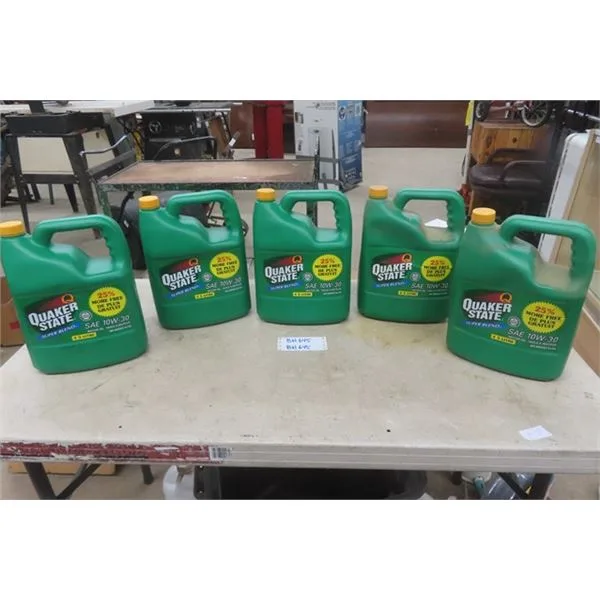
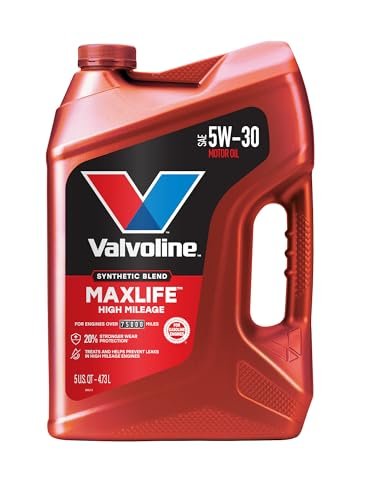
Buy enough oil to cover the manufacturer’s specified refill amount, with a little extra available for careful final adjustment or a later top-off. Most US stores sell motor oil in one-quart bottles and larger containers, including five-quart jugs, so the best purchase depends on the required capacity.
For example, if your car calls for 4.5 quarts, you need at least that amount available for the oil change. A five-quart jug may be convenient, but you should still measure the refill and avoid pouring in the entire jug without checking the level.
If your vehicle requires 6 quarts, a single five-quart jug will not be enough. You could buy a larger container or combine a five-quart jug with a one-quart bottle. Keep any leftover oil sealed and store it in a cool, dry place away from children and pets.
Source: garagesee.com
For a 4-quart capacity
Four one-quart bottles provide the listed quantity, although you should verify whether the specification includes the new filter.
For a 5-quart capacity
A five-quart jug often covers the stated amount when the specification calls for 5 quarts.
For a 6-quart capacity
A five-quart jug plus one additional quart provides the specified amount.
For a 7-quart capacity
A five-quart jug plus two additional quarts provides the listed quantity.
Should You Pour in Every Quart You Buy?
No. Buying enough oil and adding all of it are two different decisions. The package size is convenient for shopping, but it does not determine how much oil the engine can safely hold.
If you buy more oil than the engine needs, keep the remainder for a future top-off only if it is the correct type and remains clean. If you accidentally add too much, do not assume the excess will harmlessly burn off.
Measure as you fill
Track the amount poured into the engine and compare it with the official capacity.
Save clean leftover oil
Keep it tightly sealed and clearly labeled so it is not confused with another oil grade.
Dispose of used oil correctly
Take used motor oil to a local collection site, recycling center, or participating auto service business. Never pour it into a drain or onto the ground.
What Happens If You Add Too Much or Too Little Oil?
Both underfilling and overfilling can harm an engine. The correct level allows the oil pump to supply oil to moving parts while keeping the crankshaft and other components from interacting with excess oil in ways the engine was not designed to handle.
A small difference in a reading can result from the checking method, the time allowed for oil to drain back, or the vehicle’s measurement system. Recheck an uncertain reading using the manual’s instructions before making another adjustment. If the level is clearly outside the permitted range, correct it before normal driving.
Source: shunauto.com
Too little engine oil
Low oil can reduce lubrication, increase friction and heat, and lead to serious engine damage if the oil supply becomes inadequate.
Too much engine oil
Excess oil can be whipped into foam by moving parts, affect lubrication, contribute to leaks, or reach the intake and emissions systems in some engines.
Wrong oil viscosity
Oil that does not meet the required specification may not protect the engine as intended under its operating conditions.
Incorrect checking method
Checking on a slope or ignoring the manufacturer’s waiting period can lead to a misleading reading.
Signs Your Car May Have Too Little Oil
A low dipstick reading is the clearest routine sign of a low oil level. Other possible clues include repeated low-oil warnings, visible oil leaks, unusual engine noise, or blue smoke from the exhaust. These signs do not all prove the same problem, so use them as reasons to check the vehicle rather than as a diagnosis.
An oil-pressure warning is especially serious. It may indicate that oil pressure has fallen below the required level, even if some oil remains in the engine. Stop safely and switch off the engine rather than continuing to drive.
Low dipstick reading
Add the correct oil gradually and investigate repeated losses.
Oil spots under the vehicle
Check for a possible leak and arrange repairs if the source is unclear.
Oil-pressure warning light
Stop the engine safely and follow the vehicle manufacturer’s emergency guidance.
What to Do If You Overfill the Engine
If the dipstick shows a level above the maximum mark, verify the reading under the correct conditions. If the level is still too high, remove the excess oil before driving normally. You can use the correct extraction method or have a qualified service professional correct the level.
Do not rely on driving the car until the oil burns off. The effect of overfilling depends on the engine and the amount added, and serious overfilling can cause damage. If the engine runs poorly, produces unusual smoke, or displays a warning after an overfill, shut it off and seek professional help.
Confirm the reading
Check the vehicle on level ground using the procedure in the owner’s manual.
Remove excess oil
Use a suitable oil extractor or the correct drain procedure without creating a spill or burn hazard.
Check for warning signs
Do not continue driving if there is an oil-pressure warning, abnormal engine noise, or another serious symptom.
How Often Should You Check Your Engine Oil?
Check your engine oil at the interval stated in the owner’s manual, and check it sooner if you notice a warning, a leak, or signs of oil consumption. Some cars have electronic oil-level monitors, while others use a conventional dipstick. Neither method removes the need to follow the vehicle’s recommended maintenance schedule.
Oil consumption varies by engine condition, design, age, and driving pattern. A car that uses oil between changes may need more frequent checks than one that maintains a steady level. Long trips, high temperatures, heavy loads, and demanding driving conditions can also affect maintenance needs.
Do not wait for the oil-pressure warning light to remind you to check the level. That light generally warns of an oil-pressure problem, not a routine reminder that the engine needs a small top-off.
Source: engineoiljournal.com
Before a long road trip
Check the level and look for visible leaks so you can address problems before leaving.
When the vehicle uses oil
Check more often according to the manual and track how much oil you add.
After an oil change
Verify the level using the proper procedure and inspect for leaks around the filter and drain plug.
When a warning appears
Follow the exact warning message and the manufacturer’s instructions rather than assuming every oil warning means the same thing.
Does Engine Oil Capacity Change as a Car Gets Older?
The specified oil capacity usually does not change simply because a vehicle gets older. The amount needed for a normal oil change remains tied to the engine’s design and the prescribed service procedure.
However, an older or worn engine may consume oil or develop leaks. In that case, you may need to check the level more often, but you should not increase the normal fill amount to compensate for oil loss. Find and address the cause of repeated oil loss when possible.
Stable oil level
Continue the manufacturer’s normal maintenance schedule and use the correct capacity.
Increasing oil consumption
Record how much oil is added and how far the car travels between top-offs.
Sudden oil loss
Check for leaks and seek prompt service if the loss is substantial or accompanied by warning lights or engine noise.
Common Mistakes to Avoid When Filling Engine Oil
Most oil-filling mistakes happen when a driver relies on a guess instead of checking the vehicle’s specifications. A few careful steps can prevent spills, misleading readings, and avoidable engine trouble.
The best approach is simple: identify the correct engine, use the specified oil, follow the service procedure, and verify the final level. If a specification is unclear or the engine has a special lubrication system, consult a qualified technician before filling it.
Source: forgednfast.com
Using a generic capacity chart as the final answer
Charts can omit certain model years, engine options, or filter configurations. Confirm the number in the official vehicle documentation.
Filling to the estimated capacity without checking
Some oil remains in the engine after draining, and service conditions differ. Add oil carefully and verify the final level.
Confusing oil capacity with engine displacement
A 2.0-liter engine does not need 2 liters of oil simply because its displacement is 2.0 liters.
Assuming every dipstick uses the same scale
The volume between minimum and maximum marks varies by engine. Check the manual for the correct interpretation.
Ignoring the oil specification
Correct volume alone is not enough. The oil must meet the required viscosity and performance standards.
Checking on uneven ground
A slope can affect the reading. Park on a level surface and follow the specified waiting period.
Continuing to drive with an oil-pressure warning
A warning may indicate a serious lubrication issue. Stop safely and switch off the engine.
A Simple Checklist Before You Start
Before opening an oil container, confirm that you have the right oil and enough of it for the service. Keep a funnel, drain pan, gloves, and suitable tools ready if you are changing the oil yourself.
Never work under a car supported only by a jack. Use properly rated jack stands at the approved support points, or use a suitable lift. Hot oil and engine parts can burn you, so follow safe handling steps and let components cool as needed.
Vehicle details confirmed
Match the model year, engine, and official capacity.
Correct oil selected
Verify the viscosity grade and any required manufacturer approval.
Safe work area prepared
Use level ground, suitable tools, and proper support equipment.
Final level checked
Use the dipstick or electronic system after following the required measurement procedure.
Frequently Asked Questions
Q
Is 5 quarts of engine oil enough for a car?
Five US quarts are enough for many passenger cars, but not every car. Some engines require around 3 to 4 quarts, while others need 6 quarts or more. Check the owner’s manual or official service specifications for your exact model year and engine before filling.
Q
How many quarts of oil does a 4-cylinder car need?
Many four-cylinder cars use approximately 3.5 to 5.5 US quarts during a routine oil change, although the exact amount varies. Engine design, model year, and oil filter configuration affect the capacity. Use the manufacturer’s specification instead of relying on the number of cylinders alone.
Q
How many quarts of oil does a V6 engine need?
Many V6 engines need around 5 to 7 US quarts, but some require less or more. The capacity depends on the engine family, oil pan, filter, and service procedure. Check the exact vehicle documentation, including whether the stated amount includes a new oil filter.
Q
Can I use the dipstick to tell how many quarts my car needs?
The dipstick shows the current oil level, not necessarily the engine’s full refill capacity. Some vehicles have a known volume between the minimum and maximum marks, but that distance is not the same for every engine. Use the manual to interpret the marks and determine the correct capacity.
Q
Should I add all the oil listed in the owner’s manual?
The listed amount is a useful guide for the specified service condition, but you should still follow the manufacturer’s filling procedure and verify the final level. Some oil may remain in the engine after draining, so the amount needed can differ slightly. Add oil in stages rather than blindly pouring in every quart.
Q
What happens if I put one extra quart of oil in my car?
The effect depends on the engine’s capacity and how far the level rises above the maximum mark. An extra quart may cause significant overfilling in some engines, while the effect varies in others. Check the level correctly and remove excess oil before normal driving if it is above the permitted range. If the engine develops unusual noise, smoke, or a warning light, shut it off and seek professional help.
Q
Does changing the oil filter affect how much oil I need?
Yes, it can. The filter and its housing hold oil, so the amount needed may differ between an oil change with a new filter and one without a filter replacement. Use the capacity listed for the service you are performing, and verify the final level.
Q
Can I mix different brands of engine oil?
Different brands can sometimes be mixed if the oils meet the same required viscosity and performance specifications, but matching the manufacturer’s requirements is more important than the brand name. Avoid mixing oils with incompatible specifications, and use the correct oil as soon as practical if an emergency top-off requires a suitable alternative. Check the owner’s manual for any restrictions.
✦ Wrapping Up
Conclusion
Most passenger cars need about 4 to 6 US quarts of engine oil for a routine oil change, but that range is only a starting point. Your car’s exact capacity depends on its engine, model year, filter, and service procedure. The owner’s manual or official manufacturer service information provides the best answer for your specific vehicle.
Before changing or topping off the oil, confirm the required quantity and oil specification. Add oil gradually, check the level on level ground under the correct conditions, and make sure it stays within the permitted range. If you notice repeated oil loss, an oil-pressure warning, or signs of overfilling, address the issue promptly rather than guessing.
💡 Key Takeaway
Find your vehicle’s exact oil capacity in the owner’s manual, buy enough of the correct oil, and verify the final level with the specified dipstick or electronic checking procedure.
You’ve probably held up a Pennzoil and a storebrand jug side by side and wondered: does brand of motor oil matter? The honest answer is “it depends on what…
How is motor oil produced? It sounds like a oneline answer, but the real process runs through distillation, cracking, dewaxing, polymerization, additive…
When is the best time to check your motor oil? The honest answer is to use the procedure in your exact owner’s manual. A cold dipstick check, a warm engineoff…