How to Buy Motor Oil in Bulk: Easy guide
If you've searched how to buy motor oil in bulk and landed on a list of "top 10 brands," you're in the wrong place. The real question isn't which oil to pick. It's whether bulk saves you money at your volume, what the distributor's minimum order is, and whether you can store 275 gallons without it going stale.
Most people skip that math and end up with expired pails in a hot shed.
In our research across fleet shops and multi-bay garages, bulk pricing kicks in around 50 to 120 gallons per order. That's one pallet of five-gallon pails or a single 55-gallon drum. Manufacturer specs confirm a sealed-container shelf life of three to five years under proper storage.
The math only works if you can use what you buy before it degrades. Here's the actual path, step by step.
Quick Answer
Buy motor oil in bulk through an authorized regional distributor. Minimum orders start at 30 to 50 gallons. Negotiate unit price, freight, and credit terms before placing the PO.
Bulk pricing runs 15 to 40 percent below retail shelf cost as of 2026. Storage space and shelf life decide whether the deal actually works.
What "Bulk" Actually Means for Motor Oil (and When It's Worth It)
"Bulk" in the motor oil world doesn't mean one giant IBC tote on your dock. It's a threshold. Below 50 gallons, you're a retail customer buying quarts or single pails at shelf price.
Cross 50 to 120 gallons and most distributors shift you into a commercial account tier. That's where the 15 to 40 percent discount starts.
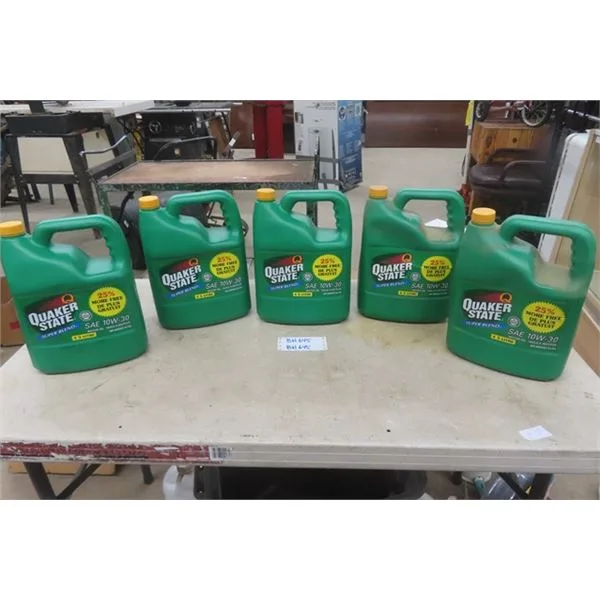
The container format changes everything about the math. A pallet of five-gallon pails (typically 30 or 40 cases) gives you 120 to 160 gallons in shrink-wrapped, easy-to-move units. A 55-gallon steel drum holds that same volume in one 450-pound container that needs a drum pump or forklift.
A 275-gallon IBC tote sits at the top end and needs a pallet jack just to move it.
So when is bulk actually worth it? If you're draining oil on more than three vehicles a week, or running a small fleet, the per-gallon savings add up fast. If you've got one car and a lawn tractor, grab a case of quarts at the parts store instead.
The break-even point sits around 200 to 300 gallons per year. Under that, storage overhead and shelf-life risk eat the discount alive.
The 4 Variables That Change Your Buying Path

Before you call a distributor, lock down four things. They determine which container format, which brand, which vendor, and which freight terms apply to you.
Variable 1: Oil spec and viscosity. SAE 5W-30 API SP for passenger cars? 15W-40 CK-4 for a diesel fleet? 75W-90 gear oil for a driveline? Each spec carries different bulk pricing. Synthetic CK-4 runs 20 to 30 percent more per gallon than conventional 10W-30.
Your SAE J300 grade and API service category drive the whole quote.
Variable 2: Annual volume. Quarts per drain times drains per year, across every asset. A 10-truck delivery fleet at 6 quarts per drain, every 7,500 miles, running 80,000 miles a year, needs roughly 4,000 quarts annually. That's 1,000 gallons.
At that level, you're in drum or IBC territory with a contract rep.
Variable 3: Storage capacity. A 55-gallon drum needs about 36 by 36 inches of floor space plus six feet of clearance. An IBC takes a 27 by 40 inch pallet footprint. If your storage is a 10-by-12 garage, you're capped at two pail cases.
That constraint narrows your format choice hard.
Variable 4: Geography and season. Northern climates stock 0W-20 and 0W-40 in winter. The Southeast runs 5W-30 year-round. Your distributor's territory and the season you order in shift both availability and pricing by 5 to 12 percent.
Step-by-Step: From Needs Audit to Pallet on Your Dock
The process runs in nine steps, but the first three carry most of the weight.
Step 1: Run your needs audit. Catalog every vehicle and asset. Note SAE grade, API spec, drain interval, quarts per service. Multiply by annual count.
That number is your purchasing baseline.
Step 2: Convert to purchase units. Quarts to pails to cases to pallets. Know the pack-out. One 5-gallon pail is 20 quarts.
Six pails make a case. Four cases stack a pallet at 120 gallons. Match your annual number to the nearest pallet or drum multiple.
Step 3: Identify 2 to 3 authorized distributors near you. Check each brand's territory map. A local oil house may carry Mobil and Valvoline but not Castrol. You need a rep who stocks your exact spec.
Step 4: Request quotes in writing. Specify FOB or delivered, freight terms, minimum order, shelf-life guarantee, and whether Safety Data Sheets ship with the order.
Step 5: Negotiate. Volume rebate tiers, credit terms (Net-30 or Net-60), returns on unopened product, and a seasonal price lock if you're buying ahead of winter.
Step 6: Order and inspect on receipt. Check tamper seals, date codes, and lot numbers before signing the bill of lading. Reject anything cracked, expired, or missing documentation.
Step 7: Store it right. Cool, dry, below 85 degrees F, no direct sun. Stack pails three-high, drums two-high on pallets. Per OSHA combustible-liquid storage rules, above-ground storage over 1,000 gallons in one compartment can trigger a local fire-marshal permit.
Step 8: Track and reorder. FIFO rotation. Set a reorder point at 20 to 25 percent of on-hand. Calendar your seasonal grade swap six to eight weeks before the weather shifts.
Step 9: Spot-check quality quarterly. Pour off a small sample from your oldest stock. Check viscosity against spec. File a vendor claim while the lot number is still traceable.
What You'll Actually Pay: Unit Prices, Freight, and the Fees Nobody Quotes Upfront
The sticker price per gallon is the last number you should focus on. The real cost stacks in layers.
| Cost layer | Typical range | Notes |
|---|---|---|
| Base price per gallon (5W-30 synthetic, bulk) | $6 to $9 | As of 2026, tracks WTI crude |
| Packaging premium (pails/drums) | $0.30 to $0.60/gal | Adds handling cost |
| Fuel surcharge | 8 to 14% of freight leg | Indexed monthly by carrier |
| Residential delivery fee | $25 to $75 per stop | Skipped if commercial dock |
| Liftgate / IBC accessorial | $75 to $150 per drop | Forklift on your end is free |
| Freight (FOB to delivered) | $0.50 to $1.50/gal | Varies by distance and lane |
| Credit-card surcharge | 2 to 3% | Avoid by paying via ACH or check |
A 120-gallon pallet that looks like $840 at $7/gal can land at $1,100 to $1,300 once you add freight, fuel, and a liftgate. That's a 30 to 55 percent add on top of the base quote.
Two tricks keep this number down. Order FOB when you can arrange your own freight. A LTL pallet at your dock often runs $40 to $80, versus $1.50/gal on the vendor's delivery truck.
And consolidate. If you need three different grades, order them on one pallet and split the freight across all three SKUs.
6 Mistakes That Quietly Erase Your Bulk Discount
1. Ordering a seasonal grade too early. You grab 0W-20 in bulk in May because the price dipped. Then October hits and your gear boxes need 75W-90.
Now you've got 200 gallons of winter-grade oil sitting in a 90-degree shed, burning through its shelf life.
2. Ignoring the freight stack. You compare a $7.10/gal quote against $7.40/gal and pick the cheaper one. But the first quote is FOB 400 miles away.
The second is delivered to your dock. The all-in cost reverses.
3. Letting one vendor lock you in. Territory rules mean your local rep is the only authorized seller for a brand in a 50-mile radius. If they raise prices 8 percent next quarter, you've got no leverage.
Splitting volume across two distributors for at least two specs keeps you negotiating from a position of choice.
4. Storing in a hot, unventilated space. Manufacturer specs assume storage below 85 degrees F with no UV. A closed-up garage in July hits 105 degrees.
Additive packages break down. You're paying synthetic prices for conventional performance.
5. Skipping the receipt inspection. You sign the bill of lading before checking seals and date codes. Three months later a pail is weeping through a hairline crack, and the vendor says it shipped fine.
No lot traceability means no recourse.
6. Ordering more than you can use before the in-date. Sealed shelf life is three to five years, but the clock starts at manufacturing, not delivery. If the pail was produced 18 months before you received it, you've got two and a half years of usable life left.
Match your order to actual consumption.
Storing and Rotating Bulk Oil Without Wasting It
Your oil is only as good as the environment it sits in. Per API service category guidelines, storage should stay below 85 degrees F with zero UV exposure. One hot summer in a sealed garage hits 105 degrees, and your additive packages start degrading.
Here's the storage checklist:
- Temperature: Below 85 F, ideally 60 to 75. Avoid thermal cycling on the same container.
- UV: No direct sun. If you must store outdoors, wrap pails in a UV-block tarp and keep drums under a covered pad.
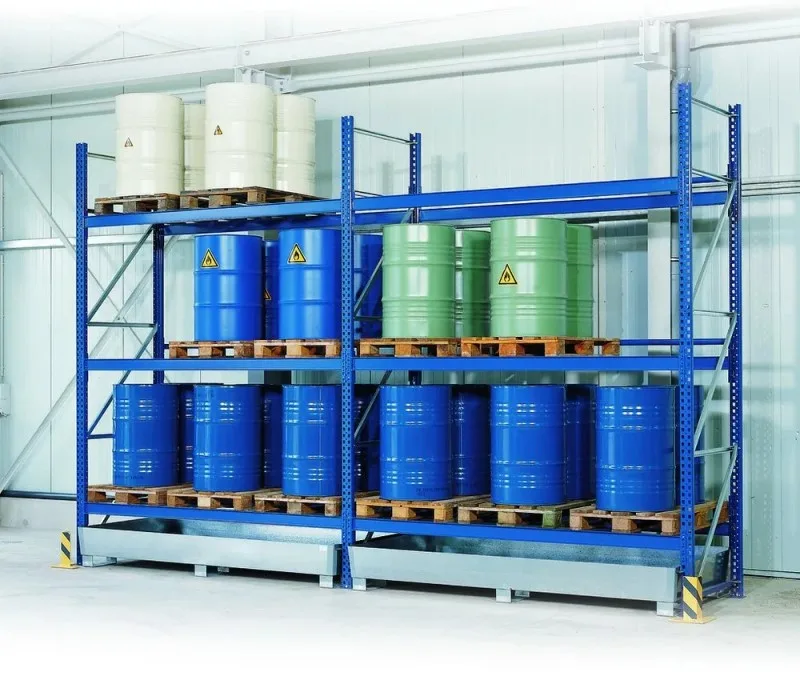
- Stacking: Pails three-high max. Drums two-high on wooden pallets. IBCs single-layer on a rated floor pad.
- Secondary containment: A 110-percent bund pad or drip tray under every drum and IBC. NFPA 30 requires this once your combustible liquid volume crosses a set threshold.
- Labeling: Write the receive date and in-date at eye level. "Received March 2026, in-date March 2029" beats hunting for a tiny print code on the pail bottom.
FIFO rotation is non-negotiable. New stock goes on the back shelf. Old stock gets pulled first.
Set a calendar reminder at the 20-month mark to spot-check viscosity on your oldest pail. If it reads outside spec, file a claim with the vendor while the lot number is still traceable.
Which Bulk Strategy Fits Your Operation?
The right container and vendor setup depends on three things: your annual gallon count, your storage footprint, and how many specs you carry.
Solo shop or 2-bay garage (under 500 gallons/year): Stick with five-gallon pail cases. Order two to three cases quarterly. A local independent oil house with a rep who visits monthly keeps you stocked without a full-time receiving operation.
You don't need a drum pump or a forklift.
Multi-bay shop or small fleet (500 to 2,000 gallons/year): Move to palletized pail orders or single 55-gallon drums. Split your specs across two distributors to keep negotiating leverage. Lock in Net-30 credit terms after your second order.
A drum pump in the $200 to $400 range pays for itself within a quarter.
Fleet, construction, or municipal depot (2,000+ gallons/year): You're in IBC and drum contract territory. Sign a 12-month volume agreement with one primary distributor and one backup. Calendar your seasonal grade swaps.
Assign a dedicated receiving log for lot numbers, date codes, and freight exceptions.
If you're torn between two formats, run the all-in cost. Add freight, handling labor, and storage footprint to the per-gallon price. The cheapest gallon on paper often costs more once you factor in a forklift operator's time moving an IBC that didn't fit your pad.
Quick Answers to the Questions Nobody Asks Until They Need Them
What's the minimum order to qualify for bulk pricing?
Most authorized distributors set the threshold at 30 to 50 gallons. That's roughly six five-gallon pails or a single case. Below that, you're priced at retail shelf cost.
Ask your rep for their specific MOQ before comparing quotes against a competitor.
Can I mix brands or specs on one bulk order?
Yes, as long as the distributor carries both lines. A single pallet can hold 5W-30 API SP on one layer and 75W-90 gear oil on another. Keep them on separate cases.
Mixing two specs inside one drum or IBC is not allowed, since each container holds a single product.
How do I verify the oil is genuine and not repackaged?
Check three things at receipt: tamper-evident seal intact, lot number matches the invoice, and the Safety Data Sheet lists the correct manufacturer. Grey-market repackaged oil skips lot traceability. If the seal looks cut or the SDS is missing, reject the unit before signing the bill of lading.
What happens if oil passes its in-date?
Pour off a small sample and check viscosity against spec. If it's off, contact the vendor with the lot number for a credit or replacement. Don't top off a running engine with out-of-date oil.
The additive package has degraded, and you're protecting metal with thinning fluid.
Do I need a permit to store 55-gallon drums on my property?
For one or two drums, almost no. Above 1,000 gallons in a single fire compartment, NFPA 30 and your local fire marshal's rules kick in. Check your county code before ordering a fourth drum.
The permit process takes two to four weeks, so build that into your receiving timeline.