What Is In High Mileage Motor Oil: The Key Ingredients
High mileage motor oil contains base oils, seal conditioners, anti-wear additives, detergents, and antioxidants for aging engines.
Your car has passed 75,000 miles, and you still rely on it for work, school runs, road trips, and daily errands. You may notice small oil spots in the driveway or find that the oil level drops between changes. This is when you may start asking, what is in high mileage motor oil, and does it really help an older engine? These oils contain special additives that aim to protect worn parts, keep the engine clean, and help maintain seals. I will explain the main ingredients, what they do, and how five popular high mileage oils compare.
🏆 Top 3 Products

Valvoline MaxLife High Mileage 5W-30 Synthetic Blend Motor Oil 5 Quart | #1 High Mileage Motor Oil Brand, helps protect aging engines, reduce leaks and minimize oil consumption
A practical choice for many older cars that need 5W-30 oil and added seal and wear protection.

Castrol GTX High Mileage 5W-30 Synthetic Blend Motor Oil, 5 Quarts
A strong option for drivers who want high mileage additives and protection against sludge buildup.

Valvoline MaxLife High Mileage 5W-20 Synthetic Blend Motor Oil 5 Quart | #1 High Mileage Motor Oil Brand, helps protect aging engines, reduce leaks and minimize oil consumption
A useful option for compatible vehicles that call for 5W-20 and need high mileage engine care.
Valvoline MaxLife High Mileage 5W-30, 5 Quart
Valvoline MaxLife High Mileage 5W-30 is a synthetic blend motor oil made for engines with many miles on the road. Its formula includes base oils and additives that aim to protect engine parts, help control deposits, and support older seals. The product is designed to help reduce oil leaks and oil use in aging engines. However, results depend on the engine’s condition and the cause of any leak.
The five-quart bottle suits many American cars, SUVs, and light trucks that call for 5W-30 oil. I would start by checking the owner’s manual before choosing it. The correct oil grade matters more than the mileage number on the dashboard. If your vehicle allows this grade, MaxLife offers a simple way to add high mileage care to a regular oil change.
✅ Pros
- ✔ Designed for engines with high mileage.
- ✔ Contains additives intended to help care for aging seals.
- ✔ Aims to reduce oil leaks and oil consumption.
- ✔ Helps protect engine parts against wear.
- ✔ Helps control harmful engine deposits.
- ✔ Synthetic blend offers a balance between conventional and full synthetic oil.
- ✔ Five-quart size may suit vehicles with larger oil capacities.
- ✔ 5W-30 grade is used by many compatible American vehicles.
⚠️ Cons
- ✖ Not suitable for every engine; always check the required oil grade.
- ✖ May not stop leaks caused by damaged seals or other broken parts.
- ✖ A synthetic blend is not the same as full synthetic oil.
- ✖ The five-quart bottle may leave too much or too little oil for some vehicles.
- ✖ The price and availability can vary by seller.
My Recommendation
I would consider this oil first for a compatible older car that calls for 5W-30 and may benefit from seal care and wear protection. It is a practical choice for daily drivers, commuters, and families who want a high mileage formula from an established oil brand. Do not expect it to repair a serious leak or restore worn engine parts. Check the manual for the correct grade and required oil performance standards before buying.
| Best For | Why |
|---|---|
| Older daily drivers | Its high mileage formula aims to protect aging engine parts and seals. |
| Vehicles requiring 5W-30 | The viscosity grade suits engines whose manuals specify 5W-30. |
| Routine oil changes | The five-quart bottle can suit many vehicles, depending on oil capacity. |
Valvoline MaxLife High Mileage 5W-30, 1 Quart

Valvoline MaxLife High Mileage 5W-30 in a one-quart bottle offers the same product line in a smaller size. It is made for compatible older engines and uses a synthetic blend with additives aimed at wear protection, deposit control, and seal care. The formula may help limit oil use in some aging engines. It cannot fix every leak or replace worn engine parts.
The small bottle is useful when you need oil for a top-up or want to buy only a little at a time. I would keep a quart in the garage if my vehicle used this grade and had a known tendency to lose a small amount of oil between services. Check the dipstick before adding oil, and pour slowly. Too much oil can harm an engine, so never add a full quart without checking the level and the amount needed.
✅ Pros
- ✔ Useful for topping up compatible engines.
- ✔ Contains high mileage additives designed for aging engines.
- ✔ Aims to support seal care and help reduce oil consumption.
- ✔ Helps protect moving parts against wear.
- ✔ Helps control sludge and deposits.
- ✔ Easy to store in a car-care cabinet or garage.
- ✔ Lets drivers buy a small amount instead of a full multi-quart pack.
- ✔ Useful for keeping the correct oil grade on hand for emergencies.
⚠️ Cons
- ✖ One quart is not enough for most complete oil changes.
- ✖ Frequent purchases may cost more per quart than a larger pack.
- ✖ It cannot repair cracked seals or major engine damage.
- ✖ Only suits engines that call for the correct viscosity and specifications.
- ✖ Drivers must measure carefully to avoid overfilling.
My Recommendation
I recommend the one-quart bottle for owners who already use compatible 5W-30 oil and need a convenient top-up supply. It is especially useful when the oil level falls slightly between scheduled changes. Before adding any oil, park on level ground and follow the vehicle maker’s dipstick or electronic level-check steps. If the level keeps dropping, find the cause rather than relying on top-ups alone.
| Best For | Why |
|---|---|
| Oil top-ups | The smaller bottle makes it easier to add only the amount the engine needs. |
| Small storage spaces | A one-quart container takes up little room in a garage or trunk. |
| Owners using 5W-30 | It can match vehicles that specify this grade and the product’s required approvals. |
Valvoline MaxLife High Mileage 5W-20, 5 Quart
Valvoline MaxLife High Mileage 5W-20 is a synthetic blend motor oil for compatible engines that call for 5W-20. Like other high mileage oils, it combines base oils with additives that aim to protect against wear and help manage deposits. Its formula is also designed to support aging seals and help reduce oil use. The exact results depend on the engine, its service history, and the reason it consumes oil.
The five-quart size can be handy for a complete oil change on some cars, though you must check your engine’s stated capacity. This grade appears in many American vehicles, including some models built for fuel efficiency. Do not switch from another viscosity just because your vehicle has high mileage. Use 5W-20 only if the manufacturer allows it and the oil meets the required service rating.
✅ Pros
- ✔ Made for high mileage engines that require 5W-20.
- ✔ Contains additives intended to support aging seals.
- ✔ Aims to help reduce oil consumption in some engines.
- ✔ Helps protect engine parts against wear.
- ✔ Helps manage sludge and deposit buildup.
- ✔ Synthetic blend offers an alternative to conventional oil.
- ✔ Five-quart size may cover many routine oil changes.
- ✔ Useful for compatible vehicles used for commuting and family trips.
⚠️ Cons
- ✖ Not suitable for engines that require a different viscosity.
- ✖ A five-quart bottle may not match the engine’s exact oil capacity.
- ✖ It cannot reverse damage from long-term poor maintenance.
- ✖ A synthetic blend may not offer all the benefits of a suitable full synthetic oil.
- ✖ It may not resolve oil loss caused by serious mechanical faults.
My Recommendation
This is a sensible choice for drivers whose manuals specify 5W-20 and who want a high mileage formula for routine engine care. I would choose it based on the required grade and approvals, not simply the age of the car. The formula may support seal care and help protect against wear, but regular oil checks and timely changes remain essential. Compare the bottle size with your engine’s capacity before purchase.
| Best For | Why |
|---|---|
| Cars requiring 5W-20 | It offers a high mileage formula in the specified viscosity grade. |
| Routine vehicle care | Its additives aim to support wear protection and deposit control. |
| Drivers buying oil in bulk | The five-quart bottle may suit a full service when the capacity matches. |
Valvoline MaxLife High Mileage 10W-30, 5 Quart
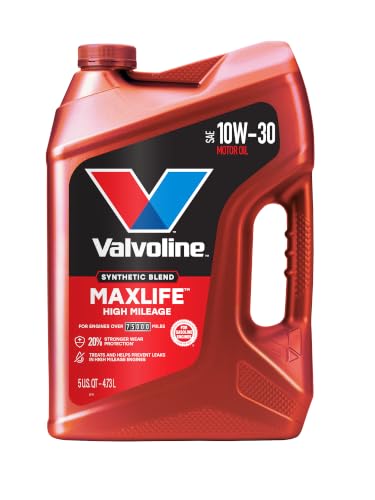
Valvoline MaxLife High Mileage 10W-30 is a synthetic blend oil designed for compatible older engines. It combines base oils with additives that aim to protect engine parts, manage deposits, and support aging seals. These features may help some engines use less oil, though the product cannot repair damaged parts. Its 10W-30 grade differs from 5W-30, so it is important to follow the vehicle maker’s advice.
This five-quart bottle may suit older cars and light trucks that specifically call for 10W-30. Drivers in warm parts of the United States may see this grade listed for certain engines, but local weather alone does not decide which oil is right. The engine design and the owner’s manual matter most. I would check both the viscosity recommendation and the required oil standards before choosing this product.
✅ Pros
- ✔ Designed for compatible high mileage engines.
- ✔ Contains additives aimed at seal care and wear protection.
- ✔ May help reduce oil consumption in some aging engines.
- ✔ Helps control engine deposits.
- ✔ Synthetic blend formula offers a middle ground between conventional and full synthetic oil.
- ✔ Five-quart bottle may suit some car and light truck oil changes.
- ✔ 10W-30 is a listed grade for some older engines.
- ✔ Can support regular maintenance when used according to the manual.
⚠️ Cons
- ✖ Not right for engines that require 5W-20, 5W-30, or another grade.
- ✖ Its cold-start behavior differs from that of 5W-30.
- ✖ The five-quart pack may not match every engine’s capacity.
- ✖ It cannot fix a broken seal or a serious oil leak.
- ✖ A synthetic blend may not be the best match for every vehicle’s oil requirements.
My Recommendation
I would choose this oil for an older car or light truck whose manual permits 10W-30 and whose owner wants high mileage additives. It can be a practical option for everyday driving when the grade and required approvals match. Do not use a thicker oil to hide a leak unless the vehicle maker permits that grade. If oil loss continues, inspect the engine and repair the source.
| Best For | Why |
|---|---|
| Vehicles requiring 10W-30 | The viscosity matches engines whose manuals specify this grade. |
| Older light trucks | The high mileage formula aims to support aging engine seals and parts. |
| Scheduled oil changes | The five-quart size may be convenient when it matches the engine’s oil capacity. |
Castrol GTX High Mileage 5W-30, 5 Quarts
Castrol GTX High Mileage 5W-30 is a synthetic blend motor oil made for older engines that need this viscosity grade. Its formula focuses on wear protection, deposit control, and care for aging seals. These features may help reduce oil use and limit some leaks, but they cannot fix damaged gaskets or worn mechanical parts. The oil also aims to help keep sludge from building up inside the engine.
The five-quart bottle may suit drivers who want to maintain a compatible car, SUV, or light truck. I would consider it for a daily driver that has covered many miles but still runs well and receives regular service. As with any motor oil, the correct grade and service rating matter more than the brand name alone. Check the current label and your owner’s manual before buying.
✅ Pros
- ✔ Made for compatible high mileage engines.
- ✔ Aims to help protect against engine wear.
- ✔ Includes additives intended to control sludge and deposits.
- ✔ Designed to support aging seals.
- ✔ May help reduce oil consumption in some engines.
- ✔ 5W-30 grade suits many vehicles that call for this viscosity.
- ✔ Five-quart bottle may suit a routine oil change.
- ✔ Offers another established brand option for older vehicle maintenance.
⚠️ Cons
- ✖ Not suitable for every vehicle or engine design.
- ✖ Cannot repair major leaks or worn engine parts.
- ✖ Synthetic blend may not meet the needs of engines that require a specific full synthetic oil.
- ✖ The correct service rating must match the owner’s manual.
- ✖ Prices and local stock can change.
My Recommendation
I recommend considering Castrol GTX High Mileage for a compatible vehicle that calls for 5W-30 and needs routine care for an aging engine. Its focus on wear protection and deposit control makes it a reasonable alternative to Valvoline MaxLife. The best choice between them depends on the required approvals, price, availability, and your vehicle’s needs. Neither oil should replace a proper diagnosis when a leak or unusual oil use appears.
| Best For | Why |
|---|---|
| Older cars using 5W-30 | It combines the required viscosity with additives aimed at high mileage engine care. |
| Drivers concerned about sludge | The formula is designed to help control harmful deposits. |
| Comparing high mileage brands | It provides an alternative to Valvoline for compatible engines. |
Final Verdict: Which Should You Buy?
Valvoline MaxLife High Mileage 5W-30 Synthetic Blend is my top general pick for compatible older engines that require 5W-30. Castrol GTX High Mileage 5W-30 is a strong alternative, while the 5W-20 and 10W-30 Valvoline options suit vehicles that call for those grades. The one-quart bottle works well for top-ups. Always check the owner’s manual first.
Knowing what is in high mileage motor oil helps you choose with care. Look for the right viscosity, required approvals, and useful additives. Change the oil on time, check the level often, and repair leaks when needed. The right oil can support an older engine, but sound maintenance matters most.
FAQs Of what is in high mileage motor oil
Q What is in high mileage motor oil?
Q Does high mileage motor oil contain seal conditioners?
Q At what mileage should I use high mileage oil?
Q Can high mileage oil stop an engine from leaking?
Q Is high mileage oil better than full synthetic oil?