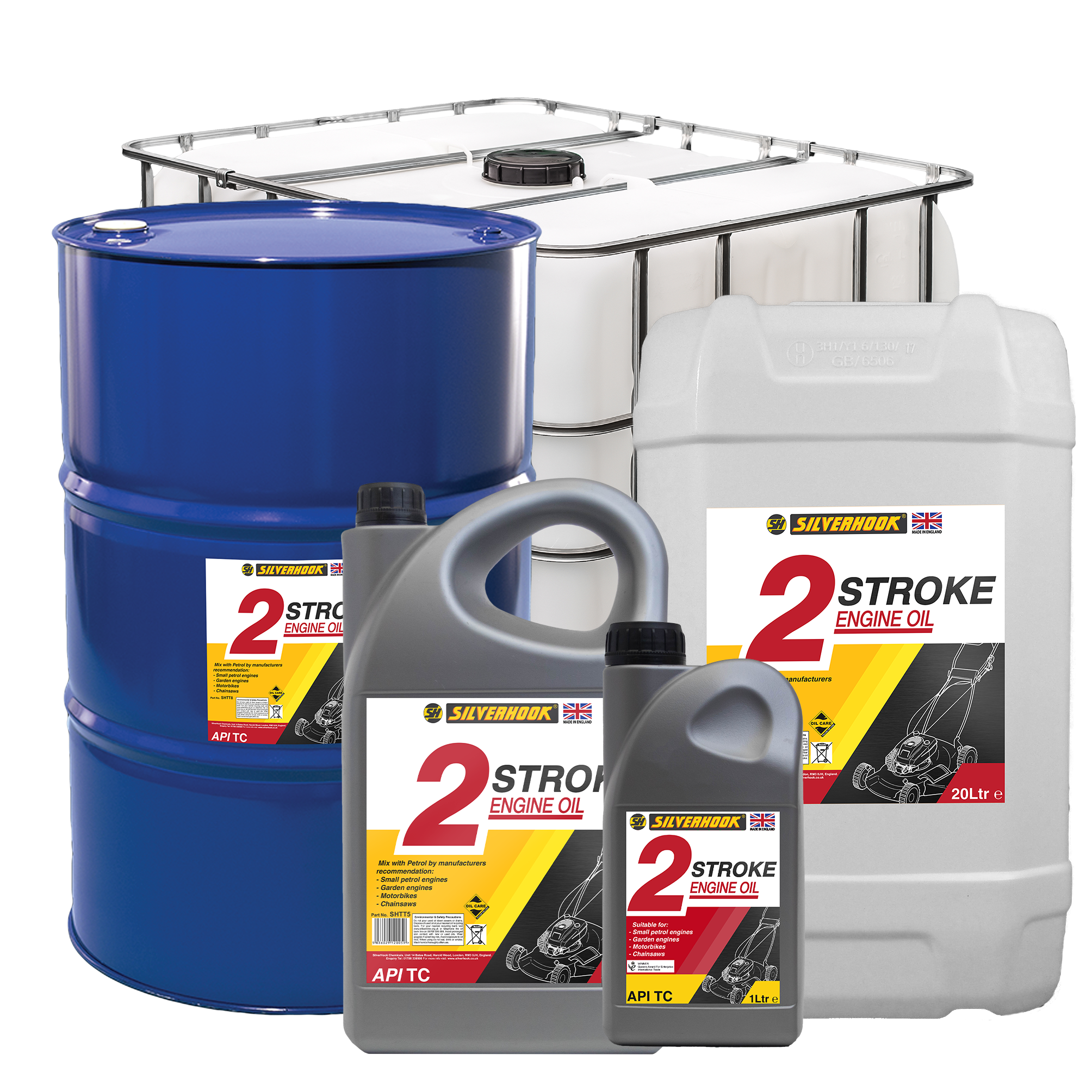
Two stroke engine oil is a special lubricant made for two-stroke engines. It protects moving parts from friction and wear, usually by mixing with fuel or feeding through a separate oil injection system.
If you use a gas-powered leaf blower in your yard, ride an older dirt bike, or run a chainsaw to cut firewood, you may need two stroke engine oil. These machines use a different engine design from most cars and trucks sold in the United States. Their lubrication needs are different, too.
A two-stroke engine often has no separate oil sump that stores engine oil for repeated circulation. Instead, the oil travels with the fuel or enters through a dedicated injection system. It lubricates key parts, then much of it burns during normal operation. Using the correct oil and fuel mixture helps protect the engine from wear, overheating, and costly damage.
This guide explains what two stroke engine oil is, how it works, which machines need it, and how to choose and use it. You will also learn how to read oil mix ratios, avoid common mistakes, and tell the difference between two-stroke oil and ordinary four-stroke engine oil.
Source: commaoil.com
What Is Two Stroke Engine Oil?
Two stroke engine oil is a lubricant formulated for engines that complete a power cycle in two piston strokes, or one crankshaft revolution. It reduces friction between moving parts and helps protect components such as the piston, piston rings, cylinder walls, crankshaft bearings, and connecting rod bearings.
Unlike most four-stroke engines, which store oil in a crankcase sump and circulate it repeatedly, many two-stroke engines use a total-loss lubrication system. Fresh lubricant enters with the fuel or through an injection system, performs its job, and then largely leaves through the exhaust during combustion.
Because the oil may burn during normal operation, it needs properties that differ from those of typical automotive engine oil. It must lubricate under demanding conditions while limiting harmful deposits, excessive smoke, and spark plug fouling. The exact requirements depend on the engine design and intended use.
You may also see the product called two-cycle oil, 2T oil, or two-stroke lubricant. These terms often describe the same general category, but they do not guarantee that every product is suitable for every engine. Always check the label and the equipment manual.
Source: handlesknobs.com
Lubrication
The oil creates a protective film between moving metal surfaces, helping reduce friction and wear.
Heat management
By reducing friction, the lubricant helps limit heat generated at moving contact points. It does not replace the engine’s cooling system.
Deposit control
Suitable two-stroke formulations help control carbon deposits and other combustion-related residue.
Engine protection
Using the specified oil and ratio helps reduce the risk of premature wear, scoring, and seizure.
Why Is Special Oil Needed?
Two-stroke engines often pass the fuel-air mixture through the crankcase before it enters the cylinder. In many designs, the crankcase also contains bearings and other parts that need lubrication. A separate sump filled with circulating engine oil would interfere with this arrangement.
The engine therefore relies on lubricant delivered with the fuel or by an oil injection pump. The oil must flow through the system, protect moving parts, and behave appropriately when exposed to combustion. Standard automotive oil is not automatically designed for these conditions.
The important point is simple: oil is not interchangeable just because two products have similar viscosity or look alike. The engine manufacturer’s required specification should guide your choice.
Correct formulation
Choose oil intended for the engine’s type and operating conditions.
Correct delivery
Use premixed fuel or the separate injection system specified for the engine.
How Does Two Stroke Engine Oil Work?
Two-stroke oil works by reaching the engine’s moving parts before much of the lubricant exits through the exhaust. In a common premix design, the operator blends the oil with gasoline. The carburetor or fuel system then delivers that mixture to the engine, where the fuel and air support combustion while the oil lubricates critical surfaces.
As the piston moves, the oil helps separate surfaces that would otherwise rub directly against each other. This protective film is especially important around the piston, cylinder wall, bearings, and other parts exposed to high speed, heat, and pressure.
During combustion, some oil burns along with the fuel. The rest may leave as fine droplets or residue. This process differs from a conventional four-stroke lubrication system, where oil is generally retained in the engine and circulated repeatedly through passages and a filter.
Some two-stroke engines use oil injection rather than premixed fuel. In these systems, a dedicated reservoir supplies oil to a pump, which meters it into the engine according to the system’s design. The operator must keep the oil reservoir filled and maintain the system as directed.
Source: targetmust.com
Step 1: Oil enters the engine
The lubricant reaches the engine through the premixed fuel or a dedicated oil injection system.
Step 2: Moving parts receive lubrication
The oil forms a film that helps reduce direct metal-to-metal contact.
Step 3: Combustion occurs
The fuel-air mixture burns to produce power, while some lubricant also burns or passes into the exhaust.
Step 4: Residue leaves the system
Combustion products and remaining oil can leave through the exhaust, making deposit control an important part of oil formulation.
What Happens If the Engine Does Not Get Enough Oil?
Insufficient lubrication can cause friction to rise quickly. The piston and cylinder may develop scoring, bearings may wear, and the engine can overheat or seize. In severe cases, the damage may require major repairs or a replacement engine.
A machine that runs normally at first is not necessarily receiving enough oil. Damage can develop before an obvious warning appears. If you suspect that you used gasoline without the required oil, stop the engine and consult the equipment manual or a qualified repair shop before restarting it.
Possible warning signs
Unusual mechanical noise, loss of power, overheating, or sudden stopping can indicate trouble, although these symptoms have other possible causes.
Safe response
Stop operating the machine if serious lubrication trouble is suspected. Do not keep running it to see whether the problem disappears.
Which Machines Use Two Stroke Engine Oil?
Two-stroke oil is used in many small gasoline-powered machines and some specialized vehicles. These engines can deliver useful power from a compact design, making them suitable for equipment that needs to stay light or operate in a limited space.
The exact lubricant depends on the engine. A chainsaw, an older motorcycle, a personal watercraft, and an outboard boat motor may all use two-stroke technology, but their oil requirements can differ. Marine engines may need oil designed for their operating environment and the manufacturer’s specified service category.
Do not assume that a product is suitable for every two-stroke engine simply because the container says 2T. Check the machine’s manual, including any required oil standard, cooling arrangement, and fuel delivery method.
Source: cdn2.n2erp.co.nz
Outdoor power equipment
Chainsaws, leaf blowers, brush cutters, string trimmers, and some lawn equipment may use two-stroke engines.
Motorcycles and recreational vehicles
Some dirt bikes, older motorcycles, snowmobiles, and other recreational machines use two-stroke lubrication systems.
Marine engines
Certain outboard motors and personal watercraft use two-stroke oil made for the relevant marine engine specification.
Model engines and specialty equipment
Some small specialty engines use two-stroke lubricant, but their fuel and oil requirements may be very specific.
Do All Small Gas Engines Need Two Stroke Oil?
No. Many small engines are four-stroke designs and have their own crankcase oil supply. Common examples include many lawn mowers, pressure washers, generators, and riding lawn tractors.
A four-stroke engine may have a separate oil fill cap or dipstick, but appearance alone is not a reliable way to identify the design. Check the model number and operator’s manual before adding oil to the fuel tank or crankcase.
Adding two-stroke premix to an engine that requires straight gasoline can cause operating problems. Running a two-stroke engine on straight gasoline when premix is required can cause severe damage. Confirm the fuel instructions before filling the tank.
Two-stroke engine
Often uses premixed gasoline and oil or a separate injection system.
Four-stroke engine
Usually stores lubricating oil in a crankcase sump and circulates it separately from the fuel.
Types of Two Stroke Engine Oil
Two-stroke oil comes in several formulations. The main differences include the base oil, additive package, smoke and deposit behavior, and the performance specifications the product meets. The right choice depends on the engine manual rather than the price or appearance of the bottle.
Mineral oil is made from refined petroleum base stocks. Synthetic oil uses synthetic base stocks, while semi-synthetic or synthetic-blend oil combines different base oil types. These labels describe formulation, but they do not by themselves prove that one product is suitable for every engine or always provides better protection.
The oil’s stated specification matters as much as its base stock. Some two-stroke products are intended for air-cooled engines, while others are designed for water-cooled marine engines. Using a product that does not meet the required specification may lead to poor lubrication or unwanted deposits.
Source: rocwood.co.uk
Mineral two-stroke oil
A petroleum-based lubricant that may suit engines whose manuals permit that formulation and specification.
Synthetic two-stroke oil
Uses synthetic base stocks and may offer performance benefits in certain applications, provided it meets the engine’s requirements.
Semi-synthetic two-stroke oil
Combines mineral and synthetic base stocks. Suitability still depends on the required specification.
Low-smoke formulations
Designed to help limit visible exhaust smoke under specified conditions, though actual smoke depends on engine condition, oil ratio, and operating conditions.
What Do Two Stroke Oil Specifications Mean?
Specifications help identify the applications for which an oil is designed. Depending on the product and market, the label may refer to standards such as API TC, JASO FB, JASO FC, JASO FD, or NMMA TC-W3. These designations are not interchangeable, and not every engine accepts every standard.
For example, a water-cooled marine engine may require a marine two-stroke oil with a specified NMMA approval. A high-performance air-cooled engine may call for a different specification. A product meeting one standard should not be assumed to satisfy the other.
Read the full label and confirm that the specification matches the manual. If the manual names a particular standard or approval, choose oil that explicitly meets the stated requirement.
Check the exact standard
Match the letters and numbers on the oil container to the requirements in the manual.
Check the intended engine
Confirm whether the oil is intended for air-cooled equipment, a water-cooled marine engine, or another application.
Do not rely on marketing alone
Words such as premium, clean-burning, or synthetic do not replace a required performance specification.
How to Mix Two Stroke Oil With Gasoline
If your engine requires premixed fuel, you must use the fuel-to-oil ratio specified by its manufacturer. The ratio tells you how much gasoline to combine with a given amount of oil. A common example is 50:1, which means 50 parts gasoline to one part oil by volume.
Do not treat any ratio as universal. Some engines require 50:1, while others may call for 40:1, 32:1, or another mixture. The correct amount depends on the engine design and the manufacturer’s instructions, not on a general rule about older or newer machines.
Use fresh gasoline of the required grade and a suitable, clean fuel container. Measure both liquids accurately, then mix them as directed by the equipment and oil manufacturers. A marked mixing bottle can reduce errors when preparing small amounts.
Many manufacturers advise adding the measured oil to part of the gasoline, closing the container, mixing it, and then adding the remaining gasoline. Follow the instructions for your specific oil and machine. Never mix fuel near an open flame or a hot engine.
Source: rocwood.co.uk
Step 1: Find the required ratio
Check the operator’s manual or the fuel label on the machine. Do not guess based on another tool you own.
Step 2: Measure the gasoline
Use the specified gasoline grade and measure the intended volume with a suitable fuel container.
Step 3: Measure the oil
Use a graduated measuring container or a purpose-made mixing bottle to avoid estimating by eye.
Step 4: Combine and mix
Follow the product instructions to blend the liquids in an approved fuel container.
Step 5: Label and store
Mark the container as premixed fuel, include the ratio and date, and store it as directed in a suitable approved container.
How Much Two Stroke Oil Do You Need?
The table below gives example measurements for common ratios. These are arithmetic examples, not a recommendation to use a particular ratio in your engine. Always confirm the required mixture before preparing fuel.
At 50:1, one gallon of gasoline requires about 2.6 US fluid ounces of oil. At 40:1, the same gallon requires about 3.2 US fluid ounces. Small measurement errors can matter, so use a measuring tool rather than a household spoon or an unmarked cup.
Calculation method
Oil volume equals gasoline volume divided by the gasoline-to-oil ratio. Keep both volumes in the same units.
Two Stroke Fuel Mixing Chart
Use this chart to estimate the oil volume for a stated gasoline quantity. Measurements are rounded for practical use. One US gallon equals 128 US fluid ounces, and one liter equals 1,000 milliliters.
50:1 ratio
For 1 US gallon of gasoline, use about 2.56 US fluid ounces or 75.7 milliliters of oil. For 1 liter of gasoline, use 20 milliliters of oil.
40:1 ratio
For 1 US gallon of gasoline, use about 3.2 US fluid ounces or 94.6 milliliters of oil. For 1 liter of gasoline, use 25 milliliters of oil.
32:1 ratio
For 1 US gallon of gasoline, use 4 US fluid ounces or about 118 milliliters of oil. For 1 liter of gasoline, use 31.25 milliliters of oil.
25:1 ratio
For 1 US gallon of gasoline, use about 5.12 US fluid ounces or 151 milliliters of oil. For 1 liter of gasoline, use 40 milliliters of oil.
What If You Mix the Wrong Ratio?
Too little oil can reduce lubrication and increase the risk of overheating, wear, or seizure. Too much oil can increase smoke and deposits, foul the spark plug, and affect how the engine runs. Neither error should be treated as harmless.
If you have not used the fuel, do not put an incorrectly mixed batch into the machine. Prepare a fresh batch at the required ratio. If you already ran the engine on the wrong mixture, stop if you notice unusual noise, overheating, loss of power, or other concerning symptoms, and follow the manufacturer’s troubleshooting guidance.
Do not correct by guessing
Do not add an estimated amount of gasoline or oil to a partly used container without calculating the existing mixture accurately.
Seek help when damage is possible
If the engine stopped suddenly or may have run without enough oil, have it checked before restarting.
Premix Oil vs. Two Stroke Oil Injection
Two-stroke engines may deliver oil through premixed fuel or through a separate oil injection system. Both approaches can lubricate the engine when designed and maintained correctly. The method you should use depends on the specific machine.
Premix systems require the operator to measure oil and gasoline before fueling. Oil injection systems usually have a dedicated reservoir and a pump that supplies lubricant to the engine. Some injection systems vary oil delivery according to engine speed or load, while others follow a specific metering design.
Never assume an engine with an oil reservoir also needs oil mixed into the gasoline. Some engines require premix even when a separate reservoir exists for another purpose, so verify the fuel system layout in the manual. Incorrectly adding extra oil can cause problems, and using straight gasoline in a premix-only engine can cause severe damage.
Source: silverhook.co.uk
Premix system
The oil is measured and mixed with gasoline before the fuel enters the engine. The operator controls the mixture ratio.
Oil injection system
A separate reservoir and delivery system supply oil according to the engine’s design. The reservoir and pump need proper maintenance.
How to Maintain an Oil Injection System
Check the oil reservoir level before use and refill it with the exact oil type specified by the manufacturer. Inspect the system according to the maintenance schedule, paying attention to leaks, damaged hoses, blocked lines, and warning indicators where fitted.
Do not disconnect or bypass the injection system unless the manufacturer provides an approved procedure. Some systems need bleeding or priming after they run empty or undergo service. A pump that contains air may fail to deliver oil correctly until the system is serviced as directed.
If an oil warning light appears, stop and follow the manual. A warning can indicate low oil, a delivery fault, or another system problem, depending on the design. Do not assume that adding oil to the reservoir automatically resolves every warning.
Use the correct oil
A suitable two-stroke oil must meet the exact specification for the injection system.
Watch for leaks
Oil around hoses, fittings, or the pump may indicate a fault that needs attention.
Follow service steps
Use the manufacturer’s bleeding, priming, and inspection procedures when required.
Two Stroke Oil vs. Four Stroke Engine Oil
Two-stroke oil and four-stroke engine oil serve the same broad purpose of reducing friction, but they are designed for different lubrication systems. Two-stroke oil often travels with the fuel and is consumed during operation. Four-stroke oil usually remains in a sump and circulates through the engine repeatedly.
Four-stroke oil must handle the demands of a recirculating lubrication system. Depending on the engine, it may need to work with oil filters, bearings, valve train parts, and emissions equipment. Two-stroke oil must suit the engine’s delivery method and combustion environment while controlling deposits.
The viscosity grade alone does not make two oils interchangeable. For example, a familiar automotive grade such as 5W-30 does not establish that the oil is appropriate for a two-stroke engine. Likewise, a bottle labeled two-stroke oil should not be poured into a four-stroke crankcase unless the manufacturer explicitly specifies that use.
Source: rocwood.co.uk
How the oil is used
Two-stroke oil is commonly burned with the fuel; four-stroke oil is generally retained and circulated.
Where the oil goes
Many two-stroke engines deliver lubricant through the fuel path or an injection system. Four-stroke engines commonly use a separate oil sump and pump.
What to buy
Select oil by engine type, manufacturer specification, and intended application rather than by viscosity or price alone.
Can You Use Two Stroke Oil in a Car?
No, not as a substitute for the engine oil specified for a typical car. Most modern cars use four-stroke engines that require a particular viscosity grade and performance specification. Two-stroke oil does not automatically meet those requirements.
Do not add two-stroke oil to a car’s crankcase or fuel tank unless the vehicle manufacturer explicitly directs you to do so. If you accidentally add it to the engine oil, avoid running the engine and contact a qualified repair professional for advice. The correct response depends on the amount added and where it went.
Car engine oil
Use the viscosity and performance specification stated in the vehicle owner’s manual.
Two-stroke engine oil
Use it only in equipment and systems that specify a compatible two-stroke lubricant.
Can You Use Four Stroke Oil in a Two Stroke Engine?
You should not substitute ordinary four-stroke oil for two-stroke oil in a premix or oil injection system unless the engine manufacturer explicitly approves the product. The oil may not have the needed formulation for fuel mixing, delivery, combustion, or deposit control.
If you are unsure which oil to use, identify the engine model and check the owner’s manual or an authorized service source. A small cost saving on lubricant is not worth risking a damaged piston, cylinder, or bearing.
Check compatibility first
Look for an explicit manufacturer approval or specification match before using a substitute.
How to Choose the Right Two Stroke Engine Oil
Choose two-stroke oil by matching the engine manufacturer’s requirements, not by picking the most expensive bottle or the one with the most attractive claims. The manual should identify the needed oil type, performance specification, and fuel mixing ratio or injection requirements.
Next, consider how the engine operates. A chainsaw used for occasional yard work may have different requirements from a high-performance dirt bike or a water-cooled marine engine. Temperature, engine speed, load, and the oil delivery method can all affect which formulation is appropriate.
If the machine is older and its manual is unavailable, find the exact model and serial number. Look for a manual from the manufacturer or ask an authorized service center. Avoid choosing a ratio solely because another owner uses it in a similar-looking machine.
Source: commaoil.com
Match the specification
Confirm that the oil meets the required API, JASO, NMMA, or other stated specification, where applicable.
Check the cooling design
Air-cooled and water-cooled engines may have different oil requirements.
Confirm the delivery system
Make sure the oil is suitable for premix, injection, or the specific method used by the engine.
Consider operating conditions
Follow any manufacturer guidance for sustained high loads, competition use, cold starts, or other demanding conditions.
Review the label
Check the intended application, performance claims, mixing directions, storage instructions, and any stated limitations.
Is Synthetic Two Stroke Oil Better Than Mineral Oil?
Synthetic two-stroke oil can offer benefits in certain applications, but the label alone does not prove that it is the best option for every engine. Performance depends on the full formulation, the required specification, and how the engine is used.
A mineral oil that meets the manufacturer’s requirements may be suitable for routine operation. A synthetic product may be preferred when the manual permits it and its properties fit the intended conditions. Neither type allows you to ignore the specified mixing ratio or service instructions.
If you compare two products, first confirm that both meet the same required standard. Then consider the manufacturer’s stated benefits and limitations. Do not assume that a more expensive oil permits a leaner mixture unless the engine manufacturer explicitly says so.
Best starting point
Choose the lowest-cost product that fully meets the engine’s required specification and intended use, rather than buying by marketing claims alone.
Common Two Stroke Oil Problems and Mistakes
Many two-stroke engine problems begin with an incorrect fuel mixture, unsuitable oil, stale fuel, or poor maintenance. Symptoms can overlap, so smoke or a rough idle does not prove that the oil is at fault. Use the machine’s troubleshooting chart and check the simplest safe causes first.
The goal is to protect the engine without making unsupported adjustments. Do not change the oil ratio, carburetor settings, or injection system merely to hide a symptom. If the problem continues, a qualified technician can check the fuel system, ignition, compression, and lubrication components.
Source: targetmust.com
Using too little oil
An overly lean oil mixture can increase friction and the risk of severe engine damage. Stop using the machine if the mixture may be wrong.
Using too much oil
Excess oil may increase exhaust smoke, deposits, spark plug fouling, or poor running. Correct the mixture according to the manual rather than guessing.
Using stale gasoline
Old fuel can cause hard starting, poor performance, or fuel system problems. Follow the equipment and fuel supplier’s storage guidance.
Mixing incompatible oils
Do not assume two products can be mixed safely or used interchangeably. Follow their labels and the engine manufacturer’s instructions.
Ignoring the oil injection system
A low reservoir, leaking line, or pump fault may interrupt lubrication. Investigate warning indicators and service needs promptly.
Storing premixed fuel too long
Fuel can degrade during storage. Prepare quantities that fit your expected use and observe the manufacturer’s storage limits.
Why Does a Two Stroke Engine Smoke So Much?
Some exhaust smoke is normal for many two-stroke engines because the lubricant is burned during operation. The amount varies with engine design, oil formulation, temperature, load, and how the engine is running.
Excessive smoke can result from too much oil in the fuel, an unsuitable lubricant, incomplete combustion, a fouled spark plug, or another engine fault. A cold engine may also behave differently from one at normal operating temperature.
Check the fuel ratio and oil specification first, provided you can do so safely. If the mixture is correct but smoke remains unusually heavy, follow the manufacturer’s troubleshooting steps or have the machine inspected. Never remove required oil simply to reduce smoke.
Check the ratio
Confirm that the gasoline and oil were measured accurately.
Check the oil type
Verify that the product meets the engine’s required specification.
Check for other faults
If the correct mixture does not resolve the issue, inspect the spark plug and fuel system according to the manual.
Can Too Much Two Stroke Oil Damage an Engine?
Yes, too much oil can cause problems even though the engine needs lubrication. An overly rich oil mixture can contribute to carbon buildup, exhaust deposits, spark plug fouling, and poor combustion. The effects depend on the engine, the amount of excess oil, and operating conditions.
If you discover an incorrect mixture before using it, prepare a new batch at the correct ratio. If the engine has already run, check for symptoms and follow the manufacturer’s guidance. Do not compensate by making unrelated carburetor adjustments.
Avoid guesswork
Measure the mixture with a suitable container and keep the correct ratio recorded.
How to Store and Handle Two Stroke Engine Oil Safely
Store two-stroke oil in its original, clearly labeled container, with the cap secured and the container kept in a suitable location. Follow the label’s temperature and storage instructions, and keep oil away from children, pets, food, and drink.
Gasoline and premixed fuel need extra care because their vapors can ignite easily. Use only an approved fuel container, keep it away from flames and sparks, and refuel outdoors or in a well-ventilated area after the engine has cooled. Never smoke while mixing or refueling.
Avoid breathing exhaust fumes, especially in enclosed spaces. Gasoline engines can produce carbon monoxide, a colorless, odorless gas that can be fatal. Do not run a chainsaw, leaf blower, or other gasoline-powered machine inside a home, garage, shed, or other enclosed area.
Prevent spills and keep oil and fuel out of storm drains, soil, and waterways. Follow local rules for disposal of unused fuel, used oil, and contaminated containers. Do not pour them onto the ground or into household drains.
Source: rocwood.co.uk
Wear suitable protection
Use the protective equipment specified for mixing, fueling, and operating the machine.
Avoid hot surfaces
Let the engine cool before refueling, and clean up spills before starting the equipment.
Use proper ventilation
Operate gasoline-powered equipment outdoors and away from doors, windows, and air intakes.
Dispose of waste properly
Follow local hazardous-waste guidance for old fuel and oil rather than dumping them into drains or onto the ground.
How Long Does Two Stroke Oil Last?
The shelf life of unopened two-stroke oil depends on the product, packaging, and storage conditions. Check the manufacturer’s label or technical information for any stated storage limit instead of assuming that all oils last the same length of time.
Premixed gasoline has separate storage limits and can deteriorate faster than the oil itself. Ethanol content, temperature, container condition, and exposure to air can affect fuel stability. Follow the equipment and fuel supplier’s directions for storage and use.
If the oil is contaminated, the container is damaged, or the product’s condition is uncertain, do not risk using it in a valuable engine. Contact the manufacturer or replace it with a fresh product that meets the required specification.
Keep containers sealed
Limit contamination and moisture exposure by closing containers promptly after use.
Mark mixed fuel
Write the mixing ratio and preparation date on the approved fuel container.
Follow stated limits
Use the product within the manufacturer’s recommended storage period and conditions.
A Practical Checklist Before Starting Your Engine
Before starting a two-stroke machine, confirm the fuel and lubrication setup. A short check can prevent a costly mistake, especially when several gasoline-powered tools in your garage use different mixtures.
Keep the instructions for each machine with its model details. Do not assume that two tools from the same brand share the same fuel ratio or oil specification. The correct setup is the one stated for that exact engine.
Source: handlesknobs.com
Identify the engine
Confirm the model and whether it uses two-stroke or four-stroke lubrication.
Read the manual
Find the required oil specification, fuel grade, mixing ratio, and any injection system instructions.
Measure carefully
Use accurate measurements and an approved fuel container when premixing.
Inspect the equipment
Look for fuel leaks, damaged hoses, loose parts, and other visible issues before starting.
Check the work area
Work outdoors with adequate ventilation and keep the machine away from ignition sources during refueling.
Follow maintenance intervals
Clean or replace the spark plug, inspect filters, and perform other maintenance at the intervals specified by the manufacturer.
What If You Cannot Find the Manual?
Find the brand, model number, and serial number on the equipment label. Use those details to locate the manufacturer’s manual or contact an authorized service center. If the machine has been modified, mention that when asking for guidance.
Do not rely on a general online chart or a ratio used by a neighbor as a substitute for model-specific instructions. If the required oil and fuel setup cannot be confirmed, postpone operation until you have reliable guidance.
Best next step
Confirm the exact engine requirements through the manufacturer or an authorized service professional before fueling and starting the machine.
Next-Question Gap Map
The following editorial gap map identifies practical follow-up needs inferred from the main question. These are not verified search-volume findings or confirmed People Also Ask questions. No live competitor-page audit, Search Console data, or current search-result review is claimed in this article.
The most useful follow-up topics are the ones that help readers avoid engine damage, choose the correct lubricant, and prepare fuel accurately. They are addressed within the guide rather than added as unrelated sections.
Source: silverhook.co.uk
Question: How much oil goes into one gallon of gas?
Reader stage: Before mixing fuel. Basis: Inferred next need from the main task. Competitor coverage: Not checked. Reader benefit: Provides a practical measurement example. Evidence: Ratio arithmetic and unit conversion. Priority: High. Placement: Fuel mixing chart.
Question: Can I use regular motor oil in a two-stroke engine?
Reader stage: Choosing oil. Basis: Inferred next need. Competitor coverage: Not checked. Reader benefit: Reduces the risk of an unsuitable lubricant. Evidence: Differences between total-loss and recirculating lubrication systems, plus model-specific requirements. Priority: High. Placement: Two-stroke versus four-stroke comparison.
Question: Why is my two-stroke engine smoking?
Reader stage: Troubleshooting. Basis: Inferred next need. Competitor coverage: Not checked. Reader benefit: Helps separate normal exhaust behavior from mixture or engine faults. Evidence: General combustion and lubrication principles. Priority: High. Placement: Common problems section.
Question: Is synthetic two-stroke oil always better?
Reader stage: Buying oil. Basis: Inferred next need. Competitor coverage: Not checked. Reader benefit: Prevents choosing by marketing claims alone. Evidence: Base oil type, specifications, and application requirements. Priority: Medium. Placement: Oil types and selection sections.
Question: How should I maintain an oil injection system?
Reader stage: Ongoing maintenance. Basis: Inferred next need. Competitor coverage: Not checked. Reader benefit: Highlights reservoir, pump, and service needs. Evidence: General injection-system operating principles, subject to the model manual. Priority: Medium. Placement: Premix versus injection section.
Editorial Evidence Limits
The article explains established general differences between common two-stroke and four-stroke lubrication systems and provides arithmetic examples for mixing ratios. It does not claim hands-on engine testing or measured performance results.
Oil approvals, fuel requirements, storage limits, and maintenance procedures can vary by product, engine model, and market. The owner’s manual and current product documentation remain the controlling sources for a specific machine.
Documented principles
The broad lubrication mechanisms, the meaning of a fuel-to-oil ratio, and the distinction between premix and injection are general technical concepts.
Model-specific facts
The required ratio, approved oil standards, service intervals, and storage limits must be confirmed from the relevant manufacturer documentation.
Not established here
No current competitor ranking, search demand figure, independent oil test, or product superiority claim has been verified for this article.
Frequently Asked Questions
Q
What is two stroke engine oil used for?
Two stroke engine oil lubricates the moving parts of two-stroke engines, including the piston, cylinder walls, and bearings. In many engines, it mixes with gasoline or enters through a separate oil injection system. The lubricant helps reduce friction and wear while supporting reliable engine operation.
Q
Is two stroke oil the same as two-cycle oil?
Yes, the terms two-stroke oil and two-cycle oil commonly refer to the same general lubricant category. However, individual products may have different performance specifications and intended uses. Check the label and the engine manual before selecting an oil.
Q
What is the correct two stroke oil mix ratio?
The correct ratio depends on the engine manufacturer. Ratios such as 50:1, 40:1, and 32:1 are examples, not universal rules. At 50:1, one US gallon of gasoline requires about 2.56 US fluid ounces of oil. Always confirm the required ratio in the manual before mixing.
Q
Can I use two stroke oil in a four-stroke engine?
Do not use two-stroke oil as a substitute for the crankcase oil specified for a four-stroke engine unless the manufacturer explicitly approves it. Four-stroke engines generally use a separate oil supply that circulates through the engine. The correct viscosity and performance specification are listed in the owner’s manual.
Q
Can I use four-stroke oil in a two-stroke engine?
Do not substitute ordinary four-stroke engine oil in a two-stroke premix or injection system unless the engine manufacturer explicitly permits it. The product may not meet the lubrication, delivery, and deposit-control requirements of that engine. Choose a two-stroke lubricant that matches the required specification.
Q
Does two stroke engine oil expire?
Two-stroke oil can have a recommended storage life that depends on the formulation and storage conditions. Follow the manufacturer’s stated limits and keep the container sealed and clean. Premixed gasoline has separate storage limits and can deteriorate even when the oil itself remains usable.
Q
Why does my two-stroke engine produce blue or white smoke?
Some smoke can be normal because two-stroke engines burn lubricant during operation. Excessive smoke may result from too much oil, an unsuitable formulation, incomplete combustion, or another engine problem. Check the specified fuel ratio and oil type first, then consult the manual if the smoke remains unusual.
Q
Can I mix different brands of two stroke oil?
Do not assume that oils from different brands are compatible in every application. Check each product’s specifications and follow the engine manufacturer’s guidance. When compatibility is uncertain, use one approved product and prepare a fresh mixture at the required ratio.
✦ Wrapping Up
Conclusion
Two stroke engine oil is a special lubricant that protects moving parts in engines that commonly burn oil along with their fuel. It is used in many chainsaws, leaf blowers, trimmers, motorcycles, and marine engines, but the exact product and delivery method vary by machine.
The most important step is to follow the manufacturer’s instructions. Confirm the oil specification, use the required fuel-to-oil ratio if premixing is necessary, and maintain any separate oil injection system. Do not assume that two-stroke oil and ordinary car engine oil are interchangeable.
Good lubrication is a small part of equipment care, but it can make a major difference to engine life. A few minutes spent checking the manual and measuring the mixture can help prevent avoidable wear, poor running, and expensive repairs.
💡 Key Takeaway
Before your next fill-up, find your engine’s exact model, confirm its required two-stroke oil specification and fuel ratio, measure the oil accurately, and store the fuel safely. If the machine uses oil injection, follow its reservoir and service instructions instead of adding premix by guesswork.
If you’ve ever stared at an oil bottle and wondered what does the w stand for in motor oil, you’re not alone. That little W next to the number isn’t a brand…
Learning how to read motor oil is simpler than most oilchange counters make it seem. Start with the specification your engine requires, not the color, price,…
You’re standing in the auto parts aisle, staring at a shelf of 5W30 bottles from six brands, and you’re wondering what do the numbers in motor oil mean. They…
You’re standing in the oil aisle, staring at five shelves of “synthetic” products. You ask what is full synthetic motor oil, and the answer isn’t just “made in…