Guide to Does Lowes Sell Motor Oil
So, does lowes sell motor oil? Yes. Lowe’s sells passenger-car engine oil, the lubricant used in most cars, SUVs, and light trucks, online and through stores in the U.S. and Canada.
Stock and package sizes vary by location, so finding the right jug matters more than finding any jug.
Motor oil must match the engine’s SAE viscosity grade and performance category. An owner’s manual may call for 0W-20, 5W-30, API SQ, ILSAC GF-7, or another named specification. As of 2026, newer labels can sit beside products that meet older standards.
Your manual decides which one belongs in your engine.
Guide to Does Lowes Sell Motor Oil
Quick Answer
Does Lowes sell motor oil? Yes, Lowe’s sells it online and at many stores. Stock depends on the store, brand, grade, and package size.
Match your owner’s manual before buying. Confirm the viscosity, oil type, performance category, and local inventory.
What’s Available in Lowe’s Automotive Oil Assortment?
Lowe’s motor oil selection includes products for routine gasoline-engine maintenance, high-mileage vehicles, and several driving conditions. Diesel and small-engine oils may appear in separate departments. The exact brands and formulas change with inventory, distribution, and product updates.
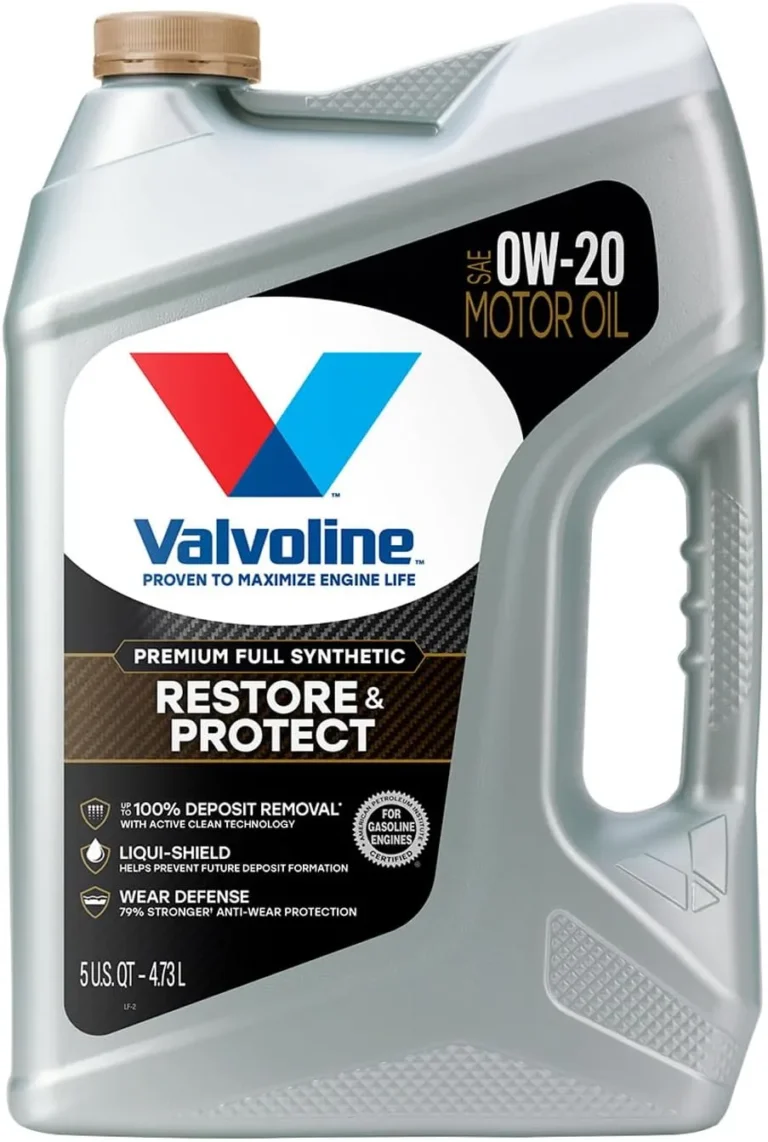
As of 2026, the U.S. catalog has included major names such as Mobil 1, Pennzoil, Valvoline, and Castrol. Product lines and sellers can change, so treat those names as examples rather than guarantees for every store.
| Product category | What the label identifies | Common use | Main shopping issue |
|---|---|---|---|
| Conventional motor oil | Mineral base oils and a performance category | Engines approved for conventional oil | It may not meet a synthetic-only requirement |
| Synthetic-blend motor oil | A blend of synthetic and conventional base oils | Drivers seeking a middle option | Several blends can share one viscosity grade |
| Full-synthetic motor oil | Engineered synthetic base stocks | Newer, turbocharged, or approved applications | It usually costs more per quart |
| High-mileage motor oil | Mileage-oriented additives in one of those oil types | Eligible older engines with stable oil use | It cannot repair worn engine parts |
| Diesel engine oil | A diesel performance category such as CK-4 or FA-4 | Specified diesel engines | A gasoline oil may not qualify |
| Small-engine oil | Equipment-specific application instructions | Mowers, generators, and other small engines | It may not meet a passenger-car specification |
A product’s front label doesn’t tell the whole story. Check the oil type, SAE grade, performance category, manufacturer approval, package size, and intended engine application.
What does “passenger-car motor oil” include?
Passenger-car motor oil is engine oil made for the lubrication and protection requirements of gasoline engines in cars, SUVs, vans, and many light trucks. It also describes the product category commonly found in Lowe’s automotive department.
The same product may be called engine oil, crankcase oil, or motor oil. These terms describe the same basic category in this context.
It lubricates moving parts and carries heat away from the engine. It also helps control deposits, corrosion, wear, and contamination. The formulation must match the engine’s design and emissions equipment.
Why does the selection differ between stores?
Store inventory depends on local demand, available shelf space, distribution, and the current product mix. A large Lowe’s supercenter may carry more automotive options than a neighborhood store. Store size alone, however, doesn’t prove that a particular jug is on the shelf.
Online inventory can include store stock, warehouse fulfillment, shipping stock, and third-party seller offers. These are separate sources. An item marked available for delivery may not be available for pickup at the selected store.
Check the exact product page after choosing your store. Confirm the size, viscosity, seller, and fulfillment method before you leave home.
How can you identify the exact product?
Use the full product name and product number when possible. A shelf may contain several 5W-30 oils from the same brand. One may be conventional, another synthetic blend, and another full synthetic.
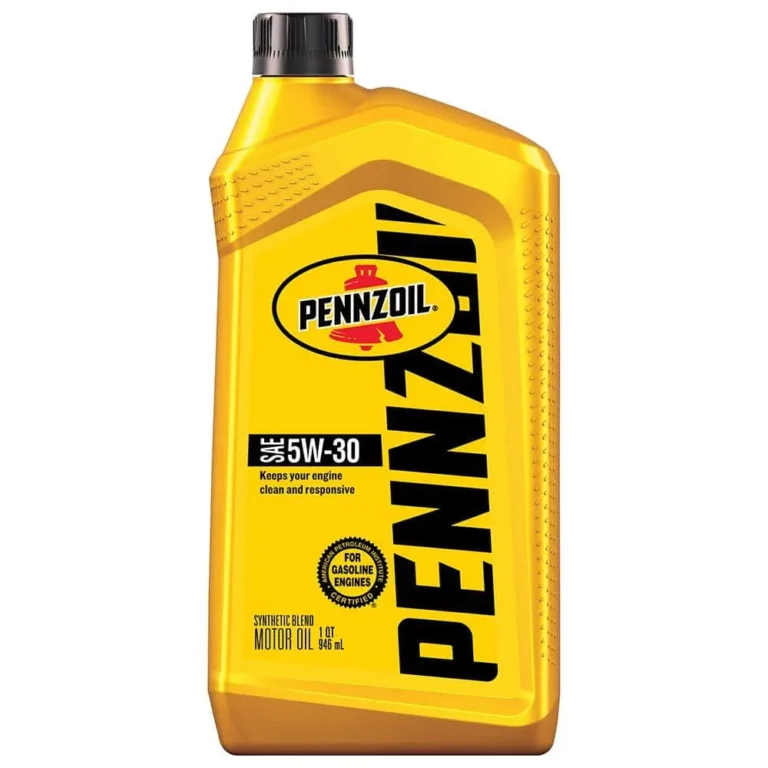
Container color and cap shape are not reliable identifiers. Brands can change packaging, and similar colors can appear across different formulas.
Read the following details:
- Brand and product line
- Oil type
- SAE viscosity grade
- API, ILSAC, or ACEA category
- Manufacturer approval
- Package size
- Intended engine application
If two containers look alike, compare the labels side by side. If the print is hard to read, use the product image on Lowe’s or the oil manufacturer’s official site.
Is passenger-car oil the same as lawn-and-garden oil?
No. Passenger-car oil and small-engine oil serve different engines and may carry different approvals. Some small engines need four-cycle oil, while others need two-cycle oil mixed with fuel.
A shared SAE grade doesn’t make the products interchangeable. Check the equipment manual and the application statement on the container.
Should you call before visiting?
A call can save a wasted trip when online inventory is unclear. Ask the automotive department for the exact product name, package size, and shelf location.
Give the associate the product number if you have it. Don’t ask only whether they have “5W-30.” Several products can share that grade while differing in oil type, certification, and container size.
Full Synthetic vs. Synthetic Blend vs. Conventional Oil
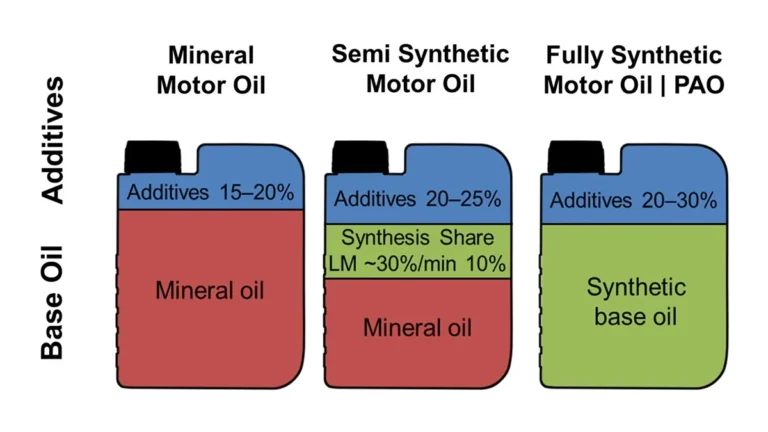
Full synthetic, synthetic blend, and conventional oil can all protect an engine when they meet the required grade and performance category. Their base-oil construction differs, but the label specification controls whether a product fits.
What are the three oil types?
Conventional motor oil is made mainly from mineral base oils refined from petroleum. It may be labeled mineral oil, although the terms aren’t perfectly standardized on every label.
Synthetic-blend motor oil combines synthetic and conventional base oils. The blend can differ between products, so one synthetic blend isn’t automatically better than another.
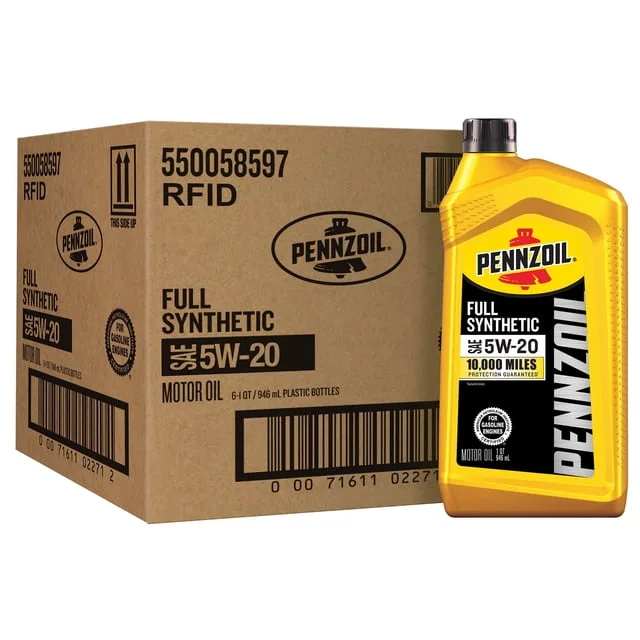
Full-synthetic motor oil uses engineered synthetic base stocks. It usually costs more, and some engines require it. A higher price doesn’t make it correct for an engine approved for conventional oil.
| Feature | Conventional | Synthetic blend | Full synthetic |
|---|---|---|---|
| Base-oil source | Mostly mineral base oils | Mixed synthetic and mineral base oils | Engineered synthetic base stocks |
| Typical cost | Lowest | Middle | Highest |
| Cold-start behavior | Formula and grade dependent | Often improved over conventional | Often strong across a wide temperature range |
| High-temperature stability | Formula dependent | Formula dependent | Often designed for demanding applications |
| Best fit | Engines approved for conventional oil | Drivers wanting a practical middle option | Newer, turbocharged, or synthetic-required engines |
| Main caution | It may not satisfy a synthetic requirement | The same grade can hide different performance | It can’t compensate for wrong specifications or mechanical faults |
Who should choose conventional oil?
Choose conventional oil when the owner’s manual permits it and the product carries the required grade and performance category. Many older vehicles and work vehicles were designed around this type of service.
A conventional formula isn’t automatically cheap or poorly made. It can meet demanding standards when the manufacturer designed and tested it for that application.
Vehicle age doesn’t decide the oil type by itself. A newer engine may allow conventional oil, while an older model may have a manual that requires synthetic.
Who should choose synthetic-blend oil?
A synthetic blend works well for many drivers who want a middle option. It often costs less than full synthetic while providing useful cold-start and high-temperature behavior.
It can suit an engine that allows synthetic-blend oil. It can also fit a driver who wants a synthetic-blend formula within a specific viscosity grade.
Two blends can carry the same SAE grade and different performance categories. Compare the full label rather than choosing by base-oil wording.
Who should choose full-synthetic oil?
Full-synthetic oil is commonly required or preferred for newer engines. It’s also relevant for many turbocharged engines, vehicles with tight emissions-system requirements, and engines with manufacturer-specific synthetic approvals.
The manufacturer may specify synthetic oil for several engineering reasons. These include piston-ring behavior, valve-train materials, fuel dilution limits, turbocharger heat, and after-treatment compatibility.
A full-synthetic formula can’t repair a failed oil pump, worn piston rings, or leaking valve seals. It also won’t correct an incorrect oil level or a failing oil filter.
Is high-mileage oil a separate base-oil type?
High-mileage oil is a performance formula, not a fourth base-oil type. It may be conventional, synthetic blend, or full synthetic.
Eligible high-mileage formulas may contain more seal conditioners, anti-wear additives, or oxidation-control ingredients. They can help with minor seepage in an aging engine, but they don’t correct sudden oil consumption.
| High-mileage situation | Sensible choice | Important caution |
|---|---|---|
| Stable use and minor seepage | An approved high-mileage formula | Keep checking the level |
| Large or sudden consumption increase | An inspection before choosing additives | Fresh oil may not solve the cause |
| Manual requires synthetic oil | A synthetic high-mileage product | Conventional high-mileage oil may not qualify |
| Manual allows conventional oil | Conventional, blend, or full synthetic | Choose the formula that meets the required specification |
| Visible smoke or low-pressure warning | Qualified diagnosis | Don’t rely on the mileage label |
Use this oil-type decision path
If the manual requires synthetic oil, then choose an oil that meets both the synthetic requirement and the required performance category. Don’t substitute conventional oil because both products share one SAE grade.
If the manual allows all three types, then compare approved products in the specified grade. Full synthetic is reasonable, but price and marketing alone shouldn’t decide.
If the vehicle is under warranty, then follow the written fluid requirement. Warranty terms may require a specific product or approval.
If the engine is older and uses stable amounts of oil, then consider a compliant high-mileage formula. Confirm that the manual permits it.
What should you ignore on the front label?
Ignore color, bottle shape, and vague words such as premium or advanced when choosing a formula. Those details don’t identify viscosity, certification, or engine compatibility.
The important marks are the SAE grade, oil type, performance category, and any manufacturer approval. Read the back label for compatibility and date-code information.
Choosing the Right SAE Viscosity Grade for Your Vehicle
The right SAE viscosity grade is one approved by the vehicle manufacturer for the engine and its operating conditions. The owner’s manual, fill cap, and service record should agree before you buy.
What does SAE 5W-30 mean?
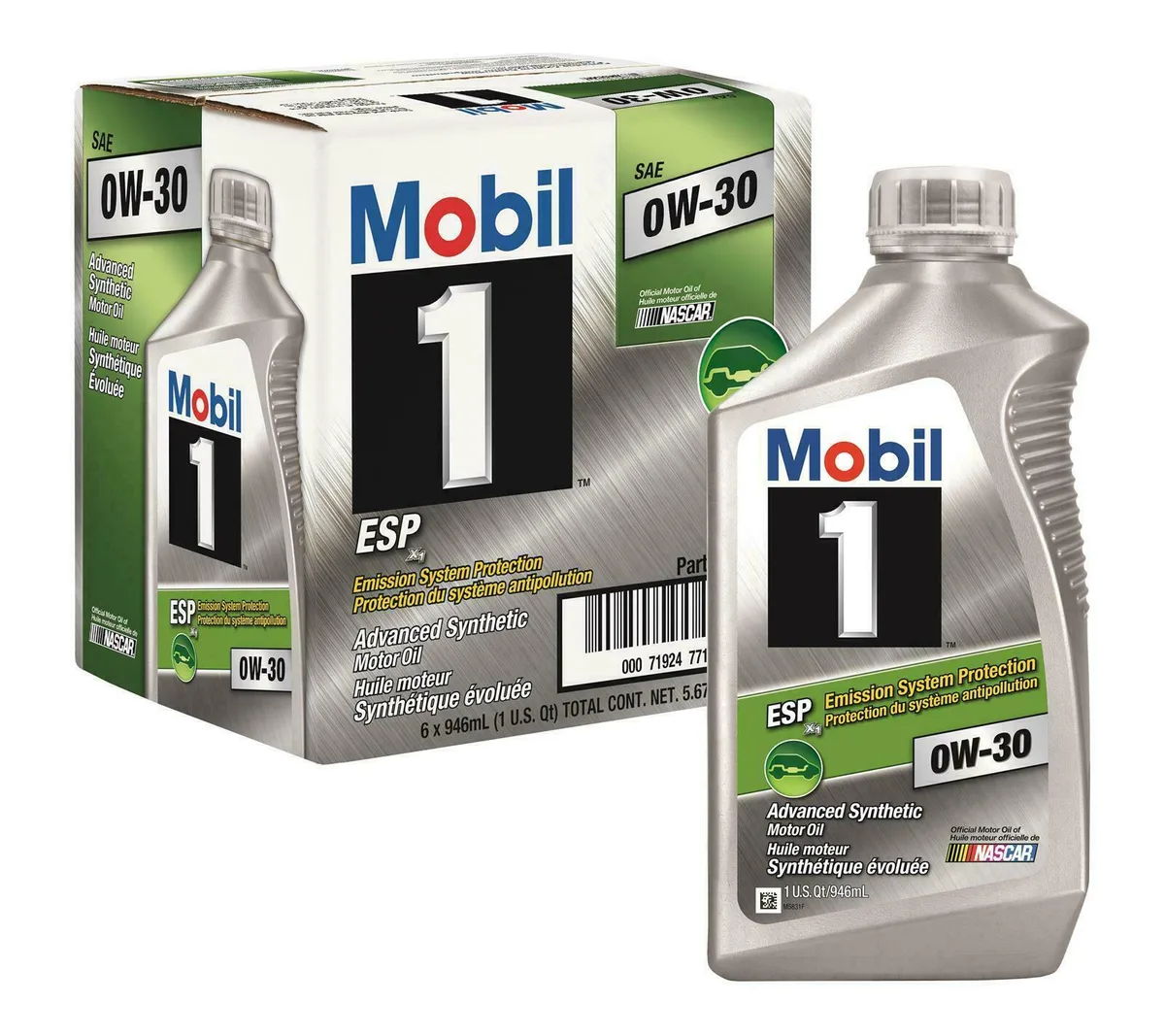
SAE 5W-30 is a multigrade engine oil designed to meet low-temperature and high-temperature viscosity requirements. The W comes from winter and refers to cold-start and oil-pumping behavior under SAE test conditions.
The first number describes cold-temperature performance. The second describes viscosity at a standardized high operating temperature. A 0W-20 oil doesn’t remain thin like a 20-weight oil after the engine warms.
SAE J300 is the standard used to classify automotive oil viscosity. It rates viscosity behavior separately from API, ILSAC, or ACEA engine-protection testing.
That means a 5W-30 label alone doesn’t show whether the oil meets API SQ, API SP, ILSAC GF-7, or another category.
Which SAE grades are common at Lowe’s?
The exact selection changes, but shoppers commonly see several widely used passenger-car grades.
| SAE grade | Common vehicle applications | Why manufacturers use it | Main requirement |
|---|---|---|---|
| 0W-20 | Some efficiency-focused and newer gasoline engines | Low cold-temperature resistance | Manufacturer approval |
| 0W-30 | Newer and turbocharged applications in some markets | Broad cold and hot temperature range | Exact manual specification |
| 5W-20 | Many four-cylinder gasoline engines | Balanced cold start and hot viscosity | API, ILSAC, and any OEM approval |
| 5W-30 | Many gasoline engines and light trucks | Broad operating range | Manual-specified grade or range |
| 5W-40 | Selected older, performance, or turbo applications | More hot-temperature viscosity behavior | Explicit manufacturer approval |
| 10W-30 | Many older gasoline engines | Familiar hot viscosity behavior | Confirmation that the engine still uses it |
| 10W-40 | Selected older or heavy-load applications | More viscosity at high temperature | Application-specific approval |
A common grade isn’t automatically correct. A manual may approve several grades but prefer one under normal conditions.
What if the manual lists more than one grade?
Read the conditions attached to each option. A colder-weather allowance may not apply in a warm climate, while a higher hot grade may be reserved for a specific engine design.
Some manuals name one preferred grade and several acceptable alternatives. Others give a range without a clear preference. In either case, use the grade that fits the manual’s conditions.
A fill cap may name one grade and the manual another. If they conflict, contact the manufacturer or a qualified technician before changing oil.
Does climate change the grade?
Climate can influence which approved grade works best, but weather alone shouldn’t make you ignore the manual. Vehicle calibration already accounts for a broad range of temperatures.
Lower cold-number grades can start and pump more readily in extreme cold. Higher hot-number grades can support engines designed for more viscosity at operating temperature.
A car specified for 5W-30 shouldn’t automatically receive 0W-20 on a cold morning. A truck specified for 5W-40 shouldn’t receive 5W-30 in hot weather without approval.
Does a turbocharged engine need a special viscosity?
Some turbocharged engines require a specific viscosity or synthetic oil. The requirement comes from the engine and manufacturer, not from the word turbocharged alone.
Follow the manual’s exact grade and approval. Don’t choose a heavier oil to quiet startup noise unless the manufacturer allows that grade.
How should you choose a top-up oil?
Match the oil already in the engine whenever possible. Check the existing grade, oil type, and performance category before adding anything.
If the exact product isn’t available, use the manual to identify an approved alternative. Add only enough to reach the proper level, then monitor consumption.
A small amount of compatible oil can be necessary, but a large top-off often signals leakage or consumption. Record the mileage and quantity added.
Use this viscosity decision guide
If the manual names one grade, then buy that grade with every required performance approval.
If the manual lists a range, then choose a grade within that range based on the stated conditions.
If the manual and fill cap disagree, then resolve the conflict before buying.
If the manual is missing, then identify the engine, model year, and VIN before choosing oil.
If the engine has low oil pressure, then correct the underlying fault before relying on viscosity changes.
API SQ, API SP, and ILSAC GF-6: Which Specification Matters?
The required performance category depends on the engine. A manual may require API SQ, API SP, ILSAC GF-6, ILSAC GF-7, ACEA, or an exact manufacturer approval.
Choose the category named in the vehicle documentation. A newer or higher-sounding label isn’t automatically correct for every engine.
What is an oil performance category?
A performance category shows that an oil passed a defined set of laboratory and engine tests. The tests may evaluate wear, deposits, oxidation, sludge, corrosion, emissions compatibility, and fuel dilution resistance.
The SAE grade describes viscosity. The performance category describes engine-protection testing. Both requirements must be met.
How do API SQ and API SP differ?
API SQ is the newer category in the current API gasoline-engine oil system. API introduced it in 2023. It builds on the protection covered by API SP and adds updated testing for fuel dilution and emissions-system compatibility.
API describes SQ as backward compatible for engines that previously required SP. Your owner’s manual remains the deciding document. An exact manufacturer approval can still be necessary.
| Manual requirement | What to look for | What not to assume |
|---|---|---|
| API SP | An oil claiming API SP or an accepted higher category | Don’t rely on viscosity alone |
| API SQ | An oil claiming API SQ | Don’t assume API SP is equivalent |
| API SP plus an OEM approval | Both the API claim and named approval | Don’t treat a generic API mark as the OEM approval |
| ILSAC GF-6A | The exact GF-6A claim | Don’t assume GF-6B is always the better choice |
| ILSAC GF-6B | The exact GF-6B claim | Don’t substitute GF-6A without approval |
| ILSAC GF-7 | The required GF-7A or GF-7B category | Don’t treat both GF-7 categories as identical |
| ACEA class | The complete class and viscosity | Don’t use a partial letter sequence |
The API Engine Oil Standards page explains the official licensing and performance system for gasoline-engine oils.
What is the difference between ILSAC GF-6A and GF-6B?
ILSAC GF-6A and GF-6B are gasoline-engine oil categories with different emissions-system requirements. GF-6B includes tighter compatibility testing for certain newer applications.
They aren’t simply lower and better versions. A vehicle that requires GF-6B may not be approved for GF-6A.
ILSAC GF-7A and GF-7B are newer categories that can appear as 2025 and 2026 model-year requirements develop. Older manuals may still specify GF-6A, GF-6B, or another standard.
What does ACEA mean?
ACEA oil classifications are common in European vehicles. They include passenger-car gasoline classes, diesel classes, and categories for engines with after-treatment systems.
A label might include a class such as A5, B5, C2, or C5. The complete class, viscosity, and manufacturer guidance matter. A partial letter sequence doesn’t confirm compatibility.
Don’t replace an API-specified oil with an ACEA formula unless the vehicle manufacturer says it’s acceptable.
Does “meets” mean “approved”?
Not always. “Meets” tells you the manufacturer states that the product satisfies a named standard. “Approved” may indicate a separate vehicle-manufacturer recognition.
| Label wording | What it tells you | What to confirm |
|---|---|---|
| API certified | The oil participates in API’s licensing program | The category shown in the API donut |
| Meets API SP | The maker states the oil satisfies that category | Exact viscosity and OEM requirements |
| Meets ILSAC GF-6A | The maker states the product satisfies that category | Exact A or B category required |
| Meets ACEA A5/B5 | The product states that full classification | Full class, viscosity, and vehicle approval |
| Meets Ford WSS-M2C | The product states a particular manufacturer specification | The exact WSS-M2C standard named |
How do you read the label?
Start with the intended engine type. Then check the SAE grade, oil type, and performance category. Finish with any OEM approval.
The API donut and ILSAC band provide test information. The back label may list compatibility, approvals, and the manufacturer’s batch code.
Don’t rely on a cropped online image that hides those details. Read the physical container before using the oil.
Use this specification workflow
First, find the required category in the owner’s manual. Next, confirm whether the engine is gasoline, diesel, or designed for a specific regional standard.
Then confirm the SAE grade and oil type. Check the OEM approval next, and only then compare price and package size.
If the manual is unclear, contact the manufacturer or a qualified technician. Don’t average two specifications or choose one based only on the newest label.
Passenger-Car, Diesel, and Small-Engine Oil: Keep These Categories Separate
Passenger-car, diesel, and small-engine oils are not interchangeable. Their viscosity grades can look similar while their engine tests, additives, and applications differ.
Use the equipment or vehicle manual before choosing any of them. A shared number such as 10W-30 or 30 doesn’t confirm compatibility.
| Category | Typical examples | Main purpose | Common mistake |
|---|---|---|---|
| Passenger-car gasoline oil | API SQ, API SP, ILSAC GF-7 | Gasoline engines in cars and light trucks | Using it in a diesel engine without approval |
| Heavy-duty diesel oil | API CK-4, CJ-4, or FA-4 | Diesel engines with specified after-treatment systems | Treating CK-4 and FA-4 as interchangeable |
| Four-cycle small-engine oil | Equipment-specific formula | Mowers and other four-cycle small engines | Using automotive oil by viscosity alone |
| Two-cycle small-engine oil | Premixed or concentrated two-cycle formula | Engines where oil is mixed with fuel | Pouring it into a four-cycle engine or fuel tank |
What should passenger-car oil match?
Passenger-car oil must match the manual’s viscosity, oil type, performance category, and manufacturer approval. The vehicle’s fuel type and emissions equipment can affect the specification.
A modern gasoline engine may require oil that supports a particulate filter, catalytic converter, turbocharger, or other after-treatment component. An older gasoline engine may use a different category.
Use the exact oil approved for the engine. Don’t choose based only on the vehicle’s age.
What is the difference between CK-4, CJ-4, and FA-4?
API CK-4 and CJ-4 are used in many heavy-duty diesel applications, but they have different test requirements. API FA-4 is intended for specific newer diesel applications and has its own viscosity rules.
CK-4 is commonly associated with 15W-40, 10W-30, and other grades. FA-4 commonly appears in low-viscosity grades such as 0W-20 and 5W-30.
That shared grade doesn’t make the oils interchangeable. A diesel manual may limit the allowed viscosity relationship as well as the performance category.
Some modern passenger-car oils are approved for certain light-duty diesel applications. Check the exact claim and vehicle requirement before using one.
What should small engines use?
Small engines have their own manuals and may require four-cycle oil, two-cycle premix, or concentrated two-cycle oil mixed at a specified ratio. Don’t infer the type from the engine’s appearance.
A push mower and a chainsaw can require different products. A generator may need a specific grade and detergent rating. Follow the equipment manual and the container’s directions.
Two-cycle oil is normally mixed with fuel unless the product and equipment instructions say otherwise. Never pour two-cycle oil into a gasoline tank or a four-cycle crankcase without approval.
Use this category decision guide
If the equipment manual names passenger-car oil, then match the required grade and certification.
If the engine is diesel, then find the exact API, ACEA, or OEM diesel specification.
If the engine is four-cycle, then use the specified small-engine oil and grade.
If the engine is two-cycle, then follow the fuel-mixing ratio and oil type in the manual.
If any label is missing or damaged, then don’t guess. Ask the equipment manufacturer or a qualified repair shop.
12-Ounce Bottles, Quarts, and 5-Quart Jugs: Which Size Should You Buy?
Buy enough oil to meet the manufacturer’s service quantity and keep a sensible reserve. The package size should fit the engine, available storage, and expected service schedule.
A 5W-30 label identifies viscosity, not quantity. The same grade can come in several container sizes.
What are the common U.S. package sizes?
One U.S. quart contains 32 fluid ounces. That conversion makes the common package sizes easy to compare.
| Package size | Pints | Quarts | Common use |
|---|---|---|---|
| 12 fl oz | 1.5 pints | 0.375 quart | Small top-offs or a measured service addition |
| 16 fl oz | 2 pints | 0.5 quart | Small top-offs and limited services |
| 1 quart | 2 pints | 1 quart | Flexible top-off size |
| 2 quarts | 4 pints | 2 quarts | Mid-size service quantity |
| 4 quarts | 8 pints | 4 quarts | Some cars and light trucks |
| 5 quarts | 10 pints | 5 quarts | Common passenger-car service size |
| 6 quarts | 12 pints | 6 quarts | Some pickups, SUVs, and commercial vehicles |
| 12-quart case | 24 pints | 12 quarts | Multiple vehicles, shops, or fleet use |
Three 12-ounce bottles provide 36 fluid ounces, or 1.125 quarts. Four provide 48 fluid ounces, or 1.5 quarts.
How do you find the required oil capacity?
The owner’s manual usually lists engine oil capacity under engine oil, maintenance, or recommended fluids. Use the capacity for the exact engine and model year.
Engine displacement alone isn’t enough. The oil pan, sump, filter, and engine design can change the capacity.
A full drain-and-fill doesn’t always remove the entire stated capacity. Oil remains in the filter, cooler passages, and engine galleries. Older engines may also hold more residual oil.
How much extra oil should you keep?
A small reserve can be useful after filling because some oil remains outside the sump and inside the filter. A few tenths of a quart is often practical for a routine car service.
Use the actual drain quantity when the manufacturer provides it. Don’t plan to fill the engine to the absolute maximum of its stated capacity.
A large leftover can be inconvenient to store. If you buy a 12-quart case for one engine, make sure the container condition and storage period suit a long reserve.
When are 12-ounce bottles useful?
Small bottles are practical when you need only a few ounces for a top-off. They’re also useful when a smaller engine needs a partial service or when you don’t want a large open container.
They usually cost more per quart. That’s the price of convenience and a smaller quantity.
Don’t buy several small bottles automatically. Compare the total fluid amount and unit price with a larger jug.
Does the number 5 in 5W-30 mean five quarts?
No. The 5 and 30 describe SAE viscosity behavior. They don’t state the package quantity.
Look for “5 qt” or “80 fl oz” near the bottom of the container. A 5W-30 bottle may hold 12 fluid ounces, one quart, or five quarts.
Can containers with different sizes use the same oil?
They can if every jug carries the same approved grade, oil type, and performance category. Check each label because sellers sometimes group similar product names under one listing.
Use the same product for a full service when possible. If you combine containers, verify that every one meets the manufacturer’s requirements.
Keep leftover oil in its original sealed container. Don’t transfer it into an unmarked bottle.
Should you check the date code?
Yes. Check the manufacturer’s batch or date code before opening the container. The format varies, so use the oil manufacturer’s decoding information when necessary.
Inspect the cap, seams, label, and container walls. Reject oil in a leaking, crushed, swollen, or unreadably labeled container.
A sealed container protects the oil from moisture and debris. Storage in a hot vehicle can damage the container and label.
Use this package-size decision guide
If the service needs less than one quart, then choose a small container only if its oil meets the manual.
If the service needs one to four quarts, then use enough jugs to reach the required quantity without unnecessary waste.
If the engine needs four to six quarts, then start with a common jug size and add a smaller container if needed.
If you service several vehicles, then compare the cost of a case with your storage space and expected use.
Comparing Lowe’s Motor Oil Prices, Promotions, and Value per Quart
A low shelf price doesn’t always produce the lowest usable cost. Compare the same specification, quantity, seller, and fulfillment method.
Prices at Lowe’s can change by store, product size, promotion, and order date. As of 2026, the displayed price should be checked again at checkout.
How do you calculate price per quart?
Divide the item price by the number of quarts in the container. One quart equals 32 fluid ounces.
Price per quart = item price ÷ (fluid ounces ÷ 32)
A 12-ounce bottle contains 0.375 quart, so its unit price is the item price divided by 0.375. A five-quart jug divides directly by five.
This comparison is useful only when the products meet the same requirements. A cheaper oil with the wrong approval isn’t better value.
What should match before you compare prices?
| Comparison | Match these details |
|---|---|
| Two brands | SAE grade, oil type, performance category, and OEM approval |
| Two package sizes | Total fluid quantity and delivered price |
| Two stores | Same product number, seller, and pickup method |
| Pickup and delivery | Shipping, service fees, tax, and delivery date |
| Sale and regular price | Account eligibility, limits, and checkout total |
A five-quart jug and a one-quart jug can use the same oil formula but have different unit prices. That difference is normal and may reflect packaging.
Where can promotions appear?
Lowe’s offers may appear on product pages, store shelf labels, digital offers, and eligible cart messages. Account pricing and manufacturer campaigns can also affect the final total.
Read the offer terms. A discount on one container size may not apply to another. A product page may show a sale while the local pickup price differs.
Open the cart and confirm the store before relying on a displayed price. Taxes, shipping, and curbside fees can change the amount due.
What makes a cheaper jug poor value?
A lower price can still be a poor choice if the viscosity is wrong, the performance category is missing, or a required OEM approval is absent. Other problems include an unreadable date code, a damaged seal, excessive unused oil, or an unfamiliar third-party seller. A restrictive return policy can also reduce the value of a cheap product.
A lower-cost oil can be excellent value when it meets the manual and is supplied in the quantity you need.
What else belongs in the total cost?
A DIY oil change may require an oil filter, drain plug washer or gasket, used-oil disposal, and basic tools. A service quote may include labor, shop supplies, inspection, and disposal.
Compare the complete costs rather than comparing only the oil jug.
One-time tools are still part of the initial DIY cost. Don’t count reusable tools as a new expense at every service, though.
Should customer ratings decide the purchase?
Ratings can reveal recurring packaging or fulfillment issues. They don’t tell you whether an oil meets your engine’s specification.
A highly rated product with the wrong SAE grade or certification remains wrong. A lower-rated product that carries the exact required approval may be the better choice.
Use this value checklist
Confirm the grade, oil type, performance category, quantity, unit price, seller, and final cost. Check the container, return terms, and local inventory before paying.
Choose the approved product with the best total cost and reliable availability. Don’t pay extra for a premium label your engine doesn’t need.
Checking Stock, Delivery, and Pickup at Your Local Lowe’s
Store inventory is tied to a specific product and location. An online listing doesn’t guarantee that the exact jug is on your local shelf.
Select the store before relying on the availability message. Check it again before a long trip.
How does Lowe’s store inventory work?
Lowe’s can list an item for store pickup, curbside pickup, delivery, shipping, or third-party fulfillment. Each route uses a separate inventory source.
A product page may combine several quantities and sellers. The available amount for one size may not apply to another size with the same general product name.
| Status | What it usually means | What to check |
|---|---|---|
| In stock for pickup | The selected store lists the item | Exact store, size, and pickup instructions |
| Curbside available | The order is prepared for vehicle pickup | Pickup window and loading location |
| Available for delivery | The item can ship to an eligible address | Delivery date, fee, and address |
| Limited stock | Only a small quantity is listed | Whether another approved size is available |
| Temporarily unavailable | The item isn’t available through that route | Another store, seller, or approved product |
Inventory can change after an order, return, store transfer, or damaged-product removal. Treat the online status as current information, not a permanent guarantee.
What should you verify before leaving?
Verify the brand, product line, oil type, and SAE grade. You should also confirm the performance category, package size, product number, selected store, seller, pickup method, and final price.
Don’t rely on a search result that only says “5W-30 motor oil.” Several formulas and sizes can match that phrase.
Save a screenshot of the exact listing. It can help when you speak with customer service or collect an order.
Why can online and shelf inventory disagree?
The store may have received part of a case, with the rest still in transit. The shelf display may hold only one facing while saleable stock sits in the back room. An online order may already have claimed the available jug.
The system may also be waiting for an inventory scan.
A product page can be slightly out of date. Call the automotive department if the status is unclear.
Ask for the full product name and product number. An associate can then check the back room and confirm the package size.
Which pickup option should you choose?
Choose store pickup when you need the oil soon and the item is listed locally. Choose curbside pickup when walking through the store is inconvenient. Use delivery when local stock is unavailable and the fee is reasonable.
Shipping may offer more selection, but delivery can take longer. A third-party seller may provide a lower price or faster fulfillment. Check the seller’s return terms before ordering.
What if the required grade isn’t available?
First, check the manual for an approved viscosity range. Then look for another brand with the same oil type and performance category.
Confirm any manufacturer approval. If the manual doesn’t allow another grade, don’t substitute it.
Search another nearby store or a qualified auto parts retailer. If no compliant product is available, wait rather than choosing an unapproved formula.
How does Canadian inventory differ?
Lowe’s Canada uses Canadian dollars and may list oil in litres or metric units. One U.S. quart equals about 29.57 millilitres. One litre equals about 33.81 U.S. fluid ounces.
Package conversions matter. A 4-litre jug isn’t the same quantity as a 4-quart jug.
Canadian vehicles may have specifications different from U.S. models. Select the Canadian store and use the manual for the vehicle sold in that market.
What should you do with a damaged or leaking jug?
Don’t use oil from a container with a broken seal, crushed side, loose cap, or unreadable label. Keep the receipt and contact the store or manufacturer.
An open-fluid return policy may differ from a normal merchandise return. Don’t pour questionable oil into the engine simply because the container came from a retailer.
Lowe’s vs. Auto Parts Stores and Online Marketplaces
The best retailer depends on your product knowledge, tools, vehicle condition, and need for installation. Lowe’s is convenient for routine shopping, while specialist automotive retailers may carry deeper selections.
No retailer can replace the owner’s manual. The right fluid still has to match the engine.
| Shopping option | Main advantage | Main limitation | Best fit |
|---|---|---|---|
| Lowe’s | Store pickup, delivery, and common automotive products | Automotive depth varies by store | Known specification and routine DIY service |
| Other home-improvement stores | Similar pickup and project-shopping convenience | Oil selection may be limited | General maintenance with a common grade |
| Auto parts chains | Broad oil, filter, and small-package selection | Inventory and prices vary by location | Specialized grades or related parts |
| Dealer or service shop | OEM fluids, trained technicians, and service records | Labor and appointment costs may be higher | New vehicles, warranty work, or diagnosis |
| Online marketplace | Wide search and seller comparison | Seller, shipping, and returns vary | Shoppers who can verify the listing |
When is Lowe’s the practical choice?
Lowe’s fits routine maintenance when you know the exact viscosity and performance category. It’s also practical when the required oil is listed for local pickup and you already have safe tools. Buying there is convenient if you need one or two jugs, if you’re combining the trip with another errand, or if no diagnosis or installation is needed.
The retailer’s broad home-improvement assortment can make one trip more convenient. That convenience matters more than carrying a slightly lower unit price elsewhere.
The limitation is automotive depth. A store may not stock a less common diesel grade, European ACEA oil, or manufacturer-specific formula.
When is an auto parts chain better?
An auto parts chain may be better when you need a specific brand, a small top-off bottle, a matching filter, or a less common viscosity. These retailers may also be better for diesel oil, European passenger-car oil, or several related parts in one trip.
Auto parts stores may also offer installation. Confirm that the location provides the service before visiting.
A small bottle can save money when you only need a few ounces. It costs more per quart, but the convenience can be worth it.
When should you use a dealer or service shop?
Use a dealer or qualified service shop for an exact OEM-fluid requirement, warranty documentation, or a vehicle with a warning or mechanical issue.
A dealer can verify software-related oil requirements and record the service. An independent technician can inspect leaks, check oil-pressure concerns, and perform the oil change.
A fresh oil change won’t repair a damaged oil pump, worn piston rings, or failing valve seals. Diagnosis and repair may be the real need.
Is a marketplace useful for research?
A marketplace can be useful for comparing product descriptions, package sizes, and seller terms. Verify the manufacturer, grade, certification, seller, and return policy.
A low price can disappear through shipping, taxes, or a restocking charge. The product may also ship in warm conditions.
Choose a seller with clear fluid-return terms. Don’t assume the platform’s general return policy covers opened motor oil.
Use this retailer decision guide
If you know the product and need local pickup, then compare the exact item at Lowe’s and nearby automotive retailers.
If you need a rare grade or manufacturer approval, then favor the retailer with reliable technical information and that product in stock.
If you need installation or diagnosis, then choose a dealer or qualified service shop.
If a marketplace price is lower, then add shipping, tax, seller risk, and return terms before deciding.
Best Motor Oil Choice for New, High-Mileage, and Older Vehicles
The best motor oil is the approved fit for the engine, not the newest or most expensive product on the shelf. Vehicle age helps narrow the search, but the manual controls the final choice.
A new engine may require synthetic oil. An older engine may be designed for conventional oil. A high-mileage formula may be useful when consumption remains stable.
| Vehicle situation | Sensible starting point | Main caution |
|---|---|---|
| New vehicle under warranty | Exact manual-specified oil and approval | Don’t substitute an unapproved synthetic or grade |
| New turbocharged engine | Manufacturer-specified synthetic oil | Viscosity alone doesn’t confirm compatibility |
| High-mileage gasoline engine | Approved high-mileage formula if eligible | Additives don’t cure mechanical consumption |
| Older conventional engine | Conventional oil if the manual allows it | Confirm the grade and emissions category |
| Older engine with stable minor seepage | Compliant high-mileage oil | Monitor the level between services |
| Diesel pickup or van | Exact diesel specification | Don’t use a generic gasoline oil |
| European vehicle | ACEA or OEM specification named in the manual | Don’t rely on a generic API mark |
| Vehicle under召回, open, or safety investigation | Manufacturer instructions and approved service guidance | Follow any applicable recall or service notice |
What should you choose for a new vehicle?
Choose the oil named in the owner’s manual, including its viscosity, type, and manufacturer approval. A new engine’s emissions system and calibration can make that requirement specific.
A vehicle may specify 0W-20, 0W-30, 5W-20, or 5W-30. No one of those grades is automatically better for every new engine.
If the vehicle is under warranty, keep the product information and service record. Fluid choice can be part of the warranty terms.
What should you choose for a high-mileage vehicle?
Choose an approved high-mileage formula when the manufacturer permits it and oil consumption is stable. The product may be conventional, synthetic blend, or full synthetic.
A high-mileage formula may help with minor seal seepage. It can’t repair a failed valve seal, worn piston ring, damaged turbocharger, or cracked head.
A sudden increase in consumption needs inspection. Record the mileage and amount of oil added between services.
What should you choose for an older vehicle?
Start with the owner’s manual and service history. Older engines commonly use grades such as 5W-30, 10W-30, or 5W-40, but the correct grade depends on the engine.
Conventional oil can be correct. Synthetic oil can also be correct when the manual permits it. A vehicle’s age doesn’t decide the base-oil type.
If the engine has a catalytic converter, diesel particulate filter, or other emissions equipment, check the required oil category. An older-looking engine can still have a specific emissions specification.
What if the previous owner used the wrong oil?
Don’t assume one fresh change corrects a long period of wrong oil. Check the oil condition for fuel, coolant, particles, or sludge.
Follow the manufacturer’s flushing or service guidance when available. A qualified technician can inspect the engine before recommending another oil change.
If the engine ran low or showed a low-pressure warning, diagnosis matters more than choosing a premium additive.
How do severe driving conditions change the choice?
Severe service can require more frequent oil changes. It doesn’t automatically change the approved viscosity or oil type.
Conditions include frequent towing, heavy loads, extended idling, repeated short trips, heavy dust, and extreme temperatures. Use the manufacturer’s shorter interval when your driving matches those conditions.
The oil-life monitor can help estimate maintenance needs. It shouldn’t replace the manual’s schedule or hide a warning.
Use this vehicle decision guide
If the vehicle is new or under warranty, then follow the exact manual and approval.
If the engine is turbocharged or emissions-sensitive, then match both the viscosity and performance category.
If the vehicle is high-mileage with stable consumption, then consider an approved high-mileage formula.
If the vehicle is older, then use the manual’s grade and category. Choose the base-oil type the manufacturer permits.
If the engine has a warning, leak, or consumption change, then inspect it before relying on a new formula.
Buying Oil at Lowe’s vs. Buying a Complete Oil Change
Buying a jug gives you control over the product and the work. A complete oil change adds labor, equipment, used-oil handling, and usually a basic inspection.
Your choice depends on your tools, experience, vehicle condition, and the amount of diagnosis needed.
What does a product-only oil purchase include?
A product-only purchase usually includes the oil container and receipt. It may not include an oil filter, drain plug washer or gasket, labor, or used-oil disposal.
You also need safe lifting equipment, a drain pan, tools, and a safe disposal route. Don’t begin the job until those items are ready.
A Lowe’s product listing doesn’t automatically include installation. Ask the local store if you need an oil-change service.
How do DIY and serviced changes compare?
| Item | Buying oil for DIY | Quick-lube service | Dealer or repair shop |
|---|---|---|---|
| Oil selection | You compare the manual and label | Shop selects an approved product | Shop can match OEM requirements |
| Oil filter | You purchase it | Usually included | Usually included |
| Labor | Your time and skill | Included in the quote | Included in the quote |
| Used oil | You arrange disposal | Included | Included |
| Inspection | Only what you perform | Usually basic | Can include a broader inspection |
| Documentation | Your maintenance record | Shop may provide a receipt | Dealer can record warranty service |
| Best fit | Experienced DIY owner | Routine maintenance | Warranty, OEM fluid, or diagnosis |
Can you bring oil to a service shop?
Sometimes, but ask before buying. Some shops accept customer-supplied oil if it meets their requirements. Others require their own product for warranty, liability, or product-control reasons.
Give the shop the brand, product name, SAE grade, performance category, and package size. They can compare it with the service requirement.
Don’t arrive with an open container. A shop may be unable to verify its storage history or exact condition.
How do you compare the complete cost?
A DIY cost includes the oil, filter, drain plug hardware, disposal, and any missing tools. A service quote may include oil, labor , shop supplies, inspection, taxes, and disposal.
A higher service quote can be worthwhile when you lack safe equipment. It can also be worthwhile when the drain plug is damaged, the oil filter won’t release, or the engine has low oil pressure.
Compare the complete totals. A cheap jug isn’t the cheapest service option if you also need tools and disposal.
What does a complete oil-change service usually include?
A complete service usually includes draining the old oil, replacing the oil filter, adding the specified oil, and disposing of the used oil and filter.
Many shops also check fluid levels, visible leaks, and belt condition. They may inspect the air filter, tire pressure, battery, and other basic items.
The service checklist varies. A dealer may perform a broader multipoint inspection. A quick-lube shop may focus mainly on lubrication and fluid checks.
Ask what the quote includes. Confirm whether the shop supplies the oil, charges separately for disposal, or performs a multipoint inspection.
What if you don’t have the right tools?
Choose a service visit if you lack safe lifting equipment, wheel chocks, a drain pan, or the correct filter tool.
Never work beneath a vehicle supported only by a jack. A floor jack can lose its position or fail. Proper jack stands and the manufacturer’s lifting instructions are necessary.
A service visit also helps when the drain plug is seized, the oil pan is difficult to access, or the filter housing uses a specialized cartridge tool.
Is a dealer or quick-lube shop better?
A dealer is usually the safer documentation choice for a new vehicle, warranty service, or exact OEM-fluid requirement. A qualified independent shop can provide the same kind of manufacturer-specific work at many vehicles.
A quick-lube shop is convenient for routine maintenance. Confirm that it uses oil meeting your vehicle’s specification and records the mileage and date.
A repair shop is more useful when an oil-pressure warning, leak, or consumption issue needs diagnosis.
Use this purchase decision guide
If you know the exact oil and have safe equipment, then buying the approved product is usually the most direct choice.
If you need only a small top-off, then choose a compatible container and buy the measured quantity.
If you lack safe tools, then use a service that includes labor and used-oil handling.
If the engine has a warning or mechanical concern, then arrange diagnosis first.
If warranty terms require an OEM fluid or documented service, then use a dealer or qualified shop that can meet those terms.
Common Mistakes When Choosing Lowe’s Motor Oil
The most common mistake is matching only the viscosity. A 5W-30 grade doesn’t confirm the oil type, performance category, or manufacturer approval.
The second most common mistake is trusting online inventory or a similar-looking jug. The product number, quantity, and selected store still need to match.
Is every 5W-30 oil interchangeable?
No. Products with the same SAE grade can use different base oils, additive packages, and performance categories.
One 5W-30 may meet API SQ, while another carries ILSAC GF-7. A third may carry an exact manufacturer approval. The viscosity number doesn’t make them interchangeable.
Match the oil type, performance category, and any OEM approval with the owner’s manual.
Can synthetic oil be substituted for conventional oil?
No. Conventional oil doesn’t satisfy a synthetic-only requirement, even when both products carry the same SAE grade.
If the manufacturer requires synthetic, use a product that meets that requirement. A conventional formula isn’t automatically acceptable because it costs less.
The reverse isn’t always true, either. A manual may allow conventional, synthetic blend, or full synthetic. The exact oil type then depends on the written requirement.
Is higher viscosity always better?
No. A higher SAE hot-temperature number doesn’t automatically improve protection.
Using an unapproved grade can change oil pressure, oil consumption, and cold-start behavior. It can also affect emissions-system operation and the engine’s ability to circulate oil quickly.
Use the preferred grade or the alternatives listed in the owner’s manual. Don’t increase the number to quiet startup noise or reduce oil consumption.
Can passenger-car oil be used in a diesel engine?
Not unless the oil carries the required diesel approval. Many passenger-car oils aren’t formulated or tested for the operating conditions in a diesel engine.
A diesel manual may require API CK-4, CJ-4, FA-4, or a named manufacturer specification. Use that exact category and viscosity.
A star symbol or the words “API Diesel” don’t tell you the whole category. Read the complete approval.
Can automotive oil be used in a small engine?
Only when the equipment manual approves it. Some small engines require a specific four-cycle oil, while others need two-cycle oil mixed with fuel.
A shared viscosity grade doesn’t confirm compatibility. Small-engine oil can also be mixed with the wrong type of package or used in the wrong compartment.
Follow the equipment manual and the container’s application directions.
Is high-mileage oil a cure for oil consumption?
No. High-mileage oil may reduce minor seepage, but it can’t repair worn piston rings, failing valve seals, a damaged turbocharger, or a cracked head.
A sudden increase in consumption needs attention. Record the mileage, amount added, and time between top-offs.
A low-pressure warning, visible smoke, or a large puddle under the car calls for inspection. Fresh oil won’t correct the underlying fault.
Are small bottles more economical?
Not usually. Small bottles usually cost more per quart because each package carries separate labeling, packaging, and handling costs.
They can still be sensible when you need only a few ounces. A 12-ounce bottle contains 0.375 quart, so it’s best for a measured top-off or limited service.
Don’t buy several small bottles when one jug gives you the required quantity and fits your storage needs.
What does a five-quart jug mean?
It means the container holds five quarts. It doesn’t say the engine needs five quarts.
The first number in 5W-30 describes cold-temperature viscosity behavior. The second describes high-temperature viscosity behavior.
Look for the package quantity near the bottom of the container. Common listings use 5 qt, 80 fl oz, or both.
Can you buy the wrong size by accident?
Yes. Product titles can look similar while the package size changes. A single listed quantity may also vary by store or seller.
Check the fluid ounces, quart count, and product number. Confirm the size after you place the order and again at pickup.
If you collect a 12-ounce bottle when you need five quarts, you may not have enough oil to complete the service safely.
Does product color identify the oil type?
No. Color comes from the base oils, additives, and pigments. Different formulas can have similar colors, and one product may change shade across batches.
Don’t choose a product by cap color, bottle color, or packaging. Read the oil type and performance category.
A dark color doesn’t prove that the oil is old. A bright color doesn’t prove that it’s better.
Is a lower price always better value?
No. A lower price matters only after the product meets your requirements.
A compliant conventional oil can be the better value for an engine approved for it. A cheaper oil with the wrong performance category is not a suitable purchase.
Also compare package size, seller, container condition, return terms, and delivery fees. A small bottle can cost more per quart and still be convenient for a top-off.
Can an online listing guarantee local stock?
No. Online availability can come from store stock, a warehouse, shipping inventory, or a third-party seller.
Select your preferred store and check the exact product size. A nearby store may have a different selection from the default location.
Inventory can change after an order, return, or warehouse transfer. Call the automotive department when the listing is unclear.
Is the newest oil specification always the correct choice?
No. A newer performance category can meet an older requirement, but the owner’s manual still controls the decision.
Some manuals name an exact manufacturer approval. A generic API or ILSAC claim doesn’t replace that requirement.
Ask the manufacturer or a qualified technician when the manual and product label don’t align.
Is the oil filter an afterthought?
No. Use the filter specified for the exact engine. A physically similar filter can have a different internal design or filtration specification.
Cartridge filters and spin-on filters aren’t interchangeable. Check the filter number, gasket, and housing before ordering.
A leaking or incorrect filter can reduce oil flow or let contaminants enter the engine.
Can too much oil damage an engine?
Yes. Overfilling can cause aeration, foaming, leaks, and inaccurate dipstick readings.
Added oil can also interfere with emissions systems. Check the owner’s manual for the proper fill and measurement procedure.
Add oil in measured amounts. Don’t pour until the jug is empty.
Does frequent topping-off mean the oil is wrong?
Not necessarily. The grade may be correct while a worn engine consumes oil, a gasket leaks, or a filter seals poorly.
Match the existing oil before making a top-off, but investigate repeated losses. A new bottle of premium oil won’t fix mechanical consumption.
Keep a simple log of mileage, quantity, and product used. That record helps a technician identify the pattern.
Does skipping an oil change make up for using a cheaper oil?
No. Fresh oil still needs to meet the manufacturer’s specification and be changed on the appropriate schedule.
Using a compliant lower-cost oil is reasonable. Extending the change interval beyond the manual’s conditions isn’t.
Severe driving can require more frequent service. The oil-life monitor helps, but it doesn’t replace the maintenance schedule.
What should you check before checkout?
Read the owner’s manual first. Then confirm the oil type, SAE grade, performance category, and OEM approval.
Check the quantity, product number, seller, package condition, and final price. Confirm local inventory if you plan to pick it up.
Keep the receipt and container until the service is complete. They document what went into the engine.
| Common mistake | Why it matters | Better check |
|---|---|---|
| Choosing by SAE grade alone | Viscosity doesn’t confirm engine protection | Performance category and OEM approval |
| Assuming all synthetic oil is required | It may cost more without improving fit | Manufacturer’s base-oil requirement |
| Using automotive oil in small equipment | Application and tests differ | Equipment manual |
| Buying by container color | Similar colors can represent different formulas | Full product label |
| Trusting generic online inventory | Availability can come from another source | Selected store and exact size |
| Ignoring package size | A small bottle can’t cover a full service | Required engine capacity |
| Buying an unapproved high-mileage oil | Additives don’t replace approval | Exact grade and performance category |
| Installing a similar oil filter | Internal designs can differ | Engine-specific filter number |
| Ignoring an oil leak | Fresh oil can hide the source | Inspect the source before driving |
| Resetting the oil-life monitor | The warning can return without maintenance | Follow the actual service interval |
Safe DIY Oil Changes, Storage, and Used-Oil Disposal
A safe DIY oil change starts before the drain plug moves. You need the right fluid, the right filter, safe support for the vehicle, and a legal plan for used oil.
If any of those pieces are missing, a qualified service shop is the better choice.
Can a DIY oil change be safe?
Yes, when the vehicle is in suitable condition and you have proper equipment. Use a firm, level surface, rated jack stands, and wheel chocks.
Never work beneath a vehicle supported only by a floor jack. Jack stands can fail or shift if they aren’t rated and positioned correctly.
If you can’t lift the vehicle safely, reach the drain plug with suitable equipment, and handle the oil without spills, use a service shop.
What equipment do you need?
| Equipment or material | Purpose | Selection point |
|---|---|---|
| Correct motor oil | Lubrication and engine protection | Match viscosity, type, certification, and approval |
| Correct oil filter | Removes contaminants from circulating oil | Match the engine and filter number |
| Drain plug washer or gasket | Seals the drain plug | Use the specified replacement part |
| Oil drain pan | Collects used oil | Choose enough capacity for the engine |
| Funnel | Controls pouring | Keep it clean and fit the fill opening |
| Ratchet and sockets | Removes the plug and filter | Match the fastener sizes |
| Torque wrench | Applies a specified plug torque when required | Use the manual’s value |
| Rated jack stands | Support the vehicle safely | Use the correct locations and rating |
| Wheel chocks | Prevent rolling | Place them according to the lifting procedure |
| Gloves and eye protection | Reduce exposure | Replace damaged safety gear |
| Absorbent material | Contains small spills | Keep oily waste out of drains |
| Sealed used-oil container | Holds waste for transport | Use a container that won’t leak |
A vehicle may use a cartridge oil filter instead of a spin-on filter. It may also need a special drain plug tool or a plastic sealing washer.
Check the service procedure before collecting parts.
How should you prepare before removing the drain plug?
Confirm the vehicle, engine, oil specification, viscosity, quantity, and filter. Arrange a collection site before opening the oil system.
Park on firm, level ground. Apply the parking brake, select the required transmission position, and chock the wheels.
Place absorbent material around the drain area. Keep children and pets away from hot oil, tools, and the vehicle.
If you can’t identify the correct oil or filter, stop before beginning. A wrong part can turn a routine service into an expensive mistake.
What is the basic oil-change sequence?
The exact procedure depends on the vehicle, but the basic sequence remains consistent.
- Confirm the oil, filter, and quantity.
- Set up safe support and oil collection.
- Warm the engine only as directed by the manufacturer.
- Remove the drain plug carefully.
- Let the old oil drain fully.
- Inspect the used oil and drain area.
- Replace the drain plug washer and oil filter.
- Secure the plug at the specified torque.
- Add the measured amount of new oil.
- Check circulation, leaks, warnings, and level.
- Record the service.
- Recycle or dispose of the used oil and filter.
Some vehicles require a separate oil-level procedure. Others use a dipstick, electronic sensor, or a specified warm-up sequence. Follow the manual rather than copying another vehicle’s steps.
Should the engine be warm or cold?
Follow the manufacturer’s instructions. Warm oil can drain more readily, but very hot oil can burn you and damage a plastic drain pan.
Let the oil cool enough to handle safely. Keep the vehicle in a secure lifted position while it drains.
A cold drain can take longer, and some residue may remain in the engine. Don’t add water or thinner fluid to speed the process.
How should you remove the drain plug?
Use the correct socket and tool. Remove the plug slowly so the oil doesn’t rush out when it releases.
Keep the plug and sealing washer clean. Inspect the threads for damage, corrosion, or pulled threads.
If the plug won’t move with normal force, stop. Forcing it can strip the threads or crack the oil pan.
A seized plug often needs heat, penetrating oil, or professional removal. A sudden crack in a cast-aluminum pan may require repair before the vehicle can be driven.
How much oil should you add?
Add oil to the manufacturer’s specified fill range. A dipstick reading is only useful when taken using the correct procedure.
Many manuals require a warm engine, a short wait after shutdown, and a level parking position. Other vehicles use a specific electronic check.
Add measured amounts through a clean funnel. Keep the container and dipstick clean so grit doesn’t enter the engine.
Don’t fill to the maximum mark. Some oil remains in the filter and engine passages after filling.
How should you install the oil filter?
Use only the filter specified for the engine. Check the model year, engine, and any manufacturer filter change interval.
A spin-on filter should seat by hand before tightening. Follow the specified turns or torque. Don’t force it with a tool.
A cartridge filter needs a clean housing, the correct O-ring, and a properly secured retaining plate. Replace any specified second seal.
Wipe the gasket surface clean before installation. Oil or debris around the filter seat can cause a leak.
How should you tighten the drain plug?
Follow the manufacturer’s sealing and torque instructions. A loose plug can leak, while an overtightened plug can strip threads or crack the pan.
Replace the specified washer or gasket. Don’t reuse a crushed, stretched, or damaged sealing part.
Tighten the plug with controlled pressure. A torque wrench matters when the manual gives a value or uses a defined tightening procedure.
If the plug won’t reach the specified torque cleanly, inspect the threads and sealing surface. Don’t hide damage with extra sealant or a larger washer.
What oil should you look for in the old pan?
Check for coolant, fuel odor, metallic particles, large debris, thick sludge, and a broken filter fragment. These findings can point to contamination or a mechanical problem.
A small amount of dark oil isn’t proof of a problem. Color alone doesn’t identify engine condition.
Keep the drain-plug magnetic debris visible if the design uses one. Don’t scrape it away before recording what you found.
If the old oil looks unusual, save a sealed sample or ask a service shop to inspect it. Disposal sites may also offer guidance.
How should you refill the engine safely?
Keep the fill port, funnel, and container clean. Add oil slowly so you can stop at the measured quantity.
Use the specified grade and product. If the exact jug is unavailable, follow the manual’s guidance for a temporary substitute.
Do not add oil to a hot, running engine unless the manufacturer provides that procedure. Most cars are filled with the engine off.
After filling, follow the manual’s circulation and warm-up instructions. Watch for an oil-pressure warning, leaks, smoke, or unusual noise.
How do you check the level after an oil change?
Use the manual’s exact procedure. It may require the engine to run, reach operating temperature, shut off, and wait a few minutes.
Park on level ground. Remove the dipstick if the manual calls for it, wipe it clean, reinsert it fully, and read it again.
An electronic oil-level sensor may need a warm engine, level surface, and ignition-on check. Don’t assume the warning light displays a precise fill quantity.
Add oil a little at a time. Recheck before topping up again.
What should you do if you overfill the engine?
Stop adding oil and check the manual’s correction procedure. Overfilling can make the reading inaccurate and cause foaming, aeration, or leaks.
Don’t drain hot oil into an unsafe container. A qualified technician can remove the excess safely if you’re unsure.
Inspect the dipstick, filter, and oil pan for leaks before adding more. An overfull reading can sometimes come from a spill around the dipstick tube.
Is it safe to start the engine after changing oil?
It’s safe when the filter and drain plug are correctly installed, the required oil quantity is present, and the vehicle is safely supported and clear of people.
Follow the manual’s circulation procedure. Many service instructions call for a short warm-up without revving the engine hard.
Stop if the oil-pressure warning stays on, fluid leaks under the vehicle, the engine knocks, or the temperature rises unusually.
Check the level again on level ground. Oil consumption during the first drive can vary, so a final scheduled recheck may be useful.
Should you replace the drain plug washer every time?
Replace it when the manufacturer specifies a new washer or gasket. Many modern manuals use a one-time-use sealing washer or require a specific sealing method.
A reusable metal crush washer can sometimes be reinstalled only when the manual allows it. Inspect it for damage and flattening.
Don’t improvise thread sealant. It can loosen under heat or contaminate the oil.
How should you store an opened jug?
Keep the oil in its original, tightly sealed container. Store it upright in a cool, dry place away from heat, sparks, and open flames.
Don’t leave the container in a hot vehicle. Heat can damage the plastic, weaken the seal, and make handling spills more likely.
Label an opened container with the product name, grade, and purchase date if the original label is no longer clear.
Don’t transfer the oil into a reused beverage bottle or an unmarked container. Keep it away from children and pets.
What about oil storage temperatures?
Store the jug within the temperature range recommended by the manufacturer. Avoid freezing, direct sun, and extreme heat where the container or formula could be affected.
The label’s ambient storage statement takes priority if it is more restrictive than general room conditions.
Don’t open a container that has frozen, separated, or crystallized until the manufacturer’s guidance is clear. A changed appearance can result from temperature, but it can also indicate a problem.
How should used oil be disposed of?
Place used oil in a clean, sealed container and take it to an approved used-oil collection site. Service stations, retailers, municipalities, and recycling centers may accept it.
Don’t pour used oil onto soil, into a storm drain, into a sewer, or into a household sink. Used oil can contain metals, fuel, coolant, and other contaminants.
The U.S. Environmental Protection Agency’s used-oil management guidance explains why oil and oily waste should be managed through appropriate collection and recycling programs.
Call ahead before bringing a large quantity. Rules and fees vary by location.
How should you handle oily rags, gloves, and plastic?
Seal oily absorbents, gloves, wipes, and plastic in a bag or suitable container. Prevent used oil from soaking through the bag.
Don’t wash oily items into a driveway or storm drain. Water can spread the contamination beyond the original spill.
Ask the collection site how it wants oily absorbents and used filters handled. Don’t assume ordinary household trash is always accepted.
What should you do after a spill?
Stop the leak if it’s safe. Protect your skin and eyes, then contain the spread with absorbent material.
Don’t hose the area. Don’t add water or detergent without following a product designed for that surface and disposal method.
Recover contaminated absorbents into a sealed container. Dispose of them through the local used-oil or oily-waste program.
A large spill, a spill near water, or a spill entering a drain may require notification under local rules. Check with the relevant environmental agency.
What should you record after a DIY service?
Record the date, mileage, oil brand, product name, oil type, SAE grade, performance category, quantity, and filter number.
Keep the receipt and container. The information helps with warranty questions, future top-offs, and maintenance records.
Record any visible leaks, warning lights, unusual noises, or old-oil findings that need follow-up.
Set the next service date from the manufacturer’s interval and your driving conditions. Severe service may require an earlier change.
When should a technician take over?
Use a qualified technician if the drain plug won’t remove, the oil pan cracks, or the filter housing breaks. Professional help is also appropriate when an oil-pressure warning remains on, an internal leak is suspected, or the engine has consumed large amounts of oil quickly.
A technician is also needed when the correct specification remains unclear, a diesel or emissions-system fault is suspected, or used oil contains coolant, fuel, or large debris.
Don’t keep driving because fresh oil hides the leak. A low-pressure warning can progress to rapid bearing and lubrication damage.
What should your final safety check include?
Confirm the drain plug is secure, the filter is properly installed, and the oil level is within range. Check beneath the vehicle for leaks.
Verify that no warning light remains on. Keep the vehicle in park or gear, set the parking brake, and lower it with the manufacturer’s lifting procedure.
Remove tools and containers from the work area. Clean small residues, seal used oil, and arrange proper disposal.
Store leftover oil upright. Record the service and schedule the next check.
| Stage | Safe practice | Avoid |
|---|---|---|
| Vehicle support | Rated jack stands and wheel chocks | Working under a jack alone |
| Oil selection | Manual viscosity, type, certification, and approval | Choosing by price or color |
| Plug removal | Controlled tools and gradual loosening | Forcing a seized plug |
| Used oil | Sealed container and approved collection | Pouring it into a drain or onto soil |
| Spills | Immediate containment with absorbent material | Hosing the spill away |
| Refilling | Measured quantity and clean funnel | Filling to the maximum mark |
| Start-up | Manual circulation procedure and warning check | Revving with low or unknown oil level |
| Storage | Original sealed container in a cool place | Storing an open jug in a hot vehicle |
Frequently Asked Questions
Does Lowe’s sell motor oil?
Yes, Lowe’s sells passenger-car motor oil online and through many U.S. and Canadian stores. Its assortment includes conventional, synthetic-blend, full-synthetic, and high-mileage formulas from major brands. Diesel and small-engine oils may sit in separate categories.
Check the exact grade, package size, and local store inventory before visiting.
Is motor oil cheaper at every Lowe’s store?
No, prices can vary by store, region, brand, size, seller, and promotion. Delivery, shipping, and taxes can change the final cost. Compare matching products and divide the delivered price by the number of quarts.
A 12-ounce bottle contains 0.375 quart, so its unit price is often higher.
What SAE viscosity grade should I use in my car?
Use the grade named in the owner’s manual, including any approved alternatives and manufacturer conditions. Common grades include 0W-20, 5W-20, 5W-30, and 10W-30. A grade alone doesn’t confirm performance certification.
Check the oil type, API, ILSAC, ACEA, or OEM requirement before buying.
Can I use conventional oil when the manual requires synthetic?
No, conventional oil doesn’t meet a synthetic-only manufacturer requirement, even if both products carry the same SAE grade. Use an approved synthetic product instead. Conventional oil can be correct when the manual permits it.
Follow the written viscosity, performance category, and any OEM approval rather than choosing by price or vehicle age.
Can I top up with a different brand or viscosity?
Match the existing oil’s SAE grade, oil type, and performance category as closely as possible. If the exact product is unavailable, check the manual for an approved alternative and add only what’s needed. Repeated top-offs can signal leaks or oil consumption.
Record the mileage and quantity, then investigate any rapid loss.
Can I use Lowe’s motor oil in a lawn mower or small engine?
Only if the equipment manual and product label approve that oil. A four-cycle engine may need a specific small-engine oil, while a two-cycle engine may need oil mixed with fuel. Don’t substitute passenger-car oil based on the viscosity number.
Confirm the equipment type, oil grade, certification, and mixing ratio first.