What do the numbers mean on motor oil: Honest Review
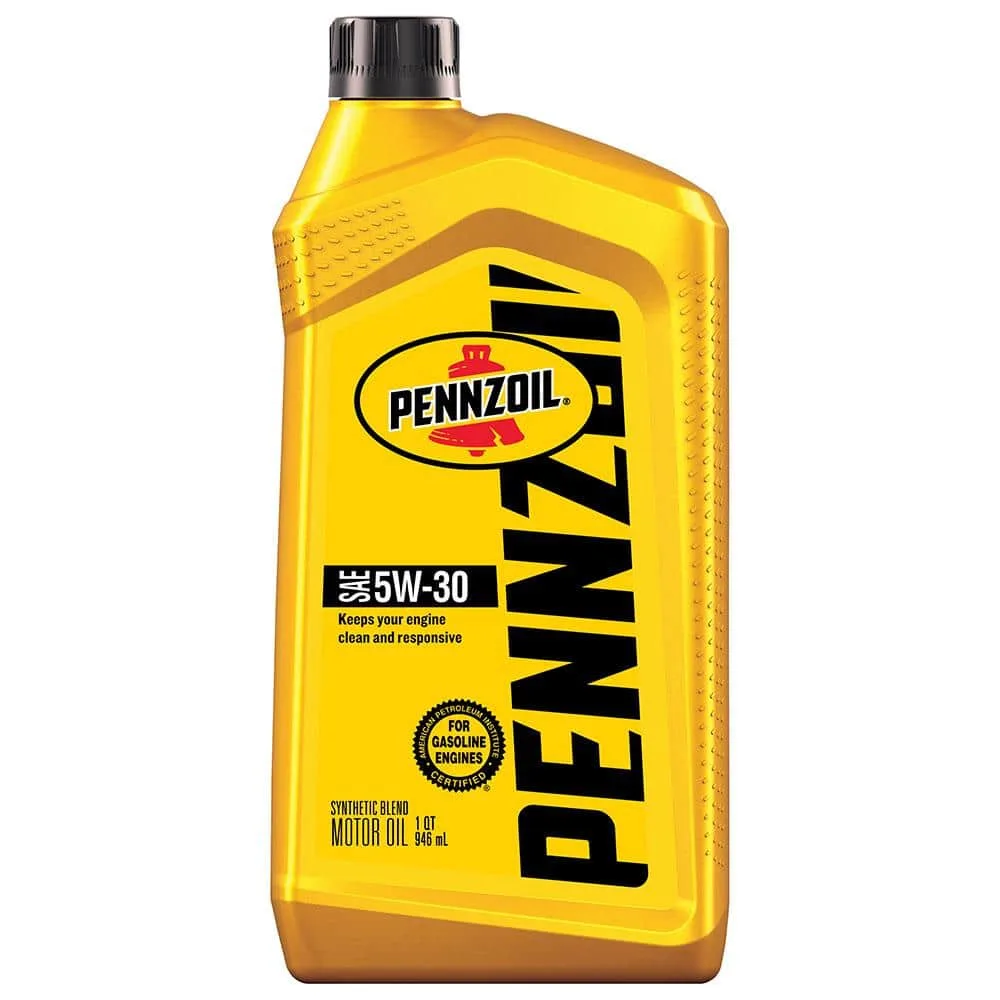
You've stood in the auto aisle, grabbed a bottle, and had no idea what do the numbers mean on motor oil. The 5W-30 on the front. The API SP on the back.
The little starburst. It looks like a homework assignment nobody assigned.
Those numbers aren't random. They trace back to SAE J300, the Society of Automotive Engineers' viscosity grading standard, and API service categories that shifted as recently as 2020 with the SP update. As of 2026, pouring the wrong API level into a turbo direct-injection engine can trigger uncontrolled low-speed pre-ignition and crack a piston.
Let's decode every number on that label.
Quick Answer
The numbers on motor oil refer to two systems. SAE viscosity grades like 5W-30 show thickness at cold and hot temps. API service letters like SP show additive and performance level.
Match both to your owner's manual spec string.
Why Every Oil Label Looks Like a Different Language (And It's Not Just You)
You're not the only one squinting at a bottle of 10W-40 and wondering if you're about to pour the wrong stuff. The confusion has a real reason.
Three separate standards bodies write the rules. SAE J300 handles the viscosity number. The API handles the service letter.
ILSAC, ACEA, and JASO add their own layers for specific markets. Your Toyota manual says "API SP, ILSAC GF-6." Your BMW says "BMW Longlife-17FE, ACEA C2." Your diesel truck says "API CK-4." Same engine block, three different naming conventions.
Then add regional differences. A bottle sold in Germany carries an ACEA C3 rating. One in India carries an IS grade alongside SAE.
One in Japan carries JASO D for diesel. The physical oil inside might be nearly identical, but the label language shifts based on where it's manufactured and sold.
So when you walk into a store and see six brands all saying "5W-30" but with different back-label codes, that's not marketing confusion. It's multiple standards stacked on one bottle.
The Two Number Systems Actually Printed on the Bottle: SAE Viscosity and API Service
Every label carries two independent number systems, and they answer two different questions.
The SAE viscosity grade (the "5W-30" part) tells you how thick the oil is at specific temperatures. It's a physical property. A SAE 5W-30 and a SAE 0W-20 can both be API SP.
Same additive package, different thickness. The SAE number is governed by SAE J300, which sets exact Cold Crank Simulator limits and kinematic viscosity ranges at 100 °C.
The API service category (the "SP" part) tells you what the oil's additive package was engineered to do. Higher letters mean more protection. SP (introduced 2020) adds low-speed pre-ignition resistance, better sludge control, and fuel-economy targets that SN (2010) didn't require.
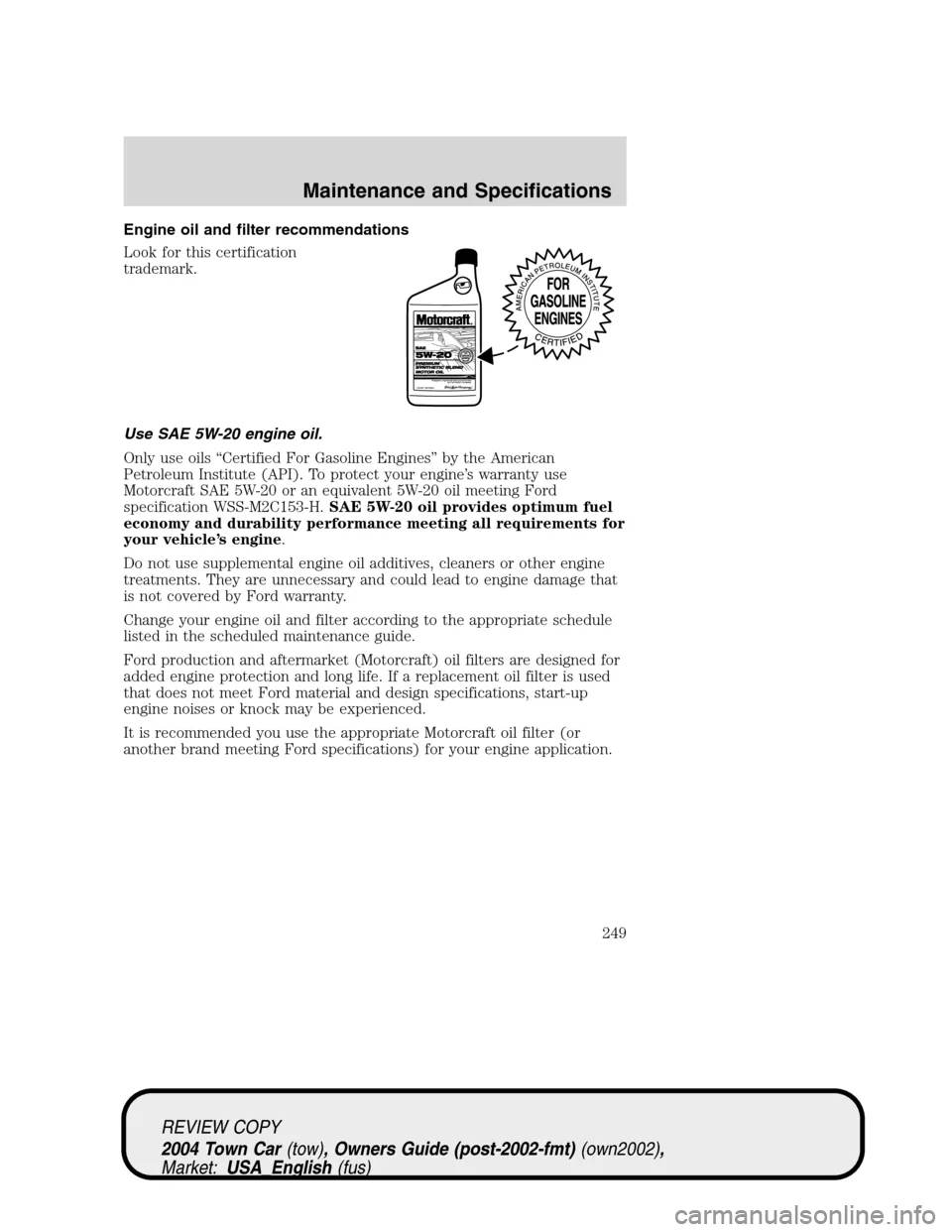
The API starburst mark on the back of the bottle certifies that the oil passed those engine test sequences.
Think of it this way: the SAE number is the oil's body. The API letter is the oil's resume. You need both to pick the right product.
One without the other is an incomplete match.
SAE Viscosity Grades Broken Down: What "5W" Means at −30 °C and What "30" Means at 100 °C
The SAE J300 system splits into two halves, and understanding both is where most of the confusion clears up.
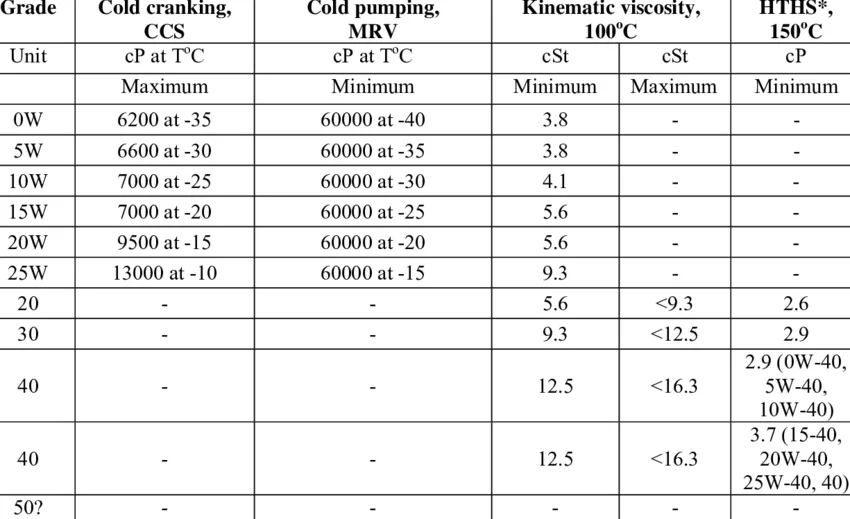
The cold side (the number before the W): The "W" stands for Winter. The number before it tells you the lowest temperature at which the oil still cranks an engine. Per SAE J300 testing, a 0W oil must flow at 6,600 cP or less in the Cold Crank Simulator at −35 °C.
A 5W must flow at 6,600 cP at −30 °C. A 10W must flow at 7,000 cP at −25 °C. Each step up means noticeably thicker oil in cold weather.
The hot side (the number after the W): This is the kinematic viscosity measured at 100 °C, roughly matching oil temperature at highway cruising. SAE J300 sets a range for each grade:
| SAE Hot Grade | Kinematic Viscosity at 100 °C (cSt) | HTHS Class at 200 °C (mPa·s) |
|---|---|---|
| 20 | 4.6 to 6.4 | 2.9 |
| 30 | 6.8 to 10.2 | 2.9 or 3.2 |
| 40 | 12.4 to 16.3 | 3.5 |
| 50 | 16.4 to 21.0 | 3.5 |
The HTHS number matters because it measures viscosity under the metal-on-metal squeeze of a bearing journal at operating temp. A 5W-30 with 2.9 HTHS and a 5W-30 with 3.2 HTHS are the same SAE grade but protect different engines.
Single-grade oils (SAE 30, SAE 5) skip the cold-side test entirely. They're one number, one viscosity range. That's why you see them in tropical garages and older farm equipment, not in your Minnesota Subaru.
API SP, SN, CK-4, FA-4: What the Letter Codes Tell You the Viscosity Numbers Can't
The API service letter is where the "what the oil actually does" lives. Viscosity tells you thickness. The letter tells you protection level, additive chemistry, and which engine architectures it's safe around.
Gasoline engines (the SA through SP progression): Each new letter adds test sequences. SP (current as of 2020, still the top spec in 2026) requires passing the API Seq. 906B low-speed pre-ignition test. It targets the exact failure mode turbo direct-injection engines with high compression suffer from.
SN (2010) predates that test entirely. If your car is a 2022 or later turbo four-cylinder, API SP isn't optional. It's the minimum that prevents LSP events.
Diesel engines (CK-4 and FA-4): These follow a different logic based on ash content. CK-4 is mid-SAPS (Sulfated Ash, Phosphorus, Sulfur) at 0.8 wt% or less, designed to protect diesel particulate filters. FA-4 is high-SAPS at 0.8 wt% or more, for long-haul heavy-duty trucks.
Pouring CK-4 into an engine spec'd for FA-4, or the reverse, changes TBN and ash levels in ways that damage your aftertreatment system.
The starburst and what it means: You'll see a small five-pointed star with the API letter inside it on the back label. That mark is the API's voluntary certification. It means the oil ran 15-plus engine test sequences in API's lab and passed.
No starburst, no verified test data. The oil might work, but you have no proof.
0W-20 vs 5W-30 vs 10W-40: Cold-Crank Viscosity, HTHS Class, and Fuel Economy Side by Side
These three grades cover 90% of passenger cars on the road. Here's how they actually differ in the test numbers.
| Feature | 0W-20 | 5W-30 | 10W-40 |
|---|---|---|---|
| Cold-side (CCS) | Flows at −35 °C | Flows at −30 °C | Flows at −25 °C |
| Hot-side kinematic (cSt @ 100 °C) | 4.6 to 6.4 | 6.8 to 10.2 | 12.4 to 16.3 |
| HTHS at 200 °C | 2.9 mPa·s | 2.9 or 3.2 mPa·s | 3.5 mPa·s |
| Typical use | Japanese/European cars, modern turbo DI | US GM, Ford, mid-size engines | Older V8s, hot climates, diesel crossovers |
| ILSAC fuel-economy target | GF-6 (≥ 2.5% gain over GF-5) | GF-5 / GF-6 | Usually not ILSAC-listed |
Who each one actually suits:
0W-20: Your 2020+ Corolla, Civic, or VW Golf TSI. The engine was designed around a 2.9 HTHS oil film. Thicker oil raises pump work in winter and reduces the fuel-economy gain ILSAC GF-6 targets.
5W-30: The workhorse spec. Your 2018 F-150, your Hyundai Santa Fe, most mid-size sedans. It gives a slightly thicker hot film (3.2 HTHS variant) for high-mileage or heavy-towing conditions while still cranking fine down to about −30 °C.
10W-40: Older pushrod V6/V8s, hot-climate diesels, or any engine where the OEM spec'd a 3.5 HTHS minimum. In Phoenix at 110 °F ambient, a 0W-20 will shear up and thin out. A 10W-40 holds its film.
One practical rule from manufacturer specs: if the manual says "SAE 0W-20," don't substitute 5W-30 just because it feels "thicker and safer." The bearing clearances in a modern Japanese four-cylinder are tuned to that 2.9 HTHS gap. A 3.2 film raises friction and can push oil consumption over spec. Match the number, not your intuition.
API SP vs API SN: The LSP Test Difference That Protects Turbo Direct-Injection Engines
The single biggest gap between SP and SN is the low-speed pre-ignition test, and it's not a minor upgrade. SN was written in 2010 for engines with moderate boost. SP came in 2020 because turbo direct-injection four-cylinders were failing in ways SN's test sequences never simulated.
The API Seq. 906B test runs 2,500 cycles at a specific low-RPM, high-load condition that mimics towing in top gear. The engine runs at roughly 1,000 RPM, 75% load, with the turbo spooled and cylinder temperature pushing past 2,500 °F. In that window, a pocket of unburned fuel in the combustion chamber can auto-ignite against hot spots from the previous cycle.
That's LSP. One event cracks a piston. Three events destroy a rod bearing.
API SP requires the oil's friction-modifier and anti-wear package to survive that 2,500-cycle sequence with zero uncontrolled pre-ignition events. SN has no equivalent test. It was designed before this failure mode was well documented.
What this means at the shelf: If your car is a 2016 or later turbocharged direct-injection (2.0L EcoBoost, 2.0 TSI, 2.5L Dynamic Force with turbo), the manual almost certainly says "API SP." Pouring in a bottle of API SN or SM to save two dollars is not a savings. It's removing the one layer of protection that test sequence validates.
How to Read Your Owner's Manual Spec String and Match It to the Bottle in 90 Seconds
Your manual's maintenance page lists a spec string like "SAE 0W-20, API SP, ILSAC GF-6." That's three separate checks, not one. Here's the 90-second process:
- Step 1 (15 sec): Find the SAE viscosity number. That's your "0W-20." It's usually in the "Engine Oil" or "Recommended Fluids" table.
- Step 2 (15 sec): Note the API service level. "SP" means the oil must carry the API SP starburst on the back label. No starburst, no match.
- Step 3 (15 sec): Check for an ILSAC, ACEA, or OEM-specific code. "ILSAC GF-6" means the oil also passed the ILSAC fuel-economy sequence. "BMW LL-01" or "VW 508.00" is an OEM overlay on top of the SAE + API base.
- Step 4 (30 sec, at the shelf): Hold the bottle. Front label: does it say SAE 0W-20? Back label: is the API starburst there with "SP" inside it? Is "ILSAC GF-6" printed? If all three match, you've got the right oil. If the back says "SN" instead of "SP," put it down.
The API starburst program explains which test sequences back each letter. Worth bookmarking before your next trip to the store.
Best Spec for Your Situation: Cold-Climate Cars, Hot-Climate Diesels, High-Mileage, Motorcycles, and Turbo GT
The "right" number depends on three variables: your climate, your engine architecture, and your mileage. Here's the quick if/then logic:
If you live below 0 °F / −18 °C regularly (Minneapolis, Duluth, Reykjavik): Use 0W-20 or 0W-30. A 5W starts to thicken noticeably at −10 °C, and a 10W barely flows. Your battery and starter work harder every cold morning. The 0W grade keeps cranking torque under 12 Nm at −30 °C.
If you run a diesel in a hot or desert climate (Phoenix, Riyadh, Gulf states): 0W-40 or 15W-40 with API CK-4 (mid-SAPS) or FA-4 (high-SAPS, heavy-duty). The thicker hot-side film (3.5 HTHS) protects the higher-heat diesel bearing journals. Don't drop to a 0W-20. The 2.9 HTHS film is too thin for the sustained 280 °C oil temps a diesel hits on the highway.
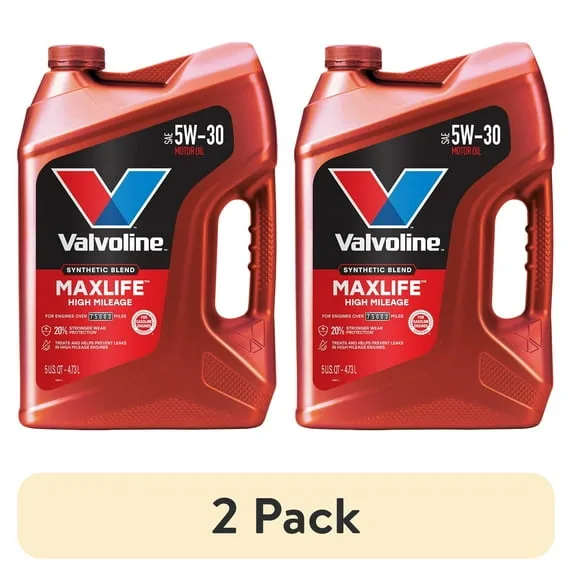
If your car is past 75,000 miles and the OEM spec is 5W-30: A "high-mileage" formulation (higher TBN, more seal conditioners, same SAE grade) is a reasonable swap. The viscosity number stays the same. The additive package gets a refresh. Don't jump to 10W-40 just because "it's older." The clearance is what it is.
If you ride a motorcycle with a wet clutch: The oil must carry JASO MA (not MB). Car oil, even at the same SAE grade, uses friction modifiers that make the clutch plate slip. You'll feel it as a shudder under acceleration. JASO MA adds a higher HTHS and omits the slippery friction-modifier package.
If you run a high-boost turbo GT car (Porsche 911, WRX STI, Supra 3.0): The GT spec (higher HTHS at 3.6 mPa·s, lower ZDDP to protect the catalytic converter, higher TBN for fuel sulfur) outperforms a standard ILSAC GF-6 in sustained high-RPM, high-load driving. The OEM manual will say "GT" or the equivalent, like Porsche A11 or Toyota 00200.
The Five Number-Reading Mistakes That Quietly Damage Your Engine
These errors don't blow the engine the same week. They accumulate over two or three oil changes.
Reading only the front label and skipping the back. "5W-30" on the front is just the SAE grade. The API letter and ILSAC code on the back are the performance proof. A 5W-30 with API SM is a different product than a 5W-30 with API SP, even though the front says the same thing.
Assuming "thicker is better" for a tight-tolerance modern engine. Your 2024 Camry was designed around a 2.9 HTHS oil film. Pouring in a 10W-40 (3.5 HTHS) raises cold-start pump work by roughly 8 to 12 percent. The engine computer doesn't know. You just lose fuel economy for nothing.
Mixing API service levels in the same drain. Topping off with SN when the last fill was SP drops your LSP protection to the lower standard. Always top off with the same or higher API level.
Ignoring the "W" and buying a single-grade SAE 30 for a car that needs 5W-30. SAE 30 has no cold-side rating. Below 10 °C it stops flowing well. Your car, spec'd for 0W-20, will sit with a starved top end on every sub-50 °F morning.
Using gasoline-spec oil in a diesel, or diesel-spec oil in a gasoline engine. The ash levels are inverted. A CK-4 diesel oil in a turbo DI gasoline engine will clog deposits on the three-way catalyst. The TBN is too high. The ZDDP package is wrong.
What the Viscosity Number Hides: Base Stock, ZDDP Levels, TBN, and Shear Stability
The SAE number is one data point on a label with four hidden variables that change how the oil behaves over 10,000 miles.
Base stock group determines shear stability. A Group III (hydrocracked mineral) 5W-30 will lose 15 to 25% of its viscosity by the 7,500-mile mark in stop-and-go driving. A Group IV (PAO) or Group V (ester) synthetic holds within 5 to 8%.
The SAE number on the bottle is the initial viscosity. By drain time, a conventional oil can behave like the next-thicker grade. The ASTM D4683 HTHS re-test at end-of-drain separates the two.
ZDDP (zinc dialkyldithiophosphate) level controls anti-wear on cam lobes and tappets. Turbo direct-injection engines need lower ZDDP (below 6,000 ppm) to protect the three-way catalyst. Naturally aspirated older engines tolerate 8,000 to 10,000 ppm and actually want it for valve-train longevity.
The SAE number tells you nothing about this. You have to read the additive breakdown, which most brands only list on their TDS (technical data sheet) PDF, not on the bottle.
TBN (Total Base Number) is the oil's acid-neutralizing capacity, measured in mg KOH/g. A TBN of 6 is fine for a light-duty conventional oil. A heavy-duty diesel needs 7 to 10.
A high-SAPS FA-4 oil can push 12 or higher. If you burn high-sulfur fuel (common in some Gulf and Southeast Asian markets), a low-TBN oil will acidify bearing surfaces mid-drain-interval.
Shear stability (VSI): The Viscosity Security Index, tested per ASTM D4683, tells you whether the oil holds its HTHS class after 10,000 miles of shear. A VSI of 8 or higher means the oil stays in its SAE grade. Below 7, you're looking at grade "drift" that can put you outside the OEM's minimum HTHS by the next oil change.
None of these four variables show up as a number on the front of the bottle. They live in the TDS, the API test report, or the OEM's approval list. If two bottles both say "5W-30, API SP" but one is a Group III blend and the other is a full PAO/ester synthetic, the PAO version will still be a 5W-30 at 10,000 miles.
The Group III version might measure closer to a 5W-35 by then. The SAE number is the starting line. The base stock is the race.
When Wrong Oil Isn't Just Suboptimal: Warranty Voiding, LSP, and Clutch Slippage
The stakes go beyond fuel economy. OEM warranty language says "use only oil meeting [spec]." One out-of-spec fill hands the dealer a documented reason to deny a powertrain claim. LSP events from API SN in a SP-spec engine can crack a piston in one tow.
JASO MB oil in a wet-clutch motorcycle causes plate slippage within 200 miles.
Quick Answers to the Questions You're Actually Googling
Does the W in 5W-30 mean weight?
No. W means Winter. It's the cold-crank rating per SAE J300.
The number after W is hot-side kinematic viscosity at 100 °C.
Can I mix two SAE grades in one fill?
Not recommended. You get an untested intermediate viscosity. The HTHS and additive ratios shift unpredictably.
Top off with the same grade only.
What's the difference between API SP and API SN?
SP (2020) adds the 2,500-cycle LSP test and a 4× sludge target. SN (2010) has neither. For any post-2020 turbo DI engine, SP is the minimum.
Do I need synthetic oil if the manual just says "5W-30"?
Not necessarily. The SAE grade is the requirement. But a full synthetic 5W-30 will hold its viscosity closer to 5W-30 at drain time.
A conventional 5W-30 may drift toward 5W-35.
Your One-Page Decision Guide: From Confused at the Aisle to Confident at the Cap
Match three things: SAE grade on the front, API letter on the back, and any ILSAC or OEM code below. All three must match your manual's spec string. If one is missing or lower, put the bottle down and keep looking.
That's the whole system. Three checks, ninety seconds, and you stop guessing.