Does Motor Oil Have Shelf Life: Complete guide
Motor oil does have a shelf life, and the answer isn't just "yes, three years." Every can or jug sitting on that garage shelf is running two clocks at the same time, and they don't sync up the way most people assume.
Manufacturer technical data sheets, as of 2026, list a 3 to 5 year shelf life for factory-sealed containers stored below 75 °F. That number assumes cool, dark, dry conditions, which most garages don't offer. So the real question isn't just whether the oil expires.
It's whether your specific bottle, in your specific storage spot, is still safe to pour into the engine.
Yes, It Does. But the Real Question Is Which Clock You're On
Motor oil does have a shelf life. Unopened, factory-sealed containers last 3 to 5 years under controlled storage. Opened containers drop to 6 to 12 months.
Hot or humid conditions shorten both windows significantly.
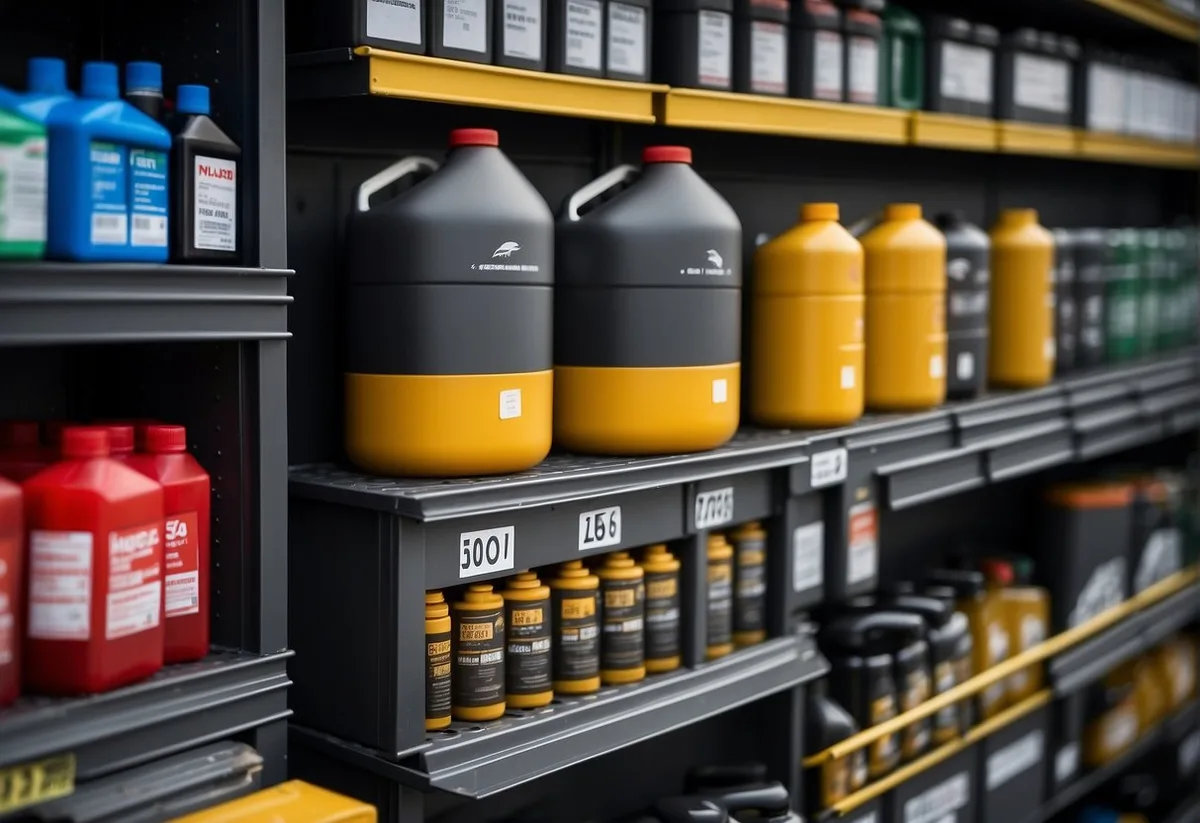
Here's where most readers get tripped up. You're looking at a bottle and thinking, "Is this oil expired?" But you're really juggling two separate timelines at once.
Clock one is the shelf clock. That's the time the oil spends sitting in its container, sealed or open. Additive packages degrade, moisture creeps in, and oxidation starts quietly.
Clock two is the in-engine clock. That's the drain interval your OEM specifies, say 5,000 miles or 6 months.
A bottle can be perfectly fine on clock one. You pour it in, and clock two takes over. The real risk shows up when you've got a 4-year-old opened container in a 95 °F garage and you're about to pour it into a turbocharged engine on a 15,000-mile interval.
That's where the clocks collide and things go wrong.
Per the API's technical bulletins, the shelf-life number on any label refers to clock one under controlled conditions. It says nothing about what happens after you crack the seal and tuck the rest behind the power washer.
What's Actually Degrading in That Bottle (It's Not What You Think)
The base oil in your container isn't the part failing. A Group III mineral base or a Group IV PAO (polyalphaolefin) is remarkably stable on its own. It won't spoil the way milk does.
The problem is the additive package mixed into that base to make it work as a finished lubricant.
Think of it this way. The base oil is the engine. The additives are the drivers.
Without them, you've got a fluid that slides but doesn't protect. Here's what's actually breaking down while that bottle sits:
- ZDDP (zinc dialkyl dithiophosphate) depletes first. It's your anti-wear workhorse, and it measurably drops in phosphorus and sulfur PPM after 18 to 24 months in warm, moist storage.
- Viscosity index modifiers (olefin copolymers) shear over time. The oil still reads on-spec at 40 °C but loses high-temperature, high-shear film strength. That's the HTHS value your turbo actually needs.
- Detergents and dispersants lose acid-neutralizing capacity. TBN drops. Acid byproducts from combustion have nothing left to neutralize.
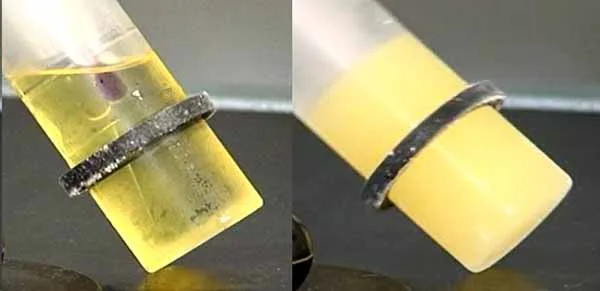
- Moisture above the 0.05 wt% threshold set by ASTM D2272 kicks in emulsion risk. You won't see it until the oil starts clouding.
None of this shows up as dark color immediately. The oil looks fine. Smells fine.
Pours fine. But the chemistry underneath has shifted, and that's the trap.
Run This 5-Minute Pour Test Before You Touch the Engine
You don't need a lab. You need a clean glass, a flashlight, and about five minutes. Here's the full walkthrough.
Step 1: Check the seal. Look at the tamper-evident ring under the cap. Cracked, missing, or weeping?
Walk away. The container's been compromised and moisture has been entering since day one.
Step 2: Read the lot or date code. That stamped number on the bottom is a production code, not a use-by date. Cross-reference it against when you bought the bottle.
If you can't confirm it's under 5 years old, proceed with caution.
Step 3: Pour into a clean glass. Tilt the container and let the oil flow slowly. You're watching for three things at once: color, viscosity, and clarity.
A healthy oil pours in a thin, steady stream. Cloudiness, separation, or a watery feel means moisture contamination.
Step 4: Smell and inspect the film. Swirl the glass. A mild petroleum smell is normal.
A rancid, varnished, or flat odor is a red flag. Watch the film on the glass walls. It should be thin and even.
Thick, ropey, or flaking residue means additives have broken down unevenly.
Step 5: Make the call.
- Clear, free-flowing, mild smell: safe to use. Note a slightly shorter drain interval.
- Slightly darker, still clear, no off-odor: borderline. Run one short drain cycle at half your normal interval, then re-test.
- Cloudy, layered, rancid, or ropey: do not pour. Take it to an EPA-designated used-oil collection point or a local auto parts drop-off.
Conventional vs. Synthetic, Sealed vs. Opened, 65 °F vs. 110 °F: How Storage Rewrites the Answer
The "3 to 5 years" number on labels isn't universal. It shifts based on three variables stacked on top of each other.
Oil type sets the baseline
A full-synthetic (Group IV PAO or Group V ester base) holds its additive package longer than a conventional Group I mineral oil. The base resists oxidation better, so additives don't get chewed up as fast. In our review of manufacturer TDS data, full-synthetics typically show a 12 to 18 month buffer past the nominal shelf date under ideal conditions.
Conventional oils start degrading right at the 3-year mark.
Sealed vs. opened changes the curve
A factory induction-sealed pail is essentially inert. Air, moisture, and UV light can't get in. The moment you crack a screw-cap HDPE jug, the clock accelerates.
Oxygen and ambient humidity hit the oil surface. In a 70 % relative-humidity garage (think Gulf Coast in August), that opened container loses meaningful additive performance within 6 months.
Temperature is the multiplier
| Storage condition | Effect on shelf life |
|---|---|
| 50 to 75 °F, dark, dry | Full 3 to 5 year window |
| 75 to 95 °F (typical summer garage) | Cuts window by roughly 30 to 40 % |
| 100 °F+ (unattached sun porch, desert) | Accelerates oxidation 2 to 3× |
| Below 32 °F | No degradation, but wax crystallization makes oil look grainy. Reversible. |
The multiplier effect means a conventional oil stored in a Phoenix garage in July is on a dramatically shorter timeline than the same bottle in a 65 °F closet in Minnesota. If you live in a hot or humid climate, treat your 3-year shelf life as closer to 18 to 24 months for opened containers.
Five Mistakes That Turn A Little Aged Oil Into Active Engine Damage
Most of the damage from aged oil isn't from the base fluid. It's from the additive package running unevenly depleted. Here are the five mistakes we see most often, and why each is worse than just buying a new bottle.
- Pouring 5-year-old full-synthetic into a turbo engine and assuming it still meets API SP. The label still says SP. But the ZDDP phosphorus level has dropped. Your turbo bearings, running at 20,000+ RPM and 400 °F, lose their anti-wear shield. The wear is slow and silent. You won't know until the engine starts making noise.
- Storing opened oil in a hot, sunlit spot and re-capping it. UV degrades the HDPE container. Plasticizers leach into the oil. You get a chemical interaction no pour test catches easily. Keep opened containers in a cool, dark cabinet.
- Top-off with a different batch or brand. Mixing a 3-year-old bottle with a fresh one dilutes the additive package unevenly. You get a fluid that doesn't meet any single spec. If you need to top off, use the same bottle or the same lot number.
- Using oil past its moisture threshold in a high-mileage engine. Above 0.05 wt% water, emulsification starts. In a high-mileage engine with worn seals, that moisture gets pulled into the crankcase faster. You accelerate corrosion on bearing caps and main journals.
- Dumping compromised oil in the storm drain or trash. Under EPA 40 CFR Part 799, even a bottle you never poured into an engine counts as "used oil" if it's degraded or contaminated. It has to go through a licensed recycler or designated collection point. Fines for non-compliant disposal run into the thousands.
What To Do When the Test Says "Nope"
The pour test came back bad. Cloudy, rancid, ropey, or the seal was already broken with visible moisture. Here's exactly what to do next.
First, do not pour it into your engine. A degraded additive package is worse than no lubrication at all. ZDDP depletion means your bearings have zero anti-wear film.
Moisture past the 0.05 wt% threshold means corrosion is already happening inside that bottle.
Second, label the container. Write the date you found the problem and what it was (cloudiness, off-odor, broken seal). If it's a 55-gallon drum at a shop, tag it with a permanent marker.
This keeps you compliant under EPA used-oil handling rules, which define "used oil" as any oil that's been degraded or contaminated, even if it never went into an engine.
Third, get it to a collection point. Your options:
- Auto parts stores like AutoZone or O'Reilly take small containers for free
- Municipal household hazardous waste events (check your city's public works calendar)
- Licensed used-oil recyclers in your area
- EPA lists designated collection points by zip code
Never dump it down a drain, onto the ground, or into regular trash. EPA enforcement for illegal used-oil disposal starts at $55,800 per violation for commercial entities. Residential penalties are lighter but still carry real fines.
If the pour test says "borderline" rather than "compromised," you get one exception. Run a short drain cycle at half your normal interval, then re-test before the next change. That's the only scenario where aged oil earns a second round.
The Questions Everyone Asks at This Exact Point
Can I use motor oil that's 5 years old but still sealed?
You probably can, but test it first. A factory-sealed container stored below 75 °F in a cool, dry spot will likely still be within spec at 5 years. Run the pour test.
If it pours clear, flows evenly, and smells normal, you're good. Shorten your next drain interval by about 25% as a safety buffer.
Does the date code on the bottle mean "use by this date"?
No. That stamped number is a production lot code, not an expiration. Some European OEM pails print a fill date, but US consumer bottles typically carry just a batch number.
The 3 to 5 year shelf life from API guidance is your real benchmark, not anything printed on the label.
Is it safe to mix old and new oil for a top-off?
Only if they're the same brand, same viscosity grade, and same API service category. Mixing a 3-year-old bottle with a fresh one dilutes the additive package unevenly. You end up with a fluid that fully meets no single spec.
For a top-off under 1 quart, use your oldest bottle. For anything more, buy fresh.
Does winter cold storage ruin oil?
No. Wax crystallization in Group I conventional oil below 32 °F makes it look grainy or opaque. That's fully reversible.
Warm the container to room temperature for 24 hours and the wax redissolves. No chemical degradation happens at cold temperatures.
What if I stored a metal pail outside in the sun?
Outdoor exposure adds UV, condensation, and temperature swing on top of the normal shelf clock. If the induction seal is intact and it's been under 2 years, test it. If the cap shows rust or weeping, assume moisture ingress and skip straight to disposal.
Your 30-Second Decision Guide: Is That Bottle Still Safe to Pour
A quick-reference table to keep taped inside your garage cabinet:
| Condition | Verdict | What to do |
|---|---|---|
| Sealed, under 3 years, cool dry storage | Safe | Use normally |
| Sealed, 3 to 5 years, cool storage | Likely safe | Pour test, shorten drain 25% |
| Opened, under 6 months, resealed | Safe | Use normally |
| Opened, 6 to 12 months, resealed | Borderline | Pour test, short drain interval |
| Any age, hot or humid garage, opened | Compromised risk | Pour test. If failed, dispose |
| Cloudy, rancid, ropey, or seal broken | Do not use | EPA-designated disposal only |
The 30-second version if you're standing in the aisle:
- Sealed and under 3 years? Pour it.
- Opened and under 6 months? Pour it, but run a shorter drain.
- Past those numbers? Five-minute pour test. Clear and clean? Use it. Anything off? Recycle it.
That's the whole tree. No lab kit, no guesswork. A glass, a flashlight, and five minutes is all you need.
The cost of getting it wrong is engine wear you won't hear until it's a $3,000 rebuild. The cost of getting it right is a $16 bottle of fresh 5W-30 from the shelf. That's a bargain.