Guide to Does Harbor Freight Sell Motor Oil
So, does harbor freight sell motor oil? Yes. Harbor Freight Tools has offered selected motor oils, often under the Pittsburgh brand, but formulas, sizes, and store stock change.
The real question is whether the exact oil matches your vehicle and is available where you need it.
As of 2026, check the live product page before you shop. A grade such as SAE 5W-30 describes viscosity, not engine approval, so compare the label with your owner’s manual before comparing price. That small check prevents a cheap but unusable purchase.
Guide to Does Harbor Freight Sell Motor Oil
Quick Answer
Yes, Harbor Freight sells selected motor oil. It has included Pittsburgh-brand gasoline engine oil. Available formulas, package sizes, and store locations change.
Online stock doesn’t confirm every store has it. Match its current label to your manual for your vehicle before shopping.
The Availability Problem: Online Stock Doesn’t Always Mean Your Local Store Has It
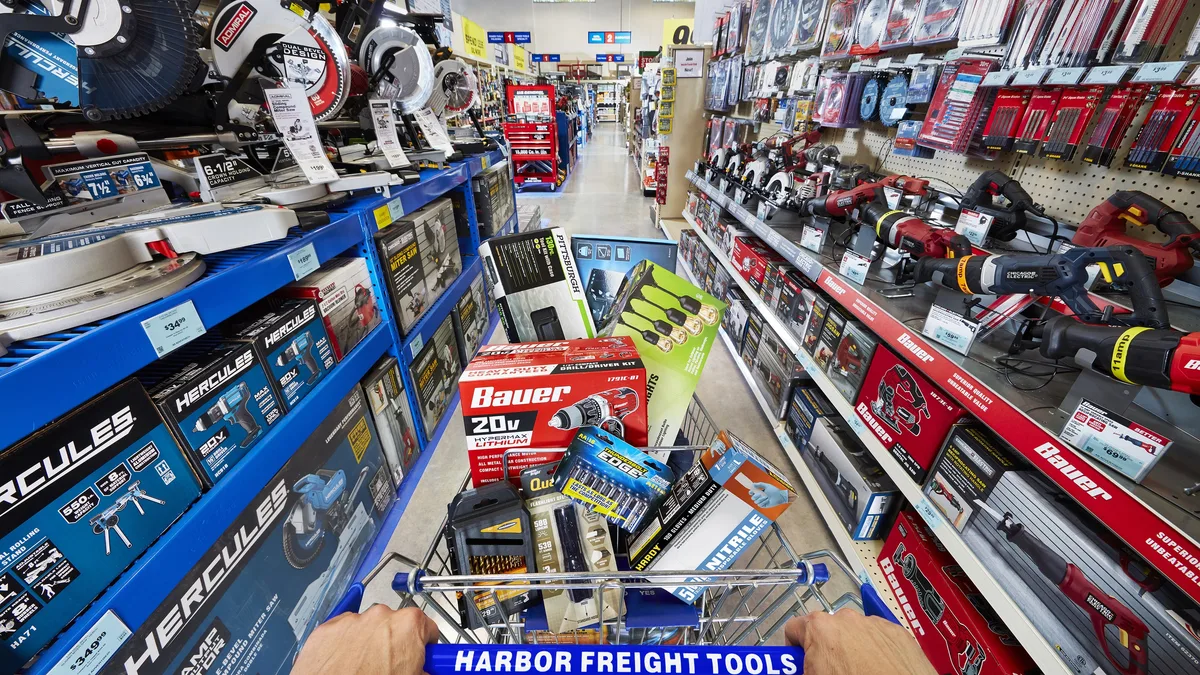
A Harbor Freight product page can tell you that an oil exists in the catalog. It doesn’t guarantee that every nearby store has the same jug or pail on its shelf.
You may find a live page while the local store is out. You may also see pickup availability for one location but not another. Shipment timing and customer demand can change the shelf count quickly.
What does online availability actually tell you?
It tells you only what the seller’s system shows at that moment. The product page, store selector, and checkout page may use different availability rules.
| Where you check | What it can confirm | What still needs checking |
|---|---|---|
| Product page | Product name, label claims, SKU, and listed price | Store shelf stock |
| Store selector | Availability shown for a specific location | Live count for the exact size |
| Phone call | What staff can locate for that store | Compatibility with your vehicle |
| Cart | Selected package and quantity | Final shipping or pickup total |
| Checkout page | Shipping eligibility and delivery estimate | Whether the seller is Harbor Freight |
Start on Harbor Freight’s official website and search for the exact product. Record the viscosity grade, formula type, package size, and product SKU.
A request for “some 5W-30” is too broad. It could lead to a different formula, approval, or container size.
How to confirm local pickup
Call the exact store before making the trip. Give staff the full product name, viscosity, package size, and SKU.
Ask these questions:
- Is the exact SKU physically on the shelf?
- Is another unit in the store’s back room?
- Is another shipment expected?
- Can staff hold the item for pickup?
- Is there a time limit on a hold?
Store policies and inventory tools can change. Don’t assume an item will remain available for long unless staff confirms it.
If the website shows a store as eligible for pickup, that doesn’t always guarantee the SKU is carried there. A direct call gives you the strongest retail confirmation.
What if the site shows stock but the store doesn’t?
Use a clear next step instead of making a wasted trip.
- If the correct SKU is stocked elsewhere, check that location.
- If shipping can arrive before your service date, compare the delivered total.
- If the required viscosity isn’t listed, search another retailer.
- If the product lacks a required approval, choose another oil.
- If the only option is a large pail, check storage and planned use.
- If staff can’t confirm inventory, order from another confirmed source.
Harbor Freight stores may receive different assortments. A product can be available through one distribution channel but absent from a particular store.
Don’t rely on an old search result
Search engines can retain pages after a product sells out. Retail pages can also remain live after inventory reaches zero.
An old result can help you identify a possible viscosity or product name. It can’t confirm the current price, formula, or stock.
Check the live listing before planning a purchase. If the page is inactive, treat the product as currently unavailable through that listing.
Use this if-and-then availability rule
- If the exact product has a live listing, check the label next.
- If shipping is available, compare the final delivered cost.
- If pickup appears, call the exact store.
- If no store confirms stock, don’t rely on the website badge.
- If only another viscosity is listed, check the manual before considering it.
- If the product page has expired, search current alternatives.
Online availability starts the process. It doesn’t finish the buying decision.
Motor Oil or Another Fluid? Confirm the Product Type and Engine Compatibility
You need engine oil for an engine, but you must confirm that the product is approved for that engine. Motor oil is a lubricant for an engine’s moving, hot, and pressurized parts.
It isn’t a universal automotive fluid. Products can look similar while using different viscosities, additives, and friction characteristics.
Never choose by jug color, bottle shape, or a broad “automotive oil” label. Begin with the engine type and the fluid specified in the owner’s manual.
Which automotive fluids can look alike?
| Product | Typical use | Why another product may be wrong |
|---|---|---|
| Motor oil | Gasoline or approved diesel engines | Must match viscosity, category, and any required approval |
| Automatic transmission fluid | Selected automatic transmissions | Uses a different friction and additive system |
| Hydraulic fluid | Hydraulic systems and selected lifters | Isn’t formulated for engine lubrication |
| Power steering fluid | Some hydraulic steering systems | Can harm seals or components if substituted |
| Brake fluid | Hydraulic brake systems | Isn’t an engine lubricant |
| Diesel engine oil | Approved diesel engines | May not suit a gasoline engine |
| Motorcycle oil | Motorcycle engines, sometimes wet clutches | May assume different clutch friction requirements |
| Small-engine oil | Lawn equipment and similar engines | May lack the category required by your vehicle |
The owner’s manual controls the correct fluid. Look for the required viscosity, performance category, and any manufacturer approval.
Some manuals list several acceptable viscosities. That gives you a defined range, not permission to choose any oil on the shelf.
What should you check for a gasoline engine?
Use this order:
- Confirm that the product is intended for gasoline engines.
- Match the SAE viscosity to the manual.
- Match the required API or ACE category.
- Verify any required OEM approval.
- Confirm the oil-change quantity.
- Match the package size to that quantity.
Turbocharged and direct-injection engines may require a specific performance category or approval. The correct viscosity alone doesn’t prove that the oil is approved.
What should you check for a diesel engine?
Use only oil approved for that engine and its emissions system. A gasoline formula can look suitable but fail the required specification.
Some diesel engines use oil categories such as CK-4 or FA-4. Passenger-car oil isn’t automatically acceptable, even if its viscosity looks right.
FA-4 has special viscosity and compatibility limits. Don’t choose it based on the “low viscosity” description alone.
Check the owner’s manual or the engine’s specified oil label. A manufacturer dealer can also confirm the correct product using the VIN.
What about hybrid vehicles?
A hybrid still has a combustion engine in most layouts. That engine needs its specified engine oil.
Hybrid status doesn’t change the viscosity, API category, or OEM approval unless the manual says so. The manual remains the controlling source.
What about motorcycles and small engines?
Motorcycle and small-engine oils can use different additive packages. They may also assume a wet-clutch friction characteristic that a passenger-car oil doesn’t provide.
Use these products only when the engine documentation specifically permits them. A small “motor oil” label doesn’t establish compatibility.
What if the manual is missing?
Use the vehicle identification number through a manufacturer dealer or a qualified technician. Year, make, model, and trim alone may not identify the exact engine.
Don’t infer the oil from a similar model. Engine codes and production dates can change fluid requirements.
If you can’t confirm the specification, use an oil known to meet the manufacturer’s current requirement. The small extra effort is better than installing the wrong fluid.
What to Check on a Harbor Freight Motor Oil Label
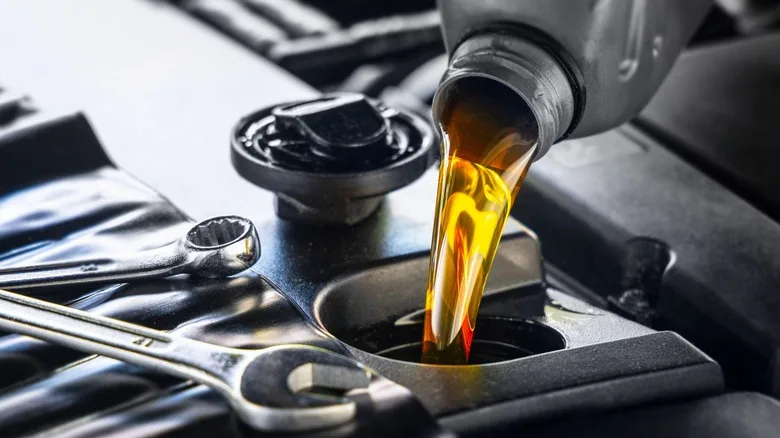
Read the label in a fixed order. Start with the engine application, then check viscosity, performance category, and any required approval.
Price and package size come last. A cheaper jug has no value if the oil doesn’t fit the engine.
Start with the stated application
Look for a gasoline, diesel, motorcycle, or other specific application. Don’t assume every motor-oil formula serves the same engines.
A passenger-car oil can be unsuitable for a diesel, motorcycle, lawn engine, or emissions-sensitive application.
If the label is vague, check the current product page or ask the seller to confirm it. Don’t rely on a blurry image or an old package description.
Decode the SAE viscosity grade
SAE J300 is the standard used to classify engine-oil viscosity. It describes oil flow under cold and hot operating conditions.
A multigrade such as 5W-30 contains two viscosity classifications. The “5W” is the cold-temperature grade. The “30” is the high-temperature grade.
| SAE grade | What it communicates | What it doesn’t prove |
|---|---|---|
| 0W-20 | Cold-flow grade of 0W and hot grade of 20 | Engine approval or oil quality |
| 5W-20 | Cold-flow grade of 5W and hot grade of 20 | Suitability for every engine |
| 5W-30 | Cold-flow grade of 5W and hot grade of 30 | Warranty coverage |
| 10W-30 | Cold-flow grade of 10W and hot grade of 30 | Compatibility with every engine |
The “W” stands for winter. It describes cold-start flow under standardized test conditions. It isn’t a direct outdoor temperature reading.
Viscosity is a physical property, not a quality rating. A 5W-30 oil can meet a modern specification. A higher-priced 5W-30 can still be wrong if it lacks a required approval.
If the manual lists several grades, choose one of those grades when the remaining specifications match. If it lists one grade with no alternative, use that grade unless the manufacturer provides other guidance.
Cold weather doesn’t automatically require 0W oil. Hot weather doesn’t automatically require a heavier grade. Follow the permitted range first.
Identify the base-oil type
The label may call the oil full synthetic, synthetic blend, or conventional. These terms describe how the base oils and additive package are formulated.
| Label description | Basic meaning | Buyer’s decision |
|---|---|---|
| Full synthetic | Uses synthetic base stocks | Confirm all required specifications |
| Synthetic blend | Uses synthetic and conventional base stocks | Confirm all required specifications |
| Conventional | Uses conventional mineral base stocks | Confirm all required specifications |
| High-mileage | Includes a higher-mileage formulation | Verify that the engine documentation permits it |
“Full synthetic” is not an engine approval. A synthetic blend can be correct when it carries the required specifications.
A conventional oil can also be correct. Engine compatibility depends on more than the base-stock type.
Likewise, “high-mileage” isn’t a universal upgrade for an older engine. Some formulas use different seal conditioners or additives.
Choose the formula that meets the specification. Don’t choose it because it has the largest word on the container.
Find the API performance category
The American Petroleum Institute, usually shown as API, develops engine-oil performance specifications. For many gasoline engines, the label shows a category such as API SQ or API SP.
API SQ is the current API performance category for gasoline engine oils. It is backward compatible with API SP for relevant applications, but the manual and OEM approval still control the final choice.
The API licensed donut mark identifies licensed API quality and viscosity claims. It doesn’t automatically prove that the oil carries an OEM approval.
Use the API program and its published specifications to interpret the claim. The API’s official site explains the licensing program and category system.
If the manual calls for API SQ, verify that claim. If it calls for API SP, a current API SQ product may meet that performance requirement, subject to any other stated conditions.
Check ACE and OEM approvals
The American Chemistry Council, usually shown as ACE, defines oil categories for certain engine applications. Use an ACE requirement when it appears in the engine documentation.
An OEM approval is more specific. It may appear as a company name, test specification, or approval code. Examples can include dexos or Ford WSS-M2C requirements.
Use this comparison:
- Find the exact wording in the owner’s manual.
- Compare it with the current product label.
- Reject similar-looking but different codes.
- Don’t treat a general API claim as an OEM approval.
- Follow the manual when it allows a broader specification.
An approval can expire or change. A catalog page may also remain online after the product image changes.
If the current label and product page conflict, pause the purchase. Ask the seller to identify the exact formula and approval.
Match the package to the oil-change quantity
US fluid-volume conversions help you compare container sizes.
- 1 US quart equals 0.946 liters.
- 1 US gallon equals 4 US quarts.
- 1 US gallon equals 3.785 liters.
- 5 US gallons equal 20 US quarts.
A one-gallon container holds 4 quarts. It doesn’t provide enough oil for a 5-quart service.
A 5-gallon pail holds 20 quarts. That doesn’t mean it will complete four 5-quart services unless the manufacturer’s stated quantity supports that assumption.
Check the owner’s manual for the specified engine oil capacity. Follow its refill and measuring procedure.
Record the exact product before you shop
Copy these details into your phone:
- Product name
- Product SKU
- Viscosity grade
- Base-oil type
- API or ACE category
- OEM approval
- Package size
- Store or seller
- Current price
This record prevents a mix-up between 5W-30 and 10W-30. It also helps store staff locate the correct SKU.
If two packages have the same name but different SKUs, treat them as separate products. Confirm the size shown on the current label.
Inspect the package before use
Check the cap, seams, label, and carton. Look for punctures, leaks, a loose cap, or an unreadable label.
Reject oil with a broken seal or damaged container. Oil can leak during storage or become contaminated.
If a marketplace seller shipped the product, confirm who handles returns. The seller’s terms may differ from Harbor Freight’s terms.
Keep the receipt and packaging until the oil is installed or the return window closes.
Use this label decision path
- If the engine application doesn’t match, don’t buy the product.
- If the viscosity doesn’t match, check an allowed alternative.
- If the manual requires an API or ACE category, verify it.
- If the manual requires an OEM approval, match the exact code.
- If the quantity is wrong, choose another SKU or retailer.
- If the label is unreadable, ask for confirmation.
- If the listing conflicts with the package, stop and resolve it.
- If every requirement matches, compare price and availability.
Compatibility comes before convenience. Once the label passes, the shopping comparison becomes much easier.
Motor Oil Costs: Compare the Container Price With the Price per Quart
A low package price can still cost more per quart. The package price also tells you nothing about whether the oil fits your engine.
Use this formula for products with the same required specification:
Unit price = final checkout price ÷ total US quarts
Keep shipping, tax, and package size in the calculation. A bulk discount may disappear after delivery costs.
How package size changes the comparison
| Package size | Quantity | What it suits |
|---|---|---|
| 1-quart jug | 1 quart | A small or irregular top-up |
| 5-quart jug | 5 quarts | Many routine service quantities |
| 1-gallon jug | 4 quarts | Engines using close to 4 quarts |
| 5-gallon pail | 20 quarts | Several planned services using the same oil |
These sizes convert directly into quantities. They don’t show current Harbor Freight availability. Check the live catalog for the sizes currently offered.
A 5-quart jug can be more practical than a gallon jug for an engine that needs slightly more than 4 quarts. A gallon jug may be more convenient if a second quart is already on hand.
Include every cost in the comparison
| Cost | Why it matters |
|---|---|
| Product total | Changes with package size and quantity |
| Shipping | Can erase a bulk-price advantage |
| Sales tax | Depends on the delivery address |
| Pickup travel | Time and fuel can matter |
| Storage | A pail needs safe, stable storage |
| Unused oil | Money may remain tied up |
| Return restrictions | Opened containers can have limited options |
| Specification mismatch | The entire purchase may be unusable |
Use the checkout total when possible. It gives you the clearest comparison for shipping orders.
For pickup, include the cost of driving and the time spent. A higher product price can still be cheaper if a nearby store has the exact oil.
Don’t compare different specifications by price
A lower-priced 5W-30 can cost more if your engine requires 0W-20 with an OEM approval.
Compare products only after these items match:
- Engine application
- SAE viscosity
- API or ACE category
- Required OEM approval
- Manufacturer restrictions
- Container integrity
Price belongs at the end of the decision, not the beginning.
Choose a package that matches the service plan
Use the engine’s specified oil-change quantity as your baseline. Then choose the smallest package that meets your real demand.
| Buying situation | Sensible pattern | Main reason |
|---|---|---|
| One routine service | Package close to the required quantity | Less leftover oil |
| A service just over 4 quarts | 5-quart jug | One container may be enough |
| Two compatible vehicles | Compare two jugs with a gallon option | Less handling than a pail |
| Several planned services | Compare smaller packages with a pail | Lower unit price may apply |
| About 20 quarts of confirmed demand | 5-gallon pail | Efficient bulk quantity |
| One small car | Smallest suitable package | Limits waste |
| Exact OEM requirement | Approved formula first | Avoid a costly mismatch |
A five-gallon pail is useful for planned demand. It’s often wasteful for one small car.
Don’t buy a pail because the per-quart number looks good. Count the oil your vehicles will realistically use first.
Work out how many services a pail can provide
A 5-gallon pail holds 20 US quarts. Divide that amount by the quantity used for one service.
- A 5-quart requirement gives four complete fills.
- A 4-quart requirement gives five complete fills.
- A 6-quart requirement gives three complete fills, with 2 quarts left.
- A 6.5-quart requirement gives three complete fills, with 0.5 quart left.
These are arithmetic examples, not service recommendations. Your manual controls the quantity.
The manufacturer may state a capacity that differs slightly from the drain-and-refill amount. Follow its measuring procedure.
Check whether a bulk saving survives delivery
Suppose one compliant pail costs less than several smaller packages. Compare the total you would actually pay.
Use this calculation:
Break-even delivery cost = compliant smaller-package total minus pail price
If shipping exceeds that amount, the pail may not be the cheapest choice.
Compare three numbers:
- The price per quart before delivery
- The total paid after delivery
- The oil needed now and during future services
If you need one jug, the lowest bulk unit price may not help. If you need several services, a pail becomes more relevant.
Account for storage and container condition
Store an unopened pail upright in its original container. Keep it clean, sealed, and away from excessive heat or impact.
Use a clean pump or dispensing wand. Don’t transfer oil into an unmarked bottle.
Keep the receipt, label details, and purchase date with the container. Follow the manufacturer’s storage guidance and the retailer’s return policy.
Inspect an opened pail before every use. Prevent dirt, water, and debris from entering the container.
Ask whether pickup may cost less overall
Use pickup when you need the oil soon and the exact store confirms stock. Check the SKU before driving.
For shipping, enter your actual delivery address. Look for the final total before paying.
Pickup inventory can change quickly. Ask whether staff can hold the item and for how long.
If the exact product is available only through shipping, delivery may beat an unreliable pickup. If a nearby store has the correct jug, pickup may beat a pail with a large delivery charge.
Use this practical buying rule
- If you need one service, favor the smallest package that supplies the required quantity.
- If several sizes carry the same formula, compare the delivered cost per quart.
- If you’ll complete several services soon, compare a pail with smaller packages.
- If the formula is correct but the size is wrong, search another SKU or retailer.
- If the local store lacks it, check another location or shipping.
- If a cheaper oil lacks a required approval, skip it.
The best motor oil is correctly specified, available cleanly, and bought at a sensible total cost.
Harbor Freight Motor Oil vs. Other Brands and Buying Options
Harbor Freight oil is worth comparing on specification and delivered price. The brand name matters less than the oil’s viscosity, performance category, and required approvals.
If the product meets every requirement, it can offer good value. If it misses one mandatory specification, another product may cost less after an incorrect service.
What should match before you compare brands?
| Factor | What to check | Why it matters |
|---|---|---|
| Engine application | Gasoline, diesel, motorcycle, or other use | Prevents an incompatible purchase |
| SAE viscosity | A grade allowed by the manual | Controls flow at operating temperatures |
| Performance category | API or ACE category | Confirms a defined specification |
| OEM approval | Exact code, if required | May determine warranty suitability |
| Base-oil type | Synthetic, blend, or conventional | Affects formulation and price |
| Package size | Quarts, gallons, or pail | Changes unit price and leftover oil |
| Total cost | Product, delivery, tax, and travel | Reveals the practical cost |
| Availability | Shipping or confirmed pickup | Determines whether you can get it |
Two products with the same viscosity can still carry different performance categories. Don’t treat them as interchangeable because the containers look alike.
Harbor Freight vs. a national oil brand
A national brand may offer more package sizes and wider local availability. That can be useful if you need a small quantity quickly.
Harbor Freight can offer strong value when its exact formula meets the requirement and the delivered price is lower.
Compare these practical points:
- Does each label carry the required specification?
- Which package fits the service quantity?
- Which seller can confirm stock?
- What is the final cost per quart?
- Which return terms are clearer?
- Is a manufacturer approval present?
User reviews can reveal repeated packaging or delivery problems. They can’t confirm that a product suits a particular engine.
Harbor Freight vs. a dealer-supplied fluid
A dealer is useful when the manual requires an exact OEM approval. That doesn’t mean a dealer is the only retailer carrying an approved product.
Compare the approval code, viscosity, quantity, and final price. A national-brand bottle may carry the same approval and cost less elsewhere.
Use a dealer when:
- The OEM requirement is exact and unfamiliar.
- The owner’s manual is missing.
- The VIN is needed to identify the vehicle.
- The vehicle still has an active service contract.
- The product is part of a documented maintenance program.
Harbor Freight vs. a quick-lube service
A quick-lube visit includes labor, oil, a filter, and used-oil disposal. Comparing its total with a jug of oil alone is misleading.
Compare like with like. Include the oil, filter, shop supplies, sales tax, and disposal cost on both sides.
A DIY purchase can cost less if you already have the tools and a safe workspace. It can cost more if you need a drain pan, jack stands, filters, or a professional inspection.
Harbor Freight vs. a marketplace seller
A lower marketplace price may come with a different seller, package size, or return policy.
Check these points before paying:
- Exact product and SKU
- Engine application
- Viscosity and performance category
- OEM approval, if required
- Seller identity
- Delivered total
- Return terms
- Container condition on arrival
If the checkout page names a third-party seller, that seller’s terms may apply.
When another option is the better choice
Choose another product or retailer when:
- The required viscosity isn’t offered.
- A required OEM approval is missing.
- The product is intended for a different engine type.
- The only available package creates excessive waste.
- Local stock can’t be confirmed.
- The delivered price is higher.
- The seller or return terms aren’t clear.
- The container may not arrive intact.
A familiar brand isn’t automatically correct. A house brand isn’t automatically wrong. The specification and fulfillment terms decide.
When Harbor Freight Motor Oil May Be a Practical Fit
Harbor Freight motor oil may fit a gasoline-powered vehicle when its label matches the owner’s manual. The strongest fit usually involves a standard specification and no unusual approval requirement.
Which situations may work well?
| Situation | Why it may fit | What you must confirm |
|---|---|---|
| Routine gasoline-engine service | The manual may give a standard SAE and API specification | Every required label claim |
| Older, simple engine | It may allow conventional or synthetic-blend oil | Permitted viscosity and category |
| Flexible viscosity range | The manual may allow several grades | Conditions for each grade |
| DIY maintenance | A correct jug supports routine servicing | Quantity, filter, tools, and disposal |
| Several planned services | A pail may lower unit cost | Confirmed demand and storage |
| Confirmed local stock | Pickup can avoid delivery cost | Exact SKU at that store |
| Shipping access | The product may reach an area without local stock | Final delivered price and date |
A high-mileage formula may fit an older engine if the documentation permits it. The label alone doesn’t make it the required oil.
When the manual allows several viscosities
Some manuals list one preferred grade and acceptable alternatives. For example, a manual may allow 5W-30 and 5W-20 under defined conditions.
If Harbor Freight offers one of those grades, check the required performance category and OEM approval. Then choose the grade suited to the vehicle and normal operating conditions.
If the conditions aren’t clear, ask a manufacturer dealer or qualified technician. Don’t select the cheapest listed grade without understanding the manual.
When a DIY oil change may make sense
A DIY service can make sense when you know the required quantity and have suitable equipment. You also need a safe work area and a clear service procedure.
The oil purchase should be matched with the correct filter and drain-plug requirements. A jug of oil doesn’t supply those parts.
DIY savings depend on labor, tools, safety, and proper disposal. A professional service can still be the better choice if you’re unsure about any part of the job.
When a bulk pail may make sense
A five-gallon pail contains 20 US quarts. That amount can suit several compatible vehicles or a small maintenance operation.
Before buying, count the oil required for each planned service. Confirm that every engine accepts the same formula.
A household with two compatible cars may need less than one pail. Don’t buy it merely because the unit price appears attractive.
When it may not fit a newer engine
Some newer turbocharged, direct-injection, hybrid, or emissions-sensitive engines require a specific performance category or OEM approval.
If the manual names an exact approval, use oil that displays it. A full synthetic formula or newer API category doesn’t replace a missing OEM code.
When it may not fit a diesel or motorcycle
Don’t use a gasoline formula because the container says “motor oil.” A diesel, motorcycle, or small engine may need a different category or additive system.
Use a substitute only when the engine documentation explicitly allows it. An engine marking or manufacturer dealer can confirm the specification.
When climate doesn’t decide the grade
Cold weather can make a lower cold-temperature grade useful, but the manual still controls the choice.
If the manual allows 0W-20 and 5W-30, both may be acceptable. If it requires 0W-20 without an alternative, a 5W-30 substitute needs manufacturer confirmation.
Weather changes how the approved oil flows. It doesn’t change what the manufacturer permits.
Don’t use a new oil to hide excessive consumption
A correct oil change won’t solve an active leak, worn engine components, or another mechanical fault.
If the engine needs oil between services, check the level and investigate the cause. A technician may need to inspect leaks, combustion, and internal wear.
Using another viscosity to hide consumption can move the engine outside its required specification. It can also remove useful diagnostic evidence.
Use this fit test
- If the vehicle uses gasoline and has a standard oil specification, compare the exact label.
- If several viscosities are allowed, choose only from the listed range.
- If an OEM approval is required, verify the exact code.
- If the engine is diesel, motorcycle-based, or specialty equipment, verify the application.
- If you need one service, choose a package close to the required quantity.
- If you’ll complete several services, compare a pail with smaller options.
- If a mandatory requirement is missing, choose another product.
Harbor Freight can be a sensible source, but only after the specification and service quantity are settled.
Step-by-Step Guide to Finding the Right Product
Finding the right product takes four checks. Identify the vehicle’s specification, verify the exact product, confirm fulfillment, and inspect the package.
This process prevents a common buying error. You avoid ending up with a correct-looking jug that has the wrong viscosity, size, or approval.
Step 1: Check Your Vehicle’s Required Oil Specification
Yes, you should begin with the vehicle rather than the retailer. Your year, make, model, trim, and engine type can change the required oil.
A VIN helps a dealer identify the exact vehicle when records are unclear. It can also distinguish engines that look similar from the outside.
Use these sources in order:
- The owner’s manual
- Manufacturer maintenance information
- A dealer’s VIN-based vehicle record
- A qualified technician familiar with the model
Record the oil information before opening any product page.
| Item to record | Why you need it |
|---|---|
| Engine type and fuel | Confirms the oil application |
| Required SAE viscosity | Sets the grade |
| API or ACE category | Sets the performance claim |
| OEM approval | Confirms manufacturer-specific suitability |
| Alternative viscosities | Expands your choices |
| Oil-change quantity | Determines package size |
| Service interval | Helps estimate future demand |
| Filter specification | Supports a complete service |
| Drain-plug torque | Matters during a DIY change |
If the manual is missing or conflicting, use VIN-based manufacturer information. Don’t guess from the model name alone.
Step 2: Find and Verify the Harbor Freight Product
Search the live catalog for the required viscosity. Add the formula and package size to narrow the listing.
On the product page, verify these points:
- Engine application
- SAE viscosity
- Full synthetic, synthetic blend, or conventional formula
- API or ACE category
- OEM approval
- Container size
- Product SKU
- Seller identity
- Current price
- Shipping and pickup options
A product image can reflect an earlier package configuration. Confirm that the image size matches the size selected at checkout.
Save the name, SKU, and label details. Store staff can search the exact item more easily.
Use this branch:
- If the engine application matches, move to viscosity.
- If the viscosity matches, move to the performance category.
- If the manual requires an OEM approval, compare the exact code.
- If every required specification matches, compare quantity and cost.
- If one requirement is unclear, pause and confirm it.
- If the listing conflicts with the label, don’t guess.
- If the page is inactive, treat availability as unconfirmed.
Store staff can help locate an item. The owner’s manual remains the source for engine compatibility.
Step 3: Confirm Store, Pickup, or Shipping Availability
Yes, you should confirm availability after identifying the exact SKU. A general listing doesn’t establish local shelf stock.
If you’re choosing shipping
Enter your delivery address at checkout. Confirm the final total, delivery estimate, and shipping charge.
Check whether the seller is Harbor Freight or a fulfillment partner. The product and return terms should be clear before you pay.
Inspect the package when it arrives. Check for leakage, a broken seal, a label mismatch, or visible damage.
If you’re choosing pickup
Select the exact store through Harbor Freight’s store interface. Then call the location with the full product name and SKU.
Ask whether the item is physically on the shelf or due in a shipment. Ask whether staff can hold it and for how long.
A pickup badge doesn’t guarantee a live shelf count. Direct staff confirmation is the better check.
If the exact product isn’t available
Use the next action that matches the problem.
| What happened | Best next action |
|---|---|
| Correct SKU isn’t stocked locally | Check another nearby store |
| Pickup isn’t offered | Compare shipping |
| Delivery is too late | Use another retailer with confirmed stock |
| Required viscosity is missing | Don’t substitute without checking the manual |
| Required OEM approval is missing | Choose another approved oil |
| Only a pail is available | Confirm storage and planned use |
| Listing and label conflict | Ask the seller to confirm the product |
| Store can’t confirm stock | Order elsewhere or wait |
Before driving, get a direct answer for the exact SKU. “We usually carry oil” isn’t enough when you need a specific formula.
Step 4: Inspect the Product Before Use
Check the cap, seams, label, and carton. The product should match the ordered formula and size.
Reject it if the seal is broken, the label is unreadable, or the container is leaking. Photograph visible damage before reporting it when practical.
Keep the receipt, packaging, and product information until installation or the return window closes.
A clear record helps if the delivered package differs from the listing. It also gives you the oil’s specification at future service time.
Expert Tips for Comparing Harbor Freight’s Oil Value
The best value is the least expensive correctly specified oil that arrives intact, remains clean, and fits your service plan.
Package size and convenience matter only after compatibility.
Treat specification as a gate
A compliant product passes four nonnegotiable checks:
- Correct engine application
- Permitted SAE viscosity
- Required API or ACE category
- Any mandatory OEM approval
Give these checks priority over ratings, discounts, and base-oil type. A lower price cannot offset a failed compatibility check.
After the product passes, compare five practical factors:
- Final cost
- Availability
- Package size
- Seller and return terms
- Storage needs
Compare the cost of oil you’ll actually use
A bulk price can look attractive while leaving unused oil. Divide the total paid by the quantity you expect to use.
If the manual calls for 5 quarts per service, four planned services use 20 quarts. A 5-gallon pail provides that amount exactly.
The pail may cost less per quart. It still has value only if all 20 quarts fit your plan and the delivered total is competitive.
Work out the break-even point
Compare the pail with the compliant smaller packages you would otherwise buy.
Use this calculation:
Maximum extra delivery cost = smaller-package total minus pail price
If shipping exceeds that amount, the pail may not be the cheapest choice.
Add sales tax and pickup travel consistently. Don’t compare a tax-inclusive price with a tax-exclusive price.
Check whether a bulk pail has a real destination
Count every planned service before ordering 20 quarts. Include only services using the same oil and specification.
Add extra oil only if you expect a top-up that uses the same formula. Don’t count another vehicle that needs a different oil.
A household with three cars may need a pail for two and separate products for the third.
Verify the label, not just the badge
Read the current label for the viscosity, formula type, performance category, and OEM approval. Save a clear image if the service will happen later.
An API licensed donut can support a licensed API claim. It doesn’t automatically establish an OEM approval.
Record any lot or batch code shown on the container. Keep it with the receipt until installation.
Don’t let ratings decide compatibility
Customer reviews can identify repeated problems with leaking containers, incorrect sizes, or fulfillment. They can’t confirm that the oil meets your engine’s specification.
Sort useful feedback into three groups:
- Product condition: Leaks, broken caps, contamination, or label mismatches
- Fulfillment: Pickup errors, damaged delivery, or missing quantities
- Fit: Whether the formula met a stated vehicle requirement
Use the first two groups to judge retailer reliability. Use the owner’s manual for the third.
Account for confirmed availability
A slightly higher local price can be worthwhile if the exact product is confirmed on the shelf. A lower listed price can be worth less if it requires a long trip or arrives after your service date.
Compare the product price with travel or delivery. Confirmed availability has value, but it doesn’t justify any price.
Inspect before the oil reaches your engine
Check the cap, seams, label, and container. The oil should match the purchased grade, category, formula, and size.
Don’t accept a leaking jug because the discount is larger. Wasted oil and cleanup cost more than the original saving.
Keep the receipt with the packaging until the issue is resolved.
Use a final value checklist
A strong purchase meets all of these conditions:
- The engine application matches.
- The viscosity is permitted.
- The performance category matches.
- Every mandatory OEM approval appears.
- The package quantity fits.
- Availability is confirmed.
- The final cost is competitive.
- The container is expected to arrive sealed.
- Any leftover oil has a clear purpose.
If one condition fails, correct it before checkout. If all conditions pass, Harbor Freight can offer genuine value.
Common Mistakes When Buying Motor Oil at Harbor Freight
The most common mistakes happen before the oil reaches the engine. Buyers often focus on price or availability while skipping a required specification.
| Common mistake | What can go wrong | Better approach |
|---|---|---|
| Buying any 5W-30 | The engine may require another grade or category | Follow the owner’s manual |
| Assuming full synthetic is always better | The oil may lack a required approval | Compare the exact specification |
| Skipping an OEM code | The oil may not satisfy engine or warranty terms | Match the code exactly |
| Assuming online stock means local stock | The store may not have the item | Call the exact store with the SKU |
| Selecting the wrong package size | The engine may be underfilled or left with excess oil | Check the specified capacity |
| Confusing API SQ with other categories | The product may not meet the listed requirement | Verify the manual’s category |
| Using gasoline oil in a diesel | It may not protect the engine or emissions system | Confirm the application |
| Confusing similar automotive fluids | Components may fail or lose lubrication | Check the fluid name and label |
| Ignoring a damaged seal | Oil can leak or become contaminated | Inspect the package before use |
| Buying a pail without storage | Oil can be stored poorly or never used | Plan storage and demand |
| Mixing oils without checking | The final fluid may not meet the specification | Use the specified oil for the next fill |
| Topping off with the wrong grade | The fluid may be outside the required specification | Check the manual and fluid history |
| Relying on an old search result | Price, formula, and stock may be outdated | Recheck the live page |
| Accepting a mismatched label | The delivered formula may differ from the order | Verify the package before leaving |
Choosing viscosity by habit
A familiar grade can feel safer, but habit isn’t a specification. Some newer engines need 0W-20. Some older engines allow several grades, while others prescribe one.
Read the manual before searching Harbor Freight. If it lists an approved range, choose a listed option.
If the manual is missing, use the VIN with a manufacturer dealer or qualified technician. Don’t let store staff guess an engine-specific requirement from the vehicle’s make.
Treating full synthetic as automatic approval
Full synthetic describes the oil’s formulation. It doesn’t prove that the product carries a required OEM approval.
The same applies to phrases such as “advanced protection” or “high mileage.” These are marketing descriptions unless tied to a recognized specification.
A conventional oil can be correct when the manual accepts it. A synthetic oil can still be wrong if its category, viscosity, or approval doesn’t match.
Comparing only the viscosity
A 5W-30 label tells you the viscosity grade. It doesn’t by itself confirm the required API, ACE, or OEM specification.
Search the exact grade first. Then compare the full performance specification before price.
Two products with the same grade can carry different approvals. Don’t treat them as identical containers with different logos.
Assuming every store carries the same formula
Harbor Freight stores can receive different assortments. A formula shipped through a warehouse may not be stocked at a nearby location.
Call with the exact product name, viscosity, package size, and SKU. If staff can’t locate it, try another store or shipping.
Store staff can help find the product. The owner’s manual still controls compatibility.
Buying the wrong quantity
Underfilling can leave engine components without enough oil. Overfilling can cause foaming, aeration, leaks, and pressure-related problems.
Use the engine’s specified fill quantity. Follow the manual’s measuring procedure rather than adding oil to an arbitrary line.
A package that appears close in size may still be too small. Calculate the actual total before checkout.
Buying a pail for one unplanned service
A bulk pail can be wasteful for a single small engine. The sticker price may look attractive while the final cost and leftover oil are poor.
Count all planned services before buying. Keep separate oil for any vehicle that needs another formula.
If storage or future use is uncertain, choose smaller containers.
Ignoring container condition
Check the cap, seams, bottom, label, and carton. Oil can leak from damaged packaging.
Don’t accept a pail with a loose cap, puncture, split seam, or unreadable label. Photograph the damage before reporting it.
Wasted oil costs more than the original discount. It also creates cleanup and disposal demands.
Mixing oils without checking compatibility
Some compatible oils can be mixed, but the final blend may not meet the owner’s required specification. The manufacturer or a qualified technician should guide a top-up after a wrong-fluid event.
A small top-up doesn’t automatically make the entire fill correct. Warranty coverage and oil-consumption diagnosis deserve more weight than convenience.
If the wrong oil was added, schedule the required drain-and-refill. Never mix products to silence a low-oil warning.
Treating oil color as a measure of quality
Color isn’t a reliable measure of viscosity, quality, or engine condition. Additive packages and base oils can vary in shade.
Use the label, level, service history, and fluid condition. A qualified technician should inspect oil that looks unusually dirty, milky, or contaminated.
Letting price decide the purchase
The cheapest compliant quart can be a good deal. The cheapest bottle in the store can be unusable in your engine.
Protect the compatibility check. Compare price only among products that meet the same required specification.
If Harbor Freight’s product passes, compare its final cost. If it fails, move to another retailer.
Missing the return window or seller terms
Keep the receipt, packaging, and product information. Read the return policy before opening or dispensing a container.
Bulk oil may have stricter terms than a sealed quart. A marketplace seller may use different terms from Harbor Freight.
If a package arrives damaged, document it and follow the retailer’s process. Don’t return an opened container without confirmation.
What to do if the wrong oil was added
Stop using the engine until the fluid level and application are checked. Don’t add another oil on a guess.
Follow this sequence:
- Check the level using the specified gauge.
- Identify the product and quantity added.
- Find the owner’s manual.
- Contact a qualified technician if the fluid is unknown.
- Follow the required inspection or drain-and-refill procedure.
- Recycle the removed oil through an approved collection point.
An oil-pressure warning, knocking, overheating, or unusual smoke needs prompt attention. Don’t drive farther to finish a planned service interval.
Safety, Warranty, and Used-Oil Disposal Considerations
The correct oil protects your engine only when it’s installed safely. A DIY service also requires the right tools, clean handling, and proper used-oil disposal.
A low purchase price won’t help if a loose drain plug causes a leak. Review the safety points before the oil reaches your vehicle.
Does buying Harbor Freight oil affect warranty coverage?
It can, if the oil doesn’t meet a specification required by the vehicle or written warranty.
The brand name alone doesn’t determine coverage. Viscosity, performance category, OEM approval, service timing, and maintenance records can all matter.
| Manual or warranty wording | Best action |
|---|---|
| One exact SAE viscosity | Use that exact grade |
| Several acceptable SAE grades | Choose one listed grade |
| API or ACE category required | Verify that category on the label |
| Exact OEM approval required | Match the approval code exactly |
| “Genuine oil required” | Use the specified fluid or obtain written confirmation |
| No clear specification | Contact the manufacturer or dealer using the VIN |
| Scheduled service required | Follow the stated time and mileage interval |
Keep proof of the oil you used. Save the receipt, current label photo, purchase date, and mileage at the service.
Record the oil filter and any other work completed. A simple service log can answer warranty questions later.
Warranty terms vary by vehicle and contract. If the wording is unclear, get a written answer from the manufacturer before using a substitute fluid.
What should you do if the oil lacks a required OEM approval?
Choose another oil that carries the exact approval. A general API category or “full synthetic” claim doesn’t replace a named OEM requirement.
The manual controls the choice. If it specifies a Ford WSS-M2C, dexos, or another approval, match the code exactly.
Don’t assume a dealer will cover damage caused by incorrect fluid. Service records can show what was used, but they can’t make an incompatible oil compatible.
Which warning signs need immediate attention?
Stop driving and shut off the engine if an oil-pressure warning appears. Check the level only after the vehicle is in a safe location.
| Warning sign | Possible concern | Safe response |
|---|---|---|
| Red oil-pressure warning | Low oil level or loss of pressure | Stop safely and shut off the engine |
| Rapid oil loss | Leak, worn seal, or mechanical wear | Check the level and diagnose the cause |
| Knocking or unusual noise | Lubrication or mechanical problem | Arrange an inspection before further driving |
| Milky residue in the filler cap | Possible coolant contamination | Have a technician inspect the fluid |
| Fuel smell in the oil | Possible fuel dilution or another fault | Stop normal driving and inspect |
| Oil around the drain plug | Loose plug or damaged washer | Correct the leak before adding oil |
| Full dipstick after servicing | Overfill or incorrect measuring method | Recheck using the manual’s procedure |
A low-oil warning can also be a false reading after an oil change. Use the dipstick or specified gauge exactly as the manufacturer describes.
Never add oil to a dry engine without checking the required quantity. Too much oil can cause aeration, foaming, leaks, and pressure problems.
Is a DIY oil change safe for a first-time owner?
A DIY oil change can be safe when you have the correct equipment, a clear procedure, and proper vehicle support.
If you’re unsure about lifting, draining, filter removal, or drain-plug torque, have a technician perform the service.
Use a vehicle-rated jack and properly rated jack stands. Never work beneath a vehicle supported only by the jack.
Follow the owner’s manual for lifting points, wheel removal, drain-plug torque, and filter replacement. An overtightened drain plug can strip threads or damage the engine.
A suitable work area includes:
- A level surface approved for the task
- Wheel chocks
- Rated jack stands
- A drain pan
- Correct sockets and tools
- Absorbent pads
- Chemical-resistant gloves
- Safety glasses
- A flashlight
- A drip pan beneath the drain plug
- A safe route for carrying used oil
Keep children and pets away from the work area. Store tools and containers so they can’t tip over during the service.
What should you check before opening the oil container?
Confirm that the product matches the vehicle and service plan. Check the cap, label, seams, and package for damage.
Set aside any container with a broken seal, leaking seam, or unreadable label. Contact the retailer for instructions.
For a five-gallon pail, inspect the cap and every seam. Look for wetness beneath the pail or inside the shipping carton.
A slightly loose cap can admit dirt and water. Don’t use oil from a container with a compromised seal.
How should you store a five-gallon pail?
Keep the pail upright in its original container. Store it in a clean, dry area away from excessive heat and impact.
Use a clean pump or dispensing wand designed for motor oil. Don’t transfer the oil into an unmarked bottle.
If you transfer it into another container, choose one that can safely hold motor oil. Keep the original label and product information with that container.
Record these details on a permanent label:
- Product name
- SAE viscosity
- Synthetic, blend, or conventional formula
- API or ACE category
- OEM approval
- Purchase date
Keep the cap secured after each use. Store oily rags separately in a sealed, labeled metal container.
What protective equipment should you use?
Wear gloves compatible with petroleum products and safety glasses during a DIY oil change. Use absorbent material to protect the work surface.
Used motor oil can contain combustion byproducts and worn metal particles. Treat it as contaminated waste, not as a harmless liquid.
Keep oily rags in a closed metal container until disposal. Air-exposed oily rags can retain heat and create a fire risk.
Don’t leave oily gloves or rags in an ordinary trash bag. Check local disposal rules for contaminated absorbents and cleaning materials.
How should you clean an oil spill?
Contain the spill before it reaches a drain. Stop the source if you can do so safely, then use absorbent pads or granular absorbent.
Prevent oil from spreading across concrete, soil, or a parking lot. Report a significant spill according to local environmental rules.
A small leak under a parked vehicle may be manageable with a drip pan. A spill that reaches a storm drain or keeps spreading needs a different response.
Don’t wash oil into a driveway with a garden hose. Running water can spread contamination and carry oil into a drain.
How do you dispose of used motor oil legally?
Take used oil to an approved collection point, recycling center, household hazardous-waste facility, or participating service business.
Common options include:
- An automotive service shop that accepts used oil
- A municipal household hazardous-waste site
- A county recycling center
- A state-approved used-oil collection point
- A retail event that specifically accepts motor oil
The U.S. Environmental Protection Agency’s used-oil guidance explains why used oil must be kept out of drains, soil, and surface water.
Never pour used oil into a storm drain, household drain, sink, toilet, or onto the ground. Don’t mix it with antifreeze, solvent, or household chemicals.
Put the oil in a clean, closed container marked “Used Motor Oil.” Keep the original collection container if the receiving site prefers it.
State and local rules control the final disposal method. Check your local environmental agency or waste department before transporting a large quantity.
Do oil filters and oily parts need separate handling?
Used oil filters can retain oil and metal particles. Many service facilities accept them with an oil change, but local programs differ.
Place filters in a sealed bag or rigid container for transport. Ask the collection site whether it accepts them.
Never puncture a filter or pour residual oil into another container. Keep oily parts separate from ordinary recycling.
Wrenches, drain pans, funnels, and other tools can be cleaned with a suitable degreaser. Follow local waste rules for any solvent-bearing materials.
What service records should you keep?
Keep a simple record for every oil change. It helps with maintenance reminders, warranty questions, resale, and future diagnosis.
| Record item | Useful detail |
|---|---|
| Date | Exact service date |
| Mileage | Odometer reading at service |
| Oil brand and product | Retailer and product name |
| Viscosity | SAE grade |
| Formula | Synthetic, blend, or conventional |
| Performance category | API or ACE category |
| OEM approval | Exact code, if required |
| Quantity | Quarts or gallons added |
| Filter | Part number or specification |
| Receipt | Seller, price, and purchase evidence |
| Next service | Time or mileage interval |
A label photo can help. Keep the product’s specification details too, since a package can change while a page remains online.
What should you do if you have a leak after an oil change?
Place a drip pan under the leak and check the oil level. Clean the surrounding area so you can identify the source.
Inspect the drain plug, washer, oil filter, and filter gasket. Check the area again after a short drive only if the level remains safe.
Don’t keep adding oil to hide a recurring leak. A repeated top-up can leave the engine short on lubrication.
If the leak is rapid or the level drops quickly, stop driving and arrange a repair.
Is it safe to mix compatible oils during a top-up?
A small top-up may be acceptable if the manufacturer allows it and the oils are compatible. The final fluid may still fall outside the required specification.
Use the specified oil for the next change. If the wrong product was added, follow the manufacturer or a technician’s drain-and-refill guidance.
Never mix products to silence a low-oil warning. Correct the level first.
Real Shopping Scenarios: Cold Climates, Warranties, and Bulk Purchases
Real buying decisions involve a vehicle, a specification, a package size, and a deadline. The lowest catalog price doesn’t always solve all four.
These examples use hypothetical quantities. They show the decision process without presenting current inventory or prices as fixed facts.
What should you do in a cold climate?
Start with the owner’s manual, not the forecast. Use a viscosity grade listed for the vehicle, then confirm its category and approvals.
Suppose the manual allows both 0W-20 and 5W-30. Harbor Freight 5W-30 can fit that viscosity requirement if its other claims match.
If the manual requires 0W-20 with no alternative, the same 5W-30 is a mismatch. Cold weather doesn’t create permission to use an unlisted grade.
| Climate concern | Correct response |
|---|---|
| Very short cold starts | Check whether a lower cold-temperature SAE grade is approved |
| Mild winter | Use any grade allowed by the manual |
| Hot summer | Stay within the permitted hot-viscosity range |
| Frequent short trips | Follow the specified oil and service schedule |
| Extended warm spell | Don’t switch oil from a forecast alone |
| Missing manual | Use VIN-based information or a qualified technician |
Weather affects how approved oil flows. It doesn’t change the manufacturer’s specification.
What if the vehicle is under warranty?
Use the exact fluid specification and keep complete service records. Verify any required OEM approval before checkout.
Suppose the manual requires a named approval. A Harbor Freight product may have the correct viscosity and API category but lack that OEM mark.
Choose another retailer’s product that displays the exact approval. The smaller saving won’t offset a coverage dispute.
If the warranty permits any brand, keep the manual’s viscosity and category requirements. Save the receipt, label photo, mileage, and service date.
Is a five-gallon pail sensible for four oil changes?
A five-gallon pail makes sense when four services use exactly five quarts each and all four require the same oil.
The pail contains 20 US quarts. It fits that plan exactly, with nothing left over.
| Purchase plan | Hypothetical total | Oil received | Used across four 5-quart services |
|---|---|---|---|
| One 5-gallon pail | $60 | 20 quarts | 20 quarts |
| Four 5-quart jugs at $20 | $80 | 20 quarts | 20 quarts |
| Five gallon jugs at $25 | $125 | 20 quarts | 20 quarts |
In this example, the pail saves $20. Shipping, tax, and travel can reduce or erase that advantage.
Verify the oil-change quantity. A vehicle that needs 5.1 quarts may not complete a full service with one 5-quart jug.
Use the manufacturer’s refill procedure. Don’t assume the nominal capacity exactly matches the drain-and-refill amount.
What if one service leaves leftover oil?
A smaller package may suit you better when the oil-change quantity doesn’t fit neatly into standard containers.
Suppose the manufacturer specifies 4.6 quarts. A 5-quart jug leaves 0.4 quarts.
A one-gallon jug holds 4 quarts, so you’d need another quart to complete the service.
| Package option | Quantity | Effect on a 4.6-quart service |
|---|---|---|
| 1-quart jug | 1 quart | Four containers needed |
| 5-quart jug | 5 quarts | Complete fill with 0.4 quart left |
| 1-gallon jug | 4 quarts | One additional quart needed |
| 5-gallon pail | 20 quarts | Large amount of unused oil |
The 5-quart jug may be simplest if you’ll use the extra oil soon. A pail is usually wasteful for one such service.
Keep leftover oil in its original labeled container. Record the purchase date and product details.
What if the online listing shows stock but the store doesn’t?
Call the exact store with the product name, viscosity, package size, and SKU. Ask whether the oil is physically on the shelf or due on a shipment.
A chain-wide listing doesn’t prove local availability. Regional assortments and shipment timing can leave one store empty.
Use this order:
- Check another eligible store.
- Check whether shipping arrives before your service date.
- Compare another retailer’s confirmed local stock.
- Change the size only if the formula still matches.
- Wait for a confirmed pickup if the service can be delayed.
Don’t ask for “any 10W-30” when your engine requires an exact approval. Request the full specification.
What if the store only has a larger jug?
A larger jug can work if the formula is correct and you’ll use the remaining oil soon.
A one-gallon jug contains 4 US quarts. It fits an engine that needs 3.8 quarts and leaves 0.2 quarts for a later top-up.
It doesn’t fit an engine that needs 4.2 quarts. You need a second compatible container.
Calculate the real unit price. A larger package isn’t cheaper if it creates another purchase or unnecessary waste.
If you won’t use the extra oil, choose a smaller package from another retailer. Storage space has value too.
What if one car requires specialty oil?
Keep that oil separate from the bulk purchase. Don’t assume a pail of passenger-car oil can serve every vehicle.
A hybrid still needs oil for its combustion engine. A diesel or motorcycle may need a different category or friction characteristic.
Count only compatible services when estimating pail demand. Add extra oil only for top-ups using the same specification.
A household with three cars may need a pail for two and separate products for the third.
What if the product is cheaper through a third-party seller?
The lower price may come with different fulfillment, return, or packaging terms. Confirm who will ship the order and who handles damage.
A marketplace listing can resemble a retailer listing while using another seller, package size, or return policy.
Check these points before paying:
- Exact product and SKU
- Engine application
- Viscosity and performance category
- OEM approval, if required
- Seller identity
- Delivered total
- Return terms
- Package condition on arrival
If a container leaks in transit, document it and contact the seller. Don’t use oil from damaged packaging.
What if a pail arrives damaged?
Don’t accept the pail as usable. Photograph the damage and report it before leaving the pickup counter or delivery location.
A compromised pail can leak during storage. It may also lose the identification needed to confirm the oil.
If one container in a multi-pack is damaged, follow the retailer’s process. Don’t assume a replacement or refund happens without confirmation.
Keep the packaging and receipt until the issue is resolved.
What if the product arrives in the wrong size?
Compare the package with the order. Check the label, SKU, and quantity before opening it.
A one-quart jug can look like a smaller container in a low-resolution photo. A gallon jug can arrive where a pail was expected.
Keep the shipping box and receipt until the mismatch is resolved. A clear record helps the seller correct the order.
If you need oil immediately, use a confirmed local source. Don’t install an incorrect quantity.
What if you need the oil today?
Use local pickup or a nearby retailer. Confirm the exact SKU before leaving home.
Shipping works best when the service date is flexible. It’s less useful when you need oil before a weekend repair.
Compare the pickup total with the nearest alternative. Account for travel time and fuel.
If Harbor Freight’s store lacks the item, call another location or supplier. Don’t travel based on a general listing.
Final Decision Guide: Buy Harbor Freight Oil or Choose Another Option
Buy Harbor Freight oil when its exact formula meets your vehicle’s requirements, the correct package is available, and the final cost fits your service plan.
Choose another option when an approval is missing, the fluid serves a different engine, the quantity doesn’t fit, or availability can’t be confirmed.
Is the exact oil correct for your engine?
Yes means every mandatory specification appears on the current product or label. No means another product is the safer purchase.
| Check | Buy path | Alternative path |
|---|---|---|
| Engine application | Matches | Choose engine-specific oil |
| SAE viscosity | Permitted by manual | Use a listed alternative or another brand |
| API or ACE category | Matches | Choose a compliant category |
| OEM approval | Exact code appears | Choose another approved product |
| Container | Correct quantity and size | Find another SKU or retailer |
| Condition | Sealed and undamaged | Reject or replace the product |
| Availability | Confirmed by seller or store | Check another source |
| Total cost | Acceptable final price | Compare another retailer |
If one mandatory check fails, stop. Don’t balance an incorrect formula against a lower price.
What if the manual lists several acceptable oils?
Choose a Harbor Freight product that matches one listed viscosity and every required performance specification.
If the manual allows 5W-20 and 5W-30, either can fit the viscosity requirement. The formula still needs the required API, ACE, or OEM claim.
Use this branch:
- If Harbor Freight offers a listed grade, compare its approval and price.
- If it offers an unlisted grade, ask the manufacturer or a technician.
- If the listing omits a required approval, verify the label.
- If the manual is missing, don’t guess from the model alone.
What if Harbor Freight doesn’t stock the required viscosity?
Choose another retailer with the exact grade. Don’t substitute a nearby grade unless the manual allows it.
You can also check another Harbor Freight location or wait for a confirmed shipment. The service deadline determines which option makes sense.
If your engine requires an OEM approval, that approval matters more than the store. Another retailer may carry the correct formula.
What if the local store hasn’t confirmed stock?
Choose a source that can confirm the item before you travel. A product-page badge isn’t enough for pickup.
Call with the product name, viscosity, package size, and SKU. Ask whether the oil is on the shelf or due on a shipment.
If staff can’t confirm it, compare shipping or another local retailer. Don’t rely on a general “in stock” label.
What if only a five-gallon pail is available?
Buy it if you have confirmed demand for most of the 20 quarts and safe storage. Choose a smaller option if one service won’t use the pail.
Count the oil required for every planned service. Confirm that each vehicle uses the same specification.
Calculate the final cost per quart. Add shipping, tax, and pickup travel before deciding.
If most of the pail would remain unused, another retailer may offer better value.
What if shipping costs more than the product saving?
Choose the option with the lower practical total. A pail price advantage can disappear after delivery.
Use this calculation:
Delivered unit price = final checkout price ÷ total US quarts
Compare it with a correctly sized product you can collect nearby. Count leftover oil as part of the buying decision.
What if the container arrives damaged?
Reject the product. Check the cap, seams, label, and carton before accepting it.
Document visible damage and follow the retailer’s process for a replacement, refund, or disposal.
Don’t use oil from a damaged or unverified container. The saving doesn’t offset a leak or contamination risk.
What if you’re under warranty?
Use the exact required oil and keep complete records. If the product lacks a named OEM approval, choose an alternative.
“Full synthetic” and a general API category don’t necessarily satisfy an OEM requirement. Match the written specification.
If the warranty language is unclear, get confirmation from the manufacturer. Keep the written answer with your service records.
Can you buy Harbor Freight oil for one routine service?
Yes, if the exact formula meets your vehicle’s requirements and the correct package is available.
Choose the smallest suitable package that provides the required quantity. Compare the final price with another compliant product.
For one service, a pail often creates more leftover oil than it saves. Use a bulk option only when you have confirmed demand.
Can you buy Harbor Freight oil online?
Yes, if the live listing offers shipping to your address or pickup through an eligible location.
Confirm the product name, viscosity, package size, SKU, seller, and final cost. Online listing availability doesn’t confirm every local store’s shelf stock.
Is Harbor Freight motor oil good for your vehicle?
It can be correct if the current oil meets the engine application, viscosity, performance category, and any required OEM approval.
Don’t judge the product by the retailer or bottle size. Use the owner’s manual as the first source and the current label as the second.
If one requirement is missing, choose another product.
Frequently Asked Questions
Does Harbor Freight sell motor oil?
Yes. Harbor Freight has offered selected motor-oil products, often under the Pittsburgh brand. Current formulas, sizes, and sellers can change, so check the live catalog.
Match the oil’s viscosity, performance category, and required OEM approval to your owner’s manual. Confirm pickup with the exact store before traveling.
Is Harbor Freight motor oil full synthetic?
Some formulas may be full synthetic, while others may be synthetic blend or conventional. The current product label controls that answer. “Full synthetic” describes the base-oil type, not engine compatibility. Verify the SAE grade, API or ACE category, and any required OEM approval before buying.
Can you buy Harbor Freight motor oil online?
You may be able to order it when a current listing shows shipping eligibility for your address. Some listings may also support pickup through a participating store. Confirm the exact SKU, package size, seller, and final total.
Call the store before pickup because a listing doesn’t guarantee shelf stock.
Will Harbor Freight oil keep my vehicle warranty?
An aftermarket oil can fit a warranty when it meets every specification in the owner’s manual and the written warranty permits it. A required OEM approval must appear on the label. Keep the receipt, product details, mileage, date, and filter record.
Ask the manufacturer if the wording is unclear.
Is a Harbor Freight five-gallon oil pail cheaper?
A five-gallon pail can cost less per quart, but delivery can erase that saving. Divide the final checkout total by 20 US quarts. Compare that amount with the delivered cost of the smaller packages you need.
Count planned oil use before buying, because unused oil reduces the real value.
What viscosity grade should you buy for my car?
Buy the SAE viscosity listed in your owner’s manual, including any acceptable alternatives. The oil must also meet the required API or ACE category and any named OEM approval. If the manual is missing, use VIN-based manufacturer information or a qualified technician.
Don’t choose a grade based only on price, climate, or another vehicle.