What Is Synthetic Blend Motor Oil: Easy guide
If you’re trying to answer “what is synthetic blend motor oil,” start with the simplest definition: it’s finished engine oil made from a blend of mineral and synthetic base oils. The blend can vary widely, and the term doesn’t require 50% synthetic content. What matters is whether the finished oil meets your engine’s specification.
Think of a bottle as a formula, not a quality ladder. SAE 0W-20 describes viscosity, API SQ or an ACEA class describes tested performance, and an OEM approval can add a separate manufacturer requirement. As of 2026, those details matter more than the words “semi-synthetic” or “part synthetic.” Start with the owner’s manual, then read the container.
What Is Synthetic Blend Motor Oil
Quick Answer
Synthetic blend motor oil combines mineral and synthetic base oils. The term sets no fixed synthetic percentage. Choose it only if it meets the required viscosity and performance category.
Any manufacturer approval must also match.
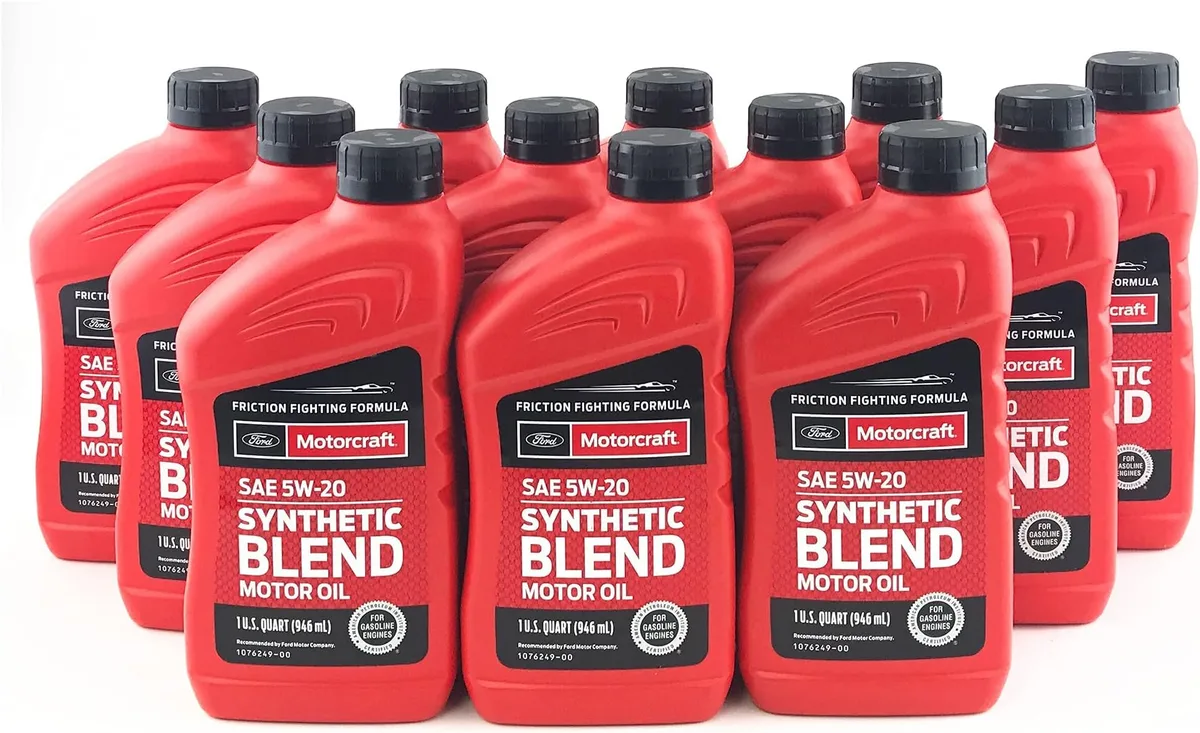
Why the Exact Oil Specification Matters
Base-stock type is only one part of the decision. A blend can be fully suitable, while a fully synthetic oil can be wrong if its viscosity, performance category, or approval doesn’t match the engine.
The owner’s manual is the controlling document. Your vehicle’s build date, VIN, engine, and emissions system can change the required oil, even when the model name looks the same.
| What to check | What it tells you | Example |
|---|---|---|
| Fluid application | Which engine type the oil is intended for | Gasoline, diesel, heavy-duty, or motorcycle |
| SAE viscosity | How the oil behaves across temperatures | SAE 0W-20 |
| Performance category | Which standardized tests the oil has passed | API SQ, API SQ-1, ACEA C3 |
| OEM approval | Whether a specific formula meets a manufacturer’s requirements | A listed approval code |
| SAPS requirement | Whether the oil suits sensitive emissions hardware | A specified low-SAPS class |
| Base-stock type | Whether the manufacturer requires conventional, blend, or full synthetic | Fully synthetic only |
| Drain schedule | When the oil must be changed | Time, distance, or engine hours |
These checks work together. A product with the right viscosity but the wrong performance category hasn’t passed the full selection process.
Viscosity doesn’t equal quality
A 5W-30 grade tells you about viscosity. It doesn’t tell you whether the oil is conventional, blended, or fully synthetic.
It also doesn’t confirm oxidation resistance, deposit control, wear protection, or emissions compatibility. Those results come from the finished formulation and its testing.
Performance category doesn’t equal OEM approval
An API or ACEA category confirms that an oil passed a defined set of tests. A manufacturer may also require a particular formulation or approval code.
If the manual says “only,” treat that requirement as mandatory. If it lists only a general API or ACEA category, the named category may be sufficient.
Base-stock preference can be mandatory
Some manufacturers allow conventional oil, synthetic blend oil, or fully synthetic oil. Others specify full synthetic or a particular approval.
Changing a blend to full synthetic doesn’t bypass the other requirements. A premium bottle still needs the correct viscosity, application, and approval.
Check the engine-bay label carefully
An oil-filler cap or engine-bay sticker may provide a quick viscosity recommendation. It can also show a low-SAPS requirement, an alternate severe-service grade, or a specific OEM approval.
The manual remains more complete. Some engine-bay labels cover several engine variants and may leave out service details.
If two documents conflict, use the VIN when requesting guidance from the manufacturer. Don’t resolve the conflict by choosing a thicker or more expensive oil.
Wrong oil may not damage an engine immediately. The risk grows through low oil pressure, poor circulation, deposits, accelerated wear, incompatible emissions hardware, and continued use beyond the approved interval.
What’s Inside Synthetic Blend Motor Oil?
Finished motor oil combines base oils with additives and viscosity modifiers. A synthetic blend contains both mineral and synthetic base stocks in proportions chosen by the manufacturer.
The label may not disclose that proportion. It may also omit the exact chemistry, oxidation package, volatility, and additive balance.
Base Stocks and Blend Composition
The base oil provides the lubricating film and carries much of the engine’s heat. Its chemistry affects viscosity, oxidation resistance, volatility, and cold-temperature flow.
| Base-stock type | Common API group | Typical role |
|---|---|---|
| Conventional mineral oil | Group I | Mineral portion of a conventional oil or blend |
| Hydrocracked mineral oil | Group II | Mineral portion of many modern conventional and blended oils |
| Hydroisomerized or gas-to-liquid stock | Group III | Synthetic portion of many fully synthetic and blended oils |
| Polyalphaolefin | Group IV | Synthetic fluid used alone or in a blend |
| Synthetic ester | Group V | Synthetic fluid often blended for polarity and solvency |
| Mineral and synthetic mixture | Groups I or II with III, IV, or V | Defines the basic structure of a synthetic blend |
Gas-to-liquid oil, or GTL, is made from natural gas or related feedstocks. It is commonly classified as a Group III synthetic base stock.
Polyalphaolefin, or PAO, is a synthetic hydrocarbon fluid. Synthetic esters have useful solvent and boundary-lubrication properties.
The synthetic percentage can vary
One blend may contain a modest synthetic fraction. Another may contain mostly synthetic stock with a smaller mineral portion.
Neither percentage is automatically better. A high synthetic content doesn’t correct a wrong viscosity or missing approval.
Some manufacturers describe the chemistry more precisely in technical literature. Most retail labels don’t, so consumers shouldn’t assume a fixed ratio.
Viscosity modifiers are not synthetic oil
A viscosity modifier helps a base oil maintain the required grade across temperatures. It allows one product to behave like a 0W-20 or 5W-30 oil.
The second number in a multigrade oil doesn’t show synthetic content. For example, 5W-30 doesn’t mean the bottle contains 30% synthetic oil.
Additive Packages and Finished-Oil Performance
The additive package provides wear protection, contaminant control, oxidation resistance, and temperature stability. A blend can contain the same types of additives as a fully synthetic oil.
| Additive type | Main function | Practical effect |
|---|---|---|
| Antiwear agents | Strengthen the lubricating film | Protects cams, bearings, gears, and other contact surfaces |
| Detergents | Neutralize acids and oxidation products | Controls sludge, varnish, and deposits |
| Dispersants | Keep soot and wear particles suspended | Reduces hard deposits in many engines |
| Antioxidants | Slow chemical aging | Supports protection between oil changes |
| Pour-point depressants | Lower the temperature needed for flow | Improves cold-weather pumpability |
| Friction modifiers | Control friction at selected surfaces | Supports efficiency or specific hardware requirements |
| Viscosity modifiers | Broaden the temperature range | Allows a multigrade oil to meet its SAE grade |
| Seal conditioners | Support certain aged elastomers | Used in some high-mileage formulas |
Not every high-mileage oil contains seal conditioners. A label may describe added antiwear protection, a higher viscosity, or both.
The finished oil matters more than its parts
An additive doesn’t replace a required base-stock type. A premium additive package can’t repair a wrong application or turn a bad viscosity grade into a correct one.
The finished product must work as a complete formula. Additives, base stocks, viscosity modifiers, and seals must remain compatible.
That’s why a blend and a fully synthetic product can pass the same performance category. Their base stocks and formulations differ, but both have met the required tests.
API Base Oil Groups I Through V: What “Semi-Synthetic” Really Means
The API base oil group system describes base-stock properties. It doesn’t rate the finished oil for a particular engine.
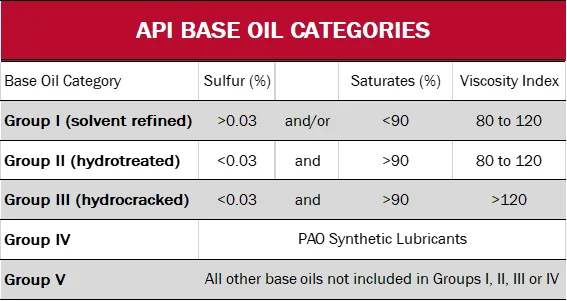
Kinematic viscosity measures a fluid’s resistance to flow at a stated temperature. It’s reported in centistokes, or cSt. Viscosity index, or VI, describes how viscosity changes as temperature rises.
| API group | Base-stock description | Defining criteria |
|---|---|---|
| Group I | Conventional mineral oil | Kinematic viscosity at 100°C of 5 cSt or less, with VI from 80 to 120 |
| Group II | Mineral or hydrocracked base oil | Kinematic viscosity at 100°C above 5 cSt, with VI from 80 to 120 |
| Group III | Hydroisomerized or synthetic hydrocarbon base oil | Kinematic viscosity at 100°C of at least 6 cSt, with VI of at least 120 |
| Group IV | Polyalphaolefin synthetic base oil | Kinematic viscosity at 40°C of at least 2 cSt |
| Group V | Synthetic ester and other qualifying synthetic base oil | Kinematic viscosity at 40°C of at least 2 cSt, with VI of at least 120 |
API’s licensed Engine Oil Guide explains the performance categories used for licensed engine oils. Those categories apply to the finished product, not just its base stock.
Group I is the older mineral category
Group I represents conventional mineral oils. It remains part of the API classification, though Group II is more common in modern conventional engine oils.
A Group I base stock can be blended with synthetic stocks. The finished oil then fits the basic idea of a synthetic blend.
Group II is widely used in conventional oil
Group II includes higher-viscosity mineral and hydrocracked base oils. Modern refining can produce base stocks with useful oxidation and volatility characteristics.
A Group II oil is still a mineral base stock. The term “Group II+” appears in marketing for highly processed Group II oils, but it is not a separate API group.
Group III drives many synthetic products
Group III includes widely used synthetic hydrocarbon base stocks. Hydroisomerization, dewaxing, and gas-to-liquid processing can produce this group.
A Group III-rich formula may cost more to manufacture than a Group II oil. That cost difference can help explain the price of many fully synthetic products.
Groups IV and V provide other synthetic chemistries
Group IV covers polyalphaolefins, or PAOs. Manufacturers may use PAO alone or combine it with Group III and Group V stocks.
Group V includes synthetic esters and other qualifying synthetics. These fluids can be blended to improve solvency, film strength, or seal compatibility.
A fully synthetic product can contain several groups. Its final recipe doesn’t have to rely on one base stock.
What the groups don’t tell you
The group number doesn’t identify the finished viscosity grade or performance category. It also fails to confirm deposit control, oxidation resistance, wear protection, emissions compatibility, or an OEM approval.
Group III isn’t automatically a higher quality tier than Group II. The finished formulation and test results determine the oil’s practical performance.
“Semi-synthetic” has no fixed recipe
The term “semi-synthetic” usually means synthetic blend oil. It doesn’t require a 50% synthetic ratio or any other universal percentage.
Marketing phrases such as “synthetic technology,” “advanced blend,” and “part synthetic” can describe different formulas. None gives you a reliable percentage on its own.
EATF 1000 is a separate European industry framework sometimes used to classify mineral and synthetic base-stock families. It also doesn’t create a universal blend ratio for retail engine oil.
Regional terminology can differ
Highly processed mineral base stocks may be treated differently under European and North American naming systems. A product can use different wording in different markets even when its performance is similar.
The vehicle manufacturer’s specification still decides suitability. Don’t force a regional label to settle a compatibility question.
Viscosity Grade, Performance Category, and OEM Approval Are Different
A correct engine oil must pass three independent checks: the required viscosity, the required performance category, and any required OEM approval.
One check can’t replace another. A bottle labeled SAE 0W-20 API SQ may still lack a separate manufacturer approval.
What does SAE 0W-20 mean?
SAE 0W-20 means the oil meets the 0W cold-temperature requirements and the 20-weight hot grade defined by SAE J300.
| SAE grade | What the grade communicates |
|---|---|
| 0W-20 | 0W cold behavior with a 20-weight hot grade |
| 0W-30 | 0W cold behavior with a 30-weight hot grade |
| 5W-30 | 5W cold behavior with a 30-weight hot grade |
| 5W-40 | 5W cold behavior with a 40-weight hot grade |
| 10W-40 | 10W cold behavior with a 40-weight hot grade |
The “W” refers to winter behavior. It doesn’t mean the oil is only for winter or that it contains a fixed amount of wax.
Cold cranking and pumping matter
Oil must flow quickly enough during startup to reach bearings, camshafts, and other surfaces. SAE cold-temperature tests include cranking and pumping limits.
A lower cold number generally means easier flow under very cold conditions. It doesn’t automatically make that grade correct for your engine.
Hot viscosity also matters
The second number describes the oil’s hot grade. High-temperature high-shear viscosity, or HTHS, provides another measure of how it flows at 150°C under high shear.
Two 5W-30 oils can have different HTHS values because their formulations differ. That difference can matter in an engine designed around a particular oil-flow requirement.
Don’t select viscosity by oil consumption
Using thicker oil to control consumption can hide a mechanical fault. Worn piston rings, valve guides, crankshaft seals, and turbocharger seals can all contribute.
Follow the manual’s grade. If consumption is rising, diagnose the cause before changing viscosity without approval.
What does an API or ACEA category tell you?
An API or ACEA category tells you that the finished oil passed a defined set of laboratory and engine tests.
As of 2026, API SQ and API SQ-1 are current U.S. gasoline-engine performance categories. Older manuals may still name API SP, SN, or another category.
Use the category named by the vehicle manufacturer. A newer category isn’t automatically an approved replacement for an older one.
ILSAC GF-7 is a separate North American performance specification. Older vehicles may still specify GF-6A or GF-6B.
ACEA classes are common in Europe. The letter and number both matter. Examples include A3/B4, A5/B5, C2, C3, C5, and E classes.
The letter can reflect the engine application, viscosity behavior, HTHS, and SAPS limits. ACEA C2, C3, and C5 are not interchangeable.
A category confirms the relevant tests. It does not create a manufacturer approval that the automaker never issued.
Does a general category replace an OEM approval?
No. An OEM approval can cover a specific formulation, viscosity, application, and emissions requirement beyond a general category.
Codes such as VW 504.00 and 507.00 or Mercedes-Benz 229.51 are examples of manufacturer-specific approvals. They apply only to the vehicles and specifications named by the manufacturer.
The approval printed on the bottle must be current. Don’t assume a similar code or older version is interchangeable.
Why do some engines require low-SAPS oil?
Certain engines require low-SAPS oil because sulfur, phosphorus, and sulfated ash can affect sensitive emissions equipment.
SASP stands for sulfated ash, sulfur, and phosphorus. The term is also commonly written as SAPS.
Relevant hardware can include a catalytic converter, diesel particulate filter, gasoline particulate filter, or another emissions component. The exact risk depends on the engine and aftertreatment design.
Low-SAPS doesn’t mean low protection. The oil must still meet the required wear, deposit, oxidation, viscosity, and corrosion tests.
A synthetic blend can meet a low-SAPS specification. A fully synthetic oil may not meet that same requirement.
Do regional labels change the oil?
Yes, but they don’t change the need to follow the vehicle’s specification.
American vehicles often use SAE, API, and ILSAC conventions. European vehicles commonly use SAE and ACEA categories alongside OEM approvals. Japanese-market vehicles may show JASO or other regional specifications.
North American products are often sold in quarts, while many European products use liters. Convert the refill quantity carefully and compare price per unit.
Regional labels can help identify the product. They don’t prove compatibility without the exact engine specification.
Synthetic Blend vs. Conventional vs. Fully Synthetic Oil
All three oil types can be correct if they meet the required specification. They differ mainly in base-stock composition, formulation range, and often price.
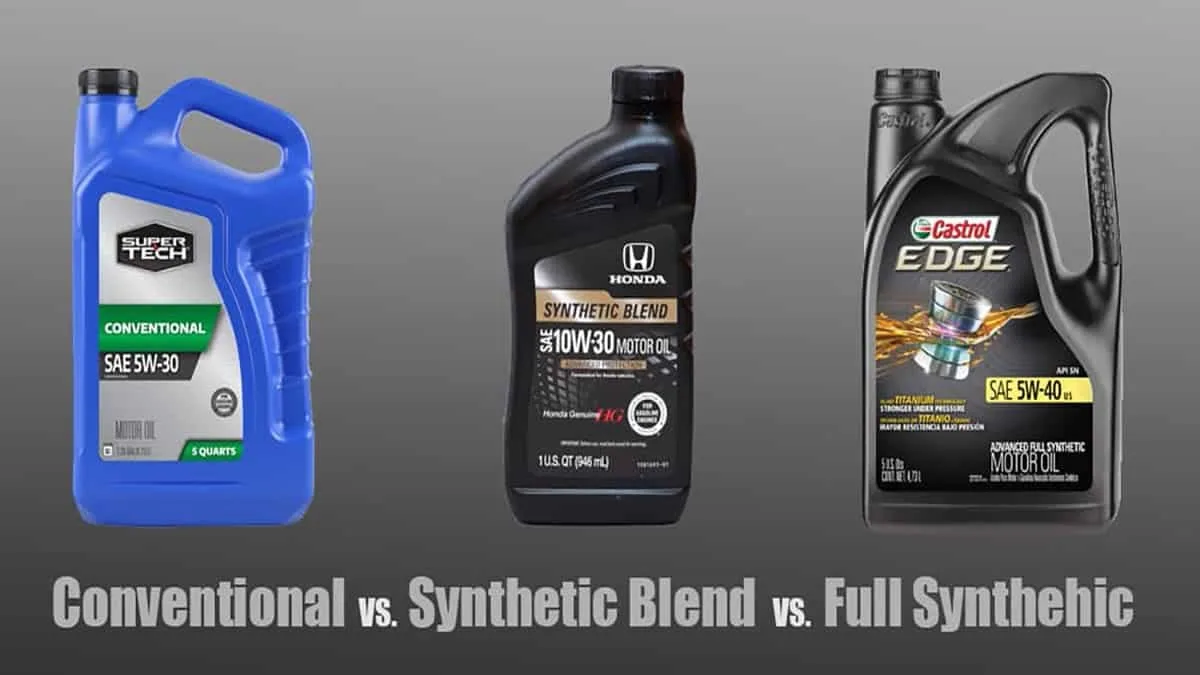
| Characteristic | Conventional oil | Synthetic blend oil | Fully synthetic oil |
|---|---|---|---|
| Typical base stock | API Group I or II | Mineral plus synthetic stocks | Qualifying Group III, IV, or V stocks |
| Synthetic content | None by definition | Variable and usually undisclosed | All base stocks qualify as synthetic |
| Relative cost | Often lowest | Usually between the other two | Often highest |
| Cold-flow properties | Product dependent | Product dependent | Product dependent |
| Oxidation and volatility | Product dependent | Product dependent | Product dependent |
| Can meet the same specification? | Yes, if approved | Yes, if approved | Yes, if approved |
| Fixed blend percentage | Not applicable | No | Not applicable |
| Common fit | Engines accepting approved conventional oil | Mainstream engines that permit a blend | Engines requiring full synthetic |
A premium blend can cost more than an entry-level fully synthetic product. Base-stock type doesn’t set price by itself.
Conventional oil can be fully suitable
Conventional oil can be correct for an older or simpler engine. It becomes a poor choice only when the manufacturer requires a synthetic formula or a blend fails the required specification.
A modern Group II oil may also have useful volatility and oxidation characteristics. Don’t judge it by the word “conventional” alone.
A blend can offer a practical balance
A blend may provide better cold-temperature flow or lower volatility than a comparable conventional formula. It can cost less than many premium fully synthetic products.
That balance works well for normal service. It also suits drivers who want approved performance without paying for a full synthetic tier they may not need.
Fully synthetic has a wider formulation range
Fully synthetic oils are commonly available in very low viscosities and low-volatility grades. They’re often chosen for extreme cold, towing, high load, and other demanding applications.
Those properties don’t make the oil correct for every engine. A fully synthetic bottle can still have the wrong grade or approval.
Which type should you choose?
If the manual permits all three, compare products that meet the same specification. If it permits only a blend, choose an approved blend with the required grade and category. If it requires full synthetic, don’t substitute a blend.
For high-mileage use, focus on the specified high-mileage grade and approval. For turbocharged or direct-injection engines, follow any OEM and SAPS requirements. For unknown specifications, get manufacturer confirmation using the VIN.
What about high-mileage oil?
High-mileage oil is defined by its intended use and formulation. It can be conventional, synthetic blend, or fully synthetic.
A high-mileage label can’t tell you the base-stock type. Read the viscosity, performance category, and approval before choosing it.
Benefits and Drawbacks: What a Blend Can and Can’t Deliver
A synthetic blend can deliver required engine performance at a lower price than many fully synthetic products. Its biggest drawback is that the label tells you very little about the exact formula.
Where a blend can make sense
A blend can be a practical choice when the manufacturer permits it. This usually happens when the correct blend is available in the required viscosity and category.
Price is often the clearest benefit. A vehicle using 5 liters can save enough per service to notice over several oil changes.
Some blends also offer useful cold-flow, oxidation, and volatility characteristics. A synthetic fraction can improve performance compared with some conventional formulas.
What the blend can deliver
When properly approved, a blend can provide fast cold pumping, stable hot viscosity, and strong wear protection. It also supports deposit and sludge control, oxidation resistance, required fuel efficiency, and seal compatibility. Additional benefits include emissions-system compatibility, acceptable volatility, and a practical purchase price.
These outcomes depend on the finished formula. They aren’t automatic promises attached to the blend name.
What the label leaves unclear
A “synthetic blend” description may not reveal the synthetic percentage or exact Group I, II, III, IV, or V stocks used. It also typically omits the oxidation package, volatility data, additive balance, and OEM approval.
That lack of detail makes two blends difficult to compare from the front label alone.
A manufacturer’s technical data sheet or a used-oil analysis can provide more information. The required approval remains the most important comparison.
Where full synthetic may be the better choice
Fully synthetic is usually the better choice when the manufacturer requires it. It’s also preferable if only one approved product exists or an engine needs a specific low-volatility formula.
Severe high-load use or specialized racing, industrial, or emissions applications can also justify a fully synthetic product.
A blend can perform well in demanding service. It simply can’t override a full-synthetic-only requirement.
Where a blend may be a poor value
A blend may offer poor value if a premium blend costs as much as a fully synthetic alternative. This is also true when a higher-quality fully synthetic option provides a longer approved interval. Finally, a blend presents poor value if it lacks the required approval or if a conventional product meets the same specification for less.
Compare approved products by cost per service. Don’t compare the price of a premium blend with a discount fully synthetic bottle.
Does a blend provide a warranty advantage?
No. Warranty coverage depends on using an oil that meets the vehicle manufacturer’s specification.
An approved blend won’t improve coverage. An unapproved premium product won’t preserve it either.
Keep the container, receipt, and service record. Those records help if a later question concerns the oil specification.
Is Synthetic Blend Oil Right for Your Vehicle?
A synthetic blend is right when your owner’s manual permits it and the product meets every required viscosity, category, and approval.
| Vehicle or driving situation | What to check | Likely fit |
|---|---|---|
| Older gasoline engine | Manual viscosity, category, and oil-consumption condition | Conventional or an approved blend may work |
| High-mileage vehicle | Required grade and high-mileage approval | Any approved base-stock type may qualify |
| Modern low-viscosity engine | SAE grade, API category, and SAPS limit | Blend or full synthetic if approved |
| Turbocharged engine | OEM approval, deposit control, and drain interval | Use the exact manufacturer specification |
| Gasoline direct-injection engine | Timing-chain, LSPI, and low-SAPS requirements | Follow the named category and approval |
| Hybrid vehicle | Engine oil specification and high-voltage service procedure | Use the exact manual-specified oil |
| Cold-climate driver | Required cold grade and pumpability | Match the specified multigrade oil |
| Severe-service driver | Manufacturer severe-service schedule | Use an approved oil and shorten the interval if required |
| Diesel or motorcycle engine | Correct fluid application | Don’t substitute passenger-car motor oil |
High-mileage and older engines
An approved blend can suit many high-mileage engines. Age alone doesn’t make full synthetic necessary.
Some older engines have higher oil consumption because of worn rings, guides, or seals. A high-mileage formula may help with minor seal seepage, but it can’t rebuild worn components.
Use the specified grade first. If consumption is substantial, arrange an inspection.
Turbocharged and direct-injection engines
Turbocharged and direct-injection engines may require specific deposit, wear, oxidation, and emissions performance. Their manuals may name an exact grade, API category, or OEM approval.
A blend is suitable only when the manufacturer permits it. A performance-sounding label isn’t enough.
Hybrids and severe driving
Hybrid engines still need engine oil. Frequent starts, heat cycling, and extended idling can change lubrication conditions, so the manufacturer’s specification and service interval control.
Severe service can include towing, repeated short trips, stop-and-go traffic, heavy payloads, or extended idling. If the manual lists a shorter interval, use it.
Safety and Warranty Warnings Before You Buy or Change Oil
Wrong oil can contribute to bearing wear, cam damage, timing-chain wear, turbocharger damage, and emissions-system faults. The exact risk depends on the mismatch and service conditions.
Match the correct application
Passenger-car motor oil, or PCMO, isn’t a universal engine lubricant. Don’t use it in a diesel, heavy-duty, marine, natural-gas, or motorcycle engine when another specification is required.
Some motorcycle oils contain zinc or other additives that may be unsuitable for certain automotive emissions systems.
Don’t change viscosity without permission
A thinner oil may provide less hot-viscosity margin. A thicker oil may flow poorly during cold starts or leave too much resistance at operating temperature. Use the grade in the manual, or get written manufacturer confirmation before changing it.
Watch low-SAPS requirements closely
Sensitive emissions hardware can be affected by the wrong sulfur, phosphorus, or sulfated-ash content. The risk depends on the engine and aftertreatment system.
Use the exact ACEA class or OEM approval named by the vehicle manufacturer. A label that simply says “low SAPS” doesn’t automatically meet a specified emissions requirement.
Protect turbochargers and timing systems
Turbocharged and direct-injection engines need stable oil pressure, good cold circulation, and strong deposit control. Follow the specified grade, performance category, and drain interval.
A new metallic knock, timing-chain rattle, or oil-pressure warning needs prompt attention. Don’t keep driving on a bottle of oil that happens to be labeled “premium.”
Keep evidence for warranty claims
A synthetic blend doesn’t void a warranty by itself. An oil outside the stated specification can create a coverage dispute.
Keep the container, receipt, and service record. Record the product name, viscosity, performance category, and OEM approval. Note the date, odometer reading, and engine hours if applicable.
Keep any manufacturer confirmation you received about a substitute.
A clear record helps when a dealer or repair shop asks what oil went into the engine.
Don’t overfill the engine
Overfilling can cause aeration, foaming, leakage, and unstable oil pressure. It can also force oil into areas where it doesn’t belong.
Use the manufacturer’s refill quantity rather than filling the sump to the brim. Some engines retain oil in the filter, cylinder walls, and upper passages after a drain.
Check the level again after the engine has settled. Follow the manual’s instructions for the engine’s warm-up state, parking position, and measuring method.
Stop driving when oil pressure is unreliable
Stop the engine safely if the red oil-pressure warning comes on. An amber oil-level warning also needs prompt attention, but confirm the level with the manufacturer’s method before restarting.
Don’t assume a low level is the only cause. A failed pressure sensor, damaged oil pump, blocked pickup, or severe internal wear can also produce a warning.
A burning smell, heavy blue smoke, a major leak, or a sudden rise in oil consumption deserves the same prompt attention. Adding another quart doesn’t repair a low-pressure system or a damaged bearing.
Don’t add unapproved additives
Oil treatments, thickeners, and engine flushes can change the oil’s viscosity or chemistry. They may interfere with catalysts, particulate filters, seals, or the factory additive package.
Use an additive only when the vehicle manufacturer or a qualified technician specifically recommends it. Record what was added and when.
A treatment marketed as a cleaner can loosen deposits that later block an oil pickup or filter. Diagnosis is safer than adding another chemical.
Handle an emergency top-up carefully
If the engine is low on oil, use the correct viscosity and performance category if you can find it safely. Never open a hot, pressurized cooling system or work beneath an unsupported vehicle.
Record the product name, quantity, and date of an emergency top-up. Schedule a proper oil change if the product differs from the required specification.
If no approved oil is available, get manufacturer or qualified-technician guidance for the distance you need to drive. A temporary substitute can be safer than an empty engine, but it should have a clear follow-up plan.
Decision Guide: How to Choose the Correct Oil
Use this guide in order. A price advantage or a familiar bottle name should never override the engine’s specification.
Step 1: Identify the exact vehicle
Record the year, make, model, trim, engine, VIN, and build date. Confirm whether the engine is gasoline, diesel, turbocharged, or hybrid.
The same model name can cover several engines. A 2.0-liter naturally aspirated engine and a 2.0-liter turbo engine may not use the same oil.
Step 2: Find the required viscosity
Read the exact SAE grade in the owner’s manual. Don’t choose 0W-20 because it’s modern, or 5W-40 because it sounds protective.
| Manual instruction | Correct action |
|---|---|
| SAE 0W-20 | Use an approved 0W-20 product |
| SAE 5W-30 | Use an approved 5W-30 product |
| SAE 0W-30 or 5W-30 allowed | Use one of the listed approved grades |
| Climate-specific alternate grade | Follow the stated temperature limits |
| No viscosity stated | Confirm it before changing oil |
Step 3: Match the fluid application
Check whether the bottle is intended for a gasoline engine, passenger car, diesel engine, heavy-duty engine, motorcycle, or another application.
Passenger-car motor oil, or PCMO, can meet a strong API gasoline specification and still be wrong for a diesel or motorcycle engine.
Step 4: Match the performance category
Find the exact API, ACEA, ILSAC, JASO, or other category named by the manufacturer.
If the manual says API SQ, use an oil labeled for API SQ. If it says ACEA C3, use an oil meeting ACEA C3.
A newer category isn’t automatically an approved replacement for an older one. Confirm any change through official manufacturer guidance.
Step 5: Check the OEM approval
Look for the approval code exactly as written in the manual. Confirm that it applies to the vehicle’s engine, model year, and region.
If the manual says “only,” treat the approval as mandatory. If the manual lists only a general category, that category may be sufficient.
A manufacturer may approve a fully synthetic, synthetic blend, or conventional product under the same specification. The approval code tells you which finished oils qualify.
Step 6: Check the base-stock instruction
Use conventional oil if the manual permits it and the product meets the category. Use a synthetic blend if blends are allowed and the product meets the category.
Use fully synthetic oil if the manufacturer requires it. If the manual names a specific chemistry, follow that instruction.
The base-stock preference is part of the lubrication design. It isn’t just a marketing preference.
Step 7: Check SAPS and emissions requirements
If the manual requires low-SAPS oil, match the exact ACEA class or OEM approval. A synthetic blend can satisfy the requirement, and a fully synthetic product can fail it.
Some engines also need special deposit, wear, turbocharger, timing-chain, or aftertreatment performance. A general oil label may not name all those needs, so check the manufacturer’s technical documentation.
Step 8: Inspect the container
Before opening the product, check the seal and packaging. Look for leaks, cracks, tampering, or an unreadable label.
Confirm the fluid type, viscosity, performance category, and OEM approval. Check the SAPS designation if required. Verify the container size and purchase date.
Don’t use oil from an unlabeled container. Don’t use oil that has been stored open or contaminated by a dirty funnel.
Step 9: Compare cost after approval
Compare only products that pass the same technical checks. Calculate the oil volume times the price per unit. Then add the filter, labor, tax, and any required oil or coolant top-ups.
A cheaper bottle that fails the required category isn’t a bargain. An approved product that costs more may still be the cheapest safe choice over the service interval.
Use this final decision table
| Situation | Best action |
|---|---|
| Manual allows conventional, blend, and full synthetic | Compare approved products with the same grade and category |
| Manual allows synthetic blend | Choose an approved blend or a fully synthetic product meeting every requirement |
| Manual requires full synthetic | Use fully synthetic oil with the required grade and approval |
| Manual requires a specific OEM approval | Use the current product carrying that approval |
| Manual requires low-SAPS | Match the stated SAPS class or OEM approval |
| Manual is unavailable | Get written specification guidance using the VIN |
| Engine consumes oil rapidly | Diagnose the cause before changing viscosity |
The final pre-purchase check
You’re ready to buy when the container shows the correct application, viscosity, performance category, and OEM approval. Confirm any required SAPS designation, the correct container size, and a clean, sealed package.
Record the drain interval. Mark whether it follows normal or severe service. If one of those items is uncertain, pause and verify it.
Synthetic Blend Oil Change: Step-by-Step
A safe oil change starts before the drain plug comes out. You’re placing the correct amount of approved oil into a clean engine without overfilling or damaging the hardware.
What you need
The correct oil and filter matter most. The other tools depend on the vehicle’s access and service procedure.
| Item | What to check |
|---|---|
| Finished engine oil | Exact SAE viscosity, performance category, OEM approval, and SAPS requirement |
| Oil filter | Correct part number and application |
| Drain-plug washer or gasket | Replace when required by the service procedure |
| Drain pan | Large enough for the engine’s oil capacity |
| Funnel and filter wrench | Clean and in good condition |
| Absorbent materials | Rags, cardboard, or a spill mat |
| Personal protection | Heat-resistant gloves and eye protection |
| Torque wrench | Use when the manual specifies a drain-plug torque |
| Used-oil container | Approved, sealed container for recycling |
Some vehicles use a cartridge filter inside a sealed housing. Others have a remote filter or a drain plug that’s difficult to reach. Follow the vehicle’s procedure rather than assuming every change looks the same.
Before you drain the oil
Read the owner’s manual and inspect the engine-bay oil label. Record the vehicle information, odometer reading, and any engine hours.
Check the current oil level before draining. Look for leaks around the oil pan, filter housing, valve-cover area, front crank seal, and drain plug.
A low level may be the reason for the service. Oil containing coolant, fuel, metal fragments, or large amounts of grit needs investigation before you change it.
Warm the engine only as directed by the maintenance procedure. Some manufacturers specify a cold drain, while others recommend warming the oil first. Hot oil burns quickly, so use a rated drain pan and protective equipment.
Support the vehicle correctly. Never work beneath a vehicle held up by a jack alone. Use the manufacturer’s lifting points and rated jack stands.
Arrange used-oil disposal before removing the plug. Keep the oil away from drains, soil, and waterways.
Drain and inspect the engine
Place the drain pan directly beneath the plug. Remove the plug carefully and let the oil drain until the flow stops.
Don’t force the flow with compressed air or a high-pressure tool. That can splash hot oil and create a burn hazard.
If the manual calls for a new drain-plug washer or gasket, replace it. Inspect the plug threads, sealing face, and oil-pan opening. Don’t apply thread sealant unless the manufacturer specifically calls for it.
Replace the oil filter at the required interval. Wipe the filter housing and sealing surface clean before fitting the new filter. A cartridge filter must seat correctly in its housing.
Inspect the old filter and drained oil. Large metal particles, coolant contamination, or fuel dilution deserve investigation. A used-oil analysis can help when wear, consumption, or emissions trouble is suspected.
Fill the engine correctly
Install the drain plug by hand first. Tighten it to the manufacturer’s specified torque. Overtightening can strip the threads or crack the oil pan.
Under-tightening can cause a leak.
Add the oil in stages. A normal drain-and-fill may require less than the full sump capacity because some oil remains in the filter, engine passages, and oil pan. Use the refill quantity stated in the service procedure.
Reinstall the filler cap and any undertray panels. Start the engine according to the manual and watch the oil-pressure indication. If the warning remains on, shut the engine down.
Run the engine only as directed during the initial circulation check. Some engines need several minutes at idle to stabilize pressure. Others should not idle for an extended period.
Shut the engine off and wait the specified time for the oil to settle. Park on level ground, then check the dipstick or electronic oil-level measurement. Add oil only if the level is below the required mark.
Reset the service indicator when the manual calls for it. Record the date, distance, product, filter, and next scheduled change.
Verify the service before driving
| Check | What you want to see | What to do if it fails |
|---|---|---|
| Oil level | Between the minimum and maximum marks | Add the correct oil or remove excess according to the manual |
| Oil pressure | Pressure indication returns to normal | Shut down and seek diagnosis |
| Drain plug | No leak beneath the oil pan | Check the plug, washer, and threads |
| Filter area | No fresh oil at the housing seal | Clean the surface and check filter seating |
| Engine noise | No new knocking, rattling, or churning | Stop driving if the noise is severe |
| Service indicator | No immediate maintenance warning | Review the completed service and interval |
A small top-up after an oil change can be normal, especially when oil remains in upper engine areas. Follow the manual’s level procedure. Don’t add a large amount simply because the engine sat overnight.
If you changed the oil yourself, keep the container and receipt until the next service. They provide useful evidence if a question later arises about the product or interval.
Dispose of the old oil safely
Pour the used oil into a sealed, approved container. Take it to a proper collection site or recycling facility. Keep filters, oily rags, and contaminated absorbents away from children, pets, and stormwater drains.
Local rules may treat those materials differently. A household trash bin is not a safe disposal choice.
Used oil can contaminate soil and water. It can also create a slip hazard around the vehicle. Don’t leave a drain pan or open container near traffic.
When a technician is safer
Get a technician to handle the service if the drain plug is seized or buried under a splash shield. A technician is also the safer choice for a dry-sump system, remote filter, or hybrid high-voltage warning.
Professional help makes sense when a visible leak needs diagnosis or the engine consumes oil rapidly. It is also useful if the oil contains coolant or fuel, or if a new noise appears during startup. Finally, seek assistance when the drain plug or oil-pan threads are damaged, or the manual is missing or contradictory.
A technician can record the exact oil specification, quantity added, filter part number, and next service date.
Common Mistakes That Can Lead to Engine Damage
Most oil-related problems come from a specification mismatch. The word “blend” rarely causes trouble by itself.
| Common mistake | Why it causes trouble | Safer choice |
|---|---|---|
| Assuming a 50% synthetic ratio | The label gives no reliable ratio | Check the finished specification |
| Choosing viscosity by feel | A wrong grade changes oil flow and pressure | Follow the manual’s SAE grade |
| Ignoring the performance category | Viscosity alone doesn’t confirm engine testing | Match API, ACEA, ILSAC, or JASO requirements |
| Skipping an OEM approval | A general category may not meet a special formula | Use the listed approval code |
| Treating “low SAPS” loosely | Sensitive emissions hardware may be affected | Match the exact class or OEM approval |
| Extending the drain interval | Oil ages faster under heat and contamination | Follow time, distance, and engine hours |
| Overfilling the sump | Aeration and foaming can reduce lubrication | Measure in smaller stages |
| Adding thickeners or treatments | Chemistry may be incompatible | Use only approved additives |
| Reusing damaged hardware | Leaks and thread damage can follow | Replace specified washers and seals |
| Mixing unknown oil | The final performance may be wrong | Use the correct oil for the next full service |
Is synthetic blend oil always weaker?
No. A synthetic blend can meet the same performance category as a conventional or fully synthetic product. It can provide adequate wear protection, oxidation resistance, deposit control, and emissions compatibility when properly formulated.
The label alone can’t reveal those results. Check the finished specification and any required approval.
Is fully synthetic always better?
No. Full synthetic may offer useful properties, but it can’t overcome a wrong viscosity, application, or approval. An approved blend may be the better choice for an engine that doesn’t require full synthetic.
A fully synthetic product can also cost more without delivering extra value for a normal driver. Compare approved options by service cost and manufacturer guidance.
Can I use a thicker oil for an older engine?
Only if the manufacturer permits that grade or a qualified technician confirms the reason for the change. A thicker oil may reduce minor seepage, but it can also increase cold-start load and oil consumption.
A high-mileage formula may be a better first step if the manual allows it. If the engine is using substantial oil, diagnose the mechanical cause.
Can I use a thinner oil to reduce consumption?
Not without checking the manual. Thinner oil can reduce consumption in some engines, but it may also reduce hot-viscosity margin and increase wear under high load.
Find the source of the consumption first. Worn rings, guides, seals, and damaged bearings need attention that oil viscosity can’t provide.
Can I use an oil with a newer performance category?
Sometimes, but only when the manufacturer supports the substitution. A newer API or ILSAC category may be technically capable, while the automaker may require a particular formulation or approval for warranty and emissions reasons.
Don’t assume that “newer” means “approved.” Check the manual or obtain written guidance.
Can I use passenger-car oil in a diesel engine?
Only if the oil is specifically approved for that diesel application. API gasoline and diesel categories have different test requirements and additive demands.
A diesel may require low-SAPS oil, a specific viscosity, and a separate performance class. A strong gasoline-engine label doesn’t cover those needs.
Can I mix brands during a top-up?
A small top-up may be manageable if both oils have compatible viscosity and performance specifications. Use the correct oil for the next scheduled service.
If one oil is unknown, has a different category, or lacks the required approval, arrange a fresh fill. Mixing two approved products doesn’t automatically create a problem, but the final specification remains the deciding factor.
Can I mix synthetic blend and fully synthetic oil?
It can be acceptable in some top-up situations if the products meet compatible requirements. It doesn’t make an incorrect oil correct.
Check the viscosity, application, performance category, and SAPS requirement. If the manual requires one type exclusively, use that type for the next complete service.
Can I extend the oil-change interval?
No. The owner’s manual and the approved oil specification set the interval. A synthetic blend doesn’t earn extra time simply because some of its base stock is synthetic.
Use the shorter interval when the vehicle operates under a listed severe-service condition. Record the distance, time, and engine hours that apply to your driving.
Is an engine flush necessary during an oil change?
Usually, no. A routine oil change replaces the oil and filter. An engine flush introduces additional chemicals that may not be compatible with seals, catalysts, particulate filters, or deposits inside the engine.
If sludge or a restriction is suspected, ask for a mechanical diagnosis. Removing a failed turbocharger, oil pickup, or timing component may be safer than trying to dissolve deposits in place.
Does a thickener fix an oil-consumption problem?
No. A thickener changes the oil’s behavior temporarily. It doesn’t repair a worn ring, guide, seal, bearing, or leak.
It can also move the problem into a different failure mode, such as cold-start starvation or restricted oil flow. Diagnose the cause before changing chemistry.
Can I reset the oil light without changing the oil?
No. The oil life monitor is a service reminder, not a complete engine-health test. Resetting it can hide an overdue change or a developing fault.
Reset the monitor after the required service, following the manual. If a leak, consumption issue, or warning caused the service, fix that problem first.
Does oil color prove quality?
No. Color varies with base stock, additives, oxidation, and normal aging. A darker oil isn’t automatically contaminated, and a light color doesn’t prove freshness.
Use the level check, service record, warning lights, and condition testing together. A used-oil analysis can help when contamination or wear is suspected.
Costs, Drain Intervals, and Performance Data
Price becomes useful only after the oil passes every specification check. Compare the actual service cost, not the bottle size or marketing language.
What affects the price?
| Factor | Why it can change the price |
|---|---|
| Base-stock type | Group III, PAO, ester, Group II, and blends use different raw materials |
| Synthetic percentage | A larger synthetic share can increase manufacturing cost |
| Performance category | More testing and tighter requirements can add cost |
| Additive package | Detergents, dispersants, and antiwear compounds affect cost |
| OEM approval | A specific formula may require tighter production controls |
| SAPS formulation | Emissions-sensitive chemistry can cost more |
| Package size | Larger containers can lower the cost per quart or liter |
| Region and retailer | Distribution, taxes, labor, and competition affect retail price |
A premium blend can cost more than an entry-level fully synthetic oil. Compare products that meet the same specification before judging value.
How to compare real service cost
Use this formula:
Cost per service = oil volume × price per unit + filter + labor and other charges
If a service calls for 5.0 liters, calculate the oil cost by multiplying 5.0 by the local price per liter. Add the filter, labor, tax, and disposal charges.
The refill quantity may be less than the engine’s full sump capacity. Some oil remains in the filter, engine passages, and oil pan after a drain. Follow the service procedure instead of filling to the theoretical maximum.
If a product costs 2.00 per liter less and the service uses 5.0 liters, the oil-only saving is 10.00 per service. Across eight services, that difference is 80.00.
That example isn’t a price claim. It shows how to compare the same engine using the actual refill quantity.
Compare the annual cost
Multiply the oil volume by the number of services per year. Add filters, labor, taxes, and any planned top-ups.
A vehicle driven 15,000 miles per year with two services and a 5.0-liter refill uses 10.0 liters of oil. At a local price of 8.00 per liter, the oil alone costs 80.00 per year.
The example excludes filters, labor, tax, and other charges. Use local figures for your own budget.
A lower-priced product can cost more if it causes deposits, increased consumption, emissions faults, or a warranty dispute. Technical suitability comes before arithmetic.
How long should the oil last?
The owner’s manual controls the interval. It may be based on time, distance, engine hours, or whichever limit comes first.
| Schedule type | How to use it |
|---|---|
| Normal service | Follow the interval for the exact engine and approved oil |
| Severe service | Shorten the interval if the manufacturer lists towing, idling, heavy traffic, or high load |
| Long-life schedule | Use only the named oil and approval |
| Time-based limit | Replace at the stated month or year even if mileage is low |
| Distance-based limit | Replace at the stated distance even if the calendar interval remains |
| Engine-hour limit | Follow the hour limit for heavily used equipment |
Some manuals permit extended intervals for approved long-life oils. That permission applies to the named formulation and specification. A synthetic blend doesn’t qualify automatically.
The oil life monitor can estimate an interval, but it may not detect coolant contamination or fuel dilution. Keep records and follow the manual.
Which performance numbers are useful?
| Metric | What it tells you | Important limitation |
|---|---|---|
| SAE viscosity grade | Cold pumping and hot viscosity classification | Says nothing about blend ratio or approval |
| HTHS viscosity | High-temperature behavior under high shear | Doesn’t measure every aspect of protection |
| Kinematic viscosity at 100°C | Resistance to flow at a stated temperature | One value can’t define engine life |
| Noack volatility | Evaporation under a defined test | Real-world loss varies with heat and airflow |
| Oxidation stability | Resistance to chemical aging under controlled conditions | Depends on the test and service condition |
| Deposit and sludge tests | Resistance to carbon and varnish formation | Results are category-specific |
| Wear tests | Performance under controlled engine conditions | No test replaces correct viscosity and approval |
| SAPS levels | Sulfated ash, phosphorus, and sulfur content | Suitability depends on the emissions system |
| Used-oil analysis | Wear metals, contamination, and oil condition | Results need a clean sample and sound interpretation |
A blend and fully synthetic product can have different values because their base stocks differ. The finished specification determines whether those differences matter.
Is lower volatility always better?
No. Lower volatility can reduce oil loss during hot operation, but the oil must still meet the required viscosity, deposit-control, oxidation, and emissions tests.
An oil that evaporates too quickly can require more top-ups. An oil with good volatility can still fail if its deposit control or wear protection is weak.
Compare results only when the test method and conditions match. A single number can’t describe the whole product.
Does oil consumption have one safe limit?
No. There is no universal number that fits every engine. The manufacturer’s repair information and the rate of change are more useful than a generic internet claim.
Measure the dipstick at similar points in the service cycle. Watch for a steady or rapid drop, external leaks, or a rising level caused by contamination.
If the engine uses substantial oil, arrange an inspection. Don’t rely on a thicker grade without manufacturer guidance.
Which data should you keep?
Record the oil specification, viscosity, performance category, OEM approval, and SAPS requirement. Note the product quantity, filter part number, date, odometer reading, and engine hours. Also record the next service date, any top-ups, and any warning lights or leaks observed.
A clear record helps you compare consumption and deposits over time. It also supports warranty discussions if a later question arises.
Long-Term Oil Monitoring and When to Seek Help
The right oil still needs regular attention. Level checks, service records, and symptom monitoring can catch a developing problem before it becomes expensive.
Check the oil level on a useful schedule
Check the level at the interval stated in the owner’s manual. For many vehicles, that means checking monthly and before a long drive. A check before an oil change provides a useful trend.
Use the manufacturer’s measuring method. Park on level ground, follow the engine warm-up instructions, and read the dipstick or electronic gauge.
Cold weather can make a borderline level more serious. Low oil can delay pressure buildup during startup and increase cavitation risk. Don’t compensate for repeated low readings by simply adding more oil.
If the level falls quickly, investigate the cause. Possible sources include the oil-pan gasket, front crank seal, valve-cover gasket, filter housing, and worn internal components.
Track consumption over time
Record the oil level at similar points in the service cycle. A stable reading is reassuring. A steady drop may point to an external leak, while a sudden increase can indicate contamination.
A rising dipstick reading may mean fuel or coolant has entered the oil. Check the filter and oil cap for fuel odor or moisture. Don’t keep driving indefinitely with a contaminated lubrication system.
Use the oil life monitor correctly
The oil life monitor estimates when service is due. It may track time, distance, temperature, idle time, and driving patterns. It isn’t a substitute for checking the level.
Reset the monitor only after completing the required service. If it resets unexpectedly, find the reason rather than treating the message as a failed bulb.
A low-mileage vehicle may still need a time-based change. Severe driving may require earlier service than the monitor displays.
When used-oil analysis is useful
Used-oil analysis can measure wear metals, viscosity, oxidation, fuel dilution, coolant, and additive depletion. It works best as a trend. One sample rarely tells the whole story.
Analysis can be useful with chronic oil consumption, turbocharged engines, and suspected coolant leakage. It’s also helpful for high-mileage vehicles, unexplained wear, used vehicles with uncertain records, and modified or performance engines.
Take the sample near the normal change point. Follow the laboratory’s collection instructions and use a clean sample. Submit the engine information so the lab can interpret the results correctly.
Used-oil analysis is not a substitute for compression, leak, cooling-system, or oil-pressure tests. Use it as one part of a diagnosis.
Warning signs that need prompt attention
| Sign | Possible concern | Action |
|---|---|---|
| Red oil-pressure warning | Low oil level, pump failure, or severe oil-flow loss | Shut down safely and seek diagnosis |
| Amber oil-level warning | Low oil level or a sensor fault | Check the level promptly |
| Blue exhaust smoke | Burning oil, worn seals, or overfueling | Inspect the engine and measure consumption |
| Oil pressure drops under load | Oil starvation, low viscosity, or pump trouble | Stop driving if the drop is significant |
| Coolant in the oil | Internal leakage or a failed gasket | Don’t continue a long drive |
| Rapid oil loss | Leak, wear, or contamination | Measure and diagnose the rate |
| Metallic or timing-chain noise | Bearing, valvetrain, or lubrication trouble | Stop if the noise is sudden or severe |
| Burning oil smell | Overheating, leak, or oil starvation | Shut down safely if the warning is active |
An oil-pressure warning takes priority over the remaining drive. A low-level warning also deserves prompt attention, but confirm the level using the manufacturer’s method before restarting.
Know when to seek professional help
Contact a technician if the manual is missing, specifications conflict, or the engine has an aftermarket modification. Seek help with repeated low-oil readings, rising consumption, visible leaks, or coolant in the oil. Professional diagnosis is also needed for fuel dilution, metallic debris, or a damaged filter housing.
Get help with a seized drain plug, remote or cartridge filter, dry-sump lubrication system, or hybrid high-voltage warning. Finally, seek assistance for a burning oil smell, new knock, rattle, or churning sound.
A technician can inspect the lubrication system, check oil pressure at operating temperature, and test the cooling system for leaks. That’s more useful than repeatedly changing viscosity grades.
Keep a simple service record
Record the date, distance, engine hours if applicable, oil specification, and product quantity. Note the filter part number, drain interval, and next service date. Record any top-ups, warnings, leaks, or consumption changes.
Keep the receipt and container when possible. The label and batch information can help a manufacturer or laboratory investigate a complaint.
For older engines, compare consumption and deposits across several services. A trend is more useful than one unusual reading.
Frequently Asked Questions
Is synthetic blend oil better than conventional oil?
It can be a better fit when its finished formula provides stronger cold-flow, volatility, or oxidation performance. It’s suitable only if it meets your engine’s required viscosity, category, and approvals. A conventional oil can also be fully suitable.
The deciding factor is the specification, not an assumption that synthetic content automatically means better protection.
Is semi-synthetic oil really 50% synthetic?
No. The term doesn’t require a 50% synthetic ratio or any other fixed percentage. Manufacturers can vary the blend among products and don’t always disclose the exact ratio.
Check the finished oil’s performance category and OEM approval. If you need the percentage for technical or commercial reasons, request the manufacturer’s formulation data.
Do I need fully synthetic oil for my car?
Not necessarily. A synthetic blend can be suitable if the owner’s manual permits it and the product meets every required specification. Use fully synthetic oil if the manufacturer requires it or if a specific approved product is necessary.
A premium label cannot compensate for the wrong viscosity, performance category, or OEM approval.
How often should synthetic blend oil be changed?
Follow the interval in the owner’s manual for the exact engine and approved oil. Severe service may require earlier changes, even when the oil life monitor displays a later date. A synthetic blend doesn’t receive extra time solely because it contains synthetic base stocks.
Record the distance, time, and engine hours that apply to your vehicle.
Can I mix synthetic blend and fully synthetic oil?
A small top-up may be acceptable if both products have compatible viscosity and performance specifications. Always follow the manufacturer’s instructions and use the specified oil type and approval. If you use a nonconforming emergency oil, schedule a fresh oil change soon.
If the oil is unknown or causes a warning, have the system serviced promptly.
Is synthetic blend oil suitable for a high-mileage engine?
Often, yes, but only when the specified viscosity, performance category, and approvals are met. A high-mileage formulation may include seal conditioners, stronger antiwear additives, or a higher-viscosity grade. Those features can help some older engines, but they cannot repair worn rings, guides, or bearings.
Diagnose substantial oil consumption instead of adding thicker oil without approval.