What Is The Top Rated Motor Oil: Best Picks
The top rated motor oil depends on your engine, but Castrol EDGE 0W-20 and Valvoline MaxLife are strong choices for compatible vehicles.
Your car may take you to work, school, the grocery store, and weekend trips across the USA. You want an oil that helps protect the engine without wasting money. Yet the shelves hold many brands, grades, and formulas. So, what is the top rated motor oil for your car? The answer starts with your owner’s manual. It tells you the right oil grade and required standards. I compare five popular options below, from full synthetic oil for modern cars to high-mileage blends for older engines. I also explain their strengths, limits, and best uses so you can make a smart choice.
🏆 Top 3 Products

Castrol EDGE 0W-20 Advanced Full Synthetic Motor Oil
This full synthetic oil is a strong choice for compatible modern cars that require SAE 0W-20.

Valvoline MaxLife High Mileage 5W-30 Synthetic Blend
Its high-mileage formula targets the needs of older engines and may help manage oil use and minor leaks.

Castrol GTX High Mileage 5W-30 Synthetic Blend
This high-mileage blend offers a practical option for older cars that call for SAE 5W-30.
Valvoline MaxLife High Mileage 5W-30 Oil
Valvoline MaxLife High Mileage 5W-30 Synthetic Blend Motor Oil is made for older cars and trucks that need SAE 5W-30 oil. Its formula aims to protect engine parts as they move and work under heat. It also targets common concerns in aging engines, such as oil use and minor seal leaks. The five-quart jug suits many cars that need a similar amount for an oil change.
When asking what is the top rated motor oil for a high-mileage car, I would put this product on the shortlist. Its synthetic blend offers a useful middle ground between conventional oil and full synthetic oil. The high-mileage focus may appeal to drivers who want extra support for an older engine. Still, no oil can repair worn seals, damaged parts, or a serious leak.
✅ Pros
- ✔ Made for engines with higher mileage.
- ✔ SAE 5W-30 grade suits many older cars and trucks.
- ✔ Synthetic blend combines synthetic and conventional base oils.
- ✔ Designed to help protect against engine wear.
- ✔ Targets minor oil leaks linked to aging seals.
- ✔ May help manage oil use in some older engines.
- ✔ Five-quart jug is handy for many routine oil changes.
- ✔ Well-known brand with a product line focused on engine care.
⚠️ Cons
- ✖ Not suitable for engines that require another oil grade.
- ✖ A synthetic blend is not the same as a full synthetic formula.
- ✖ Cannot fix major leaks or mechanical wear.
- ✖ Some newer engines may require a specific full synthetic oil.
- ✖ The right oil change interval still depends on the vehicle maker.
My Recommendation
I recommend Valvoline MaxLife High Mileage 5W-30 for drivers whose older cars require SAE 5W-30 and meet the oil’s stated specifications. It is a sensible choice for daily trips, commutes, and regular highway driving. Check the manual before buying, since mileage alone does not decide which oil your engine needs. If your car has a major oil leak or burns oil quickly, have a mechanic check it rather than relying on a new oil formula.
| Best For | Why |
|---|---|
| Older daily drivers | Its high-mileage formula targets the needs of aging engines. |
| Cars that require 5W-30 | The viscosity grade fits vehicles whose manuals call for SAE 5W-30. |
| Drivers watching oil use | The formula aims to help manage oil consumption and minor seal leaks. |
Castrol EDGE 0W-20 Full Synthetic Oil
Castrol EDGE 0W-20 Advanced Full Synthetic Motor Oil is designed for vehicles that call for SAE 0W-20. Full synthetic oil is made to handle the demands of modern engines and changing driving conditions. The 0W rating describes how the oil flows in cold conditions, while the 20 describes its viscosity at operating temperature. This five-quart pack can suit many cars, though the exact oil capacity varies by engine.
For drivers asking what is the top rated motor oil for a newer vehicle, Castrol EDGE 0W-20 is a strong candidate when the manual approves it. Full synthetic oil can provide reliable flow during cold starts and protection during normal engine operation. It may be a good fit for daily commuting, city traffic, and highway trips. However, the correct approval matters more than the brand name, so check the label and your owner’s manual.
✅ Pros
- ✔ Full synthetic formula for compatible modern engines.
- ✔ SAE 0W-20 grade supports cold-weather flow.
- ✔ Designed to protect engine parts under normal driving loads.
- ✔ Suitable for many vehicles that specify 0W-20.
- ✔ Useful for everyday city and highway driving.
- ✔ May help reduce friction when the engine runs.
- ✔ Five-quart container is convenient for many oil changes.
- ✔ Established brand with a broad motor oil range.
⚠️ Cons
- ✖ Not right for engines that require 5W-30, 10W-30, or another grade.
- ✖ Full synthetic oil may cost more than some conventional oils.
- ✖ A five-quart jug may not match every engine’s oil capacity.
- ✖ The product label must match the car maker’s required oil standards.
- ✖ It cannot make up for poor maintenance or a worn engine.
My Recommendation
I would choose Castrol EDGE 0W-20 for a modern car that calls for this grade and the product’s listed specifications. It is a strong all-around option for drivers who want full synthetic oil for daily use. Before you buy, confirm the required API or other vehicle-maker approval on the current bottle. If your manual calls for another grade, select that grade instead, even if this oil has attractive features.
| Best For | Why |
|---|---|
| Modern cars that require 0W-20 | The viscosity grade matches the needs of many engines built for this oil. |
| Cold-weather drivers | The 0W rating is designed to support flow during cold starts. |
| Daily commuters | Full synthetic oil is a practical choice for regular city and highway driving. |
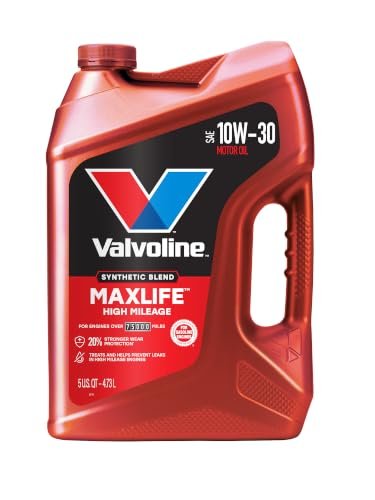
Valvoline MaxLife High Mileage 10W-30 Oil
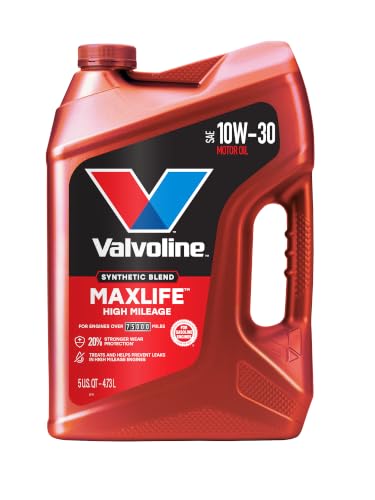
Valvoline MaxLife High Mileage 10W-30 Synthetic Blend Motor Oil serves drivers whose vehicles call for SAE 10W-30. It shares the high-mileage focus of the MaxLife line but uses a different viscosity grade from the 5W-30 version. That difference matters because the engine maker sets the correct oil grade for each vehicle. The five-quart bottle can be useful for cars and light trucks with a matching oil capacity.
If you wonder what is the top rated motor oil for an older car in a warm climate, this product may be worth a look when the manual permits 10W-30. Its synthetic blend aims to support engine protection and help manage oil use in aging engines. It can suit routine driving when paired with the correct service schedule. Do not switch from a different grade based only on the car’s age or the weather.
✅ Pros
- ✔ Designed for high-mileage engines.
- ✔ SAE 10W-30 grade suits vehicles that specify this viscosity.
- ✔ Synthetic blend offers an alternative to conventional oil.
- ✔ Targets protection against wear during engine use.
- ✔ Aims to help manage minor leaks linked to aging seals.
- ✔ May help reduce oil use in some engines.
- ✔ Five-quart jug can suit many routine oil changes.
- ✔ Useful for drivers who want a high-mileage-specific formula.
⚠️ Cons
- ✖ Not suitable when the manual requires another viscosity grade.
- ✖ The 10W winter rating may be less suitable than a specified lower-W grade in severe cold.
- ✖ It cannot repair worn seals or internal engine damage.
- ✖ May not meet every newer engine’s required specifications.
- ✖ Actual results depend on engine condition and driving habits.
My Recommendation
I recommend this MaxLife version for an older car or light truck that specifically calls for SAE 10W-30 and meets the product’s listed standards. It is especially worth considering if you prefer a high-mileage blend for routine service. Check the owner’s manual first, particularly if you drive through very cold winters. If the engine leaks heavily, smokes, or loses oil fast, arrange a repair check instead of expecting oil alone to solve the issue.
| Best For | Why |
|---|---|
| Older vehicles requiring 10W-30 | The grade matches engines designed to use SAE 10W-30. |
| High-mileage daily drivers | The formula targets common needs in aging engines. |
| Drivers who prefer a synthetic blend | It offers a middle option between conventional and full synthetic oil. |
STP Premium 10W-30 Small Engine Oil

STP Premium Synthetic Blend 4 Cycle Small Engine Oil is made for compatible four-cycle equipment. Its listed uses include lawnmowers, generators, tractors, and snow blowers. It comes in a 32-fluid-ounce bottle, which is a useful size for small engines that need only a modest amount of oil. This product is not a direct substitute for passenger-car motor oil just because both products carry a similar viscosity grade.
When asking what is the top rated motor oil for lawn equipment, it is important to separate small-engine needs from car-engine needs. This STP oil may fit equipment whose manuals call for SAE 10W-30 and the stated oil type. It can be handy for seasonal maintenance before mowing or generator use. Always check whether your equipment uses a four-cycle engine, since two-cycle engines often need a different fuel and oil setup.
✅ Pros
- ✔ Designed for compatible four-cycle small engines.
- ✔ Listed for uses such as lawnmowers and generators.
- ✔ SAE 10W-30 grade suits equipment that calls for it.
- ✔ Synthetic blend formula offers an alternative to conventional small-engine oil.
- ✔ Small 32-fluid-ounce bottle is easy to store.
- ✔ Useful for seasonal equipment maintenance.
- ✔ May suit several types of outdoor power equipment when approved.
- ✔ Helps users choose oil made for small-engine applications.
⚠️ Cons
- ✖ Not intended as a universal oil for every passenger car.
- ✖ Not suitable for two-cycle engines unless the equipment maker explicitly permits it.
- ✖ The bottle may not contain enough oil for equipment with a larger sump.
- ✖ The correct grade and oil type depend on the engine manual.
- ✖ May be unnecessary for equipment that requires another specific oil.
My Recommendation
I recommend STP Premium 10W-30 Small Engine Oil for owners of compatible four-cycle lawn and garden equipment, portable generators, and similar machines. Its small bottle is practical for a home shed or garage. Before use, confirm the engine type, oil grade, and service instructions in the equipment manual. Do not use it in a car engine unless the vehicle maker specifically approves this product for that purpose.
| Best For | Why |
|---|---|
| Lawnmower owners | The product is listed for compatible four-cycle lawn equipment. |
| Portable generator owners | Its 32-ounce size can suit routine service for some small engines. |
| Home equipment maintenance | The bottle is easy to keep on hand for seasonal oil changes. |
Castrol GTX High Mileage 5W-30 Oil
Castrol GTX High Mileage 5W-30 Synthetic Blend Motor Oil is aimed at older vehicles that need SAE 5W-30. It uses a synthetic blend and focuses on the demands of engines with more miles on the odometer. The formula is designed to help protect engine parts and address some common high-mileage concerns. Its five-quart size may work well for many passenger cars, depending on their oil capacity.
For drivers who ask what is the top rated motor oil for an older daily driver, Castrol GTX High Mileage is another option to compare. It can suit routine travel, errands, and long commutes when the grade and required standards match the car. The high-mileage label is useful, but it does not mean every older engine needs this product. Follow the owner’s manual and check the oil level on a regular basis.
✅ Pros
- ✔ Designed for engines with higher mileage.
- ✔ SAE 5W-30 grade fits many compatible older cars.
- ✔ Synthetic blend formula offers a balance of base oil types.
- ✔ Aims to help protect against engine wear.
- ✔ Targets common needs of aging engines.
- ✔ Five-quart container is useful for many oil changes.
- ✔ Suitable for routine driving when the vehicle maker approves it.
- ✔ Offers another high-mileage option alongside Valvoline MaxLife.
⚠️ Cons
- ✖ Not suitable for vehicles that require a different viscosity grade.
- ✖ May not meet the specific requirements of some newer engines.
- ✖ Cannot repair major oil leaks or mechanical faults.
- ✖ A synthetic blend may not appeal to buyers who want full synthetic oil.
- ✖ The required oil change interval varies by vehicle and driving conditions.
My Recommendation
I would consider Castrol GTX High Mileage 5W-30 for an older car that calls for SAE 5W-30 and meets the product’s stated specifications. It is a practical option for drivers who want a high-mileage oil from a familiar brand. Compare it with Valvoline MaxLife based on the required approvals, current price, and bottle size. There is no need to switch between suitable oils often; consistent maintenance with the correct product matters more.
| Best For | Why |
|---|---|
| Older cars that require 5W-30 | The viscosity grade fits many compatible high-mileage vehicles. |
| Drivers seeking a synthetic blend | It offers a blend rather than a conventional-only formula. |
| Routine maintenance | Its five-quart format can suit many standard oil changes. |
Final Verdict: Which Should You Buy?
If I had to choose one product from this list for a compatible modern car, I would start with Castrol EDGE 0W-20 Full Synthetic Motor Oil. For older vehicles that require 5W-30, I would compare Valvoline MaxLife High Mileage and Castrol GTX High Mileage. Valvoline MaxLife 10W-30 serves a different group of engines, while STP Premium 10W-30 is aimed at compatible four-cycle small equipment. The correct grade and required approvals should decide your final pick.
Still asking what is the top rated motor oil? Start with your owner’s manual, match the oil grade, and choose a product that meets the required standards. Check prices and current labels before buying. Good oil helps protect your engine, but regular service and prompt repairs matter just as much.
FAQs Of what is the top rated motor oil
Q What is the top rated motor oil overall?
Q Is full synthetic motor oil better than a synthetic blend?
Q Is high-mileage motor oil worth buying?
Q Can I use 5W-30 instead of 0W-20?
Q How often should I change my motor oil?