
Best 5 Rose Aromatherapy Oil
Choosing rose aromatherapy oil can feel needlessly confusing when every bottle promises beautiful skin, hair, and room fragrance. Rose essential oil is a concentrated aromatic oil used for scent and personal-care routines, while aromatherapy means using plant-derived fragrance to create a relaxing sensory setting. A diffuser, carrier oil, or empty spray bottle each change the result.
Our research points to HIQILI as the best overall pick because its listing covers three everyday routes: skin, diffuser, and hair care. Rose Essential Oil 100% Pure & is the closer choice when you want a bottle marketed for skin and fragrance use. Here’s the quick comparison, followed by the practical tradeoffs that matter once the oil reaches your shelf.

Comparison Chart of Rose Aromatherapy Oil
| Product | Details | Rating | Buy |
|---|---|---|---|
Editor’s Choice  | HIQILI Rose Essential Oil Skin | ★★★★☆4.6/5 | |
Top Pick  | Rose Essential Oil 100% Pure & | ★★★★☆4.6/5 | |
Best Budget  | Rose Essential Oil Pure Organic Diffuser | ★★★★☆4.6/5 | |
| ★★★★☆4.5/5 | ||
| ★★★★☆4.6/5 |

List of Top 5 Best Rose Aromatherapy Oil
We compared the supplied listings, stated uses, bottle sizes where available, and reported buyer ratings. The reviews below explain which product fits a diffuser, personal-care routine, soap-making project, or smaller budget, without treating “pure” or “organic” wording as proof on its own.
Below are the list of products:
1. HIQILI Rose Essential Oil Skin
HIQILI stood out in our data because one bottle is listed for three everyday jobs, rather than one fragrance-only purpose. That makes it a practical first pick for someone balancing a facial routine, bedroom diffuser, and hair-care shelf.
Why I picked it
I chose HIQILI because its supplied listing covers the broadest useful mix on this list. In our research, that three-route positioning mattered more than a purity claim, which isn’t clearly stated in the product title.
Key specs
- Reported buyer rating: 4.6/5.
- Skin use: Listed for facial or general skin routines.
- Diffuser use: Intended for home fragrance use.
- Hair care: Included alongside skin and diffuser applications.
- Bottle volume: Not stated in the supplied product data.
Real-world experience
This bottle makes sense for a person building one simple evening routine across skin, scent, and hair. You could dilute it for a carrier-oil blend, use a few drops in an oil-compatible diffuser, and blend a small amount into ends, while checking the device’s instructions first. It’s less conclusive for someone who needs a confirmed botanical name or a known milliliter count before buying.
- Skin, diffuser, and hair care are all listed, giving this bottle more than one routine.
- The reported 4.6/5 rating keeps it among the stronger-reviewed choices here.
- Three stated uses may remove the need to shop for separate oils for each job.
- Volume isn’t stated, so cost per milliliter and refill planning aren’t clear.
- No purity wording appears in the supplied title, so pure-claim shoppers need another option.
- ✔ You want one bottle listed for skin and room fragrance.
- ✔ Your hair routine uses diluted fragrance oils.
- ✔ You value several stated uses over a tiny trial size.
- ✖ You need a confirmed botanical name before buying.
- ✖ You need a clearly stated bottle size.
2. Rose Essential Oil 100% Pure &
This bottle directly addresses a common shopping filter: buyers searching for “pure” and “natural” wording. Its skin and diffuser positioning also gives it a clear personal-care role, although the supplied title alone doesn’t verify its source or composition.

Why I picked it
I favor this option for its clear skin and diffuser focus, with a 4.6/5 reported rating. The “100% pure and natural” language makes it easy to shortlist, but I’d still look for supporting supplier details before treating those words as verified claims.
Key specs
- Reported buyer rating: 4.6/5.
- Purity wording: “100% pure” appears in the full title.
- Natural wording: The title also describes the oil as natural.
- Intended applications: Skin use and diffuser fragrance.
- Bottle volume: Not supplied in the product inventory.
Real-world experience
This is a sensible match for someone who wants a rose-scented personal-care bottle and a room fragrance option. For skin, 1 drop in 1 teaspoon, or 5 mL, of carrier oil is a conservative starting point before patch testing. For a diffuser, follow its fill line and drop instructions rather than guessing, especially if you’re sensitive to floral fragrance.
- The title explicitly says 100% pure, making the main marketing claim easy to identify.
- Skin and diffuser applications are both stated, covering a personal routine and room fragrance.
- A reported 4.6/5 rating gives this option a strong buyer-feedback result.
- The title doesn’t identify the botanical species, plant source, or extraction method.
- Without a stated volume, you can’t compare cost per milliliter before opening the listing.
- ✔ Explicit purity wording is your main shopping filter.
- ✔ You want a bottle for both skin and diffuser fragrance.
- ✔ You’d rather ask the seller for sourcing details than buy blind.
- ✖ You need a documented ingredient list or botanical source before purchase.
- ✖ You need a clearly stated bottle capacity.
3. Rose Essential Oil Pure Organic Diffuser
The 10 mL capacity gives this bottle the clearest size in the supplied inventory. I find it most useful as a budget-friendly introduction to diffuser fragrance, with perfume, massage, aroma, and bath applications also named in its full title.

Why I picked it
I picked this for buyers who want a defined, smaller format instead of guessing at bottle capacity. The 10 mL label also makes budgeting and storage easier, although the “pure organic” wording needs supporting information before it becomes a quality judgment.
Key specs
- Stated capacity: 10 mL, or roughly two teaspoons.
- Reported buyer rating: 4.6/5.
- Primary fragrance application: Diffuser use.
- Additional applications: Perfume, massage, aroma, and bath.
- Purity wording: The full title says “pure organic.”
Real-world experience
This format suits a guest room, a travel accessory pouch, or a first diffuser session where you don’t want to commit to a large bottle. For massage, dilute 1 drop into 1 teaspoon, or 5 mL, of carrier oil rather than applying the concentrate directly. For bathing, follow the complete labeled directions instead of pouring essential oil straight into water.
- The clearly stated 10 mL capacity makes it easier to plan purchases and storage.
- Five applications appear in the full title, giving the small bottle more than one possible role.
- A reported 4.6/5 rating supports its position as an approachable diffuser option.
- The title doesn’t identify the plant species, origin, or an organic certification.
- At 10 mL, it is the smaller choice for frequent diffuser, massage, or bath routines.
- ✔ You want a small, clearly labeled starting bottle.
- ✔ Diffuser fragrance is your main application.
- ✔ You like a short shopping list focused on everyday uses.
- ✖ You expect a 10 mL bottle to last through frequent whole-home diffusing.
- ✖ Organic certification is essential to your purchase decision.
4. SU JUABA Rose Essential Oil Skin
SU JUABA is a more focused option for people organizing a beauty shelf rather than a fragrance shelf. Its title puts skin, face, and hair care together, making it a close alternative to HIQILI when diffuser use isn’t your priority.

Why I picked it
I selected this as a tightly targeted alternative, with skin, face, and hair care clearly named. That narrower brief makes it easy to choose for personal-care routines, even though you give up the explicit diffuser positioning of HIQILI.
Key specs
- Reported buyer rating: 4.5/5.
- Skin use: Included in the full title.
- Face use: Separately included in the full title.
- Hair use: Included in the full title.
- Bottle volume: Not stated in the supplied inventory.
- Diffuser use: Not specifically indicated in the product title.
Real-world experience
Think of this as a beauty-aisle option for a simple face-and-hair routine, not a bottle intended to scent a room. You could dilute 1 drop into 1 teaspoon, or 5 mL, of a suitable carrier oil for an adult skin blend, then add a tiny amount to a separate carrier-oil-based hair mixture. Patch testing matters because a rose scent you enjoy in a diffuser can still irritate sensitive skin.
- Skin, face, and hair care are named, giving personal-care shoppers a focused range of uses.
- A reported 4.5/5 rating keeps buyer feedback positive across this list.
- It offers a simpler choice when diffuser fragrance isn’t part of your plan.
- The supplied title doesn’t state a bottle size or a specific diffuser application.
- General skin, face, and hair wording doesn’t supply dilution directions for each routine.
- ✔ Your priority is face, skin, and hair fragrance.
- ✔ You want one beauty-focused bottle rather than a soap-making oil.
- ✔ You’re comfortable checking dilution and sensitivity guidance yourself.
- ✖ Diffuser use is your primary reason to buy.
- ✖ You need a clearly stated capacity or ingredient list.
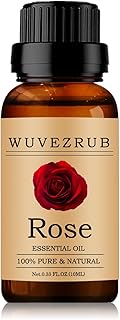
5. wuvezrub Rose Essential Oil Diffuser Aromatherapy
wuvezrub brings together two specific interests: diffuser aromatherapy and DIY soap. I’d consider it for a small craft project or a dedicated diffuser, rather than as a first choice for a skin-focused shelf.

Why I picked it
I picked this for project-based buyers, not for an undirected bottle on a general aromatherapy shelf. Its advantage is specificity, a 10 mL format linked to diffuser aromatherapy and DIY soap, which none of the other supplied titles combines in exactly the same way.
Key specs
- Stated capacity: 10 mL.
- Reported buyer rating: 4.6/5.
- Stated application: Diffuser aromatherapy.
- Craft application: DIY soap.
- Skin and hair positioning: Not specifically included in the supplied title.
- Botanical source and extraction method: Not stated in the supplied inventory.
Real-world experience
The most sensible starting scenario is a small diffuser setup or a soap recipe you already understand. Fragrance can affect how some cold-process soap batches behave, so a soap maker should add oil only according to their own formula and established safety guidance. For a diffuser, confirm that the model accepts oils before pouring anything into its reservoir.
- The 10 mL size is clearly stated, so project quantities are easier to plan.
- Diffuser aromatherapy and DIY soap give it a focused, project-based purpose.
- A reported 4.6/5 rating supports its suitability for those listed uses.
- The title doesn’t name a botanical source or explain the extraction method.
- At 10 mL, it offers less product for repeated diffusing than a larger bottle.
- A DIY soap mention doesn’t establish suitability for facial or sensitive-skin use.
- ✔ Diffuser aromatherapy and DIY soap are your two clear uses.
- ✔ A known 10 mL capacity makes project planning simpler.
- ✔ You already know the soap recipe or diffuser model you’ll use.
- ✖ You need a broad skin, hair, and diffuser product.
- ✖ You’re buying an unfamiliar oil for a first soap recipe without formulation guidance.
How I picked
I compared the supplied product inventory against four practical questions: what uses the seller states, what size the bottle actually contains, how the reported buyer rating compares, and what a shopper still needs to confirm before using the oil. As of 2026, that approach favors clear labeling over impressive-sounding fragrance claims.
A 10 mL capacity gives you a concrete quantity, so two picks score better on size transparency. The other three list skin or hair applications, but their volume isn’t provided. I also treated “pure,” “natural,” and “organic” as words to investigate rather than automatic proof of composition, origin, or certification.
I deliberately didn’t physically test the oils, apply them to skin, or evaluate their aroma in a controlled room. That means this comparison can help you match a listing to a routine, but it can’t tell you which bottle smells strongest, how quickly fragrance fades, or how a specific diffuser will perform.
Buying guide, what actually matters for rose aromatherapy oil
What should this oil do for you?
Rose essential oil is a concentrated, fragrant plant oil used for personal-care or ambient scent, not a ready-to-use moisturizer. If your main goal is a rose-scented room, prioritize diffuser suitability; if you want a facial-oil scent, check the intended application and dilution guidance. You’ll sacrifice some versatility when choosing a product built around just one use.
Does “100% pure” tell you enough?
A “100% pure” claim tells you the seller describes the product as undiluted, but the supplied titles don’t establish its botanical source, ingredients, or extraction method. Neither word “pure” nor a familiar rose scent proves exactly which plant the oil came from. Look for those details on the full listing, especially if skin care is your priority.
Can you use the same bottle in several places?
A versatile bottle can suit someone with a diffuser, a carrier-oil collection, and a hair routine. A focused bottle may make more sense if you only want fragrance for soap making, a massage blend, or a bedside diffuser. More applications don’t automatically mean better performance in every one of them.
How much should you use?
Start with the smallest amount your diffuser manual permits, rather than adding a full dropper by guesswork. A water-based ultrasonic diffuser and a waterless nebulizing diffuser are different devices, and neither should receive oil unless its instructions allow it. Never add rose oil to a steam humidifier simply because the word “humidifier” sounds similar to “diffuser.”
A carrier oil is a less aromatic base oil used to dilute essential oils before skin application. For an adult blend, 1 drop of rose oil in 1 teaspoon, or 5 mL, of carrier oil offers a measured starting point; patch test the finished mixture first. The Food and Drug Administration’s guidance on aromatherapy oils is also a useful reminder that a pleasant scent is not a treatment for a medical condition.
Is DIY soap the same as facial skincare?
DIY soap is a separate project from facial skincare, and a soap-related oil listing doesn’t establish suitability for delicate facial skin. Essential oils can affect soap making, so use a formulation and safety plan you already understand. If you’re new to cold-process soap, get that guidance before adding fragrance to a batch.
What accessories and safety steps do you need?
You may also need a dropper or pipette, an appropriate diffuser, or a carrier oil for skin blending. Keep the bottle closed, stored away from heat, and out of reach of children and pets. A rose scent you like doesn’t establish that an oil is safe for every animal, and concentrated fragrance deserves more care than a ready-to-use lotion.
Frequently Asked Questions (FAQ)
Is rose aromatherapy oil worth it for winding down at night?
A rose-scented diffuser can be a pleasant cue for winding down, but it isn’t a proven treatment for insomnia or a replacement for consistent sleep habits. What you notice will depend on the room, device, ventilation, and your sensitivity to fragrance. If you enjoy the smell, you can treat it as a low-stakes sensory ritual rather than a medical fix.
How do HIQILI and Rose Essential Oil 100% Pure & compare?
HIQILI is listed for skin, diffuser, and hair care, so it suits a broader routine. Rose Essential Oil 100% Pure & gives you explicit purity and natural wording plus skin and diffuser applications, but the supplied title doesn’t provide a botanical source. Choose HIQILI for versatility, or the other option when its label wording better matches your shopping filter.
Can I add rose oil to any humidifier?
No. Only use it if the device manual specifically permits essential oils, because a steam humidifier isn’t the same as an oil diffuser. An ultrasonic model may accept certain oils, while other devices may require a waterless design.
If the manual is missing, don’t experiment with the tank or add rose oil to the water.
Is a “pure” or “organic” label better for skin?
Neither word alone is enough to judge a rose oil for skin. Look for the intended application, ingredient information, source details, and dilution directions, then patch test a properly diluted mixture. A product designed for soap making or ambient fragrance shouldn’t automatically become your facial-care product.
Which option has the clearest bottle size?
Rose Essential Oil Pure Organic Diffuser and wuvezrub Rose Essential Oil Diffuser Aromatherapy each state a 10 mL capacity. The other three listings don’t supply a volume in the available product data, so you can’t fairly compare how much oil you’ll receive. If a known quantity matters, those two 10 mL options are easier to shortlist.
Which is the best value for a beginner?
Rose Essential Oil Pure Organic Diffuser is the most straightforward starting point when your main use is diffusing and a small bottle fits your routine. Its stated 10 mL size makes planning easier, and its title names bath, massage, perfume, and aroma uses. If one bottle needs to cover skin, hair, and diffusion, HIQILI offers more versatility instead.
Final verdict
HIQILI is the best overall pick because its listing supports skin, diffuser, and hair-care use, backed by a reported 4.6/5 rating. Rose Essential Oil 100% Pure & is the stronger choice when explicit purity wording matters, while Rose Essential Oil Pure Organic Diffuser stands out for its clearly stated 10 mL size. Choose the product that matches your actual routine, not the one with the broadest claim.
Affiliate disclosure: This post contains affiliate links. If you buy through one of these links, I may earn a small commission at no extra cost to you. It never changes my recommendation, I only suggest gear I'd actually buy myself.


